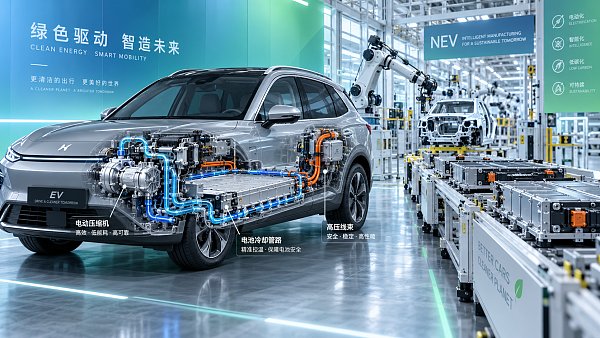
How rising freight volatility is reshaping global automotive supply chain logistics




It often starts with a routine planning call that suddenly stops being routine. A shipment of compressors is delayed at a transshipment port, a container rate changes before purchase orders are fully confirmed, or a lane that looked stable last quarter becomes unreliable because of labor action, weather, inspections, or regional policy adjustments. On paper, the issue looks like freight. In practice, it reaches much further: line scheduling becomes harder, buffer stock assumptions break down, supplier coordination turns tense, and launch timing for vehicle programs starts to feel less certain than anyone expected.
Many teams dealing with global automotive supply chain logistics have learned this the hard way. Freight volatility is no longer an isolated problem for transportation managers to absorb at the end of the chain. It now affects sourcing decisions for wiring harnesses, thermal system components, cockpit electronics, steering assemblies, and other parts that move through multi-country production networks. If you are trying to protect continuity without tying up too much cash in inventory, the old habit of treating logistics as a downstream execution function is becoming expensive.
The more difficult part is that volatility does not always look dramatic at first. Sometimes it appears as small shifts that compound: longer booking lead times, uncertain vessel connections, inland bottlenecks, changing customs attention on certain product categories, uneven capacity for dangerous goods, or inconsistent delivery windows for high-voltage components. Those details matter because modern vehicle programs depend on synchronized flows. When one part of the network stretches, the rest of the system has to absorb it.
Where decision-making usually goes wrong
A common mistake is to assume that every disruption should be solved with the same response: expedite, increase safety stock, or switch carriers. Those actions can help in specific cases, but they are not a strategy. If a team reacts to every disturbance by paying more for transport or filling warehouses, it may reduce one immediate risk while creating others such as inventory obsolescence, poor working-capital discipline, or weak visibility into root causes.
Another frequent misread is to look at freight only through cost per shipment. That view made more sense when lane conditions were steadier and product platforms were less exposed to cross-border complexity. Today, transport cost matters, but so do variability, customs predictability, handoff quality, packaging resilience, and the ability to reroute without disrupting engineering or production requirements. For automotive parts, the acceptable logistics path for a low-voltage cable may differ sharply from the acceptable path for battery cooling components or electronic cockpit modules.
There is also a planning blind spot between procurement and logistics. Procurement may secure a competitive supplier source in one region, while logistics later discovers that the route introduces unstable transit windows, difficult port handling, or repeated compliance friction. By then, the nominal piece-price gain is already being offset elsewhere. This is one reason rising freight volatility is reshaping sourcing discussions, not just shipment planning.
The shift from cheapest route to most controllable network
When volatility persists, companies tend to move away from asking, “Which route is cheapest?” and toward asking, “Which network is controllable enough for this part?” That is a meaningful change in mindset. The answer depends on component criticality, replenishment rhythm, engineering change frequency, and regional demand patterns.
For example, parts with stable demand and low revision risk may still tolerate longer replenishment cycles if the routing is consistent and the planning buffers are realistic. But components tied to rapid product iteration, launch schedules, or mixed-model assembly often need a different logistics logic. A lane that saves money but creates unpredictable handoff times can become a weak point, especially when the component is linked to thermal management, electrical architecture, or in-cabin electronics where substitution is limited.
This is also where regionalization enters the picture. Not every category can or should be fully localized, but many organizations are reconsidering how much dependency they place on long, fragmented corridors. Some are separating strategic dual sourcing from operational dual routing. Others are building product-level freight policies instead of broad, company-wide transport rules. The effect is subtle but important: logistics is being designed into the supply chain architecture earlier, rather than patched in later.
What to examine before changing suppliers or warehouse footprint
When freight conditions become unstable, there is a temptation to jump straight into larger structural moves such as adding distribution centers, moving production, or replacing overseas suppliers. Sometimes those decisions are justified. Just as often, teams would benefit from a more disciplined review first.
Start with part segmentation that reflects operational reality, not broad purchasing categories. A high-volume harness program, an electric compressor, a HUD module, and a steering column should not automatically sit in the same logistics bucket just because they all serve vehicle assembly. Their packaging sensitivity, replenishment urgency, customs classification complexity, and line-stop risk can be very different. If segmentation is too general, mitigation actions tend to be blunt and costly.
Then look at variability rather than average transit time. Average figures hide most of the operational pain. A lane with a moderate average but narrow variance may be easier to manage than a faster lane with wide swings. For production planning, consistency is often more valuable than nominal speed. This matters particularly when scheduling inbound flows for components that feed synchronized manufacturing or vehicle launch windows.
The next area is interface risk. Many disruptions are not caused by one dramatic failure but by handoffs between suppliers, forwarders, consolidators, ports, customs brokers, and inland carriers. If documentation rules for smart cockpit electronics differ from those for mechanical steering systems, or if battery-related thermal components need extra handling discipline, each transition point deserves attention. Decision-makers often discover that the real issue is not a single carrier but a chain of loosely managed interfaces.
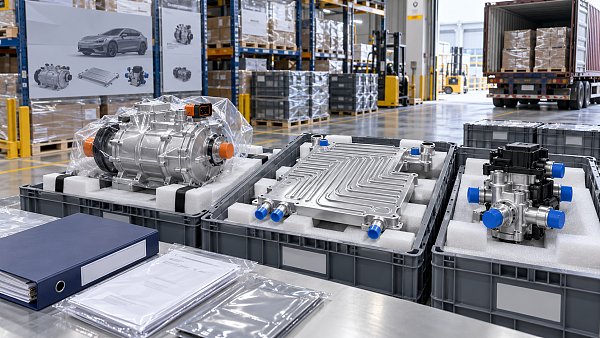
It is also worth reviewing packaging and shipment design. In periods of volatility, poorly designed pack density, fragile returnable loops, or overdependence on a single consolidation pattern can magnify disruption. Sometimes a packaging adjustment or revised shipment cadence does more to restore control than a costly network overhaul.
How logistics pressure is changing sourcing and inventory behavior
One clear trend is that inventory is being treated less as a blanket insurance policy and more as a targeted control tool. Instead of raising stock levels across the board, many teams are becoming more selective. They are identifying which components truly justify extra buffer because the replacement lead time, customs sensitivity, or production impact is hard to absorb. For lower-risk items, they may accept leaner buffers if the lane is stable enough.
This selectivity matters in automotive components because product families behave differently. A media head unit may face firmware timing and market-specific configuration concerns. A battery liquid cooling system may involve stricter coordination across suppliers and plants. High-voltage harnesses may have distinct shipping, compliance, and handling considerations. Treating all these categories with the same stock rule usually creates waste somewhere.
Sourcing discussions are also changing. Freight volatility is pushing teams to compare suppliers not only on cost, capacity, and quality, but also on route flexibility, export readiness, documentation discipline, packaging maturity, and the ability to support alternate shipment models. A supplier that can adapt to a revised lane or ship profile may prove more resilient than one that looks competitive only under ideal transport conditions.
Another shift is the growing value of shorter information cycles. Weekly or monthly reviews are often too slow when lanes are unstable. That does not mean every organization needs constant emergency meetings. It does mean decisions benefit from faster visibility into booking status, milestone exceptions, regional congestion signals, and part-level exposure. The point is not to create noise, but to shorten the time between signal and response.
A more practical way to respond when volatility becomes persistent
If your network is repeatedly affected by freight swings, a useful starting point is to stop looking for one master fix. In most cases, resilience comes from several smaller adjustments that work together.
One adjustment is to define alternate logistics paths in advance for specific part families. Not every item needs a backup mode, but critical parts often do. The important detail is to validate the alternate path before it is needed: documentation flow, packaging fit, customs readiness, destination handling, and who authorizes the switch. Without that preparation, a backup route exists only in theory.
Another step is to connect sourcing reviews with logistics intelligence earlier. This is where industry monitoring becomes helpful. Teams responsible for automotive thermal systems, compressors, steering systems, cockpit electronics, or wiring products often need more than generic freight news. They need to understand how product trends, export movements, standards interpretation, and regional manufacturing shifts may influence future lane risk. Information platforms that track automotive components, trade developments, and application trends can support this process by giving procurement and operations a more informed basis for discussion. Used carefully, that kind of reference is not a replacement for internal planning, but it can help teams ask better questions sooner.
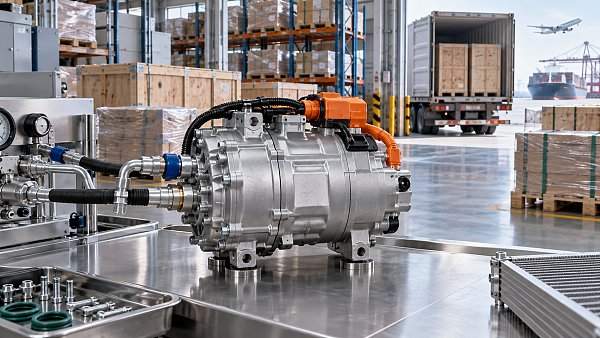
It also helps to create part-specific escalation logic. If a swash plate compressor shipment is late, the response may differ from a delay involving an EPS-related electronic subassembly or a batch of data cables for a high-voltage architecture. The escalation path should reflect substitution possibilities, production impact, and timing sensitivity. When every delay is escalated the same way, resources get wasted and real priorities blur.
Finally, review whether your KPIs are reinforcing the wrong behavior. If teams are measured mainly on freight cost, they may accept unstable lanes that create wider operational damage later. If teams are measured only on line continuity, they may overuse premium transport. The better balance usually includes controllability, exception rate, and the cost of variability, even if those measures are harder to standardize.
Signs that the old logistics model is no longer enough
You do not need a major crisis to know that your approach needs updating. Repeated replanning of inbound schedules is one sign. So is the constant use of informal workarounds: phone-based expediting, manual status chasing, emergency booking requests, and ad hoc inventory borrowing between facilities. These habits often indicate that the network is operating on effort rather than structure.
Another sign is when engineering, purchasing, and logistics are reacting to the same problem from different angles without a common view. Engineering worries about revision timing, purchasing focuses on source options, logistics pushes for routing changes, and plant operations asks for more stock. None of those concerns are wrong. The issue is that freight volatility now cuts across all of them, so isolated responses tend to clash.
In global automotive supply chain logistics, the companies that adapt best are usually not the ones that eliminate volatility. That is rarely possible. They are the ones that reduce surprise. They understand which parts are truly exposed, which lanes are only apparently cheap, which suppliers can support alternate flows, and where visibility is too slow to be useful. Once that picture becomes clearer, decisions around sourcing, routing, inventory, and regional footprint become less reactive.
Freight instability is unlikely to stay confined to transport departments. It is already influencing how component programs are planned, where supply risk is judged acceptable, and how cross-border automotive flows are organized. If your current process still treats logistics as the final step after sourcing is decided, this is probably the moment to change that order. In the current market, control is built upstream.
Related News
- 00
0000-00
How electric compressor speed affects EV battery cooling capacity - 00
0000-00
How to verify a variable frequency compressor supplier’s efficiency claims - 00
0000-00
How bend radius affects FPC reliability in automotive camera modules - 00
0000-00
How to diagnose intermittent loss of electric power steering assist - 00
0000-00
How to size automotive power modules for electric compressors
Tags
- thermal systems
- automotive supply chain
- automotive components
- smart cockpit electronics
- smart cockpit
- Battery Liquid Cooling System
- Electric Compressor
- Swash Plate Compressor
- Media Head Unit
- Steering Column
- battery liquid cooling
- global automotive supply chain
- steering systems
- Cabin Electronics
- global automotive supply chain logistics
Weekly Insights
Stay ahead with our curated technology reports delivered every Monday.
Recommended News
 How electric compressor speed affects EV battery cooling capacityElectric compressor technology: battery cooling depends on more than RPM. Discover how speed, refrigerant flow, and system limits affect EV cooling capacity and energy efficiency.Author:Time:Oct 19, 2026
 How to verify a variable frequency compressor supplier’s efficiency claimsVerify a variable frequency compressor supplier’s efficiency claims using COP boundaries, matched test conditions, and duty-cycle data. Learn how to choose with confidence.Author:Time:Oct 18, 2026
 How bend radius affects FPC reliability in automotive camera modulesAutomotive FPC applications: camera module reliability starts with bend radius. Learn how stack-up, strain, and validation guide robust designs and help prevent costly failures.Author:Time:Oct 17, 2026
 How to diagnose intermittent loss of electric power steering assistMaster power steering system diagnostics to trace intermittent EPS assist loss. Learn proven checks for voltage, wiring, and fault codes to avoid costly guesswork.Author:Time:Oct 16, 2026
 How to size automotive power modules for electric compressorsSize automotive power modules for electric compressors with confidence. Learn how voltage, phase current, losses, and cooling shape reliable selection—and avoid costly oversizing.Author:Time:Oct 15, 2026
 Why automotive power electronics are shifting to silicon carbideAutomotive Power Electronics are shifting to silicon carbide. Discover how SiC can cut losses, boost EV power density, and reshape cooling, reliability, and system costs.Author:Time:Oct 14, 2026
 How EV adoption shapes the electrically driven compressor marketExplore how EV adoption shapes the electrically driven compressor market, from battery cooling and heat pumps to supplier margins. Discover the drivers of profitable growth.Author:Time:Oct 13, 2026
 How to size a PTC heater for reliable EV cabin heatingPTC Heater sizing for EV cabins: learn how to balance defrost performance, heat-pump integration, airflow, voltage range, and battery power for reliable winter comfort.Author:Time:Oct 12, 2026
 What determines the cooling output of electric automotive AC compressors?Automotive air conditioning compressors electric systems: explore how speed, voltage, refrigerant, controls, and heat exchangers shape EV cooling capacity and efficiency.Author:Time:Oct 11, 2026
 What makes a touchscreen media head unit responsive enough for daily use?Touchscreen media head unit performance explained: discover what delivers fast starts, smooth maps, reliable phone pairing, and responsive daily driving.Author:Time:Oct 10, 2026
 Can a Domain Controller Share a Cooling Loop with Other Electronics?Can a domain controller share a cooling loop with other electronics? Explore thermal zoning, flow control, safety priorities, and reliable vehicle electronics cooling strategies.Author:Time:Oct 19, 2026
 What Causes Domain Controller Overheating During Summer Testing?What causes domain controller overheating in summer testing? Explore heat load, airflow, installation, software factors, and practical fixes.Author:Time:Oct 18, 2026
 Is a Head-Up Display Hard to Integrate with Different Windshields?Is a head-up display difficult to integrate with different windshields? Discover how glass geometry, coatings, and calibration affect HUD clarity, cost, and production readiness.Author:Time:Oct 17, 2026
 What Should Be Checked Before Selecting an Automotive Head Unit?What should be checked before selecting an automotive head unit? Explore compatibility, performance, cybersecurity, compliance, and supplier support.Author:Time:Oct 16, 2026
 Is Steer-by-Wire More Expensive Than an EPS Steering System?Is steer-by-wire more expensive than an EPS steering system? Explore the true costs, safety demands, software value, and when SbW justifies its premium.Author:Time:Oct 15, 2026
 Which Automotive Electronics Need Validation for 800V Platforms?What automotive electronics should be validated for 800V platforms? Explore critical checks for harnesses, power electronics, thermal systems, safety, and EMC.Author:Time:Oct 14, 2026
 How Do Automotive Compressor Export Requirements Vary by Market?How do automotive compressor export requirements vary by market? Explore key compliance rules for refrigerants, EV safety, OEM approvals, labeling, and customs.Author:Time:Oct 13, 2026
 What Documents Are Needed to Export Automotive Thermal Components?What documents are needed to export automotive thermal components? Explore customs, compliance, technical records, and shipping tips to prevent costly delays.Author:Time:Oct 12, 2026
 How Often Should an EV Air Conditioning Compressor Be Inspected?How often should an EV air conditioning compressor be inspected? Discover recommended service intervals, warning signs, and expert care tips to protect cooling performance and EV reliability.Author:Time:Oct 11, 2026
 How to size power solutions for automotive head-up display systemsHeads-up display systems power solutions: learn how to size automotive HUD power architectures for startup, brightness, thermal limits, EMC, protection, and reliable vehicle operation.Author:Time:Oct 19, 2026
 How does a head-up display work in a high-performance car?Hoe werkt een head-up display in een high-performance auto en welke informatie toont het? Discover the tech, safety alerts, and performance data that sharpen every drive.Author:Time:Oct 18, 2026
 Which trends will shape zonal EV architectures in the next decade?Future trends in zonal EV architectures: explore smarter power distribution, 48V systems, thermal integration, software, and resilient networks shaping next-gen vehicles.Author:Time:Oct 17, 2026
 When does a zonal EV architecture outperform a centralized design?Explore the trade-offs between zonal and centralized EV architectures to identify the best path for harness efficiency, software scalability, safety, and faster EV launches.Author:Time:Oct 16, 2026
 How to compare vendors for zonal EV power architecturesComparing vendors for zonal EV power architectures: assess electrical capability, interface ownership, lifecycle support, and integration risk for smarter sourcing.Author:Time:Oct 15, 2026
 How zonal architectures can improve EV reliability at the system levelHow zonal architectures affect EV reliability: explore fault containment, diagnostics, power resilience, and software strategies for more dependable electric vehicles.Author:Time:Oct 14, 2026
 What is driving growth in the automotive E/E architecture market?Explore what drives the automotive electric electronic systems architecture market, from EV power systems and zonal computing to ADAS, cybersecurity, and software-defined vehicles.Author:Time:Oct 13, 2026
 How to evaluate top-rated vehicle electrical components for reliabilityDiscover how to evaluate top-rated vehicle electrical components for reliability, from connector integrity and thermal margins to validation data and manufacturing control.Author:Time:Oct 12, 2026
 What makes vehicle electrical components reliable over a long service life?Top-rated vehicle electrical components for reliability depend on thermal control, sealing, vibration resistance, and validated manufacturing. Discover how to choose durable parts.Author:Time:Oct 11, 2026
 How battery thermal management solutions prevent fast-charge overheatingBattery thermal management solutions prevent fast-charge overheating with intelligent cooling, valve control, predictive preconditioning, and reliable heat rejection.Author:Time:Oct 09, 2026
 What an automotive market report can reveal about EV demand shiftsAutomotive market report insights reveal EV demand shifts, component opportunities, regional risks, and smarter investment strategies for growth.Author:Time:Oct 08, 2026