Which trends will shape zonal EV architectures in the next decade?




Zonal EV architecture is not simply a way to remove wiring. It is a redesign of the vehicle’s electrical, electronic, thermal, and software boundaries. Over the next decade, its commercial importance will depend less on the number of zone controllers installed and more on whether automakers can turn that architectural change into lower integration cost, faster feature deployment, better energy efficiency, and more controllable lifecycle risk.
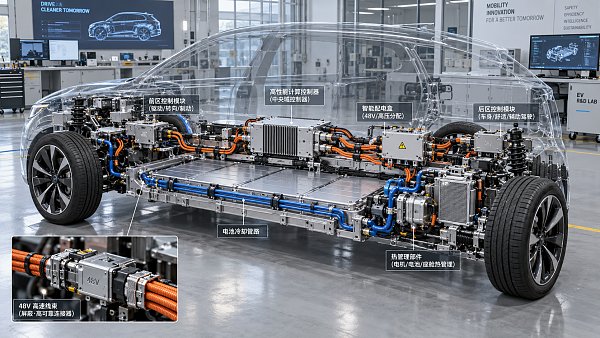
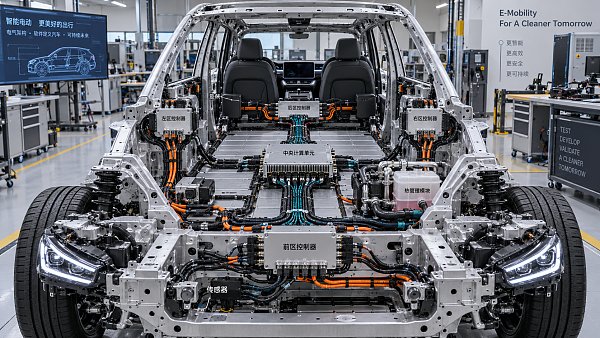
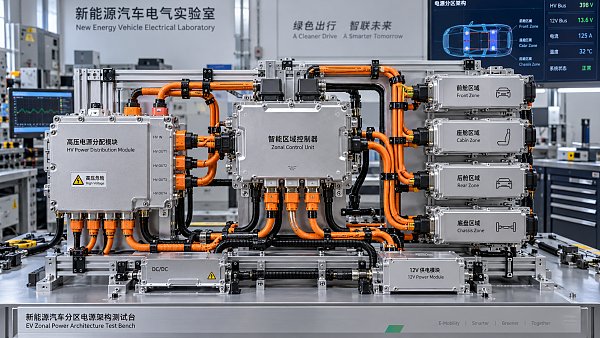
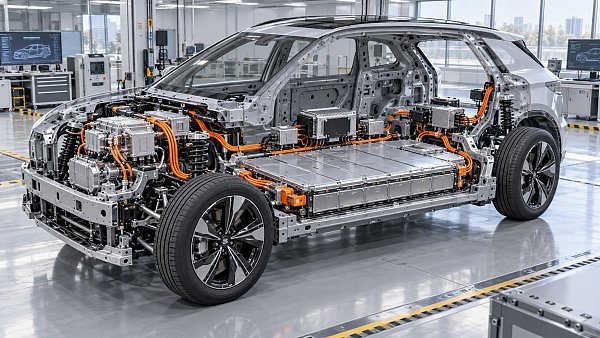
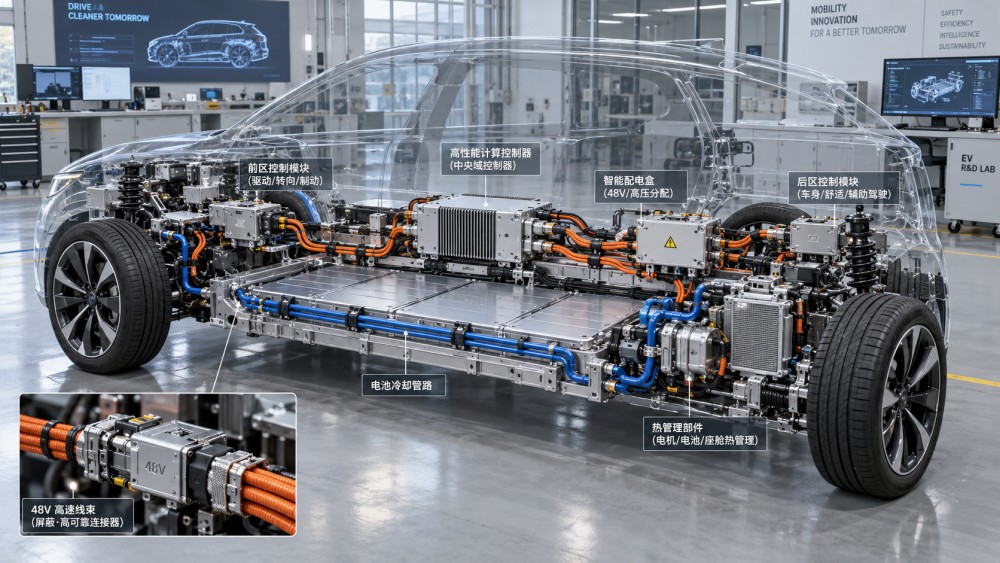
The central shift is from a vehicle organized around many function-specific electronic control units (ECUs) toward a smaller number of high-performance computers connected to geographically distributed zone controllers. A front-left zone, front-right zone, cabin zone, rear zone, or powertrain-adjacent zone can aggregate local sensors, actuators, lighting, doors, thermal devices, and wiring connections. The computing-heavy tasks move toward central controllers, while zones manage local input/output, power distribution, and network access.
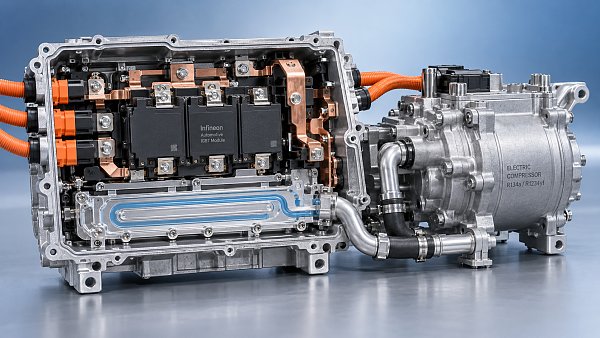
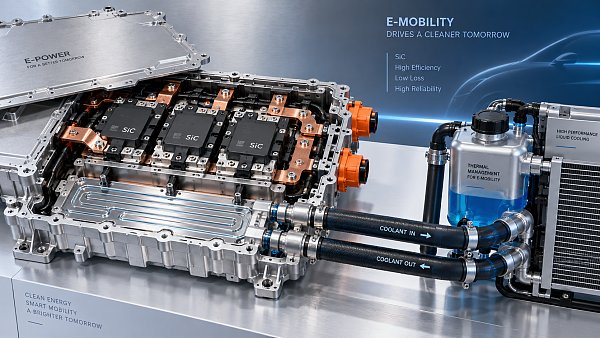
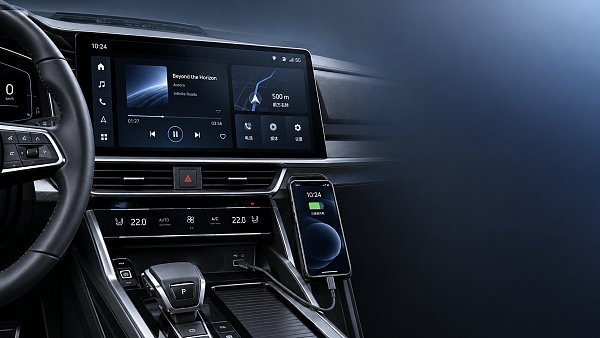
That model will shape component requirements far beyond the electronics domain. High-voltage harnesses, low-voltage power distribution, battery cooling loops, cockpit displays, body controllers, connectors, diagnostics, and cybersecurity interfaces will increasingly be specified as parts of an architecture rather than as isolated components.
Wiring reduction will remain important, but it is not the whole business case
Conventional vehicle electrical systems evolved feature by feature. New functions often brought dedicated ECUs, separate harness branches, additional connectors, and more communication gateways. This creates a packaging burden, raises assembly complexity, and makes fault isolation harder as electrical content rises.
Zonal architectures reduce the distance between a device and its controller. Instead of routing long individual signal wires to a central or function-specific ECU, local devices connect to a nearby zone controller, which then communicates with a central computer over a high-speed backbone. The expected effect is a more rational harness layout, fewer long low-voltage runs, and clearer physical segmentation of the vehicle.
Yet treating zonal design as a wire-weight reduction project is a strategic mistake. Harness savings can be offset by higher requirements for smart power distribution, robust connectors, network switches, zone-controller electronics, electromagnetic compatibility engineering, and software validation. The economic value emerges when physical simplification is combined with platform reuse, shorter assembly operations, reduced ECU proliferation, and a more stable path for feature upgrades.
A vehicle program should therefore evaluate architecture economics across the lifecycle. The relevant question is not whether a zonal system uses fewer meters of wire in a prototype. It is whether the arrangement reduces variant complexity across multiple vehicle derivatives, plants, and model years without shifting excessive cost into diagnostics, service, or software maintenance.
Power distribution is moving from passive protection to intelligent control
One of the most consequential future trends in zonal EV architectures is the transformation of low-voltage power distribution. Traditional fuse-and-relay arrangements are well understood, cost-effective, and serviceable, but they offer limited flexibility once installed. Zonal systems create a stronger case for electronic fuses, smart high-side switches, local load monitoring, and software-configurable power channels.
This does not mean mechanical fuses will disappear from every application. They remain useful for fault protection, cost control, and compliance with established safety practices. The change is that more loads will be managed through electronically controlled distribution modules capable of measuring current, identifying abnormal behavior, prioritizing essential loads, and supporting controlled restart logic.
The implications are particularly significant for EVs because the 12 V or 48 V low-voltage system supports an expanding set of electrically actuated functions: pumps, valves, blowers, cooling fans, seat systems, lighting, displays, door modules, steering-related electronics, and driver-assistance sensors. A local zone controller that can detect an overcurrent condition and isolate a non-critical branch may preserve vehicle functionality more effectively than a simple blown fuse.
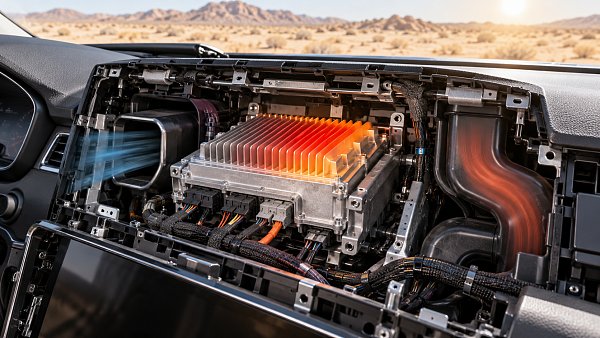
However, intelligent power distribution also changes the supply-chain burden. Suppliers need competence in semiconductor availability management, thermal design of switching devices, fault-detection logic, cybersecurity, and functional-safety evidence. A sourcing decision based only on nominal current ratings or connector count will miss the architecture-level risk. Electrical protection behavior, diagnostic coverage, failure modes, and recovery strategy need to be assessed alongside price and manufacturing capacity.
The 48 V question will become more practical
Battery-electric vehicles retain a high-voltage traction battery but still depend heavily on low-voltage electrical systems. As electrical loads increase, 12 V distribution faces constraints in current, cable cross-section, voltage drop, and connector heating. This makes 48 V distribution an important direction for selected high-power auxiliary loads, even where a full 48 V vehicle electrical architecture is not adopted.
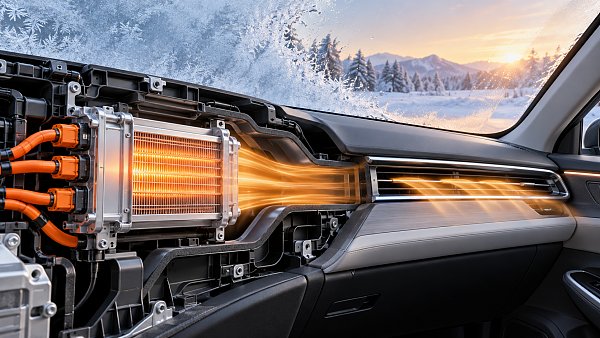
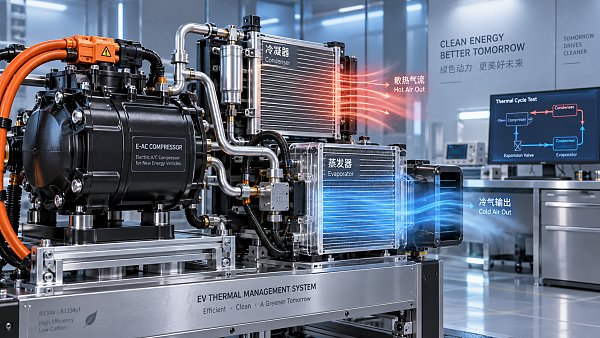
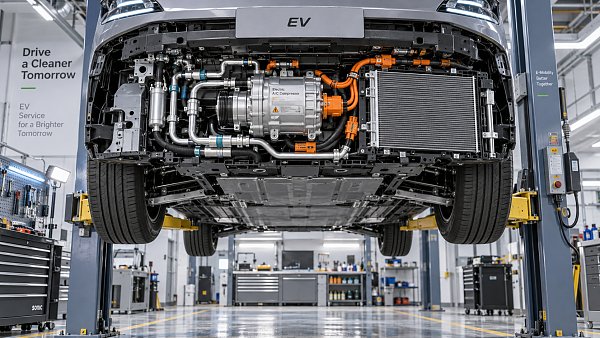
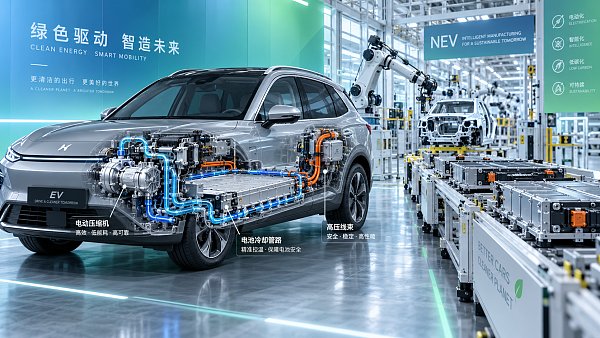
Thermal management is a likely focal point. Electric compressors, coolant pumps, fans, PTC heaters, active grille shutters, valves, and battery-conditioning devices can impose substantial electrical loads under certain operating conditions. Higher low-voltage distribution can reduce current for a given power level, allowing more manageable conductor sizes and potentially improving local power delivery.
Adoption will not be determined by voltage alone. Introducing 48 V adds DC/DC conversion requirements, protection coordination challenges, component qualification work, and service considerations. It also creates a transition problem: many established body electronics and accessories are optimized for 12 V. The likely outcome is not a single universal voltage strategy, but a mixed environment in which 12 V, 48 V, and traction-voltage systems are assigned according to load profile, safety need, packaging, and platform economics.
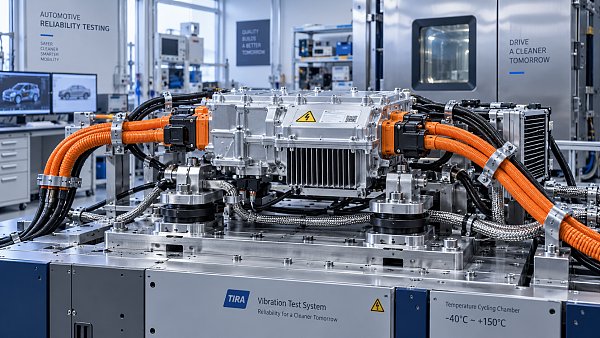
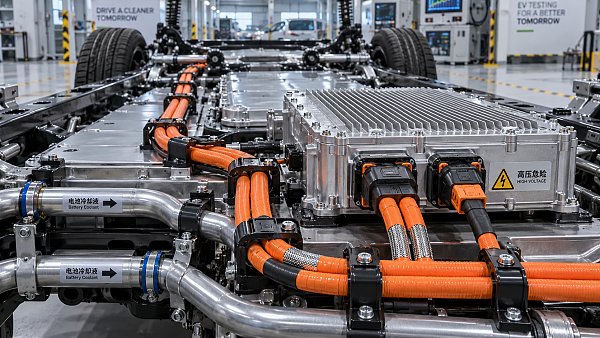
This makes connector and harness strategy more complex, not less. Components must be designed around their actual electrical environment, including transient behavior, isolation requirements, thermal exposure, sealing needs, and compatibility with local electronic power distribution. The future value in harness supply will increasingly lie in engineered modules and validated interconnect systems rather than commodity cable alone.
Thermal systems will become architecture participants
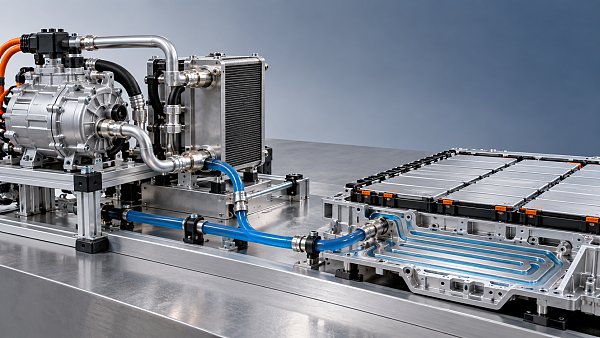
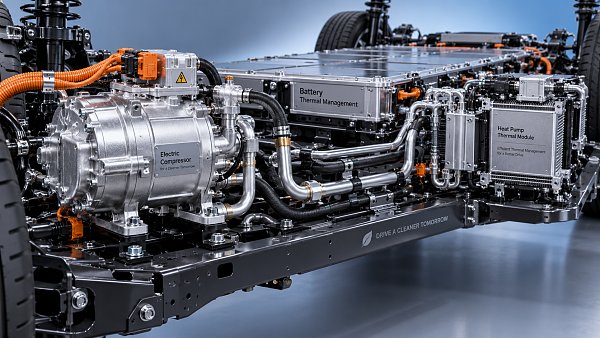
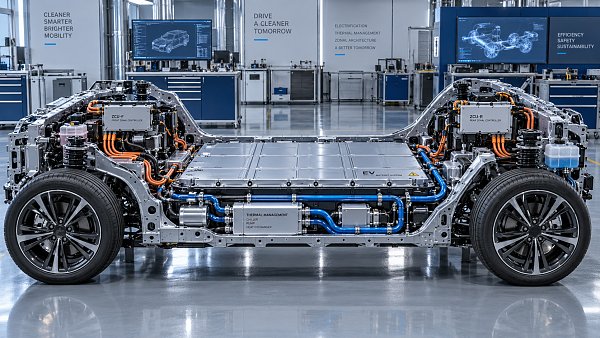
EV thermal management has often been treated as a subsystem centered on the battery, cabin, e-axle, heat pump, compressor, valves, heat exchangers, and coolant circuits. Zonal design makes thermal systems more deeply connected to vehicle-wide computing and power management.
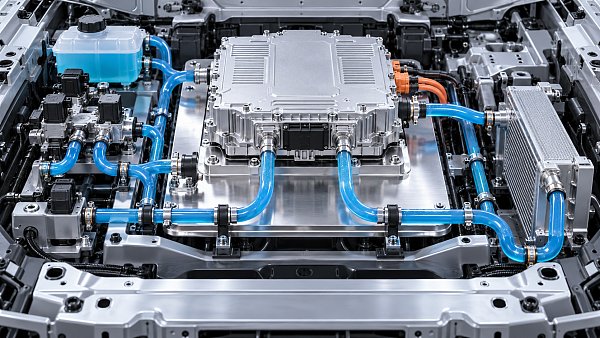
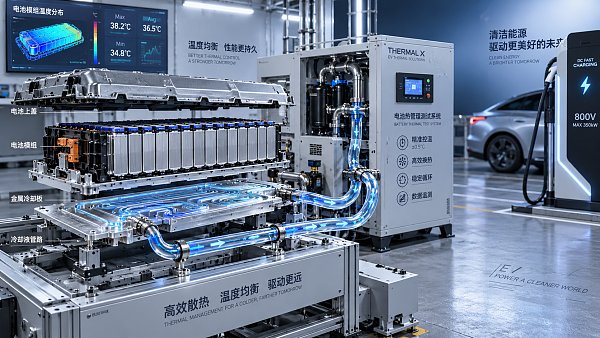
A modern EV must make energy allocation decisions across battery temperature, passenger comfort, charging performance, power electronics protection, motor cooling, and range preservation. Those decisions require coordinated sensing, actuation, and control. Distributed zone controllers can shorten connections to pumps, valves, sensors, blowers, and local actuators, while centralized software can optimize the operating strategy across the vehicle.
The key trend is not merely more thermal sensors. It is tighter coupling between thermal control, route planning, charging events, battery state, ambient conditions, and cabin demand. This increases the importance of reliable data paths and fault handling. A thermal valve or pump may be physically local, but its operating decision may depend on a central energy-management model. The component architecture must therefore tolerate communication loss, degraded operation, and local safety fallback.
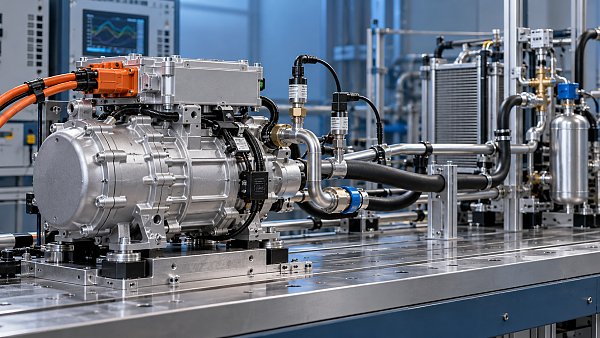
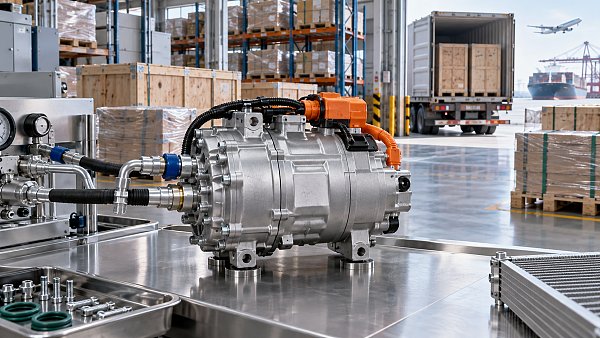
Suppliers of electric compressors, integrated thermal valves, coolant modules, and battery cooling hardware will face a broader interface requirement. Mechanical performance remains essential, but it will no longer be enough to provide a component with a defined voltage and communication pinout. Software behavior, diagnostics, update compatibility, calibration boundaries, and safe-state behavior are becoming part of the product definition.
Vehicle networks will consolidate around high-speed backbones
Zonal architecture needs a communications backbone capable of carrying data between central computing units and physical zones. Automotive Ethernet is positioned to take a larger role because it can support higher bandwidth, scalable network topologies, and the data demands of cameras, radar, displays, domain controllers, and centralized computing. CAN and LIN will remain relevant for many local control tasks because they are established, efficient for lower-bandwidth communication, and embedded in a large component base.
The practical future is a layered network rather than a clean replacement of one protocol by another. Ethernet will increasingly serve as the backbone and may extend to selected edge devices. CAN, CAN FD, LIN, and other legacy-compatible interfaces will continue to connect local actuators and lower-speed modules where their cost and capability remain appropriate.
What changes is the importance of network architecture as a purchasing and platform decision. Cable suppliers will need to meet not only conductor and shielding requirements but also impedance control, connector performance, electromagnetic compatibility, mechanical durability, and traceability expectations. Network switches and gateways become more central to vehicle availability. A fault in a backbone path can affect several functions at once, making redundancy and segmentation decisions commercially significant.
There is also a trade-off between consolidation and fault containment. Fewer controllers can reduce hardware count, but excessive centralization can widen the consequence of a single computing or network failure. Successful zonal implementations will separate functions according to safety criticality, latency sensitivity, update exposure, and degraded-operation needs rather than simply concentrating everything possible into one central computer.
Software-defined vehicles will expose new supplier boundaries
Zonal architecture is a foundation for the software-defined vehicle, but hardware consolidation does not automatically create software agility. A centralized compute platform can make it easier to update features, change control strategies, and reuse software across vehicle lines. It can also create integration bottlenecks if ownership of interfaces is unclear.
The defining question is who controls the software abstraction layer between central applications and local hardware. If every actuator remains tied to a proprietary supplier implementation, the vehicle manufacturer may inherit a fragmented software landscape despite using zone controllers. If interfaces are standardized too rigidly, performance optimization and component differentiation may be constrained.
This tension will influence supplier relationships. Component makers will be asked for stable application programming interfaces, diagnostic services, cybersecurity support, software bills of materials, and long-term maintenance commitments. They may also need to support over-the-air update processes without allowing an update to compromise a safety-relevant local function.
Architecture decisions made early in a program can lock in these responsibilities for years. A low initial electronics price can become expensive if later integration requires custom gateways, repeated software adaptation, or supplier-specific validation for each platform update. The future trends in zonal EV architectures therefore point toward procurement models that assess software support and interface governance as seriously as hardware quality.
Cybersecurity and functional safety will be designed into zones, not added afterward
A zonal controller is both a local control point and a potential entry point into the vehicle network. As connectivity expands, the architecture must prevent a compromised infotainment, telematics, diagnostic, or external interface from reaching safety-relevant controls without appropriate isolation.
Secure boot, authenticated software updates, hardware security capabilities, network segmentation, intrusion detection, and credential management will become more important at the zone level. These are not optional software extras. They influence processor selection, memory provisioning, communication design, manufacturing key management, service procedures, and supplier accountability.
Functional safety must also reflect the distributed nature of the system. When local actuation is coordinated by central logic, engineering teams need clear definitions of safe states, watchdog behavior, fallback control, communication timeouts, and fault reporting. For example, a zone responsible for a pump, fan, or lighting circuit may need to maintain a controlled local response if central commands are unavailable. The appropriate behavior differs by function; architecture cannot rely on one generic fail-safe pattern.
Standards such as ISO 26262 for functional safety and ISO/SAE 21434 for cybersecurity provide established frameworks, but compliance should not be reduced to a documentation exercise. The commercial issue is whether responsibility is traceable across silicon providers, controller manufacturers, software developers, harness assemblers, and vehicle integrators.
Manufacturing architecture will matter as much as electronic architecture
Zonal designs promise simpler vehicle assembly only when electrical interfaces, mounting points, harness routing, connector access, and end-of-line testing are engineered together. Moving from a large vehicle-wide harness toward modular zonal harnesses can support preassembly and reduce routing effort, but it may introduce more local connectors and new opportunities for assembly error.
Modularity also affects service and repair. Replacing a local zone module may be easier than tracing a fault across a highly distributed legacy harness, yet replacement can require software commissioning, cybersecurity authorization, and calibration verification. Repairability should be considered early, especially where body damage, water ingress, or connector contamination can affect local electronic nodes.
Manufacturing resilience will depend on how well the architecture separates common modules from vehicle-specific variants. A globally sourced zone controller may offer scale advantages, but a design that depends on one constrained semiconductor, connector family, or proprietary software stack carries concentrated risk. Multi-source strategies are more credible when interface specifications, validation ownership, and substitute-component rules are established before disruption occurs.
The competitive divide will be created by integration discipline
Over the next decade, zonal EV architectures will reward companies that can coordinate electrical distribution, network design, thermal actuation, software interfaces, and production engineering as one system. The most durable advantage will not come from claiming a zonal layout on a technical diagram. It will come from controlling the difficult interfaces between central computing and local physical systems.
Several warning signs deserve attention during platform planning: zone controllers specified before power-distribution strategy is settled; high-speed networks designed without a clear diagnostics model; thermal components selected without defined software ownership; and cybersecurity requirements added after supplier interfaces are fixed. Each may appear manageable in isolation, but together they can turn a simplified architecture into a costly integration program.
The direction is clear: EVs will become more electrically localized and more computationally centralized at the same time. That dual movement will reshape the value of harnesses, connectors, power modules, thermal components, cockpit electronics, and embedded software. The strongest architectural choices will be those that preserve local resilience while enabling central control, and that treat the supply chain as a managed system of interfaces rather than a collection of individual parts.
Related News
- 00
0000-00
How electric compressor speed affects EV battery cooling capacity - 00
0000-00
How to verify a variable frequency compressor supplier’s efficiency claims - 00
0000-00
How bend radius affects FPC reliability in automotive camera modules - 00
0000-00
How to diagnose intermittent loss of electric power steering assist - 00
0000-00
How to size automotive power modules for electric compressors
Weekly Insights
Stay ahead with our curated technology reports delivered every Monday.
Recommended News
 How electric compressor speed affects EV battery cooling capacityElectric compressor technology: battery cooling depends on more than RPM. Discover how speed, refrigerant flow, and system limits affect EV cooling capacity and energy efficiency.Author:Time:Oct 19, 2026
 How to verify a variable frequency compressor supplier’s efficiency claimsVerify a variable frequency compressor supplier’s efficiency claims using COP boundaries, matched test conditions, and duty-cycle data. Learn how to choose with confidence.Author:Time:Oct 18, 2026
 How bend radius affects FPC reliability in automotive camera modulesAutomotive FPC applications: camera module reliability starts with bend radius. Learn how stack-up, strain, and validation guide robust designs and help prevent costly failures.Author:Time:Oct 17, 2026
 How to diagnose intermittent loss of electric power steering assistMaster power steering system diagnostics to trace intermittent EPS assist loss. Learn proven checks for voltage, wiring, and fault codes to avoid costly guesswork.Author:Time:Oct 16, 2026
 How to size automotive power modules for electric compressorsSize automotive power modules for electric compressors with confidence. Learn how voltage, phase current, losses, and cooling shape reliable selection—and avoid costly oversizing.Author:Time:Oct 15, 2026
 Why automotive power electronics are shifting to silicon carbideAutomotive Power Electronics are shifting to silicon carbide. Discover how SiC can cut losses, boost EV power density, and reshape cooling, reliability, and system costs.Author:Time:Oct 14, 2026
 How EV adoption shapes the electrically driven compressor marketExplore how EV adoption shapes the electrically driven compressor market, from battery cooling and heat pumps to supplier margins. Discover the drivers of profitable growth.Author:Time:Oct 13, 2026
 How to size a PTC heater for reliable EV cabin heatingPTC Heater sizing for EV cabins: learn how to balance defrost performance, heat-pump integration, airflow, voltage range, and battery power for reliable winter comfort.Author:Time:Oct 12, 2026
 What determines the cooling output of electric automotive AC compressors?Automotive air conditioning compressors electric systems: explore how speed, voltage, refrigerant, controls, and heat exchangers shape EV cooling capacity and efficiency.Author:Time:Oct 11, 2026
 What makes a touchscreen media head unit responsive enough for daily use?Touchscreen media head unit performance explained: discover what delivers fast starts, smooth maps, reliable phone pairing, and responsive daily driving.Author:Time:Oct 10, 2026
 Can a Domain Controller Share a Cooling Loop with Other Electronics?Can a domain controller share a cooling loop with other electronics? Explore thermal zoning, flow control, safety priorities, and reliable vehicle electronics cooling strategies.Author:Time:Oct 19, 2026
 What Causes Domain Controller Overheating During Summer Testing?What causes domain controller overheating in summer testing? Explore heat load, airflow, installation, software factors, and practical fixes.Author:Time:Oct 18, 2026
 Is a Head-Up Display Hard to Integrate with Different Windshields?Is a head-up display difficult to integrate with different windshields? Discover how glass geometry, coatings, and calibration affect HUD clarity, cost, and production readiness.Author:Time:Oct 17, 2026
 What Should Be Checked Before Selecting an Automotive Head Unit?What should be checked before selecting an automotive head unit? Explore compatibility, performance, cybersecurity, compliance, and supplier support.Author:Time:Oct 16, 2026
 Is Steer-by-Wire More Expensive Than an EPS Steering System?Is steer-by-wire more expensive than an EPS steering system? Explore the true costs, safety demands, software value, and when SbW justifies its premium.Author:Time:Oct 15, 2026
 Which Automotive Electronics Need Validation for 800V Platforms?What automotive electronics should be validated for 800V platforms? Explore critical checks for harnesses, power electronics, thermal systems, safety, and EMC.Author:Time:Oct 14, 2026
 How Do Automotive Compressor Export Requirements Vary by Market?How do automotive compressor export requirements vary by market? Explore key compliance rules for refrigerants, EV safety, OEM approvals, labeling, and customs.Author:Time:Oct 13, 2026
 What Documents Are Needed to Export Automotive Thermal Components?What documents are needed to export automotive thermal components? Explore customs, compliance, technical records, and shipping tips to prevent costly delays.Author:Time:Oct 12, 2026
 How Often Should an EV Air Conditioning Compressor Be Inspected?How often should an EV air conditioning compressor be inspected? Discover recommended service intervals, warning signs, and expert care tips to protect cooling performance and EV reliability.Author:Time:Oct 11, 2026
 How to size power solutions for automotive head-up display systemsHeads-up display systems power solutions: learn how to size automotive HUD power architectures for startup, brightness, thermal limits, EMC, protection, and reliable vehicle operation.Author:Time:Oct 19, 2026
 How does a head-up display work in a high-performance car?Hoe werkt een head-up display in een high-performance auto en welke informatie toont het? Discover the tech, safety alerts, and performance data that sharpen every drive.Author:Time:Oct 18, 2026
 Which trends will shape zonal EV architectures in the next decade?Future trends in zonal EV architectures: explore smarter power distribution, 48V systems, thermal integration, software, and resilient networks shaping next-gen vehicles.Author:Time:Oct 17, 2026
 When does a zonal EV architecture outperform a centralized design?Explore the trade-offs between zonal and centralized EV architectures to identify the best path for harness efficiency, software scalability, safety, and faster EV launches.Author:Time:Oct 16, 2026
 How to compare vendors for zonal EV power architecturesComparing vendors for zonal EV power architectures: assess electrical capability, interface ownership, lifecycle support, and integration risk for smarter sourcing.Author:Time:Oct 15, 2026
 How zonal architectures can improve EV reliability at the system levelHow zonal architectures affect EV reliability: explore fault containment, diagnostics, power resilience, and software strategies for more dependable electric vehicles.Author:Time:Oct 14, 2026
 What is driving growth in the automotive E/E architecture market?Explore what drives the automotive electric electronic systems architecture market, from EV power systems and zonal computing to ADAS, cybersecurity, and software-defined vehicles.Author:Time:Oct 13, 2026
 How to evaluate top-rated vehicle electrical components for reliabilityDiscover how to evaluate top-rated vehicle electrical components for reliability, from connector integrity and thermal margins to validation data and manufacturing control.Author:Time:Oct 12, 2026
 What makes vehicle electrical components reliable over a long service life?Top-rated vehicle electrical components for reliability depend on thermal control, sealing, vibration resistance, and validated manufacturing. Discover how to choose durable parts.Author:Time:Oct 11, 2026
 How battery thermal management solutions prevent fast-charge overheatingBattery thermal management solutions prevent fast-charge overheating with intelligent cooling, valve control, predictive preconditioning, and reliable heat rejection.Author:Time:Oct 09, 2026
 What an automotive market report can reveal about EV demand shiftsAutomotive market report insights reveal EV demand shifts, component opportunities, regional risks, and smarter investment strategies for growth.Author:Time:Oct 08, 2026