How HDR imaging helps automotive camera systems handle glare




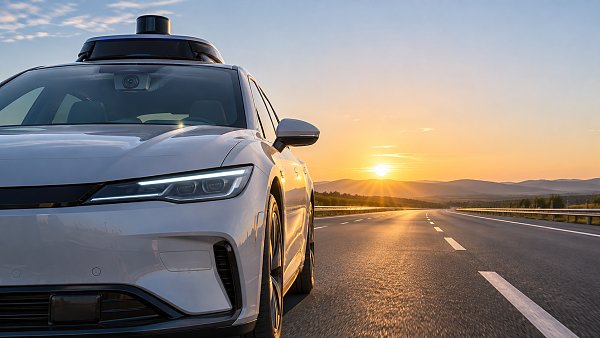
Glare can hide a pedestrian beside a bright headlight or erase lane detail in a sunlit road. Automotive Camera Systems HDR imaging helps by retaining usable information across bright and dark parts of the same scene, using sensor and image-processing techniques that extend the range captured in one output image. Its effectiveness depends not only on dynamic range, but also on motion artifacts, optical flare, exposure control and processing latency.
HDR does not eliminate glare at its source. If the lens scatters sunlight across the image, or if a highlight overwhelms the sensor’s available signal range, processing cannot reliably reconstruct details that were never captured.
How Automotive Camera Systems HDR imaging preserves detail
A camera sensor converts incoming light into electrical signals. In a high-contrast scene, a long exposure can reveal a shaded object but saturate around a headlight; a short exposure can preserve the headlight’s surroundings but leave the shadows dominated by noise. HDR techniques seek to retain useful information from both regions.
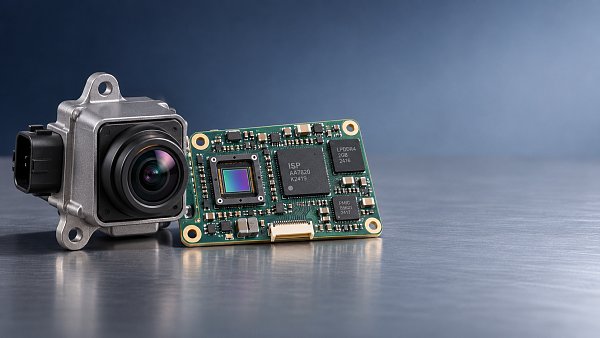
In a multi-exposure implementation, the camera captures or reads out signals with different effective exposure times or sensitivities. The image signal processor, or ISP, combines the usable portions: shorter exposures contribute highlight detail, while longer exposures contribute shadow detail. The merged signal is then mapped into a form suitable for display or downstream perception algorithms.
Other sensor architectures obtain signals with different sensitivities from the same pixel or capture interval, reducing the time separation between bright- and dark-region measurements. The distinction matters because HDR is a family of acquisition and processing methods, not a single sensor specification. Two cameras with similar advertised dynamic range can behave differently around moving vehicles, flickering LEDs or intense sunlight.
Dynamic range is not the same as visible detail
Dynamic range is commonly expressed in decibels, but the figure is meaningful only alongside its measurement conditions. Sensor-level values, merged-image values and system-level results can use different definitions of the brightest usable signal and the darkest acceptable signal.
A high numerical range does not establish that an object is detectable in deep shadow. Shadow detail can be limited by read noise, photon noise, color noise, compression and aggressive denoising. At the bright end, clipping, blooming or lens flare can obscure details even if the sensor has an HDR mode.
What happens when glare enters the optical path
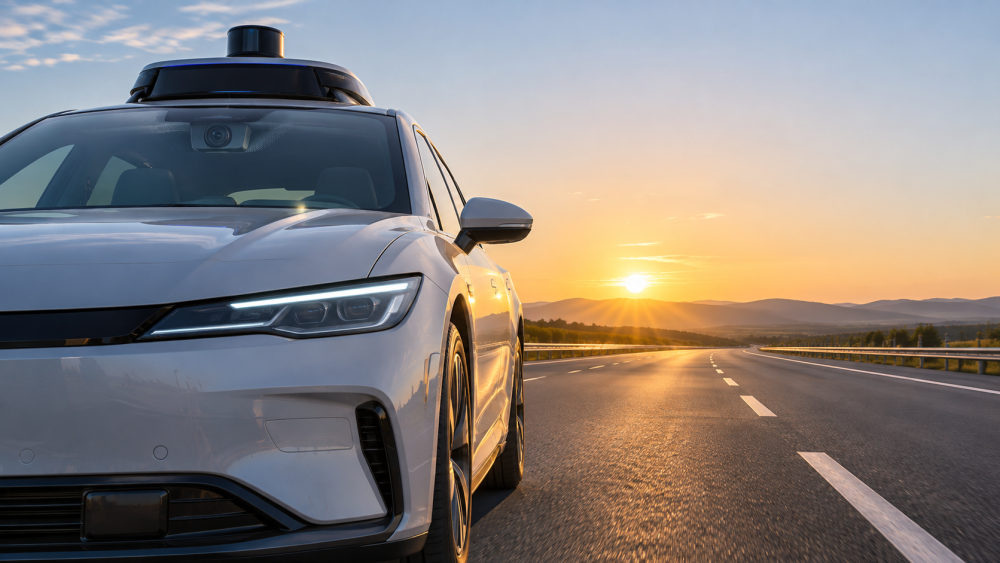
Consider a camera facing low sun while a dark vehicle approaches from a shaded road. HDR can use the short-exposure signal to retain structure near the bright sky and the longer-exposure signal to reveal the vehicle. Whether both remain useful depends on the lens, sensor and processing chain working together.
Optical flare is a separate constraint from sensor dynamic range. Light reflected or scattered within the lens assembly, windshield or protective cover can create veiling glare, reducing contrast over a broad area. Ghost reflections and local bright spots can also obscure objects; HDR cannot fully separate these optical artifacts from the scene after capture.
For a fair evaluation, specify whether the camera is tested as a bare module or behind production-intent glass and covers. Surface contamination, scratches, coatings, mounting angle and the position of the light source relative to the lens can materially change the result. A clean laboratory target alone does not characterize the installed optical system.
HDR capture methods and their engineering trade-offs
These categories describe general mechanisms, not guaranteed performance. A particular implementation may combine methods, and the ISP’s merge, noise reduction and tone mapping can be as consequential as the sensor architecture.
Motion artifacts
When exposures are taken at different times, a moving pedestrian or vehicle occupies different positions in each image. A merge algorithm must align the signals or select one exposure locally. Imperfect alignment can leave double edges, transparent-looking objects or missing texture; relying on one exposure can instead sacrifice highlight or shadow information in that region.
Rolling-shutter readout adds another timing dimension because different rows represent different moments. Motion, vibration and pulsed lighting can therefore interact with HDR exposure sequencing. Test reports should identify exposure timing and readout behavior rather than attributing every artifact to the merge algorithm.
LED flicker and traffic signals
LED headlights, tail lamps and traffic signals can be driven with time-varying light output. A camera exposure that samples only part of the illumination cycle may render a light dim, unstable or absent in some frames. HDR exposure merging can complicate the result if contributing exposures sample different phases.
HDR and LED flicker mitigation are related but separate requirements. Longer exposure can improve temporal integration of a pulsed source, but can also increase motion blur or saturate highlights. Validation should cover relevant light modulation patterns, brightness levels, exposure settings and vehicle motion rather than relying on a static image.
Tone mapping, perception and latency
The merged HDR signal contains more brightness information than a conventional display can necessarily show at once. Tone mapping compresses that range, adjusting global or local contrast so that bright and dark regions can be represented together. A visually attractive image, however, is not automatically the best input for object detection or distance estimation.
Local tone mapping can make a shaded object easier to see while also changing edge contrast or creating halos around bright features. Denoising can stabilize dark areas but remove fine markings; sharpening can restore apparent edges while amplifying noise. If a perception model receives a processed image, its performance must be assessed with the exact processing configuration used in operation.
Latency also needs an end-to-end definition. Exposure duration, sensor readout, frame buffering, HDR merging, ISP processing, transmission and downstream inference all contribute to the age of the information used by the vehicle. A frame-rate figure alone does not reveal capture-to-output delay or the timing differences between exposures within a frame.
Building a meaningful HDR evaluation
A useful test plan connects image measurements to the driving function. A surround-view display, for example, may prioritize visible artifacts and driver interpretability, while a forward perception camera also requires stable machine-readable features under motion and changing illumination. Neither use case is adequately represented by a single dynamic-range number.
- Define the scene: Specify the bright source, background illumination, target contrast, target position and camera angle. Include direct sun, oncoming headlights, reflective road surfaces and transitions into or out of shade where relevant.
- Measure target visibility: Examine whether specified objects, markings or edges remain distinguishable near the glare source and in adjacent shadows. Record clipped regions, contrast loss and noise, not just overall image appearance.
- Introduce motion: Move targets or the camera at representative speeds and inspect ghosts, blur, rolling-shutter distortion and frame-to-frame stability.
- Exercise lighting timing: Test relevant LED sources and exposure modes, including transitions between operating conditions. Check both rendered appearance and the downstream function’s response.
- Measure timing: Establish a common capture reference and record latency and variability through the intended output path. Include buffering and processing settings in the report.
- Test the installed configuration: Include the intended lens, cover or windshield, ISP tuning, interface and software version. Repeat critical measurements after configuration changes.
Use controlled laboratory scenes for repeatability and representative vehicle scenarios to expose interactions that a bench setup may miss. Keep raw or minimally processed captures where available: comparing them with the final output helps distinguish sensor limitations from optical, merge or tone-mapping problems.
Standards and specification checks
Standards can support a consistent test method, but their scope should be checked before treating a result as evidence for a particular safety function. IEEE 2020 addresses image-quality measurement for automotive systems; applicable methods and the exact edition should be identified in the test plan. A reported result should also state deviations, equipment, scene geometry and processing settings so that it can be compared or repeated.
ISO 26262 concerns functional safety of electrical and electronic systems, while ISO 21448 addresses safety of the intended functionality. Neither should be treated as a substitute for image-quality testing: the relevance of a glare-related limitation depends on the system function, operational conditions and safety analysis. Regulatory obligations likewise depend on the vehicle function and market, not simply on whether a camera supports HDR.
The strongest specification combines measurable image-quality criteria with scenario coverage and timing requirements. It should state the target conditions, acceptable artifacts, output format, processing configuration and pass criteria, then verify that the camera and downstream function meet them together. HDR is effective against glare only within the limits of the complete optical, sensor and processing chain.
Have questions about this sector analysis, or seeking best practices specific to your niche? Drop us a line below and let the senior consultants at GAC assist you.
“We respect your privacy. Your information is strictly confidential.”
Related News
- 00
0000-00
How HDR imaging helps automotive camera systems handle glare - 00
0000-00
What does AEC-Q100 qualification mean for automotive camera systems? - 00
0000-00
How to verify a waterproof connector supplier's IP ratings - 00
0000-00
How do air pockets affect automotive coolant systems? - 00
0000-00
How to identify automotive component export opportunities in new markets
Weekly Insights
Stay ahead with our curated technology reports delivered every Monday.
Recommended News
 How HDR imaging helps automotive camera systems handle glareDiscover how Automotive Camera Systems HDR imaging preserves detail in glare, and explore practical tests for motion, LED flicker and latency.Author:Time:Nov 24, 2026
 What does AEC-Q100 qualification mean for automotive camera systems?Automotive Camera Systems AEC-Q100 qualification: Discover what it means for IC reliability, temperature grades and camera validation before approving a design.Author:Time:Nov 22, 2026
 How to verify a waterproof connector supplier's IP ratingsWaterproof connector supplier IP ratings: learn how to verify test reports, match configurations and reduce automotive sourcing risks before you buy.Author:Time:Nov 21, 2026
 How do air pockets affect automotive coolant systems?Automotive Coolant Systems can overheat when air pockets disrupt coolant flow. Discover the warning signs, safe bleeding methods, and when to seek further diagnosis.Author:Time:Nov 20, 2026
 How to identify automotive component export opportunities in new marketsDiscover Automotive Component Export opportunities in new markets by assessing buyer access, technical fit, trade requirements, and landed costs.Author:Time:Nov 19, 2026
 How to assess a smart cockpit electronics manufacturer's integration capabilityAssess a smart cockpit electronics manufacturer's integration capability with practical checks for interfaces, testing, safety, cybersecurity and supplier support.Author:Time:Nov 18, 2026
 How does a shielded HSD cable reduce interference in vehicles?Discover how a shielded HSD cable reduces vehicle interference, and learn why connector design, routing, and testing matter for reliable high-speed data links.Author:Time:Nov 17, 2026
 What drives demand for scroll compressors in the automotive market?Explore the scroll compressor for automobile market and discover how EV adoption, heat pumps, efficiency, and supplier capabilities shape demand.Author:Time:Nov 16, 2026
 Does AEC-Q200 apply to flexible printed circuits?Flexible Printed Circuit AEC-Q200 requirements explained: discover which components qualify and how to assess automotive FPC reliability.Author:Time:Nov 15, 2026
 How does production volume affect automotive flexible electronics costs?Explore how production volume affects automotive flexible electronics cost, from tooling and yield to testing. Compare quotes and negotiate smarter.Author:Time:Nov 14, 2026
 How much does an in-vehicle infotainment system cost to replace?Explore in-vehicle infotainment cost, from affordable repairs to factory replacements. Compare options, installation fees, and compatibility before you buy.Author:Time:Nov 13, 2026
 How does condenser efficiency affect heat pump performance?Discover how condenser high efficiency can improve heat pump performance, reduce compressor power, and boost heating COP—plus the trade-offs to watch.Author:Time:Nov 12, 2026
 What does each FAKRA cable color code mean?FAKRA cable color code explained: Explore common connector colors, typical uses and key compatibility checks before choosing a replacement.Author:Time:Nov 11, 2026
 How to compare noise ratings for battery coolant pumpsCompare coolant pump low noise ratings with confidence. Learn how test conditions, hydraulic duty, tonal noise and installation affect your choice.Author:Time:Nov 10, 2026
 How bright should automotive display systems be in sunlight?Automotive Display Systems need more than brightness to stay readable in sunlight. Discover why 1,000 nits is a starting point and how to evaluate glare and heat.Author:Time:Nov 09, 2026
 How heat pumps improve the efficiency of EV thermal systemsEV Thermal Systems use heat pumps to reduce heating energy demand. Explore how they work, where they excel, and what limits efficiency in cold weather.Author:Time:Nov 08, 2026
 Can a smart cockpit platform support multiple displays?Can a smart cockpit platform support multiple displays? Explore key requirements for performance, safety, connectivity, and supplier evaluation.Author:Time:Nov 07, 2026
 How is automotive connector vibration resistance tested?Automotive connector vibration resistance testing reveals hidden contact failures. Explore test profiles, continuity monitoring and pass criteria.Author:Time:Nov 06, 2026
 How heat pumps save energy in automotive cabin climate systemsAutomotive Cabin Climate Systems energy saving starts with smarter heat pump design. Explore real-world efficiency, cold-weather trade-offs, and testing tips.Author:Time:Nov 05, 2026
 Is an EV heat pump worth it for winter driving range?Is a heat pump worth using in a cold-climate EV? Discover how it affects winter range, when it pays off, and what to check before buying.Author:Time:Nov 04, 2026
 When should you use 50-ohm coaxial cable instead of 75-ohm?Coaxial cable 50 ohm or 75 ohm? Learn when to use each, avoid impedance mismatches, and choose the right cable for reliable RF and video performance.Author:Time:Nov 03, 2026
 How to select a high temperature motor harness for an EVChoose the right high temperature motor harness for your EV. Compare thermal limits, current capacity, shielding, routing, and validation evidence.Author:Time:Nov 02, 2026
 How much does electric power steering replacement cost?Electric power steering price typically ranges from $1,000 to $3,000 for major replacements. Discover cost factors, repair options, and tips for comparing quotes.Author:Time:Nov 01, 2026
 How to size an EV A/C compressor for the required cooling capacitySize an EV A/C Compressor with confidence. Explore cooling loads, performance maps and power limits to select the right compressor for your vehicle.Author:Time:Oct 31, 2026
 How to choose the right pitch for an FPC board connectorFPC board connector pitch affects space, assembly and reliability. Learn how to compare options and select the best fit for your design.Author:Time:Oct 30, 2026
 How zonal design affects harness routing in high-voltage EV architecturesExplore high-voltage electrical architecture zonal design and its impact on EV harness routing. Discover key trade-offs in cable length, safety, thermal performance, and service access.Author:Time:Oct 29, 2026
 How tariffs affect costs in global automotive parts supply chainsNavigate tariffs in the global automotive parts trade supply chain. Learn to compare landed costs, manage duty exposure, and uncover smarter sourcing strategies to protect your margins.Author:Time:Oct 28, 2026
 How to assess vendor lock-in in a software-defined vehicle platformAssess Software-Defined Vehicle platform lock-in with practical tests for API portability, data access, update control, and exit costs. Learn how to choose a platform with a proven exit path.Author:Time:Oct 27, 2026
 How ISO 26262 guides functional safety in steer-by-wire systemsExplore steering systems functional safety through ISO 26262. Learn how hazard analysis, fault-tolerant design, and validation build a stronger steer-by-wire safety case.Author:Time:Oct 26, 2026
 How to evaluate a steering angle sensor manufacturer's accuracy claimsEvaluate steering angle sensor manufacturer accuracy claims with practical checks on calibration, latency, and test evidence. Compare suppliers confidently and avoid costly selection mistakes.Author:Time:Oct 25, 2026