How to assess a smart cockpit electronics manufacturer's integration capability




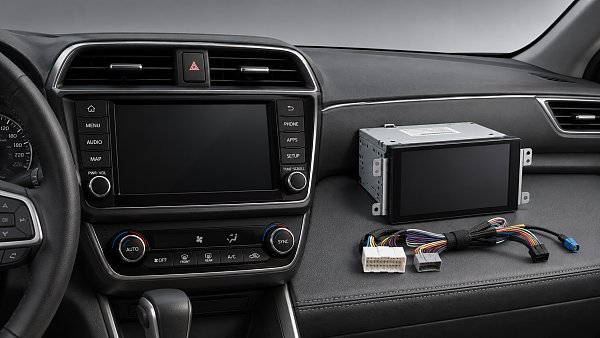
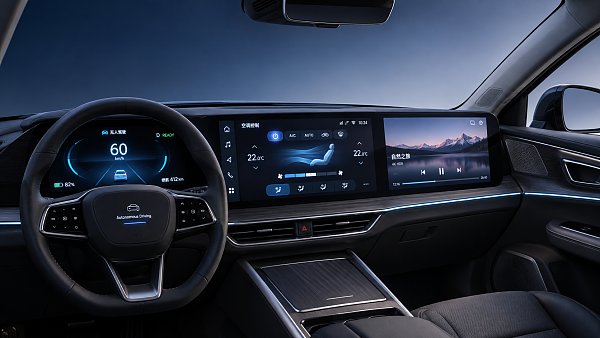
Assessing a smart cockpit electronics manufacturer requires more than reviewing individual components. The key question is whether the supplier can integrate displays, media head units, HUD systems, software, vehicle networks, and electronic architecture into a reliable cockpit experience. A polished demonstration is a useful starting point, but it does not establish how the system behaves during a cold start, a network fault, or a software update years after launch.
The most revealing assessment follows the interfaces: who defines them, who tests them, and who takes responsibility when two acceptable components fail to work together. That approach makes it easier to compare suppliers whose product portfolios and development models are very different.
Start with the integration boundary, not the product catalog
A supplier may offer a head unit, instrument display, and head-up display, yet rely on different subcontractors for the operating system, graphics, connectivity, or display controllers. That is not automatically a weakness. The concern is whether the proposed integrator has access to the specifications, engineering tools, source code or support channels needed to resolve cross-domain problems.
Ask for a system block diagram showing hardware, software, vehicle networks, external dependencies, and ownership of each interface. It should distinguish what the manufacturer develops itself from what it licenses, buys, or expects the vehicle manufacturer to provide. A diagram without these boundaries can hide a difficult handover until the vehicle is already in validation.
Consider a cluster and HUD displaying the same navigation instruction. If the cluster receives a route update but the HUD displays an older instruction, which team traces the data path? The answer might involve the navigation application, middleware, network gateway, rendering service, and HUD controller. A capable integrator can explain the diagnostic route and identify the owners before the fault occurs.
Follow the data through the vehicle
Interface compatibility is more than a list of supported protocols. CAN, LIN, and automotive Ethernet may all appear in a proposal, but the evaluator still needs to understand signal ownership, network loading, timing, gateway behavior, and what happens when a message is missing or invalid. Ask to see an interface control document or a representative, suitably redacted version.
For each critical function, trace the source signal through the gateway and application to the display or audio output. Define acceptable latency and data freshness for the intended use rather than accepting a single headline response-time figure. A media search result and a driver warning have different consequences when delayed.
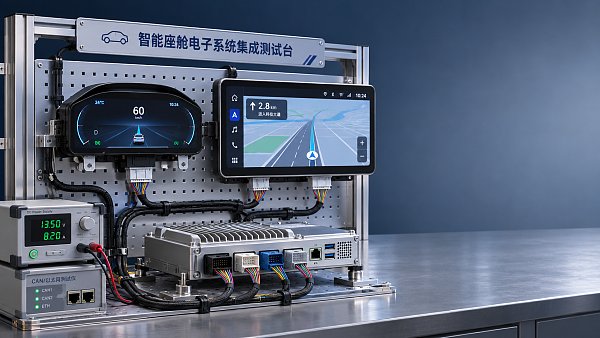
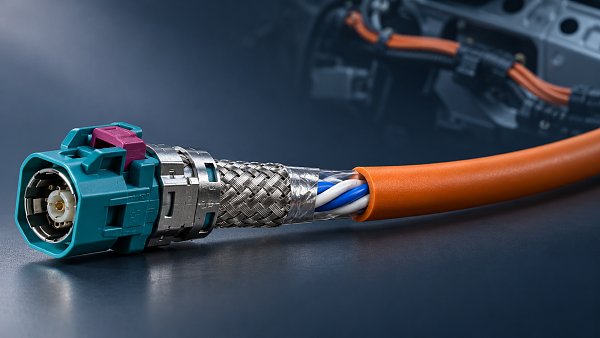
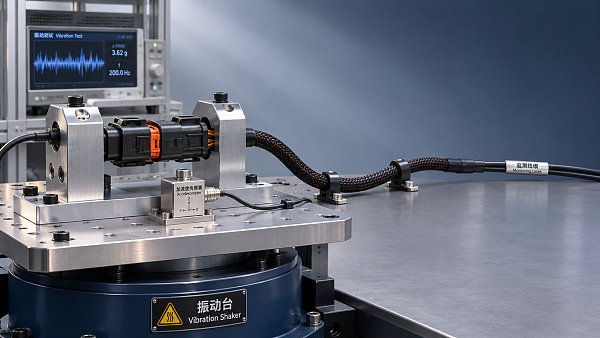
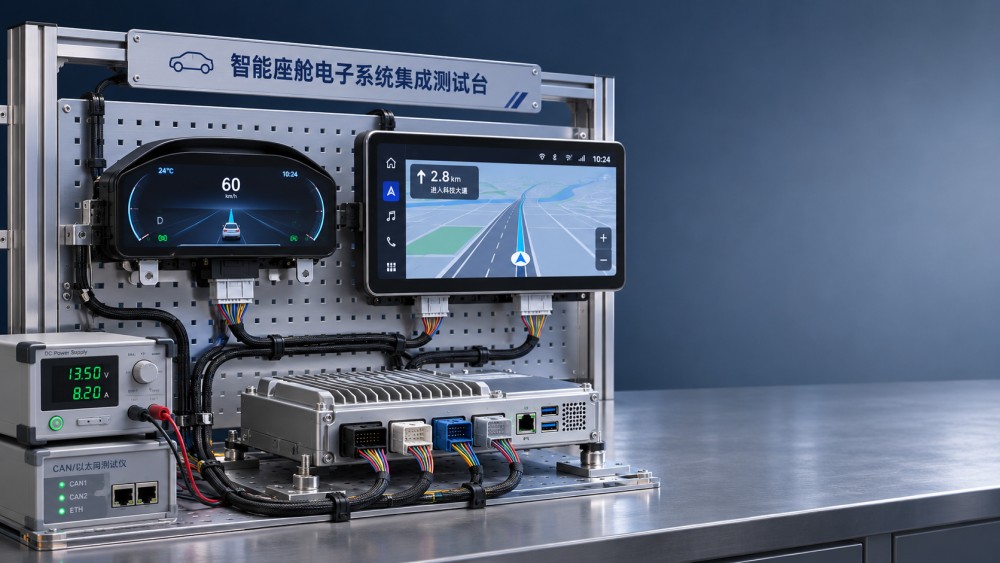
The physical connection matters too. Display links, high-speed data cables, connectors, and wiring-harness routing can introduce problems that a software-only demonstration will not reveal. Request evidence that the proposed cable lengths, connector interfaces, grounding strategy, and electromagnetic environment have been considered together. A bench setup with short cables and a stable power supply is useful, but it is not a substitute for a representative vehicle configuration.
Pay particular attention to architecture changes between vehicle variants. A different gateway, amplifier, camera, or display resolution can alter integration effort even when the head unit part number stays the same. Ask which interface assumptions are fixed and which require a new engineering change or validation cycle.
Test the cockpit as a shared computing system
A modern cockpit may run navigation, voice interaction, media, connectivity, vehicle settings, and multiple displays on shared compute resources. Each function can pass in isolation while the combined system struggles under load. Request a resource budget covering processor and graphics utilization, memory, storage, network bandwidth, and thermal operating limits for the proposed configuration.
The useful question is not simply whether there is spare capacity at launch. Ask what happens when navigation is rendering, a phone is connected, audio is playing, and a software update or background process starts. Which tasks take priority? Can a nonessential application affect a driver-facing display? How are overloads detected and recovered?
Boot and wake-up behavior deserve the same scrutiny. A supplier should be able to describe power-state transitions, recovery after an interrupted start, and the availability of required information during startup. If a camera image or warning depends on another ECU, the timing assessment needs to cover that dependency rather than only the display controller.
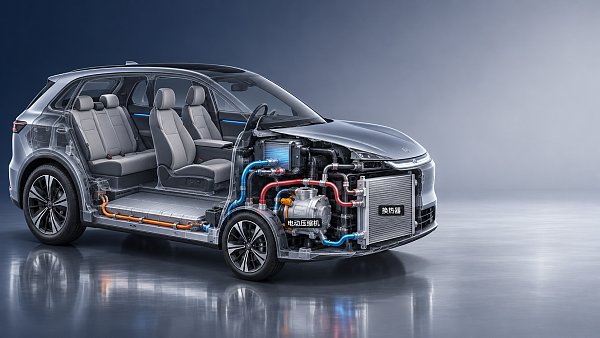
Thermal performance is another system question. A display that works on the bench may be packaged behind a sun-loaded instrument panel, while the head unit shares a confined space with other electronics. Review where temperature is measured, what derating occurs, and whether reduced brightness or processing performance affects the intended function. The vehicle’s cabin design and thermal conditions should be part of the test assumptions.
Look for validation evidence that includes failure paths
A pass report is only as useful as its configuration and acceptance criteria. Ask for a requirements-to-test trace showing which vehicle functions have been verified, on which hardware and software versions, and with what unresolved deviations. The supplier should be able to explain the relationship between component tests, hardware-in-the-loop or system benches, and vehicle-level tests.
Make room in the assessment for tests that deliberately disturb the system. A practical review can include:
- Disconnecting or corrupting a relevant network input and checking the displayed state and recovery behavior.
- Interrupting power or communication during startup and during an update, then checking whether the system returns to a defined state.
- Changing display, cable, or ECU variants to expose assumptions in configuration and compatibility management.
- Running simultaneous cockpit functions under representative thermal and electrical conditions while recording performance and faults.
These are examples to adapt to the vehicle’s requirements, not a universal acceptance suite. The important evidence is the supplier’s ability to reproduce a fault, collect useful logs, isolate the cause across interfaces, and verify the correction. Ask to review the defect workflow, including how issues are prioritized and how fixes are checked for regressions.
Separate functional safety from cybersecurity
Cockpit systems can present information with safety implications, but not every screen or media function has the same safety role. Functional safety assessment should start with the vehicle-level item definition and hazard analysis, not an assumption that the entire cockpit needs one uniform safety treatment. ISO 26262 provides a framework for automotive functional safety; the applicable responsibilities and required evidence depend on the function and the project’s safety concept.
Ask how safety-related and non-safety-related functions are separated, how faults are detected, and what the driver sees when a function cannot be trusted. If a warning depends on a signal from another ECU, the safety discussion must include that dependency and the behavior when the signal is unavailable. A component-level claim alone does not demonstrate that the vehicle-level safety goal has been met.
Cybersecurity has a different question: how can the system be attacked, and how are risks managed throughout its life? Review the threat analysis for interfaces such as wireless connectivity, diagnostic access, application services, and update mechanisms. ISO/SAE 21434 addresses road vehicle cybersecurity engineering. Depending on the vehicle category, market, and approval circumstances, regulations such as UN Regulation No. 155 on cybersecurity and No. 156 on software updates may also be relevant; confirm applicability with the vehicle manufacturer and approval specialists.
Do not accept “supports secure updates” as the whole answer. Ask how update packages are authenticated, how incompatible versions are prevented, what happens after an interrupted installation, and who handles vulnerability reports after production. The OEM and its suppliers may each own part of that process.
Examine the supply chain behind the integration claim
Integration capability can weaken when a key dependency changes. A display panel revision, processor supply issue, operating-system update, or end-of-life wireless module may require more than a like-for-like purchasing decision. Ask how the supplier identifies affected vehicle variants, assesses compatibility, and decides when revalidation is necessary.
For software, request a component inventory appropriate to the project, including third-party and open-source dependencies, and clarify who can deliver fixes. Review the support period, escalation route, and arrangements if a technology partner stops maintaining a component. Access to source code, diagnostic tools, and build environments should be discussed contractually rather than assumed.
Manufacturing evidence matters as well. A good engineering prototype does not prove that production units will retain the same display calibration, software configuration, or traceability. Ask how hardware revisions and software builds are linked to serial numbers, how end-of-line tests cover integrated functions, and how a field failure can be traced back to its configuration.
Use a comparable supplier review, then probe the differences
Give shortlisted suppliers the same representative vehicle architecture and a small set of scenarios: a multi-display startup, a lost network signal, a variant change, and an interrupted software update. Ask each to identify assumptions, ownership, evidence, and open risks. This makes the comparison more meaningful than scoring feature lists alone.
A supplier with a narrower portfolio may be the better fit if it exposes interfaces clearly and has a credible plan for working with the OEM’s other partners. Conversely, a single-source proposal can simplify coordination but may create dependence on proprietary interfaces or tools. Compare the cost of integration and future changes, not just the number of boxes on the quotation.
For wider context, GACT’s coverage of cockpit electronics, data cables, wiring harnesses, and automotive supply chains can help frame questions about adjacent components and market developments. Project-specific decisions still need current specifications and evidence from the organizations responsible for the actual vehicle.
Before selection, record unresolved assumptions in the technical agreement: interface owners, test configurations, acceptance criteria, defect responsibilities, change-control rules, and support commitments. If the parties cannot agree on who investigates a fault at an interface, the integration risk is already visible.
Have questions about this sector analysis, or seeking best practices specific to your niche? Drop us a line below and let the senior consultants at GAC assist you.
“We respect your privacy. Your information is strictly confidential.”
Related News
- 00
0000-00
What does AEC-Q100 qualification mean for automotive camera systems? - 00
0000-00
How to verify a waterproof connector supplier's IP ratings - 00
0000-00
How do air pockets affect automotive coolant systems? - 00
0000-00
How to identify automotive component export opportunities in new markets - 00
0000-00
How to assess a smart cockpit electronics manufacturer's integration capability
Weekly Insights
Stay ahead with our curated technology reports delivered every Monday.
Recommended News
 What does AEC-Q100 qualification mean for automotive camera systems?Automotive Camera Systems AEC-Q100 qualification: Discover what it means for IC reliability, temperature grades and camera validation before approving a design.Author:Time:Nov 22, 2026
 How to verify a waterproof connector supplier's IP ratingsWaterproof connector supplier IP ratings: learn how to verify test reports, match configurations and reduce automotive sourcing risks before you buy.Author:Time:Nov 21, 2026
 How do air pockets affect automotive coolant systems?Automotive Coolant Systems can overheat when air pockets disrupt coolant flow. Discover the warning signs, safe bleeding methods, and when to seek further diagnosis.Author:Time:Nov 20, 2026
 How to identify automotive component export opportunities in new marketsDiscover Automotive Component Export opportunities in new markets by assessing buyer access, technical fit, trade requirements, and landed costs.Author:Time:Nov 19, 2026
 How to assess a smart cockpit electronics manufacturer's integration capabilityAssess a smart cockpit electronics manufacturer's integration capability with practical checks for interfaces, testing, safety, cybersecurity and supplier support.Author:Time:Nov 18, 2026
 How does a shielded HSD cable reduce interference in vehicles?Discover how a shielded HSD cable reduces vehicle interference, and learn why connector design, routing, and testing matter for reliable high-speed data links.Author:Time:Nov 17, 2026
 What drives demand for scroll compressors in the automotive market?Explore the scroll compressor for automobile market and discover how EV adoption, heat pumps, efficiency, and supplier capabilities shape demand.Author:Time:Nov 16, 2026
 Does AEC-Q200 apply to flexible printed circuits?Flexible Printed Circuit AEC-Q200 requirements explained: discover which components qualify and how to assess automotive FPC reliability.Author:Time:Nov 15, 2026
 How does production volume affect automotive flexible electronics costs?Explore how production volume affects automotive flexible electronics cost, from tooling and yield to testing. Compare quotes and negotiate smarter.Author:Time:Nov 14, 2026
 How much does an in-vehicle infotainment system cost to replace?Explore in-vehicle infotainment cost, from affordable repairs to factory replacements. Compare options, installation fees, and compatibility before you buy.Author:Time:Nov 13, 2026
 How does condenser efficiency affect heat pump performance?Discover how condenser high efficiency can improve heat pump performance, reduce compressor power, and boost heating COP—plus the trade-offs to watch.Author:Time:Nov 12, 2026
 What does each FAKRA cable color code mean?FAKRA cable color code explained: Explore common connector colors, typical uses and key compatibility checks before choosing a replacement.Author:Time:Nov 11, 2026
 How to compare noise ratings for battery coolant pumpsCompare coolant pump low noise ratings with confidence. Learn how test conditions, hydraulic duty, tonal noise and installation affect your choice.Author:Time:Nov 10, 2026
 How bright should automotive display systems be in sunlight?Automotive Display Systems need more than brightness to stay readable in sunlight. Discover why 1,000 nits is a starting point and how to evaluate glare and heat.Author:Time:Nov 09, 2026
 How heat pumps improve the efficiency of EV thermal systemsEV Thermal Systems use heat pumps to reduce heating energy demand. Explore how they work, where they excel, and what limits efficiency in cold weather.Author:Time:Nov 08, 2026
 Can a smart cockpit platform support multiple displays?Can a smart cockpit platform support multiple displays? Explore key requirements for performance, safety, connectivity, and supplier evaluation.Author:Time:Nov 07, 2026
 How is automotive connector vibration resistance tested?Automotive connector vibration resistance testing reveals hidden contact failures. Explore test profiles, continuity monitoring and pass criteria.Author:Time:Nov 06, 2026
 How heat pumps save energy in automotive cabin climate systemsAutomotive Cabin Climate Systems energy saving starts with smarter heat pump design. Explore real-world efficiency, cold-weather trade-offs, and testing tips.Author:Time:Nov 05, 2026
 Is an EV heat pump worth it for winter driving range?Is a heat pump worth using in a cold-climate EV? Discover how it affects winter range, when it pays off, and what to check before buying.Author:Time:Nov 04, 2026
 When should you use 50-ohm coaxial cable instead of 75-ohm?Coaxial cable 50 ohm or 75 ohm? Learn when to use each, avoid impedance mismatches, and choose the right cable for reliable RF and video performance.Author:Time:Nov 03, 2026
 How to select a high temperature motor harness for an EVChoose the right high temperature motor harness for your EV. Compare thermal limits, current capacity, shielding, routing, and validation evidence.Author:Time:Nov 02, 2026
 How much does electric power steering replacement cost?Electric power steering price typically ranges from $1,000 to $3,000 for major replacements. Discover cost factors, repair options, and tips for comparing quotes.Author:Time:Nov 01, 2026
 How to size an EV A/C compressor for the required cooling capacitySize an EV A/C Compressor with confidence. Explore cooling loads, performance maps and power limits to select the right compressor for your vehicle.Author:Time:Oct 31, 2026
 How to choose the right pitch for an FPC board connectorFPC board connector pitch affects space, assembly and reliability. Learn how to compare options and select the best fit for your design.Author:Time:Oct 30, 2026
 How zonal design affects harness routing in high-voltage EV architecturesExplore high-voltage electrical architecture zonal design and its impact on EV harness routing. Discover key trade-offs in cable length, safety, thermal performance, and service access.Author:Time:Oct 29, 2026
 How tariffs affect costs in global automotive parts supply chainsNavigate tariffs in the global automotive parts trade supply chain. Learn to compare landed costs, manage duty exposure, and uncover smarter sourcing strategies to protect your margins.Author:Time:Oct 28, 2026
 How to assess vendor lock-in in a software-defined vehicle platformAssess Software-Defined Vehicle platform lock-in with practical tests for API portability, data access, update control, and exit costs. Learn how to choose a platform with a proven exit path.Author:Time:Oct 27, 2026
 How ISO 26262 guides functional safety in steer-by-wire systemsExplore steering systems functional safety through ISO 26262. Learn how hazard analysis, fault-tolerant design, and validation build a stronger steer-by-wire safety case.Author:Time:Oct 26, 2026
 How to evaluate a steering angle sensor manufacturer's accuracy claimsEvaluate steering angle sensor manufacturer accuracy claims with practical checks on calibration, latency, and test evidence. Compare suppliers confidently and avoid costly selection mistakes.Author:Time:Oct 25, 2026
 How to diagnose CAN bus faults in a hybrid vehicle control unitDiagnose Hybrid Vehicle Systems control unit CAN bus faults with step-by-step power, wiring, and waveform checks. Find the root cause and avoid unnecessary replacement.Author:Time:Oct 24, 2026