How much does electric power steering replacement cost?




Replacing an electric power steering (EPS) assembly can cost roughly $1,000 to $3,000 or more in the United States, including parts and labor. Some vehicles cost considerably more, particularly when the steering rack must be replaced as a complete unit. A repair involving a separate sensor, wiring, or power supply may cost much less, so an EPS warning light does not automatically mean you need an expensive replacement.
These are broad budgeting estimates, not quotes. The electric power steering price for your car depends on which component has failed, whether it is available separately, local labor rates, and any programming or calibration required. Before approving a repair, ask the shop to identify the failed part and explain what is included in its estimate.
What Are You Actually Paying to Replace?
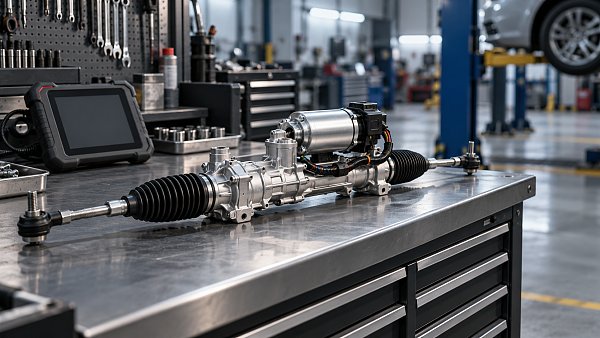
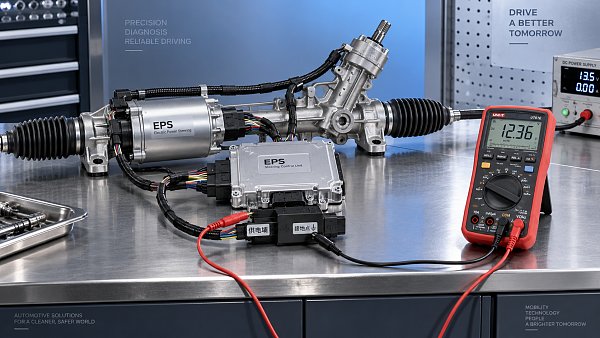
Electric power steering uses an electric motor to assist the driver. Depending on the vehicle, that motor and its electronics may be mounted on the steering column, steering rack, or another part of the steering assembly. The layout matters because a repairable component on one car may be built into a larger assembly on another.
A quote for “power steering replacement” can therefore describe several different jobs:
- Steering rack or rack-and-motor assembly: Often a major expense because the part itself can be costly and installation may require substantial labor. A wheel alignment is commonly needed afterward.
- Steering column assembly: On some vehicles, the electric assist motor or related components are integrated with the column. The price depends on how much of the column must be replaced and how difficult it is to access.
- EPS motor or control module: These may be replaceable individually on certain models. On others, the manufacturer supplies them only as part of a larger assembly.
- Sensor, connector, or wiring repair: A fault in a torque sensor, electrical connection, fuse, or power supply can affect steering assist. The cost varies with the fault and whether the affected component can be replaced separately.
The distinction is important when comparing estimates. A quote for a complete rack assembly is not directly comparable with a quote for a sensor or an electrical repair, even if both are described as fixing the power steering.
For a major EPS assembly replacement, a total around $1,000 to $3,000 is a useful starting point for budgeting, but it is not a ceiling. A dealer-supplied assembly for a complex vehicle can exceed that range. At the other end, a minor electrical repair may fall well below it. The only meaningful estimate is one based on your vehicle identification number, the diagnosed fault, and the parts actually available for your car.
What Makes an EPS Replacement Expensive?
The part is often the largest variable. A new original-equipment rack or column can cost substantially more than a remanufactured assembly. Some designs combine the motor, control electronics, sensors, and mechanical components, so a fault in one area may require replacement of the whole unit if individual parts are not supplied or supported.
Labor depends on access and vehicle design. A steering rack may be difficult to reach, and the shop may need to remove other components to replace it. A steering column repair involves different work. Ask for the labor charge and estimated labor time separately from the parts price; this makes it easier to understand why two quotes differ.
Programming and calibration can add to the bill. Some vehicles require a replacement control module to be programmed or configured, followed by procedures such as steering angle sensor calibration. Requirements vary by model and by the part being changed. A shop should check the applicable procedure before presenting a final estimate.
An alignment may be a separate line item. Removing or replacing a steering rack can affect wheel alignment. Ask whether alignment is included and whether the shop performs it in-house. If the vehicle has driver-assistance features, ask whether any related calibration is required for the specific repair; it should not be assumed necessary for every EPS job.
Taxes, diagnostic charges, disposal fees, and towing are other possible additions. A low parts-and-labor figure can look less attractive once these are included.
Get the Fault Diagnosed Before Buying Parts
Heavy steering and an EPS warning light are reasons to have the car inspected, but they do not identify the failed component. An EPS system relies on a healthy electrical supply as well as the motor, sensors, controller, and wiring. A weak battery, charging problem, damaged connection, or blown fuse can produce symptoms that resemble a more expensive failure.
A useful diagnosis starts with the symptoms: when they occur, whether the warning stays on, and whether steering assist is lost all the time or only intermittently. The technician can then check relevant fault codes and test the power supply, connections, and components as appropriate. A fault code is a starting point for testing, not always proof that the named component needs replacement.
Ask whether the diagnostic fee is separate and whether any of it is applied to the repair. Also ask what evidence supports the recommended replacement. A clear answer might identify a failed test or explain why a component cannot be repaired separately. The shop may need additional inspection before it can provide a firm diagnosis, especially when a problem is intermittent.
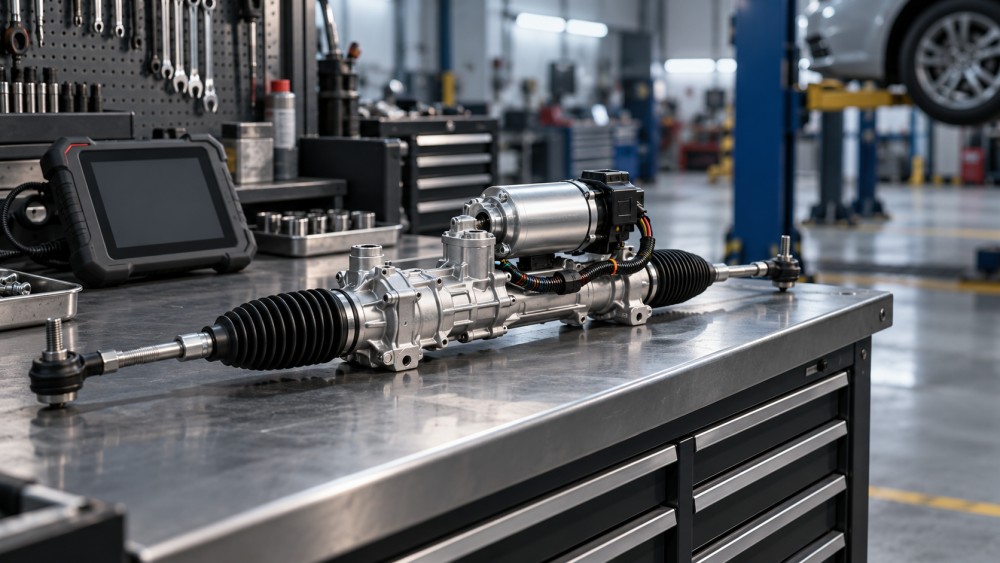
If a shop recommends a complete rack or column, ask whether a smaller component caused the fault and whether that component is available separately for your vehicle. A complete assembly can be the appropriate repair, particularly when separate parts are unavailable or the assembly has multiple faults. The shop should be able to explain that decision rather than relying solely on the warning light.
New, Remanufactured, or Used: Which Part Makes Sense?
A new original-equipment part may be attractive if you plan to keep the car, want the part specified by the vehicle manufacturer, or have limited alternatives. Its main disadvantage is often price. Confirm the warranty terms and whether the quoted part includes all necessary components.
A remanufactured assembly can reduce the parts bill, but the word “remanufactured” does not guarantee that every internal component is new. Quality and warranty coverage depend on the supplier. Ask what the warranty covers, who handles a failure, and whether labor is covered if the replacement part must be removed again.
Some remanufactured parts carry a core charge: an amount added until the old assembly is returned and accepted. Ask whether the estimate includes that charge and what conditions could prevent a refund. A damaged or incomplete old unit may not qualify for the full credit.
A used part may have the lowest purchase price, but its history and remaining life can be uncertain. Compatibility is also more complicated than matching the vehicle’s make and model. Part numbers, equipment, software, and programming requirements may matter, and some used electronic modules may not be suitable for reuse on another vehicle. Confirm compatibility and programming support with the installing shop before purchasing anything.
Before bringing your own part, ask whether the shop will install it and what warranty applies to its labor. A cheaper part can become costly if it is incompatible, arrives incomplete, or fails and must be replaced a second time.
How to Compare Quotes Without Missing Extra Costs
Give each shop the same vehicle details and describe the same symptoms. If a diagnosis has already been completed, share the written findings, but understand that another shop may want to perform its own checks before guaranteeing the repair.
A useful written estimate should identify:
- The diagnosed fault and the exact assembly or component to be replaced.
- The part’s condition and source: new, remanufactured, or used.
- Parts cost, labor charge, and any diagnostic fee.
- Programming, calibration, and alignment charges, where applicable.
- Taxes, core charges, and any other fees not included in the initial figure.
- Parts and labor warranty terms, including who handles a failed replacement.
Pay attention to assumptions. One estimate may include a new rack, programming, and alignment; another may list a remanufactured rack and installation only. Neither is necessarily better until you know what the vehicle needs and what each shop will charge to complete the job.
It is also reasonable to ask what could change the price after work begins. Corroded fasteners, damaged wiring, or additional faults may only become apparent during inspection or disassembly. Ask the shop to contact you for authorization before performing work that exceeds the agreed estimate.
Can You Keep Driving With an EPS Warning?
Do not assume that an illuminated warning can wait until the next routine service. Loss of electric assist can make the steering much heavier, especially at low speed or while parking. The vehicle may still steer mechanically, but the effort required can be difficult to manage, and the cause of the warning is not yet known.
If steering suddenly becomes heavy, the car feels unsafe to control, or you hear unusual mechanical noises, stop in a safe place and arrange assistance. Check the owner’s manual for the warning shown and contact a repair shop about whether the car should be driven or towed. If the warning is intermittent and steering feels normal, seek advice promptly rather than assuming the issue has resolved itself.
When Is Replacement Worth the Cost?
Compare the complete repair estimate with the car’s condition and your plans for it, not just its resale value. A sound vehicle with a known history may be worth repairing even when the bill is significant. A vehicle that also needs tires, brakes, major engine work, or other expensive repairs calls for a broader calculation.
Ask the shop whether there are related problems that could affect the replacement, such as damaged wiring or a charging-system fault. Replacing an EPS assembly without resolving an underlying electrical issue can leave the original symptom in place or contribute to another failure.
If the estimate is close to what you would reasonably spend to keep the car, get a second qualified opinion before authorizing the work. Give the second shop the diagnostic report, ask it to identify any additional testing fees, and compare the finished repair price. Once you know which part has failed and what each quote includes, the decision is much easier to make.
Have questions about this sector analysis, or seeking best practices specific to your niche? Drop us a line below and let the senior consultants at GAC assist you.
“We respect your privacy. Your information is strictly confidential.”
Related News
- 00
0000-00
How much does electric power steering replacement cost? - 00
0000-00
How to size an EV A/C compressor for the required cooling capacity - 00
0000-00
How to choose the right pitch for an FPC board connector - 00
0000-00
How zonal design affects harness routing in high-voltage EV architectures - 00
0000-00
How tariffs affect costs in global automotive parts supply chains
Weekly Insights
Stay ahead with our curated technology reports delivered every Monday.
Recommended News
 How much does electric power steering replacement cost?Electric power steering price typically ranges from $1,000 to $3,000 for major replacements. Discover cost factors, repair options, and tips for comparing quotes.Author:Time:Nov 01, 2026
 How to size an EV A/C compressor for the required cooling capacitySize an EV A/C Compressor with confidence. Explore cooling loads, performance maps and power limits to select the right compressor for your vehicle.Author:Time:Oct 31, 2026
 How to choose the right pitch for an FPC board connectorFPC board connector pitch affects space, assembly and reliability. Learn how to compare options and select the best fit for your design.Author:Time:Oct 30, 2026
 How zonal design affects harness routing in high-voltage EV architecturesExplore high-voltage electrical architecture zonal design and its impact on EV harness routing. Discover key trade-offs in cable length, safety, thermal performance, and service access.Author:Time:Oct 29, 2026
 How tariffs affect costs in global automotive parts supply chainsNavigate tariffs in the global automotive parts trade supply chain. Learn to compare landed costs, manage duty exposure, and uncover smarter sourcing strategies to protect your margins.Author:Time:Oct 28, 2026
 How to assess vendor lock-in in a software-defined vehicle platformAssess Software-Defined Vehicle platform lock-in with practical tests for API portability, data access, update control, and exit costs. Learn how to choose a platform with a proven exit path.Author:Time:Oct 27, 2026
 How ISO 26262 guides functional safety in steer-by-wire systemsExplore steering systems functional safety through ISO 26262. Learn how hazard analysis, fault-tolerant design, and validation build a stronger steer-by-wire safety case.Author:Time:Oct 26, 2026
 How to evaluate a steering angle sensor manufacturer's accuracy claimsEvaluate steering angle sensor manufacturer accuracy claims with practical checks on calibration, latency, and test evidence. Compare suppliers confidently and avoid costly selection mistakes.Author:Time:Oct 25, 2026
 How to diagnose CAN bus faults in a hybrid vehicle control unitDiagnose Hybrid Vehicle Systems control unit CAN bus faults with step-by-step power, wiring, and waveform checks. Find the root cause and avoid unnecessary replacement.Author:Time:Oct 24, 2026
 How does battery cooling pipe diameter affect coolant pressure drop?Battery Cooling Pipe diameter affects coolant pressure drop and pump power. Explore sizing calculations and practical tips to optimize EV battery cooling and compare options with confidence.Author:Time:Oct 23, 2026
 How to assess PPAP readiness of automotive sensor system manufacturersAssess Automotive Sensor Systems manufacturers for PPAP readiness. Learn to verify production evidence, measurement capability, validation, and traceability to reduce sourcing risks.Author:Time:Oct 22, 2026
 What to ask an FPC connector manufacturer about reliability testingChoosing an FPC Connector manufacturer? Learn what to ask about reliability testing, failure limits, and traceable results to reduce design risks and select with confidence.Author:Time:Oct 21, 2026
 How to verify vehicle fitment for an aftermarket AC evaporatorNavigating the evaporator aftermarket? Verify vehicle fitment with VIN data, OE numbers, and physical interface checks. Use this guide to avoid costly mismatches and order confidently.Author:Time:Oct 20, 2026
 How electric compressor speed affects EV battery cooling capacityElectric compressor technology: battery cooling depends on more than RPM. Discover how speed, refrigerant flow, and system limits affect EV cooling capacity and energy efficiency.Author:Time:Oct 19, 2026
 How to verify a variable frequency compressor supplier’s efficiency claimsVerify a variable frequency compressor supplier’s efficiency claims using COP boundaries, matched test conditions, and duty-cycle data. Learn how to choose with confidence.Author:Time:Oct 18, 2026
 How bend radius affects FPC reliability in automotive camera modulesAutomotive FPC applications: camera module reliability starts with bend radius. Learn how stack-up, strain, and validation guide robust designs and help prevent costly failures.Author:Time:Oct 17, 2026
 How to diagnose intermittent loss of electric power steering assistMaster power steering system diagnostics to trace intermittent EPS assist loss. Learn proven checks for voltage, wiring, and fault codes to avoid costly guesswork.Author:Time:Oct 16, 2026
 How to size automotive power modules for electric compressorsSize automotive power modules for electric compressors with confidence. Learn how voltage, phase current, losses, and cooling shape reliable selection—and avoid costly oversizing.Author:Time:Oct 15, 2026
 Why automotive power electronics are shifting to silicon carbideAutomotive Power Electronics are shifting to silicon carbide. Discover how SiC can cut losses, boost EV power density, and reshape cooling, reliability, and system costs.Author:Time:Oct 14, 2026
 How EV adoption shapes the electrically driven compressor marketExplore how EV adoption shapes the electrically driven compressor market, from battery cooling and heat pumps to supplier margins. Discover the drivers of profitable growth.Author:Time:Oct 13, 2026
 How to size a PTC heater for reliable EV cabin heatingPTC Heater sizing for EV cabins: learn how to balance defrost performance, heat-pump integration, airflow, voltage range, and battery power for reliable winter comfort.Author:Time:Oct 12, 2026
 What determines the cooling output of electric automotive AC compressors?Automotive air conditioning compressors electric systems: explore how speed, voltage, refrigerant, controls, and heat exchangers shape EV cooling capacity and efficiency.Author:Time:Oct 11, 2026
 What makes a touchscreen media head unit responsive enough for daily use?Touchscreen media head unit performance explained: discover what delivers fast starts, smooth maps, reliable phone pairing, and responsive daily driving.Author:Time:Oct 10, 2026
 How Does a Battery Management System Communicate Cooling Demand?How does a battery management system communicate cooling demand? Explore CAN signals, thermal priorities, fault handling, and EV cooling control strategies.Author:Time:Oct 20, 2026
 Can a Domain Controller Share a Cooling Loop with Other Electronics?Can a domain controller share a cooling loop with other electronics? Explore thermal zoning, flow control, safety priorities, and reliable vehicle electronics cooling strategies.Author:Time:Oct 19, 2026
 What Causes Domain Controller Overheating During Summer Testing?What causes domain controller overheating in summer testing? Explore heat load, airflow, installation, software factors, and practical fixes.Author:Time:Oct 18, 2026
 Is a Head-Up Display Hard to Integrate with Different Windshields?Is a head-up display difficult to integrate with different windshields? Discover how glass geometry, coatings, and calibration affect HUD clarity, cost, and production readiness.Author:Time:Oct 17, 2026
 What Should Be Checked Before Selecting an Automotive Head Unit?What should be checked before selecting an automotive head unit? Explore compatibility, performance, cybersecurity, compliance, and supplier support.Author:Time:Oct 16, 2026
 Is Steer-by-Wire More Expensive Than an EPS Steering System?Is steer-by-wire more expensive than an EPS steering system? Explore the true costs, safety demands, software value, and when SbW justifies its premium.Author:Time:Oct 15, 2026
 Which Automotive Electronics Need Validation for 800V Platforms?What automotive electronics should be validated for 800V platforms? Explore critical checks for harnesses, power electronics, thermal systems, safety, and EMC.Author:Time:Oct 14, 2026