Why automotive power electronics are shifting to silicon carbide




Why automotive power electronics are shifting to silicon carbide
Why are automotive power electronics moving from silicon to silicon carbide (SiC)? As electric vehicles adopt higher-voltage architectures, engineers face growing pressure to reduce conversion losses, improve thermal performance, and increase power density without compromising reliability. SiC devices offer advantages in traction inverters, onboard chargers, and DC-DC converters, but their value depends on operating conditions, gate-drive design, packaging, and system cost.
The shift is not a universal replacement of silicon. It is a change in how vehicle programs balance semiconductor cost against energy consumption, cooling requirements, packaging space, and platform scalability. For an engineering team evaluating the trend, the useful question is not whether SiC is more advanced. It is where its electrical advantages survive integration and become measurable vehicle-level benefits.
Higher voltage makes the case stronger—but does not settle it
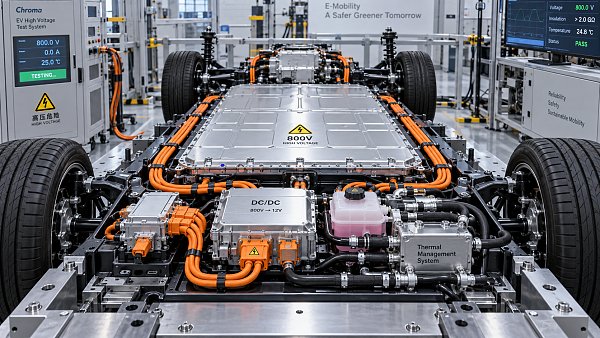
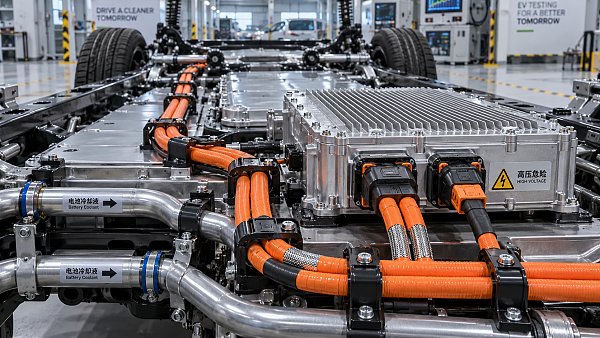
At a given power level, increasing system voltage reduces current. That can reduce resistive losses and ease some conductor-sizing constraints, although insulation, connector design, and electrical clearances become more demanding. This is one reason higher-voltage EV platforms attract attention across the component supply chain, from traction inverters to high-voltage wiring harnesses.
SiC supports this direction because its high critical electric field allows a thinner, more heavily doped drift region than silicon for a comparable blocking-voltage requirement. In practical terms, it enables high-voltage MOSFETs with an attractive combination of conduction and switching performance. Compared with silicon IGBTs, SiC MOSFETs avoid the minority-carrier tail current associated with IGBT turn-off, helping reduce switching losses.
That makes SiC particularly attractive in demanding high-voltage applications, but nominal battery voltage is only a starting point. Device selection must account for maximum charged-pack voltage, regenerative operation, switching overshoot, and the required design margin. A platform described as “800 V” does not by itself define the appropriate semiconductor voltage rating.
Silicon remains credible where power requirements are modest, switching frequencies are lower, or acquisition cost dominates. A well-designed silicon solution may be preferable to a poorly integrated SiC alternative, especially when the surrounding architecture cannot exploit the reduced losses.
The adoption drivers differ across the vehicle
The traction inverter draws the most attention because it handles propulsion power and operates across a wide range of speeds and torque demands. Here, lower inverter losses can reduce energy consumption and heat rejection. The result, however, depends on the motor, modulation strategy, battery voltage, and duty cycle—not simply the efficiency measured at one high-load operating point.
For passenger vehicles, part-load performance deserves particular scrutiny. An inverter may show an impressive peak-efficiency figure yet deliver a smaller advantage over the operating region most frequently used in everyday driving. Comparisons should therefore use efficiency maps and representative drive-cycle weighting, with equivalent motor output and thermal conditions.
Onboard chargers present a different opportunity. SiC can support higher switching frequencies, which may reduce the size of magnetic components and improve packaging flexibility. But switching faster increases demands on electromagnetic compatibility, insulation, and layout. Magnetics do not shrink without limit: core losses, winding losses, temperature rise, and manufacturability still constrain the design.
In high-voltage DC-DC converters, the decision depends heavily on topology and conversion ratio. Soft-switching operation can change the relative importance of switching losses, conduction losses, and device capacitances. SiC should therefore be compared with the relevant silicon or other wide-bandgap alternative in the actual circuit, rather than ranked by a single datasheet parameter.
Adoption may consequently be selective within one vehicle. A manufacturer can justify SiC in the traction inverter while retaining silicon in lower-power auxiliary systems. That is a rational architecture decision, not an incomplete transition.
Lower losses change thermal design, not just efficiency figures
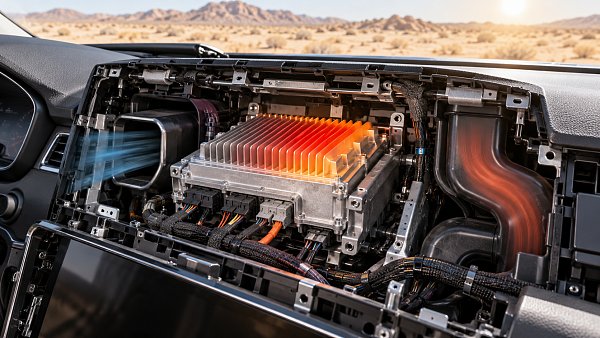
Reduced semiconductor losses can ease cooling demand, enable a smaller power module, or provide more operating margin within an existing cooling system. Those outcomes are alternatives, not benefits that should automatically be added together. A compact inverter may concentrate heat into a smaller footprint even while its total losses fall.
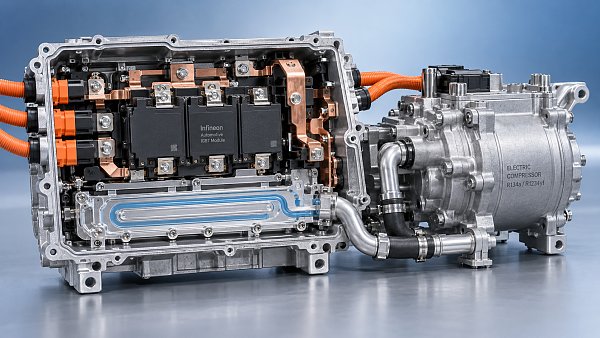
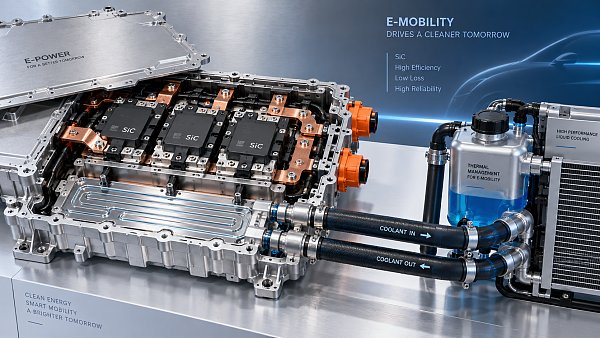
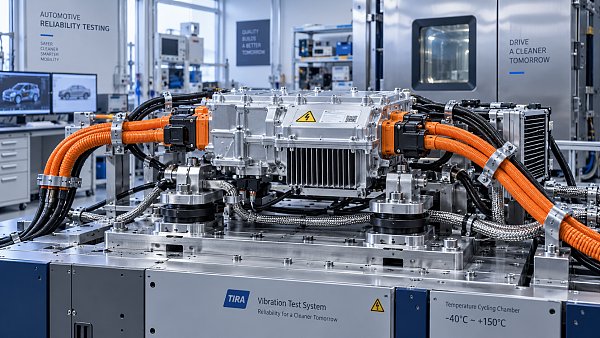
The thermal path remains decisive: die attach, substrate, baseplate or direct-cooling structure, interface materials, and coolant conditions all influence junction temperature. SiC's material properties do not establish the allowable temperature of the complete assembly. Packaging, capacitors, sensors, and interconnects may impose tighter limits than the semiconductor itself.
A useful system view follows energy from the battery through the inverter and motor, then follows rejected heat into the coolant circuit. That exposes whether lower inverter losses can actually change pump demand, heat-exchanger sizing, or thermal-control strategy.
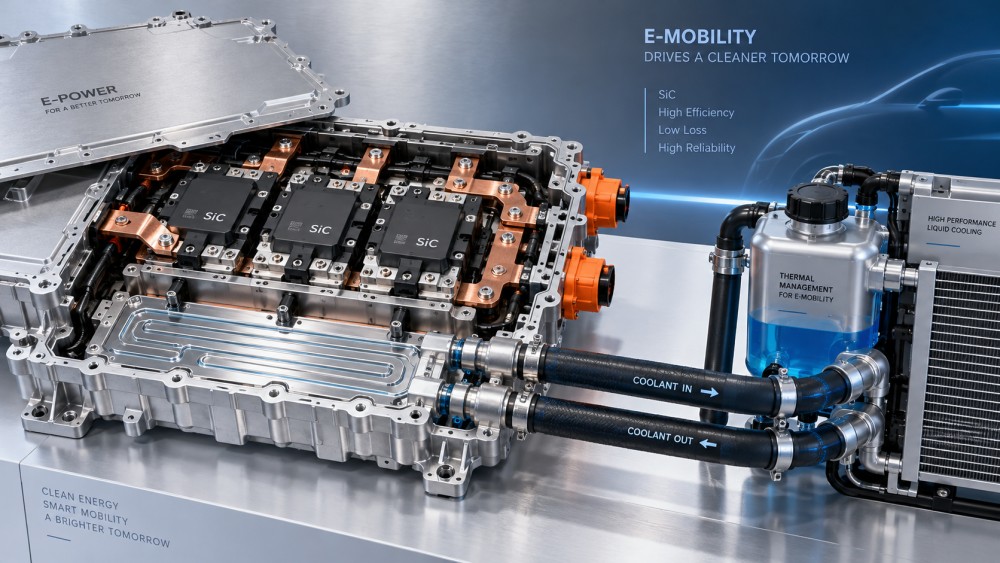
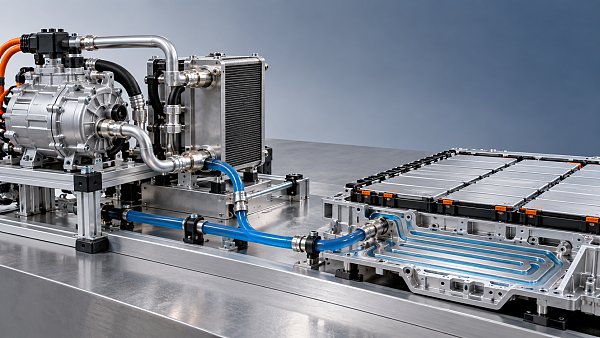
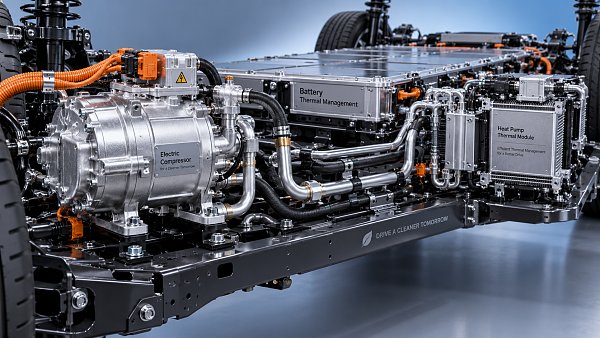
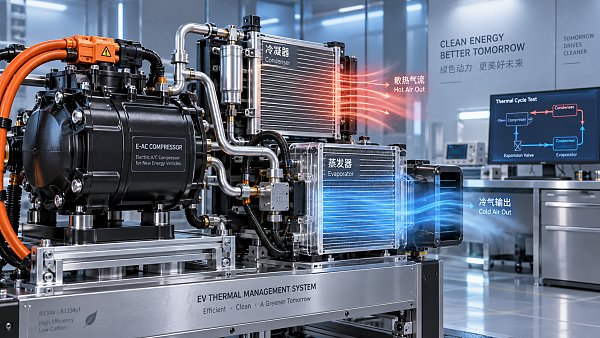
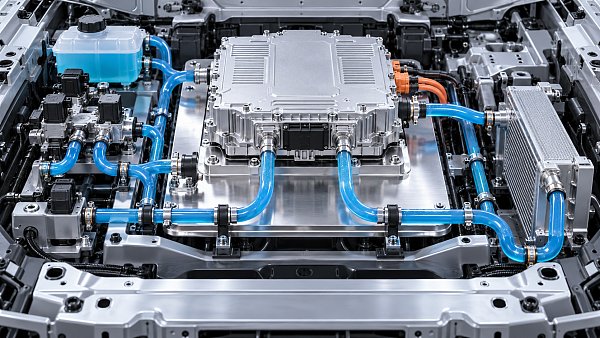
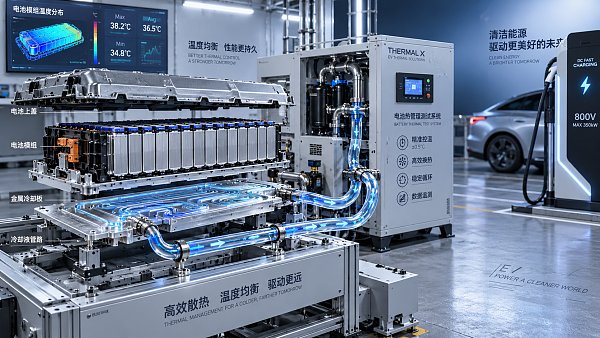
This is where power electronics connect with battery liquid cooling, integrated thermal valves, heat pumps, and electric compressors. Shared thermal infrastructure may limit how far inverter cooling can be downsized because other components still determine peak cooling demand. Conversely, reduced heat rejection can provide useful headroom during simultaneous propulsion, battery conditioning, and cabin cooling.
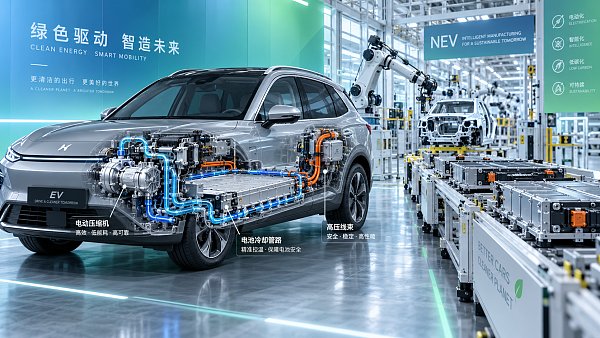
GACT's coverage of automotive components and NEV thermal management is relevant to this broader assessment. Tracking semiconductor developments alongside thermal-system architecture and high-voltage harness design helps distinguish a genuine platform benefit from an improvement confined to one component.
Fast switching creates a new set of integration risks
SiC's switching capability is valuable only when the surrounding circuit controls it. High voltage and current slew rates interact with parasitic inductance and capacitance, producing overshoot, ringing, and common-mode noise. These effects can consume voltage margin, disrupt control signals, and increase the filtering needed to meet vehicle electromagnetic compatibility requirements.
Gate-drive design is therefore part of the device decision. Evaluators should examine gate-voltage limits, driver current capability, isolation performance, common-mode transient immunity, and protection timing. Kelvin-source connections, short switching loops, and suitable gate resistance can be important, but their implementation must follow the selected device and package requirements.
Fault protection also deserves early attention. Some SiC devices have less short-circuit withstand time than familiar silicon IGBT designs. Protection must detect and interrupt a fault within the device's specified capability without creating excessive turn-off overvoltage. Reusing an existing IGBT protection strategy without validation is risky.
In motor-drive applications, faster voltage edges can also affect winding insulation stress and bearing currents, depending on cable length, grounding, motor construction, and filtering. Slowing the switching edge may resolve an integration problem, but it can give back part of the expected efficiency gain. The meaningful comparison is the validated switching speed, not the fastest laboratory waveform.
Reliability evidence must extend beyond device qualification
Automotive qualification is necessary evidence, but it is not proof that a complete inverter will meet its vehicle lifetime target. AEC-Q101 is relevant to discrete semiconductor qualification; power modules and vehicle assemblies require evidence appropriate to their construction and intended application. Functional safety and electromagnetic compatibility introduce separate requirements.
For SiC MOSFETs, engineering reviews should examine gate-oxide reliability, threshold-voltage behavior, body-diode operation where relevant, and stability under the proposed electrical and thermal stresses. Package-level assessments must address power cycling, thermal cycling, interconnect fatigue, and the integrity of cooling interfaces.
The strongest validation plan starts with the vehicle mission profile. Repeated acceleration, sustained high-speed operation, charging, cold starts, and coolant-temperature excursions stress different parts of the assembly. Supplier qualification data should be supplemented by tests that reproduce the project's relevant conditions, with clear failure criteria and traceability to the proposed production design.
Market momentum depends on system economics and supply readiness
SiC demand is linked to electrification, higher-voltage platforms, and pressure to package more power into limited space. Yet announcements of manufacturing expansion should not be treated as interchangeable with qualified automotive supply. Substrate quality, device yield, packaging capacity, and customer qualification all affect what can actually be delivered.
Purchasing comparisons should extend beyond the semiconductor price. A SiC design may change cooling hardware, passive components, enclosure dimensions, gate drivers, and EMC filters. It also incurs engineering and validation costs. Battery-capacity reductions or range gains should enter the business case only when vehicle-level analysis supports them, not as automatic credits attached to lower inverter losses.
Second sourcing is another practical constraint. Devices with similar headline ratings can differ in gate requirements, capacitances, switching behavior, and package parasitics. A substitute may need layout changes or renewed validation. Procurement teams should establish which alternatives are electrically compatible, production-qualified, and available over the expected platform life.
Across global supply chains, regional sourcing requirements, logistics, technical support, and production-change notification processes can influence adoption alongside electrical performance. Industry news and supply-chain intelligence, including the coverage provided by GACT, can help identify developments worth investigating. Project decisions still require supplier documentation and confirmed delivery commitments.
What a credible evaluation should establish
A useful comparison holds vehicle requirements constant and allows each technology an appropriate design. Simply replacing silicon devices with SiC in an unchanged circuit can understate SiC's potential; comparing an optimized SiC assembly with an outdated silicon baseline can overstate it.
- Define the voltage envelope, torque-speed duty cycle, charging requirements, and coolant boundary conditions before selecting devices.
- Compare measured loss maps, temperatures, and EMC behavior under equivalent operating conditions, including low-load operation.
- Reconcile module-level gains with complete-system mass, volume, energy consumption, and installed cost.
- Confirm fault protection, lifetime evidence, production availability, and the validation needed for alternative sources.
Automotive power electronics are shifting toward SiC because its high-voltage switching performance addresses real design constraints. The transition will remain application-specific. Before committing a platform, establish where the saved losses go: into lower energy use, smaller hardware, reduced cooling demand, or greater operating margin. If that benefit cannot be demonstrated after integration, the material advantage alone is not enough.
Related News
- 00
0000-00
How electric compressor speed affects EV battery cooling capacity - 00
0000-00
How to verify a variable frequency compressor supplier’s efficiency claims - 00
0000-00
How bend radius affects FPC reliability in automotive camera modules - 00
0000-00
How to diagnose intermittent loss of electric power steering assist - 00
0000-00
How to size automotive power modules for electric compressors
Weekly Insights
Stay ahead with our curated technology reports delivered every Monday.
Recommended News
 How electric compressor speed affects EV battery cooling capacityElectric compressor technology: battery cooling depends on more than RPM. Discover how speed, refrigerant flow, and system limits affect EV cooling capacity and energy efficiency.Author:Time:Oct 19, 2026
 How to verify a variable frequency compressor supplier’s efficiency claimsVerify a variable frequency compressor supplier’s efficiency claims using COP boundaries, matched test conditions, and duty-cycle data. Learn how to choose with confidence.Author:Time:Oct 18, 2026
 How bend radius affects FPC reliability in automotive camera modulesAutomotive FPC applications: camera module reliability starts with bend radius. Learn how stack-up, strain, and validation guide robust designs and help prevent costly failures.Author:Time:Oct 17, 2026
 How to diagnose intermittent loss of electric power steering assistMaster power steering system diagnostics to trace intermittent EPS assist loss. Learn proven checks for voltage, wiring, and fault codes to avoid costly guesswork.Author:Time:Oct 16, 2026
 How to size automotive power modules for electric compressorsSize automotive power modules for electric compressors with confidence. Learn how voltage, phase current, losses, and cooling shape reliable selection—and avoid costly oversizing.Author:Time:Oct 15, 2026
 Why automotive power electronics are shifting to silicon carbideAutomotive Power Electronics are shifting to silicon carbide. Discover how SiC can cut losses, boost EV power density, and reshape cooling, reliability, and system costs.Author:Time:Oct 14, 2026
 How EV adoption shapes the electrically driven compressor marketExplore how EV adoption shapes the electrically driven compressor market, from battery cooling and heat pumps to supplier margins. Discover the drivers of profitable growth.Author:Time:Oct 13, 2026
 How to size a PTC heater for reliable EV cabin heatingPTC Heater sizing for EV cabins: learn how to balance defrost performance, heat-pump integration, airflow, voltage range, and battery power for reliable winter comfort.Author:Time:Oct 12, 2026
 What determines the cooling output of electric automotive AC compressors?Automotive air conditioning compressors electric systems: explore how speed, voltage, refrigerant, controls, and heat exchangers shape EV cooling capacity and efficiency.Author:Time:Oct 11, 2026
 What makes a touchscreen media head unit responsive enough for daily use?Touchscreen media head unit performance explained: discover what delivers fast starts, smooth maps, reliable phone pairing, and responsive daily driving.Author:Time:Oct 10, 2026
 Can a Domain Controller Share a Cooling Loop with Other Electronics?Can a domain controller share a cooling loop with other electronics? Explore thermal zoning, flow control, safety priorities, and reliable vehicle electronics cooling strategies.Author:Time:Oct 19, 2026
 What Causes Domain Controller Overheating During Summer Testing?What causes domain controller overheating in summer testing? Explore heat load, airflow, installation, software factors, and practical fixes.Author:Time:Oct 18, 2026
 Is a Head-Up Display Hard to Integrate with Different Windshields?Is a head-up display difficult to integrate with different windshields? Discover how glass geometry, coatings, and calibration affect HUD clarity, cost, and production readiness.Author:Time:Oct 17, 2026
 What Should Be Checked Before Selecting an Automotive Head Unit?What should be checked before selecting an automotive head unit? Explore compatibility, performance, cybersecurity, compliance, and supplier support.Author:Time:Oct 16, 2026
 Is Steer-by-Wire More Expensive Than an EPS Steering System?Is steer-by-wire more expensive than an EPS steering system? Explore the true costs, safety demands, software value, and when SbW justifies its premium.Author:Time:Oct 15, 2026
 Which Automotive Electronics Need Validation for 800V Platforms?What automotive electronics should be validated for 800V platforms? Explore critical checks for harnesses, power electronics, thermal systems, safety, and EMC.Author:Time:Oct 14, 2026
 How Do Automotive Compressor Export Requirements Vary by Market?How do automotive compressor export requirements vary by market? Explore key compliance rules for refrigerants, EV safety, OEM approvals, labeling, and customs.Author:Time:Oct 13, 2026
 What Documents Are Needed to Export Automotive Thermal Components?What documents are needed to export automotive thermal components? Explore customs, compliance, technical records, and shipping tips to prevent costly delays.Author:Time:Oct 12, 2026
 How Often Should an EV Air Conditioning Compressor Be Inspected?How often should an EV air conditioning compressor be inspected? Discover recommended service intervals, warning signs, and expert care tips to protect cooling performance and EV reliability.Author:Time:Oct 11, 2026
 How to size power solutions for automotive head-up display systemsHeads-up display systems power solutions: learn how to size automotive HUD power architectures for startup, brightness, thermal limits, EMC, protection, and reliable vehicle operation.Author:Time:Oct 19, 2026
 How does a head-up display work in a high-performance car?Hoe werkt een head-up display in een high-performance auto en welke informatie toont het? Discover the tech, safety alerts, and performance data that sharpen every drive.Author:Time:Oct 18, 2026
 Which trends will shape zonal EV architectures in the next decade?Future trends in zonal EV architectures: explore smarter power distribution, 48V systems, thermal integration, software, and resilient networks shaping next-gen vehicles.Author:Time:Oct 17, 2026
 When does a zonal EV architecture outperform a centralized design?Explore the trade-offs between zonal and centralized EV architectures to identify the best path for harness efficiency, software scalability, safety, and faster EV launches.Author:Time:Oct 16, 2026
 How to compare vendors for zonal EV power architecturesComparing vendors for zonal EV power architectures: assess electrical capability, interface ownership, lifecycle support, and integration risk for smarter sourcing.Author:Time:Oct 15, 2026
 How zonal architectures can improve EV reliability at the system levelHow zonal architectures affect EV reliability: explore fault containment, diagnostics, power resilience, and software strategies for more dependable electric vehicles.Author:Time:Oct 14, 2026
 What is driving growth in the automotive E/E architecture market?Explore what drives the automotive electric electronic systems architecture market, from EV power systems and zonal computing to ADAS, cybersecurity, and software-defined vehicles.Author:Time:Oct 13, 2026
 How to evaluate top-rated vehicle electrical components for reliabilityDiscover how to evaluate top-rated vehicle electrical components for reliability, from connector integrity and thermal margins to validation data and manufacturing control.Author:Time:Oct 12, 2026
 What makes vehicle electrical components reliable over a long service life?Top-rated vehicle electrical components for reliability depend on thermal control, sealing, vibration resistance, and validated manufacturing. Discover how to choose durable parts.Author:Time:Oct 11, 2026
 How battery thermal management solutions prevent fast-charge overheatingBattery thermal management solutions prevent fast-charge overheating with intelligent cooling, valve control, predictive preconditioning, and reliable heat rejection.Author:Time:Oct 09, 2026
 What an automotive market report can reveal about EV demand shiftsAutomotive market report insights reveal EV demand shifts, component opportunities, regional risks, and smarter investment strategies for growth.Author:Time:Oct 08, 2026