When does a zonal EV architecture outperform a centralized design?




When Does a Zonal EV Architecture Outperform a Centralized Design?
For an EV program leader, electrical architecture is not a diagram-level decision. It changes the harness bill of materials, ECU ownership, validation sequence, supplier interfaces, service strategy, and the practical pace at which a vehicle can reach production. The usual debate is framed as zonal versus centralized architecture, but that framing can be misleading. A zonal vehicle is rarely “fully decentralized,” and a centralized vehicle still relies on distributed sensors, actuators, and local power electronics.
The useful question is narrower: where should computing, power distribution, and vehicle-network gateways sit for this specific platform? The trade-offs between zonal and centralized EV architectures become clear only when the team looks beyond nominal wiring reduction and asks what the vehicle must support over its planned life.
A zonal approach tends to outperform when a program has enough electrical complexity, platform volume, and software ambition to justify redesigning the vehicle around regional controllers. A more centralized design remains the sensible choice when the immediate priority is program containment: proven subsystems, limited engineering bandwidth, shorter launch timing, or a vehicle range that cannot absorb a new supplier and software-integration model.
The distinction that matters: compute centralization is not the same as zonal wiring
Centralized architecture usually means that more vehicle functions are consolidated into a small number of high-performance controllers or domain controllers. This can simplify feature coordination for cockpit, ADAS, body, and vehicle control functions. It does not automatically eliminate long harness runs. If every door module, seat function, lamp, thermal actuator, and sensor still routes separately toward a central controller or central fuse-and-relay area, harness complexity remains substantial.
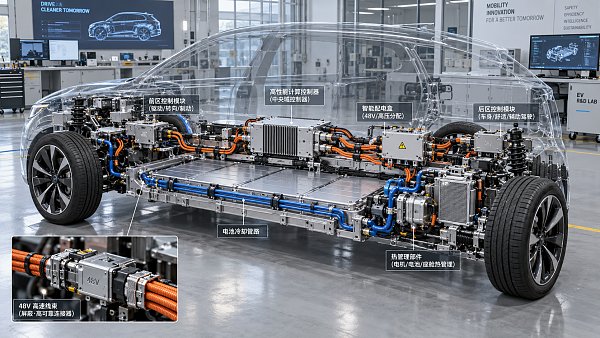
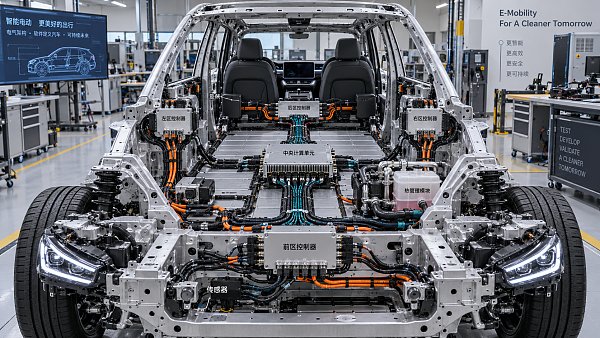
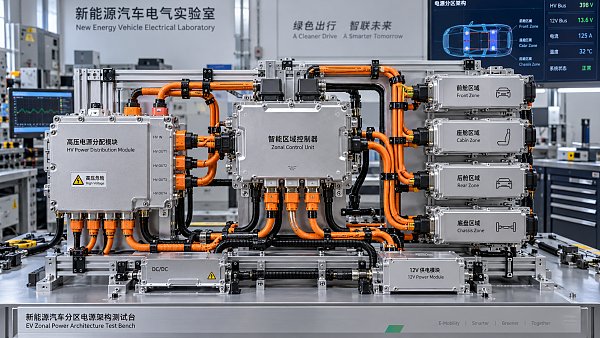
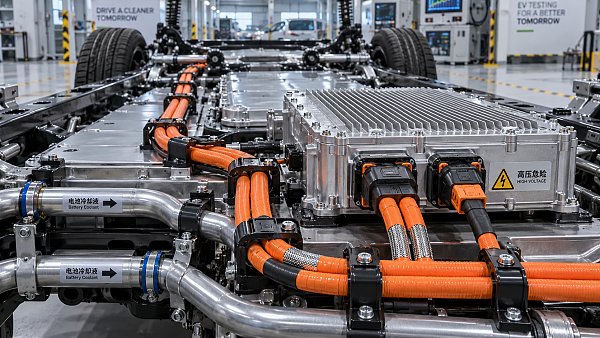
A zonal architecture reorganizes the vehicle physically. Controllers are placed near groups of loads and sensors—often front, rear, left, right, or cabin zones. A zonal controller handles local input/output, power switching, diagnostics, and gateway functions, while a central compute unit runs broader software functions. The architecture is therefore often described more accurately as central compute with zonal I/O and power distribution.
That distinction matters during an architecture review. Replacing several ECUs with one central computer may reduce controller count, but it can create difficult connector density, thermal packaging, and fault-containment questions. Adding zonal controllers without consolidating the software stack can simply move complexity outward. Neither change is inherently better.
When the zonal case becomes compelling
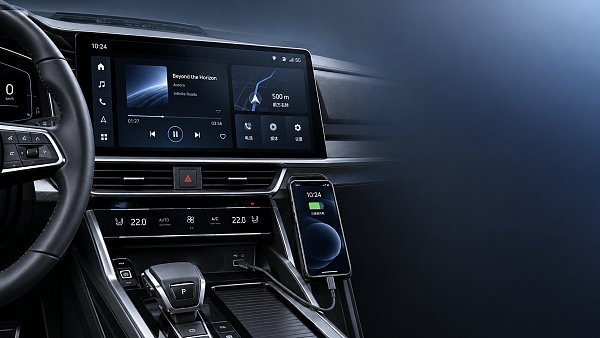
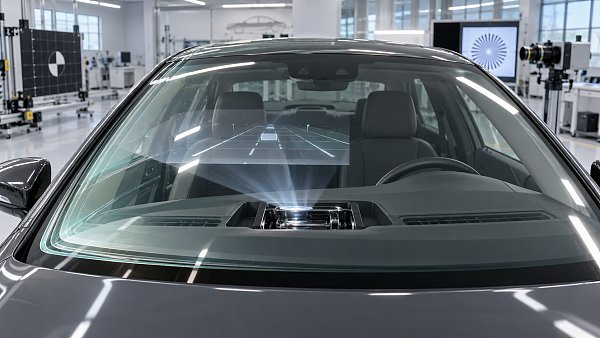
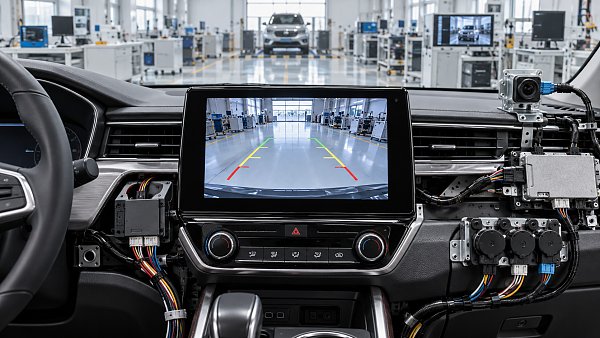
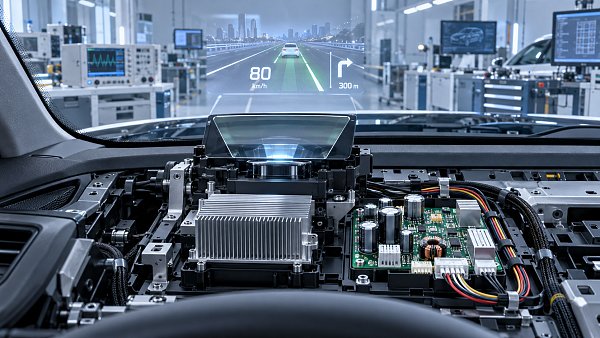
A zonal design is strongest when the vehicle has a high and growing number of electrically controlled devices spread across the body. Premium cabins are an obvious example: multiple displays, a HUD, media head unit, amplified audio, ambient lighting, powered closures, seat functions, cameras, and comfort electronics can create a large amount of low-voltage wiring. The same is true when a platform is expected to add higher levels of sensing or more software-defined features through later derivatives.
In these cases, localizing connections can shorten branch lengths and reduce the number of point-to-point routes crossing the vehicle. The result is not just a potentially lighter harness. Assembly can become more modular if the body, instrument panel, doors, front end, and rear end are designed around repeatable zone interfaces. This is particularly valuable when a manufacturer plans several wheelbases, body styles, or regional variants from one electrical platform.
Zonal architecture also has a stronger business case when over-the-air feature development is central to the product roadmap. A central compute layer can coordinate vehicle functions more consistently, while zonal controllers abstract local hardware differences. That can make it easier to reuse software across derivatives—provided the I/O definitions, diagnostics, and supplier interfaces are controlled early. Without that discipline, “software-defined” can become a label placed over a collection of incompatible local implementations.
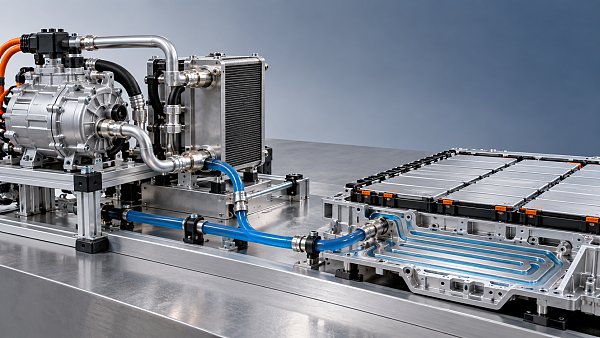
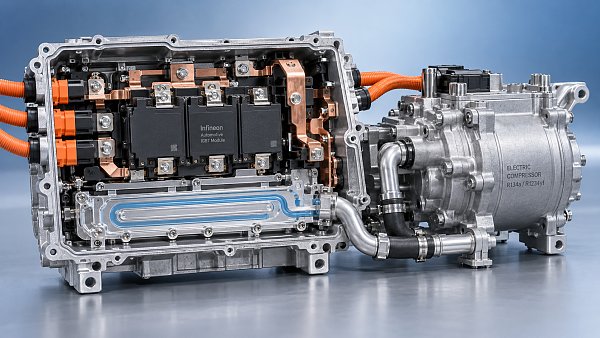
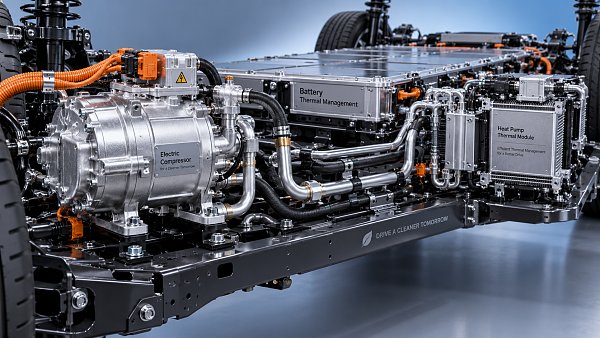
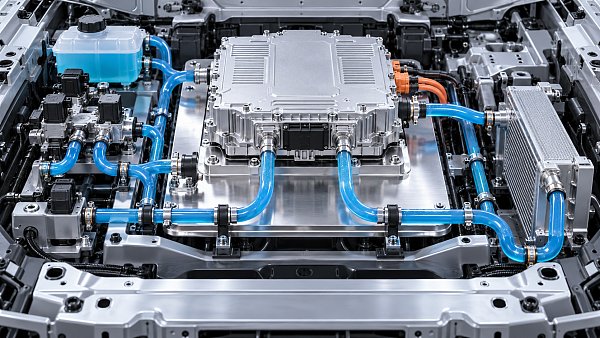
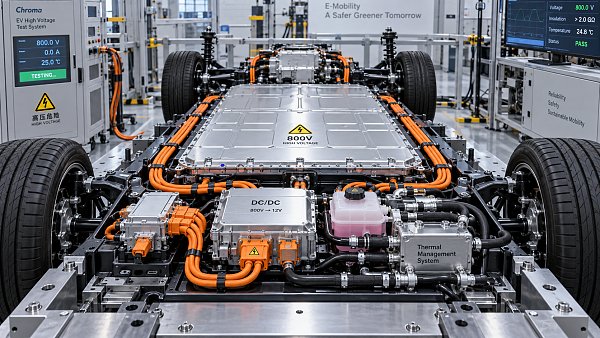
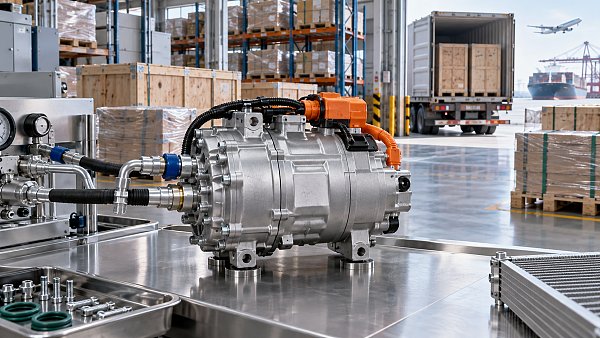
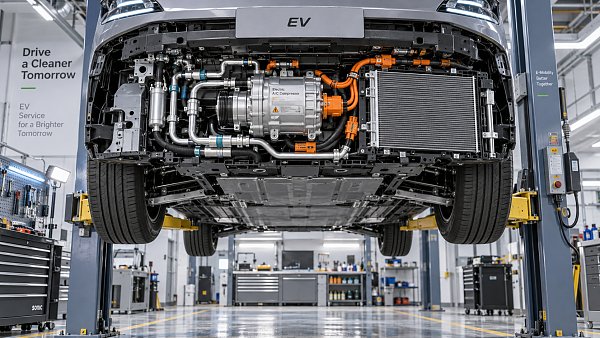
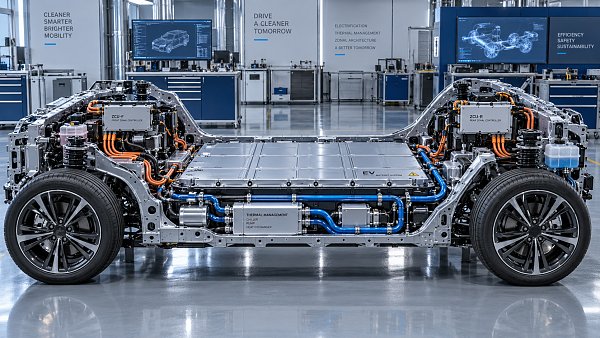
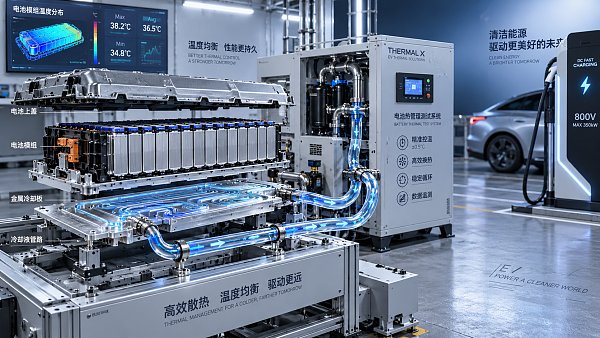
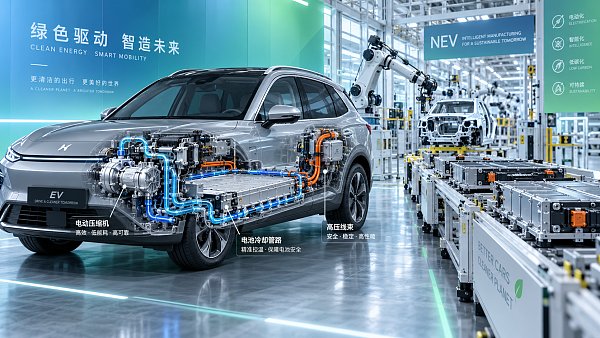
High-voltage EV systems add another reason to consider zones. Battery liquid-cooling loops, heat-pump components, electric compressors, pumps, valves, active grille shutters, and thermal sensors are distributed across the vehicle. Their control strategy may be centralized, but their electrical loads and diagnostics are physical and local. A zonal design can make the interfaces around front-end thermal modules, battery systems, and cabin HVAC assemblies cleaner. It does not remove the need for careful high-voltage harness routing, insulation coordination, electromagnetic compatibility work, or service isolation procedures.
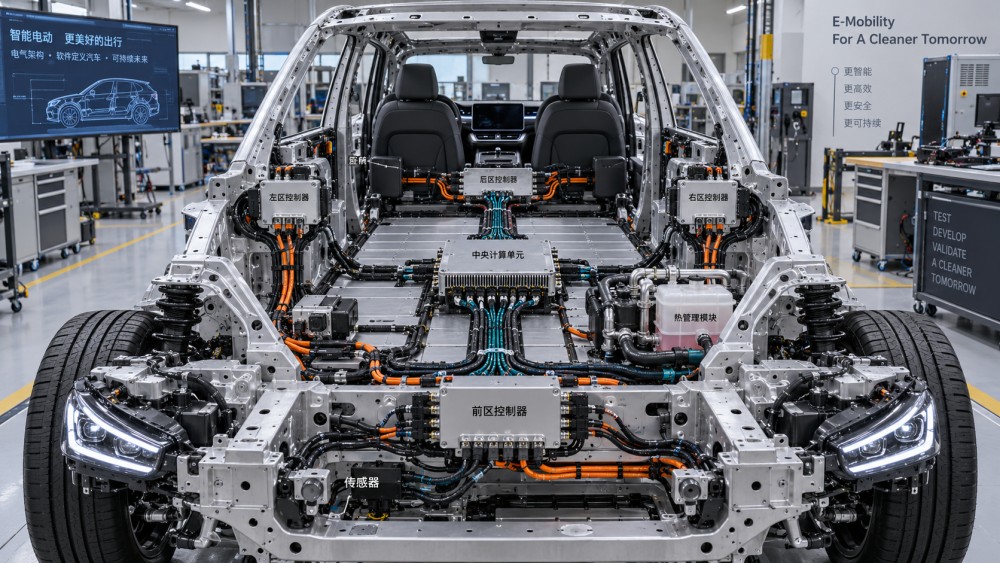
The practical comparison is broader than harness length
When centralized architecture is the more disciplined choice
There is a tendency to treat zonal architecture as the inevitable endpoint of EV development. For many programs, that is premature. If a vehicle is based on a heavily reused platform, has a relatively stable feature set, and must launch on a constrained schedule, a centralized or domain-based design can be the safer decision. This is especially true when the organization already has validated body controllers, gateway logic, harness designs, and service tools.
The first zonal program often carries hidden work. Teams need new network topologies, revised diagnostic concepts, a strategy for local power distribution, updated manufacturing test procedures, and unambiguous ownership of software configuration. A prototype can look clean while production integration remains unresolved. Connector access, water ingress protection, repairability after a low-speed impact, and replacement-part coding are all easier to underestimate than to solve late.
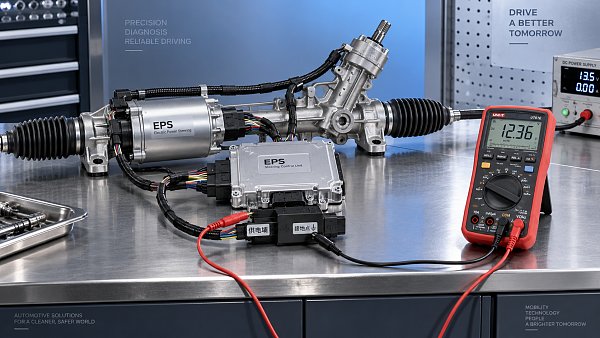
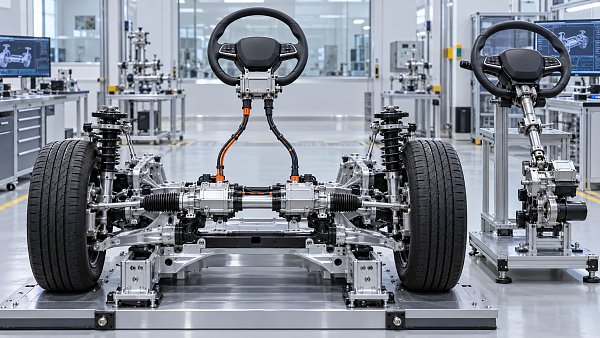
Centralization can also be sensible where functional safety analysis points toward clearer separation. A steer-by-wire system, EPS, braking functions, or high-voltage battery controls cannot be treated like convenience loads merely because they communicate through the same backbone. The architecture must define degraded operation, independent power paths where required, wake-up behavior, and fault reporting. Consolidation is valuable only if it does not make a single controller, connector, power stage, or software release a disproportionate source of vehicle-level risk.
Three issues that commonly decide the program
1. Network bandwidth and latency are architecture questions, not just bus-selection questions
A zonal vehicle usually requires a capable backbone between zones and central compute, but the decision should begin with message behavior rather than a fashionable network label. Teams need to map camera data, display updates, actuator commands, diagnostics, software flashing, and wake-up traffic. Cabin electronics may tolerate different latency behavior from steering or thermal protection functions. The difficult part is defining priorities under degraded conditions and during service operations, not simply selecting a higher-bandwidth physical layer.
2. Thermal and packaging constraints can reverse the expected benefit
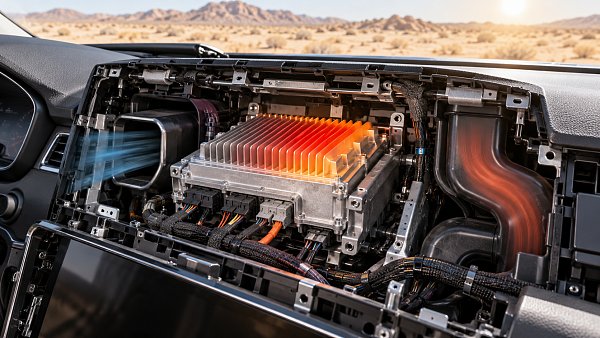
Zonal controllers move electronics closer to wet, hot, vibrating, or impact-exposed areas. A front zone near HVAC hardware, electric compressors, cooling modules, and lighting may face a different environment from a cabin controller. The rear zone may compete for space with charging hardware, rear drive components, or luggage volume. If the enclosure, cooling path, sealing requirements, and connector orientation are not realistic, the perceived harness benefit can be consumed by packaging and reliability work.
3. Supplier readiness must include software and change control
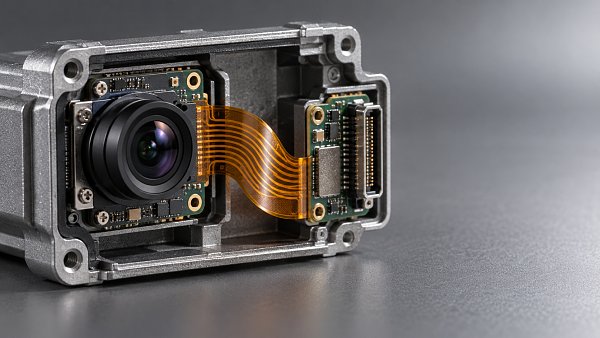
Hardware capability alone is not enough. The relevant question is whether the ECU, harness, cockpit, thermal-system, and chassis suppliers can work against stable interface definitions and support changes without creating version ambiguity. Zonal programs involve interactions among FPC systems, data and communication cables, low-voltage and high-voltage harnesses, smart cockpit electronics, thermal actuators, and safety-relevant chassis components. Procurement should examine engineering change handling, diagnostic data access, cybersecurity responsibilities, test ownership, and long-term component availability—not only unit price.
A better selection process: start with the next platform, not the current vehicle
The most reliable evaluation begins with a functional inventory across the full platform horizon. List the loads, sensors, actuators, displays, thermal devices, ADAS hardware, steering functions, and charging interfaces expected on the base vehicle and on likely derivatives. Then identify which items are genuinely local, which require deterministic behavior, which must stay alive in a degraded state, and which are likely to change through software updates.
Next, compare at least two complete implementation concepts. One should preserve the proven architecture with targeted consolidation; the other should model zones, physical placement, network links, service access, harness segmentation, and software ownership. Do not compare only ECU counts. A lower controller count may be offset by higher computing requirements, new enclosure designs, more demanding validation, or a difficult production test strategy.
For globally sourced programs, regional supply conditions should be included early. Availability of automotive-grade connectors, cable assemblies, electronic components, thermal-system modules, and local validation capability can differ materially among China, Europe, North America, Japan, South Korea, India, Mexico, and Southeast Asia. Intelligence on component categories and supply-chain conditions is useful only when it is tied back to the program’s actual interface and launch plan. Broad market trends cannot substitute for a harness drawing, power budget, or failure-mode review.
The decision is usually hybrid—and that is not a compromise
The strongest answer is often a staged architecture: centralize compute where cross-vehicle coordination and feature growth justify it, deploy zones where local I/O and power distribution are dense, and retain dedicated controllers where safety, timing, or supplier maturity makes that prudent. This avoids forcing every subsystem into the same migration timetable.
A zonal EV architecture outperforms a centralized design when it reduces physical and organizational complexity across multiple vehicle generations—not when it merely produces a more modern block diagram. If the program cannot yet support common software interfaces, realistic zone packaging, robust cybersecurity boundaries, and disciplined supplier integration, a well-executed centralized design is usually the better engineering decision. The architecture should earn its complexity before the vehicle has to carry it.
Related News
- 00
0000-00
How electric compressor speed affects EV battery cooling capacity - 00
0000-00
How to verify a variable frequency compressor supplier’s efficiency claims - 00
0000-00
How bend radius affects FPC reliability in automotive camera modules - 00
0000-00
How to diagnose intermittent loss of electric power steering assist - 00
0000-00
How to size automotive power modules for electric compressors
Weekly Insights
Stay ahead with our curated technology reports delivered every Monday.
Recommended News
 How electric compressor speed affects EV battery cooling capacityElectric compressor technology: battery cooling depends on more than RPM. Discover how speed, refrigerant flow, and system limits affect EV cooling capacity and energy efficiency.Author:Time:Oct 19, 2026
 How to verify a variable frequency compressor supplier’s efficiency claimsVerify a variable frequency compressor supplier’s efficiency claims using COP boundaries, matched test conditions, and duty-cycle data. Learn how to choose with confidence.Author:Time:Oct 18, 2026
 How bend radius affects FPC reliability in automotive camera modulesAutomotive FPC applications: camera module reliability starts with bend radius. Learn how stack-up, strain, and validation guide robust designs and help prevent costly failures.Author:Time:Oct 17, 2026
 How to diagnose intermittent loss of electric power steering assistMaster power steering system diagnostics to trace intermittent EPS assist loss. Learn proven checks for voltage, wiring, and fault codes to avoid costly guesswork.Author:Time:Oct 16, 2026
 How to size automotive power modules for electric compressorsSize automotive power modules for electric compressors with confidence. Learn how voltage, phase current, losses, and cooling shape reliable selection—and avoid costly oversizing.Author:Time:Oct 15, 2026
 Why automotive power electronics are shifting to silicon carbideAutomotive Power Electronics are shifting to silicon carbide. Discover how SiC can cut losses, boost EV power density, and reshape cooling, reliability, and system costs.Author:Time:Oct 14, 2026
 How EV adoption shapes the electrically driven compressor marketExplore how EV adoption shapes the electrically driven compressor market, from battery cooling and heat pumps to supplier margins. Discover the drivers of profitable growth.Author:Time:Oct 13, 2026
 How to size a PTC heater for reliable EV cabin heatingPTC Heater sizing for EV cabins: learn how to balance defrost performance, heat-pump integration, airflow, voltage range, and battery power for reliable winter comfort.Author:Time:Oct 12, 2026
 What determines the cooling output of electric automotive AC compressors?Automotive air conditioning compressors electric systems: explore how speed, voltage, refrigerant, controls, and heat exchangers shape EV cooling capacity and efficiency.Author:Time:Oct 11, 2026
 What makes a touchscreen media head unit responsive enough for daily use?Touchscreen media head unit performance explained: discover what delivers fast starts, smooth maps, reliable phone pairing, and responsive daily driving.Author:Time:Oct 10, 2026
 Can a Domain Controller Share a Cooling Loop with Other Electronics?Can a domain controller share a cooling loop with other electronics? Explore thermal zoning, flow control, safety priorities, and reliable vehicle electronics cooling strategies.Author:Time:Oct 19, 2026
 What Causes Domain Controller Overheating During Summer Testing?What causes domain controller overheating in summer testing? Explore heat load, airflow, installation, software factors, and practical fixes.Author:Time:Oct 18, 2026
 Is a Head-Up Display Hard to Integrate with Different Windshields?Is a head-up display difficult to integrate with different windshields? Discover how glass geometry, coatings, and calibration affect HUD clarity, cost, and production readiness.Author:Time:Oct 17, 2026
 What Should Be Checked Before Selecting an Automotive Head Unit?What should be checked before selecting an automotive head unit? Explore compatibility, performance, cybersecurity, compliance, and supplier support.Author:Time:Oct 16, 2026
 Is Steer-by-Wire More Expensive Than an EPS Steering System?Is steer-by-wire more expensive than an EPS steering system? Explore the true costs, safety demands, software value, and when SbW justifies its premium.Author:Time:Oct 15, 2026
 Which Automotive Electronics Need Validation for 800V Platforms?What automotive electronics should be validated for 800V platforms? Explore critical checks for harnesses, power electronics, thermal systems, safety, and EMC.Author:Time:Oct 14, 2026
 How Do Automotive Compressor Export Requirements Vary by Market?How do automotive compressor export requirements vary by market? Explore key compliance rules for refrigerants, EV safety, OEM approvals, labeling, and customs.Author:Time:Oct 13, 2026
 What Documents Are Needed to Export Automotive Thermal Components?What documents are needed to export automotive thermal components? Explore customs, compliance, technical records, and shipping tips to prevent costly delays.Author:Time:Oct 12, 2026
 How Often Should an EV Air Conditioning Compressor Be Inspected?How often should an EV air conditioning compressor be inspected? Discover recommended service intervals, warning signs, and expert care tips to protect cooling performance and EV reliability.Author:Time:Oct 11, 2026
 How to size power solutions for automotive head-up display systemsHeads-up display systems power solutions: learn how to size automotive HUD power architectures for startup, brightness, thermal limits, EMC, protection, and reliable vehicle operation.Author:Time:Oct 19, 2026
 How does a head-up display work in a high-performance car?Hoe werkt een head-up display in een high-performance auto en welke informatie toont het? Discover the tech, safety alerts, and performance data that sharpen every drive.Author:Time:Oct 18, 2026
 Which trends will shape zonal EV architectures in the next decade?Future trends in zonal EV architectures: explore smarter power distribution, 48V systems, thermal integration, software, and resilient networks shaping next-gen vehicles.Author:Time:Oct 17, 2026
 When does a zonal EV architecture outperform a centralized design?Explore the trade-offs between zonal and centralized EV architectures to identify the best path for harness efficiency, software scalability, safety, and faster EV launches.Author:Time:Oct 16, 2026
 How to compare vendors for zonal EV power architecturesComparing vendors for zonal EV power architectures: assess electrical capability, interface ownership, lifecycle support, and integration risk for smarter sourcing.Author:Time:Oct 15, 2026
 How zonal architectures can improve EV reliability at the system levelHow zonal architectures affect EV reliability: explore fault containment, diagnostics, power resilience, and software strategies for more dependable electric vehicles.Author:Time:Oct 14, 2026
 What is driving growth in the automotive E/E architecture market?Explore what drives the automotive electric electronic systems architecture market, from EV power systems and zonal computing to ADAS, cybersecurity, and software-defined vehicles.Author:Time:Oct 13, 2026
 How to evaluate top-rated vehicle electrical components for reliabilityDiscover how to evaluate top-rated vehicle electrical components for reliability, from connector integrity and thermal margins to validation data and manufacturing control.Author:Time:Oct 12, 2026
 What makes vehicle electrical components reliable over a long service life?Top-rated vehicle electrical components for reliability depend on thermal control, sealing, vibration resistance, and validated manufacturing. Discover how to choose durable parts.Author:Time:Oct 11, 2026
 How battery thermal management solutions prevent fast-charge overheatingBattery thermal management solutions prevent fast-charge overheating with intelligent cooling, valve control, predictive preconditioning, and reliable heat rejection.Author:Time:Oct 09, 2026
 What an automotive market report can reveal about EV demand shiftsAutomotive market report insights reveal EV demand shifts, component opportunities, regional risks, and smarter investment strategies for growth.Author:Time:Oct 08, 2026