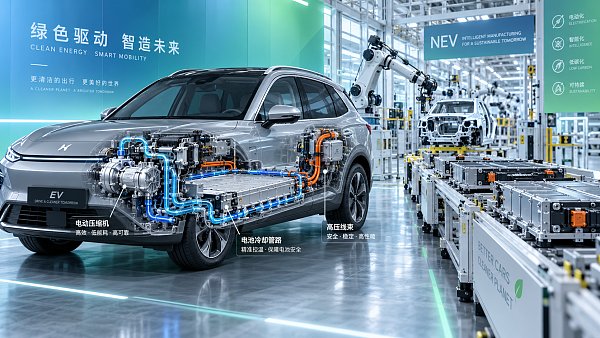
How zonal architectures can improve EV reliability at the system level




How Zonal Architectures Can Improve EV Reliability at the System Level
As electric vehicles absorb more high-voltage functions, connected cockpit features, software-defined controls, and active thermal management, reliability can no longer be judged by the quality of a battery pack, inverter, compressor, or display in isolation. The electrical architecture connecting those systems has become part of the reliability case.
This is why technical teams increasingly ask how zonal architectures affect EV reliability. A zonal design can shorten harness routes, localize power and data distribution, reduce connector count in some areas, and make faults easier to isolate. At the same time, it concentrates responsibility in zonal controllers and introduces new dependencies involving software, network communication, power conversion, sealing, thermal exposure, and service procedures.
For evaluators reviewing a vehicle platform, a wiring-harness strategy, or a supplier proposal, the key question is not whether zonal architecture is inherently “better.” The practical question is whether the design improves fault containment and maintainability without creating unacceptable single points of failure.
From distributed ECUs to physical vehicle zones
Traditional vehicle electrical/electronic architectures often assign separate electronic control units to individual functions: body control, door modules, seat control, HVAC, infotainment, lighting, parking assistance, battery management, and more. As functions expand, the vehicle can accumulate many ECUs, long point-to-point harness branches, gateways, connectors, and communication paths.
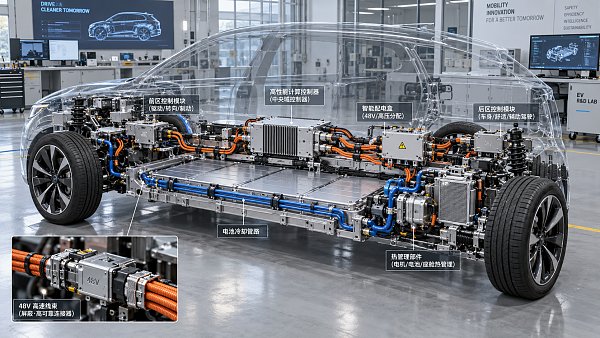
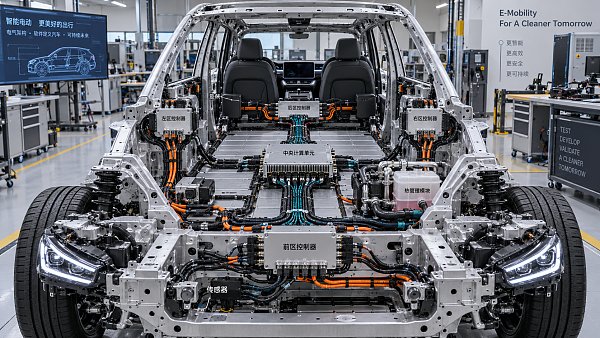
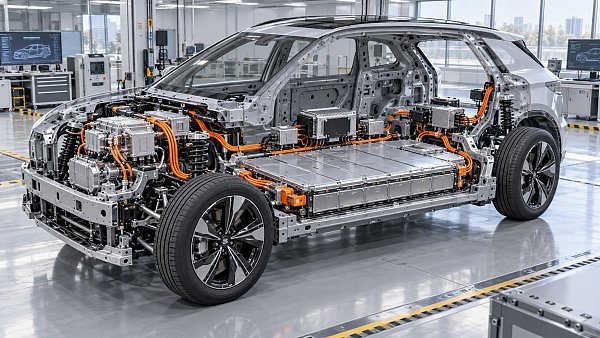
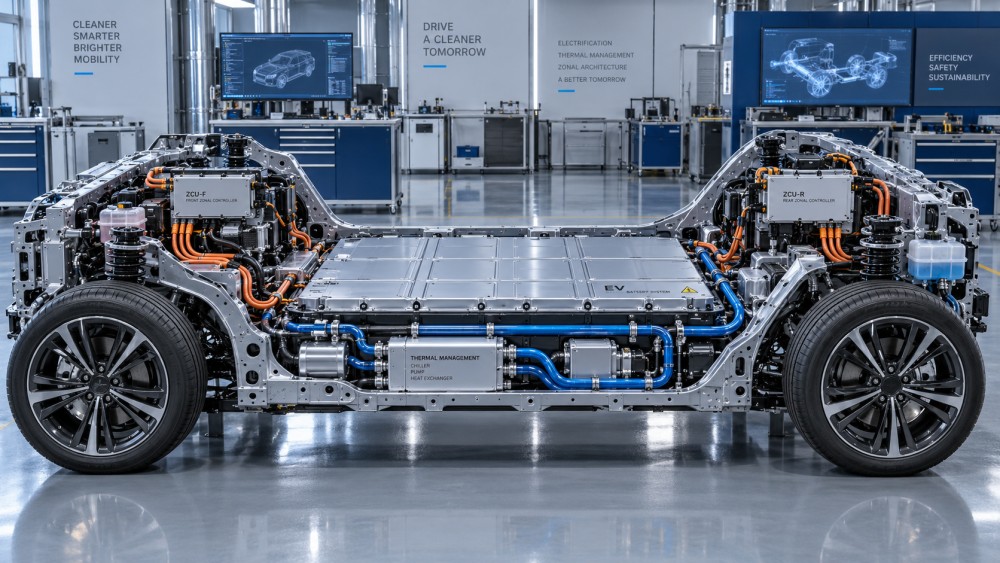
A zonal architecture reorganizes much of this equipment around location. Instead of routing separate wires and network lines from many central controllers to every actuator and sensor, the vehicle may use zonal controllers positioned near physical areas such as the front-left, front-right, rear-left, rear-right, cockpit, or powertrain zone. These controllers aggregate local inputs and outputs, distribute power, and communicate with central compute units through higher-bandwidth network backbones.
In an EV, the zonal concept commonly intersects with several sensitive domains:
- Low-voltage power distribution for body electronics, lighting, pumps, fans, and cockpit equipment;
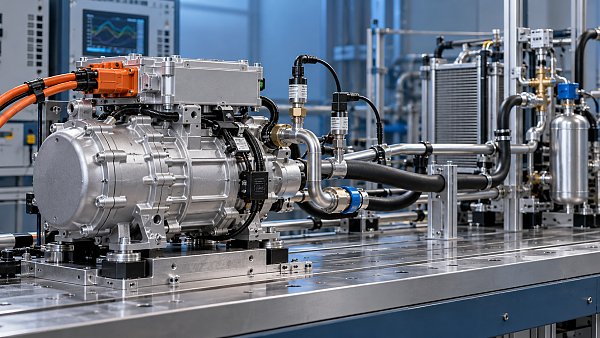
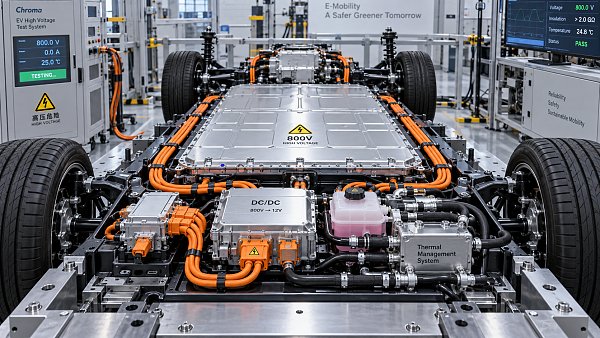
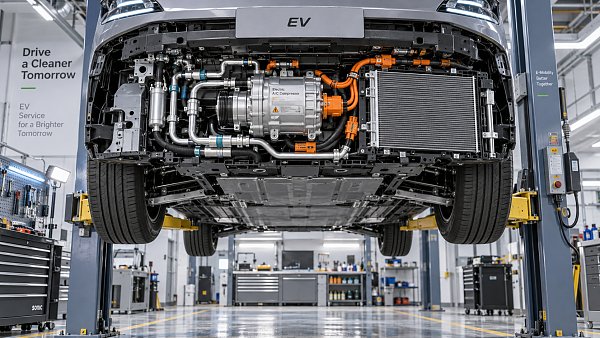
- High-voltage monitoring and controlled interfaces around the battery, electric compressor, PTC heater, inverter, and charging system;
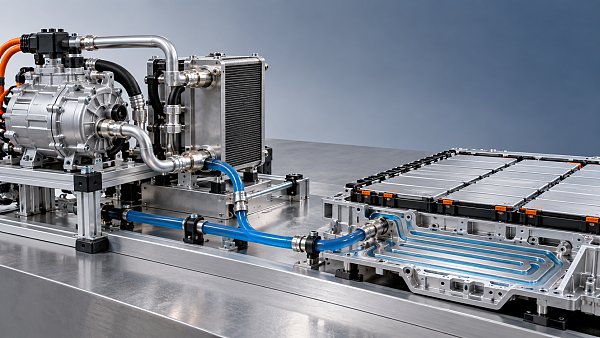
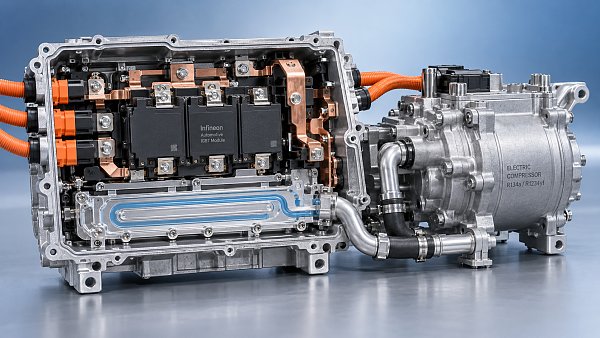
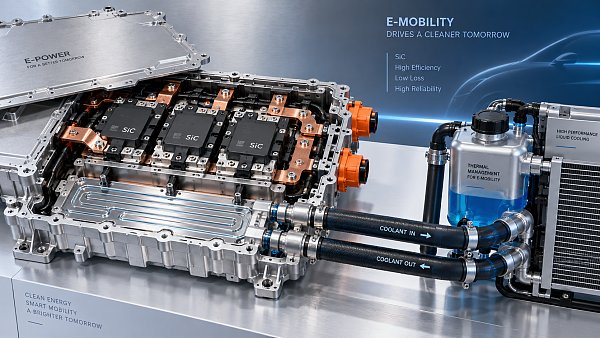
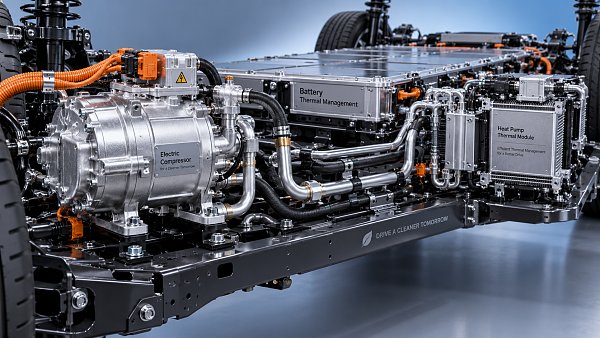
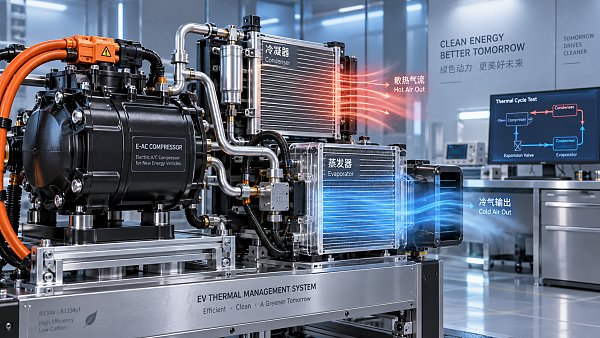
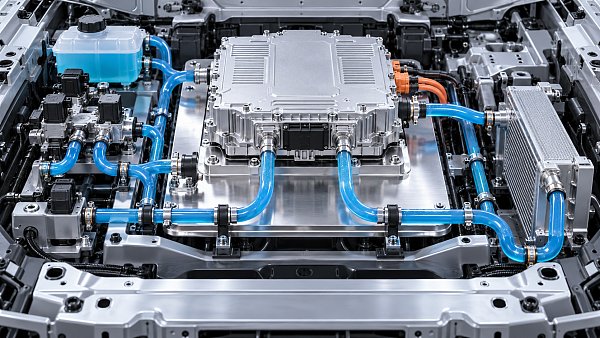
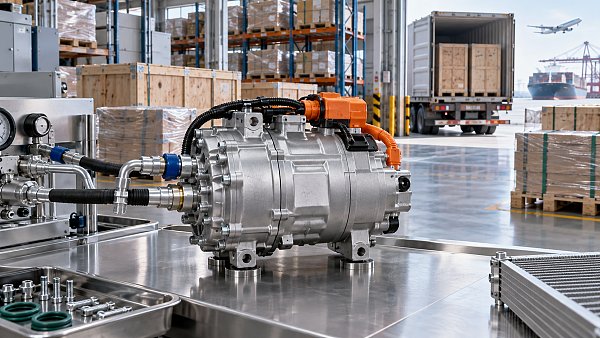
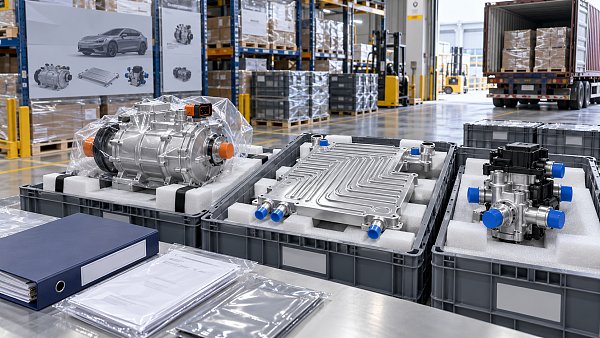
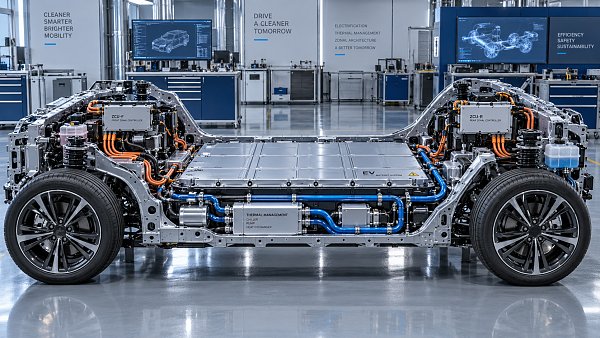
- Thermal-management components, including integrated thermal valves, coolant pumps, refrigerant controls, heat-pump actuators, and battery liquid-cooling loops;
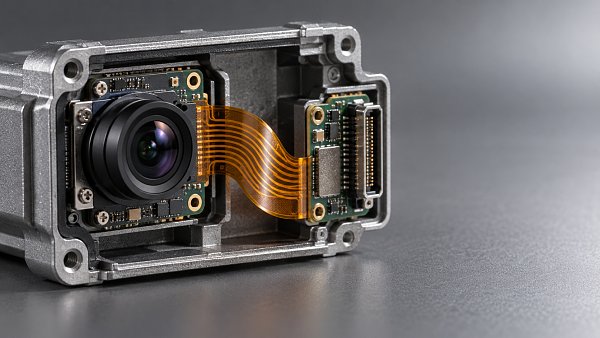
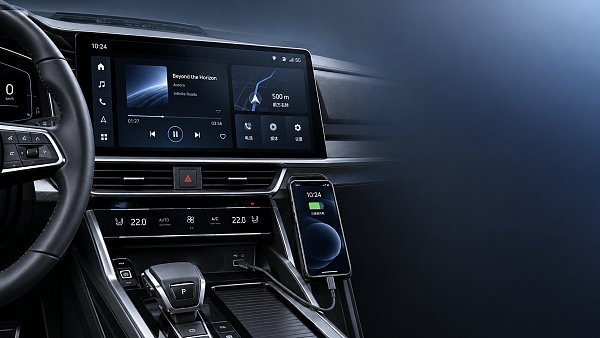
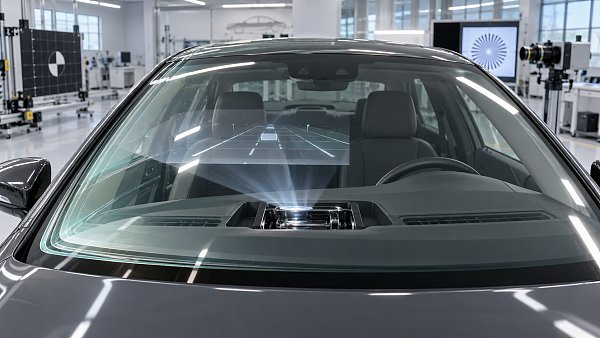
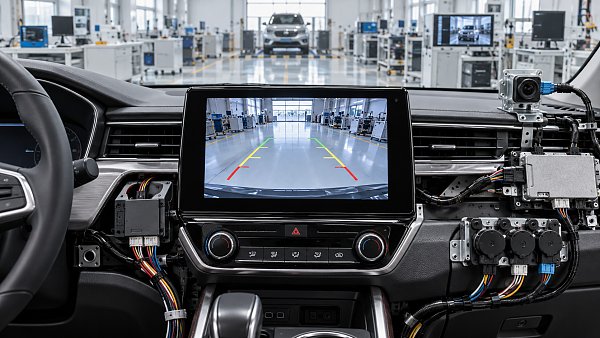
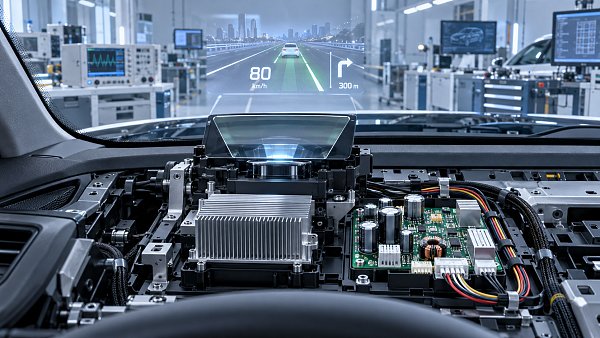
- Data connections for cameras, displays, head units, HUD systems, Ethernet switches, and advanced driver-assistance sensors;
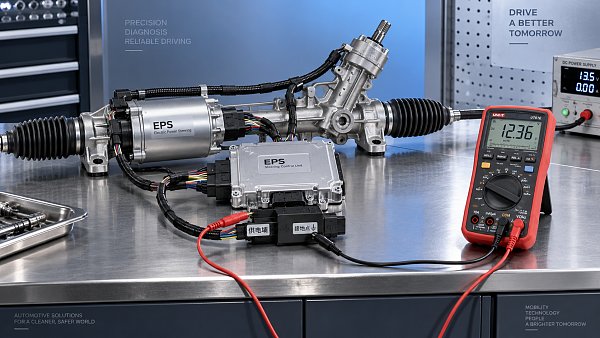
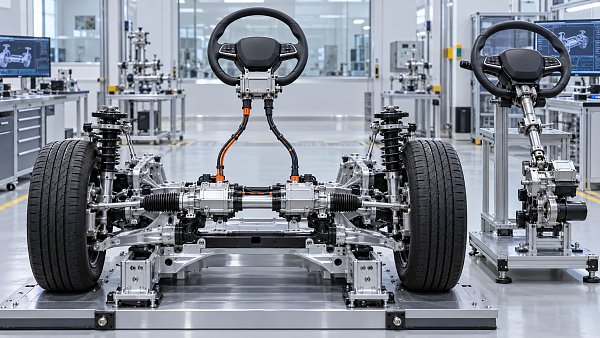
- Local sensing and actuation related to steering, chassis, doors, seating, and exterior functions.
The architecture therefore changes the reliability conversation from “Will this component fail?” to “What happens to the vehicle when it does?”
Reliability gains begin with fewer long, exposed connections
Harness complexity is not merely a cost or weight issue. Every long wire run introduces routing constraints, vibration exposure, abrasion risks, terminals, splice points, clips, seals, and possible assembly variation. A conventional architecture can require signals and power to travel across the vehicle even when the related sensor and actuator are only a short distance apart.
By placing intelligence and power distribution closer to loads, a zonal architecture can reduce the length of low-voltage branch circuits. That may lower the number of potential open circuits, high-resistance connections, and damage locations. Shorter local runs are also easier to protect physically, particularly in doors, bumpers, wheel-well-adjacent areas, and front-end modules where movement, water ingress, and mechanical impact are realistic lifetime concerns.
For technical evaluation, however, “less wiring” should not be accepted as a sufficient reliability claim. The total connection count matters more than cable length alone. A zonal layout may eliminate many individual terminals while adding higher-capacity connectors, local fuse elements, Ethernet interfaces, and sealed controller housings. Reliability improves only when the new interfaces are specified, validated, and assembled to a standard appropriate for their environment.
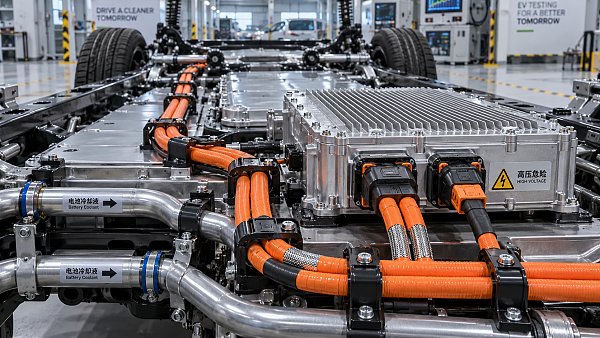
This distinction is especially important for high-voltage harnesses and data/communication cables. A shorter high-voltage route may reduce voltage drop and routing risk, but its shielding, isolation clearance, connector interlock behavior, and crash protection remain critical. Similarly, replacing multiple low-speed communication branches with Ethernet backbone links can simplify the overall network while raising expectations for electromagnetic compatibility, connector robustness, and network redundancy.
Fault containment is the central system-level advantage
A well-executed zonal architecture can prevent a local electrical fault from becoming a vehicle-wide event. This is where its value is most tangible for reliability engineers and safety assessors.
Consider a damaged front-corner harness following a minor impact or water intrusion. In a highly centralized layout, the fault may affect multiple wires that return to distant controllers, making diagnosis slow and potentially disturbing shared circuits. In a zonal design, a local controller can identify abnormal current, isolate a branch, report the failure over the network, and preserve unrelated functions where the safety concept permits.
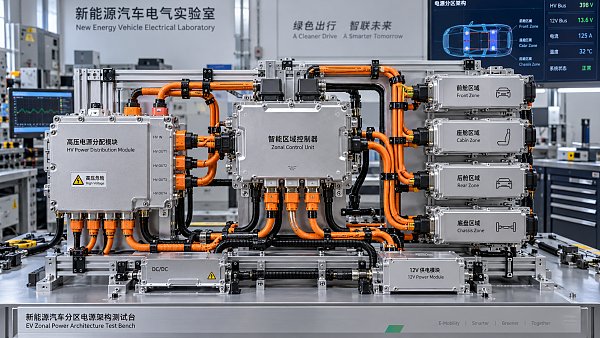
That containment depends on deliberate power-distribution design. Intelligent electronic fuses, solid-state power switches, current sensing, load prioritization, and selective shutdown logic can allow the vehicle to disconnect a failed lamp, pump, door actuator, or auxiliary outlet without collapsing the entire low-voltage network. The behavior must be defined for both transient faults and permanent faults. A brief inrush-current event should not trigger the same response as a sustained short to ground.
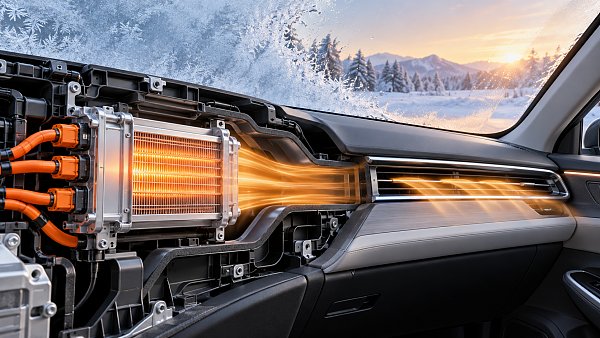
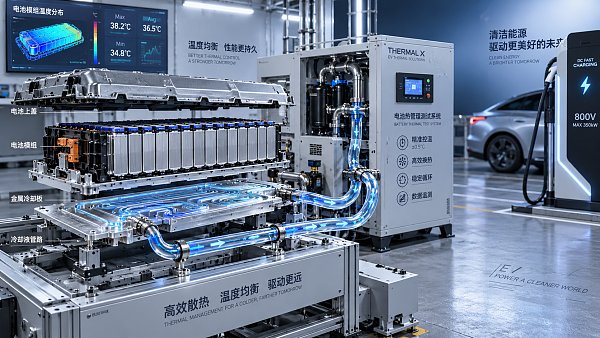
Thermal systems provide a useful example. An EV’s battery cooling pump, radiator fan, refrigerant valve, electric compressor, and coolant heater do not all carry the same consequence of failure. If a zonal controller manages local loads, its fault strategy needs to distinguish between convenience loads and components required to maintain battery temperature, defogging performance, power derating control, or occupant safety. Isolation cannot be designed as a generic “switch it off” action.
Graceful degradation must be designed, not assumed
Reliability at the vehicle level is often about graceful degradation. A failed rear zone controller should not automatically disable a vehicle’s ability to communicate critical warnings, unlock required exits, maintain legally required lighting functions, or support safe parking behavior. The same principle applies to cockpit systems: loss of a media head unit is inconvenient; loss of a driver-relevant telltale, rear-view camera under applicable operating conditions, or defrost control may have a different consequence.
Technical reviewers should request a function-dependency map that identifies what is hosted in each zone, which central compute unit commands it, which network path it uses, and what happens if any one element loses power or communication. This map often reveals whether a claimed fault-containment benefit is real or only physical packaging convenience.
New concentration risks: the zonal controller becomes a critical asset
Moving functions into zones does not eliminate complexity; it relocates it. A zonal controller can consolidate multiple functions that were previously distributed across separate modules. That reduces hardware count but increases the importance of its enclosure, processor, power stage, connector system, and software.
A single failure inside the controller may affect local lighting, access functions, sensor inputs, thermal actuators, or convenience equipment at the same time. The risk is manageable, but it has to be treated explicitly. Hardware partitioning, independent power domains, watchdog supervision, protected outputs, thermal derating, and diagnostic coverage all influence whether a controller fault remains contained.
Environmental placement deserves equal attention. A controller mounted near the vehicle perimeter may be exposed to splash water, salt, vibration, temperature cycling, and stone impact. A location that shortens harnesses may also become more hostile than a protected cabin installation. Sealing performance, pressure equalization, connector orientation, drainage paths, potting strategy, corrosion resistance, and repair access should be reviewed as a complete package rather than as separate checklist items.
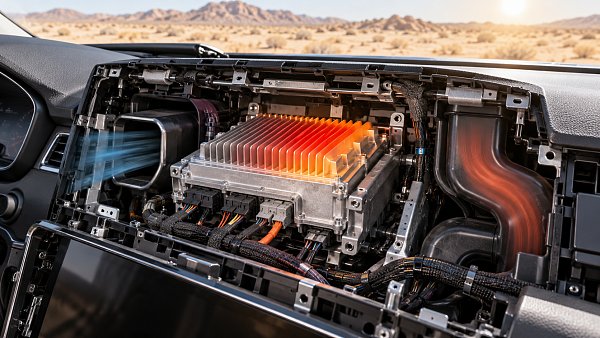
There is also a subtle thermal issue. Zonal modules handling multiple switched loads can generate meaningful heat, especially when driving pumps, fans, heaters, or high-current lighting circuits. Their heat dissipation must be assessed under high ambient temperature, solar loading, low vehicle speed, and degraded cooling conditions. In an EV, these scenarios can overlap with heavy demand from the battery thermal-management system and electric air-conditioning compressor.
Power architecture determines whether local intelligence remains available
Zonal reliability is closely tied to the low-voltage supply strategy. Many new EV platforms use 12 V systems, while others are moving toward 48 V subsystems or mixed-voltage approaches to support higher electrical loads. Regardless of voltage level, zonal controllers need stable supply behavior during cranking-equivalent events, DC/DC converter transitions, charging, load dumps, brownouts, and fault isolation actions.
A design that uses a single central low-voltage source with insufficiently protected feeders can undermine the resilience promised by local zones. Conversely, carefully separated feeds, coordinated protection devices, and reserve energy provisions can keep essential zonal functions alive during a localized harness or converter problem.
Evaluators should examine:
- Whether each zone has independent or selectively protected supply paths;
- How voltage dips affect controller reset behavior and output states;
- Whether critical loads have a defined fallback mode when network commands are unavailable;
- How electronic fuses coordinate with conventional fuses, relays, and central power-distribution units;
- Whether diagnostic reporting remains functional after partial power loss.
These questions matter because a fault that is electrically isolated but invisible to diagnostics can still lead to long workshop times and inconsistent field repairs.
Diagnostics become faster when the architecture preserves context
One of the strongest operational arguments for zonal architecture is improved diagnosability. A local controller can measure current, voltage, temperature, communication status, and actuator feedback near the affected load. Instead of reporting a broad “function unavailable” message from a distant ECU, it can provide information that narrows the likely fault location.
For service teams, this can reduce unnecessary replacement of harness sections or downstream modules. For fleet operators, it can support earlier detection of intermittent corrosion, overloaded circuits, pump degradation, or connector heating before a fault becomes immobilizing.
Yet diagnostic capability depends on implementation quality. A zonal controller should distinguish between a disconnected load, a short circuit, a stalled motor, a supply undervoltage event, and a communication timeout. It should also retain relevant freeze-frame data: vehicle state, local voltage, current profile, temperature, commanded output, and fault duration. Without that context, a sophisticated architecture can merely produce more diagnostic codes.
Remote diagnostics add another consideration. Centralized software platforms can collect health data from multiple zones, but communication bandwidth, cybersecurity controls, data ownership, and update strategy need defined boundaries. A remote update intended to improve fault handling must not introduce incompatible calibration, altered timing, or unexpected interactions with local power stages.
Software and network behavior are now part of electrical reliability
In a zonal vehicle, an actuator may receive its command through a chain involving central compute, an Ethernet backbone, a network switch, a zonal controller, and a local driver circuit. The hardware may be healthy while the function is unavailable because of latency, message loss, software timing, or an incorrect configuration.
That does not make zonal architecture unreliable. It means reliability validation must include networked behavior, not only component endurance. Timing budgets should be established for functions such as steering-related signals, lighting activation, thermal control, door access, camera availability, and driver displays. Communication loss scenarios need defined fallback states. Where required by the vehicle safety concept, redundant paths or independent local control may be necessary.
Cybersecurity is relevant here as well. Consolidation can reduce the number of externally accessible modules, but a compromised zonal gateway could expose several local functions. Secure boot, authenticated updates, network segmentation, intrusion monitoring, and controlled diagnostic access contribute to dependable operation over the vehicle’s service life.
A practical evaluation framework for technical teams
When assessing how zonal architectures affect EV reliability, begin with failure propagation rather than architecture diagrams. Ask what happens when a connector floods, a feeder opens, a controller overheats, an Ethernet link drops, a software update fails, or a high-current actuator develops a short. Then determine which functions are lost, which remain available, and how the vehicle detects and communicates the condition.
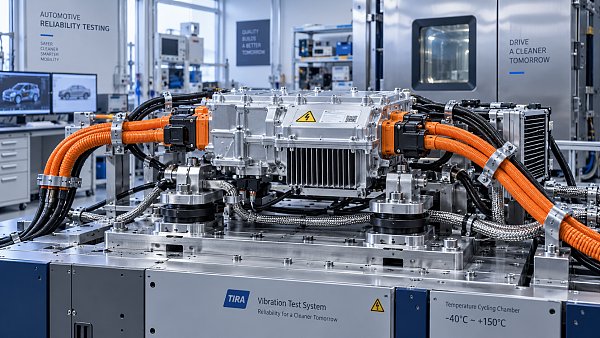
A credible design review should connect four levels of evidence: component qualification, harness and connector validation, controller-level fault testing, and vehicle-level functional verification. Testing only the zonal ECU on a bench will not expose routing damage, ground-offset effects, cross-zone network dependencies, thermal interaction with adjacent systems, or service-access limitations.
It is also useful to separate availability from safety. A vehicle may remain safe after a fault while losing features that customers consider essential, such as climate control, charging convenience, rear access, display functions, or parking assistance. Repeated availability failures can drive warranty cost and customer dissatisfaction even when no safety requirement is breached.
What a robust zonal EV platform should demonstrate
The most convincing zonal architectures do not promise that failures will disappear. They demonstrate that failures are less likely to spread, easier to detect, and more manageable when they occur. That requires disciplined coordination between wiring-harness engineering, power electronics, thermal-system design, cockpit electronics, software integration, and service planning.
For EV programs incorporating battery liquid cooling, heat-pump systems, electric compressors, high-voltage harnesses, cockpit displays, steering electronics, and high-speed data cables, the architecture should be reviewed as a connected operating system. Localized power and intelligence can reduce exposure to wiring-related faults and improve service visibility, but only if the zones are backed by robust power protection, environmental validation, diagnostic depth, and clearly defined degraded modes.
Ultimately, the answer to how zonal architectures affect EV reliability is not found in the number of controllers removed from a bill of materials. It is found in the vehicle’s behavior under realistic faults. When a local defect stays local, critical functions retain an appropriate fallback path, and technicians can identify the cause without dismantling half the vehicle, zonal architecture delivers a meaningful system-level reliability advantage.
Related News
- 00
0000-00
How electric compressor speed affects EV battery cooling capacity - 00
0000-00
How to verify a variable frequency compressor supplier’s efficiency claims - 00
0000-00
How bend radius affects FPC reliability in automotive camera modules - 00
0000-00
How to diagnose intermittent loss of electric power steering assist - 00
0000-00
How to size automotive power modules for electric compressors
Weekly Insights
Stay ahead with our curated technology reports delivered every Monday.
Recommended News
 How electric compressor speed affects EV battery cooling capacityElectric compressor technology: battery cooling depends on more than RPM. Discover how speed, refrigerant flow, and system limits affect EV cooling capacity and energy efficiency.Author:Time:Oct 19, 2026
 How to verify a variable frequency compressor supplier’s efficiency claimsVerify a variable frequency compressor supplier’s efficiency claims using COP boundaries, matched test conditions, and duty-cycle data. Learn how to choose with confidence.Author:Time:Oct 18, 2026
 How bend radius affects FPC reliability in automotive camera modulesAutomotive FPC applications: camera module reliability starts with bend radius. Learn how stack-up, strain, and validation guide robust designs and help prevent costly failures.Author:Time:Oct 17, 2026
 How to diagnose intermittent loss of electric power steering assistMaster power steering system diagnostics to trace intermittent EPS assist loss. Learn proven checks for voltage, wiring, and fault codes to avoid costly guesswork.Author:Time:Oct 16, 2026
 How to size automotive power modules for electric compressorsSize automotive power modules for electric compressors with confidence. Learn how voltage, phase current, losses, and cooling shape reliable selection—and avoid costly oversizing.Author:Time:Oct 15, 2026
 Why automotive power electronics are shifting to silicon carbideAutomotive Power Electronics are shifting to silicon carbide. Discover how SiC can cut losses, boost EV power density, and reshape cooling, reliability, and system costs.Author:Time:Oct 14, 2026
 How EV adoption shapes the electrically driven compressor marketExplore how EV adoption shapes the electrically driven compressor market, from battery cooling and heat pumps to supplier margins. Discover the drivers of profitable growth.Author:Time:Oct 13, 2026
 How to size a PTC heater for reliable EV cabin heatingPTC Heater sizing for EV cabins: learn how to balance defrost performance, heat-pump integration, airflow, voltage range, and battery power for reliable winter comfort.Author:Time:Oct 12, 2026
 What determines the cooling output of electric automotive AC compressors?Automotive air conditioning compressors electric systems: explore how speed, voltage, refrigerant, controls, and heat exchangers shape EV cooling capacity and efficiency.Author:Time:Oct 11, 2026
 What makes a touchscreen media head unit responsive enough for daily use?Touchscreen media head unit performance explained: discover what delivers fast starts, smooth maps, reliable phone pairing, and responsive daily driving.Author:Time:Oct 10, 2026
 Can a Domain Controller Share a Cooling Loop with Other Electronics?Can a domain controller share a cooling loop with other electronics? Explore thermal zoning, flow control, safety priorities, and reliable vehicle electronics cooling strategies.Author:Time:Oct 19, 2026
 What Causes Domain Controller Overheating During Summer Testing?What causes domain controller overheating in summer testing? Explore heat load, airflow, installation, software factors, and practical fixes.Author:Time:Oct 18, 2026
 Is a Head-Up Display Hard to Integrate with Different Windshields?Is a head-up display difficult to integrate with different windshields? Discover how glass geometry, coatings, and calibration affect HUD clarity, cost, and production readiness.Author:Time:Oct 17, 2026
 What Should Be Checked Before Selecting an Automotive Head Unit?What should be checked before selecting an automotive head unit? Explore compatibility, performance, cybersecurity, compliance, and supplier support.Author:Time:Oct 16, 2026
 Is Steer-by-Wire More Expensive Than an EPS Steering System?Is steer-by-wire more expensive than an EPS steering system? Explore the true costs, safety demands, software value, and when SbW justifies its premium.Author:Time:Oct 15, 2026
 Which Automotive Electronics Need Validation for 800V Platforms?What automotive electronics should be validated for 800V platforms? Explore critical checks for harnesses, power electronics, thermal systems, safety, and EMC.Author:Time:Oct 14, 2026
 How Do Automotive Compressor Export Requirements Vary by Market?How do automotive compressor export requirements vary by market? Explore key compliance rules for refrigerants, EV safety, OEM approvals, labeling, and customs.Author:Time:Oct 13, 2026
 What Documents Are Needed to Export Automotive Thermal Components?What documents are needed to export automotive thermal components? Explore customs, compliance, technical records, and shipping tips to prevent costly delays.Author:Time:Oct 12, 2026
 How Often Should an EV Air Conditioning Compressor Be Inspected?How often should an EV air conditioning compressor be inspected? Discover recommended service intervals, warning signs, and expert care tips to protect cooling performance and EV reliability.Author:Time:Oct 11, 2026
 How to size power solutions for automotive head-up display systemsHeads-up display systems power solutions: learn how to size automotive HUD power architectures for startup, brightness, thermal limits, EMC, protection, and reliable vehicle operation.Author:Time:Oct 19, 2026
 How does a head-up display work in a high-performance car?Hoe werkt een head-up display in een high-performance auto en welke informatie toont het? Discover the tech, safety alerts, and performance data that sharpen every drive.Author:Time:Oct 18, 2026
 Which trends will shape zonal EV architectures in the next decade?Future trends in zonal EV architectures: explore smarter power distribution, 48V systems, thermal integration, software, and resilient networks shaping next-gen vehicles.Author:Time:Oct 17, 2026
 When does a zonal EV architecture outperform a centralized design?Explore the trade-offs between zonal and centralized EV architectures to identify the best path for harness efficiency, software scalability, safety, and faster EV launches.Author:Time:Oct 16, 2026
 How to compare vendors for zonal EV power architecturesComparing vendors for zonal EV power architectures: assess electrical capability, interface ownership, lifecycle support, and integration risk for smarter sourcing.Author:Time:Oct 15, 2026
 How zonal architectures can improve EV reliability at the system levelHow zonal architectures affect EV reliability: explore fault containment, diagnostics, power resilience, and software strategies for more dependable electric vehicles.Author:Time:Oct 14, 2026
 What is driving growth in the automotive E/E architecture market?Explore what drives the automotive electric electronic systems architecture market, from EV power systems and zonal computing to ADAS, cybersecurity, and software-defined vehicles.Author:Time:Oct 13, 2026
 How to evaluate top-rated vehicle electrical components for reliabilityDiscover how to evaluate top-rated vehicle electrical components for reliability, from connector integrity and thermal margins to validation data and manufacturing control.Author:Time:Oct 12, 2026
 What makes vehicle electrical components reliable over a long service life?Top-rated vehicle electrical components for reliability depend on thermal control, sealing, vibration resistance, and validated manufacturing. Discover how to choose durable parts.Author:Time:Oct 11, 2026
 How battery thermal management solutions prevent fast-charge overheatingBattery thermal management solutions prevent fast-charge overheating with intelligent cooling, valve control, predictive preconditioning, and reliable heat rejection.Author:Time:Oct 09, 2026
 What an automotive market report can reveal about EV demand shiftsAutomotive market report insights reveal EV demand shifts, component opportunities, regional risks, and smarter investment strategies for growth.Author:Time:Oct 08, 2026