What makes vehicle electrical components reliable over a long service life?




What Makes Vehicle Electrical Components Reliable Over a Long Service Life?
Long service life in vehicle electrical systems is rarely the result of one impressive number on a datasheet. A connector may have excellent current capability, a display may look sharp in the lab, and a harness may pass an initial continuity test—yet the vehicle can still develop intermittent faults years later. Heat, vibration, humidity, voltage transients, chemical exposure, installation quality, and software behavior all interact over time.
For researchers comparing top-rated vehicle electrical components for reliability, the useful question is not simply which component has the highest stated rating. It is whether the complete design can keep performing in its actual location on the vehicle. A high-voltage harness routed near a battery pack faces a different risk profile from a cockpit display, an EPS control unit, or a data cable behind the instrument panel. Reliable parts are designed, validated, manufactured, and integrated with those differences in mind.
This matters even more as vehicles move toward higher-voltage architectures, connected cabins, electric compressors, steer-by-wire functions, and tightly packaged thermal systems. Electrical reliability is no longer confined to the wiring harness. It reaches into sensors, displays, controllers, motors, connectors, cooling interfaces, communication networks, and the mechanical structures that hold them in place.
Reliability begins with the real operating environment
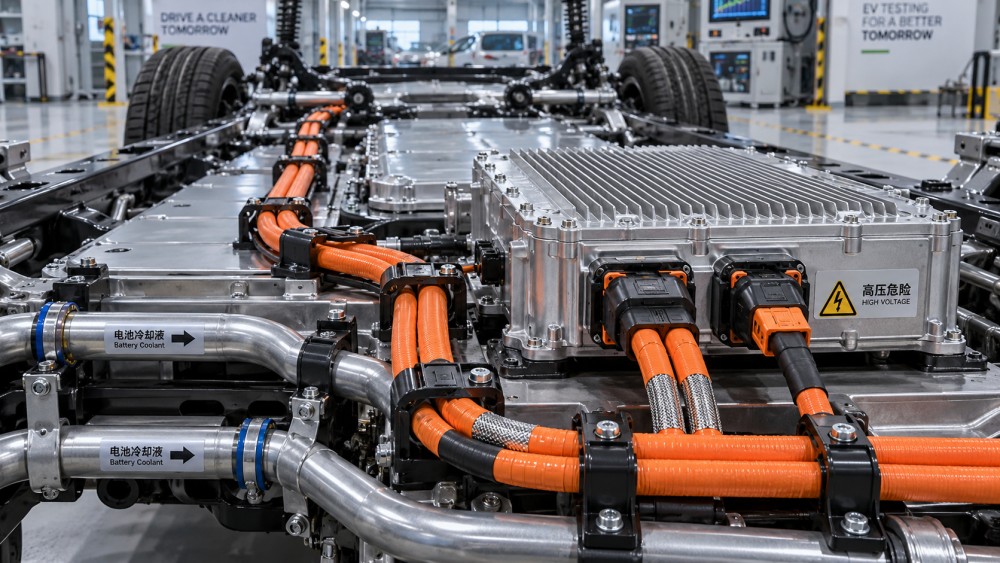
Automotive components operate in an environment that is much less forgiving than a bench test. Under-hood assemblies may experience sustained heat, repeated thermal cycling, fluids, road splash, and strong vibration. Components inside the cabin avoid some of those stresses, but they face ultraviolet exposure, condensation, electromagnetic interference, user interaction, and long operating hours. In an EV, battery-area components also need to be considered alongside high voltage, cooling-system proximity, and service safety requirements.
The important detail is cumulative stress. A component does not fail only when it reaches an extreme temperature once. Repeated expansion and contraction can fatigue solder joints, crack potting materials, loosen terminal interfaces, and change contact resistance. Repeated vibration can damage conductor strands where a harness enters a connector or clamp. Moisture can enter a housing slowly, then create corrosion that first appears as an intermittent fault rather than a complete failure.
That is why engineers often care more about the duty cycle and mounting position than a broad claim such as “automotive grade.” The phrase may be relevant, but it is not a substitute for understanding where the part will sit, how it will be fixed, what it will touch, and what happens when surrounding systems get hot.
Material choices are visible only when something goes wrong
Good material selection is one of the quiet foundations of reliable vehicle electrical components. It covers conductor material, insulation, connector plating, seals, housing polymers, adhesives, PCB laminates, and protective coatings. These choices are not interchangeable simply because two materials meet the same basic dimensional requirement.
In a wiring harness, conductor flexibility and strand construction affect resistance to repeated bending. Insulation must remain stable at the expected temperature while resisting abrasion, fluids, and installation damage. A lighter harness can reduce vehicle mass, but aggressive downsizing needs careful attention to current load, heat dissipation, voltage drop, routing, and mechanical protection. Weight reduction without enough margin often moves the risk downstream into field durability.
Connector performance depends heavily on contact design and surface treatment. Low contact resistance at the beginning of life is not the whole story. The contact system has to tolerate micro-motion from vibration, mating and unmating where service is expected, moisture exposure, and temperature cycling. Corrosion products or fretting wear can raise resistance gradually, particularly in low-current signal circuits where a small change may disrupt communication or sensor readings.
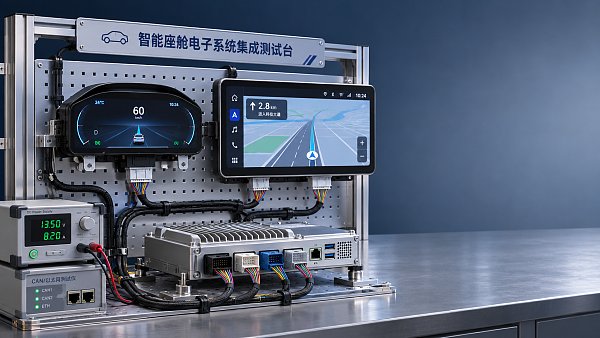
For cockpit electronics, the less obvious materials can matter just as much. Adhesives and optical bonding materials in displays must retain their intended properties across cabin temperature swings. Flexible printed circuits need bend control and strain relief. A HUD module, media head unit, or instrument display may be electrically sound but still become unreliable if its optical, mechanical, or thermal interfaces age poorly.
Heat management is an electrical reliability issue
Electrical stress and thermal stress are closely linked. Higher current creates heat; poor thermal paths retain it; heat accelerates aging in insulation, semiconductors, capacitors, seals, and solder connections. This is one reason reliability cannot be assessed by looking at electrical ratings in isolation.
High-voltage harnesses, electric compressors, battery cooling controls, heat-pump system electronics, and power steering assemblies each have different thermal considerations. An electric compressor, for example, combines electrical drive functions with mechanical loads and refrigerant-system conditions. Its reliability depends not only on motor and inverter design, but also on sealing, lubrication compatibility, heat rejection, vibration isolation, and protection logic. A reliable component is usually the result of these interfaces working together.
Battery liquid-cooling systems introduce another practical concern: electrical parts may be located near hoses, valves, pumps, or joints that can experience condensation or service-related fluid exposure. The relevant question is not whether a module has a sealed enclosure in theory. It is whether its sealing strategy, connector orientation, pressure equalization approach, cable exits, and vehicle-level drainage make sense in the installed position.
Sealing must protect without trapping a new problem
Ingress protection is often discussed as though a higher rating automatically means a better design. In practice, sealing has trade-offs. A tightly sealed enclosure may resist water and dust well, but it can also face internal pressure changes during thermal cycling. If the design does not manage those changes appropriately, seals and interfaces may be put under repeated stress. Moisture already present inside an enclosure can also become a long-term issue if it has no controlled way to escape.
The same thinking applies to harness grommets, connector backshells, cable glands, and potting compounds. A seal must work with the surrounding materials over time, not merely when the assembly is new. Chemical compatibility matters around automotive fluids. Compression set matters for elastomer seals. Assembly variation matters because a well-designed seal can still fail if it is twisted, contaminated, under-compressed, or damaged during installation.
For vehicles used in coastal regions, cold climates with road-treatment chemicals, tropical markets, or dusty operating environments, the exposure profile can vary substantially. Procurement teams should resist the temptation to treat a single environmental test summary as universal proof of durability. The relevant validation needs to reflect the target vehicle program and market conditions.
Vibration and routing are where many good designs become weak systems
A robust component can become unreliable through poor integration. Harnesses that are too taut, poorly supported, routed against sharp edges, or placed near hot surfaces can fail before their underlying materials reach their expected limit. The same is true for control units fixed to structures that transmit excessive vibration, or displays mounted without adequate consideration for vehicle body movement and thermal expansion.
The vulnerable points are usually interfaces: a wire-to-terminal crimp, a terminal-to-connector contact, a cable exit from a housing, a PCB-to-housing attachment, or a bolt joint that loses clamp load. These are not glamorous details, but they are where field failures often begin. A proper design review should examine movement, bend radius, clamp spacing, strain relief, service access, and the chance of assembly workers forcing a connector or harness into an unintended position.
Data and communication cables deserve particular attention. High-speed signals are sensitive not only to continuity but also to impedance control, shielding integrity, grounding strategy, and routing near noise sources. A cable that survives mechanically may still create a system-level problem if its installation exposes it to electromagnetic interference or damages the shield termination.
Electrical stability includes faults that a simple power test will not reveal
Vehicle electrical systems are exposed to voltage variation, switching noise, transient events, ground offsets, and electromagnetic disturbances. Reliable design therefore requires more than confirming nominal voltage and current capability. Sensitive electronics need protection against expected vehicle electrical conditions, while communication systems need to maintain signal integrity when neighboring systems switch loads or when the vehicle operates in a noisy electromagnetic environment.
This becomes especially relevant in EPS systems, steer-by-wire architectures, smart cockpit modules, electric compressor controls, and high-voltage battery-related assemblies. A fault in these areas may not be a simple “component stopped working” event. It can appear as a temporary warning, a reset, reduced performance, communication loss, sensor plausibility fault, or degraded operating mode.
Relevant environmental and electromagnetic validation may refer to vehicle or customer-specific requirements, and commonly used frameworks such as ISO 16750 or EMC test standards can be part of the discussion. However, passing a standard test does not remove the need for vehicle-level validation. System behavior depends on grounding, cable routing, software, power architecture, neighboring loads, and the way multiple suppliers’ components interact.
Process discipline is part of the component, even if it is not physically visible
Two parts built to the same drawing can have different reliability outcomes if manufacturing control is inconsistent. Crimp quality, terminal insertion force, soldering process windows, sealing application, torque management, cleanliness, traceability, and end-of-line testing all influence durability. In automotive supply chains, the challenge is not only building a good prototype; it is repeatedly producing the same quality across high volumes and across production changes.
This is why supplier evaluation should go beyond catalog specifications. Useful questions include whether the supplier can explain its critical process controls, how it handles material or tooling changes, what traceability exists for safety-relevant or high-voltage parts, and how it investigates intermittent failures. A polished presentation cannot answer those questions. Engineering records, validation plans, process documentation, and a willingness to discuss limitations are more revealing.
Supply continuity also affects reliability in a practical sense. Unplanned substitutions of polymers, plating, electronic components, or cable materials can alter performance. Buyers assessing global sources should clarify change-notification expectations and confirm whether regional production sites use equivalent tooling, materials, and quality controls.
How to compare components without relying on a “top-rated” label
There is no universal list of top-rated vehicle electrical components because reliability is application-specific. A connector that performs well in a protected cabin location may not be appropriate near the underbody. A compact, lightweight high-voltage cable may be suitable for one battery-pack routing path but not another. A display architecture that is effective in one climate can require different thermal or optical consideration elsewhere.
A more credible comparison usually starts with a short set of project questions:
- What are the actual temperature, vibration, moisture, chemical, and contamination exposures at the installation point?
- Which electrical events, current loads, communication speeds, and EMC risks are relevant?
- Are the interfaces mechanically protected, serviceable, and tolerant of normal assembly variation?
- What validation evidence applies to this exact configuration rather than to a related product family?
- How are material changes, process changes, and supply-chain substitutions controlled?
This approach is more useful than ranking parts by one headline feature. It also explains why GACT’s coverage of high-voltage harnesses, data cables, cockpit electronics, thermal controls, electric compressors, and steering systems needs to connect product design with application conditions, market requirements, and supply-chain context. Component reliability is not a single-product question; it is a vehicle-system question.
The durable choice is usually the better-matched choice
Long-life electrical components are built from sound materials, but materials alone do not guarantee success. Reliability comes from realistic thermal design, durable sealing, vibration control, stable electrical behavior, disciplined manufacturing, and careful vehicle integration. The strongest suppliers are generally the ones that can discuss these trade-offs clearly rather than promising that one design is ideal for every application.
When reviewing a harness, EPS assembly, cockpit module, cable, compressor controller, or thermal-system electrical part, look closely at the interfaces and the operating environment. That is usually where a dependable specification becomes a dependable vehicle—or where it quietly falls short.
Have questions about this sector analysis, or seeking best practices specific to your niche? Drop us a line below and let the senior consultants at GAC assist you.
“We respect your privacy. Your information is strictly confidential.”
Related News
- 00
0000-00
How to assess a smart cockpit electronics manufacturer's integration capability - 00
0000-00
How does a shielded HSD cable reduce interference in vehicles? - 00
0000-00
What drives demand for scroll compressors in the automotive market? - 00
0000-00
Does AEC-Q200 apply to flexible printed circuits? - 00
0000-00
How does production volume affect automotive flexible electronics costs?
Weekly Insights
Stay ahead with our curated technology reports delivered every Monday.
Recommended News
 How to assess a smart cockpit electronics manufacturer's integration capabilityAssess a smart cockpit electronics manufacturer's integration capability with practical checks for interfaces, testing, safety, cybersecurity and supplier support.Author:Time:Nov 18, 2026
 How does a shielded HSD cable reduce interference in vehicles?Discover how a shielded HSD cable reduces vehicle interference, and learn why connector design, routing, and testing matter for reliable high-speed data links.Author:Time:Nov 17, 2026
 What drives demand for scroll compressors in the automotive market?Explore the scroll compressor for automobile market and discover how EV adoption, heat pumps, efficiency, and supplier capabilities shape demand.Author:Time:Nov 16, 2026
 Does AEC-Q200 apply to flexible printed circuits?Flexible Printed Circuit AEC-Q200 requirements explained: discover which components qualify and how to assess automotive FPC reliability.Author:Time:Nov 15, 2026
 How does production volume affect automotive flexible electronics costs?Explore how production volume affects automotive flexible electronics cost, from tooling and yield to testing. Compare quotes and negotiate smarter.Author:Time:Nov 14, 2026
 How much does an in-vehicle infotainment system cost to replace?Explore in-vehicle infotainment cost, from affordable repairs to factory replacements. Compare options, installation fees, and compatibility before you buy.Author:Time:Nov 13, 2026
 How does condenser efficiency affect heat pump performance?Discover how condenser high efficiency can improve heat pump performance, reduce compressor power, and boost heating COP—plus the trade-offs to watch.Author:Time:Nov 12, 2026
 What does each FAKRA cable color code mean?FAKRA cable color code explained: Explore common connector colors, typical uses and key compatibility checks before choosing a replacement.Author:Time:Nov 11, 2026
 How to compare noise ratings for battery coolant pumpsCompare coolant pump low noise ratings with confidence. Learn how test conditions, hydraulic duty, tonal noise and installation affect your choice.Author:Time:Nov 10, 2026
 How bright should automotive display systems be in sunlight?Automotive Display Systems need more than brightness to stay readable in sunlight. Discover why 1,000 nits is a starting point and how to evaluate glare and heat.Author:Time:Nov 09, 2026
 How heat pumps improve the efficiency of EV thermal systemsEV Thermal Systems use heat pumps to reduce heating energy demand. Explore how they work, where they excel, and what limits efficiency in cold weather.Author:Time:Nov 08, 2026
 Can a smart cockpit platform support multiple displays?Can a smart cockpit platform support multiple displays? Explore key requirements for performance, safety, connectivity, and supplier evaluation.Author:Time:Nov 07, 2026
 How is automotive connector vibration resistance tested?Automotive connector vibration resistance testing reveals hidden contact failures. Explore test profiles, continuity monitoring and pass criteria.Author:Time:Nov 06, 2026
 How heat pumps save energy in automotive cabin climate systemsAutomotive Cabin Climate Systems energy saving starts with smarter heat pump design. Explore real-world efficiency, cold-weather trade-offs, and testing tips.Author:Time:Nov 05, 2026
 Is an EV heat pump worth it for winter driving range?Is a heat pump worth using in a cold-climate EV? Discover how it affects winter range, when it pays off, and what to check before buying.Author:Time:Nov 04, 2026
 When should you use 50-ohm coaxial cable instead of 75-ohm?Coaxial cable 50 ohm or 75 ohm? Learn when to use each, avoid impedance mismatches, and choose the right cable for reliable RF and video performance.Author:Time:Nov 03, 2026
 How to select a high temperature motor harness for an EVChoose the right high temperature motor harness for your EV. Compare thermal limits, current capacity, shielding, routing, and validation evidence.Author:Time:Nov 02, 2026
 How much does electric power steering replacement cost?Electric power steering price typically ranges from $1,000 to $3,000 for major replacements. Discover cost factors, repair options, and tips for comparing quotes.Author:Time:Nov 01, 2026
 How to size an EV A/C compressor for the required cooling capacitySize an EV A/C Compressor with confidence. Explore cooling loads, performance maps and power limits to select the right compressor for your vehicle.Author:Time:Oct 31, 2026
 How to choose the right pitch for an FPC board connectorFPC board connector pitch affects space, assembly and reliability. Learn how to compare options and select the best fit for your design.Author:Time:Oct 30, 2026
 How zonal design affects harness routing in high-voltage EV architecturesExplore high-voltage electrical architecture zonal design and its impact on EV harness routing. Discover key trade-offs in cable length, safety, thermal performance, and service access.Author:Time:Oct 29, 2026
 How tariffs affect costs in global automotive parts supply chainsNavigate tariffs in the global automotive parts trade supply chain. Learn to compare landed costs, manage duty exposure, and uncover smarter sourcing strategies to protect your margins.Author:Time:Oct 28, 2026
 How to assess vendor lock-in in a software-defined vehicle platformAssess Software-Defined Vehicle platform lock-in with practical tests for API portability, data access, update control, and exit costs. Learn how to choose a platform with a proven exit path.Author:Time:Oct 27, 2026
 How ISO 26262 guides functional safety in steer-by-wire systemsExplore steering systems functional safety through ISO 26262. Learn how hazard analysis, fault-tolerant design, and validation build a stronger steer-by-wire safety case.Author:Time:Oct 26, 2026
 How to evaluate a steering angle sensor manufacturer's accuracy claimsEvaluate steering angle sensor manufacturer accuracy claims with practical checks on calibration, latency, and test evidence. Compare suppliers confidently and avoid costly selection mistakes.Author:Time:Oct 25, 2026
 How to diagnose CAN bus faults in a hybrid vehicle control unitDiagnose Hybrid Vehicle Systems control unit CAN bus faults with step-by-step power, wiring, and waveform checks. Find the root cause and avoid unnecessary replacement.Author:Time:Oct 24, 2026
 How does battery cooling pipe diameter affect coolant pressure drop?Battery Cooling Pipe diameter affects coolant pressure drop and pump power. Explore sizing calculations and practical tips to optimize EV battery cooling and compare options with confidence.Author:Time:Oct 23, 2026
 How to assess PPAP readiness of automotive sensor system manufacturersAssess Automotive Sensor Systems manufacturers for PPAP readiness. Learn to verify production evidence, measurement capability, validation, and traceability to reduce sourcing risks.Author:Time:Oct 22, 2026
 What to ask an FPC connector manufacturer about reliability testingChoosing an FPC Connector manufacturer? Learn what to ask about reliability testing, failure limits, and traceable results to reduce design risks and select with confidence.Author:Time:Oct 21, 2026
 How to verify vehicle fitment for an aftermarket AC evaporatorNavigating the evaporator aftermarket? Verify vehicle fitment with VIN data, OE numbers, and physical interface checks. Use this guide to avoid costly mismatches and order confidently.Author:Time:Oct 20, 2026