How to compare vendors for zonal EV power architectures




Vendor comparison for zonal EV power architectures cannot be reduced to comparing a zone controller price, a high-voltage harness quotation, or a connector catalogue. The architecture changes where power is converted, protected, distributed, diagnosed, and repaired. A supplier that performs well on a conventional centralized wiring program may still create integration risk if its hardware, software, validation methods, and manufacturing model are not aligned with zonal electrical design.
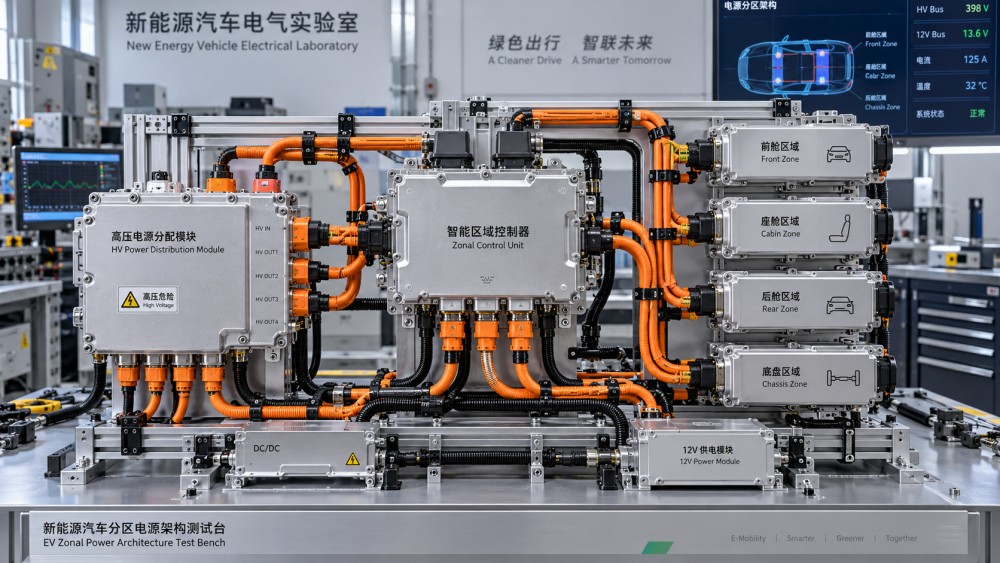
The central procurement question is not “Which vendor offers the lowest-cost zonal component?” It is whether a vendor can support the required electrical function across the full vehicle lifecycle: platform definition, prototype builds, industrialization, homologation support, serial production, service, and controlled engineering changes. This requires comparison at the interface level, where zone controllers, power distribution units, harnesses, connectors, battery systems, body electronics, and central compute domains meet.
Start with the vehicle architecture, not the supplier product list
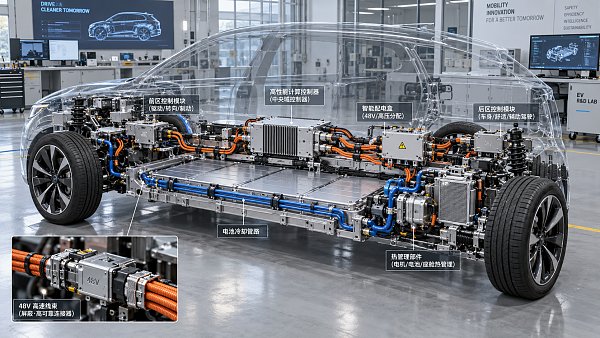
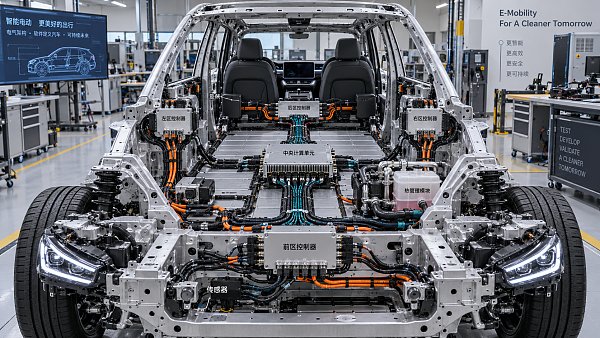
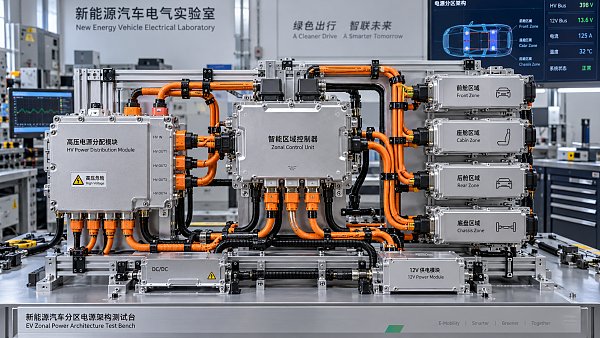
“Zonal architecture” describes different technical realities across vehicle programs. One vehicle may use regional controllers to shorten low-voltage harness runs while retaining several distributed electronic control units. Another may consolidate body functions, power distribution, diagnostics, and communications into intelligent zone controllers linked to a central computing unit. Some programs are focused mainly on 48 V loads; others combine 12 V, 48 V, and high-voltage traction circuits.
A vendor comparison should therefore begin with an architecture boundary document that defines what is being sourced. At minimum, it should identify:
- Voltage domains: 12 V, 48 V, high voltage, and isolated versus non-isolated interfaces.
- Functions assigned to each zone: power distribution, fuse or electronic protection, wake-up control, load switching, sensing, gateway functions, diagnostics, or local actuation.
- Network interfaces, including CAN, LIN, Automotive Ethernet, and any power-line communication requirements.
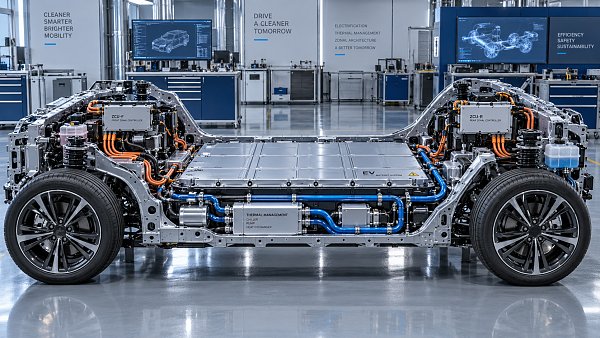
- Physical zone locations and environmental exposure: cabin, front compartment, underbody, wheelhouse, liftgate, or battery-adjacent locations.
- Interfaces with central body controllers, battery management systems, onboard chargers, DC/DC converters, thermal systems, and high-voltage distribution assemblies.
- Required service actions, such as replacement of a controller, connector repair, harness branch replacement, or software update.
Without this definition, quotations are rarely comparable. One supplier may price a controller with bare hardware only, while another includes embedded software, diagnostic descriptions, production test equipment, connector systems, and functional-safety work products. The lower line-item price may simply indicate that essential obligations are excluded or assumed to be supplied elsewhere.
Assess electrical capability at the operating edge
Nominal voltage and current ratings are insufficient for comparing zonal power products. The relevant question is whether the supplier can demonstrate performance under the electrical and thermal conditions created by the actual load mix and installation position.
For low-voltage zonal distribution, evaluate continuous current, inrush current, short-circuit behavior, switching endurance, voltage drop, quiescent current, reverse-polarity protection, load-dump tolerance where applicable, and thermal derating. Electronic fuses and smart power switches require particular attention. Their appeal is programmable protection and diagnostic visibility, but their trip behavior must be coordinated with downstream loads, wiring cross-sections, upstream battery protection, and vehicle safety functions.
A zone controller located near pumps, fans, window motors, heated elements, lamps, or actuators can experience simultaneous load peaks that do not appear in a simplified bill of materials. Ask for the vendor’s power-budget method, worst-case assumptions, and evidence that it models conductor resistance, connector contact resistance, ambient temperature, enclosure heat dissipation, and aging margin.
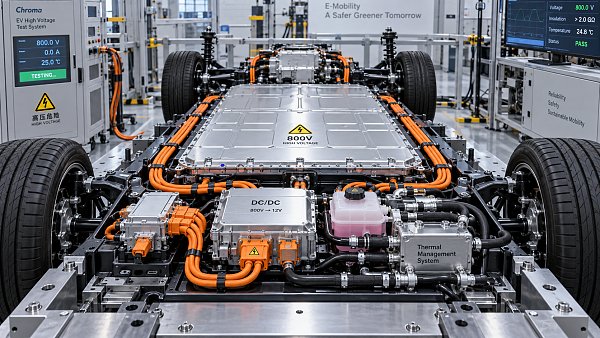
For high-voltage interfaces, the assessment must go beyond conductor size. Relevant evidence includes insulation coordination, creepage and clearance design, shielding strategy, connector keying, HVIL implementation where used, sealing, contact-temperature behavior, electromagnetic compatibility, and safe disconnection provisions. High-voltage cables, connectors, and distribution elements should be evaluated as an assembly rather than as independent purchased parts. A compliant cable paired with an unsuitable connector, terminal crimp, seal, or routing condition can still become the weak point.
Automotive cable requirements may be specified through standards such as ISO 19642 for road-vehicle high-voltage cables, while low-voltage cables are often assessed against applicable OEM specifications and standards such as ISO 6722. These references do not eliminate the need for vehicle-level validation. They establish part-level expectations; they do not prove that the assembled system will withstand the vehicle’s vibration, thermal, chemical, electrical, and packaging conditions.
Compare interface ownership, because integration gaps become program delays
The most difficult failures in zonal programs often emerge between supplier scopes. A controller supplier may state that a connector is customer-nominated. The harness supplier may build to released drawings but not own voltage-drop analysis. The software supplier may supply diagnostics but not maintain the diagnostic database after a hardware revision. Each statement can be commercially reasonable, yet the overall vehicle remains exposed.
Vendor proposals should identify interface ownership in a form that can be converted into contractual deliverables. Important questions include:
- Who owns connector selection, terminal-crimp specifications, mating-cycle requirements, and connector position
Related News
- 00
0000-00
How electric compressor speed affects EV battery cooling capacity - 00
0000-00
How to verify a variable frequency compressor supplier’s efficiency claims - 00
0000-00
How bend radius affects FPC reliability in automotive camera modules - 00
0000-00
How to diagnose intermittent loss of electric power steering assist - 00
0000-00
How to size automotive power modules for electric compressors
Weekly Insights
Stay ahead with our curated technology reports delivered every Monday.
Recommended News
 How electric compressor speed affects EV battery cooling capacityElectric compressor technology: battery cooling depends on more than RPM. Discover how speed, refrigerant flow, and system limits affect EV cooling capacity and energy efficiency.Author:Time:Oct 19, 2026
 How to verify a variable frequency compressor supplier’s efficiency claimsVerify a variable frequency compressor supplier’s efficiency claims using COP boundaries, matched test conditions, and duty-cycle data. Learn how to choose with confidence.Author:Time:Oct 18, 2026
 How bend radius affects FPC reliability in automotive camera modulesAutomotive FPC applications: camera module reliability starts with bend radius. Learn how stack-up, strain, and validation guide robust designs and help prevent costly failures.Author:Time:Oct 17, 2026
 How to diagnose intermittent loss of electric power steering assistMaster power steering system diagnostics to trace intermittent EPS assist loss. Learn proven checks for voltage, wiring, and fault codes to avoid costly guesswork.Author:Time:Oct 16, 2026
 How to size automotive power modules for electric compressorsSize automotive power modules for electric compressors with confidence. Learn how voltage, phase current, losses, and cooling shape reliable selection—and avoid costly oversizing.Author:Time:Oct 15, 2026
 Why automotive power electronics are shifting to silicon carbideAutomotive Power Electronics are shifting to silicon carbide. Discover how SiC can cut losses, boost EV power density, and reshape cooling, reliability, and system costs.Author:Time:Oct 14, 2026
 How EV adoption shapes the electrically driven compressor marketExplore how EV adoption shapes the electrically driven compressor market, from battery cooling and heat pumps to supplier margins. Discover the drivers of profitable growth.Author:Time:Oct 13, 2026
 How to size a PTC heater for reliable EV cabin heatingPTC Heater sizing for EV cabins: learn how to balance defrost performance, heat-pump integration, airflow, voltage range, and battery power for reliable winter comfort.Author:Time:Oct 12, 2026
 What determines the cooling output of electric automotive AC compressors?Automotive air conditioning compressors electric systems: explore how speed, voltage, refrigerant, controls, and heat exchangers shape EV cooling capacity and efficiency.Author:Time:Oct 11, 2026
 What makes a touchscreen media head unit responsive enough for daily use?Touchscreen media head unit performance explained: discover what delivers fast starts, smooth maps, reliable phone pairing, and responsive daily driving.Author:Time:Oct 10, 2026
 Can a Domain Controller Share a Cooling Loop with Other Electronics?Can a domain controller share a cooling loop with other electronics? Explore thermal zoning, flow control, safety priorities, and reliable vehicle electronics cooling strategies.Author:Time:Oct 19, 2026
 What Causes Domain Controller Overheating During Summer Testing?What causes domain controller overheating in summer testing? Explore heat load, airflow, installation, software factors, and practical fixes.Author:Time:Oct 18, 2026
 Is a Head-Up Display Hard to Integrate with Different Windshields?Is a head-up display difficult to integrate with different windshields? Discover how glass geometry, coatings, and calibration affect HUD clarity, cost, and production readiness.Author:Time:Oct 17, 2026
 What Should Be Checked Before Selecting an Automotive Head Unit?What should be checked before selecting an automotive head unit? Explore compatibility, performance, cybersecurity, compliance, and supplier support.Author:Time:Oct 16, 2026
 Is Steer-by-Wire More Expensive Than an EPS Steering System?Is steer-by-wire more expensive than an EPS steering system? Explore the true costs, safety demands, software value, and when SbW justifies its premium.Author:Time:Oct 15, 2026
 Which Automotive Electronics Need Validation for 800V Platforms?What automotive electronics should be validated for 800V platforms? Explore critical checks for harnesses, power electronics, thermal systems, safety, and EMC.Author:Time:Oct 14, 2026
 How Do Automotive Compressor Export Requirements Vary by Market?How do automotive compressor export requirements vary by market? Explore key compliance rules for refrigerants, EV safety, OEM approvals, labeling, and customs.Author:Time:Oct 13, 2026
 What Documents Are Needed to Export Automotive Thermal Components?What documents are needed to export automotive thermal components? Explore customs, compliance, technical records, and shipping tips to prevent costly delays.Author:Time:Oct 12, 2026
 How Often Should an EV Air Conditioning Compressor Be Inspected?How often should an EV air conditioning compressor be inspected? Discover recommended service intervals, warning signs, and expert care tips to protect cooling performance and EV reliability.Author:Time:Oct 11, 2026
 How to size power solutions for automotive head-up display systemsHeads-up display systems power solutions: learn how to size automotive HUD power architectures for startup, brightness, thermal limits, EMC, protection, and reliable vehicle operation.Author:Time:Oct 19, 2026
 How does a head-up display work in a high-performance car?Hoe werkt een head-up display in een high-performance auto en welke informatie toont het? Discover the tech, safety alerts, and performance data that sharpen every drive.Author:Time:Oct 18, 2026
 Which trends will shape zonal EV architectures in the next decade?Future trends in zonal EV architectures: explore smarter power distribution, 48V systems, thermal integration, software, and resilient networks shaping next-gen vehicles.Author:Time:Oct 17, 2026
 When does a zonal EV architecture outperform a centralized design?Explore the trade-offs between zonal and centralized EV architectures to identify the best path for harness efficiency, software scalability, safety, and faster EV launches.Author:Time:Oct 16, 2026
 How to compare vendors for zonal EV power architecturesComparing vendors for zonal EV power architectures: assess electrical capability, interface ownership, lifecycle support, and integration risk for smarter sourcing.Author:Time:Oct 15, 2026
 How zonal architectures can improve EV reliability at the system levelHow zonal architectures affect EV reliability: explore fault containment, diagnostics, power resilience, and software strategies for more dependable electric vehicles.Author:Time:Oct 14, 2026
 What is driving growth in the automotive E/E architecture market?Explore what drives the automotive electric electronic systems architecture market, from EV power systems and zonal computing to ADAS, cybersecurity, and software-defined vehicles.Author:Time:Oct 13, 2026
 How to evaluate top-rated vehicle electrical components for reliabilityDiscover how to evaluate top-rated vehicle electrical components for reliability, from connector integrity and thermal margins to validation data and manufacturing control.Author:Time:Oct 12, 2026
 What makes vehicle electrical components reliable over a long service life?Top-rated vehicle electrical components for reliability depend on thermal control, sealing, vibration resistance, and validated manufacturing. Discover how to choose durable parts.Author:Time:Oct 11, 2026
 How battery thermal management solutions prevent fast-charge overheatingBattery thermal management solutions prevent fast-charge overheating with intelligent cooling, valve control, predictive preconditioning, and reliable heat rejection.Author:Time:Oct 09, 2026
 What an automotive market report can reveal about EV demand shiftsAutomotive market report insights reveal EV demand shifts, component opportunities, regional risks, and smarter investment strategies for growth.Author:Time:Oct 08, 2026