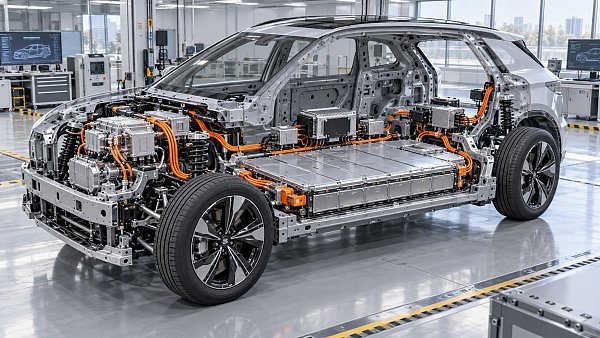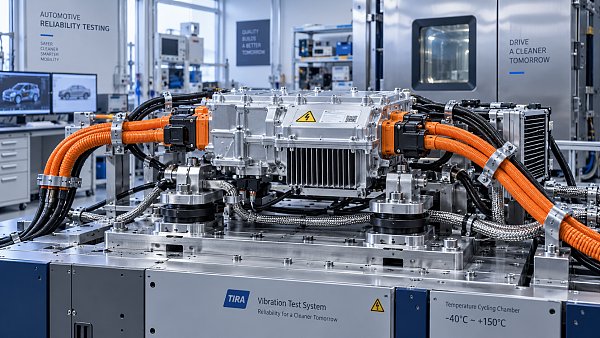
What Documents Are Needed to Export Automotive Thermal Components?




Exporting automotive thermal components is not a matter of preparing one standard customs folder. An electric compressor, a battery liquid cooling plate, a heat pump assembly, and an integrated thermal valve may all be described as automotive parts, but their documentation needs can differ because of their materials, electrical content, refrigerant handling, packaging, destination market, and buyer approval process.
The practical answer to what documents are needed to export automotive thermal components is: prepare the core commercial and transport documents for every shipment, then add product-specific technical, origin, compliance, and safety records based on the component and destination. A shipment may clear customs with correct commercial paperwork yet still be delayed by the buyer if the part number, test report, labeling, or engineering revision does not match the purchase order.
The most reliable approach is to build the document pack from the actual shipment configuration, not from a previous shipment of a different product.
Start with the documents customs and logistics providers need
Most exports of automotive thermal products require a commercial document set. These records establish what is being sold, how it is packed, where it is made, and how it will travel.
Consistency is more important than document volume. The part number, quantity, package count, weights, consignee name, country of origin, and shipment terms should not conflict across the invoice, packing list, transport document, and customs entry. Small differences often create manual review work at the border.
Descriptions deserve particular care. “Electric automotive compressor for vehicle air-conditioning system” is more useful than “compressor.” “Aluminum battery cooling plate for electric vehicle battery thermal management” is more useful than “metal parts.” A clear description helps the customs broker classify the cargo and helps the buyer reconcile it against incoming inspection records.
Technical records are often as important as customs paperwork
Thermal-system buyers generally need proof that the shipment is the approved product configuration. For a production release, the commercial invoice alone is rarely enough. The required depth depends on whether the shipment is a sample, a pilot batch, service part, replacement part, or serial-production delivery.
A practical technical file commonly includes:
- Product specification or data sheet: identifying the part number, product function, principal materials, interfaces, operating medium where relevant, electrical characteristics where relevant, and physical dimensions.
- Engineering drawing or controlled drawing reference: especially when the buyer needs to confirm mounting points, ports, connectors, hose fittings, or dimensional tolerances.
- Bill of materials or material declaration: often requested for regulated substances, recycling requirements, customer material systems, or component traceability.
- Certificate of conformity or certificate of analysis: used when the purchase agreement requires confirmation that the delivered batch meets defined specifications.
- Inspection and test records: such as leak-test confirmation, pressure-test records, electrical inspection results, functional test results, or visual inspection records, where contractually required.
- Traceability information: batch number, production date code, serial number range, or lot identification linked to labels and packing details.
Not every shipment needs every record. A basic mechanical bracket supplied with a thermal module may need far less technical evidence than a high-voltage electric compressor. However, the risk of under-documentation rises where a component is safety-relevant, electrically powered, pressure-bearing, refrigerant-facing, or integrated into a battery thermal loop.
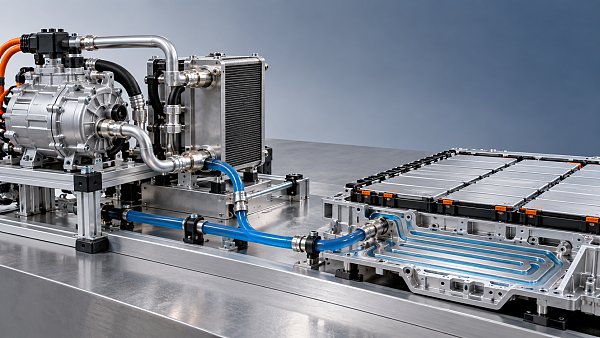
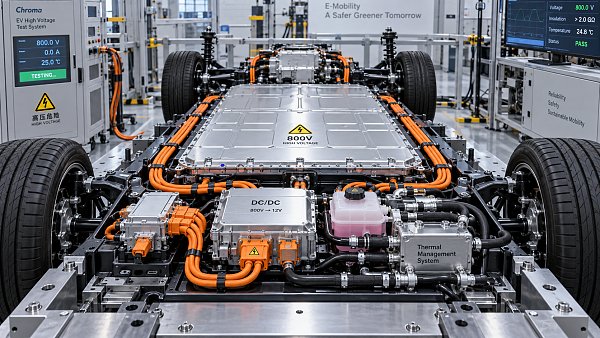
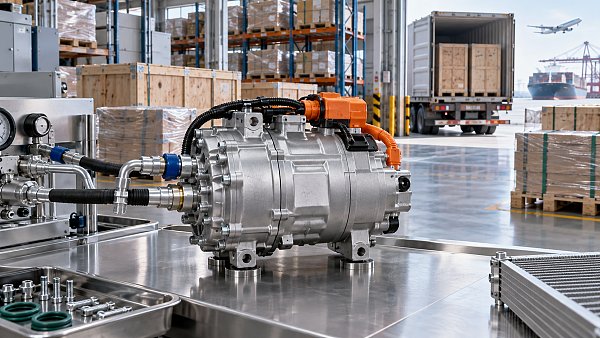
For example, an integrated thermal valve may require clear port identification, sealing-material information, flow-direction confirmation, and an approved drawing reference. A battery liquid cooling system may require records that establish coolant-path cleanliness, leak performance, connection interface, and material compatibility. An electric compressor may require product identification, electrical interface details, performance documentation requested by the buyer, and transport information related to any installed electronic content.
Classify the product correctly before issuing export documents
Commodity classification is one of the decisions that should be settled before the shipment is booked. Automotive thermal components may be classified according to their principal function, construction, and level of assembly. A compressor, heat exchanger, thermal valve, hose assembly, control module, or complete thermal management assembly should not be assumed to share the same tariff treatment simply because all are used in a vehicle.
Classification affects customs declarations, duties in the importing market, trade statistics, and sometimes documentation requests. It also influences how a product description should be written. The classification process should use the actual design: what the product does, whether it is complete or unfinished, whether it contains electrical control elements, and whether it is supplied as a standalone part or as part of an assembly.
A common error is allowing the freight description to become the customs description. A logistics label may say “automotive cooling parts,” while the customs declaration needs a more precise commercial identity. Another error is using an old classification after the product has changed from a mechanical device to an electrically actuated unit. Product revisions can change the documentation logic even when the product name remains similar.
When the component contains refrigerant, coolant, electronics, or batteries
Thermal components are not automatically regulated as dangerous goods, but certain shipment conditions require additional documentation and handling instructions. The decisive question is not the broad product category. It is what is physically present in the shipped unit.
Refrigerant-related products
Heat pump assemblies, air-conditioning compressors, refrigerant lines, and other HVAC components may be shipped empty, sealed, prefilled, or with residual process contents. These states are not interchangeable. A prefilled unit can trigger carrier requirements that do not apply to an evacuated or dry-shipped component. The product record and shipment instructions should state the condition accurately, including whether refrigerant is present and how the unit has been prepared for transport.
Shipping paperwork may need to be supported by a safety data sheet, carrier declarations, package markings, or other dangerous-goods documents when the transported contents and transport mode require them. Do not rely on the sales description to communicate this. The logistics provider needs the actual transport condition, not merely the component’s intended use in a vehicle.
Coolant-facing and pressure-bearing assemblies
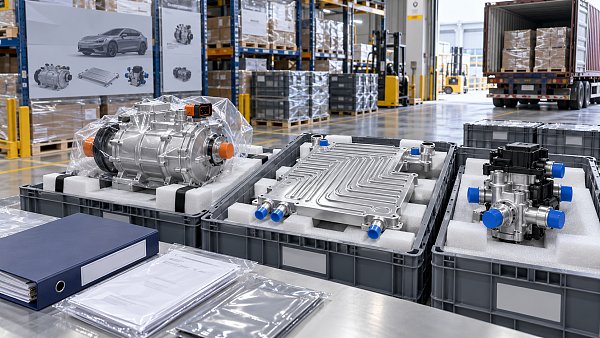
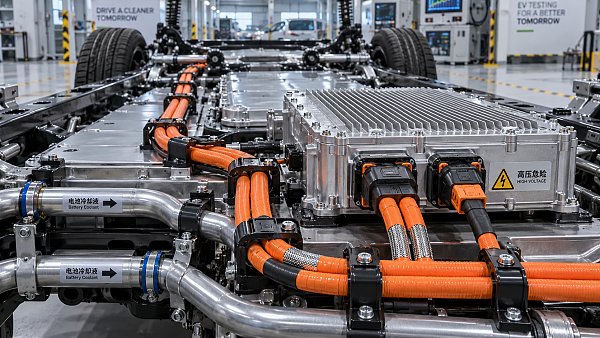
Battery cooling plates, liquid cooling manifolds, thermal valves, pumps, and hose assemblies are commonly delivered dry, protected, or filled according to customer requirements. The document pack should make the shipped condition clear. If the assembly was pressure-tested, cleaned, capped, or packaged to protect internal passages, the packing and inspection records should support that status.
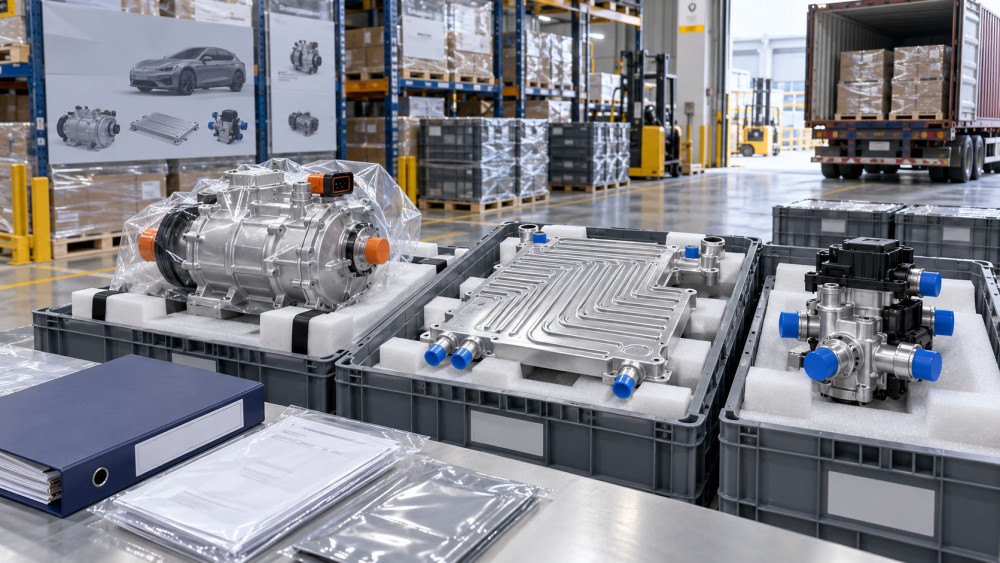
For these parts, contamination control can be as commercially important as customs clearance. If an invoice identifies the part correctly but the crate does not preserve port protection or lot traceability, the buyer may reject the delivery during incoming inspection. Packing instructions, port-cap requirements, moisture protection, and clean-area labels should match the customer’s agreed packaging specification.
Electronic thermal components
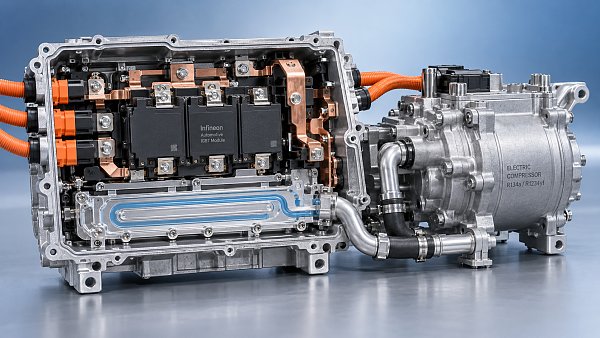
Electric compressors, electronically controlled valves, pumps, sensors, and thermal control modules add another layer of documentation. Buyers may request connector information, software or hardware revision identification, electrical test results, electromagnetic compatibility evidence, or restricted-substance declarations. The exact requirements depend on the destination market and the supply contract, but the general rule is stable: electrical content must be described accurately, and the delivered revision must be traceable.
If a thermal assembly includes a separate battery, backup power source, or packaged battery-powered device, transport documentation must reflect that content. Do not assume that a vehicle component is exempt from battery-related transport handling simply because the battery is small or secondary to the main product.
Compliance records should follow the destination and the sales channel
There is no single universal compliance certificate for all automotive thermal components. Requirements vary with the importing country, whether the part is supplied to an OEM, a Tier 1 supplier, an aftermarket distributor, or an industrial customer, and whether it is sold as a replacement part or incorporated into a vehicle during production.
Compliance records often requested in cross-border automotive trade include material declarations, restricted-substance statements, environmental compliance declarations, product-labeling evidence, and customer-specific quality documentation. A buyer may also require confirmation of manufacturing-system approvals, but such approvals should not be treated as a substitute for shipment-specific records.
The practical issue is document alignment. If the buyer’s purchase order calls for a declared material standard, a specified packaging label, and a lot-specific inspection certificate, those requirements should be checked before goods are released to the forwarder. Adding documents after the cargo reaches the destination can delay delivery even when the product itself is acceptable.
For suppliers serving several markets, a controlled document matrix is more useful than maintaining one oversized “compliance folder.” The matrix can link each part family and destination to its usual customs documents, buyer documents, technical attachments, labeling rules, and transport conditions. GACT’s coverage of thermal systems, electric compressors, battery liquid cooling, heat pump systems, and integrated thermal valves can help teams connect these component differences with broader export and supply-chain considerations.
Build the file around the shipment, not just the product
Before release, compare the product records against the commercial transaction. This step catches failures that are easy to miss when engineering, sales, quality, packaging, and logistics each work from separate files.
- Confirm the exact part number, revision level, quantity, and buyer purchase-order reference.
- Identify the shipment condition: dry, sealed, charged, filled, pressure-tested, electrically equipped, or containing regulated contents.
- Set the correct product description and commodity classification based on the actual item being exported.
- Match invoice, packing list, labels, and transport booking details before cargo handover.
- Attach only the technical and compliance records required for that customer, destination, and shipment type.
- Keep a controlled copy of the final document set linked to the shipment and production lot.
This process is especially useful for mixed shipments. A container may include mechanical cooling plates, electronic valves, compressors, service parts, and packaging accessories. Combining them under one generic line item may be convenient internally, but it makes customs review, duty allocation, buyer receiving, and warranty traceability harder.
Errors that create avoidable export delays
The most frequent documentation problem is not a missing certificate; it is a mismatch. The invoice lists one part number while the label shows another revision. The packing list states ten cartons while the bill of lading states nine. The origin declaration identifies a different manufacturer than the commercial invoice. A refrigerant-bearing assembly is booked as ordinary cargo because the team used a historical template for an empty unit.
Another weak practice is sending a broad technical brochure in place of controlled product documents. Brochures explain a product family. They usually do not prove the part number, revision, inspection lot, material condition, or delivered configuration for a specific order. A buyer may value the brochure for product understanding, but it should not replace the drawing reference, inspection certificate, or traceability record required for release.
Finally, do not treat packaging as separate from documentation. For thermal assemblies, packaging can preserve cleanliness, protect connectors, prevent port damage, and show handling orientation. The packaging instruction, labels, and packing list should describe the same shipment reality.
What to confirm before the first export shipment
Before issuing documents, confirm four points with the buyer and logistics chain: the exact imported product identity, the applicable origin treatment, the required technical and quality attachments, and the physical transport condition. These answers determine nearly every document that follows.
For repeat production shipments, standardize the base file but retain change control. A new software revision, different refrigerant condition, revised connector, changed packing method, or new destination can turn a familiar shipment into a different documentation case. Keeping commercial, technical, compliance, and logistics information synchronized is what allows automotive thermal components to move across borders without creating unnecessary customs, receiving, or traceability problems.
Related News
- 00
0000-00
How electric compressor speed affects EV battery cooling capacity - 00
0000-00
How to verify a variable frequency compressor supplier’s efficiency claims - 00
0000-00
How bend radius affects FPC reliability in automotive camera modules - 00
0000-00
How to diagnose intermittent loss of electric power steering assist - 00
0000-00
How to size automotive power modules for electric compressors
Weekly Insights
Stay ahead with our curated technology reports delivered every Monday.
Recommended News
 How electric compressor speed affects EV battery cooling capacityElectric compressor technology: battery cooling depends on more than RPM. Discover how speed, refrigerant flow, and system limits affect EV cooling capacity and energy efficiency.Author:Time:Oct 19, 2026
 How to verify a variable frequency compressor supplier’s efficiency claimsVerify a variable frequency compressor supplier’s efficiency claims using COP boundaries, matched test conditions, and duty-cycle data. Learn how to choose with confidence.Author:Time:Oct 18, 2026
 How bend radius affects FPC reliability in automotive camera modulesAutomotive FPC applications: camera module reliability starts with bend radius. Learn how stack-up, strain, and validation guide robust designs and help prevent costly failures.Author:Time:Oct 17, 2026
 How to diagnose intermittent loss of electric power steering assistMaster power steering system diagnostics to trace intermittent EPS assist loss. Learn proven checks for voltage, wiring, and fault codes to avoid costly guesswork.Author:Time:Oct 16, 2026
 How to size automotive power modules for electric compressorsSize automotive power modules for electric compressors with confidence. Learn how voltage, phase current, losses, and cooling shape reliable selection—and avoid costly oversizing.Author:Time:Oct 15, 2026
 Why automotive power electronics are shifting to silicon carbideAutomotive Power Electronics are shifting to silicon carbide. Discover how SiC can cut losses, boost EV power density, and reshape cooling, reliability, and system costs.Author:Time:Oct 14, 2026
 How EV adoption shapes the electrically driven compressor marketExplore how EV adoption shapes the electrically driven compressor market, from battery cooling and heat pumps to supplier margins. Discover the drivers of profitable growth.Author:Time:Oct 13, 2026
 How to size a PTC heater for reliable EV cabin heatingPTC Heater sizing for EV cabins: learn how to balance defrost performance, heat-pump integration, airflow, voltage range, and battery power for reliable winter comfort.Author:Time:Oct 12, 2026
 What determines the cooling output of electric automotive AC compressors?Automotive air conditioning compressors electric systems: explore how speed, voltage, refrigerant, controls, and heat exchangers shape EV cooling capacity and efficiency.Author:Time:Oct 11, 2026
 What makes a touchscreen media head unit responsive enough for daily use?Touchscreen media head unit performance explained: discover what delivers fast starts, smooth maps, reliable phone pairing, and responsive daily driving.Author:Time:Oct 10, 2026
 Can a Domain Controller Share a Cooling Loop with Other Electronics?Can a domain controller share a cooling loop with other electronics? Explore thermal zoning, flow control, safety priorities, and reliable vehicle electronics cooling strategies.Author:Time:Oct 19, 2026
 What Causes Domain Controller Overheating During Summer Testing?What causes domain controller overheating in summer testing? Explore heat load, airflow, installation, software factors, and practical fixes.Author:Time:Oct 18, 2026
 Is a Head-Up Display Hard to Integrate with Different Windshields?Is a head-up display difficult to integrate with different windshields? Discover how glass geometry, coatings, and calibration affect HUD clarity, cost, and production readiness.Author:Time:Oct 17, 2026
 What Should Be Checked Before Selecting an Automotive Head Unit?What should be checked before selecting an automotive head unit? Explore compatibility, performance, cybersecurity, compliance, and supplier support.Author:Time:Oct 16, 2026
 Is Steer-by-Wire More Expensive Than an EPS Steering System?Is steer-by-wire more expensive than an EPS steering system? Explore the true costs, safety demands, software value, and when SbW justifies its premium.Author:Time:Oct 15, 2026
 Which Automotive Electronics Need Validation for 800V Platforms?What automotive electronics should be validated for 800V platforms? Explore critical checks for harnesses, power electronics, thermal systems, safety, and EMC.Author:Time:Oct 14, 2026
 How Do Automotive Compressor Export Requirements Vary by Market?How do automotive compressor export requirements vary by market? Explore key compliance rules for refrigerants, EV safety, OEM approvals, labeling, and customs.Author:Time:Oct 13, 2026
 What Documents Are Needed to Export Automotive Thermal Components?What documents are needed to export automotive thermal components? Explore customs, compliance, technical records, and shipping tips to prevent costly delays.Author:Time:Oct 12, 2026
 How Often Should an EV Air Conditioning Compressor Be Inspected?How often should an EV air conditioning compressor be inspected? Discover recommended service intervals, warning signs, and expert care tips to protect cooling performance and EV reliability.Author:Time:Oct 11, 2026
 How to size power solutions for automotive head-up display systemsHeads-up display systems power solutions: learn how to size automotive HUD power architectures for startup, brightness, thermal limits, EMC, protection, and reliable vehicle operation.Author:Time:Oct 19, 2026
 How does a head-up display work in a high-performance car?Hoe werkt een head-up display in een high-performance auto en welke informatie toont het? Discover the tech, safety alerts, and performance data that sharpen every drive.Author:Time:Oct 18, 2026
 Which trends will shape zonal EV architectures in the next decade?Future trends in zonal EV architectures: explore smarter power distribution, 48V systems, thermal integration, software, and resilient networks shaping next-gen vehicles.Author:Time:Oct 17, 2026
 When does a zonal EV architecture outperform a centralized design?Explore the trade-offs between zonal and centralized EV architectures to identify the best path for harness efficiency, software scalability, safety, and faster EV launches.Author:Time:Oct 16, 2026
 How to compare vendors for zonal EV power architecturesComparing vendors for zonal EV power architectures: assess electrical capability, interface ownership, lifecycle support, and integration risk for smarter sourcing.Author:Time:Oct 15, 2026
 How zonal architectures can improve EV reliability at the system levelHow zonal architectures affect EV reliability: explore fault containment, diagnostics, power resilience, and software strategies for more dependable electric vehicles.Author:Time:Oct 14, 2026
 What is driving growth in the automotive E/E architecture market?Explore what drives the automotive electric electronic systems architecture market, from EV power systems and zonal computing to ADAS, cybersecurity, and software-defined vehicles.Author:Time:Oct 13, 2026
 How to evaluate top-rated vehicle electrical components for reliabilityDiscover how to evaluate top-rated vehicle electrical components for reliability, from connector integrity and thermal margins to validation data and manufacturing control.Author:Time:Oct 12, 2026
 What makes vehicle electrical components reliable over a long service life?Top-rated vehicle electrical components for reliability depend on thermal control, sealing, vibration resistance, and validated manufacturing. Discover how to choose durable parts.Author:Time:Oct 11, 2026
 How battery thermal management solutions prevent fast-charge overheatingBattery thermal management solutions prevent fast-charge overheating with intelligent cooling, valve control, predictive preconditioning, and reliable heat rejection.Author:Time:Oct 09, 2026
 What an automotive market report can reveal about EV demand shiftsAutomotive market report insights reveal EV demand shifts, component opportunities, regional risks, and smarter investment strategies for growth.Author:Time:Oct 08, 2026