How EPS Steering Affects Low-Speed Handling




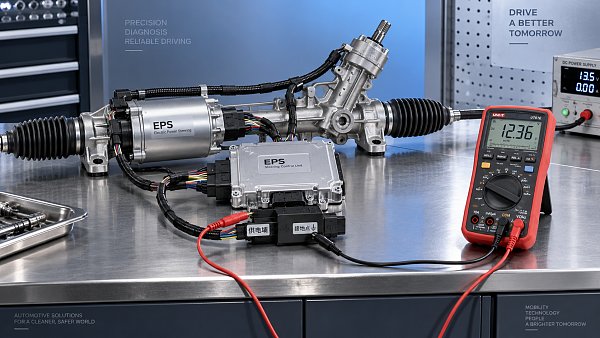
EPS steering plays a critical role in how a vehicle feels and responds during parking, tight turns, and stop-and-go driving. For operators and everyday users, understanding its impact on low-speed handling helps explain steering effort, maneuvering precision, and overall driving comfort. This article explores how EPS tuning influences control at low speeds and why it matters for modern vehicle reliability, safety, and user experience.
Why does EPS steering matter most at low speed?
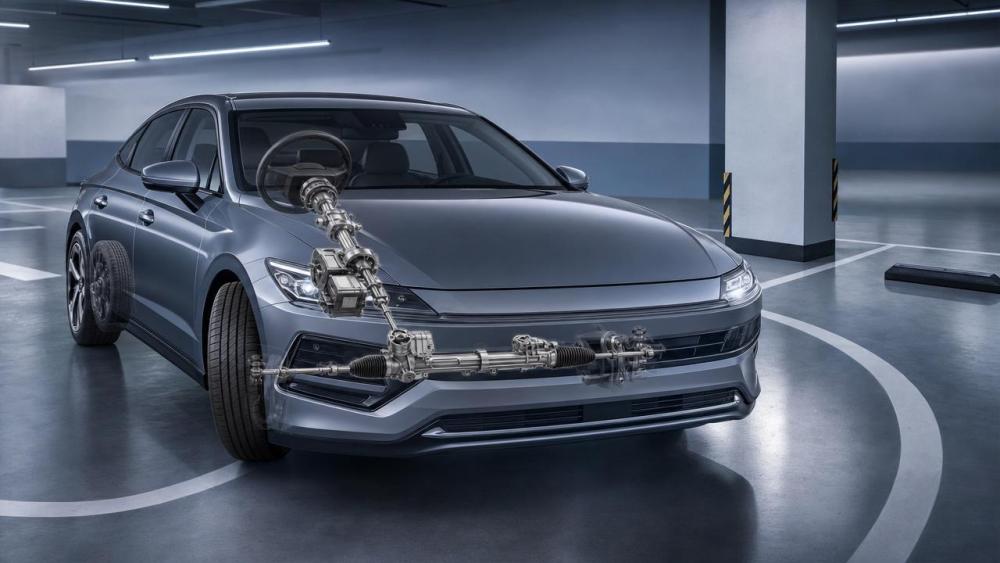
At highway speed, small steering inputs are enough, and vehicle stability depends heavily on alignment, suspension geometry, tire behavior, and chassis calibration. At low speed, however, EPS steering becomes far more noticeable because the system directly shapes how much effort the driver feels at the wheel.
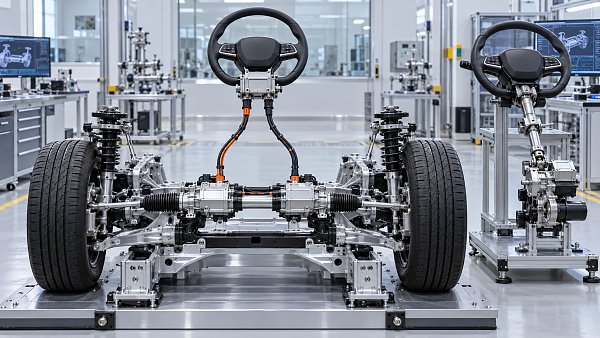
When a vehicle is parking, moving through narrow ramps, entering loading areas, or making repeated U-turns in urban traffic, the steering rack must overcome higher tire scrub and larger steering angles. In these moments, EPS motor assistance determines whether the wheel feels light, progressive, delayed, or overly artificial.
For users and operators, this is not a minor comfort feature. It affects fatigue, confidence, steering accuracy, and the ability to place the vehicle cleanly in tight spaces. In electric and intelligent vehicles, it also interacts with braking, ADAS, domain control, and power management, which makes low-speed calibration a system-level issue rather than a standalone steering concern.
- Parking effort: A well-tuned EPS steering system reduces handwheel torque without making the wheel feel vague.
- Tight-space precision: Good assist mapping helps the driver reach the intended steering angle smoothly, with fewer corrective inputs.
- Driver confidence: Consistent assist during stop-and-go traffic prevents the sudden heaviness or overboost that can unsettle inexperienced users.
- Vehicle integration: EPS steering must work cleanly with sensors, wiring harnesses, power supply quality, and thermal constraints.
What users usually notice first
Most operators do not describe steering in engineering terms. They say the wheel is too light, too heavy, too numb, slow to return, jerky at center, or inconsistent between cold start and long traffic operation. These impressions often come from assist curve design, torque sensor filtering, friction compensation, and motor response timing inside the EPS steering system.
How EPS steering changes low-speed handling in real operating scenarios
Low-speed handling is not one single event. It is a group of scenarios, each with a different steering demand. This is where EPS steering calibration must balance ease of use, steering feedback, and safety margin.
The table below shows how low-speed situations place different requirements on steering assist, returnability, and control feel.
This comparison shows that good EPS steering is not simply “lighter steering.” It must be speed-sensitive, angle-sensitive, and thermally stable. A system that feels comfortable during one parking attempt may still perform poorly after repeated maneuvering, during cold starts, or when the vehicle is loaded differently.
Parking and curbside maneuvering
In parking, tire-road friction is high and steering angles are large. EPS steering must deliver enough assist to reduce effort, but it also needs a clear buildup so the driver can judge front-wheel position. If assist is too strong too early, the wheel can feel disconnected from the road, which hurts placement precision.
Urban delivery, shuttle, and service routes
Operators who repeat the same low-speed tasks throughout the day care about consistency. In these use cases, EPS steering quality is linked to electrical load management, steering motor temperature, harness integrity, and control software behavior over time. That broader systems view is exactly where industry intelligence platforms such as GACT add value, because steering cannot be judged in isolation.
Which EPS steering parameters influence low-speed feel the most?
Users often ask why two vehicles with similar size can feel very different when turning at low speed. The answer usually sits in a few calibration and hardware factors, not in one single component.
- Assist curve mapping: Determines how much motor torque supports the driver at different speeds and steering efforts.
- Torque sensor resolution and filtering: Affects how quickly and naturally the system reacts to hand input.
- Rack friction and mechanical compliance: Excessive friction can make the steering feel sticky around center or heavy during reversals.
- Return control: Influences how the wheel comes back after a turn and whether it needs driver correction.
- Electrical stability: Voltage fluctuation, connector quality, and harness design can affect assist consistency.
- Thermal behavior: Repeated low-speed turning can warm the EPS motor and power electronics, changing output behavior if thermal protection thresholds are reached.
A practical parameter view for users and evaluators
The table below converts engineering topics into operator-friendly evaluation points. It can be used during test drives, fleet assessments, or sourcing discussions.
These points are especially important in modern NEV platforms, where EPS steering shares electrical and thermal design priorities with other critical systems. A steering column, controller, wiring harness, and thermal environment must all remain aligned if low-speed feel is expected to stay stable across seasons and operating conditions.
EPS steering versus hydraulic steering at low speed: what really changes?
Although hydraulic steering is still a reference point for some drivers, EPS steering has become the mainstream solution because it supports electrification, reduces parasitic losses, and allows software-based tuning. At low speed, the difference is usually felt in response shape, energy use, and integration flexibility.
The comparison below helps users and decision-makers understand where EPS steering creates practical advantages and where calibration quality matters most.
In practice, operators benefit from EPS steering when the system is calibrated for smooth low-speed buildup rather than simply maximum assist. The best result is a steering feel that is easy in parking but still informative enough for precise control.
What should users, fleet operators, or sourcing teams check before choosing an EPS steering solution?
Selection errors often happen because buyers compare only nominal vehicle class or motor power while ignoring calibration strategy, wiring quality, software maturity, and operating duty cycle. For low-speed handling, those details matter.
A practical selection checklist
- Define the main low-speed use case. Passenger parking, urban fleet cycling, warehouse perimeter movement, and service-route delivery create different assist and durability needs.
- Evaluate repeated maneuver behavior. A short test drive is not enough. Ask how the EPS steering behaves after many lock-to-lock events or extended stop-and-go operation.
- Check electrical architecture compatibility. Steering performance depends on stable supply, connector robustness, and harness routing, especially in electrified platforms.
- Review software update capability. If low-speed feel requires improvement later, software flexibility can be more valuable than a small upfront hardware cost saving.
- Ask about environmental robustness. Cold starts, wet conditions, vibration, and thermal cycling can change steering feel if validation is weak.
Why intelligence support matters in steering decisions
GACT’s value in this area comes from connecting chassis behavior with adjacent subsystems. EPS steering quality depends not only on the steering unit itself, but also on wiring harness design, controller architecture, thermal loads, and the broader vehicle electrification pathway. For buyers and technical evaluators, this cross-domain view reduces the risk of making a steering decision based on incomplete data.
Common misconceptions about EPS steering and low-speed handling
Is lighter always better?
No. If EPS steering becomes too light, the driver may lose positional awareness during parking and tight cornering. Good low-speed tuning reduces effort while preserving a progressive sense of wheel angle and tire reaction.
Does poor low-speed feel always mean a bad EPS unit?
Not always. Tires, alignment, front axle load, friction in the steering linkage, and unstable electrical supply can all distort the behavior of EPS steering. Diagnosis should consider the whole vehicle system.
Can software tuning solve everything?
Software can solve many feel issues, but only within hardware limits. If the torque sensor is noisy, the motor overheats quickly, or the harness introduces voltage drop, calibration alone cannot fully restore consistent low-speed handling.
FAQ: EPS steering questions users ask before operation or procurement
How can I tell whether EPS steering is well tuned for parking?
Turn the wheel from center at standstill and at crawling speed. The force should rise smoothly, not suddenly. During reverse parking, the wheel should feel easy to rotate but not disconnected. You should also be able to sense when the front wheels approach larger steering angles without guessing.
Which vehicles benefit most from strong low-speed EPS steering calibration?
Urban passenger vehicles, delivery fleets, shuttle vehicles, compact EVs, and vehicles that frequently operate in garages or narrow service lanes benefit the most. In these cases, steering effort and precision directly affect fatigue, curb avoidance, and maneuvering efficiency.
What are the usual warning signs of low-speed EPS steering problems?
Common signs include inconsistent effort after repeated turning, a sticky feeling around center, delayed response at initial input, poor self-centering, or steering weight that changes noticeably with temperature or electrical load. These symptoms should be checked before they become reliability complaints.
Should procurement teams ask about standards and validation?
Yes. While specific compliance depends on project scope, buyers should ask about durability testing, environmental validation, electrical integrity, and functional safety-related development processes where relevant. In steering systems, validation quality is directly linked to repeatable low-speed behavior.
Why choose us for EPS steering insight and next-step evaluation?
GACT supports users, evaluators, and sourcing teams that need more than generic steering descriptions. Our focus on automotive electromechanical controls, wiring harnesses, smart cabin electronics, and NEV thermal systems allows us to interpret EPS steering as part of the full vehicle control environment.
If you are comparing steering solutions, validating a low-speed handling complaint, or planning a new electrified platform, you can contact us for targeted support on the following topics:
- Parameter confirmation for low-speed steering feel, including effort progression, returnability, and consistency priorities.
- Product and architecture selection, especially where EPS steering interacts with wiring harness design, controller integration, or future steer-by-wire planning.
- Delivery-cycle discussions for projects that need a realistic timeline between concept evaluation, supplier screening, and validation support.
- Custom solution review for vehicle classes with unusual low-speed duty cycles, thermal restrictions, or compact packaging requirements.
- Certification and compliance topic mapping, including commonly referenced automotive validation expectations.
- Sample and quotation communication support where steering decisions must be compared against adjacent systems and long-term platform direction.
For organizations that need a clearer decision path, GACT can help connect steering behavior with broader component intelligence, so low-speed handling choices are made with better technical context, lower sourcing risk, and stronger long-term platform fit.
Related News
- 00
0000-00
How electric compressor speed affects EV battery cooling capacity - 00
0000-00
How to verify a variable frequency compressor supplier’s efficiency claims - 00
0000-00
How bend radius affects FPC reliability in automotive camera modules - 00
0000-00
How to diagnose intermittent loss of electric power steering assist - 00
0000-00
How to size automotive power modules for electric compressors
Weekly Insights
Stay ahead with our curated technology reports delivered every Monday.
Recommended News
 How electric compressor speed affects EV battery cooling capacityElectric compressor technology: battery cooling depends on more than RPM. Discover how speed, refrigerant flow, and system limits affect EV cooling capacity and energy efficiency.Author:Time:Oct 19, 2026
 How to verify a variable frequency compressor supplier’s efficiency claimsVerify a variable frequency compressor supplier’s efficiency claims using COP boundaries, matched test conditions, and duty-cycle data. Learn how to choose with confidence.Author:Time:Oct 18, 2026
 How bend radius affects FPC reliability in automotive camera modulesAutomotive FPC applications: camera module reliability starts with bend radius. Learn how stack-up, strain, and validation guide robust designs and help prevent costly failures.Author:Time:Oct 17, 2026
 How to diagnose intermittent loss of electric power steering assistMaster power steering system diagnostics to trace intermittent EPS assist loss. Learn proven checks for voltage, wiring, and fault codes to avoid costly guesswork.Author:Time:Oct 16, 2026
 How to size automotive power modules for electric compressorsSize automotive power modules for electric compressors with confidence. Learn how voltage, phase current, losses, and cooling shape reliable selection—and avoid costly oversizing.Author:Time:Oct 15, 2026
 Why automotive power electronics are shifting to silicon carbideAutomotive Power Electronics are shifting to silicon carbide. Discover how SiC can cut losses, boost EV power density, and reshape cooling, reliability, and system costs.Author:Time:Oct 14, 2026
 How EV adoption shapes the electrically driven compressor marketExplore how EV adoption shapes the electrically driven compressor market, from battery cooling and heat pumps to supplier margins. Discover the drivers of profitable growth.Author:Time:Oct 13, 2026
 How to size a PTC heater for reliable EV cabin heatingPTC Heater sizing for EV cabins: learn how to balance defrost performance, heat-pump integration, airflow, voltage range, and battery power for reliable winter comfort.Author:Time:Oct 12, 2026
 What determines the cooling output of electric automotive AC compressors?Automotive air conditioning compressors electric systems: explore how speed, voltage, refrigerant, controls, and heat exchangers shape EV cooling capacity and efficiency.Author:Time:Oct 11, 2026
 What makes a touchscreen media head unit responsive enough for daily use?Touchscreen media head unit performance explained: discover what delivers fast starts, smooth maps, reliable phone pairing, and responsive daily driving.Author:Time:Oct 10, 2026
 Can a Domain Controller Share a Cooling Loop with Other Electronics?Can a domain controller share a cooling loop with other electronics? Explore thermal zoning, flow control, safety priorities, and reliable vehicle electronics cooling strategies.Author:Time:Oct 19, 2026
 What Causes Domain Controller Overheating During Summer Testing?What causes domain controller overheating in summer testing? Explore heat load, airflow, installation, software factors, and practical fixes.Author:Time:Oct 18, 2026
 Is a Head-Up Display Hard to Integrate with Different Windshields?Is a head-up display difficult to integrate with different windshields? Discover how glass geometry, coatings, and calibration affect HUD clarity, cost, and production readiness.Author:Time:Oct 17, 2026
 What Should Be Checked Before Selecting an Automotive Head Unit?What should be checked before selecting an automotive head unit? Explore compatibility, performance, cybersecurity, compliance, and supplier support.Author:Time:Oct 16, 2026
 Is Steer-by-Wire More Expensive Than an EPS Steering System?Is steer-by-wire more expensive than an EPS steering system? Explore the true costs, safety demands, software value, and when SbW justifies its premium.Author:Time:Oct 15, 2026
 Which Automotive Electronics Need Validation for 800V Platforms?What automotive electronics should be validated for 800V platforms? Explore critical checks for harnesses, power electronics, thermal systems, safety, and EMC.Author:Time:Oct 14, 2026
 How Do Automotive Compressor Export Requirements Vary by Market?How do automotive compressor export requirements vary by market? Explore key compliance rules for refrigerants, EV safety, OEM approvals, labeling, and customs.Author:Time:Oct 13, 2026
 What Documents Are Needed to Export Automotive Thermal Components?What documents are needed to export automotive thermal components? Explore customs, compliance, technical records, and shipping tips to prevent costly delays.Author:Time:Oct 12, 2026
 How Often Should an EV Air Conditioning Compressor Be Inspected?How often should an EV air conditioning compressor be inspected? Discover recommended service intervals, warning signs, and expert care tips to protect cooling performance and EV reliability.Author:Time:Oct 11, 2026
 How to size power solutions for automotive head-up display systemsHeads-up display systems power solutions: learn how to size automotive HUD power architectures for startup, brightness, thermal limits, EMC, protection, and reliable vehicle operation.Author:Time:Oct 19, 2026
 How does a head-up display work in a high-performance car?Hoe werkt een head-up display in een high-performance auto en welke informatie toont het? Discover the tech, safety alerts, and performance data that sharpen every drive.Author:Time:Oct 18, 2026
 Which trends will shape zonal EV architectures in the next decade?Future trends in zonal EV architectures: explore smarter power distribution, 48V systems, thermal integration, software, and resilient networks shaping next-gen vehicles.Author:Time:Oct 17, 2026
 When does a zonal EV architecture outperform a centralized design?Explore the trade-offs between zonal and centralized EV architectures to identify the best path for harness efficiency, software scalability, safety, and faster EV launches.Author:Time:Oct 16, 2026
 How to compare vendors for zonal EV power architecturesComparing vendors for zonal EV power architectures: assess electrical capability, interface ownership, lifecycle support, and integration risk for smarter sourcing.Author:Time:Oct 15, 2026
 How zonal architectures can improve EV reliability at the system levelHow zonal architectures affect EV reliability: explore fault containment, diagnostics, power resilience, and software strategies for more dependable electric vehicles.Author:Time:Oct 14, 2026
 What is driving growth in the automotive E/E architecture market?Explore what drives the automotive electric electronic systems architecture market, from EV power systems and zonal computing to ADAS, cybersecurity, and software-defined vehicles.Author:Time:Oct 13, 2026
 How to evaluate top-rated vehicle electrical components for reliabilityDiscover how to evaluate top-rated vehicle electrical components for reliability, from connector integrity and thermal margins to validation data and manufacturing control.Author:Time:Oct 12, 2026
 What makes vehicle electrical components reliable over a long service life?Top-rated vehicle electrical components for reliability depend on thermal control, sealing, vibration resistance, and validated manufacturing. Discover how to choose durable parts.Author:Time:Oct 11, 2026
 How battery thermal management solutions prevent fast-charge overheatingBattery thermal management solutions prevent fast-charge overheating with intelligent cooling, valve control, predictive preconditioning, and reliable heat rejection.Author:Time:Oct 09, 2026
 What an automotive market report can reveal about EV demand shiftsAutomotive market report insights reveal EV demand shifts, component opportunities, regional risks, and smarter investment strategies for growth.Author:Time:Oct 08, 2026