2026 EPS Steering Failure Risks to Watch




As vehicle electronics grow more complex, EPS steering failures are becoming a priority issue across safety, validation, and field reliability work. In 2026, higher software coupling, denser packaging, and wider supplier variation may expose hidden failure paths. This guide outlines the main risks worth tracking so that steering faults can be contained before they become safety events, recalls, or costly redesign cycles.
Why a Checklist Matters for 2026 EPS Steering Failure Risk
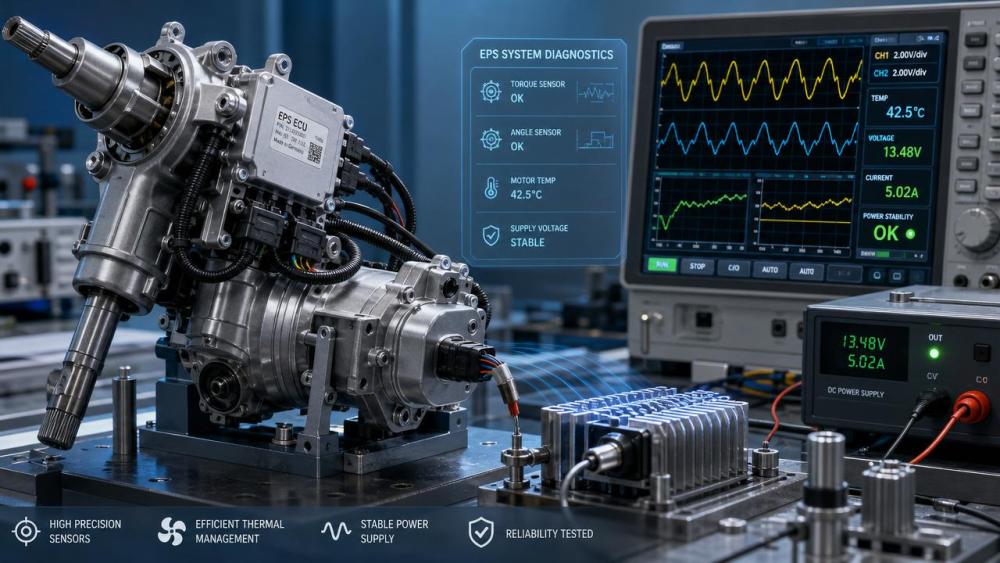
A checklist approach is essential because EPS steering no longer depends on a single mechanical subsystem. It now sits at the intersection of sensors, ECUs, motors, power supply quality, software logic, and vehicle network behavior.
That integration improves performance, but it also creates cross-domain fault chains. A voltage drop, thermal overload, or communication error can degrade steering assist, trigger limp-home logic, or distort driver feedback.
For organizations tracking global auto component risk, EPS steering deserves structured review because its failure signatures often emerge slowly through calibration drift, intermittent faults, or edge-case software interactions.
Core EPS Steering Checklist: Risks to Watch Closely
Use the following checklist to evaluate high-priority EPS steering failure modes in design reviews, validation plans, plant audits, and field issue screening.
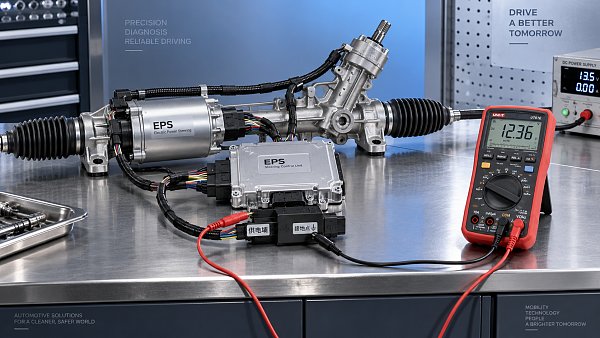
- Verify power stability under cranking, regenerative transitions, and low-temperature start conditions to confirm the EPS steering controller does not reset, derate assist, or log false DTCs.
- Check torque sensor correlation across full temperature range and vibration exposure to catch offset drift, signal mismatch, or noise that can distort steering intent recognition.
- Review motor thermal margins during repeated parking maneuvers, curb strikes, and urban stop-start cycles to prevent overheating, current limitation, and assist fade.
- Assess ECU software fallback logic for CAN loss, sensor dropout, and overcurrent events to ensure EPS steering enters a predictable safe state without unstable handwheel feel.
- Inspect connector sealing, terminal retention, and harness routing near heat sources because intermittent contact remains a frequent root cause of field steering warnings.
- Measure rack, column, or pinion friction growth after corrosion, dust ingress, or grease aging so assist algorithms are not masking mechanical degradation until failure becomes abrupt.
- Validate electromagnetic compatibility against onboard chargers, DC-DC converters, and high-voltage switching noise that can corrupt EPS steering sensor lines or controller timing.
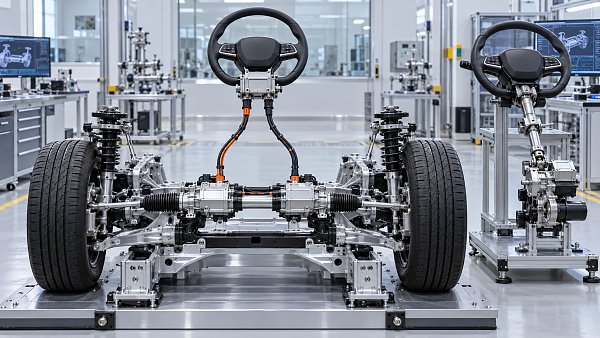
- Confirm redundancy strategy in vehicles moving toward steer-by-wire architectures, especially fault detection coverage, degraded operation paths, and diagnostic communication during partial failures.
- Track supplier process capability for chips, MOSFETs, bearings, magnets, and position sensors because batch variation can create latent reliability issues months after SOP.
- Audit software update controls, calibration traceability, and cybersecurity hardening since corrupted parameters or unauthorized access can compromise EPS steering response and compliance.
How Risks Change Across Vehicle Applications
Battery Electric Vehicles
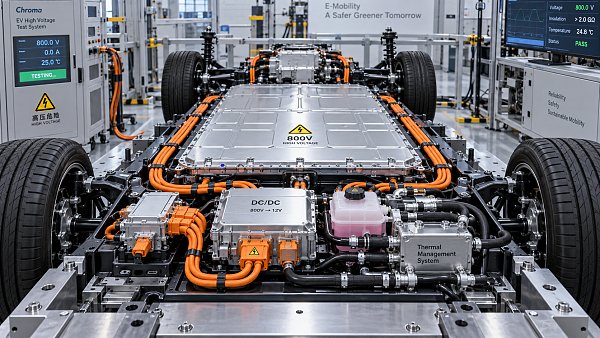
In EV platforms, EPS steering faces stronger EMC stress and greater power architecture complexity. High-voltage switching, aggressive regenerative braking, and compact packaging increase exposure to thermal and electrical interference.
Additional attention should be paid to 12V stability during converter transitions. Short disturbances may not produce visible shutdowns, yet they can trigger intermittent assist anomalies or warning lamp events.
Hybrid Platforms
Hybrid vehicles combine engine restart events with electrified subsystems, creating a difficult environment for EPS steering robustness. Repeated start-stop cycles can stress connectors, software timing, and voltage recovery logic.
Transient interactions between engine vibration and steering motor control should also be reviewed. Marginal designs may pass bench validation but reveal noise, oscillation, or assist inconsistency in mixed-mode driving.
Commercial and Utility Vehicles
Heavier duty cycles make thermal load and mechanical wear more critical. In these applications, EPS steering must survive repeated low-speed high-torque steering, uneven road shock, and extended operating hours.
Contamination control becomes especially important. Water, salt, and particulate intrusion can accelerate friction increase, bearing degradation, and connector corrosion long before a formal failure threshold is reached.
Commonly Overlooked EPS Steering Risk Signals
Some EPS steering failures are missed because teams focus only on hard faults. The following signals often appear earlier and deserve escalation.
Intermittent Warning Events
Short-lived steering warnings after cold start, fast charging, or low-speed maneuvering may indicate unstable supply, connector fretting, or sensor plausibility issues. These patterns should never be dismissed as isolated noise.
Steering Feel Drift
A gradual increase in steering effort, center feel inconsistency, or returnability change can signal friction growth, calibration drift, or thermal derating. Subjective feedback often appears before a clear diagnostic threshold is crossed.
No Trouble Code, Yet Repeat Complaints
If field reports cluster without persistent DTC storage, investigate communication timing, rare environmental triggers, and reset events. EPS steering issues can remain invisible when fault duration is too short for standard logging.
Software Fixes That Mask Hardware Limits
Calibration changes may temporarily reduce complaint rates while leaving thermal, friction, or sensor margin problems unresolved. This creates delayed exposure that becomes harder to trace after volume ramp-up.
Practical Execution Steps for Prevention and Diagnosis
To reduce 2026 EPS steering risk, link validation, manufacturing, and field monitoring rather than treating them as separate activities. A fault chain usually crosses all three.
- Build a fault matrix covering electrical, mechanical, thermal, and software triggers. Rank each by severity, detection coverage, and reproducibility in real driving conditions.
- Expand test cases beyond standard durability cycles. Include low-voltage events, high-EMI exposure, wet corrosion conditions, and repeated parking maneuvers on steep grades.
- Correlate end-of-line data with field returns. Small deviations in motor current, sensor offset, or steering friction may reveal weak process windows early.
- Tighten supplier change control for semiconductors and magnetic materials. Even minor substitutions can alter EPS steering noise immunity, heat generation, or signal stability.
- Improve event logging granularity. Capture transient voltage, controller reset history, and environmental context so intermittent failures can be reconstructed with confidence.
Conclusion and Next Actions
In 2026, EPS steering risk will be shaped less by isolated component defects and more by interaction failure between electronics, software, thermal load, and supply chain consistency. That is why checklist-based review is no longer optional.
Start by screening power stability, sensor integrity, thermal headroom, harness quality, EMC resilience, and fallback logic. Then connect validation data with field patterns and supplier process signals.
When these steps are executed early, EPS steering programs gain stronger safety margins, cleaner compliance evidence, and faster root-cause closure. The most effective next move is to turn this checklist into a recurring review item across every major steering milestone.
Related News
- 00
0000-00
How electric compressor speed affects EV battery cooling capacity - 00
0000-00
How to verify a variable frequency compressor supplier’s efficiency claims - 00
0000-00
How bend radius affects FPC reliability in automotive camera modules - 00
0000-00
How to diagnose intermittent loss of electric power steering assist - 00
0000-00
How to size automotive power modules for electric compressors
Weekly Insights
Stay ahead with our curated technology reports delivered every Monday.
Recommended News
 How electric compressor speed affects EV battery cooling capacityElectric compressor technology: battery cooling depends on more than RPM. Discover how speed, refrigerant flow, and system limits affect EV cooling capacity and energy efficiency.Author:Time:Oct 19, 2026
 How to verify a variable frequency compressor supplier’s efficiency claimsVerify a variable frequency compressor supplier’s efficiency claims using COP boundaries, matched test conditions, and duty-cycle data. Learn how to choose with confidence.Author:Time:Oct 18, 2026
 How bend radius affects FPC reliability in automotive camera modulesAutomotive FPC applications: camera module reliability starts with bend radius. Learn how stack-up, strain, and validation guide robust designs and help prevent costly failures.Author:Time:Oct 17, 2026
 How to diagnose intermittent loss of electric power steering assistMaster power steering system diagnostics to trace intermittent EPS assist loss. Learn proven checks for voltage, wiring, and fault codes to avoid costly guesswork.Author:Time:Oct 16, 2026
 How to size automotive power modules for electric compressorsSize automotive power modules for electric compressors with confidence. Learn how voltage, phase current, losses, and cooling shape reliable selection—and avoid costly oversizing.Author:Time:Oct 15, 2026
 Why automotive power electronics are shifting to silicon carbideAutomotive Power Electronics are shifting to silicon carbide. Discover how SiC can cut losses, boost EV power density, and reshape cooling, reliability, and system costs.Author:Time:Oct 14, 2026
 How EV adoption shapes the electrically driven compressor marketExplore how EV adoption shapes the electrically driven compressor market, from battery cooling and heat pumps to supplier margins. Discover the drivers of profitable growth.Author:Time:Oct 13, 2026
 How to size a PTC heater for reliable EV cabin heatingPTC Heater sizing for EV cabins: learn how to balance defrost performance, heat-pump integration, airflow, voltage range, and battery power for reliable winter comfort.Author:Time:Oct 12, 2026
 What determines the cooling output of electric automotive AC compressors?Automotive air conditioning compressors electric systems: explore how speed, voltage, refrigerant, controls, and heat exchangers shape EV cooling capacity and efficiency.Author:Time:Oct 11, 2026
 What makes a touchscreen media head unit responsive enough for daily use?Touchscreen media head unit performance explained: discover what delivers fast starts, smooth maps, reliable phone pairing, and responsive daily driving.Author:Time:Oct 10, 2026
 Can a Domain Controller Share a Cooling Loop with Other Electronics?Can a domain controller share a cooling loop with other electronics? Explore thermal zoning, flow control, safety priorities, and reliable vehicle electronics cooling strategies.Author:Time:Oct 19, 2026
 What Causes Domain Controller Overheating During Summer Testing?What causes domain controller overheating in summer testing? Explore heat load, airflow, installation, software factors, and practical fixes.Author:Time:Oct 18, 2026
 Is a Head-Up Display Hard to Integrate with Different Windshields?Is a head-up display difficult to integrate with different windshields? Discover how glass geometry, coatings, and calibration affect HUD clarity, cost, and production readiness.Author:Time:Oct 17, 2026
 What Should Be Checked Before Selecting an Automotive Head Unit?What should be checked before selecting an automotive head unit? Explore compatibility, performance, cybersecurity, compliance, and supplier support.Author:Time:Oct 16, 2026
 Is Steer-by-Wire More Expensive Than an EPS Steering System?Is steer-by-wire more expensive than an EPS steering system? Explore the true costs, safety demands, software value, and when SbW justifies its premium.Author:Time:Oct 15, 2026
 Which Automotive Electronics Need Validation for 800V Platforms?What automotive electronics should be validated for 800V platforms? Explore critical checks for harnesses, power electronics, thermal systems, safety, and EMC.Author:Time:Oct 14, 2026
 How Do Automotive Compressor Export Requirements Vary by Market?How do automotive compressor export requirements vary by market? Explore key compliance rules for refrigerants, EV safety, OEM approvals, labeling, and customs.Author:Time:Oct 13, 2026
 What Documents Are Needed to Export Automotive Thermal Components?What documents are needed to export automotive thermal components? Explore customs, compliance, technical records, and shipping tips to prevent costly delays.Author:Time:Oct 12, 2026
 How Often Should an EV Air Conditioning Compressor Be Inspected?How often should an EV air conditioning compressor be inspected? Discover recommended service intervals, warning signs, and expert care tips to protect cooling performance and EV reliability.Author:Time:Oct 11, 2026
 How to size power solutions for automotive head-up display systemsHeads-up display systems power solutions: learn how to size automotive HUD power architectures for startup, brightness, thermal limits, EMC, protection, and reliable vehicle operation.Author:Time:Oct 19, 2026
 How does a head-up display work in a high-performance car?Hoe werkt een head-up display in een high-performance auto en welke informatie toont het? Discover the tech, safety alerts, and performance data that sharpen every drive.Author:Time:Oct 18, 2026
 Which trends will shape zonal EV architectures in the next decade?Future trends in zonal EV architectures: explore smarter power distribution, 48V systems, thermal integration, software, and resilient networks shaping next-gen vehicles.Author:Time:Oct 17, 2026
 When does a zonal EV architecture outperform a centralized design?Explore the trade-offs between zonal and centralized EV architectures to identify the best path for harness efficiency, software scalability, safety, and faster EV launches.Author:Time:Oct 16, 2026
 How to compare vendors for zonal EV power architecturesComparing vendors for zonal EV power architectures: assess electrical capability, interface ownership, lifecycle support, and integration risk for smarter sourcing.Author:Time:Oct 15, 2026
 How zonal architectures can improve EV reliability at the system levelHow zonal architectures affect EV reliability: explore fault containment, diagnostics, power resilience, and software strategies for more dependable electric vehicles.Author:Time:Oct 14, 2026
 What is driving growth in the automotive E/E architecture market?Explore what drives the automotive electric electronic systems architecture market, from EV power systems and zonal computing to ADAS, cybersecurity, and software-defined vehicles.Author:Time:Oct 13, 2026
 How to evaluate top-rated vehicle electrical components for reliabilityDiscover how to evaluate top-rated vehicle electrical components for reliability, from connector integrity and thermal margins to validation data and manufacturing control.Author:Time:Oct 12, 2026
 What makes vehicle electrical components reliable over a long service life?Top-rated vehicle electrical components for reliability depend on thermal control, sealing, vibration resistance, and validated manufacturing. Discover how to choose durable parts.Author:Time:Oct 11, 2026
 How battery thermal management solutions prevent fast-charge overheatingBattery thermal management solutions prevent fast-charge overheating with intelligent cooling, valve control, predictive preconditioning, and reliable heat rejection.Author:Time:Oct 09, 2026
 What an automotive market report can reveal about EV demand shiftsAutomotive market report insights reveal EV demand shifts, component opportunities, regional risks, and smarter investment strategies for growth.Author:Time:Oct 08, 2026