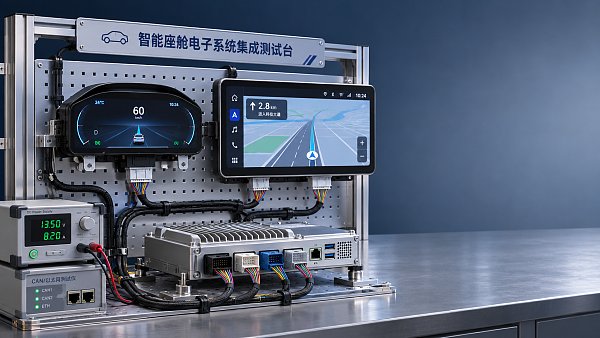
Autonomous Driving Data Trends Reshaping Vehicle Networks




Why is autonomous driving data becoming the backbone of vehicle networks?
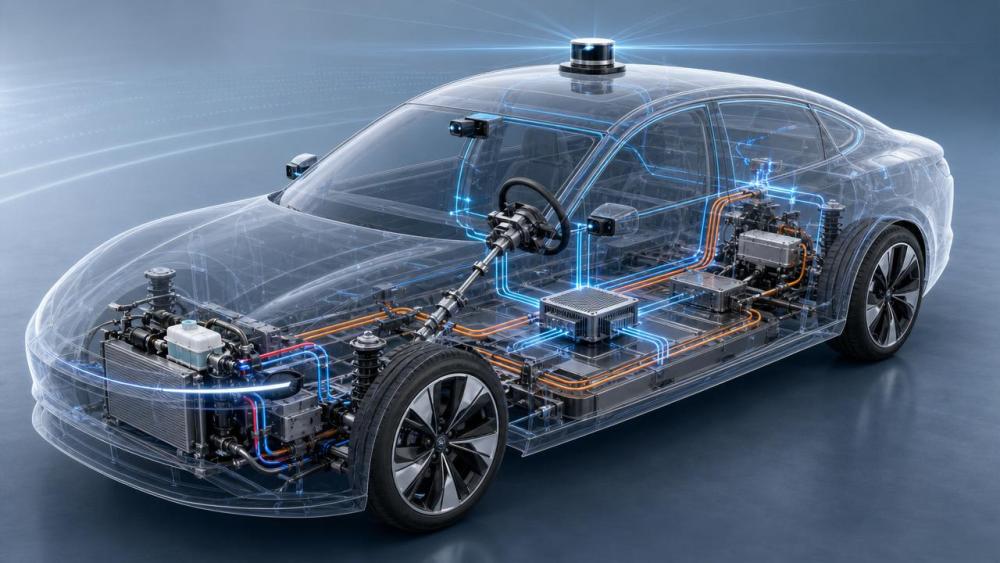
As autonomous driving data surges across modern vehicle networks, it is redefining safety, responsiveness, and energy efficiency across the automotive value chain.
This shift matters because data now travels like a critical power flow, not a secondary software layer inside connected vehicles.
Sensors, controllers, wiring harnesses, steering systems, IVI platforms, and thermal modules must process autonomous driving data with minimal delay and high reliability.
In practical terms, vehicle networks are evolving from distributed electronic links into coordinated data infrastructures supporting perception, decision, control, and diagnostics.
That evolution is especially relevant for GACT’s focus areas, where electromechanical controls and thermal efficiency directly affect system performance.
Auto wiring harnesses carry growing bandwidth loads, while smart cabins and steer-by-wire architectures demand stable, secure signal transmission.
At the same time, higher compute loads generate more heat, making NEV thermal management systems essential for sustaining reliable autonomous functions.
The core trend is clear: autonomous driving data is no longer isolated within ADAS modules. It now reshapes full-vehicle architecture.
What changes in vehicle networks are being driven by autonomous driving data?
The first major change is bandwidth expansion. Cameras, radar, lidar, driver monitoring, and over-the-air diagnostics all increase data traffic.
Legacy network structures based mainly on CAN and LIN cannot alone support the scale of autonomous driving data now entering vehicles.
As a result, Ethernet, domain controllers, zonal architectures, and high-speed gateways are becoming more common.
The second change is lower latency tolerance. Steering, braking, and motion planning need near-real-time communication.
A delayed packet is no longer an inconvenience. In some scenarios, it becomes a safety risk.
The third change is network consolidation. Instead of many isolated ECUs, automakers are moving toward centralized computing.
This reduces wiring complexity, but it also raises demands on thermal stability, redundancy design, and software integration discipline.
The fourth change is cybersecurity. More autonomous driving data means more attack surfaces across internal and cloud-connected networks.
For that reason, secure communication protocols, functional safety validation, and data integrity management are rising together.
Key network shifts now visible
- Higher dependence on automotive Ethernet for data-heavy sensor streams
- Migration from distributed ECUs to domain and zonal controllers
- Greater integration between perception, chassis, and cabin systems
- Stronger need for thermal control around compute-intensive modules
- Expanded validation for redundancy, fault tolerance, and cyber resilience
Which automotive components are most affected by autonomous driving data trends?
Several component categories are directly influenced, but the impact is not evenly distributed across the vehicle platform.
Auto wiring harnesses are among the most affected. Higher data rates require improved shielding, routing, connector quality, and lightweight design.
In high-voltage vehicles, harness design must balance signal integrity, electromagnetic compatibility, and installation efficiency.
Power steering systems are another critical area. As steer-by-wire matures, autonomous driving data directly informs steering response and redundancy logic.
That creates tighter integration between sensors, control software, actuators, and chassis safety architecture.
In-vehicle infotainment also changes. Smart cabins increasingly consume and display contextual autonomous driving data through multi-screen interfaces and AR-HUD layers.
This pushes IVI systems beyond entertainment into information fusion, passenger trust building, and human-machine coordination.
NEV thermal management systems face growing demands because high-performance processors, sensors, and power electronics create dense thermal loads.
Electric compressors, heat pumps, and multi-way valves therefore support not only comfort, but also computing continuity and battery efficiency.
This is where GACT’s intelligence framework is valuable. Vehicle neurons and temperature control hubs increasingly depend on one another.
How should companies judge whether their current vehicle network is ready?
Readiness should not be judged by sensor count alone. It should be judged by how the full system handles autonomous driving data under stress.
A practical review starts with five dimensions: bandwidth, latency, redundancy, thermal headroom, and software upgradability.
If one of these areas is weak, network modernization may stall even when ADAS functions appear advanced on paper.
Bandwidth checks should cover peak sensor loads, not average traffic. Real driving spikes often expose hidden architecture limits.
Latency checks should focus on steering, braking, obstacle fusion, and driver takeover warnings.
Redundancy checks should ask whether critical paths can tolerate a single-point failure without losing essential vehicle control.
Thermal headroom should include processors, network gateways, power modules, and cabin-linked electronics under hot and cold conditions.
Software upgradability matters because autonomous driving data strategies evolve rapidly through new algorithms and compliance requirements.
Quick readiness checklist
What are the biggest mistakes when planning for autonomous driving data growth?
One common mistake is treating autonomous driving data as a software issue only.
In reality, data growth affects harness materials, connector architecture, cooling systems, packaging constraints, and supply chain resilience.
Another mistake is underestimating thermal consequences. High compute density can degrade performance long before component failure occurs.
A third mistake is scaling sensors without redesigning network topology. More inputs do not automatically create better decision quality.
If the architecture cannot prioritize, synchronize, and secure autonomous driving data, complexity rises faster than capability.
Another risk appears in fragmented sourcing. Different component roadmaps may not align on communication standards or thermal envelopes.
This can delay integration and reduce reliability during validation.
Finally, some projects ignore human-machine interaction. Smart cabins must present autonomous driving data clearly, especially during edge cases and takeover scenarios.
Frequent planning errors
- Overbuilding sensor stacks while neglecting network efficiency
- Ignoring compute cooling and power consumption tradeoffs
- Assuming legacy harnesses can absorb new data loads
- Separating cabin interface planning from autonomous function design
- Failing to align cybersecurity with functional safety
How can businesses prepare for the next phase of autonomous driving data demands?
Preparation starts with architecture visibility. Teams need a shared map linking data flow, thermal load, control logic, and component interfaces.
The next step is prioritizing scalable subsystems. Wiring, steering electronics, smart cabin controllers, and thermal modules should be evaluated together.
A phased roadmap is usually more effective than a full redesign. Start with the highest-risk bottlenecks affecting autonomous driving data continuity.
For many vehicle programs, that means improving high-speed communication paths, connector robustness, and compute cooling integration first.
It is also wise to monitor raw material trends and compliance changes because copper, aluminum, automotive-grade standards, and software regulations influence rollout speed.
This is where an intelligence portal like GACT adds strategic value through stitched insights across electromechanical controls and thermal systems.
By connecting vehicle neurons with temperature control hubs, companies can avoid siloed decisions and build stronger technical barriers.
Autonomous driving data will keep growing. The winners will be those that design networks, controls, and thermal systems as one coordinated platform.
Action guide for the next 12 months
- Audit data-intensive functions across perception, steering, and cabin systems
- Stress-test network bandwidth and latency under peak driving scenarios
- Review thermal margins for processors, gateways, and electric compressors
- Align harness, controller, and cooling suppliers on future architectures
- Track standards, cybersecurity rules, and component material volatility
In summary, autonomous driving data is reshaping vehicle networks far beyond sensors and software.
It influences how vehicles transmit signals, steer safely, cool computing zones, and communicate with occupants.
A structured review of architecture, component readiness, and thermal resilience can reveal the most urgent next steps.
For long-term competitiveness, use intelligence that connects wiring, steering, IVI, and NEV thermal management into one decision framework.
That is the practical path to turning autonomous driving data growth into safer, smarter, and more efficient mobility systems.
Have questions about this sector analysis, or seeking best practices specific to your niche? Drop us a line below and let the senior consultants at GAC assist you.
“We respect your privacy. Your information is strictly confidential.”
Related News
- 00
0000-00
How to assess a smart cockpit electronics manufacturer's integration capability - 00
0000-00
How does a shielded HSD cable reduce interference in vehicles? - 00
0000-00
What drives demand for scroll compressors in the automotive market? - 00
0000-00
Does AEC-Q200 apply to flexible printed circuits? - 00
0000-00
How does production volume affect automotive flexible electronics costs?
Weekly Insights
Stay ahead with our curated technology reports delivered every Monday.
Recommended News
 How to assess a smart cockpit electronics manufacturer's integration capabilityAssess a smart cockpit electronics manufacturer's integration capability with practical checks for interfaces, testing, safety, cybersecurity and supplier support.Author:Time:Nov 18, 2026
 How does a shielded HSD cable reduce interference in vehicles?Discover how a shielded HSD cable reduces vehicle interference, and learn why connector design, routing, and testing matter for reliable high-speed data links.Author:Time:Nov 17, 2026
 What drives demand for scroll compressors in the automotive market?Explore the scroll compressor for automobile market and discover how EV adoption, heat pumps, efficiency, and supplier capabilities shape demand.Author:Time:Nov 16, 2026
 Does AEC-Q200 apply to flexible printed circuits?Flexible Printed Circuit AEC-Q200 requirements explained: discover which components qualify and how to assess automotive FPC reliability.Author:Time:Nov 15, 2026
 How does production volume affect automotive flexible electronics costs?Explore how production volume affects automotive flexible electronics cost, from tooling and yield to testing. Compare quotes and negotiate smarter.Author:Time:Nov 14, 2026
 How much does an in-vehicle infotainment system cost to replace?Explore in-vehicle infotainment cost, from affordable repairs to factory replacements. Compare options, installation fees, and compatibility before you buy.Author:Time:Nov 13, 2026
 How does condenser efficiency affect heat pump performance?Discover how condenser high efficiency can improve heat pump performance, reduce compressor power, and boost heating COP—plus the trade-offs to watch.Author:Time:Nov 12, 2026
 What does each FAKRA cable color code mean?FAKRA cable color code explained: Explore common connector colors, typical uses and key compatibility checks before choosing a replacement.Author:Time:Nov 11, 2026
 How to compare noise ratings for battery coolant pumpsCompare coolant pump low noise ratings with confidence. Learn how test conditions, hydraulic duty, tonal noise and installation affect your choice.Author:Time:Nov 10, 2026
 How bright should automotive display systems be in sunlight?Automotive Display Systems need more than brightness to stay readable in sunlight. Discover why 1,000 nits is a starting point and how to evaluate glare and heat.Author:Time:Nov 09, 2026
 How heat pumps improve the efficiency of EV thermal systemsEV Thermal Systems use heat pumps to reduce heating energy demand. Explore how they work, where they excel, and what limits efficiency in cold weather.Author:Time:Nov 08, 2026
 Can a smart cockpit platform support multiple displays?Can a smart cockpit platform support multiple displays? Explore key requirements for performance, safety, connectivity, and supplier evaluation.Author:Time:Nov 07, 2026
 How is automotive connector vibration resistance tested?Automotive connector vibration resistance testing reveals hidden contact failures. Explore test profiles, continuity monitoring and pass criteria.Author:Time:Nov 06, 2026
 How heat pumps save energy in automotive cabin climate systemsAutomotive Cabin Climate Systems energy saving starts with smarter heat pump design. Explore real-world efficiency, cold-weather trade-offs, and testing tips.Author:Time:Nov 05, 2026
 Is an EV heat pump worth it for winter driving range?Is a heat pump worth using in a cold-climate EV? Discover how it affects winter range, when it pays off, and what to check before buying.Author:Time:Nov 04, 2026
 When should you use 50-ohm coaxial cable instead of 75-ohm?Coaxial cable 50 ohm or 75 ohm? Learn when to use each, avoid impedance mismatches, and choose the right cable for reliable RF and video performance.Author:Time:Nov 03, 2026
 How to select a high temperature motor harness for an EVChoose the right high temperature motor harness for your EV. Compare thermal limits, current capacity, shielding, routing, and validation evidence.Author:Time:Nov 02, 2026
 How much does electric power steering replacement cost?Electric power steering price typically ranges from $1,000 to $3,000 for major replacements. Discover cost factors, repair options, and tips for comparing quotes.Author:Time:Nov 01, 2026
 How to size an EV A/C compressor for the required cooling capacitySize an EV A/C Compressor with confidence. Explore cooling loads, performance maps and power limits to select the right compressor for your vehicle.Author:Time:Oct 31, 2026
 How to choose the right pitch for an FPC board connectorFPC board connector pitch affects space, assembly and reliability. Learn how to compare options and select the best fit for your design.Author:Time:Oct 30, 2026
 How zonal design affects harness routing in high-voltage EV architecturesExplore high-voltage electrical architecture zonal design and its impact on EV harness routing. Discover key trade-offs in cable length, safety, thermal performance, and service access.Author:Time:Oct 29, 2026
 How tariffs affect costs in global automotive parts supply chainsNavigate tariffs in the global automotive parts trade supply chain. Learn to compare landed costs, manage duty exposure, and uncover smarter sourcing strategies to protect your margins.Author:Time:Oct 28, 2026
 How to assess vendor lock-in in a software-defined vehicle platformAssess Software-Defined Vehicle platform lock-in with practical tests for API portability, data access, update control, and exit costs. Learn how to choose a platform with a proven exit path.Author:Time:Oct 27, 2026
 How ISO 26262 guides functional safety in steer-by-wire systemsExplore steering systems functional safety through ISO 26262. Learn how hazard analysis, fault-tolerant design, and validation build a stronger steer-by-wire safety case.Author:Time:Oct 26, 2026
 How to evaluate a steering angle sensor manufacturer's accuracy claimsEvaluate steering angle sensor manufacturer accuracy claims with practical checks on calibration, latency, and test evidence. Compare suppliers confidently and avoid costly selection mistakes.Author:Time:Oct 25, 2026
 How to diagnose CAN bus faults in a hybrid vehicle control unitDiagnose Hybrid Vehicle Systems control unit CAN bus faults with step-by-step power, wiring, and waveform checks. Find the root cause and avoid unnecessary replacement.Author:Time:Oct 24, 2026
 How does battery cooling pipe diameter affect coolant pressure drop?Battery Cooling Pipe diameter affects coolant pressure drop and pump power. Explore sizing calculations and practical tips to optimize EV battery cooling and compare options with confidence.Author:Time:Oct 23, 2026
 How to assess PPAP readiness of automotive sensor system manufacturersAssess Automotive Sensor Systems manufacturers for PPAP readiness. Learn to verify production evidence, measurement capability, validation, and traceability to reduce sourcing risks.Author:Time:Oct 22, 2026
 What to ask an FPC connector manufacturer about reliability testingChoosing an FPC Connector manufacturer? Learn what to ask about reliability testing, failure limits, and traceable results to reduce design risks and select with confidence.Author:Time:Oct 21, 2026
 How to verify vehicle fitment for an aftermarket AC evaporatorNavigating the evaporator aftermarket? Verify vehicle fitment with VIN data, OE numbers, and physical interface checks. Use this guide to avoid costly mismatches and order confidently.Author:Time:Oct 20, 2026