How EPS Steering Calibration Affects Lane-Keeping Stability




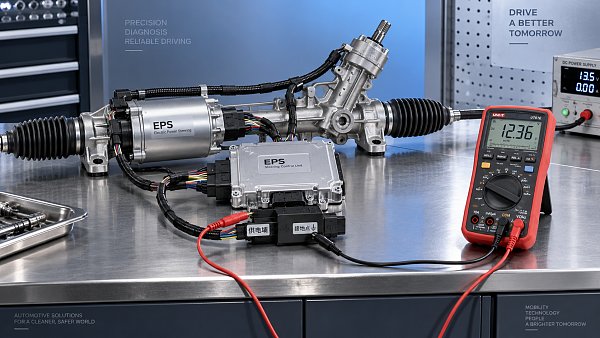
In advanced chassis control, EPS steering calibration directly shapes lane-keeping stability by influencing steering feel, returnability, and correction accuracy.
For technical evaluation, EPS steering is not only a comfort feature. It is a core control layer affecting directional confidence, on-center precision, and driver workload.
When calibration is balanced, the vehicle tracks cleanly with small, predictable inputs. When tuning is weak, subtle weave, delayed corrections, or nervous straight-line behavior can appear.
This guide answers common questions about EPS steering calibration, lane stability, test judgment, and practical risks in real driving conditions.
What does EPS steering calibration actually control in lane-keeping stability?
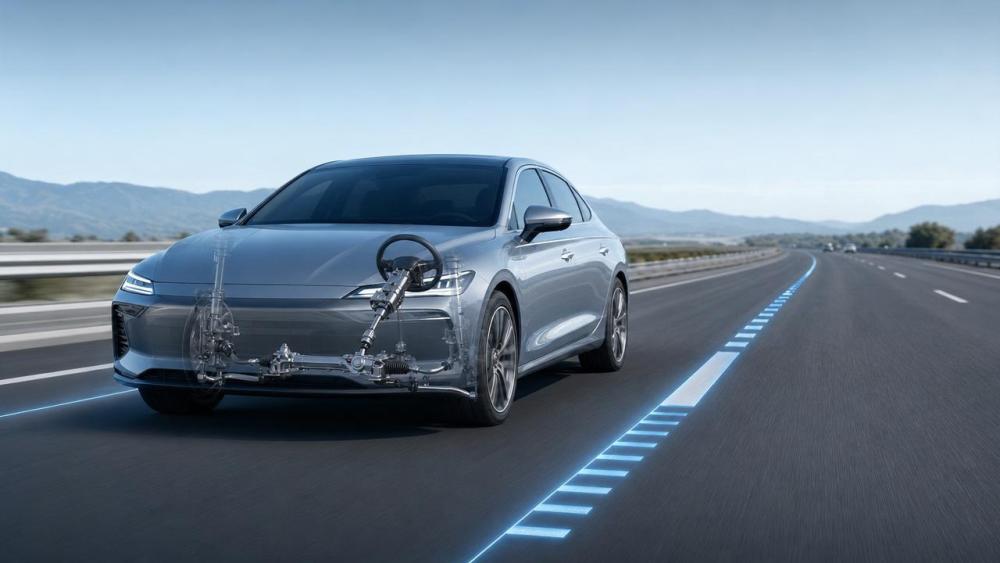
EPS steering calibration defines how assist, torque interpretation, damping, friction compensation, and return control respond across speed and steering angle.
Lane-keeping stability depends heavily on the on-center region. That is where small steering corrections maintain heading on highways and smooth secondary roads.
If assist is too light near center, corrections may become excessive. If friction compensation is too aggressive, the wheel can feel artificial or overreactive.
A well-calibrated EPS steering system should support three behaviors:
- Stable straight-line holding with minimal wander
- Clear torque build-up during lane corrections
- Smooth self-centering after small steering inputs
In modern vehicles, EPS steering also interacts with ADAS lane support. Calibration errors can therefore affect both human steering feel and automated path correction quality.
Why do assist maps and torque sensing matter so much?
Assist maps determine how much motor support is provided for a given steering torque, speed, and driving condition.
Torque sensing translates driver intent into control action. If this translation lacks resolution or filtering balance, the steering response can become vague or twitchy.
For lane-keeping stability, speed-dependent assist is critical. High assist at low speed improves parking, but excessive assist at highway speed weakens directional discipline.
Calibration teams often tune these variables together:
- On-center assist gradient
- Torque deadband width
- Sensor signal filtering
- Motor damping and inertia compensation
- Return torque support after release
A narrow deadband can improve immediacy, yet it may also amplify road disturbances. A wide deadband can calm the wheel, but may delay needed corrections.
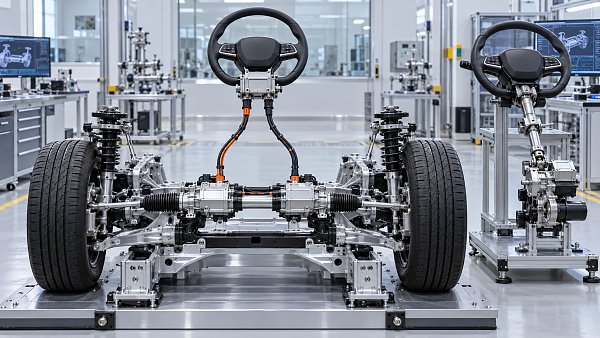
That tradeoff is central to EPS steering development, especially as chassis systems move toward steer-by-wire readiness and higher autonomy support.
How can you tell if EPS steering calibration is helping or hurting lane tracking?
Evaluation starts with symptoms visible during constant-speed driving. The vehicle should hold a clean path without repeated micro-corrections.
If the steering wheel feels numb, the driver may add delayed, larger inputs. If it feels nervous, the vehicle may oscillate around the desired line.
Common signs that EPS steering calibration needs refinement include:
- Poor on-center definition on highways
- Steering wheel not returning naturally after lane change
- Frequent correction inputs in crosswind conditions
- Overreaction to road crown or expansion joints
- Mismatch between steering torque and yaw response
Subjective testing should be supported by objective data. Useful signals include steering torque, handwheel angle, lateral acceleration, yaw rate, and path deviation.
In comparative testing, the best EPS steering setups usually reduce steering reversal frequency while preserving confidence during lane corrections.
Which road conditions expose EPS steering calibration weaknesses fastest?
Not all roads reveal the same issues. Some calibration problems remain hidden in smooth proving-ground loops but appear quickly in real traffic environments.
The most revealing conditions often include:
- Highway cruising on coarse asphalt
- Crosswind exposure on bridges or open roads
- Road crown with slight downhill bias
- Lane changes with immediate return-to-center
- Split-friction or uneven tire grip surfaces
Crosswinds are especially valuable because they test whether EPS steering offers calm resistance and controllable correction authority.
Road crown testing matters because weak return logic or poor pull compensation can create a constant drift sensation.
If the steering requires repeated trimming, lane-keeping stability may be limited by calibration rather than by hardware capability alone.
How does EPS steering interact with suspension, tires, and ADAS?
EPS steering never works in isolation. Its calibration must align with mechanical trail, bushing compliance, tire stiffness, alignment settings, and braking interventions.
A steering map that feels stable on one tire specification may feel dull or restless on another due to different self-aligning torque behavior.
Suspension geometry also changes the calibration window. Higher compliance can demand stronger filtering, while sharper front-end response may need calmer assist gain.
With ADAS lane centering, the integration challenge becomes even larger. EPS steering must blend driver torque, path planner demand, and safety limits smoothly.
If the handoff feels abrupt, drivers may perceive instability even when the path controller is mathematically accurate.
In the broader automotive systems landscape, this is why steering control belongs beside wiring, IVI, and thermal systems in core vehicle intelligence discussions.
What are the most common calibration mistakes and how can they be avoided?
A frequent mistake is chasing light steering feel as a comfort target while sacrificing highway center stability.
Another error is over-filtering torque signals. This can reduce harshness, yet it may also hide driver intent and slow the first correction.
Teams also sometimes tune returnability only in ideal conditions. Real roads then expose weak recovery after lane change or evasive movement.
To avoid these problems, calibration should include:
- Clear targets for on-center torque buildup
- Multi-surface validation with tire variation
- Crosswind and road crown assessment
- Driver-in-the-loop and signal-based evaluation
- ADAS coordination checks during takeover and override
Good EPS steering calibration is rarely about maximum assist sophistication. It is usually about consistency, predictability, and balanced correction effort.
FAQ table: how to judge EPS steering calibration for lane-keeping stability?
What is the practical takeaway for evaluating EPS steering performance?
EPS steering calibration affects lane-keeping stability through many small control decisions, especially around center feel, return behavior, and disturbance filtering.
The best setups do not simply feel light or sporty. They help the vehicle hold direction with low correction demand and consistent driver confidence.
For deeper assessment, combine seat-level impressions with signal review across different roads, winds, tire states, and ADAS operating modes.
In a vehicle architecture shaped by electrification and smart control, EPS steering is a strategic component of both chassis quality and intelligent mobility readiness.
If the next step is technical benchmarking, start with on-center response, returnability, and crosswind correction performance before judging any broader steering claim.
Related News
- 00
0000-00
How electric compressor speed affects EV battery cooling capacity - 00
0000-00
How to verify a variable frequency compressor supplier’s efficiency claims - 00
0000-00
How bend radius affects FPC reliability in automotive camera modules - 00
0000-00
How to diagnose intermittent loss of electric power steering assist - 00
0000-00
How to size automotive power modules for electric compressors
Weekly Insights
Stay ahead with our curated technology reports delivered every Monday.
Recommended News
 How electric compressor speed affects EV battery cooling capacityElectric compressor technology: battery cooling depends on more than RPM. Discover how speed, refrigerant flow, and system limits affect EV cooling capacity and energy efficiency.Author:Time:Oct 19, 2026
 How to verify a variable frequency compressor supplier’s efficiency claimsVerify a variable frequency compressor supplier’s efficiency claims using COP boundaries, matched test conditions, and duty-cycle data. Learn how to choose with confidence.Author:Time:Oct 18, 2026
 How bend radius affects FPC reliability in automotive camera modulesAutomotive FPC applications: camera module reliability starts with bend radius. Learn how stack-up, strain, and validation guide robust designs and help prevent costly failures.Author:Time:Oct 17, 2026
 How to diagnose intermittent loss of electric power steering assistMaster power steering system diagnostics to trace intermittent EPS assist loss. Learn proven checks for voltage, wiring, and fault codes to avoid costly guesswork.Author:Time:Oct 16, 2026
 How to size automotive power modules for electric compressorsSize automotive power modules for electric compressors with confidence. Learn how voltage, phase current, losses, and cooling shape reliable selection—and avoid costly oversizing.Author:Time:Oct 15, 2026
 Why automotive power electronics are shifting to silicon carbideAutomotive Power Electronics are shifting to silicon carbide. Discover how SiC can cut losses, boost EV power density, and reshape cooling, reliability, and system costs.Author:Time:Oct 14, 2026
 How EV adoption shapes the electrically driven compressor marketExplore how EV adoption shapes the electrically driven compressor market, from battery cooling and heat pumps to supplier margins. Discover the drivers of profitable growth.Author:Time:Oct 13, 2026
 How to size a PTC heater for reliable EV cabin heatingPTC Heater sizing for EV cabins: learn how to balance defrost performance, heat-pump integration, airflow, voltage range, and battery power for reliable winter comfort.Author:Time:Oct 12, 2026
 What determines the cooling output of electric automotive AC compressors?Automotive air conditioning compressors electric systems: explore how speed, voltage, refrigerant, controls, and heat exchangers shape EV cooling capacity and efficiency.Author:Time:Oct 11, 2026
 What makes a touchscreen media head unit responsive enough for daily use?Touchscreen media head unit performance explained: discover what delivers fast starts, smooth maps, reliable phone pairing, and responsive daily driving.Author:Time:Oct 10, 2026
 Can a Domain Controller Share a Cooling Loop with Other Electronics?Can a domain controller share a cooling loop with other electronics? Explore thermal zoning, flow control, safety priorities, and reliable vehicle electronics cooling strategies.Author:Time:Oct 19, 2026
 What Causes Domain Controller Overheating During Summer Testing?What causes domain controller overheating in summer testing? Explore heat load, airflow, installation, software factors, and practical fixes.Author:Time:Oct 18, 2026
 Is a Head-Up Display Hard to Integrate with Different Windshields?Is a head-up display difficult to integrate with different windshields? Discover how glass geometry, coatings, and calibration affect HUD clarity, cost, and production readiness.Author:Time:Oct 17, 2026
 What Should Be Checked Before Selecting an Automotive Head Unit?What should be checked before selecting an automotive head unit? Explore compatibility, performance, cybersecurity, compliance, and supplier support.Author:Time:Oct 16, 2026
 Is Steer-by-Wire More Expensive Than an EPS Steering System?Is steer-by-wire more expensive than an EPS steering system? Explore the true costs, safety demands, software value, and when SbW justifies its premium.Author:Time:Oct 15, 2026
 Which Automotive Electronics Need Validation for 800V Platforms?What automotive electronics should be validated for 800V platforms? Explore critical checks for harnesses, power electronics, thermal systems, safety, and EMC.Author:Time:Oct 14, 2026
 How Do Automotive Compressor Export Requirements Vary by Market?How do automotive compressor export requirements vary by market? Explore key compliance rules for refrigerants, EV safety, OEM approvals, labeling, and customs.Author:Time:Oct 13, 2026
 What Documents Are Needed to Export Automotive Thermal Components?What documents are needed to export automotive thermal components? Explore customs, compliance, technical records, and shipping tips to prevent costly delays.Author:Time:Oct 12, 2026
 How Often Should an EV Air Conditioning Compressor Be Inspected?How often should an EV air conditioning compressor be inspected? Discover recommended service intervals, warning signs, and expert care tips to protect cooling performance and EV reliability.Author:Time:Oct 11, 2026
 How to size power solutions for automotive head-up display systemsHeads-up display systems power solutions: learn how to size automotive HUD power architectures for startup, brightness, thermal limits, EMC, protection, and reliable vehicle operation.Author:Time:Oct 19, 2026
 How does a head-up display work in a high-performance car?Hoe werkt een head-up display in een high-performance auto en welke informatie toont het? Discover the tech, safety alerts, and performance data that sharpen every drive.Author:Time:Oct 18, 2026
 Which trends will shape zonal EV architectures in the next decade?Future trends in zonal EV architectures: explore smarter power distribution, 48V systems, thermal integration, software, and resilient networks shaping next-gen vehicles.Author:Time:Oct 17, 2026
 When does a zonal EV architecture outperform a centralized design?Explore the trade-offs between zonal and centralized EV architectures to identify the best path for harness efficiency, software scalability, safety, and faster EV launches.Author:Time:Oct 16, 2026
 How to compare vendors for zonal EV power architecturesComparing vendors for zonal EV power architectures: assess electrical capability, interface ownership, lifecycle support, and integration risk for smarter sourcing.Author:Time:Oct 15, 2026
 How zonal architectures can improve EV reliability at the system levelHow zonal architectures affect EV reliability: explore fault containment, diagnostics, power resilience, and software strategies for more dependable electric vehicles.Author:Time:Oct 14, 2026
 What is driving growth in the automotive E/E architecture market?Explore what drives the automotive electric electronic systems architecture market, from EV power systems and zonal computing to ADAS, cybersecurity, and software-defined vehicles.Author:Time:Oct 13, 2026
 How to evaluate top-rated vehicle electrical components for reliabilityDiscover how to evaluate top-rated vehicle electrical components for reliability, from connector integrity and thermal margins to validation data and manufacturing control.Author:Time:Oct 12, 2026
 What makes vehicle electrical components reliable over a long service life?Top-rated vehicle electrical components for reliability depend on thermal control, sealing, vibration resistance, and validated manufacturing. Discover how to choose durable parts.Author:Time:Oct 11, 2026
 How battery thermal management solutions prevent fast-charge overheatingBattery thermal management solutions prevent fast-charge overheating with intelligent cooling, valve control, predictive preconditioning, and reliable heat rejection.Author:Time:Oct 09, 2026
 What an automotive market report can reveal about EV demand shiftsAutomotive market report insights reveal EV demand shifts, component opportunities, regional risks, and smarter investment strategies for growth.Author:Time:Oct 08, 2026