What Drives High Efficiency in Hybrid Vehicle Systems?




Meta Title: Hybrid Vehicle Systems High Efficiency: What Really Improves Performance?
When people ask what drives Hybrid Vehicle Systems high efficiency, they usually expect a simple answer like “better batteries” or “more advanced motors.” In practice, efficiency comes from how well the whole system is balanced. Engine operating strategy, motor control, thermal management, electric compressors, power electronics, wiring architecture, regenerative braking, and vehicle mass all interact. If even one of these areas is poorly matched, the hybrid system may look advanced on paper but lose efficiency in real driving, especially in stop-and-go traffic, cold weather, or high-load conditions.
That is the key point: a hybrid vehicle is not efficient because it has more components. It becomes efficient when those components help the powertrain stay in its most effective operating range more of the time.
Efficiency in hybrid systems starts with energy flow, not a single part
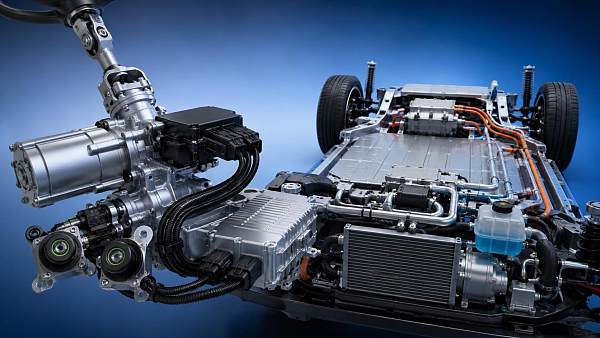
A useful way to look at a hybrid platform is to follow the energy. Fuel energy enters through the engine. Electrical energy moves through the battery, inverter, motor, converter, and auxiliary systems. Mechanical energy reaches the wheels through the transmission or power-split device. Heat is generated almost everywhere in the process, and heat that is not managed well becomes wasted energy.
So if you are comparing hybrid architectures or evaluating suppliers, the real question is not “Which component has the highest standalone efficiency?” It is “How much of the vehicle’s total operating time can the system avoid waste?”
In most hybrid designs, waste shows up in familiar places:
- Engine running outside its efficient load range
- Excess electrical conversion losses
- Poor battery temperature control
- Inefficient cabin and battery thermal loads
- Heavy harnesses and packaging compromises
- Weak regenerative braking recovery in real traffic
A high-efficiency hybrid reduces these losses through coordination, not through any one “miracle” technology.
Why engine-motor coordination matters more than many people think
One common misunderstanding is that the electric side of a hybrid does most of the efficiency work. It helps a lot, but the engine still matters enormously. In a strong hybrid, the electric motor improves efficiency mainly by letting the engine operate under better conditions: fewer inefficient low-load events, less idling, smoother torque fill, and more strategic use of high-efficiency zones.
This is why control software is so important. A technically capable engine paired with weak energy management logic may still deliver disappointing results. By contrast, a well-calibrated hybrid control unit can extract more usable efficiency from a modest hardware package.
In engineering reviews, this usually comes down to a few practical questions:
- How often can the engine shut off without hurting drivability?
- How effectively does the system blend motor torque and engine torque?
- Can the vehicle avoid unnecessary engine starts during urban operation?
- Does the control strategy adapt well to highway, grade, cold-start, and accessory-heavy conditions?
These are not academic details. They determine whether lab-cycle efficiency turns into real-world efficiency.
[图片占位符1:展示混合动力系统中发动机、电机、电池、逆变器与热管理回路协同工作的结构示意图,alt="Hybrid Vehicle Systems high efficiency depends on coordinated thermal and power flow"]
Thermal management often decides whether the system stays efficient all year
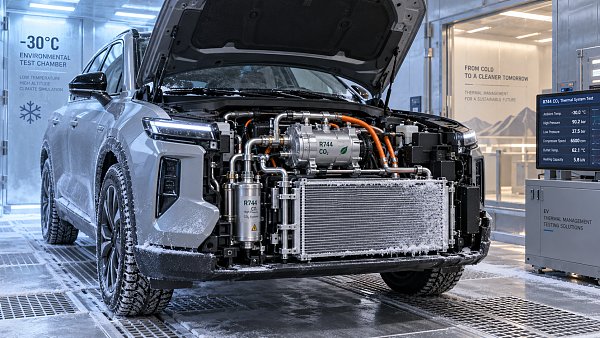
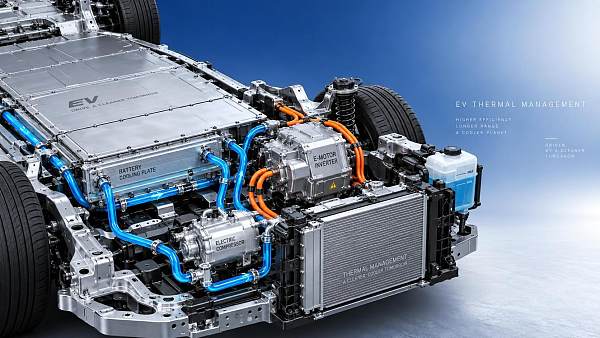
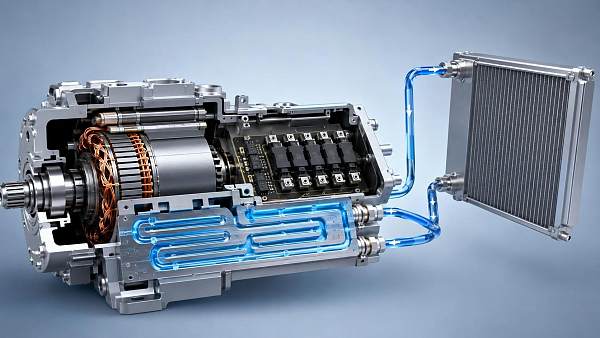
Ask engineers working on hybrids in different climates and they will tell you quickly: thermal control is where many efficiency gains are won or lost. Batteries, inverters, motors, compressors, and cabin systems all respond to temperature. Once temperatures move outside ideal ranges, electrical losses rise, battery acceptance for regenerative braking can fall, and the engine may need to run more often to support heating or cooling loads.
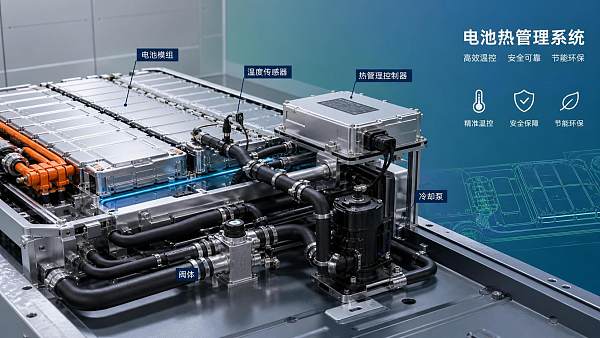
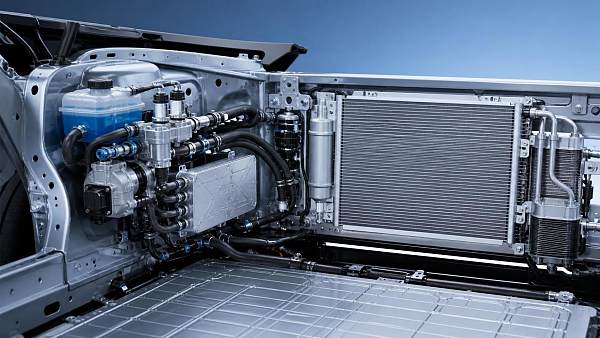
This is where modern thermal architectures earn their value. Integrated thermal valves, battery liquid cooling systems, and heat pump systems are not just feature upgrades. They help the vehicle move heat where it is needed and reduce parasitic energy consumption.
For example, in cold weather, an efficient heat pump system can reduce the penalty of cabin heating compared with simpler resistive approaches. In warm conditions, better refrigerant and coolant loop management can limit compressor energy draw while protecting battery and electronics performance. In hybrids, auxiliary loads matter more than many buyers expect, because every extra watt comes from fuel, recovered braking energy, or both.
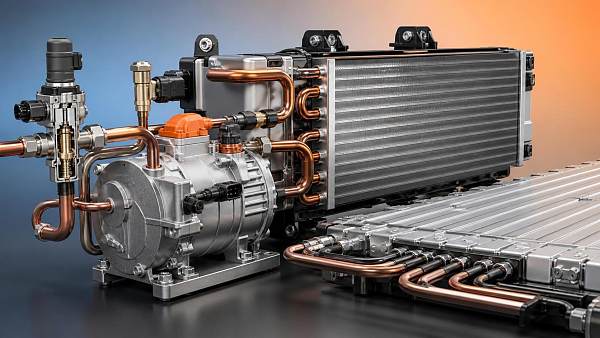
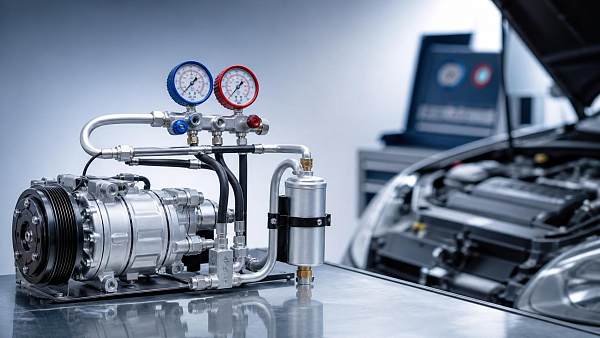
Electric compressors are especially relevant here. Compared with traditional belt-driven designs, they offer more flexible control because they are not tied directly to engine speed. That allows cooling capacity to better match system demand and supports operation when the engine is off. But flexibility alone is not enough. Compressor efficiency still depends on motor design, control strategy, refrigerant loop integration, and operating envelope.
This is one reason platforms focused on NEV thermal management receive so much attention in current component research. Portals such as GACT are useful in this context because they track not just individual parts like electric compressors, integrated thermal valves, and battery cooling systems, but also the broader supply-chain and application trends behind them.
Power electronics and voltage architecture: small losses add up fast
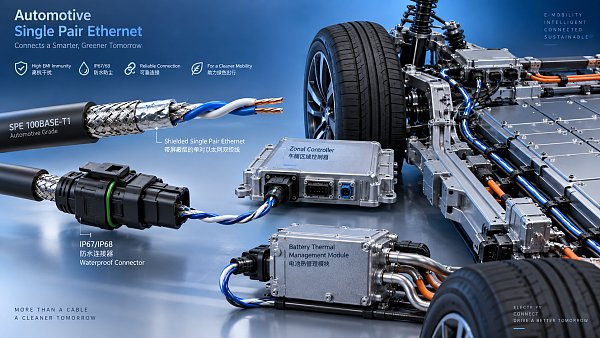
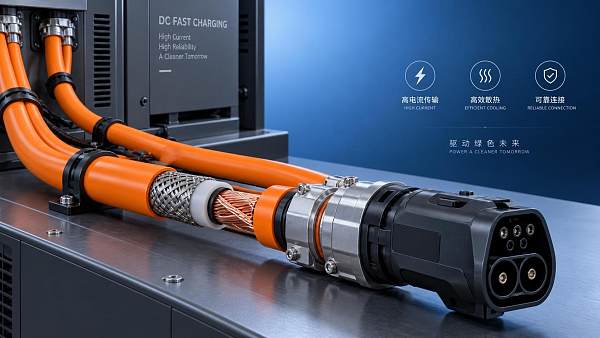
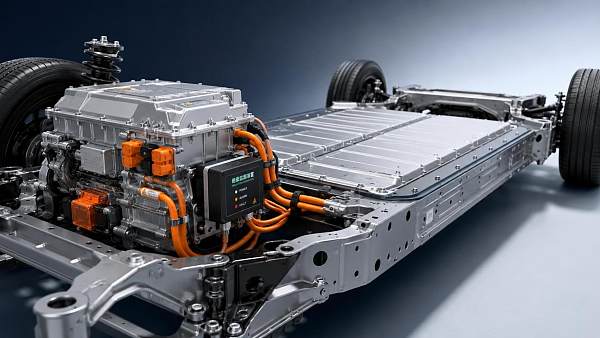
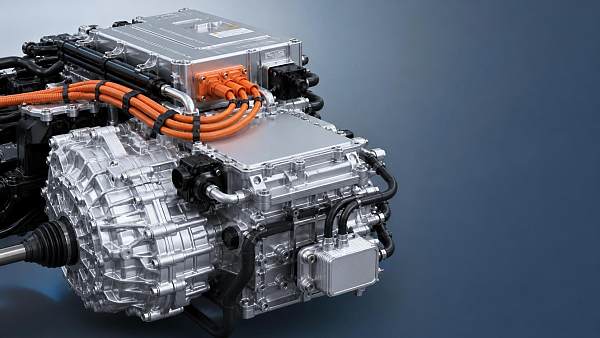
Another area that tends to be underestimated is the electrical path itself. Every conversion step costs energy. The inverter, DC-DC converter, onboard control units, high-voltage harnesses, connectors, and power distribution architecture all contribute to system loss, packaging complexity, and thermal burden.
On paper, the efficiency gap between two inverters or cable layouts may seem minor. In vehicle operation, those small differences can accumulate across thousands of charge-discharge and torque-assist events. That is why hybrid system efficiency depends heavily on clean electrical design, stable thermal conditions, and careful harness routing.
Lightweight high-voltage harnesses and data/communication cables also matter more than they did in earlier platforms. Extra mass hurts efficiency directly, while poor packaging can complicate cooling, serviceability, and electromagnetic compatibility. Engineers and sourcing teams sometimes focus first on high-visibility components like batteries and motors, but lower-profile parts in the electrical architecture can quietly shape the final efficiency result.
Regenerative braking is valuable, but it is not “free efficiency”
People often assume that regenerative braking automatically recovers a large share of lost energy. It helps, but recovery is limited by traction, battery state of charge, battery temperature, motor capacity, braking feel targets, and vehicle speed profile.
In dense city traffic, regen can be a major contributor. On long highway runs, its role is much smaller. In cold conditions, the battery may not accept charge aggressively enough to capture as much braking energy as expected. If the friction and regen blending is poorly tuned, either efficiency or brake feel suffers.
A short answer is this: regenerative braking improves hybrid efficiency when the battery, motor, brake control, and thermal system are ready to use it. Without that coordination, the theoretical benefit shrinks quickly.
Weight, aerodynamics, and rolling resistance still matter in a hybrid
There is a persistent mistake in market discussions: once a vehicle is electrified, some people treat traditional vehicle efficiency factors as secondary. They are not. A hybrid still pays for excess weight, poor aerodynamics, and high rolling resistance every time it accelerates, climbs, or cruises.
The reason this matters is simple. Hybridization can mask inefficiencies by recovering some energy and optimizing engine operation, but it does not erase the underlying load. A heavier vehicle needs more propulsion energy. A less aerodynamic body needs more power at speed. A poorly optimized tire choice can undermine gains made elsewhere.
This is why efficient hybrid platforms usually reflect system-level discipline. Thermal systems are integrated early. Harnesses are optimized for weight and routing. Cooling loops are simplified where possible. Component packaging is treated as an efficiency issue, not only a manufacturing issue.
Standards and evaluation: what should actually be checked?
If you are researching the technical side rather than buying a single passenger vehicle, it helps to separate marketing claims from measurable indicators. Efficiency claims in hybrids should be checked against recognized test methods, official fuel economy procedures, emissions standards, component specifications, and climate-dependent operating scenarios. Exact standards vary by market, so the relevant benchmark may differ between China, Europe, the United States, Japan, or other regions.
What deserves attention during evaluation?
- Official fuel consumption or energy-use test basis
- Cold-weather and hot-weather performance behavior
- Thermal system architecture and control logic
- Electric compressor and HVAC load strategy
- Battery cooling method and temperature operating window
- High-voltage architecture, wiring weight, and integration quality
- Real-world urban versus highway efficiency balance
If a supplier or platform description only highlights peak values while avoiding operating conditions, calibration logic, or thermal load behavior, that is usually a sign to look deeper.
Where high efficiency usually breaks down
In actual programs, the biggest disappointments are rarely caused by a total lack of technology. More often, the problem is mismatch.
An oversized thermal system may protect components well but consume too much power. A highly efficient compressor may not perform as expected if the refrigerant loop layout is poorly integrated. A lightweight harness design may create service or durability concerns if routing is not mature. A strong regen strategy may feel unnatural to drivers and get softened in final calibration.
This is why experienced teams rarely evaluate hybrid efficiency in isolated boxes. They review trade-offs between thermal performance, NVH, package space, cost, software complexity, durability, and regional climate needs.
That point matters for researchers and procurement teams too. If your goal is benchmarking, sourcing, or technology tracking, it is usually more useful to compare system fit than to compare headline component claims. This is where an industry intelligence source covering thermal systems, compressors, steering, harnesses, and electrical architecture can help frame the right questions before supplier engagement.
What to focus on before making any technical judgment
If you are early in the research phase, start with use case. A city-focused hybrid, a performance-oriented hybrid, and a hybrid designed for mixed-climate export markets will not chase efficiency in exactly the same way.
Then check these four things:
- Whether the thermal system is integrated or assembled from loosely matched subsystems
- Whether the control strategy is built for real driving conditions, not only certification cycles
- Whether auxiliary loads, especially HVAC, are treated as a core efficiency issue
- Whether electrical architecture and harness design support low-loss, lightweight integration
That will tell you far more about Hybrid Vehicle Systems high efficiency than a brochure full of isolated component claims.
FAQ
Is a more powerful motor always better for hybrid efficiency?
No. A larger motor can improve assist and regeneration, but if it adds cost, weight, or control complexity without matching the vehicle duty cycle, overall efficiency may not improve much.
Why does cabin air conditioning affect hybrid efficiency so much?
Because HVAC is a meaningful auxiliary load. In hybrids, especially when the engine is off, compressor and thermal system efficiency directly affect how often stored or generated energy is consumed.
Does regenerative braking deliver the same benefit in all climates?
No. Battery temperature and charge acceptance can reduce recovery potential in cold conditions, and calibration choices also change how much energy is actually captured.
What is the most overlooked factor in hybrid system efficiency?
Thermal integration is high on the list. Many people focus on battery size or motor power first, while temperature control quietly shapes battery behavior, HVAC load, electrical losses, and component durability.
图片占位符清单
图片占位符1:建议放在“Why engine-motor coordination matters more than many people think”之后;图片内容为混合动力系统动力流与热管理协同示意;alt 文案为 “Hybrid Vehicle Systems high efficiency depends on coordinated thermal and power flow”
内链锚文本建议
- Battery liquid cooling systems: 建议链接到电池液冷系统专题页
- Electric compressor technology in hybrid vehicles: 建议链接到电动压缩机技术解析页
- Integrated thermal valves for NEV platforms: 建议链接到集成热管理阀产品或技术页
- High-voltage wiring harness design trends: 建议链接到高压线束行业趋势页
- Heat pump systems in automotive thermal management: 建议链接到热泵系统应用分析页
外部权威来源建议
- Government fuel economy and emissions regulatory agency pages
- Automotive engineering society technical papers and standards documents
- OEM or Tier 1 official technical documentation on hybrid thermal and powertrain systems
Related News
- 00
0000-00
How global auto parts buyers can verify supplier quality before ordering - 00
0000-00
How global automotive supply chain disruption reshapes sourcing risk - 00
0000-00
When is a single pair ethernet cable the right choice for vehicles? - 00
0000-00
When does a zonal automotive Ethernet architecture reduce wiring complexity? - 00
0000-00
Which automotive component export regulations apply before shipping?
Tags
- NEV thermal management
- thermal systems
- electric compressors
- heat pump systems
- automotive thermal management
- battery cooling systems
- thermal valves
- Heat Pump System
- Electric Compressor
- battery liquid cooling
- compressor efficiency
- electric compressor technology
- Hybrid Vehicle Systems
- Hybrid Vehicle Systems high efficiency
- liquid cooling systems
Weekly Insights
Stay ahead with our curated technology reports delivered every Monday.
Recommended News
 How global auto parts buyers can verify supplier quality before orderingGlobal auto parts buyers: learn how to verify supplier quality through audits, testing, traceability, and staged approvals before placing orders.Author:Time:Sep 25, 2026
 How global automotive supply chain disruption reshapes sourcing riskGlobal automotive supply chain disruption is reshaping sourcing risk. Discover practical strategies for resilient automotive procurement, recovery planning, regionalization, and supplier continuity.Author:Time:Sep 24, 2026
 When is a single pair ethernet cable the right choice for vehicles?Single pair Ethernet cable: learn when it delivers lighter, reliable vehicle networks—and how to assess bandwidth, power, EMC, and connector readiness.Author:Time:Sep 23, 2026
 When does a zonal automotive Ethernet architecture reduce wiring complexity?Automotive Ethernet architecture reduces wiring complexity when zonal controllers aggregate local loads, replacing long cross-vehicle circuits with efficient backbones.Author:Time:Sep 22, 2026
 Which automotive component export regulations apply before shipping?Automotive Component Export regulations explained: master customs, safety approvals, batteries, chemicals, transport rules, and sanctions screening before shipment.Author:Time:Sep 21, 2026
 How automotive software architecture shapes EV platform scalabilityAutomotive Software Architecture defines EV platform scalability—discover how modular interfaces, controlled configurations, and resilient updates accelerate innovation.Author:Time:Sep 20, 2026
 When R744 HVAC technology is the right fit for heat pump systemsR744 HVAC technology: discover when CO2 heat pumps deliver stronger cold-weather performance, vehicle thermal integration, and long-term value.Author:Time:Sep 19, 2026
 How AUTOSAR shapes software integration for cockpit domain controllersCockpit domain controller AUTOSAR integration explained: assess software boundaries, safety, updates, and scalable smart cockpit architecture.Author:Time:Sep 18, 2026
 What should you verify before choosing a heat pump supplier?Heat pump supplier selection guide: verify engineering fit, cold-climate performance, manufacturing quality, supply resilience, and commercial readiness before nomination.Author:Time:Sep 17, 2026
 Which Automotive CAN Bus standard fits a new vehicle network?Automotive CAN Bus standard guide: compare Classical CAN, CAN FD, and CAN XL to build a reliable, scalable vehicle network with the right cost, bandwidth, and compatibility.Author:Time:Sep 16, 2026
 How thermodynamic parameter modeling improves battery cooling designThermodynamic parameter modeling improves battery cooling design by predicting heat flow, temperature uniformity, flow balance, and transient performance.Author:Time:Sep 15, 2026
 Where automotive thermal management applications matter most in EV designAutomotive thermal management applications shape EV battery safety, fast charging, range, HVAC comfort, and powertrain reliability. Explore the design priorities that matter most.Author:Time:Sep 14, 2026
 How actuator redundancy affects steer-by-wire system safetySteer by wire actuator redundancy explained: discover how independent power, sensing, control, and fault handling protect vehicle steering safety.Author:Time:Sep 13, 2026
 What cable ratings matter most in a fast charging harness?Fast charging harness ratings explained: assess current capacity, thermal derating, voltage, shielding, and connector performance for reliable EV charging.Author:Time:Sep 12, 2026
 How to specify a low voltage harness assembly for automotive useLow voltage harness assembly specification guide for automotive use—covering circuit design, durability, EMC, validation, and production-ready compliance.Author:Time:Sep 11, 2026
 What to verify before choosing a variable speed compressor supplierVariable speed compressor supplier selection made easier: verify technical fit, validation, compliance, capacity, and after-sales support before sourcing.Author:Time:Sep 10, 2026
 What is driving the EV wiring harness price trend in 2026?EV wiring harness price trend in 2026: explore how high-voltage systems, copper costs, vehicle architecture, and sourcing strategies shape EV harness costs.Author:Time:Sep 09, 2026
 How windshield curvature causes HUD system image distortionHUD system image distortion explained: discover how windshield curvature affects focus, ghosting, keystone, and AR-HUD accuracy—and how to evaluate solutions.Author:Time:Sep 08, 2026
 How to choose an AR-HUD projector for different windshield designsAR-HUD projector selection guide for different windshield designs. Learn how curvature, wedge glass, coatings, calibration, and packaging affect clear, stable AR display performance.Author:Time:Sep 07, 2026
 How does an e-drive cooling system prevent motor and inverter overheating?E-drive cooling system guide: learn how targeted coolant flow, cold plates, heat rejection, and smart controls prevent motor and inverter overheating.Author:Time:Sep 07, 2026
 How does vehicle motion control support safer steer-by-wire systems?Vehicle motion control strengthens steer-by-wire safety by coordinating steering, braking, and propulsion. Explore fault handling, validation, and safer vehicle responses.Author:Time:Sep 05, 2026
 How insulation monitoring protects high-voltage electrical architectureHigh-voltage electrical architecture insulation monitoring detects leakage early, improving EV safety, fault diagnosis, quality control, and reliability.Author:Time:Sep 04, 2026
 How ISO 26262 shapes functional safety requirements for automotive actuatorsAutomotive Actuators functional safety: discover how ISO 26262 links vehicle hazards, ASILs, diagnostics, and safety evidence for reliable actuator design.Author:Time:Sep 03, 2026
 How to choose a thermal management controller for battery coolingThermal Management Controller selection guide for battery cooling: compare control accuracy, BMS integration, safety, efficiency, and validation for smarter EV performance.Author:Time:Sep 02, 2026
 How EV powertrain components in Europe are adapting to 800V systemsEV Powertrain Components Europe are evolving for 800V systems—discover how inverters, e-axles, connectors and cooling enable safer, faster, high-performance EVs.Author:Time:Sep 01, 2026
 How electronic expansion valves improve heat pump efficiency at part loadElectronic expansion valve heat pump systems improve part-load efficiency through precise refrigerant control, stable superheat, and smarter EV thermal management. Explore key insights.Author:Time:Aug 31, 2026
 How to qualify an automotive flexible electronics supplier for FFC reliabilityAutomotive flexible electronics supplier qualification guide: verify FFC bend, thermal, electrical, connector, and production reliability before sourcing.Author:Time:Aug 30, 2026
 What to audit before choosing a swash plate compressor factorySwash plate compressor factory audit guide: verify machining, testing, traceability, change control, supply stability, and export readiness before sourcing.Author:Time:Aug 29, 2026
 How automotive thermal management modules affect EV battery coolingAutomotive thermal management module insights for EV battery cooling: learn how flow, chillers, heat pumps, and predictive controls improve fast charging, range, and reliability.Author:Time:Aug 28, 2026
 When does an aftermarket auto A/C compressor become a false economy?Auto A/C compressor aftermarket choices can cut upfront costs—but when do they raise lifecycle risk? Explore fitment, durability, warranty, and downtime factors before you buy.Author:Time:Aug 27, 2026