How automotive software architecture shapes EV platform scalability




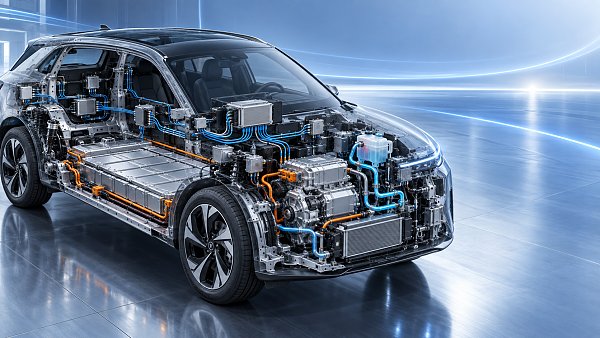
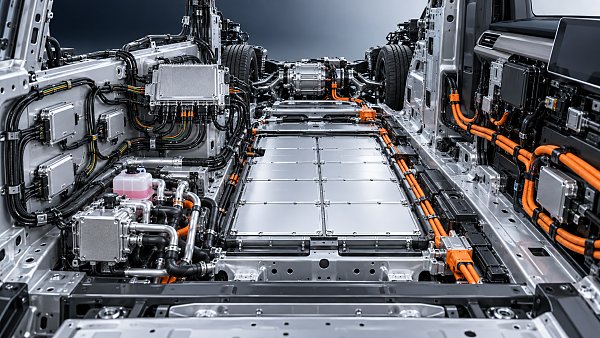
EV platform scalability is determined early by the boundaries between software functions, electronic control units, vehicle networks, and physical components. A platform can share the same battery enclosure, e-axle family, thermal loop hardware, cockpit display set, and harness architecture across several vehicle sizes, yet still become difficult to extend when the software assumes one fixed sensor set, one network topology, or one calibration method. The resulting constraint is often discovered late: a new heat pump, inverter, display, steering actuator, or charging configuration requires changes across unrelated controllers because responsibilities were never cleanly separated.
A scalable automotive software architecture preserves variation at defined interfaces. It allows vehicle programs to change hardware capacity, option content, regional configurations, and control strategies without copying large portions of application code or revalidating functions that were not altered. This is particularly important in electric vehicles because thermal management, high-voltage energy flow, charging, cockpit functions, and chassis control increasingly exchange data and compete for shared electrical and computational resources.
Scalability starts with ownership of functions
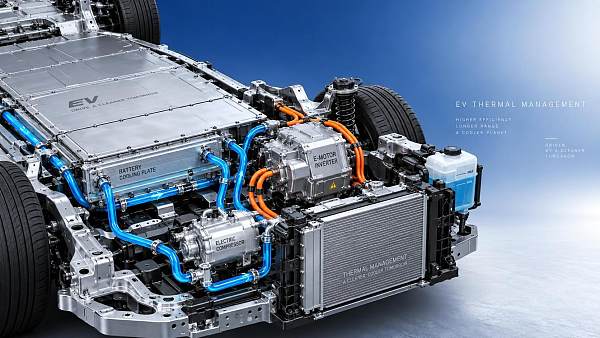
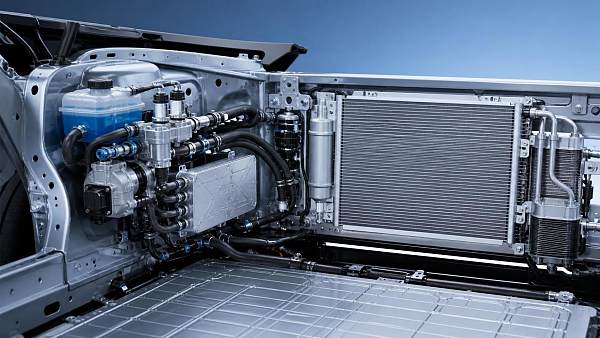
The first architectural question is not how many ECUs a vehicle has. It is which software layer owns each decision. A battery management system should retain responsibility for cell protection, pack state estimation, and allowable charge or discharge limits. A thermal domain controller may determine coolant routing, compressor demand, fan operation, and cabin-to-battery heat allocation. A vehicle energy coordinator can arbitrate between those domain outputs when range, charging time, occupant comfort, traction demand, and component protection conflict.
Problems arise when these responsibilities overlap. For example, an electric compressor controller may contain a local power-limiting rule, while the thermal controller separately requests compressor torque and the energy coordinator applies a third constraint. Each rule may appear reasonable when tested alone. Under low ambient temperature, rapid charging, and a high cabin heating request, their combined behavior can produce oscillation: compressor speed rises, the high-voltage limit tightens, thermal capacity falls, the controller increases its request, and the cycle repeats. Clear functional ownership makes the arbitration path explicit and reduces this type of emergent behavior.
A practical distinction is between control authority and measurement authority. A controller can publish coolant temperatures, pressure readings, estimated heat rejection, or inverter losses without owning the final system action. Likewise, a central coordinator can issue a target or envelope without directly commanding every valve position or compressor phase current. Separating these roles protects local safety behavior while allowing platform-level optimization.
Layering determines how much hardware can change
Software portability depends on whether application logic is coupled to a specific ECU, microcontroller peripheral, or communication frame. A layered design commonly separates vehicle functions, reusable services, communication middleware, and hardware abstraction. The value is not the diagram itself; it is the ability to replace a component implementation without forcing changes into the function that uses it.
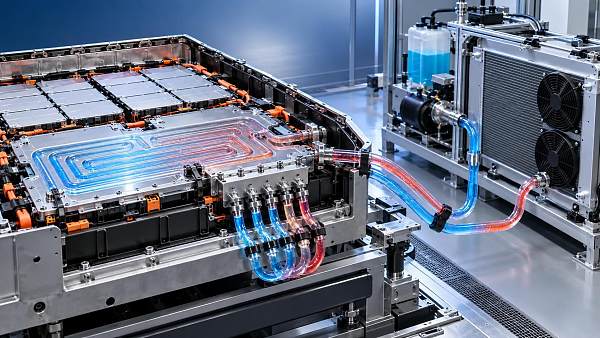
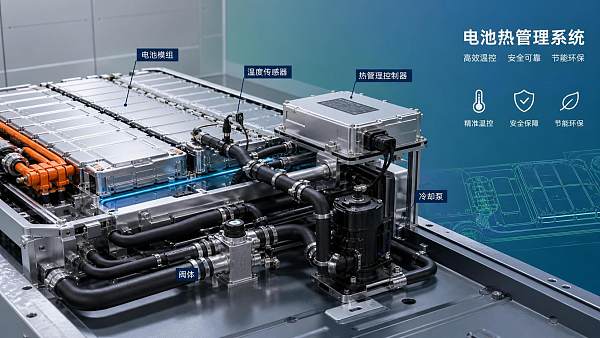
Consider a battery cooling function. At the vehicle-function layer, it needs concepts such as requested coolant temperature, thermal capacity available, actuator status, and fault state. It should not need to know whether a coolant valve uses a LIN node, a CAN-connected smart actuator, or a directly driven motor channel. That detail belongs below a stable service interface. When a vehicle derivative moves from separate valves to an integrated thermal valve, the software change can remain concentrated in the actuator adapter and diagnostic configuration rather than spreading into energy management and charging logic.
Abstraction only works when the interface reflects the physical capability honestly. A generic command such as “set cooling level to 60%” is weak if one thermal system has a chiller, another uses refrigerant-to-coolant exchange, and a third has separate battery and drive-unit loops. The higher layer needs a capability model: available heat sources and sinks, flow-path restrictions, response limits, permitted operating modes, and the confidence of the reported state. A narrow interface that hides these distinctions creates portability on paper but forces special cases back into application code.
Hardware abstraction also has timing limits. A brake-related or steer-by-wire control loop cannot tolerate an extra chain of service calls, queued network messages, and delayed state updates simply because the same interface is elegant for body functions. Time-critical functions require explicit execution periods, deadline monitoring, signal freshness rules, and local fallback behavior. Scalability is weakened when a common architecture ignores the difference between a cockpit personalization setting and a chassis control signal.
Vehicle networks are part of the software contract
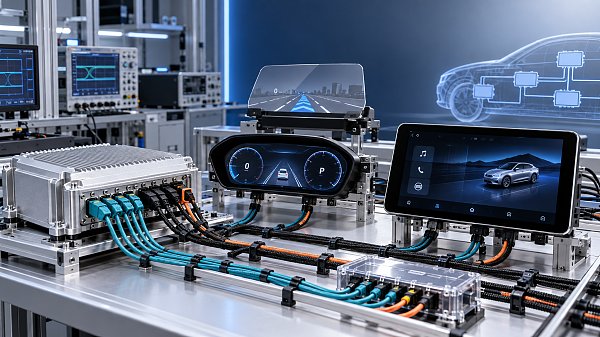
Network selection affects software scalability because it sets bandwidth, latency, determinism, fault containment, and update paths. CAN and LIN remain suitable for many distributed actuators and sensors, while automotive Ethernet supports higher data rates and service-oriented communication. The architectural issue is not simply replacing one bus with another. It is ensuring that a functional interface remains stable when transport changes.
A thermal controller that subscribes to battery limits, charging state, compressor availability, and cabin demand needs defined update rates and validity behavior. A message arriving correctly but too late can be functionally equivalent to a missing message. The interface specification should therefore state more than signal names and units. It should define:
- the producer’s update behavior in normal operation, wake-up, degraded operation, and software update states;
- freshness thresholds, including whether the receiving function should hold the last valid value, substitute a conservative value, or disable a requested mode;
- the source of time for correlated signals, especially where battery, inverter, and charging data are used to calculate a shared power envelope;
- diagnostic ownership when a network path fails but the physical actuator remains healthy.
Signal semantics require similar care. “Available battery power” can mean a short-duration electrical limit, a continuously sustainable limit, a limit after auxiliary loads, or a value already reduced by charging and thermal constraints. Treating all variants as interchangeable leads to incorrect power allocation. The same risk applies to state-of-charge, battery temperature, pump status, and steering actuator readiness. A scalable architecture gives each shared signal a defined physical meaning, validity condition, source, and lifecycle.
Service-oriented functions need bounded behavior
Service-oriented architecture can support feature growth by exposing functions through contracts rather than fixed point-to-point messages. It is useful for cockpit services, remote diagnostics, charging preferences, configuration management, and some cross-domain coordination. Yet a service interface does not remove the need for deterministic control. The architecture must identify which services are advisory, which services issue requests, and which commands have authority over a safety-relevant actuator.
For example, a cockpit application may request a cabin preconditioning target through a service interface. The thermal domain should interpret that request within refrigerant pressure limits, battery energy availability, compressor operating conditions, and defrost requirements. The application should receive a meaningful status rather than infer success from an HVAC command echo. That status might distinguish accepted, constrained, unavailable, and completed states. Without this distinction, software teams often compensate at the user-interface layer with timers and assumptions that fail when hardware options differ.
Versioning is equally important. An interface that adds a required field, changes an enumeration meaning, or reuses a reserved diagnostic code can break an older controller even when network communication continues. Backward-compatible evolution requires optional fields, explicit capability discovery where appropriate, and an agreed retirement path for deprecated behavior. This matters across vehicle programs that remain in production while newer derivatives adopt different sensor packages or central computing hardware.
Configuration should be treated as controlled product data
Variant handling is where many EV architectures lose their intended reuse. Battery capacities, heat-pump availability, number of coolant loops, rear drive unit presence, charging hardware, display size, steering configuration, and regional functions create a large configuration space. Embedding these choices in branches throughout source code leads to opaque behavior and makes review difficult. The alternative is not unlimited configurability. It is a controlled separation between software logic and approved vehicle configuration.
A configuration model should connect feature selections to physical topology, software parameters, network nodes, diagnostics, calibration limits, and test evidence. If an optional electric compressor uses a different operating envelope, the architecture needs more than a different part number. The associated controller configuration must identify its capability, electrical limits, communication behavior, fault reactions, and calibration set. A configuration that changes only one of these layers can pass bench tests but fail after integration.
Parameters deserve classification. Some are product calibration values, such as temperature targets, flow thresholds, or torque blending curves. Some describe topology, such as the presence of a valve branch or a sensor. Others are safety-related limits that require stricter change control. Mixing them in one undifferentiated parameter file creates release risk. A software update intended to tune cabin comfort should not accidentally alter a topology declaration or an energy-protection threshold.
Update capability depends on partitioning and recovery
Over-the-air updating is often described as a connectivity feature, but its real architectural dependency is partitioning. A vehicle must be able to identify the software unit being changed, verify its compatibility with dependent units, apply the update under adequate power and network conditions, and recover from interruption. Large monolithic images make this process slow and increase the amount of software affected by a small change. Excessively fragmented images create another problem: dependency combinations become difficult to control.
The appropriate unit of update is usually a functionally coherent software component with explicit interfaces and a known compatibility range. A thermal strategy update, for example, should be evaluated against the supported battery-management, compressor-control, and energy-coordination interfaces. It should not assume that every vehicle has the same heat exchanger arrangement or charging controller behavior. Compatibility matrices need to include hardware revision and configuration state, not only software version.
Recovery behavior deserves equal weight. During an interrupted update, a controller may need to retain the previous executable image, enter a limited operating mode, or prevent activation until dependent modules are compatible. For high-voltage and chassis functions, a degraded state must be defined in terms of vehicle behavior, not merely communication availability. “ECU online” is not evidence that torque, steering, thermal protection, or diagnostics are operating at the required level.
Centralization changes wiring, but not every control boundary
Central compute architectures can reduce duplicated processing, simplify feature deployment, and support richer cross-domain coordination. They also concentrate failure modes and increase dependence on Ethernet switches, gateways, power distribution, and software scheduling. Moving a function centrally is justified when its data dependencies, compute demand, and update cadence benefit from shared execution. It is less suitable when the actuator needs immediate local control during a network interruption or when physical placement makes sensor and actuator wiring impractical.
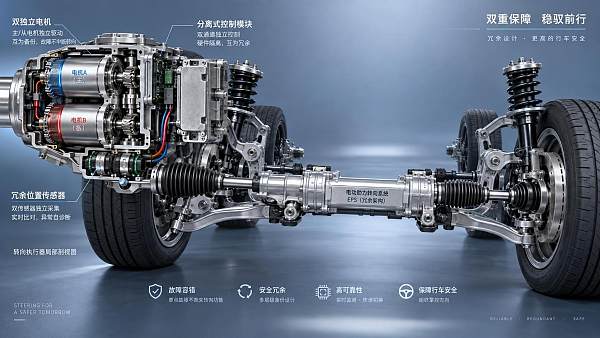
High-voltage contactor control, electric power steering assistance, compressor motor control, and certain thermal protection actions often need local execution even when supervisory decisions are centralized. The central layer can calculate targets and modes; the local controller enforces electrical, mechanical, and thermal limits at the required response time. This hybrid model avoids a false choice between fully distributed ECUs and a single central computer.
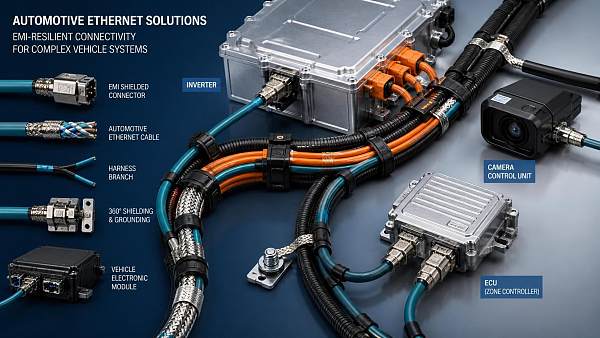
Harness design must reflect the resulting architecture. Consolidating data onto Ethernet does not eliminate the need for robust power, grounding, shielding, wake-up, and diagnostic paths. High-voltage harness routing, electromagnetic compatibility constraints, connector sealing, and service disconnect arrangements can affect where controllers and gateways are placed. A software architecture that assumes continuous, noise-free connectivity may become fragile once integrated with actual vehicle packaging.
Validation should follow interfaces and operating states
Component-level verification cannot prove platform scalability. The important failures appear at interfaces: a valid but stale signal, a new actuator capability reported with an old status code, a wake-up sequence that starts thermal control before battery data is available, or a central update that changes the timing of a distributed controller. Interface tests should cover normal requests, invalid data, delayed data, partial network loss, incompatible versions, and fallback transitions.
Thermal and energy functions require scenario-based validation because their interactions are state dependent. Fast charging in cold weather, repeated acceleration after a high thermal load, cabin conditioning during low state of charge, and recovery after a communication restart can expose different coordination defects. The aim is not to test every physical combination independently. It is to identify the architectural invariants that must remain true across combinations: component protection limits remain local and enforceable, authority is unambiguous, shared values retain their meaning, and degraded behavior remains bounded.
When those invariants are encoded in software contracts, configuration data, and verification artifacts, an EV platform can accept new batteries, thermal layouts, cockpit features, and chassis options without turning each derivative into a separate software program.
Related News
- 00
0000-00
Which automotive component export regulations apply before shipping? - 00
0000-00
How automotive software architecture shapes EV platform scalability - 00
0000-00
When R744 HVAC technology is the right fit for heat pump systems - 00
0000-00
How AUTOSAR shapes software integration for cockpit domain controllers - 00
0000-00
What should you verify before choosing a heat pump supplier?
Weekly Insights
Stay ahead with our curated technology reports delivered every Monday.
Recommended News
 Which automotive component export regulations apply before shipping?Automotive Component Export regulations explained: master customs, safety approvals, batteries, chemicals, transport rules, and sanctions screening before shipment.Author:Time:Sep 21, 2026
 How automotive software architecture shapes EV platform scalabilityAutomotive Software Architecture defines EV platform scalability—discover how modular interfaces, controlled configurations, and resilient updates accelerate innovation.Author:Time:Sep 20, 2026
 When R744 HVAC technology is the right fit for heat pump systemsR744 HVAC technology: discover when CO2 heat pumps deliver stronger cold-weather performance, vehicle thermal integration, and long-term value.Author:Time:Sep 19, 2026
 How AUTOSAR shapes software integration for cockpit domain controllersCockpit domain controller AUTOSAR integration explained: assess software boundaries, safety, updates, and scalable smart cockpit architecture.Author:Time:Sep 18, 2026
 What should you verify before choosing a heat pump supplier?Heat pump supplier selection guide: verify engineering fit, cold-climate performance, manufacturing quality, supply resilience, and commercial readiness before nomination.Author:Time:Sep 17, 2026
 Which Automotive CAN Bus standard fits a new vehicle network?Automotive CAN Bus standard guide: compare Classical CAN, CAN FD, and CAN XL to build a reliable, scalable vehicle network with the right cost, bandwidth, and compatibility.Author:Time:Sep 16, 2026
 How thermodynamic parameter modeling improves battery cooling designThermodynamic parameter modeling improves battery cooling design by predicting heat flow, temperature uniformity, flow balance, and transient performance.Author:Time:Sep 15, 2026
 Where automotive thermal management applications matter most in EV designAutomotive thermal management applications shape EV battery safety, fast charging, range, HVAC comfort, and powertrain reliability. Explore the design priorities that matter most.Author:Time:Sep 14, 2026
 How actuator redundancy affects steer-by-wire system safetySteer by wire actuator redundancy explained: discover how independent power, sensing, control, and fault handling protect vehicle steering safety.Author:Time:Sep 13, 2026
 What cable ratings matter most in a fast charging harness?Fast charging harness ratings explained: assess current capacity, thermal derating, voltage, shielding, and connector performance for reliable EV charging.Author:Time:Sep 12, 2026
 How to specify a low voltage harness assembly for automotive useLow voltage harness assembly specification guide for automotive use—covering circuit design, durability, EMC, validation, and production-ready compliance.Author:Time:Sep 11, 2026
 What to verify before choosing a variable speed compressor supplierVariable speed compressor supplier selection made easier: verify technical fit, validation, compliance, capacity, and after-sales support before sourcing.Author:Time:Sep 10, 2026
 What is driving the EV wiring harness price trend in 2026?EV wiring harness price trend in 2026: explore how high-voltage systems, copper costs, vehicle architecture, and sourcing strategies shape EV harness costs.Author:Time:Sep 09, 2026
 How windshield curvature causes HUD system image distortionHUD system image distortion explained: discover how windshield curvature affects focus, ghosting, keystone, and AR-HUD accuracy—and how to evaluate solutions.Author:Time:Sep 08, 2026
 How to choose an AR-HUD projector for different windshield designsAR-HUD projector selection guide for different windshield designs. Learn how curvature, wedge glass, coatings, calibration, and packaging affect clear, stable AR display performance.Author:Time:Sep 07, 2026
 How does an e-drive cooling system prevent motor and inverter overheating?E-drive cooling system guide: learn how targeted coolant flow, cold plates, heat rejection, and smart controls prevent motor and inverter overheating.Author:Time:Sep 07, 2026
 How does vehicle motion control support safer steer-by-wire systems?Vehicle motion control strengthens steer-by-wire safety by coordinating steering, braking, and propulsion. Explore fault handling, validation, and safer vehicle responses.Author:Time:Sep 05, 2026
 How insulation monitoring protects high-voltage electrical architectureHigh-voltage electrical architecture insulation monitoring detects leakage early, improving EV safety, fault diagnosis, quality control, and reliability.Author:Time:Sep 04, 2026
 How ISO 26262 shapes functional safety requirements for automotive actuatorsAutomotive Actuators functional safety: discover how ISO 26262 links vehicle hazards, ASILs, diagnostics, and safety evidence for reliable actuator design.Author:Time:Sep 03, 2026
 How to choose a thermal management controller for battery coolingThermal Management Controller selection guide for battery cooling: compare control accuracy, BMS integration, safety, efficiency, and validation for smarter EV performance.Author:Time:Sep 02, 2026
 How EV powertrain components in Europe are adapting to 800V systemsEV Powertrain Components Europe are evolving for 800V systems—discover how inverters, e-axles, connectors and cooling enable safer, faster, high-performance EVs.Author:Time:Sep 01, 2026
 How electronic expansion valves improve heat pump efficiency at part loadElectronic expansion valve heat pump systems improve part-load efficiency through precise refrigerant control, stable superheat, and smarter EV thermal management. Explore key insights.Author:Time:Aug 31, 2026
 How to qualify an automotive flexible electronics supplier for FFC reliabilityAutomotive flexible electronics supplier qualification guide: verify FFC bend, thermal, electrical, connector, and production reliability before sourcing.Author:Time:Aug 30, 2026
 What to audit before choosing a swash plate compressor factorySwash plate compressor factory audit guide: verify machining, testing, traceability, change control, supply stability, and export readiness before sourcing.Author:Time:Aug 29, 2026
 How automotive thermal management modules affect EV battery coolingAutomotive thermal management module insights for EV battery cooling: learn how flow, chillers, heat pumps, and predictive controls improve fast charging, range, and reliability.Author:Time:Aug 28, 2026
 When does an aftermarket auto A/C compressor become a false economy?Auto A/C compressor aftermarket choices can cut upfront costs—but when do they raise lifecycle risk? Explore fitment, durability, warranty, and downtime factors before you buy.Author:Time:Aug 27, 2026
 How rising freight volatility is reshaping global automotive supply chain logisticsGlobal automotive supply chain logistics is being reshaped by freight volatility. Discover practical strategies to reduce risk, improve control, and protect automotive sourcing and production continuity.Author:Time:Aug 26, 2026
 How to choose automotive Ethernet cables for EMI-heavy vehicle systemsAutomotive Ethernet cables for EMI-heavy vehicles: learn how to compare shielding, signal integrity, durability, and connector fit to choose a more robust, future-ready link.Author:Time:Aug 25, 2026
 When does commercial vehicle thermal management for trucks lower fleet operating costsCommercial vehicle thermal management for trucks lowers fleet costs by reducing fuel or energy waste, downtime, and component failures. See when the ROI is real and worth the investment.Author:Time:Aug 24, 2026
 What drives auto A/C compressors price differences across vehicle typesAuto A/C compressors price varies by vehicle type, design, and thermal system demands. Learn the real cost drivers to compare quotes smarter and avoid hidden sourcing risks.Author:Time:Aug 23, 2026