How insulation monitoring protects high-voltage electrical architecture




As electric vehicles adopt higher system voltages, insulation monitoring becomes a frontline safety function across batteries, inverters, compressors, and wiring harnesses.
For quality and safety teams, the key question is practical: can the vehicle detect dangerous leakage early enough to prevent electric shock, fire, shutdowns, or costly recalls?
High-voltage electrical architecture insulation monitoring provides that early warning by continuously evaluating electrical separation between energized circuits and the vehicle chassis.
What insulation monitoring actually protects

Insulation monitoring protects people and equipment when high-voltage conductors no longer remain adequately isolated from the vehicle body.
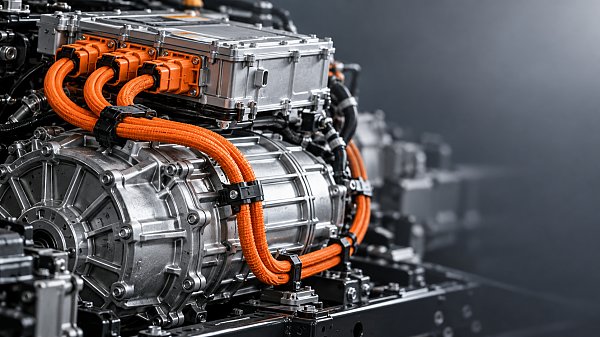
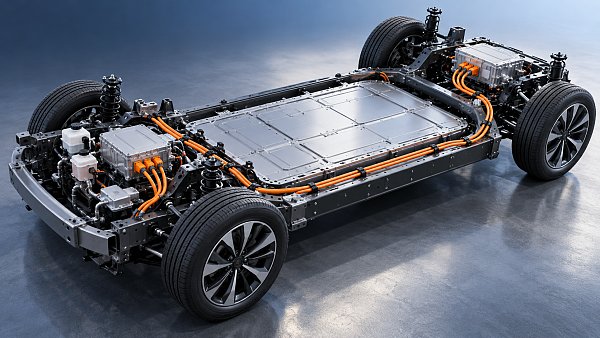
In a typical EV, the traction battery, inverter, onboard charger, DC-DC converter, electric compressor, and high-voltage harnesses share a connected energy system.
Any damaged cable, contaminated connector, weakened seal, or internal component fault can create an unintended current path toward the chassis.
That path may initially be too small to trigger an overcurrent protection device, yet still indicate deteriorating insulation and increasing safety risk.
An insulation monitoring device, commonly called an IMD, measures the relationship between the high-voltage system and chassis ground.
It reports insulation resistance or an equivalent leakage condition, allowing the vehicle control system to issue warnings, limit operation, or disconnect energy.
Why ordinary overcurrent protection is not enough
Fuses and circuit breakers primarily respond to excessive current flowing through intended conductors, while insulation faults can develop without high fault current.
This difference matters because a first insulation fault in an ungrounded or floating EV system may not immediately create a short circuit.
The vehicle can continue operating, but the remaining safety margin becomes smaller if a second fault appears elsewhere in the architecture.
Insulation monitoring detects this first deterioration before the condition necessarily becomes a high-current event or visible component failure.
For safety managers, this makes insulation monitoring complementary to fuses, contactors, crash disconnects, isolation barriers, and high-voltage interlock loops.
No single protection device addresses every failure mode, so an effective architecture combines prevention, detection, controlled response, and service verification.
Where insulation faults commonly develop
Battery packs face insulation risks from coolant intrusion, condensation, cell module damage, busbar contamination, housing deformation, and manufacturing defects.
High-voltage harnesses can experience abrasion, crushing, bending stress, connector damage, incorrect routing, and insufficient separation from sharp body structures.
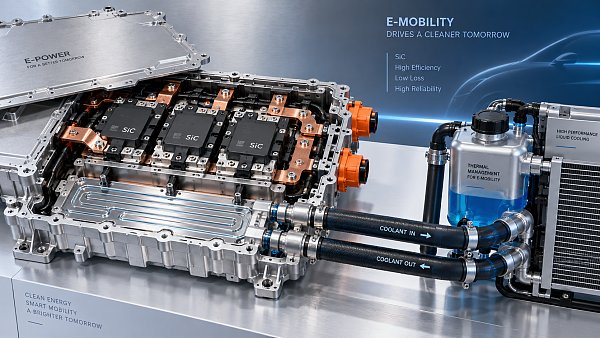
Inverters and onboard chargers contain switching devices, capacitors, laminated busbars, and thermal interfaces that can degrade under heat and vibration.
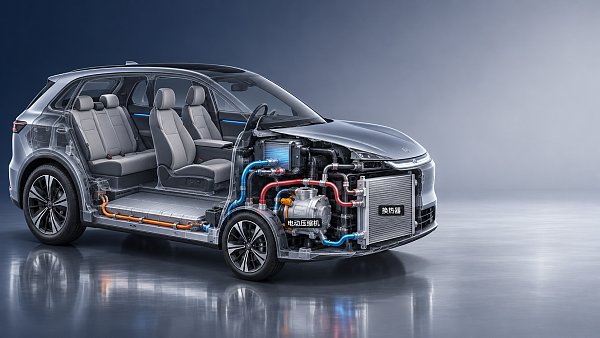
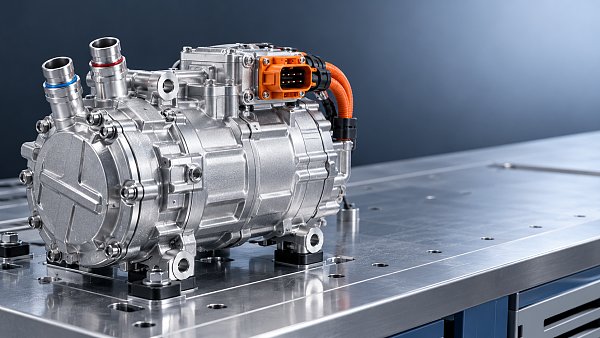
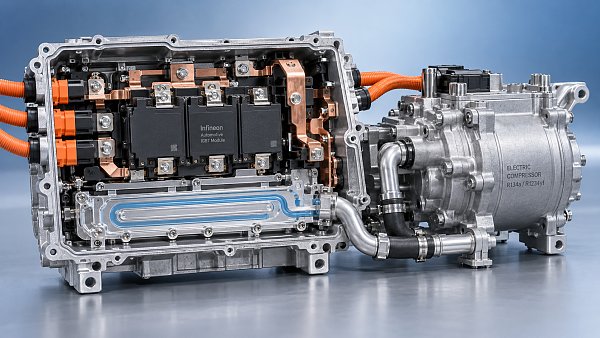
Electric compressors and other high-voltage auxiliaries may develop leakage through motor windings, coolant paths, seals, or damaged internal insulation.
Road salt, conductive dust, cleaning chemicals, and moisture can reduce surface resistance around connectors even when conductors remain electrically intact.
These causes show why insulation monitoring should be evaluated across the complete vehicle platform rather than assigned only to the battery supplier.
How monitoring supports quality control
Quality teams can use insulation monitoring data to identify process weaknesses that may remain hidden during conventional end-of-line electrical tests.
A vehicle may pass a static resistance measurement while still containing a marginal connector, intermittent harness fault, or temperature-sensitive leakage path.
Continuous monitoring during charging, driving, regenerative braking, and thermal operation reveals behavior across conditions that laboratory checks may not reproduce.
Production engineers should compare measurements by vehicle variant, supplier batch, assembly station, environmental condition, and component revision.
Abnormal trends can indicate crimping problems, seal compression variation, routing damage, coating defects, or inconsistent assembly torque.
This turns insulation monitoring from a reactive warning feature into a source of manufacturing intelligence and warranty-risk reduction.
What safety managers should expect during a fault
A useful monitoring strategy clearly defines what happens after insulation resistance falls below an accepted threshold.
The response may include a driver warning, reduced power, charging inhibition, contactor opening, service isolation, or complete vehicle shutdown.
The correct response depends on voltage level, fault location, operating state, measurement confidence, and the consequences of continued operation.
A temporary warning may be appropriate for a developing fault, while a rapid shutdown is necessary when shock or thermal escalation becomes credible.
Safety managers should verify that diagnostic messages are understandable, prioritized correctly, and retained for later inspection.
They should also confirm that a fault cannot be cleared permanently through a simple ignition cycle without addressing its underlying cause.
Key design choices in high-voltage architecture
IMD performance depends on the electrical architecture, including whether the system is floating, partially referenced, switched, or divided into multiple domains.
Parasitic capacitance from motors, filters, cables, battery structures, and shielding can influence measurement stability and response time.
Power electronics may introduce switching noise that complicates the distinction between genuine leakage and measurement interference.
Engineers therefore need to validate the monitoring device with representative inverters, compressors, battery packs, chargers, and harness lengths.
Measurement injection methods, response thresholds, isolation relays, and diagnostic algorithms should be reviewed as one coordinated safety function.
Component selection based only on nominal voltage or catalogue resistance range can overlook real integration limitations.
How to define meaningful thresholds
An insulation threshold must protect occupants and technicians while remaining practical for the vehicle’s normal electrical environment.
Thresholds are commonly related to system voltage, but the final strategy also considers energy, accessible conductive surfaces, response timing, and operating conditions.
Setting the limit too high can produce nuisance warnings, unnecessary shutdowns, and poor customer acceptance during humid or contaminated conditions.
Setting it too low can delay intervention until the fault has become more difficult to locate or more dangerous to manage.
Quality and safety teams should document warning thresholds, critical thresholds, hysteresis, filtering time, and recovery behavior.
They should also define whether thresholds vary during charging, driving, crash response, service mode, and manufacturing inspection.
Testing methods that expose real weaknesses
Validation should begin with controlled resistance tests between high-voltage circuits and chassis ground across the expected operating voltage range.
Teams should then introduce representative faults at battery modules, harness branches, connectors, inverter phases, compressor windings, and charging interfaces.
Temperature cycling can expose seal contraction, material expansion, condensation, and insulation degradation that static room-temperature tests miss.
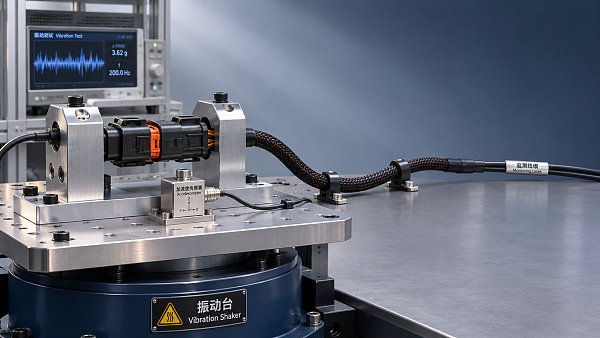
Vibration and mechanical durability testing are essential because harness movement and connector fretting can create intermittent leakage during vehicle operation.
Humidity, salt spray, dust, coolant exposure, and pressure-wash simulations help assess contamination-related surface conduction around vulnerable interfaces.
Testing should record detection time, false alarms, fault classification, system response, stored diagnostic information, and recovery after repair.
Production-line checks and supplier control
End-of-line testing should verify both the vehicle’s measured insulation condition and the correct communication between the IMD and control software.
Resistance measurements, high-voltage interlock checks, dielectric tests, connector inspections, and diagnostic communication tests serve different purposes.
They should not be treated as interchangeable simply because each test involves the high-voltage system.
Supplier quality agreements should specify measurement conditions, acceptable variation, calibration intervals, traceability, and defect escalation requirements.
For harness suppliers, critical controls include conductor insulation, shielding continuity, terminal crimp quality, connector sealing, branch routing, and bend-radius compliance.
For battery and power-electronics suppliers, teams should examine housing interfaces, coolant isolation, busbar insulation, internal barriers, and fault-reporting behavior.
Diagnostics and fault localization
Detecting an insulation fault is only the first step; service teams must locate it efficiently before the vehicle can return to operation.
A single vehicle-level resistance value may confirm a problem without identifying whether the battery, inverter, charger, compressor, or harness is responsible.
Architecture designers can support localization by dividing high-voltage branches, adding controlled switching, and using diagnostic sequences that isolate subsystems.
Service procedures should explain safe de-energization, waiting periods, personal protective equipment, measurement points, and approved replacement criteria.
Diagnostic software should distinguish current faults, historical faults, intermittent events, and faults that occur only during specific operating states.
Better localization reduces unnecessary component replacement, shortens repair time, and prevents technicians from repeatedly returning unsafe vehicles to customers.
Common implementation mistakes
One common mistake is installing a capable IMD without validating its behavior against the complete high-voltage system.
Another is treating insulation monitoring as a battery-only function even though leakage may originate in downstream loads or cables.
Teams also overlook software integration, allowing warnings to disappear, fault records to be overwritten, or contactor commands to conflict.
Insufficient attention to parasitic capacitance can create unstable readings, delayed detection, or nuisance alerts during inverter switching.
Maintenance programs may fail when they define no inspection path for recurring moisture, contamination, harness abrasion, or connector damage.
Finally, organizations sometimes approve thresholds without connecting them to hazard analysis, service capability, regulatory expectations, and customer operating conditions.
How to evaluate an IMD supplier
Procurement teams should assess detection accuracy, response time, voltage compatibility, measurement stability, diagnostic coverage, and communication interfaces.
Evidence should include test data from complete vehicle systems rather than only isolated laboratory demonstrations using ideal resistive loads.
Suppliers should explain performance under switching noise, high capacitance, rapid voltage changes, temperature variation, and multiple connected components.
They should provide information about functional safety processes, cybersecurity interfaces, software updates, calibration requirements, and long-term component availability.
Mechanical integration also matters, including mounting, connector protection, creepage, clearance, vibration resistance, thermal limits, and service accessibility.
The best purchasing decision balances technical performance with production support, diagnostic tools, documentation quality, and global supply continuity.
Business value beyond electrical safety
Effective insulation monitoring can reduce warranty exposure by identifying degradation before it causes vehicle immobilization or expensive secondary damage.
It also helps manufacturers establish clearer responsibility across battery, harness, power-electronics, charging, and thermal-system suppliers.
Reliable early detection improves vehicle availability because technicians can investigate a developing issue before a complete shutdown becomes necessary.
For exporters and global OEM programs, consistent monitoring supports platform standardization across markets, vehicle variants, and charging environments.
Data from field events can guide design changes, supplier corrective actions, inspection intervals, and future architecture decisions.
These benefits make insulation monitoring a quality-management tool as well as a compliance and occupant-protection mechanism.
Questions quality and safety teams should ask
Does the monitoring strategy cover every energized branch, including auxiliary loads and charging paths?
Can the system identify a first insulation fault before a second fault creates a more serious hazard?
Are warnings and shutdown actions appropriate for driving, charging, crash recovery, and service conditions?
Has the IMD been validated with the actual battery, inverter, compressor, charger, and harness configuration?
Can service technicians localize intermittent faults without repeatedly replacing expensive components?
Are threshold decisions supported by hazard analysis, test evidence, production data, and field experience?
These questions provide a practical review framework for comparing architectures, suppliers, and corrective-action proposals.
Conclusion: a necessary layer of EV risk control
High-voltage electrical architecture insulation monitoring gives EV platforms visibility into insulation deterioration before it becomes an uncontrolled electrical event.
Its value depends on more than the monitoring device itself; architecture, thresholds, software, testing, diagnostics, production controls, and service procedures must work together.
For quality personnel, the strongest benefit is earlier detection of process and component weakness across the complete high-voltage system.
For safety managers, the priority is predictable protection for occupants, emergency responders, technicians, and charging personnel under realistic fault conditions.
Manufacturers that treat insulation monitoring as an integrated safety and quality function can improve risk control, fault localization, reliability, and platform confidence.
As battery voltage and electrical content continue rising, robust monitoring will remain essential to safe, scalable, and serviceable vehicle design.
Have questions about this sector analysis, or seeking best practices specific to your niche? Drop us a line below and let the senior consultants at GAC assist you.
“We respect your privacy. Your information is strictly confidential.”
Related News
- 00
0000-00
Can a smart cockpit platform support multiple displays? - 00
0000-00
How is automotive connector vibration resistance tested? - 00
0000-00
How heat pumps save energy in automotive cabin climate systems - 00
0000-00
Is an EV heat pump worth it for winter driving range? - 00
0000-00
When should you use 50-ohm coaxial cable instead of 75-ohm?
Weekly Insights
Stay ahead with our curated technology reports delivered every Monday.
Recommended News
 Can a smart cockpit platform support multiple displays?Can a smart cockpit platform support multiple displays? Explore key requirements for performance, safety, connectivity, and supplier evaluation.Author:Time:Nov 07, 2026
 How is automotive connector vibration resistance tested?Automotive connector vibration resistance testing reveals hidden contact failures. Explore test profiles, continuity monitoring and pass criteria.Author:Time:Nov 06, 2026
 How heat pumps save energy in automotive cabin climate systemsAutomotive Cabin Climate Systems energy saving starts with smarter heat pump design. Explore real-world efficiency, cold-weather trade-offs, and testing tips.Author:Time:Nov 05, 2026
 Is an EV heat pump worth it for winter driving range?Is a heat pump worth using in a cold-climate EV? Discover how it affects winter range, when it pays off, and what to check before buying.Author:Time:Nov 04, 2026
 When should you use 50-ohm coaxial cable instead of 75-ohm?Coaxial cable 50 ohm or 75 ohm? Learn when to use each, avoid impedance mismatches, and choose the right cable for reliable RF and video performance.Author:Time:Nov 03, 2026
 How to select a high temperature motor harness for an EVChoose the right high temperature motor harness for your EV. Compare thermal limits, current capacity, shielding, routing, and validation evidence.Author:Time:Nov 02, 2026
 How much does electric power steering replacement cost?Electric power steering price typically ranges from $1,000 to $3,000 for major replacements. Discover cost factors, repair options, and tips for comparing quotes.Author:Time:Nov 01, 2026
 How to size an EV A/C compressor for the required cooling capacitySize an EV A/C Compressor with confidence. Explore cooling loads, performance maps and power limits to select the right compressor for your vehicle.Author:Time:Oct 31, 2026
 How to choose the right pitch for an FPC board connectorFPC board connector pitch affects space, assembly and reliability. Learn how to compare options and select the best fit for your design.Author:Time:Oct 30, 2026
 How zonal design affects harness routing in high-voltage EV architecturesExplore high-voltage electrical architecture zonal design and its impact on EV harness routing. Discover key trade-offs in cable length, safety, thermal performance, and service access.Author:Time:Oct 29, 2026
 How tariffs affect costs in global automotive parts supply chainsNavigate tariffs in the global automotive parts trade supply chain. Learn to compare landed costs, manage duty exposure, and uncover smarter sourcing strategies to protect your margins.Author:Time:Oct 28, 2026
 How to assess vendor lock-in in a software-defined vehicle platformAssess Software-Defined Vehicle platform lock-in with practical tests for API portability, data access, update control, and exit costs. Learn how to choose a platform with a proven exit path.Author:Time:Oct 27, 2026
 How ISO 26262 guides functional safety in steer-by-wire systemsExplore steering systems functional safety through ISO 26262. Learn how hazard analysis, fault-tolerant design, and validation build a stronger steer-by-wire safety case.Author:Time:Oct 26, 2026
 How to evaluate a steering angle sensor manufacturer's accuracy claimsEvaluate steering angle sensor manufacturer accuracy claims with practical checks on calibration, latency, and test evidence. Compare suppliers confidently and avoid costly selection mistakes.Author:Time:Oct 25, 2026
 How to diagnose CAN bus faults in a hybrid vehicle control unitDiagnose Hybrid Vehicle Systems control unit CAN bus faults with step-by-step power, wiring, and waveform checks. Find the root cause and avoid unnecessary replacement.Author:Time:Oct 24, 2026
 How does battery cooling pipe diameter affect coolant pressure drop?Battery Cooling Pipe diameter affects coolant pressure drop and pump power. Explore sizing calculations and practical tips to optimize EV battery cooling and compare options with confidence.Author:Time:Oct 23, 2026
 How to assess PPAP readiness of automotive sensor system manufacturersAssess Automotive Sensor Systems manufacturers for PPAP readiness. Learn to verify production evidence, measurement capability, validation, and traceability to reduce sourcing risks.Author:Time:Oct 22, 2026
 What to ask an FPC connector manufacturer about reliability testingChoosing an FPC Connector manufacturer? Learn what to ask about reliability testing, failure limits, and traceable results to reduce design risks and select with confidence.Author:Time:Oct 21, 2026
 How to verify vehicle fitment for an aftermarket AC evaporatorNavigating the evaporator aftermarket? Verify vehicle fitment with VIN data, OE numbers, and physical interface checks. Use this guide to avoid costly mismatches and order confidently.Author:Time:Oct 20, 2026
 How electric compressor speed affects EV battery cooling capacityElectric compressor technology: battery cooling depends on more than RPM. Discover how speed, refrigerant flow, and system limits affect EV cooling capacity and energy efficiency.Author:Time:Oct 19, 2026
 How to verify a variable frequency compressor supplier’s efficiency claimsVerify a variable frequency compressor supplier’s efficiency claims using COP boundaries, matched test conditions, and duty-cycle data. Learn how to choose with confidence.Author:Time:Oct 18, 2026
 How bend radius affects FPC reliability in automotive camera modulesAutomotive FPC applications: camera module reliability starts with bend radius. Learn how stack-up, strain, and validation guide robust designs and help prevent costly failures.Author:Time:Oct 17, 2026
 How to diagnose intermittent loss of electric power steering assistMaster power steering system diagnostics to trace intermittent EPS assist loss. Learn proven checks for voltage, wiring, and fault codes to avoid costly guesswork.Author:Time:Oct 16, 2026
 How to size automotive power modules for electric compressorsSize automotive power modules for electric compressors with confidence. Learn how voltage, phase current, losses, and cooling shape reliable selection—and avoid costly oversizing.Author:Time:Oct 15, 2026
 Why automotive power electronics are shifting to silicon carbideAutomotive Power Electronics are shifting to silicon carbide. Discover how SiC can cut losses, boost EV power density, and reshape cooling, reliability, and system costs.Author:Time:Oct 14, 2026
 How EV adoption shapes the electrically driven compressor marketExplore how EV adoption shapes the electrically driven compressor market, from battery cooling and heat pumps to supplier margins. Discover the drivers of profitable growth.Author:Time:Oct 13, 2026
 How to size a PTC heater for reliable EV cabin heatingPTC Heater sizing for EV cabins: learn how to balance defrost performance, heat-pump integration, airflow, voltage range, and battery power for reliable winter comfort.Author:Time:Oct 12, 2026
 What determines the cooling output of electric automotive AC compressors?Automotive air conditioning compressors electric systems: explore how speed, voltage, refrigerant, controls, and heat exchangers shape EV cooling capacity and efficiency.Author:Time:Oct 11, 2026
 What makes a touchscreen media head unit responsive enough for daily use?Touchscreen media head unit performance explained: discover what delivers fast starts, smooth maps, reliable phone pairing, and responsive daily driving.Author:Time:Oct 10, 2026
 How Does a Battery Management System Communicate Cooling Demand?How does a battery management system communicate cooling demand? Explore CAN signals, thermal priorities, fault handling, and EV cooling control strategies.Author:Time:Oct 20, 2026