Which automotive component export regulations apply before shipping?




There is no single “automotive component export certificate” that clears every shipment. The applicable requirements depend on a chain of facts: the exact component, its intended vehicle application, the importing country, the legal identity of the importer, the shipment’s customs classification and origin, and whether the product contains controlled electronics, batteries, chemicals, refrigerants, radio functions, or safety-critical functions.
For commercial review, the key question before shipment is not simply whether a part has passed factory inspection. It is whether the shipment can be legally exported, declared correctly, imported into the destination market, and released without creating downstream liability for the seller, importer, distributor, or vehicle integrator. Automotive Component Export regulations therefore sit across customs law, product compliance, transport safety, export controls, environmental obligations, and contractual documentation.
Start by separating export clearance from destination-market approval
A part can be accepted by export customs and still be unsuitable for sale, installation, or distribution in the destination market. Conversely, a technically compliant part may be delayed if its tariff classification, country of origin declaration, invoice value, or supporting documents are incomplete.
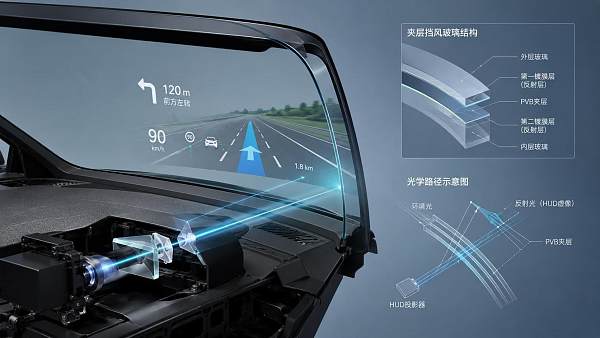
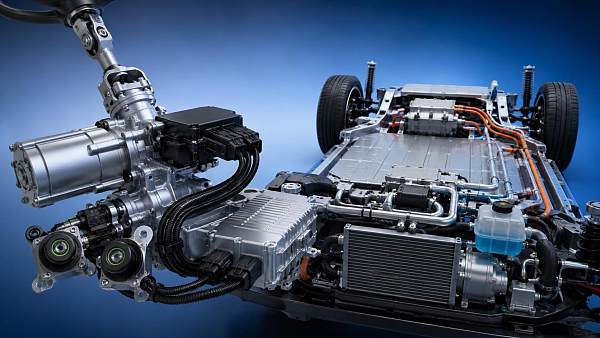
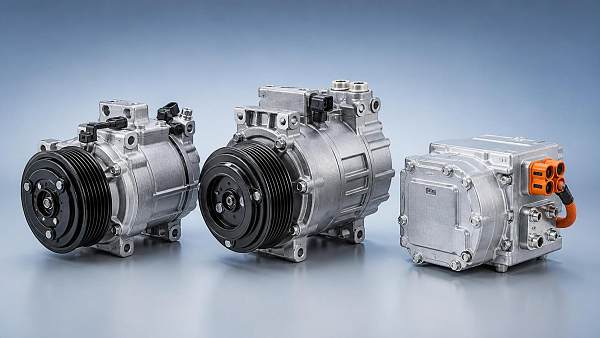
This distinction matters most for components that are safety-critical or electronically complex. A steering column, EPS controller, brake-related electronic module, high-voltage harness, battery cooling assembly, electric compressor, infotainment head unit, or HUD can trigger different compliance questions even when all are described commercially as “auto parts.”
Pre-shipment review should therefore distinguish four separate permissions:
- Export legality: whether the exporter may ship the goods from the country of export, taking account of customs filings, export controls, sanctions, and licensing requirements.
- Transport acceptance: whether the goods may travel by the proposed air, sea, road, or rail route, particularly where lithium batteries, pressurized systems, refrigerants, or hazardous substances are involved.
- Import customs compliance: whether the destination declaration, tariff treatment, origin claim, valuation, and importer-of-record documentation are correct.
- Market-placement compliance: whether the product may lawfully be supplied, fitted, or used in the destination market for its stated application.
Failure in any one category can stop a shipment or turn a routine customs issue into a warranty, recall, contractual, or enforcement exposure.
Customs classification, origin, and value are the first regulatory controls
The customs declaration normally begins with the Harmonized System (HS) classification. Automotive parts are often assumed to fall under heading 8708, but that assumption is frequently unsafe. Electrical apparatus, electronic displays, compressors, batteries, sensors, radio equipment, cables, and specialized machinery may be classified outside 8708 according to their essential function and the applicable tariff rules.
Examples require careful review. A vehicle wiring harness may fall within a heading for insulated electric conductors rather than a general vehicle-parts heading. A display module may be classified under provisions for display apparatus. An automotive air-conditioning compressor, whether scroll or swash-plate design, requires classification based on the tariff wording and product construction. A complete lithium-ion battery pack is not merely an automotive accessory for customs purposes.
An incorrect HS code affects more than duty. It can alter statistical reporting, import permits, trade-remedy exposure, origin documentation, and the regulator’s view of the shipment. Product descriptions should be technically specific enough to support the declared code: part number, function, material or technology, voltage where relevant, whether it is complete or unfinished, and whether it is intended solely or principally for a vehicle application.
Country of origin must also be distinguished from country of export. Origin is determined under the rules applicable in the importing market and may depend on substantial transformation, tariff-shift rules, regional-value-content calculations, or product-specific trade agreement requirements. A supplier declaration alone is not always sufficient evidence for preferential tariff treatment.
For shipments claiming benefits under a free trade agreement, origin evidence should be reviewed before dispatch. In North American trade, for example, USMCA origin qualification follows its own rules and documentation framework. A product assembled in one country from imported electronics, copper conductors, castings, or compressor mechanisms does not automatically qualify as originating. Unsupported preference claims can result in retroactive duty assessments and penalties for the importer.
Customs value should reflect the actual transaction structure. Assists, tooling contributions, royalties, engineering charges, free-issued materials, and certain packaging costs may affect declared value under the destination country’s customs valuation rules. These items are particularly relevant in automotive supply programs where molds, test equipment, software development, or OEM-owned components are supplied separately from the piece-price invoice.

Safety and vehicle-approval rules depend on what the part is and how it will be used
Automotive safety regulation is not uniform across markets, and component-level requirements differ from complete-vehicle approval. A part that is legal for aftermarket distribution in one jurisdiction may require approval, marking, testing evidence, or restricted sales conditions elsewhere.
In the European Union, vehicle type approval is substantially aligned with the EU framework for the approval and market surveillance of motor vehicles and with applicable UN Regulations administered through the UNECE system. Certain components and separate technical units may require type approval or prescribed approval markings when supplied for regulated vehicle functions. The relevant regulation depends on the item: lighting, mirrors, glazing, braking elements, steering-related functions, electromagnetic compatibility, and other regulated systems are not governed by one general rule.
A frequent mistake is to treat CE marking as a universal passport for automotive parts. It is not. CE marking applies only where a relevant EU harmonisation law requires it. Some electronic automotive products may fall within rules on radio equipment, electromagnetic compatibility, electrical safety, or substances, but an automotive component subject to vehicle type-approval rules is not made compliant merely by applying a CE mark. The applicable legal route must be identified from the product’s function, integration level, and intended supply chain.
In the United States, the National Highway Traffic Safety Administration (NHTSA) administers Federal Motor Vehicle Safety Standards (FMVSS). Manufacturers of vehicles and certain regulated equipment are generally responsible for self-certification rather than obtaining a pre-market NHTSA approval certificate. Whether a replacement part is covered depends on the relevant FMVSS and the component’s regulatory status. Even where a standalone replacement part does not bear a separate certification label, it must not cause a vehicle to become noncompliant or create a safety defect when installed or represented for use.
Canada, the United Kingdom, Japan, China, Gulf markets, and other destinations each apply their own vehicle approval, product safety, labeling, import, and conformity assessment systems. The commercial decision should not rely on a statement such as “ECE compliant” or “tested to SAE” without identifying whether that evidence is accepted for the specific product, vehicle category, and route to market in the country of import.
Electronics, connectivity, and high-voltage architecture create additional compliance layers
Smart cockpit devices, media head units, HUD systems, displays, telematics modules, cameras, communication cables, and wireless interfaces require a review beyond automotive functional performance. If the item intentionally transmits or receives radio signals, destination-market radio approval may apply. In the EU, radio equipment is generally assessed under the Radio Equipment Directive; in the United States, equipment authorization requirements can arise under Federal Communications Commission rules. The correct obligation depends on the incorporated transmitter, operating bands, modular approvals, host-product configuration, software controls, and labeling requirements.
Electromagnetic compatibility must also be assessed in the correct automotive context. Compliance with a generic commercial EMC standard may not establish compliance with vehicle-level or component-level automotive EMC requirements. For parts intended to be fitted to a vehicle, the relevant regulatory regime and OEM specifications can be more consequential than a generic laboratory report.
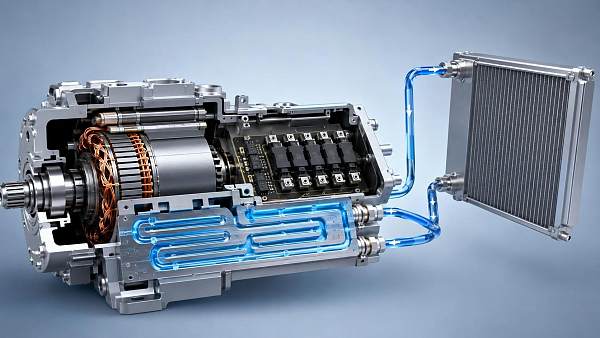
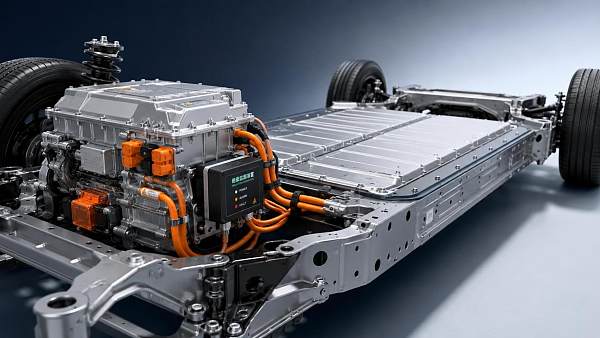
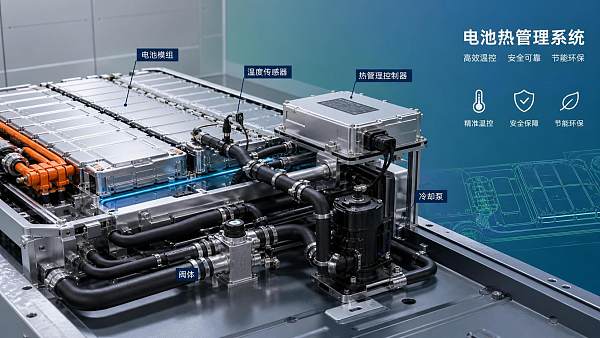
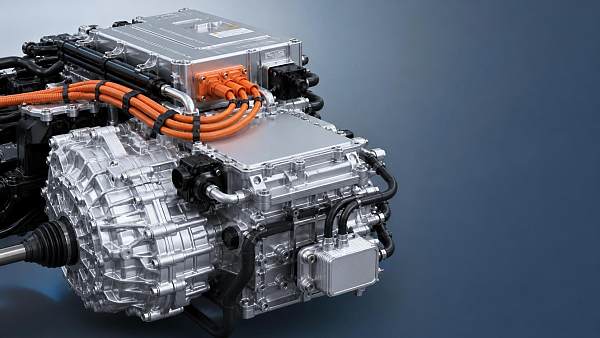
High-voltage harnesses, battery liquid-cooling modules, electric compressors, integrated thermal valves, and heat-pump assemblies require particular attention to voltage rating, insulation design, connector interfaces, ingress protection, thermal stability, flammability, and system-level compatibility. Yet technical test results alone do not determine legal market access. The shipment file should connect each report to the exact part number, revision level, manufacturing location, and intended application. A report for an earlier connector, software version, refrigerant specification, or cable construction may not support the shipped configuration.
Environmental, chemical, and refrigerant obligations often sit outside the engineering file
Automotive components can contain substances subject to market restrictions, information duties, or reporting requirements. For EU supply chains, REACH obligations may be relevant where articles contain substances of very high concern above applicable thresholds, while RoHS can apply to relevant electrical and electronic equipment categories. Whether a specific automotive product is within scope, exempt, or subject to a particular obligation should be assessed by product and market, not assumed from its vehicle use.
Material declarations are especially important for wiring harnesses, printed circuit assemblies, displays, electronic controllers, seals, coatings, solder, and plastic compounds. An International Material Data System (IMDS) record can be important in OEM supply chains, but it is not itself a customs document or a blanket legal certification. It should be consistent with the product’s bill of materials and the declarations provided to the importer.
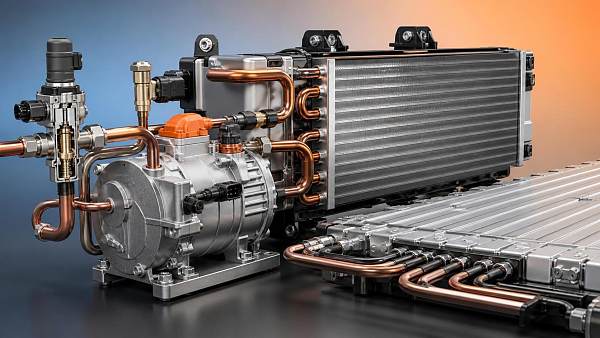
Thermal systems need a separate refrigerant review. Compressors or heat-pump modules may be shipped dry, pre-filled, or accompanied by refrigerant-containing service parts. Refrigerant controls differ by jurisdiction and can affect import eligibility, transport classification, servicing restrictions, and labeling. A commercial invoice that simply describes an item as “A/C compressor” may omit information needed by freight forwarders or destination compliance teams when the shipment contains controlled gases, oils, pressure vessels, or hazardous mixtures.
Dangerous-goods rules are shipment-specific, not product-category rules
Transport regulations apply according to the condition in which the product is shipped. Lithium batteries and battery-containing assemblies may be subject to UN 38.3 testing and the applicable provisions of the International Maritime Dangerous Goods Code, IATA Dangerous Goods Regulations, or ADR for road transport. The applicable entry changes depending on whether the battery is shipped by itself, packed with equipment, contained in equipment, damaged, prototype, waste, or transported under a special provision.
Battery cooling parts may not be dangerous goods when empty, but they may require a different assessment when filled with coolant or shipped with pressurized lines. Electric compressors and HVAC assemblies can similarly change transport status based on refrigerant charge and packaging. The practical control is to obtain a current safety data sheet where applicable, transport classification, net quantity, UN number if assigned, packing instruction, and confirmation that the packaging matches the selected mode of transport.
Export controls and sanctions should be screened before the booking is placed
Most ordinary automotive components are not controlled merely because they are automotive, but that does not remove export-control risk. The applicable rules can depend on the exporting jurisdiction, the origin of incorporated technology, encryption functionality, technical parameters, end user, end use, destination, and transaction parties.
For goods subject to U.S. jurisdiction, the Export Administration Regulations may apply to U.S.-origin items, certain foreign-produced items, software, or technology. The classification may be EAR99 or may require review against an Export Control Classification Number. Similar considerations arise under EU dual-use rules and national export-control regimes. Screening should cover not only the buyer but also consignee, end user, financial parties, vessel or carrier where relevant, destination, and known end use.
Sanctions screening cannot be replaced by a general contractual statement that goods will not be diverted. A credible record links the screened entities, product, destination, shipping route, and declared end use. This is particularly important where components can be integrated into vehicles, industrial equipment, defense-adjacent platforms, or re-export supply chains.
The shipment file should prove consistency, not merely collect certificates
The strongest pre-shipment record is internally consistent across the purchase order, product specification, packing list, commercial invoice, customs declaration, transport paperwork, certificates, labels, and destination compliance evidence. Mismatches are a common source of holds: different part numbers on an invoice and test report, an origin claim unsupported by manufacturing records, a battery declared as non-hazardous without transport evidence, or a wireless unit shipped without the required market approval.
The final release decision should be made at the part-number and shipment-condition level, not at the broad product-family level. “Automotive wiring harness,” “electric compressor,” or “cockpit display” is too broad a description for determining legal requirements. Voltage, radio capability, battery content, refrigerant charge, vehicle category, destination, and intended use can change the answer.
That discipline reduces a recurring commercial error: treating customs clearance as proof of compliance. Clearance only addresses the declaration accepted for a particular import transaction. It does not replace technical conformity, product safety duties, environmental obligations, or the importer’s responsibility to place compliant automotive components on the market.
Related News
- 00
0000-00
Which automotive component export regulations apply before shipping? - 00
0000-00
How automotive software architecture shapes EV platform scalability - 00
0000-00
When R744 HVAC technology is the right fit for heat pump systems - 00
0000-00
How AUTOSAR shapes software integration for cockpit domain controllers - 00
0000-00
What should you verify before choosing a heat pump supplier?
Weekly Insights
Stay ahead with our curated technology reports delivered every Monday.
Recommended News
 Which automotive component export regulations apply before shipping?Automotive Component Export regulations explained: master customs, safety approvals, batteries, chemicals, transport rules, and sanctions screening before shipment.Author:Time:Sep 21, 2026
 How automotive software architecture shapes EV platform scalabilityAutomotive Software Architecture defines EV platform scalability—discover how modular interfaces, controlled configurations, and resilient updates accelerate innovation.Author:Time:Sep 20, 2026
 When R744 HVAC technology is the right fit for heat pump systemsR744 HVAC technology: discover when CO2 heat pumps deliver stronger cold-weather performance, vehicle thermal integration, and long-term value.Author:Time:Sep 19, 2026
 How AUTOSAR shapes software integration for cockpit domain controllersCockpit domain controller AUTOSAR integration explained: assess software boundaries, safety, updates, and scalable smart cockpit architecture.Author:Time:Sep 18, 2026
 What should you verify before choosing a heat pump supplier?Heat pump supplier selection guide: verify engineering fit, cold-climate performance, manufacturing quality, supply resilience, and commercial readiness before nomination.Author:Time:Sep 17, 2026
 Which Automotive CAN Bus standard fits a new vehicle network?Automotive CAN Bus standard guide: compare Classical CAN, CAN FD, and CAN XL to build a reliable, scalable vehicle network with the right cost, bandwidth, and compatibility.Author:Time:Sep 16, 2026
 How thermodynamic parameter modeling improves battery cooling designThermodynamic parameter modeling improves battery cooling design by predicting heat flow, temperature uniformity, flow balance, and transient performance.Author:Time:Sep 15, 2026
 Where automotive thermal management applications matter most in EV designAutomotive thermal management applications shape EV battery safety, fast charging, range, HVAC comfort, and powertrain reliability. Explore the design priorities that matter most.Author:Time:Sep 14, 2026
 How actuator redundancy affects steer-by-wire system safetySteer by wire actuator redundancy explained: discover how independent power, sensing, control, and fault handling protect vehicle steering safety.Author:Time:Sep 13, 2026
 What cable ratings matter most in a fast charging harness?Fast charging harness ratings explained: assess current capacity, thermal derating, voltage, shielding, and connector performance for reliable EV charging.Author:Time:Sep 12, 2026
 How to specify a low voltage harness assembly for automotive useLow voltage harness assembly specification guide for automotive use—covering circuit design, durability, EMC, validation, and production-ready compliance.Author:Time:Sep 11, 2026
 What to verify before choosing a variable speed compressor supplierVariable speed compressor supplier selection made easier: verify technical fit, validation, compliance, capacity, and after-sales support before sourcing.Author:Time:Sep 10, 2026
 What is driving the EV wiring harness price trend in 2026?EV wiring harness price trend in 2026: explore how high-voltage systems, copper costs, vehicle architecture, and sourcing strategies shape EV harness costs.Author:Time:Sep 09, 2026
 How windshield curvature causes HUD system image distortionHUD system image distortion explained: discover how windshield curvature affects focus, ghosting, keystone, and AR-HUD accuracy—and how to evaluate solutions.Author:Time:Sep 08, 2026
 How to choose an AR-HUD projector for different windshield designsAR-HUD projector selection guide for different windshield designs. Learn how curvature, wedge glass, coatings, calibration, and packaging affect clear, stable AR display performance.Author:Time:Sep 07, 2026
 How does an e-drive cooling system prevent motor and inverter overheating?E-drive cooling system guide: learn how targeted coolant flow, cold plates, heat rejection, and smart controls prevent motor and inverter overheating.Author:Time:Sep 07, 2026
 How does vehicle motion control support safer steer-by-wire systems?Vehicle motion control strengthens steer-by-wire safety by coordinating steering, braking, and propulsion. Explore fault handling, validation, and safer vehicle responses.Author:Time:Sep 05, 2026
 How insulation monitoring protects high-voltage electrical architectureHigh-voltage electrical architecture insulation monitoring detects leakage early, improving EV safety, fault diagnosis, quality control, and reliability.Author:Time:Sep 04, 2026
 How ISO 26262 shapes functional safety requirements for automotive actuatorsAutomotive Actuators functional safety: discover how ISO 26262 links vehicle hazards, ASILs, diagnostics, and safety evidence for reliable actuator design.Author:Time:Sep 03, 2026
 How to choose a thermal management controller for battery coolingThermal Management Controller selection guide for battery cooling: compare control accuracy, BMS integration, safety, efficiency, and validation for smarter EV performance.Author:Time:Sep 02, 2026
 How EV powertrain components in Europe are adapting to 800V systemsEV Powertrain Components Europe are evolving for 800V systems—discover how inverters, e-axles, connectors and cooling enable safer, faster, high-performance EVs.Author:Time:Sep 01, 2026
 How electronic expansion valves improve heat pump efficiency at part loadElectronic expansion valve heat pump systems improve part-load efficiency through precise refrigerant control, stable superheat, and smarter EV thermal management. Explore key insights.Author:Time:Aug 31, 2026
 How to qualify an automotive flexible electronics supplier for FFC reliabilityAutomotive flexible electronics supplier qualification guide: verify FFC bend, thermal, electrical, connector, and production reliability before sourcing.Author:Time:Aug 30, 2026
 What to audit before choosing a swash plate compressor factorySwash plate compressor factory audit guide: verify machining, testing, traceability, change control, supply stability, and export readiness before sourcing.Author:Time:Aug 29, 2026
 How automotive thermal management modules affect EV battery coolingAutomotive thermal management module insights for EV battery cooling: learn how flow, chillers, heat pumps, and predictive controls improve fast charging, range, and reliability.Author:Time:Aug 28, 2026
 When does an aftermarket auto A/C compressor become a false economy?Auto A/C compressor aftermarket choices can cut upfront costs—but when do they raise lifecycle risk? Explore fitment, durability, warranty, and downtime factors before you buy.Author:Time:Aug 27, 2026
 How rising freight volatility is reshaping global automotive supply chain logisticsGlobal automotive supply chain logistics is being reshaped by freight volatility. Discover practical strategies to reduce risk, improve control, and protect automotive sourcing and production continuity.Author:Time:Aug 26, 2026
 How to choose automotive Ethernet cables for EMI-heavy vehicle systemsAutomotive Ethernet cables for EMI-heavy vehicles: learn how to compare shielding, signal integrity, durability, and connector fit to choose a more robust, future-ready link.Author:Time:Aug 25, 2026
 When does commercial vehicle thermal management for trucks lower fleet operating costsCommercial vehicle thermal management for trucks lowers fleet costs by reducing fuel or energy waste, downtime, and component failures. See when the ROI is real and worth the investment.Author:Time:Aug 24, 2026
 What drives auto A/C compressors price differences across vehicle typesAuto A/C compressors price varies by vehicle type, design, and thermal system demands. Learn the real cost drivers to compare quotes smarter and avoid hidden sourcing risks.Author:Time:Aug 23, 2026