How AUTOSAR shapes software integration for cockpit domain controllers




How AUTOSAR Shapes Software Integration for Cockpit Domain Controllers
As cockpit architectures consolidate infotainment, displays, connectivity, voice interaction, and selected vehicle functions, the cockpit domain controller AUTOSAR framework has become a serious evaluation point rather than a specification checkbox. Technical teams need to know where AUTOSAR reduces integration risk, where it introduces overhead, and how it coexists with Android, Linux, QNX, hypervisors, and proprietary middleware inside a modern smart cockpit.
The answer is rarely that an entire cockpit controller should be “AUTOSAR-based.” A more useful question is: which functions need standardized automotive behavior, deterministic communication, lifecycle control, safety traceability, or reuse across vehicle lines? The result is commonly a mixed software platform. AUTOSAR may govern the vehicle-facing and safety-relevant portions, while a high-performance operating environment handles rich HMI, app ecosystems, graphics, and cloud-facing services.
For assessors comparing suppliers or platform proposals, the value of AUTOSAR lies less in the brand name and more in the quality of the architecture behind it: clear software boundaries, controlled interface definitions, diagnostic ownership, update behavior, and evidence that the integration can survive variant growth over the vehicle lifecycle.
Why cockpit consolidation makes integration harder
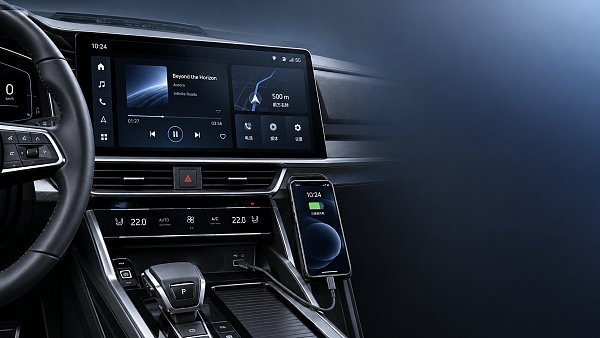
A cockpit domain controller may replace separate head units, instrument clusters, display controllers, telematics gateways, or body-function interfaces. It can connect to HUD systems, center-stack and passenger displays, cameras, microphones, amplifiers, smartphones, Ethernet switches, CAN networks, and vehicle service gateways. The hardware consolidation looks efficient. The software consequences are more demanding.
These functions operate at very different rates and under different constraints. A navigation application can tolerate occasional service restarts. A telltale indicator, reverse-camera transition, vehicle-speed signal, or warning presentation may not. The same controller may need to receive data from steering systems, HVAC controls, battery thermal management functions, charging interfaces, and high-voltage architecture networks, then present selected information through displays or voice interfaces without allowing a consumer-facing application to interfere with vehicle communication.
This is where interface discipline matters. Without it, each new display program, regional connectivity feature, or vehicle variant can create another set of custom mappings between applications, ECUs, and signals. Integration effort then moves from visible application development into debugging ownership disputes: which team owns a stale signal, an unavailable service, a diagnostic fault, or a failed over-the-air update?
AUTOSAR does not remove these issues automatically. It provides conventions and building blocks that can make them manageable when applied with a coherent system design.
AUTOSAR is a framework, not a cockpit operating system
A common assessment error is treating AUTOSAR as a direct alternative to Android Automotive, Linux, or QNX. They address different layers and use cases. AUTOSAR defines standardized software architecture, methodology, interfaces, and services for automotive electronic systems. It has two principal platforms that are relevant to cockpit integration.
AUTOSAR Classic Platform is generally suited to resource-constrained, real-time ECU functions. Its layered approach includes application software components, the Runtime Environment (RTE), basic software, and microcontroller-related layers. In a cockpit program, Classic may appear in a companion MCU, gateway function, display control path, body interface, watchdog-related function, or deterministic signal-processing element.
AUTOSAR Adaptive Platform is intended for higher-performance computing environments and service-oriented applications. It supports dynamic deployment concepts, POSIX-based operating environments, service communication, diagnostics, execution management, and other platform services. Adaptive is often more relevant when a cockpit controller must expose vehicle services to several software domains or communicate over automotive Ethernet using service-oriented patterns.
Neither platform dictates a complete user-interface stack. Rendering frameworks, media pipelines, voice engines, navigation content, app runtimes, and cloud clients may remain outside AUTOSAR. The critical design task is defining the contract between those layers and the vehicle-facing services.

The practical contribution: stable boundaries between software domains
The strongest integration benefit of a cockpit domain controller AUTOSAR approach is the separation of application intent from communication and hardware details. A function should request a vehicle service or consume a defined data element; it should not need to understand every CAN frame layout, Ethernet route, sensor source, or ECU supplier implementation behind that service.
In Classic systems, the RTE formalizes the connection between software components. In Adaptive systems, service-oriented communication and interfaces can support a similar architectural objective at a different scale. Service discovery and SOME/IP are frequently discussed in Ethernet-based vehicle networks, but the real engineering question is more specific: are service names, event rates, timeouts, availability behavior, version rules, and ownership defined consistently across the system?
Consider a cockpit display showing battery preconditioning status, cabin thermal settings, drive-mode information, and steering-wheel control responses. Those items may originate in separate controllers and networks. A well-designed integration layer can make the HMI consume defined services rather than direct raw signals. That reduces coupling, but only if the semantic model is controlled. “Temperature,” for example, may mean requested cabin setpoint, measured cabin temperature, coolant temperature, battery inlet temperature, or an invalid value awaiting initialization. A standardized transport layer does not solve unclear semantics.
ARXML and configuration governance are often the hidden differentiator
AUTOSAR descriptions commonly use ARXML to represent software components, interfaces, communication mappings, ECU configurations, and related system information. This can improve traceability across OEM, Tier 1, middleware, and toolchain teams. It can also become a source of delay when model ownership is unclear.
Technical assessors should look beyond whether a supplier can export ARXML. The more revealing questions are whether interface changes are versioned, whether incompatible changes are detected before integration, whether generated configuration artifacts can be reproduced, and whether the program has a clear authority for the system model. An apparently small update to a data type, service instance, network endpoint, or diagnostic identifier can affect several domains at once.
This matters especially in global programs. A cockpit platform may share core software across China, Europe, North America, Japan, South Korea, India, Mexico, and Southeast Asia while differing in language packs, map providers, radio requirements, connectivity services, display layouts, and feature availability. A scalable platform needs configuration discipline without turning every market variation into an independent software branch.
Safety, cybersecurity, and freedom from interference
Cockpit software is not uniformly safety-critical, yet the controller often displays or relays information that drivers rely on. It may also host gateway functions, receive ADAS status, manage warning presentations, or interact with steering-wheel controls and vehicle settings. The architecture must therefore distinguish between a visually rich but non-safety application and functions whose malfunction could have a safety impact.
AUTOSAR can support structured development through defined interfaces, diagnostics, memory and execution concepts, and platform services. It does not itself grant ISO 26262 compliance. Functional safety must be assessed at vehicle and item level, with requirements, safety mechanisms, verification evidence, and supplier responsibilities tailored to the specific function. A statement that software is “AUTOSAR compliant” is not a substitute for a safety argument.
The same caution applies to cybersecurity. ISO/SAE 21434 and applicable vehicle cybersecurity obligations may influence how cockpit services are designed, authenticated, updated, and monitored. A connected head unit is an attractive attack surface because it may expose Bluetooth, Wi-Fi, cellular links, USB interfaces, app content, and cloud APIs. Segmentation between an infotainment domain and vehicle-control communication is therefore not a theoretical concern. Assessors should examine trust boundaries, credential handling, diagnostic access, secure boot assumptions, logging, and the behavior of the platform when a service is unavailable or compromised.
Updates expose the difference between a demo and an automotive platform
Cockpit programs increasingly depend on post-launch feature updates, bug fixes, content refreshes, and cybersecurity remediation. Yet update architecture is often considered after the core integration has already become complex. That is risky. A domain controller may include separate partitions, ECUs, boot chains, configuration sets, application bundles, and calibration or vehicle-specific data. Each may have different rollback requirements and dependencies.
AUTOSAR-based diagnostic and update capabilities can provide a structured foundation, but the end-to-end process must still be designed across the full vehicle. Questions worth raising include: Can a vehicle remain in a safe and usable state if a cockpit update is interrupted? Are service interface versions compatible during staged rollout? Does an HMI application degrade gracefully if an underlying vehicle service is temporarily absent? Who validates the combined release when the display software, gateway configuration, and network database change together?
A credible answer includes release governance, not merely a promise of FOTA capability. This is particularly relevant where smart-cockpit functions intersect with display modules, media head units, HUD systems, data cables, communication harnesses, and Ethernet network components supplied by different organizations.
Where AUTOSAR can be the wrong tool—or the wrong scope
Standardization has a cost. AUTOSAR configuration, tooling, integration expertise, and conformance management can be substantial. For isolated prototype features or rapidly changing consumer applications, forcing every component into an AUTOSAR model may slow development without improving the outcome. Similarly, graphics-intensive user interfaces often need native access to platform-specific capabilities that do not fit comfortably within a generic automotive abstraction.
The better approach is selective rigor. Use standardized automotive interfaces where vehicle interoperability, reliability, diagnostics, variant management, or safety justification demand them. Allow product teams enough freedom above that boundary to evolve HMI features at the pace expected of a digital cockpit. The boundary should be explicit, testable, and protected—not merely shown on an architecture slide.
A sharper evaluation checklist for technical teams
- Which functions run on Classic Platform, Adaptive Platform, or a non-AUTOSAR environment, and why?
- How are vehicle signals transformed into stable services with defined units, validity states, timestamps, and failure behavior?
- What is the interface-versioning policy across HMI, middleware, gateways, and external ECUs?
- Can the supplier demonstrate ownership of ARXML, network configuration, diagnostics, and integration test artifacts?
- How are freedom from interference, access control, and fault containment addressed when Android, Linux, or other rich environments coexist with vehicle-facing software?
- What happens during partial updates, service loss, network congestion, display failure, or a mismatch between software versions?
These questions reveal more than a feature list. They show whether a supplier understands the operational reality of integrating cockpit electronics with thermal controls, chassis information, high-voltage systems, wiring architecture, and connected services.
Integration should be evaluated as a vehicle-system decision
For the automotive component ecosystem, cockpit integration increasingly crosses conventional category boundaries. A display feature can depend on vehicle Ethernet performance; a thermal-management screen depends on reliable data ownership; a steering-wheel interaction depends on gateway timing and network architecture. GACT’s coverage of smart cockpit electronics alongside thermal systems, steering, compressors, harnesses, and data communication components reflects this convergence: software integration is inseparable from the electrical, thermal, and mechanical systems that supply and consume vehicle information.
AUTOSAR is most valuable when it is used as an engineering discipline for managing those dependencies. Before selecting a cockpit platform, technical teams should map the required vehicle services, partition critical functions, define interface ownership, and review update and diagnostic behavior across the complete delivery chain. If those foundations are weak, adopting AUTOSAR terminology will not prevent integration problems. If they are strong, the framework can make a complex cockpit controller far easier to evolve across models, markets, and supplier boundaries.
Have questions about this sector analysis, or seeking best practices specific to your niche? Drop us a line below and let the senior consultants at GAC assist you.
“We respect your privacy. Your information is strictly confidential.”
Related News
- 00
0000-00
Can a smart cockpit platform support multiple displays? - 00
0000-00
How is automotive connector vibration resistance tested? - 00
0000-00
How heat pumps save energy in automotive cabin climate systems - 00
0000-00
Is an EV heat pump worth it for winter driving range? - 00
0000-00
When should you use 50-ohm coaxial cable instead of 75-ohm?
Tags
- thermal systems
- domain controller
- battery thermal management
- domain controllers
- smart cockpit electronics
- smart cockpit
- head units
- Cockpit Domain Controller
- Cockpit Display
- automotive Ethernet
- steering systems
- Digital Cockpit
- cockpit domain controllers
- ISO 26262 compliance
- cockpit domain controller AUTOSAR
Weekly Insights
Stay ahead with our curated technology reports delivered every Monday.
Recommended News
 Can a smart cockpit platform support multiple displays?Can a smart cockpit platform support multiple displays? Explore key requirements for performance, safety, connectivity, and supplier evaluation.Author:Time:Nov 07, 2026
 How is automotive connector vibration resistance tested?Automotive connector vibration resistance testing reveals hidden contact failures. Explore test profiles, continuity monitoring and pass criteria.Author:Time:Nov 06, 2026
 How heat pumps save energy in automotive cabin climate systemsAutomotive Cabin Climate Systems energy saving starts with smarter heat pump design. Explore real-world efficiency, cold-weather trade-offs, and testing tips.Author:Time:Nov 05, 2026
 Is an EV heat pump worth it for winter driving range?Is a heat pump worth using in a cold-climate EV? Discover how it affects winter range, when it pays off, and what to check before buying.Author:Time:Nov 04, 2026
 When should you use 50-ohm coaxial cable instead of 75-ohm?Coaxial cable 50 ohm or 75 ohm? Learn when to use each, avoid impedance mismatches, and choose the right cable for reliable RF and video performance.Author:Time:Nov 03, 2026
 How to select a high temperature motor harness for an EVChoose the right high temperature motor harness for your EV. Compare thermal limits, current capacity, shielding, routing, and validation evidence.Author:Time:Nov 02, 2026
 How much does electric power steering replacement cost?Electric power steering price typically ranges from $1,000 to $3,000 for major replacements. Discover cost factors, repair options, and tips for comparing quotes.Author:Time:Nov 01, 2026
 How to size an EV A/C compressor for the required cooling capacitySize an EV A/C Compressor with confidence. Explore cooling loads, performance maps and power limits to select the right compressor for your vehicle.Author:Time:Oct 31, 2026
 How to choose the right pitch for an FPC board connectorFPC board connector pitch affects space, assembly and reliability. Learn how to compare options and select the best fit for your design.Author:Time:Oct 30, 2026
 How zonal design affects harness routing in high-voltage EV architecturesExplore high-voltage electrical architecture zonal design and its impact on EV harness routing. Discover key trade-offs in cable length, safety, thermal performance, and service access.Author:Time:Oct 29, 2026
 How tariffs affect costs in global automotive parts supply chainsNavigate tariffs in the global automotive parts trade supply chain. Learn to compare landed costs, manage duty exposure, and uncover smarter sourcing strategies to protect your margins.Author:Time:Oct 28, 2026
 How to assess vendor lock-in in a software-defined vehicle platformAssess Software-Defined Vehicle platform lock-in with practical tests for API portability, data access, update control, and exit costs. Learn how to choose a platform with a proven exit path.Author:Time:Oct 27, 2026
 How ISO 26262 guides functional safety in steer-by-wire systemsExplore steering systems functional safety through ISO 26262. Learn how hazard analysis, fault-tolerant design, and validation build a stronger steer-by-wire safety case.Author:Time:Oct 26, 2026
 How to evaluate a steering angle sensor manufacturer's accuracy claimsEvaluate steering angle sensor manufacturer accuracy claims with practical checks on calibration, latency, and test evidence. Compare suppliers confidently and avoid costly selection mistakes.Author:Time:Oct 25, 2026
 How to diagnose CAN bus faults in a hybrid vehicle control unitDiagnose Hybrid Vehicle Systems control unit CAN bus faults with step-by-step power, wiring, and waveform checks. Find the root cause and avoid unnecessary replacement.Author:Time:Oct 24, 2026
 How does battery cooling pipe diameter affect coolant pressure drop?Battery Cooling Pipe diameter affects coolant pressure drop and pump power. Explore sizing calculations and practical tips to optimize EV battery cooling and compare options with confidence.Author:Time:Oct 23, 2026
 How to assess PPAP readiness of automotive sensor system manufacturersAssess Automotive Sensor Systems manufacturers for PPAP readiness. Learn to verify production evidence, measurement capability, validation, and traceability to reduce sourcing risks.Author:Time:Oct 22, 2026
 What to ask an FPC connector manufacturer about reliability testingChoosing an FPC Connector manufacturer? Learn what to ask about reliability testing, failure limits, and traceable results to reduce design risks and select with confidence.Author:Time:Oct 21, 2026
 How to verify vehicle fitment for an aftermarket AC evaporatorNavigating the evaporator aftermarket? Verify vehicle fitment with VIN data, OE numbers, and physical interface checks. Use this guide to avoid costly mismatches and order confidently.Author:Time:Oct 20, 2026
 How electric compressor speed affects EV battery cooling capacityElectric compressor technology: battery cooling depends on more than RPM. Discover how speed, refrigerant flow, and system limits affect EV cooling capacity and energy efficiency.Author:Time:Oct 19, 2026
 How to verify a variable frequency compressor supplier’s efficiency claimsVerify a variable frequency compressor supplier’s efficiency claims using COP boundaries, matched test conditions, and duty-cycle data. Learn how to choose with confidence.Author:Time:Oct 18, 2026
 How bend radius affects FPC reliability in automotive camera modulesAutomotive FPC applications: camera module reliability starts with bend radius. Learn how stack-up, strain, and validation guide robust designs and help prevent costly failures.Author:Time:Oct 17, 2026
 How to diagnose intermittent loss of electric power steering assistMaster power steering system diagnostics to trace intermittent EPS assist loss. Learn proven checks for voltage, wiring, and fault codes to avoid costly guesswork.Author:Time:Oct 16, 2026
 How to size automotive power modules for electric compressorsSize automotive power modules for electric compressors with confidence. Learn how voltage, phase current, losses, and cooling shape reliable selection—and avoid costly oversizing.Author:Time:Oct 15, 2026
 Why automotive power electronics are shifting to silicon carbideAutomotive Power Electronics are shifting to silicon carbide. Discover how SiC can cut losses, boost EV power density, and reshape cooling, reliability, and system costs.Author:Time:Oct 14, 2026
 How EV adoption shapes the electrically driven compressor marketExplore how EV adoption shapes the electrically driven compressor market, from battery cooling and heat pumps to supplier margins. Discover the drivers of profitable growth.Author:Time:Oct 13, 2026
 How to size a PTC heater for reliable EV cabin heatingPTC Heater sizing for EV cabins: learn how to balance defrost performance, heat-pump integration, airflow, voltage range, and battery power for reliable winter comfort.Author:Time:Oct 12, 2026
 What determines the cooling output of electric automotive AC compressors?Automotive air conditioning compressors electric systems: explore how speed, voltage, refrigerant, controls, and heat exchangers shape EV cooling capacity and efficiency.Author:Time:Oct 11, 2026
 What makes a touchscreen media head unit responsive enough for daily use?Touchscreen media head unit performance explained: discover what delivers fast starts, smooth maps, reliable phone pairing, and responsive daily driving.Author:Time:Oct 10, 2026
 How Does a Battery Management System Communicate Cooling Demand?How does a battery management system communicate cooling demand? Explore CAN signals, thermal priorities, fault handling, and EV cooling control strategies.Author:Time:Oct 20, 2026