How to Evaluate an Automotive Cables Manufacturer Beyond Unit Price




How to Evaluate an Automotive Cables Manufacturer Beyond Unit Price
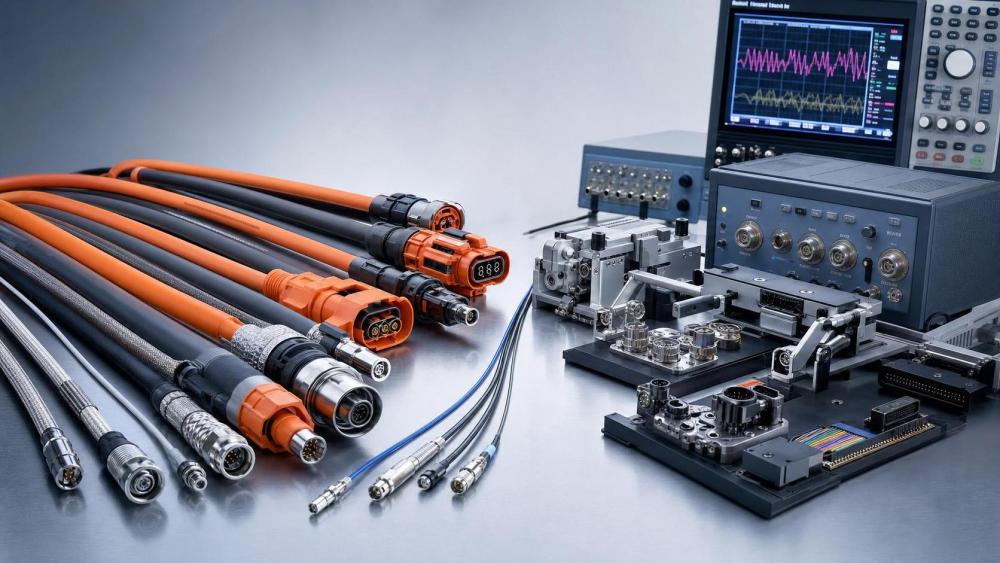
Choosing an automotive cables manufacturer on unit price alone often looks efficient at first.
In practice, it can create hidden cost across quality failures, delayed launches, warranty claims, and unstable delivery.
That matters even more in today’s vehicles.
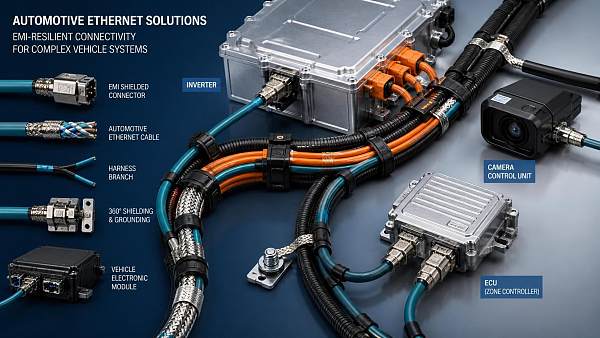
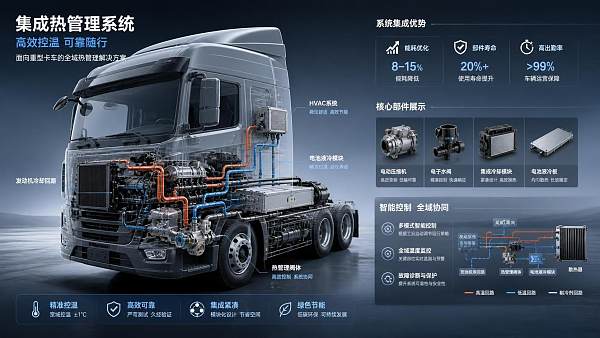
Automotive cables now support infotainment, sensors, thermal systems, communication networks, battery systems, and high-voltage architecture.
A weak supplier can affect safety, EMC performance, assembly efficiency, and export compliance.
A stronger decision starts with total business fit, not just the quote sheet.
When evaluating an automotive cables manufacturer, the better question is simple.
Can this supplier deliver stable performance over the full product life cycle?
That includes design support, validation depth, process control, scalability, and global service capability.
The points below help turn that broad question into a practical evaluation framework.
Start with Technical Fit, Not Just the Drawing
A capable automotive cables manufacturer should understand the application before quoting aggressively.
That sounds basic, but it is where many sourcing mistakes begin.
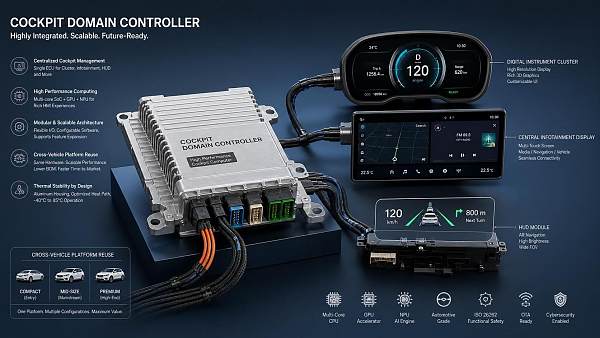
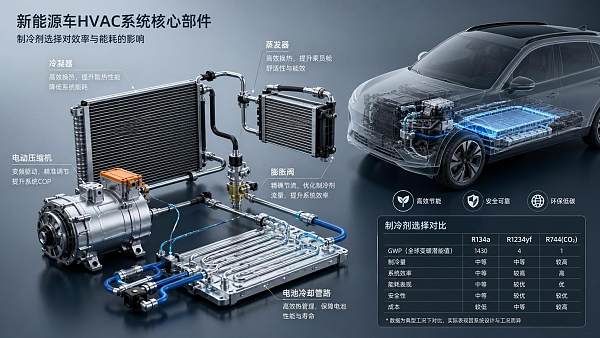
Cables for cockpit displays differ from cables for battery cooling modules, Ethernet backbones, or high-voltage systems.
Materials, shielding, bend radius, temperature resistance, and connector compatibility all change by use case.
If the supplier asks only for quantity and target price, that is a warning sign.
A stronger automotive cables manufacturer usually asks deeper questions early.
- What voltage, current, and signal type will the cable carry?
- What are the temperature, vibration, and fluid exposure conditions?
- Does the harness route through tight packaging areas?
- What EMC or communication performance is required?
- Which market standards and vehicle programs apply?
This early technical dialogue reduces rework later.
It also shows whether the automotive cables manufacturer has real engineering depth or just trading capability.
Check Validation Standards and Test Coverage
Low price loses value quickly when field failures appear after SOP.
That is why validation should carry similar weight to cost.
A reliable automotive cables manufacturer should explain what it tests, how often, and under which standards.
Depending on the product, that may include conductor resistance, insulation thickness, tensile strength, aging, flame behavior, shielding effectiveness, and salt spray performance.
For communication and data products, signal integrity matters just as much as mechanical durability.
For EV and hybrid programs, thermal stability and high-voltage insulation become more critical.
Useful checkpoints include the following.
- Ask for PPAP support and sample validation records.
- Confirm whether the supplier works with ISO 9001 or IATF 16949 systems.
- Review test capability for thermal cycling, vibration, and chemical exposure.
- Check whether external lab reports match internal quality claims.
- Verify change control rules for resin, copper, shielding, and jacket material.
In real sourcing projects, the strongest automotive cables manufacturer is not always the one with the longest certificate list.
It is usually the one that can connect test results directly to your application risk.
Evaluate Manufacturing Consistency and Process Control
A polished sample does not guarantee stable mass production.
This is where many supplier comparisons become misleading.
An experienced automotive cables manufacturer should demonstrate control over drawing conversion, material preparation, extrusion, shielding, twisting, cutting, crimping, and final inspection.
Process discipline matters because automotive cable issues often come from variation, not obvious design failure.
Even a small shift in conductor strand quality or insulation concentricity can affect long-term reliability.
During audit or supplier review, focus on practical signals.
- Traceability by lot, machine, operator, and material batch
- In-process inspection frequency and reaction plans
- Crimp force monitoring and pull-force verification
- SPC usage on critical dimensions
- Containment procedures for nonconforming output
- Maintenance planning for key equipment
A dependable automotive cables manufacturer can usually show these systems clearly, without overexplaining or avoiding details.
That transparency often predicts fewer launch surprises.
Review Supply Chain Resilience and Material Sourcing
Recent market shifts have made this factor much more visible.
Copper volatility, resin shortages, logistics delays, and compliance pressure now affect delivery more than before.
That means a low-cost automotive cables manufacturer may become expensive during disruption.
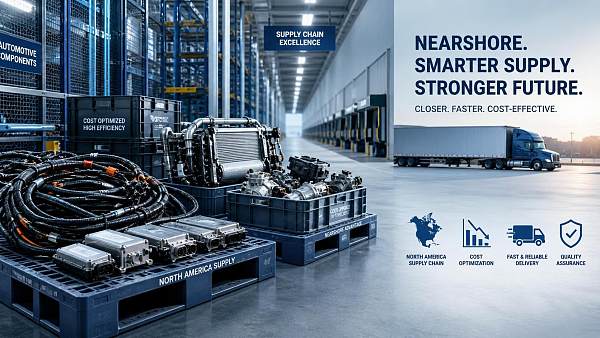
Procurement teams should ask where the supplier sources copper, insulation compounds, shielding materials, terminals, and connectors.
Single-source dependency increases risk, especially for export programs or fast ramp projects.
A resilient automotive cables manufacturer usually has backup sourcing logic and approved alternates.
It should also manage inventory and lead times with discipline.
This is also where total landed cost becomes clearer than unit price alone.
Look at Export Experience and Compliance Maturity
Not every automotive cables manufacturer is equally prepared for international business.
Some suppliers make good products but struggle with documentation, communication rhythm, or regional compliance expectations.
That gap can slow approval and create avoidable procurement friction.
A globally active automotive cables manufacturer should handle technical files, inspection reports, packaging labels, and customs-related support with consistency.
It should also understand market-specific expectations in the United States, Europe, Southeast Asia, Mexico, or other target regions.
Useful evaluation points include REACH, RoHS, IMDS support, conflict minerals declarations, and document response speed.
More importantly, ask how the supplier manages engineering change notices and revision alignment across plants and customers.
In actual business, slow document control can damage timelines almost as much as poor production quality.
Compare the Supplier on Total Cost of Ownership
This is where the purchasing decision becomes more balanced.
A lower quote from one automotive cables manufacturer may still lead to higher annual cost.
That happens when scrap rises, line stoppages increase, validation cycles repeat, or claims consume engineering time.
A practical sourcing review should compare both direct and indirect cost elements.
- Quoted unit price and tooling cost
- Sampling and validation support
- Quality escape rate and response time
- Logistics, packaging, and inventory burden
- Engineering support during program change
- Risk of launch delay or field failure
This comparison often changes the ranking quickly.
The best automotive cables manufacturer is often the one that protects margin through stability, not the one that wins only on the first spreadsheet.
Use a Simple Supplier Scorecard Before Final Selection
To avoid subjective decisions, use a weighted scorecard.
This keeps the automotive cables manufacturer comparison grounded in business priorities.
For example, price may be 25% of the score, while technical fit, quality systems, delivery resilience, and compliance share the rest.
If the program supports EV, ADAS, cockpit electronics, or high-speed data, increase the technical and validation weighting.
If the project is export-driven, increase compliance and logistics weighting.
A simple scorecard can include these fields.
- Application understanding
- Validation depth
- Mass production consistency
- Supply chain resilience
- Export and compliance readiness
- Commercial competitiveness
- Corrective action responsiveness
This creates a cleaner final discussion and supports supplier approval with evidence.
Final Takeaway
Choosing an automotive cables manufacturer is no longer a basic price negotiation.
It is a risk decision tied to vehicle performance, compliance, launch timing, and long-term supply security.
The most reliable choice comes from checking technical fit, validation discipline, production control, sourcing resilience, and global execution.
When those areas are clear, price becomes one useful factor, not the only decision rule.
A practical next step is to build a short supplier checklist and test each automotive cables manufacturer against the same criteria.
That approach leads to better sourcing outcomes and fewer surprises after nomination.
Related News
- 00
0000-00
How thermodynamic parameter modeling improves battery cooling design - 00
0000-00
Where automotive thermal management applications matter most in EV design - 00
0000-00
How actuator redundancy affects steer-by-wire system safety - 00
0000-00
What cable ratings matter most in a fast charging harness? - 00
0000-00
How to specify a low voltage harness assembly for automotive use
Weekly Insights
Stay ahead with our curated technology reports delivered every Monday.
Recommended News
 How thermodynamic parameter modeling improves battery cooling designThermodynamic parameter modeling improves battery cooling design by predicting heat flow, temperature uniformity, flow balance, and transient performance.Author:Time:Sep 15, 2026
 Where automotive thermal management applications matter most in EV designAutomotive thermal management applications shape EV battery safety, fast charging, range, HVAC comfort, and powertrain reliability. Explore the design priorities that matter most.Author:Time:Sep 14, 2026
 How actuator redundancy affects steer-by-wire system safetySteer by wire actuator redundancy explained: discover how independent power, sensing, control, and fault handling protect vehicle steering safety.Author:Time:Sep 13, 2026
 What cable ratings matter most in a fast charging harness?Fast charging harness ratings explained: assess current capacity, thermal derating, voltage, shielding, and connector performance for reliable EV charging.Author:Time:Sep 12, 2026
 How to specify a low voltage harness assembly for automotive useLow voltage harness assembly specification guide for automotive use—covering circuit design, durability, EMC, validation, and production-ready compliance.Author:Time:Sep 11, 2026
 What to verify before choosing a variable speed compressor supplierVariable speed compressor supplier selection made easier: verify technical fit, validation, compliance, capacity, and after-sales support before sourcing.Author:Time:Sep 10, 2026
 What is driving the EV wiring harness price trend in 2026?EV wiring harness price trend in 2026: explore how high-voltage systems, copper costs, vehicle architecture, and sourcing strategies shape EV harness costs.Author:Time:Sep 09, 2026
 How windshield curvature causes HUD system image distortionHUD system image distortion explained: discover how windshield curvature affects focus, ghosting, keystone, and AR-HUD accuracy—and how to evaluate solutions.Author:Time:Sep 08, 2026
 How to choose an AR-HUD projector for different windshield designsAR-HUD projector selection guide for different windshield designs. Learn how curvature, wedge glass, coatings, calibration, and packaging affect clear, stable AR display performance.Author:Time:Sep 07, 2026
 How does an e-drive cooling system prevent motor and inverter overheating?E-drive cooling system guide: learn how targeted coolant flow, cold plates, heat rejection, and smart controls prevent motor and inverter overheating.Author:Time:Sep 07, 2026
 How does vehicle motion control support safer steer-by-wire systems?Vehicle motion control strengthens steer-by-wire safety by coordinating steering, braking, and propulsion. Explore fault handling, validation, and safer vehicle responses.Author:Time:Sep 05, 2026
 How insulation monitoring protects high-voltage electrical architectureHigh-voltage electrical architecture insulation monitoring detects leakage early, improving EV safety, fault diagnosis, quality control, and reliability.Author:Time:Sep 04, 2026
 How ISO 26262 shapes functional safety requirements for automotive actuatorsAutomotive Actuators functional safety: discover how ISO 26262 links vehicle hazards, ASILs, diagnostics, and safety evidence for reliable actuator design.Author:Time:Sep 03, 2026
 How to choose a thermal management controller for battery coolingThermal Management Controller selection guide for battery cooling: compare control accuracy, BMS integration, safety, efficiency, and validation for smarter EV performance.Author:Time:Sep 02, 2026
 How EV powertrain components in Europe are adapting to 800V systemsEV Powertrain Components Europe are evolving for 800V systems—discover how inverters, e-axles, connectors and cooling enable safer, faster, high-performance EVs.Author:Time:Sep 01, 2026
 How electronic expansion valves improve heat pump efficiency at part loadElectronic expansion valve heat pump systems improve part-load efficiency through precise refrigerant control, stable superheat, and smarter EV thermal management. Explore key insights.Author:Time:Aug 31, 2026
 How to qualify an automotive flexible electronics supplier for FFC reliabilityAutomotive flexible electronics supplier qualification guide: verify FFC bend, thermal, electrical, connector, and production reliability before sourcing.Author:Time:Aug 30, 2026
 What to audit before choosing a swash plate compressor factorySwash plate compressor factory audit guide: verify machining, testing, traceability, change control, supply stability, and export readiness before sourcing.Author:Time:Aug 29, 2026
 How automotive thermal management modules affect EV battery coolingAutomotive thermal management module insights for EV battery cooling: learn how flow, chillers, heat pumps, and predictive controls improve fast charging, range, and reliability.Author:Time:Aug 28, 2026
 When does an aftermarket auto A/C compressor become a false economy?Auto A/C compressor aftermarket choices can cut upfront costs—but when do they raise lifecycle risk? Explore fitment, durability, warranty, and downtime factors before you buy.Author:Time:Aug 27, 2026
 How rising freight volatility is reshaping global automotive supply chain logisticsGlobal automotive supply chain logistics is being reshaped by freight volatility. Discover practical strategies to reduce risk, improve control, and protect automotive sourcing and production continuity.Author:Time:Aug 26, 2026
 How to choose automotive Ethernet cables for EMI-heavy vehicle systemsAutomotive Ethernet cables for EMI-heavy vehicles: learn how to compare shielding, signal integrity, durability, and connector fit to choose a more robust, future-ready link.Author:Time:Aug 25, 2026
 When does commercial vehicle thermal management for trucks lower fleet operating costsCommercial vehicle thermal management for trucks lowers fleet costs by reducing fuel or energy waste, downtime, and component failures. See when the ROI is real and worth the investment.Author:Time:Aug 24, 2026
 What drives auto A/C compressors price differences across vehicle typesAuto A/C compressors price varies by vehicle type, design, and thermal system demands. Learn the real cost drivers to compare quotes smarter and avoid hidden sourcing risks.Author:Time:Aug 23, 2026
 When is a 600V motor harness the right choice for EV subsystemsMotor harness 600V is ideal for EV subsystems like compressors and pumps when voltage, thermal load, EMC, and packaging demand a compact, reliable, cost-smart harness solution.Author:Time:Aug 22, 2026
 What makes a cockpit domain controller ECU scalable across vehicle platformsCockpit domain controller ECU scalability goes beyond compute—learn how modular software, display flexibility, thermal design, and network compatibility enable reuse across vehicle platforms.Author:Time:Aug 21, 2026
 When does automotive sourcing in Mexico lower total landed cost?Automotive sourcing in Mexico lowers total landed cost when logistics, tariffs, inventory, and supplier capability align. Learn where savings are real and when the switch pays off.Author:Time:Aug 20, 2026
 How to choose a 24V low voltage harness for vibration-prone systemsLow voltage harness 24V selection for vibration-prone systems: learn how to assess wire flexibility, terminals, routing, and durability to prevent failures and improve reliability.Author:Time:Aug 19, 2026
 How refrigerant choice affects automotive HVAC system efficiencyAutomotive HVAC system refrigerant choices directly shape efficiency, compressor load, EV range, and compliance. Discover how to compare refrigerants for smarter thermal system decisions.Author:Time:Aug 18, 2026
 Is heat pump air conditioning worth it for EVs in hot climates?Heat pump air conditioning EV systems can help in hot climates—but only when thermal management is well engineered. Learn what really improves comfort, battery cooling, and summer range.Author:Time:Aug 17, 2026