How to Evaluate a Motor Harness Manufacturer for Quality and Lead Time




What should you look at first when reviewing a motor harness manufacturer?

A quick quote comparison rarely tells the full story.
When evaluating a motor harness manufacturer, the first question is whether the supplier can deliver stable quality at the pace your program needs.
That matters even more in automotive and adjacent industrial applications, where one harness issue can stop assembly, trigger field failures, or delay validation.
In practice, the best starting point is not price.
It is capability fit.
A suitable motor harness manufacturer should match the technical complexity of the project, the compliance level of the market, and the required delivery rhythm.
This is especially relevant as wiring systems become more critical in electrification, high-voltage architecture, thermal management, and smart cockpit integration.
Platforms such as GACT often highlight this broader shift.
Motor harness sourcing no longer sits in isolation.
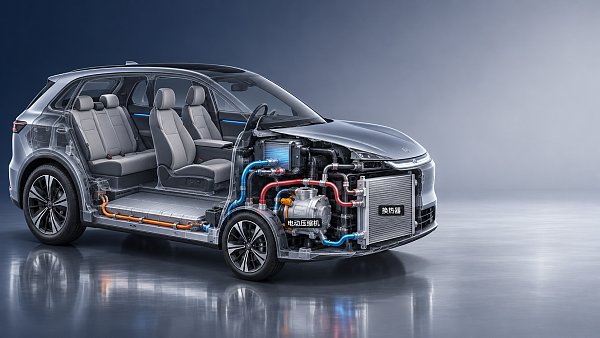
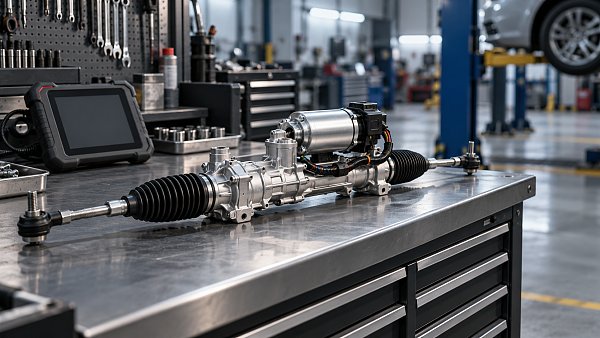
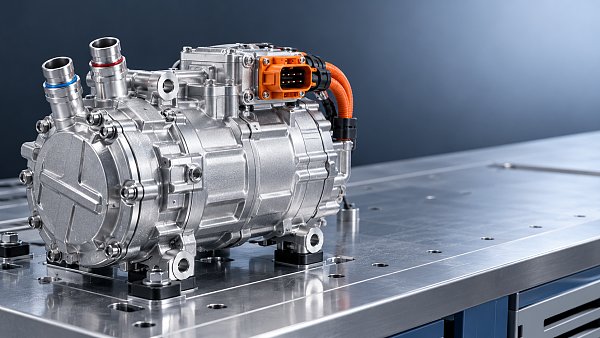
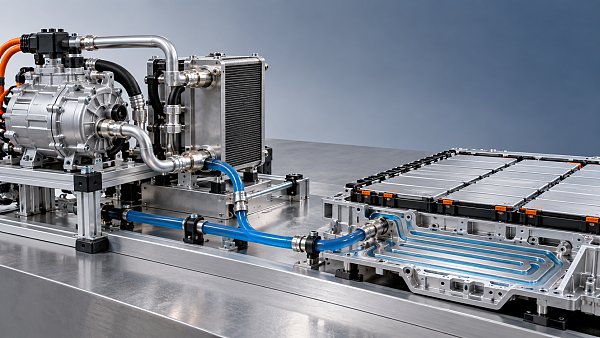
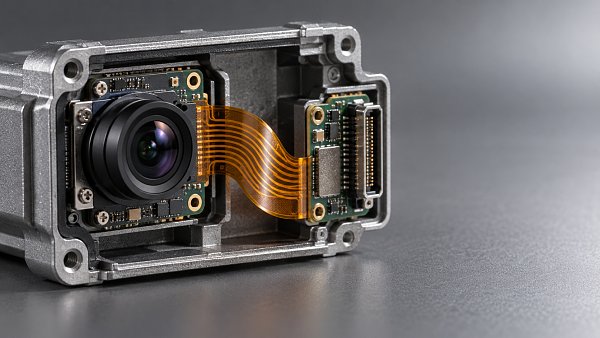
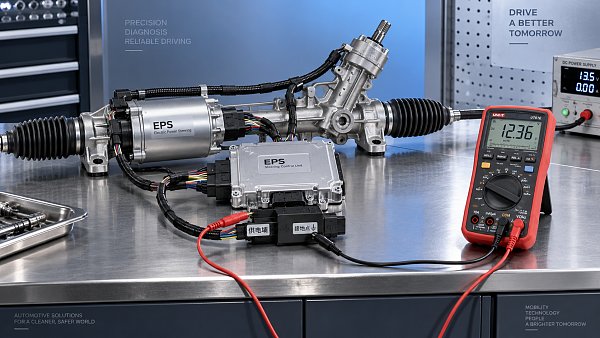
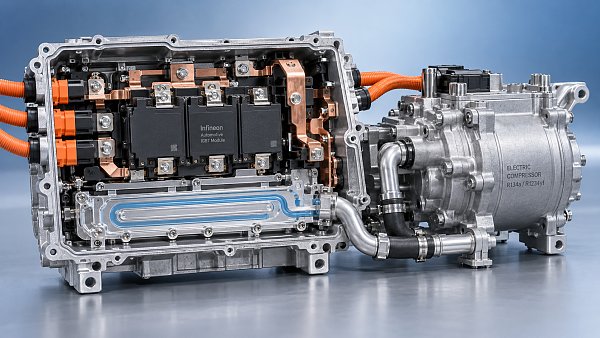
It connects with battery cooling layouts, electric compressors, EPS systems, data cables, and other linked automotive components.
A strong review usually begins with four basics:
- Product scope, including low-voltage, signal, or high-voltage harness experience.
- Manufacturing maturity, from crimping to overmolding and final inspection.
- Quality discipline, including traceability and test coverage.
- Lead time control for samples, engineering changes, and mass production.
If these four areas are weak, later promises on cost or expansion are difficult to trust.
How do you judge quality beyond certificates and factory claims?
Certificates matter, but they are only the entry ticket.
A motor harness manufacturer may hold ISO or IATF certifications and still struggle with process consistency.
The more useful question is whether quality is built into daily production.
Ask how raw materials are approved.
Check whether terminals, connectors, seals, tapes, and wires are sourced from controlled suppliers with clear revision records.
Then review process control.
For a motor harness manufacturer, stable crimp height, pull-force testing, continuity checks, short-circuit prevention, and connector insertion verification should be routine, not optional.
It also helps to ask for recent defect examples.
The answer often reveals more than a polished presentation.
Suppliers with mature systems can explain root cause, corrective action, containment, and recurrence prevention without hesitation.
The table below is a practical way to separate surface-level claims from real operating control.
This kind of review is more useful than asking whether quality is “good.”
It shows whether the motor harness manufacturer can keep performance consistent over time.
Can the supplier really support your application, or only simple harness work?
Not every motor harness manufacturer handles the same level of complexity.
Some are effective in standard low-pin-count assemblies.
Others are prepared for shielded cables, compact routing, thermal resistance, vibration loads, or high-voltage safety requirements.
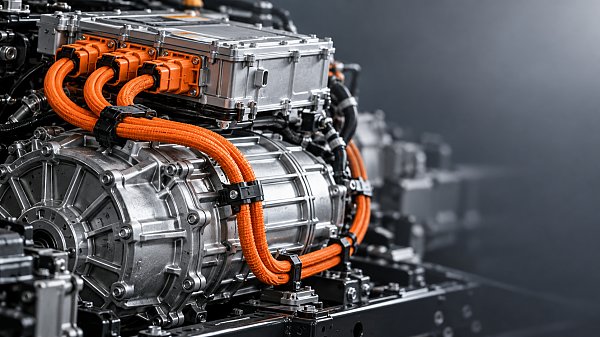
The difference becomes important when the harness is installed near motors, compressors, battery packs, steering systems, or thermal modules.
A supplier familiar with broader vehicle system trends usually asks better technical questions.
For example, they may ask about bend radius, EMC risk, temperature exposure, connector locking force, or packaging constraints inside compact electrified platforms.
That is a positive sign.
A capable motor harness manufacturer should also be able to explain how it supports:
- Prototype builds with frequent drawing changes.
- Validation samples for electrical and environmental testing.
- PPAP or equivalent submission requirements.
- Program ramp-up from trial lots to stable volume output.
If the supplier answers only in general language, technical depth may be limited.
In actual sourcing work, this often leads to redesign loops, delayed sample approval, and unexpected tooling adjustments.
What is the best way to evaluate lead time without relying on promises?
Lead time should be checked as a process, not as a sales statement.
A motor harness manufacturer may quote short delivery windows, yet depend on unstable terminal supply, outsourced sub-steps, or manual planning.
That creates risk during engineering changes and volume swings.
A better approach is to break lead time into stages.
Review sample preparation, tooling readiness, material procurement, production scheduling, final testing, and shipment release separately.
This shows where delay is most likely.
Need a simple benchmark?
Ask for evidence from the last three similar projects, including quoted lead time and actual lead time.
That comparison is usually more revealing than a new promise.
It is also worth checking these points:
- Does the motor harness manufacturer stock common wire, terminals, and seals?
- Are custom connectors or overmold tools the true bottleneck?
- How quickly can revised drawings be loaded into production control?
- Is there backup capacity for peak demand or urgent replacement orders?
For cross-border programs, include export handling as part of lead time.
Documentation accuracy, packaging standards, and route stability can affect delivery just as much as factory output.
This is one reason market and supply chain intelligence from industry sources remains useful during supplier review.
Where do cost risks usually hide when comparing a motor harness manufacturer?
The lowest quoted piece price may become the highest total cost.
With a motor harness manufacturer, hidden cost often appears in scrap, engineering rework, delayed launches, premium freight, or field sorting.
These costs do not always show up in the initial RFQ sheet.
A practical comparison should include both direct and indirect items.
- Tooling charges and ownership terms.
- MOQ and batch-size assumptions.
- Material substitution approval rules.
- Change management cost after drawing release.
- Warranty response and defect containment responsibility.
It is also smart to compare cost resilience.
Can the motor harness manufacturer manage copper price movement, connector shortages, or shipping disruptions without constant re-quotation?
More mature suppliers tend to offer clearer pricing logic and better change visibility.
That does not guarantee the lowest number.
It usually supports better total cost control over the full program cycle.
What final checks help reduce sourcing mistakes before approval?
Before selecting a motor harness manufacturer, the final review should connect technical evidence with operational reality.
This is where many sourcing decisions become clearer.
A capable supplier should not only pass an audit.
It should also show predictable execution under schedule pressure.
A short final checklist can help:
- Verify process flow from incoming materials to shipment.
- Review sample records, not only presentation slides.
- Confirm testing scope for electrical, mechanical, and environmental performance.
- Check actual on-time delivery history for comparable programs.
- Clarify escalation contacts for quality incidents and schedule changes.
- Align forecast visibility, safety stock, and engineering change procedures.
A reliable motor harness manufacturer is rarely defined by one strong factory tour or one attractive quotation.
The better decision comes from checking whether quality control, application knowledge, and lead time discipline hold together as one system.
If the program involves electrified vehicles, compact thermal systems, cockpit electronics, or high-voltage layouts, that system view becomes even more important.
The next practical step is to build a supplier scorecard around your real harness application.
Then compare each motor harness manufacturer using the same evidence set, the same risk questions, and the same delivery assumptions.
That approach usually leads to better sourcing decisions than chasing the fastest quote or the lowest unit price.
Have questions about this sector analysis, or seeking best practices specific to your niche? Drop us a line below and let the senior consultants at GAC assist you.
“We respect your privacy. Your information is strictly confidential.”
Related News
- 00
0000-00
How to compare noise ratings for battery coolant pumps - 00
0000-00
How bright should automotive display systems be in sunlight? - 00
0000-00
How heat pumps improve the efficiency of EV thermal systems - 00
0000-00
Can a smart cockpit platform support multiple displays? - 00
0000-00
How is automotive connector vibration resistance tested?
Weekly Insights
Stay ahead with our curated technology reports delivered every Monday.
Recommended News
 How to compare noise ratings for battery coolant pumpsCompare coolant pump low noise ratings with confidence. Learn how test conditions, hydraulic duty, tonal noise and installation affect your choice.Author:Time:Nov 10, 2026
 How bright should automotive display systems be in sunlight?Automotive Display Systems need more than brightness to stay readable in sunlight. Discover why 1,000 nits is a starting point and how to evaluate glare and heat.Author:Time:Nov 09, 2026
 How heat pumps improve the efficiency of EV thermal systemsEV Thermal Systems use heat pumps to reduce heating energy demand. Explore how they work, where they excel, and what limits efficiency in cold weather.Author:Time:Nov 08, 2026
 Can a smart cockpit platform support multiple displays?Can a smart cockpit platform support multiple displays? Explore key requirements for performance, safety, connectivity, and supplier evaluation.Author:Time:Nov 07, 2026
 How is automotive connector vibration resistance tested?Automotive connector vibration resistance testing reveals hidden contact failures. Explore test profiles, continuity monitoring and pass criteria.Author:Time:Nov 06, 2026
 How heat pumps save energy in automotive cabin climate systemsAutomotive Cabin Climate Systems energy saving starts with smarter heat pump design. Explore real-world efficiency, cold-weather trade-offs, and testing tips.Author:Time:Nov 05, 2026
 Is an EV heat pump worth it for winter driving range?Is a heat pump worth using in a cold-climate EV? Discover how it affects winter range, when it pays off, and what to check before buying.Author:Time:Nov 04, 2026
 When should you use 50-ohm coaxial cable instead of 75-ohm?Coaxial cable 50 ohm or 75 ohm? Learn when to use each, avoid impedance mismatches, and choose the right cable for reliable RF and video performance.Author:Time:Nov 03, 2026
 How to select a high temperature motor harness for an EVChoose the right high temperature motor harness for your EV. Compare thermal limits, current capacity, shielding, routing, and validation evidence.Author:Time:Nov 02, 2026
 How much does electric power steering replacement cost?Electric power steering price typically ranges from $1,000 to $3,000 for major replacements. Discover cost factors, repair options, and tips for comparing quotes.Author:Time:Nov 01, 2026
 How to size an EV A/C compressor for the required cooling capacitySize an EV A/C Compressor with confidence. Explore cooling loads, performance maps and power limits to select the right compressor for your vehicle.Author:Time:Oct 31, 2026
 How to choose the right pitch for an FPC board connectorFPC board connector pitch affects space, assembly and reliability. Learn how to compare options and select the best fit for your design.Author:Time:Oct 30, 2026
 How zonal design affects harness routing in high-voltage EV architecturesExplore high-voltage electrical architecture zonal design and its impact on EV harness routing. Discover key trade-offs in cable length, safety, thermal performance, and service access.Author:Time:Oct 29, 2026
 How tariffs affect costs in global automotive parts supply chainsNavigate tariffs in the global automotive parts trade supply chain. Learn to compare landed costs, manage duty exposure, and uncover smarter sourcing strategies to protect your margins.Author:Time:Oct 28, 2026
 How to assess vendor lock-in in a software-defined vehicle platformAssess Software-Defined Vehicle platform lock-in with practical tests for API portability, data access, update control, and exit costs. Learn how to choose a platform with a proven exit path.Author:Time:Oct 27, 2026
 How ISO 26262 guides functional safety in steer-by-wire systemsExplore steering systems functional safety through ISO 26262. Learn how hazard analysis, fault-tolerant design, and validation build a stronger steer-by-wire safety case.Author:Time:Oct 26, 2026
 How to evaluate a steering angle sensor manufacturer's accuracy claimsEvaluate steering angle sensor manufacturer accuracy claims with practical checks on calibration, latency, and test evidence. Compare suppliers confidently and avoid costly selection mistakes.Author:Time:Oct 25, 2026
 How to diagnose CAN bus faults in a hybrid vehicle control unitDiagnose Hybrid Vehicle Systems control unit CAN bus faults with step-by-step power, wiring, and waveform checks. Find the root cause and avoid unnecessary replacement.Author:Time:Oct 24, 2026
 How does battery cooling pipe diameter affect coolant pressure drop?Battery Cooling Pipe diameter affects coolant pressure drop and pump power. Explore sizing calculations and practical tips to optimize EV battery cooling and compare options with confidence.Author:Time:Oct 23, 2026
 How to assess PPAP readiness of automotive sensor system manufacturersAssess Automotive Sensor Systems manufacturers for PPAP readiness. Learn to verify production evidence, measurement capability, validation, and traceability to reduce sourcing risks.Author:Time:Oct 22, 2026
 What to ask an FPC connector manufacturer about reliability testingChoosing an FPC Connector manufacturer? Learn what to ask about reliability testing, failure limits, and traceable results to reduce design risks and select with confidence.Author:Time:Oct 21, 2026
 How to verify vehicle fitment for an aftermarket AC evaporatorNavigating the evaporator aftermarket? Verify vehicle fitment with VIN data, OE numbers, and physical interface checks. Use this guide to avoid costly mismatches and order confidently.Author:Time:Oct 20, 2026
 How electric compressor speed affects EV battery cooling capacityElectric compressor technology: battery cooling depends on more than RPM. Discover how speed, refrigerant flow, and system limits affect EV cooling capacity and energy efficiency.Author:Time:Oct 19, 2026
 How to verify a variable frequency compressor supplier’s efficiency claimsVerify a variable frequency compressor supplier’s efficiency claims using COP boundaries, matched test conditions, and duty-cycle data. Learn how to choose with confidence.Author:Time:Oct 18, 2026
 How bend radius affects FPC reliability in automotive camera modulesAutomotive FPC applications: camera module reliability starts with bend radius. Learn how stack-up, strain, and validation guide robust designs and help prevent costly failures.Author:Time:Oct 17, 2026
 How to diagnose intermittent loss of electric power steering assistMaster power steering system diagnostics to trace intermittent EPS assist loss. Learn proven checks for voltage, wiring, and fault codes to avoid costly guesswork.Author:Time:Oct 16, 2026
 How to size automotive power modules for electric compressorsSize automotive power modules for electric compressors with confidence. Learn how voltage, phase current, losses, and cooling shape reliable selection—and avoid costly oversizing.Author:Time:Oct 15, 2026
 Why automotive power electronics are shifting to silicon carbideAutomotive Power Electronics are shifting to silicon carbide. Discover how SiC can cut losses, boost EV power density, and reshape cooling, reliability, and system costs.Author:Time:Oct 14, 2026
 How EV adoption shapes the electrically driven compressor marketExplore how EV adoption shapes the electrically driven compressor market, from battery cooling and heat pumps to supplier margins. Discover the drivers of profitable growth.Author:Time:Oct 13, 2026
 How to size a PTC heater for reliable EV cabin heatingPTC Heater sizing for EV cabins: learn how to balance defrost performance, heat-pump integration, airflow, voltage range, and battery power for reliable winter comfort.Author:Time:Oct 12, 2026