Automotive Network Protocols and Functional Safety: Key Integration Risks




Why Integration Risk Appears Early in Software-Defined Vehicles

Automotive network protocols functional safety now sits at the center of vehicle integration, not at the edge of electronics validation.
The reason is practical. More functions now share data paths, power domains, gateways, and timing assumptions across the vehicle.
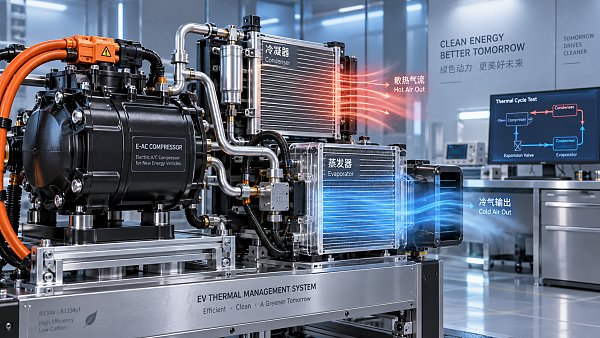
A thermal controller may depend on battery data, compressor feedback, cabin requests, and diagnostic messaging at the same time.
A steer-by-wire or EPS function may rely on deterministic communication, fault containment, and fast recovery under degraded conditions.
In these architectures, automotive network protocols functional safety is no longer just a protocol selection issue.
It affects ASIL decomposition, wiring architecture, ECU partitioning, software update strategy, and even harness routing decisions.
This matters across the component landscape tracked by GACT, especially where smart cockpits, thermal systems, high-voltage harnesses, and chassis control begin to converge.
The hard part is that similar vehicles can still need different communication and safety treatments.
A low-cost body controller, an electric compressor controller, and a cockpit display can all use networked communication, yet their safety margins are not comparable.
The Same Protocol Does Not Mean the Same Safety Case
In actual projects, the first useful question is not which bus is present.
The better question is what failure becomes hazardous when timing, data freshness, or message integrity is lost.
CAN may be acceptable for many control loops, but the safety argument changes when bus load rises or gateways add delay.
LIN often works well for simple actuators and sensors, yet it becomes a weak choice when diagnostic depth or redundancy expectations increase.
FlexRay still appears where deterministic timing remains critical, though Ethernet is increasingly taking over broader data transport roles.
Automotive Ethernet brings bandwidth and scalability, but automotive network protocols functional safety becomes more sensitive to switch behavior, synchronization, and cyber-safety interaction.
That is why protocol choice should follow function behavior, fault reaction time, and diagnostic coverage targets rather than trend alone.
Where demand starts to split
Different applications create different communication priorities, even inside one platform.
This is where automotive network protocols functional safety becomes a cross-domain judgment, not a single ECU checklist.
Thermal Management Programs Usually Hide Timing Risks
NEV thermal architectures often look manageable on paper because each subsystem seems modular.
The integration problem appears when electric compressors, thermal valves, battery loops, and cabin comfort logic share bus capacity and diagnostics.
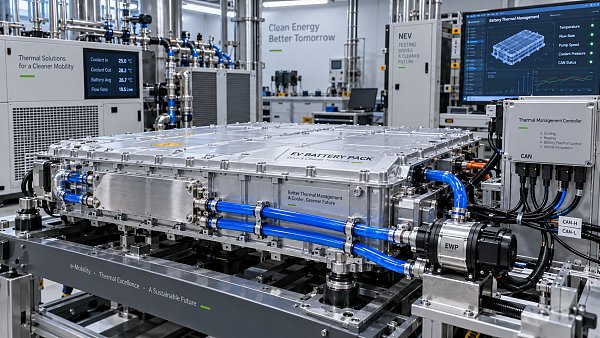
In one scenario, a battery liquid cooling system needs stable temperature data and predictable actuator responses during fast charging.
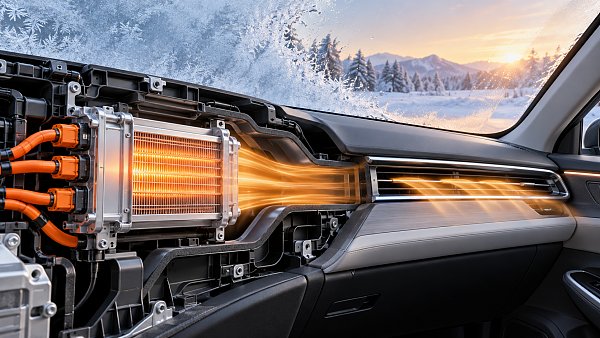
In another, a heat pump system must coordinate cabin demand with battery protection under low ambient temperatures.
Both use connected controls, but their safety priorities differ.
The first often depends on thermal protection timing. The second adds comfort arbitration and energy optimization pressures.
A common mistake is to validate message receipt without validating action timing after gateway, software scheduler, and sensor filter delays.
For automotive network protocols functional safety, stale data can be as dangerous as missing data when control loops are tightly coupled.
Projects in this area should map each thermal safety goal to a communication deadline, a fallback action, and a diagnostic trigger.
Chassis and Steering Functions Need a Different Standard of Confidence
The judgment changes sharply once communication supports motion control.
Steering columns, EPS systems, and steer-by-wire architectures face a narrower tolerance for jitter, data corruption, and fault recovery delay.
Here, automotive network protocols functional safety is tied to controllability, not just message delivery.
A network design that works for thermal coordination may fail the safety case for steering torque command distribution.
More common in practice is a mixed architecture where safety-critical commands and non-critical diagnostics share parts of the communication path.
This saves hardware, but it raises questions about congestion, fault propagation, and update sequencing.
The safer approach is to define which communication elements must remain operational under single-point failure, then design partitioning around that rule.
- Separate safety timing analysis from nominal bandwidth analysis.
- Verify fallback steering behavior during network degradation, not only full bus loss.
- Check whether software updates can alter timing margins inside a previously accepted safety path.
Smart Cockpit and Displays Look Less Critical, but They Still Carry Safety Exposure
Cockpit electronics rarely fail the same way as steering, yet they should not be treated as safety-neutral.
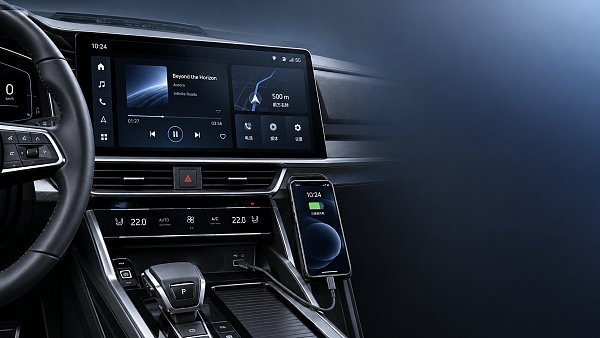
HUD systems, cockpit displays, and media head units increasingly present warnings, state transitions, and energy information that influence driver response.
In zonal architectures, those signals may travel through shared Ethernet backbones and centralized compute resources.
The risk is less about actuator control and more about data consistency, display priority, and degraded-mode communication.
Automotive network protocols functional safety in this scenario depends on whether the right information remains timely and unambiguous when the network is stressed.
One frequent oversight is assuming that infotainment bandwidth planning automatically protects warning visibility.
It does not. Safety-relevant content still needs defined priority, timeout behavior, and display fallback rules.
Wiring Harness and Cable Decisions Can Quietly Break the Safety Plan
Protocol diagrams often look clean before real packaging constraints are applied.
Once high-voltage harnesses, data cables, FPC systems, connector families, and grounding paths are finalized, communication behavior can change.
This is especially relevant where lightweight wiring, compact zones, and thermal density are pushing tighter layouts.
Automotive network protocols functional safety should therefore include physical implementation checks, not just network simulation.
EMC exposure, shield termination quality, connector aging, and service routing errors may all reduce diagnostic confidence.
A design can meet protocol specifications and still underperform in the vehicle because the electrical environment changed.
This is one area where supply chain intelligence and standards interpretation become useful early, especially across different regional production programs.
What Often Gets Misjudged Before Validation Starts
Most late issues do not come from a complete lack of analysis.
They come from treating similar applications as if they share the same operating assumptions.
- Choosing a protocol by legacy habit instead of fault reaction time.
- Reviewing ECU safety concepts without checking gateway dependencies.
- Focusing on component cost while ignoring validation effort and service complexity.
- Assuming one market configuration covers all regional compliance and environmental conditions.
- Testing message integrity, but not end-to-end behavior during partial communication degradation.
These errors are common because modern vehicle programs combine thermal efficiency, cockpit intelligence, and chassis control within compressed timelines.
That is exactly why automotive network protocols functional safety should be reviewed at architecture freeze, harness freeze, and validation planning stages.
A Practical Way to Judge Fit Before Programs Scale
A useful decision path starts with the real operating scene, not the communication standard alone.
For each critical function, define what data is needed, how fresh it must be, what happens if it is late, and what the system must do next.
Then compare those answers against the chosen topology, gateway plan, cable environment, and software update model.
When the vehicle includes electric compressors, battery cooling, cockpit displays, or steer-by-wire functions, the review should be cross-domain from the start.
In practice, the most reliable programs build a short adaptation checklist before detailed validation begins.
- List safety-relevant signals and their maximum acceptable age.
- Mark gateways, switches, and shared buses that can delay or block them.
- Confirm physical routing limits for data and high-voltage coexistence.
- Define degraded operation for each critical application scene.
- Align protocol, software, and hardware assumptions before sourcing changes spread risk.
Automotive network protocols functional safety is strongest when scenario differences are surfaced early and translated into concrete validation rules.
The next step is straightforward: map the actual vehicle scenes, compare timing and fault needs, and build an integration checklist that reflects those differences before release gates tighten.
Have questions about this sector analysis, or seeking best practices specific to your niche? Drop us a line below and let the senior consultants at GAC assist you.
“We respect your privacy. Your information is strictly confidential.”
Related News
- 00
0000-00
Can a smart cockpit platform support multiple displays? - 00
0000-00
How is automotive connector vibration resistance tested? - 00
0000-00
How heat pumps save energy in automotive cabin climate systems - 00
0000-00
Is an EV heat pump worth it for winter driving range? - 00
0000-00
When should you use 50-ohm coaxial cable instead of 75-ohm?
Tags
- thermal systems
- electric compressors
- high-voltage harness
- steer-by-wire
- heat pump systems
- thermal valves
- smart cockpit
- head units
- cockpit displays
- FPC systems
- steering columns
- chassis control
- Battery Liquid Cooling System
- Heat Pump System
- Electric Compressor
- Cockpit Display
- battery liquid cooling
- automotive Ethernet
- Automotive Network Protocols
- automotive network protocols functional safety
Weekly Insights
Stay ahead with our curated technology reports delivered every Monday.
Recommended News
 Can a smart cockpit platform support multiple displays?Can a smart cockpit platform support multiple displays? Explore key requirements for performance, safety, connectivity, and supplier evaluation.Author:Time:Nov 07, 2026
 How is automotive connector vibration resistance tested?Automotive connector vibration resistance testing reveals hidden contact failures. Explore test profiles, continuity monitoring and pass criteria.Author:Time:Nov 06, 2026
 How heat pumps save energy in automotive cabin climate systemsAutomotive Cabin Climate Systems energy saving starts with smarter heat pump design. Explore real-world efficiency, cold-weather trade-offs, and testing tips.Author:Time:Nov 05, 2026
 Is an EV heat pump worth it for winter driving range?Is a heat pump worth using in a cold-climate EV? Discover how it affects winter range, when it pays off, and what to check before buying.Author:Time:Nov 04, 2026
 When should you use 50-ohm coaxial cable instead of 75-ohm?Coaxial cable 50 ohm or 75 ohm? Learn when to use each, avoid impedance mismatches, and choose the right cable for reliable RF and video performance.Author:Time:Nov 03, 2026
 How to select a high temperature motor harness for an EVChoose the right high temperature motor harness for your EV. Compare thermal limits, current capacity, shielding, routing, and validation evidence.Author:Time:Nov 02, 2026
 How much does electric power steering replacement cost?Electric power steering price typically ranges from $1,000 to $3,000 for major replacements. Discover cost factors, repair options, and tips for comparing quotes.Author:Time:Nov 01, 2026
 How to size an EV A/C compressor for the required cooling capacitySize an EV A/C Compressor with confidence. Explore cooling loads, performance maps and power limits to select the right compressor for your vehicle.Author:Time:Oct 31, 2026
 How to choose the right pitch for an FPC board connectorFPC board connector pitch affects space, assembly and reliability. Learn how to compare options and select the best fit for your design.Author:Time:Oct 30, 2026
 How zonal design affects harness routing in high-voltage EV architecturesExplore high-voltage electrical architecture zonal design and its impact on EV harness routing. Discover key trade-offs in cable length, safety, thermal performance, and service access.Author:Time:Oct 29, 2026
 How tariffs affect costs in global automotive parts supply chainsNavigate tariffs in the global automotive parts trade supply chain. Learn to compare landed costs, manage duty exposure, and uncover smarter sourcing strategies to protect your margins.Author:Time:Oct 28, 2026
 How to assess vendor lock-in in a software-defined vehicle platformAssess Software-Defined Vehicle platform lock-in with practical tests for API portability, data access, update control, and exit costs. Learn how to choose a platform with a proven exit path.Author:Time:Oct 27, 2026
 How ISO 26262 guides functional safety in steer-by-wire systemsExplore steering systems functional safety through ISO 26262. Learn how hazard analysis, fault-tolerant design, and validation build a stronger steer-by-wire safety case.Author:Time:Oct 26, 2026
 How to evaluate a steering angle sensor manufacturer's accuracy claimsEvaluate steering angle sensor manufacturer accuracy claims with practical checks on calibration, latency, and test evidence. Compare suppliers confidently and avoid costly selection mistakes.Author:Time:Oct 25, 2026
 How to diagnose CAN bus faults in a hybrid vehicle control unitDiagnose Hybrid Vehicle Systems control unit CAN bus faults with step-by-step power, wiring, and waveform checks. Find the root cause and avoid unnecessary replacement.Author:Time:Oct 24, 2026
 How does battery cooling pipe diameter affect coolant pressure drop?Battery Cooling Pipe diameter affects coolant pressure drop and pump power. Explore sizing calculations and practical tips to optimize EV battery cooling and compare options with confidence.Author:Time:Oct 23, 2026
 How to assess PPAP readiness of automotive sensor system manufacturersAssess Automotive Sensor Systems manufacturers for PPAP readiness. Learn to verify production evidence, measurement capability, validation, and traceability to reduce sourcing risks.Author:Time:Oct 22, 2026
 What to ask an FPC connector manufacturer about reliability testingChoosing an FPC Connector manufacturer? Learn what to ask about reliability testing, failure limits, and traceable results to reduce design risks and select with confidence.Author:Time:Oct 21, 2026
 How to verify vehicle fitment for an aftermarket AC evaporatorNavigating the evaporator aftermarket? Verify vehicle fitment with VIN data, OE numbers, and physical interface checks. Use this guide to avoid costly mismatches and order confidently.Author:Time:Oct 20, 2026
 How electric compressor speed affects EV battery cooling capacityElectric compressor technology: battery cooling depends on more than RPM. Discover how speed, refrigerant flow, and system limits affect EV cooling capacity and energy efficiency.Author:Time:Oct 19, 2026
 How to verify a variable frequency compressor supplier’s efficiency claimsVerify a variable frequency compressor supplier’s efficiency claims using COP boundaries, matched test conditions, and duty-cycle data. Learn how to choose with confidence.Author:Time:Oct 18, 2026
 How bend radius affects FPC reliability in automotive camera modulesAutomotive FPC applications: camera module reliability starts with bend radius. Learn how stack-up, strain, and validation guide robust designs and help prevent costly failures.Author:Time:Oct 17, 2026
 How to diagnose intermittent loss of electric power steering assistMaster power steering system diagnostics to trace intermittent EPS assist loss. Learn proven checks for voltage, wiring, and fault codes to avoid costly guesswork.Author:Time:Oct 16, 2026
 How to size automotive power modules for electric compressorsSize automotive power modules for electric compressors with confidence. Learn how voltage, phase current, losses, and cooling shape reliable selection—and avoid costly oversizing.Author:Time:Oct 15, 2026
 Why automotive power electronics are shifting to silicon carbideAutomotive Power Electronics are shifting to silicon carbide. Discover how SiC can cut losses, boost EV power density, and reshape cooling, reliability, and system costs.Author:Time:Oct 14, 2026
 How EV adoption shapes the electrically driven compressor marketExplore how EV adoption shapes the electrically driven compressor market, from battery cooling and heat pumps to supplier margins. Discover the drivers of profitable growth.Author:Time:Oct 13, 2026
 How to size a PTC heater for reliable EV cabin heatingPTC Heater sizing for EV cabins: learn how to balance defrost performance, heat-pump integration, airflow, voltage range, and battery power for reliable winter comfort.Author:Time:Oct 12, 2026
 What determines the cooling output of electric automotive AC compressors?Automotive air conditioning compressors electric systems: explore how speed, voltage, refrigerant, controls, and heat exchangers shape EV cooling capacity and efficiency.Author:Time:Oct 11, 2026
 What makes a touchscreen media head unit responsive enough for daily use?Touchscreen media head unit performance explained: discover what delivers fast starts, smooth maps, reliable phone pairing, and responsive daily driving.Author:Time:Oct 10, 2026
 How Does a Battery Management System Communicate Cooling Demand?How does a battery management system communicate cooling demand? Explore CAN signals, thermal priorities, fault handling, and EV cooling control strategies.Author:Time:Oct 20, 2026