What Drives High-Voltage Cable Harness Cost in EV Programs?




Start with the cost drivers that actually move the quote
If you buy high-voltage harnesses for EV programs, you already know the first trap: people talk about copper price as if it explains everything. It does not. Copper matters, of course, but the real cost of a high-voltage cable harness comes from the full build: conductor size, shielding, connector system, routing difficulty, sealing level, test scope, packaging, and the supplier’s ability to make the part repeatedly without quality drift.
That is why two harnesses with similar length can land at very different prices. One may look simple on a BOM, then turn expensive because of tight bend radii, multiple branch points, overmolded interfaces, or market-specific compliance requirements. Procurement teams usually get better results when they stop asking only, “What is your best price?” and start checking which design and process choices are silently inflating cost.
A useful buying review starts with this question: what portion of the high-voltage cable harness cost is driven by physics, what portion by vehicle integration, and what portion by avoidable specification habits? That split tells you where negotiation is realistic and where it is not.
Check the conductor before you discuss anything else
Conductor material and cross-section usually set the floor for cost. Larger cable sizes are not just a raw material issue; they also increase weight, handling difficulty, terminal size, connector body size, and routing constraints. If the cable is oversized because of conservative assumptions rather than actual current, duty cycle, and thermal conditions, the cost penalty compounds quickly.
When reviewing supplier quotations, ask for the conductor-related assumptions behind the design release:
- Required current path and peak load case
- Ambient and local thermal environment
- Allowed voltage drop
- Installation route and bundling density
- Target weight reduction versus durability margin
A common sourcing mistake is comparing two quotes without checking whether both suppliers priced the same conductor class and the same copper content. One supplier may be quoting exactly to print, while another is quietly pricing a safer or more manufacturable option. If those assumptions are not aligned, the cheaper number is meaningless.
Do not treat shielding as a standard feature
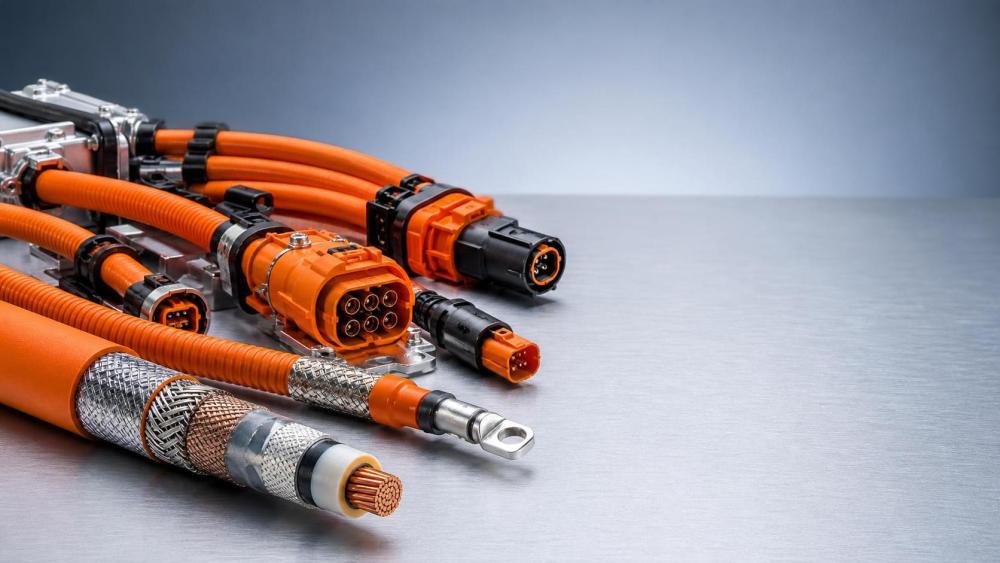
Shielding is one of the fastest ways to push up high-voltage cable harness cost, and buyers often underestimate why. The extra expense is not only the shielding material itself. It also shows up in termination labor, connector design, shielding continuity control, and testing. Once the harness has to manage electromagnetic compatibility in a demanding architecture, both materials and assembly complexity go up.
This is where procurement should push for definition, not just discount. Check whether every segment truly needs shielding, whether the shielding specification is uniform across the full assembly, and whether the termination approach is compatible with the supplier’s actual process capability. Over-specified shielding can lock in cost for the life of the program.
On the other hand, trying to save money by relaxing shielding without approval from the responsible engineering team is a false economy. If EMC issues show up late, the redesign cost is usually much worse than the original harness delta.
Connector systems are often where “simple” programs become expensive
High-voltage connectors carry their own cost logic. A harness tied to battery packs, inverters, e-axles, compressors, PTC heaters, or charging interfaces may require different interface geometries, locking systems, CPA features, HVIL provisions, sealing performance, and serviceability expectations. Once the connector family is fixed, much of the harness cost follows it.
For buyers, this is the checkpoint that separates useful cost-down work from wasted RFQ cycles. Review these items line by line:
- Is the connector nominated by the OEM or open for sourcing alternatives?
- Does the connector include HVIL and secondary locking features that change assembly time?
- Are there mixed sourcing responsibilities between cable supplier and connector supplier?
- Is there a local content expectation for the target production region?
- Does the harness require field service disconnection features that raise component cost?
If those points are unclear, suppliers will price risk into the quote. That is one of the most common reasons a purchasing team sees a wide spread between offers that seem to cover the same part number.
Routing difficulty has a bigger cost impact than many BOM reviews capture
A long, straight run is one thing. A harness that has to snake through battery enclosures, underbody channels, crowded power electronics space, or tight body openings is another. Packaging constraints create hidden cost in scrap risk, installation aids, protective coverings, brackets, clips, and dimensional control during assembly.
This is where procurement should insist on seeing more than a flat drawing. Ask for the route environment, bend-sensitive areas, abrasion points, and attachment method. If the harness needs special protection against chafing, vibration, fluid exposure, or thermal proximity, expect cost to rise through both material additions and process controls.
A practical warning: late vehicle package changes are especially painful for high-voltage harnesses. Even a modest reroute can trigger new cable lengths, connector clocking changes, bracket revisions, and revalidation work. Buyers should watch change management closely because the piece price may stay visible while engineering change cost gets buried elsewhere.
Sealing, protection, and orange jacket assumptions need to be challenged carefully
Not every harness in an EV sees the same environment. Some routes live in relatively protected interior zones. Others sit near splash exposure, road debris, chemical contact, or heat sources. The cost difference between those two cases is not cosmetic. It can change insulation system choice, jacket construction, connector sealing level, grommet design, and protective sleeve requirements.
Buyers should be careful with blanket specifications. Teams sometimes carry over the highest environmental protection level across all variants because it feels safer. It usually is not the most economical approach. The right review is specific: which branch sees what condition, for how long, and at what installation location? If that detail is missing, suppliers will usually quote the more conservative build.
Labor content still matters, even in technically mature programs
High-voltage harnesses are not priced like commodity bulk cable. Assembly content can be significant, especially where shielding terminations, connector insertion, sealing steps, torque-sensitive operations, marking, inspection, and electrical testing are involved. Programs with low automation compatibility often carry more labor cost than buyers expect from the print alone.
This does not mean low-cost-region sourcing automatically wins. If the supplier’s process discipline is weak, the program can pay later through rework, field concerns, delivery instability, or tighter incoming inspection. For procurement, the useful question is not “Where is the labor cheaper?” It is “Which supplier can build this harness with stable yield at the required volume?” Those are different conversations.
Tooling and launch cost deserve their own review
Some buyers focus too heavily on piece price and miss launch economics. Depending on the design, the supplier may need dedicated fixtures, crimp tools, shielding termination equipment, leak-related test setups, or custom gauges. If annual volume is modest, amortization can distort the unit cost more than expected.
A clean RFQ package should separate:
- Piece price at forecast volume
- Tooling and fixture charges
- Prototype versus mass production assumptions
- Engineering change treatment during launch phase
- Validation sample and testing cost responsibility
Without that split, a quote may look attractive only because cost has been shifted into another bucket.
Compliance cost depends on market, vehicle architecture, and document discipline
Safety and compliance requirements are real cost drivers, but buyers should avoid turning them into vague talking points. Requirements depend on the vehicle platform, target market, customer specifications, and the documents governing the harness. That means the procurement job is to check which standards and test requirements are actually called out in the sourcing package, not to rely on generic statements about certification.
At quote review, verify the exact referenced documents in the drawing, component specification, statement of work, and validation plan. The cost impact may come from material selection, traceability demands, sample testing, production end-of-line testing, or documentation workload. If one supplier prices full compliance evidence and another assumes minimal submission scope, the comparison is distorted before negotiations even start.
Compare suppliers on capability, not just on price per assembly
This is where many EV sourcing decisions go wrong. High-voltage cable harness cost is partly a manufacturing capability issue. A supplier with experience in low-voltage harnesses may still be the wrong fit if the program requires robust shielding termination, high-voltage connector handling, traceability control, or disciplined end-of-line testing.
This is especially important for procurement teams sourcing across China, Europe, North America, India, Mexico, Japan, South Korea, or Southeast Asia. The piece price may look lower in one region, but the landed cost picture changes once logistics, responsiveness, import structure, and launch support are included.
Watch the RFQ package for cost distortion
If your RFQ is thin, your quote spread will be wide. That is normal. Suppliers fill in missing assumptions differently, and every gap becomes either a risk premium or a future change claim. Before asking for cost reduction, make sure the sourcing package is strong enough to support apples-to-apples pricing.
The minimum useful package usually includes the latest drawing revision, 3D route or package information where relevant, connector specification, test and validation expectation, annual volume by phase, target plant location, and any customer-specific documentation requirement. Missing one of those items can move the quote more than a routine annual cost-down discussion.
A practical buying sequence that keeps cost under control
If the goal is better sourcing decisions, work in this order. First, lock the current-carrying and thermal assumptions, because conductor oversizing is expensive and hard to unwind later. Then review shielding and connector choices, since those are major multipliers. After that, check routing, protection, and assembly difficulty, which often explain why benchmark pricing fails. Only then should you push suppliers on conversion cost, tooling structure, and regional sourcing options.
That sequence does two things. It prevents unrealistic price targets from being pushed onto technically fixed content, and it exposes the parts of the harness design where cost can still be influenced without creating quality or launch risk.
For procurement teams, the best control point is early alignment. A high-voltage harness rarely becomes expensive because of one dramatic mistake. More often, cost builds quietly through conservative assumptions, incomplete RFQs, difficult packaging, and supplier risk pricing. Catch those early, and the conversation changes from arguing over quotes to managing the real drivers behind high-voltage cable harness cost.
Have questions about this sector analysis, or seeking best practices specific to your niche? Drop us a line below and let the senior consultants at GAC assist you.
“We respect your privacy. Your information is strictly confidential.”
Related News
- 00
0000-00
How to assess a smart cockpit electronics manufacturer's integration capability - 00
0000-00
How does a shielded HSD cable reduce interference in vehicles? - 00
0000-00
What drives demand for scroll compressors in the automotive market? - 00
0000-00
Does AEC-Q200 apply to flexible printed circuits? - 00
0000-00
How does production volume affect automotive flexible electronics costs?
Weekly Insights
Stay ahead with our curated technology reports delivered every Monday.
Recommended News
 How to assess a smart cockpit electronics manufacturer's integration capabilityAssess a smart cockpit electronics manufacturer's integration capability with practical checks for interfaces, testing, safety, cybersecurity and supplier support.Author:Time:Nov 18, 2026
 How does a shielded HSD cable reduce interference in vehicles?Discover how a shielded HSD cable reduces vehicle interference, and learn why connector design, routing, and testing matter for reliable high-speed data links.Author:Time:Nov 17, 2026
 What drives demand for scroll compressors in the automotive market?Explore the scroll compressor for automobile market and discover how EV adoption, heat pumps, efficiency, and supplier capabilities shape demand.Author:Time:Nov 16, 2026
 Does AEC-Q200 apply to flexible printed circuits?Flexible Printed Circuit AEC-Q200 requirements explained: discover which components qualify and how to assess automotive FPC reliability.Author:Time:Nov 15, 2026
 How does production volume affect automotive flexible electronics costs?Explore how production volume affects automotive flexible electronics cost, from tooling and yield to testing. Compare quotes and negotiate smarter.Author:Time:Nov 14, 2026
 How much does an in-vehicle infotainment system cost to replace?Explore in-vehicle infotainment cost, from affordable repairs to factory replacements. Compare options, installation fees, and compatibility before you buy.Author:Time:Nov 13, 2026
 How does condenser efficiency affect heat pump performance?Discover how condenser high efficiency can improve heat pump performance, reduce compressor power, and boost heating COP—plus the trade-offs to watch.Author:Time:Nov 12, 2026
 What does each FAKRA cable color code mean?FAKRA cable color code explained: Explore common connector colors, typical uses and key compatibility checks before choosing a replacement.Author:Time:Nov 11, 2026
 How to compare noise ratings for battery coolant pumpsCompare coolant pump low noise ratings with confidence. Learn how test conditions, hydraulic duty, tonal noise and installation affect your choice.Author:Time:Nov 10, 2026
 How bright should automotive display systems be in sunlight?Automotive Display Systems need more than brightness to stay readable in sunlight. Discover why 1,000 nits is a starting point and how to evaluate glare and heat.Author:Time:Nov 09, 2026
 How heat pumps improve the efficiency of EV thermal systemsEV Thermal Systems use heat pumps to reduce heating energy demand. Explore how they work, where they excel, and what limits efficiency in cold weather.Author:Time:Nov 08, 2026
 Can a smart cockpit platform support multiple displays?Can a smart cockpit platform support multiple displays? Explore key requirements for performance, safety, connectivity, and supplier evaluation.Author:Time:Nov 07, 2026
 How is automotive connector vibration resistance tested?Automotive connector vibration resistance testing reveals hidden contact failures. Explore test profiles, continuity monitoring and pass criteria.Author:Time:Nov 06, 2026
 How heat pumps save energy in automotive cabin climate systemsAutomotive Cabin Climate Systems energy saving starts with smarter heat pump design. Explore real-world efficiency, cold-weather trade-offs, and testing tips.Author:Time:Nov 05, 2026
 Is an EV heat pump worth it for winter driving range?Is a heat pump worth using in a cold-climate EV? Discover how it affects winter range, when it pays off, and what to check before buying.Author:Time:Nov 04, 2026
 When should you use 50-ohm coaxial cable instead of 75-ohm?Coaxial cable 50 ohm or 75 ohm? Learn when to use each, avoid impedance mismatches, and choose the right cable for reliable RF and video performance.Author:Time:Nov 03, 2026
 How to select a high temperature motor harness for an EVChoose the right high temperature motor harness for your EV. Compare thermal limits, current capacity, shielding, routing, and validation evidence.Author:Time:Nov 02, 2026
 How much does electric power steering replacement cost?Electric power steering price typically ranges from $1,000 to $3,000 for major replacements. Discover cost factors, repair options, and tips for comparing quotes.Author:Time:Nov 01, 2026
 How to size an EV A/C compressor for the required cooling capacitySize an EV A/C Compressor with confidence. Explore cooling loads, performance maps and power limits to select the right compressor for your vehicle.Author:Time:Oct 31, 2026
 How to choose the right pitch for an FPC board connectorFPC board connector pitch affects space, assembly and reliability. Learn how to compare options and select the best fit for your design.Author:Time:Oct 30, 2026
 How zonal design affects harness routing in high-voltage EV architecturesExplore high-voltage electrical architecture zonal design and its impact on EV harness routing. Discover key trade-offs in cable length, safety, thermal performance, and service access.Author:Time:Oct 29, 2026
 How tariffs affect costs in global automotive parts supply chainsNavigate tariffs in the global automotive parts trade supply chain. Learn to compare landed costs, manage duty exposure, and uncover smarter sourcing strategies to protect your margins.Author:Time:Oct 28, 2026
 How to assess vendor lock-in in a software-defined vehicle platformAssess Software-Defined Vehicle platform lock-in with practical tests for API portability, data access, update control, and exit costs. Learn how to choose a platform with a proven exit path.Author:Time:Oct 27, 2026
 How ISO 26262 guides functional safety in steer-by-wire systemsExplore steering systems functional safety through ISO 26262. Learn how hazard analysis, fault-tolerant design, and validation build a stronger steer-by-wire safety case.Author:Time:Oct 26, 2026
 How to evaluate a steering angle sensor manufacturer's accuracy claimsEvaluate steering angle sensor manufacturer accuracy claims with practical checks on calibration, latency, and test evidence. Compare suppliers confidently and avoid costly selection mistakes.Author:Time:Oct 25, 2026
 How to diagnose CAN bus faults in a hybrid vehicle control unitDiagnose Hybrid Vehicle Systems control unit CAN bus faults with step-by-step power, wiring, and waveform checks. Find the root cause and avoid unnecessary replacement.Author:Time:Oct 24, 2026
 How does battery cooling pipe diameter affect coolant pressure drop?Battery Cooling Pipe diameter affects coolant pressure drop and pump power. Explore sizing calculations and practical tips to optimize EV battery cooling and compare options with confidence.Author:Time:Oct 23, 2026
 How to assess PPAP readiness of automotive sensor system manufacturersAssess Automotive Sensor Systems manufacturers for PPAP readiness. Learn to verify production evidence, measurement capability, validation, and traceability to reduce sourcing risks.Author:Time:Oct 22, 2026
 What to ask an FPC connector manufacturer about reliability testingChoosing an FPC Connector manufacturer? Learn what to ask about reliability testing, failure limits, and traceable results to reduce design risks and select with confidence.Author:Time:Oct 21, 2026
 How to verify vehicle fitment for an aftermarket AC evaporatorNavigating the evaporator aftermarket? Verify vehicle fitment with VIN data, OE numbers, and physical interface checks. Use this guide to avoid costly mismatches and order confidently.Author:Time:Oct 20, 2026