In-Vehicle Infotainment Platform Trends Shaping Smarter Cockpit Upgrades in 2026




The race toward smarter cockpits is no longer centered on screen size alone. In 2026, the in-vehicle infotainment platform is emerging as a strategic layer that connects displays, software, connectivity, thermal efficiency, and electronic architecture into one upgrade path.
That shift matters because cockpit electronics now influence brand differentiation, sourcing decisions, lifecycle cost, and regional compliance. A stronger platform can improve user experience, but it also affects wiring complexity, power demand, update capability, and supplier coordination across the vehicle.
Why the platform matters more in 2026
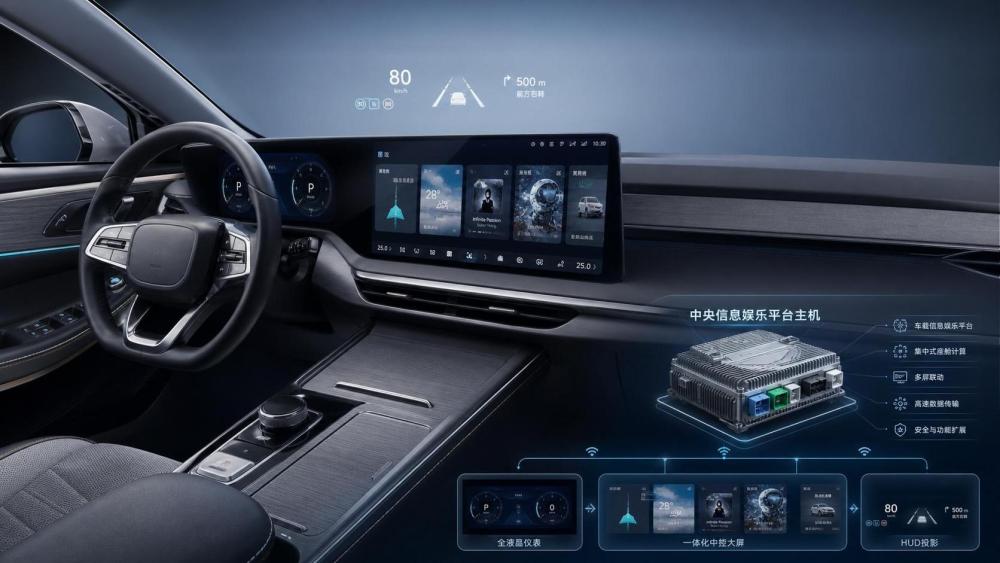
The modern cockpit has become a convergence point. Media head units, cockpit displays, HUD systems, cameras, voice control, cloud services, and digital vehicle functions increasingly depend on the same software and hardware foundation.
An in-vehicle infotainment platform is no longer a standalone entertainment module. It acts as an orchestration layer for interaction, content delivery, navigation, connected services, and interface consistency across multiple screens.
This is especially relevant in software-defined vehicles. Once cockpit functions move toward centralized computing, the platform starts shaping how quickly features can be deployed, updated, localized, and monetized after vehicle delivery.
For the broader automotive components industry, the topic also links directly with adjacent systems. Display modules need data bandwidth. Connectivity needs stable power. Larger screen domains generate heat. New interfaces often change wiring harness design and component integration.
What an in-vehicle infotainment platform now includes
At a practical level, the in-vehicle infotainment platform combines several layers rather than one product. Looking at these layers separately helps clarify business value and sourcing risk.
Core architecture
This includes the computing domain, operating system, middleware, graphics engine, application framework, and cybersecurity structure. Architecture choices affect scalability, boot time, update logic, and long-term serviceability.
Interface ecosystem
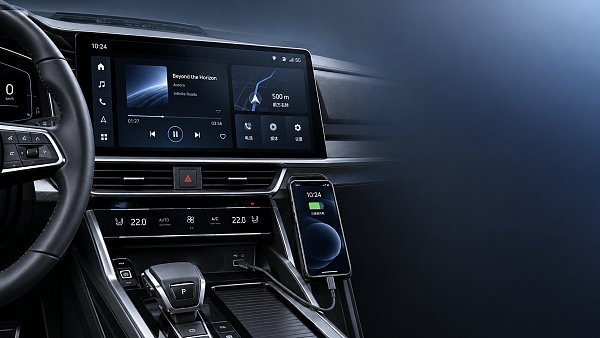
The platform must support center displays, instrument clusters, rear-seat screens, HUD systems, voice assistants, steering wheel controls, and smartphone integration. A fragmented interface weakens the value of the whole cockpit.
Connectivity and data handling
5G, Wi-Fi, Bluetooth, GNSS, V2X readiness, cloud synchronization, and data security policies are now baseline considerations. The in-vehicle infotainment platform increasingly serves as a data gateway between users, vehicle systems, and digital services.
Physical integration
Behind the interface, there are cockpit displays, flexible printed circuits, data and communication cables, high-voltage and low-voltage harness routes, connectors, thermal management components, and packaging constraints.
The trends shaping smarter cockpit upgrades
Several trends are giving the in-vehicle infotainment platform more strategic weight in 2026. They are technical trends, but they also change procurement logic and partnership models.
Centralized cockpit computing
Instead of many isolated ECUs, more vehicle programs are moving toward domain controllers or centralized platforms. This can simplify feature coordination, but it raises expectations for reliability, thermal control, and software integration discipline.
Display expansion with higher integration
Curved displays, pillar-to-pillar layouts, passenger screens, and advanced HUD systems are expanding. The platform must render more data, maintain responsiveness, and support consistent visual logic across a larger cockpit surface.
OTA-driven feature strategy
A competitive in-vehicle infotainment platform should support modular updates. This matters because feature sales, map services, app ecosystems, and UI refinements increasingly continue after SOP rather than ending at launch.
Cross-domain efficiency pressure
Cockpit electronics are now evaluated together with power consumption, cabin thermal balance, and electrical architecture. Larger displays and stronger processors can increase heat load, making thermal design a practical business issue.
Regional software localization
China, the United States, Europe, Japan, India, and Southeast Asia differ in app ecosystems, regulation, voice interaction preferences, navigation content, privacy rules, and connectivity partners. One global platform still needs regional adaptation.
How cockpit upgrades connect with the wider components chain
The in-vehicle infotainment platform is often discussed as software. In reality, upgrade feasibility depends on hardware ecosystems across the vehicle, which is why cross-category visibility matters.
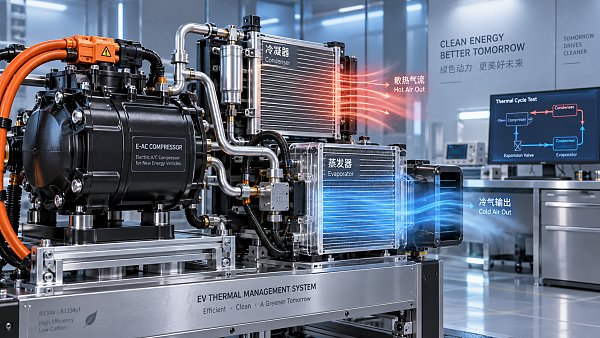
For example, higher cockpit computing loads may require better heat dissipation strategies, especially in EV and NEV architectures where thermal efficiency is already under pressure.
Display expansion and sensor-rich cabins can also reshape harness requirements. Data and communication cables, FPC systems, and high-voltage or mixed-voltage routing must support signal integrity and packaging efficiency.
This is where platforms such as GACT become relevant as intelligence sources rather than simple content hubs. Smart cockpit electronics do not sit in isolation from thermal systems, wiring, power steering electronics, or export-side sourcing realities.
A cockpit program can look attractive at the interface level, yet become less competitive if supplier depth is weak in displays, media head units, communication cables, or supporting thermal components.
Where the business value is usually found
The commercial value of an in-vehicle infotainment platform is broader than user entertainment. In many evaluations, the strongest value comes from five areas.
- Faster variant development across vehicle lines through a reusable software and hardware base.
- More flexible feature packaging through OTA updates, subscriptions, or market-specific software bundles.
- Better cockpit consistency across displays, HUD systems, and connected services.
- Improved sourcing leverage when platform standards reduce fragmentation among suppliers.
- Longer product relevance when the platform can absorb new apps, interfaces, and connectivity requirements.
These gains are strongest when platform strategy is aligned with real vehicle architecture. A feature-rich interface without electrical, thermal, and lifecycle support can become expensive to maintain.
A practical framework for evaluating platform competitiveness
When comparing an in-vehicle infotainment platform across suppliers or programs, a structured view helps separate headline features from durable competitiveness.
Signals worth watching across major markets
Market direction is not uniform. China continues to move quickly on cockpit digitization, voice interaction, integrated displays, and software-rich user experience. Europe keeps a strong focus on compliance, platform stability, and supplier integration discipline.
North America remains important for connected services, large vehicle cockpit packages, and branded interface ecosystems. India and Southeast Asia create pressure for cost-aware platform scaling rather than premium hardware alone.
That regional variation means the best in-vehicle infotainment platform is rarely the one with the longest feature list. The stronger candidate is usually the one that matches market expectations, vehicle class, and support capacity.
How to move from trend watching to grounded decisions
A useful next step is to map cockpit goals against the full component chain. Start with target functions, then trace the required display, computing, connectivity, harness, and thermal support conditions.
After that, compare supplier claims with integration evidence. A credible in-vehicle infotainment platform should show not only interface quality, but also update logic, hardware compatibility, and regional deployment readiness.
It also helps to monitor adjacent intelligence. GACT’s coverage of smart cockpit electronics, wiring harnesses, thermal systems, and export trends can support a broader view of feasibility, cost pressure, and supply chain fit.
By 2026, smarter cockpit upgrades will be judged less by isolated features and more by platform maturity. The clearer the evaluation framework, the easier it becomes to identify which in-vehicle infotainment platform can hold value over time.
Have questions about this sector analysis, or seeking best practices specific to your niche? Drop us a line below and let the senior consultants at GAC assist you.
“We respect your privacy. Your information is strictly confidential.”
Related News
- 00
0000-00
Can a smart cockpit platform support multiple displays? - 00
0000-00
How is automotive connector vibration resistance tested? - 00
0000-00
How heat pumps save energy in automotive cabin climate systems - 00
0000-00
Is an EV heat pump worth it for winter driving range? - 00
0000-00
When should you use 50-ohm coaxial cable instead of 75-ohm?
Weekly Insights
Stay ahead with our curated technology reports delivered every Monday.
Recommended News
 Can a smart cockpit platform support multiple displays?Can a smart cockpit platform support multiple displays? Explore key requirements for performance, safety, connectivity, and supplier evaluation.Author:Time:Nov 07, 2026
 How is automotive connector vibration resistance tested?Automotive connector vibration resistance testing reveals hidden contact failures. Explore test profiles, continuity monitoring and pass criteria.Author:Time:Nov 06, 2026
 How heat pumps save energy in automotive cabin climate systemsAutomotive Cabin Climate Systems energy saving starts with smarter heat pump design. Explore real-world efficiency, cold-weather trade-offs, and testing tips.Author:Time:Nov 05, 2026
 Is an EV heat pump worth it for winter driving range?Is a heat pump worth using in a cold-climate EV? Discover how it affects winter range, when it pays off, and what to check before buying.Author:Time:Nov 04, 2026
 When should you use 50-ohm coaxial cable instead of 75-ohm?Coaxial cable 50 ohm or 75 ohm? Learn when to use each, avoid impedance mismatches, and choose the right cable for reliable RF and video performance.Author:Time:Nov 03, 2026
 How to select a high temperature motor harness for an EVChoose the right high temperature motor harness for your EV. Compare thermal limits, current capacity, shielding, routing, and validation evidence.Author:Time:Nov 02, 2026
 How much does electric power steering replacement cost?Electric power steering price typically ranges from $1,000 to $3,000 for major replacements. Discover cost factors, repair options, and tips for comparing quotes.Author:Time:Nov 01, 2026
 How to size an EV A/C compressor for the required cooling capacitySize an EV A/C Compressor with confidence. Explore cooling loads, performance maps and power limits to select the right compressor for your vehicle.Author:Time:Oct 31, 2026
 How to choose the right pitch for an FPC board connectorFPC board connector pitch affects space, assembly and reliability. Learn how to compare options and select the best fit for your design.Author:Time:Oct 30, 2026
 How zonal design affects harness routing in high-voltage EV architecturesExplore high-voltage electrical architecture zonal design and its impact on EV harness routing. Discover key trade-offs in cable length, safety, thermal performance, and service access.Author:Time:Oct 29, 2026
 How tariffs affect costs in global automotive parts supply chainsNavigate tariffs in the global automotive parts trade supply chain. Learn to compare landed costs, manage duty exposure, and uncover smarter sourcing strategies to protect your margins.Author:Time:Oct 28, 2026
 How to assess vendor lock-in in a software-defined vehicle platformAssess Software-Defined Vehicle platform lock-in with practical tests for API portability, data access, update control, and exit costs. Learn how to choose a platform with a proven exit path.Author:Time:Oct 27, 2026
 How ISO 26262 guides functional safety in steer-by-wire systemsExplore steering systems functional safety through ISO 26262. Learn how hazard analysis, fault-tolerant design, and validation build a stronger steer-by-wire safety case.Author:Time:Oct 26, 2026
 How to evaluate a steering angle sensor manufacturer's accuracy claimsEvaluate steering angle sensor manufacturer accuracy claims with practical checks on calibration, latency, and test evidence. Compare suppliers confidently and avoid costly selection mistakes.Author:Time:Oct 25, 2026
 How to diagnose CAN bus faults in a hybrid vehicle control unitDiagnose Hybrid Vehicle Systems control unit CAN bus faults with step-by-step power, wiring, and waveform checks. Find the root cause and avoid unnecessary replacement.Author:Time:Oct 24, 2026
 How does battery cooling pipe diameter affect coolant pressure drop?Battery Cooling Pipe diameter affects coolant pressure drop and pump power. Explore sizing calculations and practical tips to optimize EV battery cooling and compare options with confidence.Author:Time:Oct 23, 2026
 How to assess PPAP readiness of automotive sensor system manufacturersAssess Automotive Sensor Systems manufacturers for PPAP readiness. Learn to verify production evidence, measurement capability, validation, and traceability to reduce sourcing risks.Author:Time:Oct 22, 2026
 What to ask an FPC connector manufacturer about reliability testingChoosing an FPC Connector manufacturer? Learn what to ask about reliability testing, failure limits, and traceable results to reduce design risks and select with confidence.Author:Time:Oct 21, 2026
 How to verify vehicle fitment for an aftermarket AC evaporatorNavigating the evaporator aftermarket? Verify vehicle fitment with VIN data, OE numbers, and physical interface checks. Use this guide to avoid costly mismatches and order confidently.Author:Time:Oct 20, 2026
 How electric compressor speed affects EV battery cooling capacityElectric compressor technology: battery cooling depends on more than RPM. Discover how speed, refrigerant flow, and system limits affect EV cooling capacity and energy efficiency.Author:Time:Oct 19, 2026
 How to verify a variable frequency compressor supplier’s efficiency claimsVerify a variable frequency compressor supplier’s efficiency claims using COP boundaries, matched test conditions, and duty-cycle data. Learn how to choose with confidence.Author:Time:Oct 18, 2026
 How bend radius affects FPC reliability in automotive camera modulesAutomotive FPC applications: camera module reliability starts with bend radius. Learn how stack-up, strain, and validation guide robust designs and help prevent costly failures.Author:Time:Oct 17, 2026
 How to diagnose intermittent loss of electric power steering assistMaster power steering system diagnostics to trace intermittent EPS assist loss. Learn proven checks for voltage, wiring, and fault codes to avoid costly guesswork.Author:Time:Oct 16, 2026
 How to size automotive power modules for electric compressorsSize automotive power modules for electric compressors with confidence. Learn how voltage, phase current, losses, and cooling shape reliable selection—and avoid costly oversizing.Author:Time:Oct 15, 2026
 Why automotive power electronics are shifting to silicon carbideAutomotive Power Electronics are shifting to silicon carbide. Discover how SiC can cut losses, boost EV power density, and reshape cooling, reliability, and system costs.Author:Time:Oct 14, 2026
 How EV adoption shapes the electrically driven compressor marketExplore how EV adoption shapes the electrically driven compressor market, from battery cooling and heat pumps to supplier margins. Discover the drivers of profitable growth.Author:Time:Oct 13, 2026
 How to size a PTC heater for reliable EV cabin heatingPTC Heater sizing for EV cabins: learn how to balance defrost performance, heat-pump integration, airflow, voltage range, and battery power for reliable winter comfort.Author:Time:Oct 12, 2026
 What determines the cooling output of electric automotive AC compressors?Automotive air conditioning compressors electric systems: explore how speed, voltage, refrigerant, controls, and heat exchangers shape EV cooling capacity and efficiency.Author:Time:Oct 11, 2026
 What makes a touchscreen media head unit responsive enough for daily use?Touchscreen media head unit performance explained: discover what delivers fast starts, smooth maps, reliable phone pairing, and responsive daily driving.Author:Time:Oct 10, 2026
 How Does a Battery Management System Communicate Cooling Demand?How does a battery management system communicate cooling demand? Explore CAN signals, thermal priorities, fault handling, and EV cooling control strategies.Author:Time:Oct 20, 2026