How Steering Angle Sensors Support Stability Control Accuracy




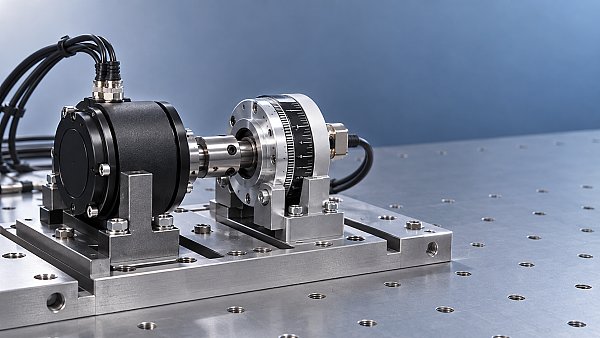
A steering angle sensor for stability control sits at a small physical point in the vehicle, yet it shapes a large part of how electronic safety systems interpret driver intent. When the wheel is turned, the sensor converts that movement into real-time data for ESC, EPS, brake control, and, increasingly, steer-by-wire architectures. In today’s automotive environment, where chassis control must work across ICE, hybrid, and EV platforms, the accuracy of that signal affects much more than steering feel. It influences intervention timing, yaw control logic, and confidence in system calibration.
That is why this topic keeps appearing across component sourcing, platform engineering, and system validation discussions tracked by GACT. As the industry moves toward electrification, high-voltage architectures, and more software-defined vehicle functions, the steering angle sensor for stability control is no longer a background component. It becomes part of a broader decision chain involving steering columns, EPS systems, wiring harness design, communication integrity, and vehicle safety performance.
Why the sensor matters beyond steering input
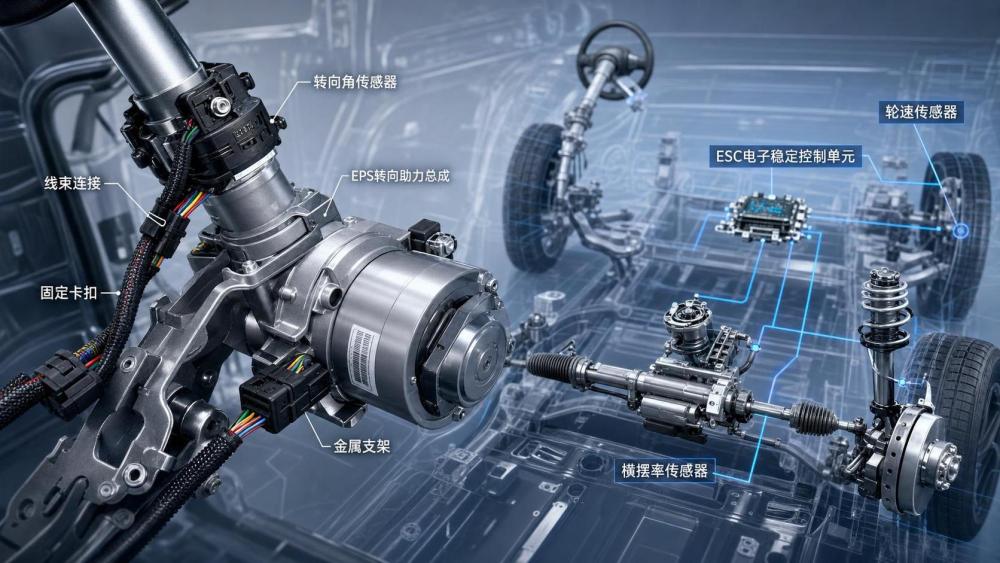
Stability control compares what the driver wants with what the vehicle is actually doing. The steering wheel angle is one of the earliest indicators of intended direction.
If that input is delayed, noisy, misaligned, or poorly calibrated, the entire control model starts with a flawed assumption. ESC can still respond, but not with the same precision.
A steering angle sensor for stability control usually works alongside yaw rate, lateral acceleration, wheel speed, and brake pressure data. The sensor itself does not create stability.
It provides the reference point that lets the controller judge whether the vehicle is understeering, oversteering, or tracking as expected. That distinction is fundamental in emergency avoidance, low-friction roads, and high-speed lane changes.
In practical terms, the better the steering angle signal, the better the controller can decide when to brake an individual wheel, reduce motor torque, or adjust assist behavior.
What control accuracy really depends on
Sensor accuracy is not a single specification. It is a combination of several behaviors that matter under real operating conditions.
Key performance elements
- Resolution: how finely the steering position can be measured.
- Linearity: how consistently output follows steering movement.
- Latency: how quickly the signal reaches the control unit.
- Zero-point stability: whether center position remains reliable over time.
- Noise resistance: how well the signal survives electrical interference.
- Thermal robustness: whether performance changes across temperature extremes.
A steering angle sensor for stability control may pass bench tests and still create integration issues inside a vehicle. That often happens when evaluators focus on nominal output but miss dynamic behavior.
For example, small offset drift at center can affect straight-line correction logic. Slight latency growth under load can reduce the quality of ESC timing during fast transient maneuvers.
These are not theoretical concerns. They shape calibration effort, diagnostic thresholds, and the amount of filtering required in the controller.
The connection with EPS, steer-by-wire, and chassis electronics
The steering angle sensor for stability control does not operate in isolation. In current platforms, it is part of a networked chassis domain.
With EPS, the sensor supports both steering assist and directional control logic. The same input may feed driver assistance functions, lane support features, and stability algorithms.
That shared role raises the standard for signal integrity. A reading that is acceptable for assist feel may still be insufficient for precise stability intervention.
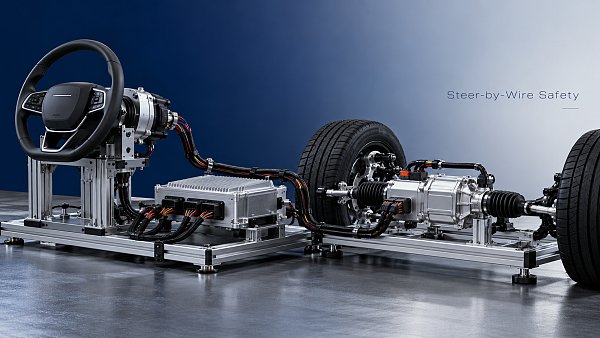
The challenge grows in steer-by-wire systems. Mechanical linkage assumptions change, redundancy becomes more important, and the relationship between steering command and wheel response is increasingly software managed.
This is where GACT’s wider coverage becomes relevant. Steering systems now intersect with wiring harness architecture, data and communication cables, cockpit electronics, and power distribution choices.
A weak sensor signal can come from the sensor itself, but it can also come from connector quality, EMC exposure, harness routing, or bus communication instability.
Integration points often overlooked
Why the topic is gaining weight in EV and global platform programs
The move toward EVs changes vehicle mass distribution, torque response, and thermal constraints. It also changes expectations for integrated control.
Electric platforms respond faster to powertrain commands than many conventional vehicles. That makes the timing relationship between steering input and torque reduction more sensitive.
At the same time, platform consolidation is pushing components into wider regional deployment. A steering angle sensor for stability control may need to support one architecture across China, Europe, North America, India, and Southeast Asia.
That creates new evaluation pressure. Teams must look at standards interpretation, sourcing consistency, validation repeatability, and environmental durability across diverse road and climate conditions.
This is one reason industry portals such as GACT increasingly connect component insights with supply chain intelligence, export trends, and application analysis. The technical question is no longer separate from the program question.
Typical scenarios where signal quality becomes visible
Most steering angle sensor issues are not obvious during routine driving. They become visible when the control system is asked to distinguish subtle changes quickly.
- Rapid lane changes at highway speed, where steering intent changes faster than body motion.
- Low-mu surfaces, where ESC must separate slip behavior from driver command.
- Mixed braking and cornering, where wheel-speed interpretation depends on correct steering reference.
- ADAS-supported driving, where lane functions and stability control rely on aligned steering data.
- EV torque transitions, where instantaneous power response increases control sensitivity.
In these conditions, a steering angle sensor for stability control is judged less by headline specifications and more by repeatability, consistency, and behavior under disturbance.
How to evaluate integration value in practice
A useful evaluation approach starts with system fit, not only component data sheets. The question is how the sensor behaves inside the target control architecture.
Practical checkpoints
- Check center-position drift after thermal cycling and vibration exposure.
- Review latency through the full signal chain, not only sensor output timing.
- Compare filtering needs between EPS and ESC use cases.
- Confirm EMC resilience with actual harness routing conditions.
- Assess fault detection logic for plausibility, redundancy, and service recovery.
- Validate calibration retention after steering column installation and vehicle assembly.
It also helps to assess supplier capability beyond the single component. Where steering columns, EPS units, connectors, and communication lines come from different sources, interface discipline matters.
A steering angle sensor for stability control can appear cost-competitive in isolation, yet increase calibration workload or failure analysis time at vehicle level. That tradeoff should be made visible early.
What to watch next
The next wave of change will likely come from deeper domain integration. Steering, braking, motion control, and cockpit feedback are moving closer together in software and network design.
That means the steering angle sensor for stability control will be judged not only by measurement accuracy, but by cybersecurity readiness, redundancy strategy, software traceability, and cross-domain compatibility.
For ongoing assessment, it makes sense to build a comparison framework that covers sensor behavior, controller interaction, harness conditions, and regional compliance assumptions together.
That kind of framework is more useful than a simple pass-fail review. It helps clarify where the real performance margin comes from, where integration risks sit, and which suppliers or architectures deserve deeper technical follow-up.
When reviewing future steering, EPS, or chassis control programs, start by mapping the full data path behind the steering angle sensor for stability control. From there, compare calibration burden, signal integrity, and system interaction under the exact vehicle scenarios that matter most.
Have questions about this sector analysis, or seeking best practices specific to your niche? Drop us a line below and let the senior consultants at GAC assist you.
“We respect your privacy. Your information is strictly confidential.”
Related News
- 00
0000-00
What does each FAKRA cable color code mean? - 00
0000-00
How to compare noise ratings for battery coolant pumps - 00
0000-00
How bright should automotive display systems be in sunlight? - 00
0000-00
How heat pumps improve the efficiency of EV thermal systems - 00
0000-00
Can a smart cockpit platform support multiple displays?
Weekly Insights
Stay ahead with our curated technology reports delivered every Monday.
Recommended News
 What does each FAKRA cable color code mean?FAKRA cable color code explained: Explore common connector colors, typical uses and key compatibility checks before choosing a replacement.Author:Time:Nov 11, 2026
 How to compare noise ratings for battery coolant pumpsCompare coolant pump low noise ratings with confidence. Learn how test conditions, hydraulic duty, tonal noise and installation affect your choice.Author:Time:Nov 10, 2026
 How bright should automotive display systems be in sunlight?Automotive Display Systems need more than brightness to stay readable in sunlight. Discover why 1,000 nits is a starting point and how to evaluate glare and heat.Author:Time:Nov 09, 2026
 How heat pumps improve the efficiency of EV thermal systemsEV Thermal Systems use heat pumps to reduce heating energy demand. Explore how they work, where they excel, and what limits efficiency in cold weather.Author:Time:Nov 08, 2026
 Can a smart cockpit platform support multiple displays?Can a smart cockpit platform support multiple displays? Explore key requirements for performance, safety, connectivity, and supplier evaluation.Author:Time:Nov 07, 2026
 How is automotive connector vibration resistance tested?Automotive connector vibration resistance testing reveals hidden contact failures. Explore test profiles, continuity monitoring and pass criteria.Author:Time:Nov 06, 2026
 How heat pumps save energy in automotive cabin climate systemsAutomotive Cabin Climate Systems energy saving starts with smarter heat pump design. Explore real-world efficiency, cold-weather trade-offs, and testing tips.Author:Time:Nov 05, 2026
 Is an EV heat pump worth it for winter driving range?Is a heat pump worth using in a cold-climate EV? Discover how it affects winter range, when it pays off, and what to check before buying.Author:Time:Nov 04, 2026
 When should you use 50-ohm coaxial cable instead of 75-ohm?Coaxial cable 50 ohm or 75 ohm? Learn when to use each, avoid impedance mismatches, and choose the right cable for reliable RF and video performance.Author:Time:Nov 03, 2026
 How to select a high temperature motor harness for an EVChoose the right high temperature motor harness for your EV. Compare thermal limits, current capacity, shielding, routing, and validation evidence.Author:Time:Nov 02, 2026
 How much does electric power steering replacement cost?Electric power steering price typically ranges from $1,000 to $3,000 for major replacements. Discover cost factors, repair options, and tips for comparing quotes.Author:Time:Nov 01, 2026
 How to size an EV A/C compressor for the required cooling capacitySize an EV A/C Compressor with confidence. Explore cooling loads, performance maps and power limits to select the right compressor for your vehicle.Author:Time:Oct 31, 2026
 How to choose the right pitch for an FPC board connectorFPC board connector pitch affects space, assembly and reliability. Learn how to compare options and select the best fit for your design.Author:Time:Oct 30, 2026
 How zonal design affects harness routing in high-voltage EV architecturesExplore high-voltage electrical architecture zonal design and its impact on EV harness routing. Discover key trade-offs in cable length, safety, thermal performance, and service access.Author:Time:Oct 29, 2026
 How tariffs affect costs in global automotive parts supply chainsNavigate tariffs in the global automotive parts trade supply chain. Learn to compare landed costs, manage duty exposure, and uncover smarter sourcing strategies to protect your margins.Author:Time:Oct 28, 2026
 How to assess vendor lock-in in a software-defined vehicle platformAssess Software-Defined Vehicle platform lock-in with practical tests for API portability, data access, update control, and exit costs. Learn how to choose a platform with a proven exit path.Author:Time:Oct 27, 2026
 How ISO 26262 guides functional safety in steer-by-wire systemsExplore steering systems functional safety through ISO 26262. Learn how hazard analysis, fault-tolerant design, and validation build a stronger steer-by-wire safety case.Author:Time:Oct 26, 2026
 How to evaluate a steering angle sensor manufacturer's accuracy claimsEvaluate steering angle sensor manufacturer accuracy claims with practical checks on calibration, latency, and test evidence. Compare suppliers confidently and avoid costly selection mistakes.Author:Time:Oct 25, 2026
 How to diagnose CAN bus faults in a hybrid vehicle control unitDiagnose Hybrid Vehicle Systems control unit CAN bus faults with step-by-step power, wiring, and waveform checks. Find the root cause and avoid unnecessary replacement.Author:Time:Oct 24, 2026
 How does battery cooling pipe diameter affect coolant pressure drop?Battery Cooling Pipe diameter affects coolant pressure drop and pump power. Explore sizing calculations and practical tips to optimize EV battery cooling and compare options with confidence.Author:Time:Oct 23, 2026
 How to assess PPAP readiness of automotive sensor system manufacturersAssess Automotive Sensor Systems manufacturers for PPAP readiness. Learn to verify production evidence, measurement capability, validation, and traceability to reduce sourcing risks.Author:Time:Oct 22, 2026
 What to ask an FPC connector manufacturer about reliability testingChoosing an FPC Connector manufacturer? Learn what to ask about reliability testing, failure limits, and traceable results to reduce design risks and select with confidence.Author:Time:Oct 21, 2026
 How to verify vehicle fitment for an aftermarket AC evaporatorNavigating the evaporator aftermarket? Verify vehicle fitment with VIN data, OE numbers, and physical interface checks. Use this guide to avoid costly mismatches and order confidently.Author:Time:Oct 20, 2026
 How electric compressor speed affects EV battery cooling capacityElectric compressor technology: battery cooling depends on more than RPM. Discover how speed, refrigerant flow, and system limits affect EV cooling capacity and energy efficiency.Author:Time:Oct 19, 2026
 How to verify a variable frequency compressor supplier’s efficiency claimsVerify a variable frequency compressor supplier’s efficiency claims using COP boundaries, matched test conditions, and duty-cycle data. Learn how to choose with confidence.Author:Time:Oct 18, 2026
 How bend radius affects FPC reliability in automotive camera modulesAutomotive FPC applications: camera module reliability starts with bend radius. Learn how stack-up, strain, and validation guide robust designs and help prevent costly failures.Author:Time:Oct 17, 2026
 How to diagnose intermittent loss of electric power steering assistMaster power steering system diagnostics to trace intermittent EPS assist loss. Learn proven checks for voltage, wiring, and fault codes to avoid costly guesswork.Author:Time:Oct 16, 2026
 How to size automotive power modules for electric compressorsSize automotive power modules for electric compressors with confidence. Learn how voltage, phase current, losses, and cooling shape reliable selection—and avoid costly oversizing.Author:Time:Oct 15, 2026
 Why automotive power electronics are shifting to silicon carbideAutomotive Power Electronics are shifting to silicon carbide. Discover how SiC can cut losses, boost EV power density, and reshape cooling, reliability, and system costs.Author:Time:Oct 14, 2026
 How EV adoption shapes the electrically driven compressor marketExplore how EV adoption shapes the electrically driven compressor market, from battery cooling and heat pumps to supplier margins. Discover the drivers of profitable growth.Author:Time:Oct 13, 2026