How global automotive supply chain disruption reshapes sourcing risk




Disruption Has Changed the Unit of Sourcing Risk
For automotive procurement teams, global automotive supply chain disruption is no longer a short-term exception to be handled through expediting, buffer stock, and supplier escalation. It has changed the underlying definition of sourcing risk. A component can be technically approved, competitively priced, and produced by a financially credible supplier, yet still become a source of production exposure if its material path, production footprint, logistics route, or regulatory treatment is too concentrated.
This matters most in components where automotive programs have limited substitution freedom. A high-voltage wiring harness, battery liquid-cooling assembly, electric compressor, steering system, cockpit display, or integrated thermal valve cannot usually be replaced as easily as a general-purpose fastener. Vehicle validation, software integration, connector compatibility, safety requirements, tooling ownership, and regional certification can all make a seemingly available alternative unusable within the time frame of a disruption.
The procurement question is therefore becoming more precise: where does supply continuity actually depend on a single country, supplier group, production process, material, transport lane, or qualification decision? The answer is rarely visible in a conventional price comparison.
Why “Dual Sourcing” Often Gives a False Sense of Security
Many sourcing organizations have responded by qualifying a second supplier. That can reduce risk, but only when the two sources fail independently. In automotive supply chains, they often do not.
Two harness suppliers may use the same copper rod producer, source terminals from the same specialist stamping base, or assemble in different countries while importing equivalent subcomponents through the same ports. Two electric compressor suppliers may have separate factories but rely on common magnet, power electronics, bearing, or machining capacity. A thermal system may appear diversified at module level while its critical valve, refrigerant-control element, controller, or sealing material remains concentrated upstream.
Supplier count is therefore a weak proxy for resilience. Buyers need to distinguish between commercial dual sourcing and operationally independent sourcing. The latter requires visibility into the dependencies that sit below the direct supplier relationship.
A useful review asks whether alternate sources differ in the areas that have caused disruptions most often:
- Manufacturing region and local utility, labor, or permitting exposure.
- Critical raw material and sub-tier component origin.
- Production technology, tooling location, and key equipment dependence.
- Port, border crossing, shipping route, and freight-forwarding concentration.
- Trade classification, tariff exposure, and local-content eligibility.
- Engineering release status and the time needed to switch production volume.
The objective is not to eliminate concentration everywhere. That would be prohibitively expensive and may create unnecessary complexity. The objective is to identify concentration that can stop vehicle production, delay a launch, or force unplanned design changes.
Component Risk Is Becoming More Uneven
Not all automotive parts should be treated with the same disruption model. The market is moving toward more technically integrated vehicle systems, and those systems have different failure points.
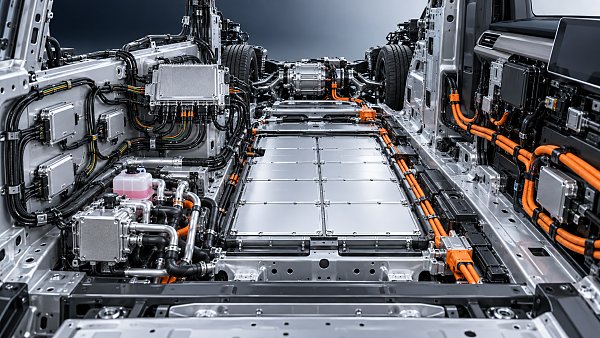
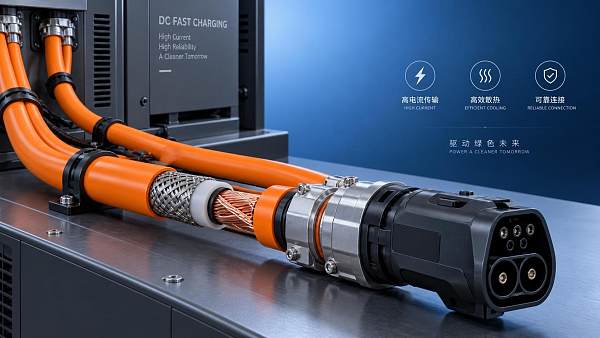
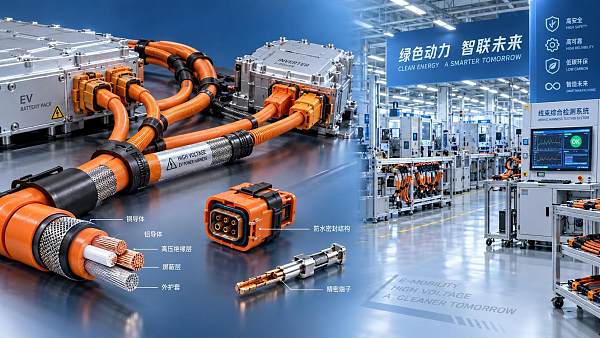
Wiring harnesses remain exposed because they combine labor-intensive assembly with a large number of connectors, terminals, seals, clips, tapes, and increasingly high-voltage protection elements. Their bulk and vehicle-specific geometry also make last-minute relocation difficult. A harness supplier may have spare assembly labor in another region, but transferring a program still depends on drawings, fixtures, connector supply, testing capacity, and customer approval.
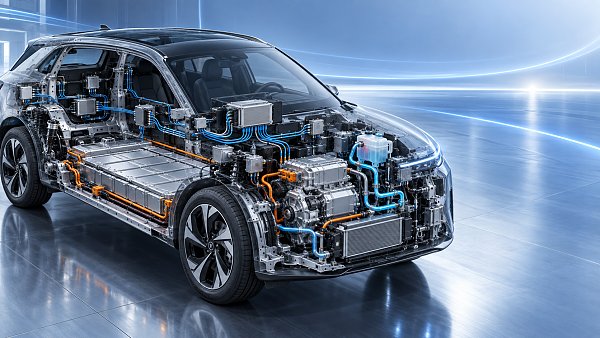
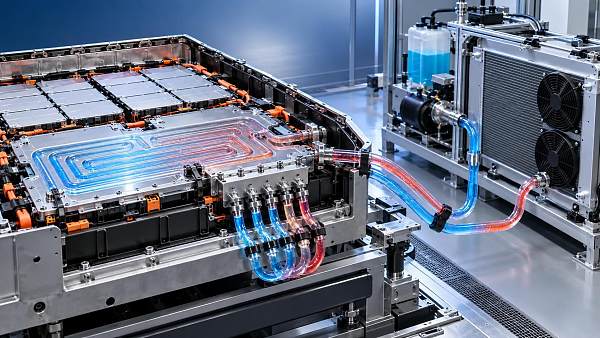
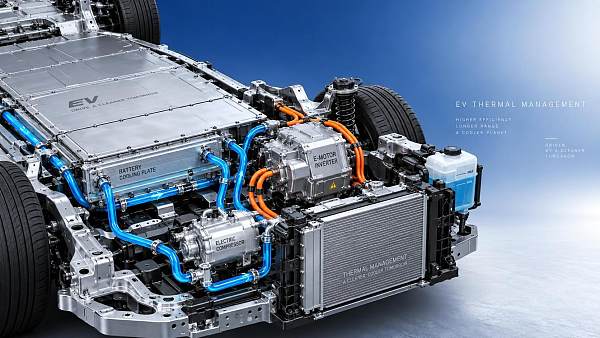
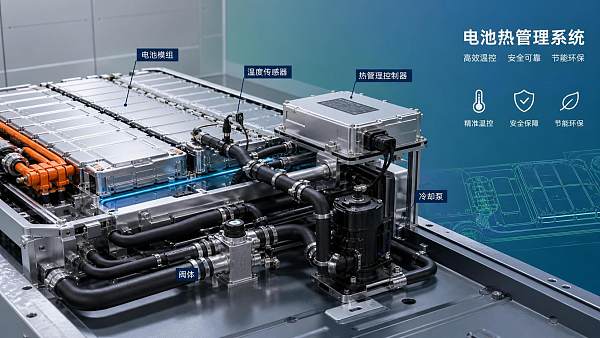
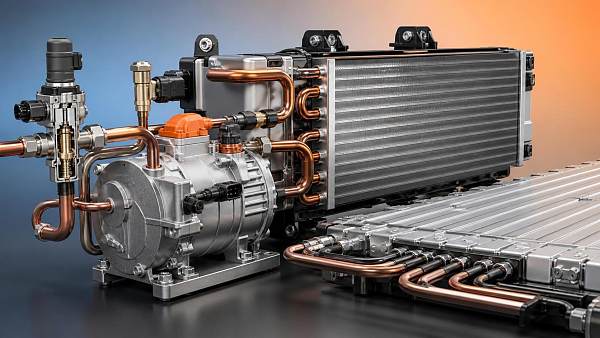
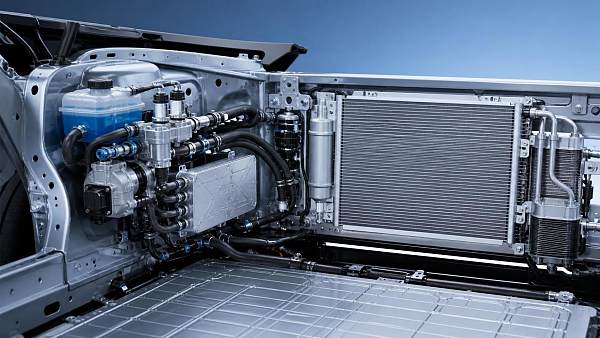
Thermal management systems present a different sourcing challenge. Battery cooling plates, heat pump modules, electric compressors, valves, hoses, sensors, and controllers are linked through performance requirements rather than merely assembled together. A substitution can affect cooling capacity, refrigerant flow, noise, power consumption, software calibration, crash packaging, and serviceability. The risk is less about the availability of a generic part and more about whether a changed component still performs correctly across the vehicle operating envelope.
Smart cockpit electronics are vulnerable to another pattern: high value concentrated in smaller, specialized inputs. Displays, processors, memory, cameras, audio components, communication modules, and power-management devices can each have distinct lead-time and export-control exposure. In these categories, a low-cost electronic part can hold up a much higher-value cockpit assembly. Procurement teams need to map the bill of materials down to the components that are difficult to re-approve, not just the parts with the highest invoice value.
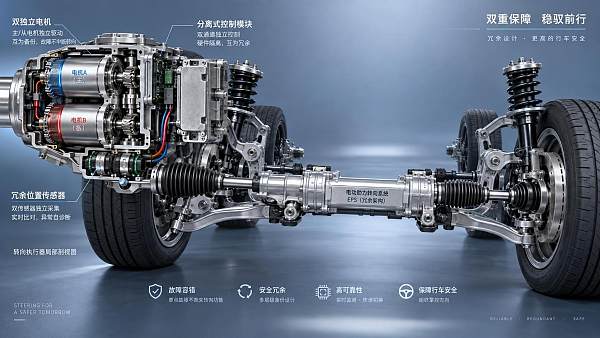
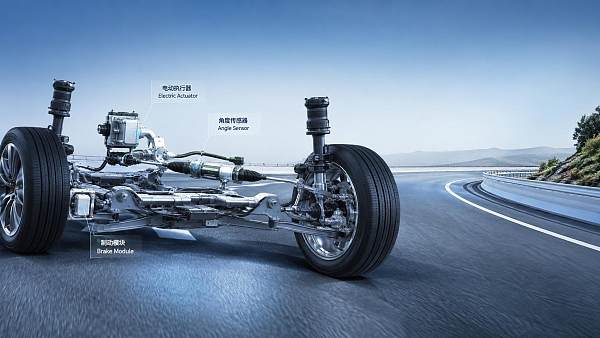
Steering components add a safety and liability dimension. EPS motors, torque sensors, control units, steering columns, and steer-by-wire-related hardware require disciplined process control and validation. Switching sources under pressure can create a larger risk than waiting for supply, especially where functional safety, traceability, or software compatibility is involved. For these parts, continuity planning must begin well before a supply interruption becomes urgent.
Price Volatility Is Only One Part of the Cost Problem
Procurement teams are accustomed to evaluating piece price, annual productivity, freight, tariffs, payment terms, and inventory carrying cost. Disruption changes the weighting of those factors because the most expensive outcome may be a lost production day, an emergency engineering release, or the need to carry costly inventory across multiple vehicle programs.
A low-price award can become structurally expensive when it depends on a long and fragile route. Conversely, regional sourcing can carry a higher nominal piece price while reducing transit variability, customs exposure, recovery time, and the amount of inventory needed to protect the assembly plant. Neither conclusion is automatic. Local supply can still depend on imported electronics, magnets, specialty steel, resin, or tooling; offshore supply can be highly reliable when the supplier has redundant capacity, stable shipping arrangements, and a mature regional support network.
The more useful measure is landed and recoverable cost. Landed cost includes the obvious logistics and trade expenses. Recoverable cost asks a harder question: if this source is interrupted, how quickly can production be restored, at what engineering cost, and with what effect on vehicle output? A sourcing decision that looks efficient in a normal month may look very different when assessed against its recovery profile.
Regionalization Is Selective, Not a Universal Retreat From Global Supply
There is a strong business case for placing some production closer to vehicle assembly, particularly for bulky, labor-intensive, highly customized, or time-sensitive parts. Harness assemblies, molded fluid lines, some thermal modules, and vehicle-specific cockpit assemblies can benefit from regional production because transport delays and late engineering changes are harder to absorb.
Yet regionalization should not be treated as a blanket remedy. Advanced automotive components are built on global layers of specialized capability. Semiconductor packaging, display materials, certain power-electronics inputs, rare-earth magnets, precision bearings, compressor machining, and sensor technologies may remain geographically concentrated even if final assembly moves closer to the vehicle plant.
The practical direction is a more regional operating model built on global technical networks. Buyers may source a component locally while maintaining global visibility into the inputs that determine whether the local plant can keep running. They may also split supply by vehicle platform, region, or demand band rather than dividing volume evenly between two suppliers. This can preserve scale while avoiding complete dependence on one supply path.
Regional capacity should also be evaluated against its ramp-up conditions. A facility that can build a part at steady state is not necessarily able to absorb a sudden volume transfer. The buyer should understand labor availability, machine utilization, supplier-owned versus customer-owned tooling, local sub-tier capacity, testing equipment, and the time required for a production part approval process. A nominally nearby source with no rapid-ramp capability may offer little protection in an actual disruption.
Trade Policy Now Belongs in the Sourcing File
Trade policy used to sit at the edge of many component sourcing decisions, often reviewed after engineering and commercial selection were largely complete. That approach is increasingly fragile. Duties, origin rules, customs procedures, sanctions, export restrictions, and regional-content conditions can influence the economic viability and physical movement of automotive parts.
For procurement, the issue is not predicting every policy change. It is avoiding sourcing structures that depend on a single assumption about market access. A part may cross several borders before reaching the OEM plant: raw material to sub-tier, sub-tier to component maker, component maker to module integrator, and module to final assembly. The final country of assembly does not by itself explain trade exposure.
Buyers should maintain a product-level view of origin and classification for parts with high value, long lead times, or limited substitutes. This is especially relevant for high-voltage harnesses, electric compressors, thermal-system controllers, infotainment electronics, and steering electronics, where imported content can be substantial even when final assembly occurs locally. Procurement, customs specialists, engineering, and suppliers need a shared process because a classification change or origin-rule issue can affect both cost and delivery.
Build Risk Reviews Around Time to Recover
A practical sourcing-risk program does not need to begin with an enormous mapping project. It should begin with the parts that have the highest consequence if supply stops and the longest credible time to recover.
“Time to recover” is more useful than generic risk scoring because it connects disruption to plant reality. It includes the time needed to identify the problem, secure material, transfer tooling, validate parts, gain customer approval, arrange logistics, and stabilize quality at the replacement source. For safety-critical or electronically integrated parts, approval time may dominate. For bulky or labor-intensive assemblies, physical capacity and logistics may dominate. For material-intensive products, upstream availability may be the limiting factor.
A focused review can group components into three working categories:
- Production stoppers: parts with little inventory, no practical substitute, and a direct line-stop effect. These need named recovery owners, tested escalation routes, and frequent capacity review.
- Constrained but manageable parts: parts where supply can be protected through targeted stock, allocation agreements, flexible logistics, or planned volume rebalancing.
- Commercially exposed parts: parts where disruption is more likely to affect price or margin than vehicle output. These require market monitoring, but not the same level of contingency spending.
This classification should change when vehicle architecture changes. Electrification raises the importance of thermal control, high-voltage distribution, power electronics, and electric compressors. Software-rich interiors increase exposure to electronic content and software-linked validation. A risk register built around the previous generation of vehicle content can miss the components now capable of delaying production.
Supplier Conversations Need Better Evidence
Supplier questionnaires remain useful, but broad assurances about business continuity do not provide enough decision support. Procurement teams need evidence that can be tied to a specific program and component family.
For a critical supplier, the discussion should establish where the part is made, what the constrained subcomponents are, which sites can support emergency volume, what inventory is genuinely controlled by the supplier, and what approvals would be needed before a transfer. Buyers should also ask how the supplier allocates scarce capacity among customers. Contracted volume is important, but allocation rules during a shortage can determine the real outcome.
There is a similar need for discipline inside the buying organization. Engineering teams may know which specification changes are feasible. Manufacturing may understand which variants can be sequenced differently. Logistics may see route constraints before they appear in supplier delivery data. Procurement has the clearest view of commercial leverage and supplier commitments. These inputs should be brought together before a disruption forces decisions under time pressure.
Global automotive supply chain disruption has made sourcing more strategic because the risk now sits in the connections between design, geography, materials, trade rules, capacity, and qualification. The strongest procurement response is not simply more inventory or more suppliers. It is a clearer view of which dependencies can interrupt production, how long each would take to recover, and which investments materially improve that recovery path.
Related News
- 00
0000-00
How global auto parts buyers can verify supplier quality before ordering - 00
0000-00
How global automotive supply chain disruption reshapes sourcing risk - 00
0000-00
When is a single pair ethernet cable the right choice for vehicles? - 00
0000-00
When does a zonal automotive Ethernet architecture reduce wiring complexity? - 00
0000-00
Which automotive component export regulations apply before shipping?
Weekly Insights
Stay ahead with our curated technology reports delivered every Monday.
Recommended News
 How global auto parts buyers can verify supplier quality before orderingGlobal auto parts buyers: learn how to verify supplier quality through audits, testing, traceability, and staged approvals before placing orders.Author:Time:Sep 25, 2026
 How global automotive supply chain disruption reshapes sourcing riskGlobal automotive supply chain disruption is reshaping sourcing risk. Discover practical strategies for resilient automotive procurement, recovery planning, regionalization, and supplier continuity.Author:Time:Sep 24, 2026
 When is a single pair ethernet cable the right choice for vehicles?Single pair Ethernet cable: learn when it delivers lighter, reliable vehicle networks—and how to assess bandwidth, power, EMC, and connector readiness.Author:Time:Sep 23, 2026
 When does a zonal automotive Ethernet architecture reduce wiring complexity?Automotive Ethernet architecture reduces wiring complexity when zonal controllers aggregate local loads, replacing long cross-vehicle circuits with efficient backbones.Author:Time:Sep 22, 2026
 Which automotive component export regulations apply before shipping?Automotive Component Export regulations explained: master customs, safety approvals, batteries, chemicals, transport rules, and sanctions screening before shipment.Author:Time:Sep 21, 2026
 How automotive software architecture shapes EV platform scalabilityAutomotive Software Architecture defines EV platform scalability—discover how modular interfaces, controlled configurations, and resilient updates accelerate innovation.Author:Time:Sep 20, 2026
 When R744 HVAC technology is the right fit for heat pump systemsR744 HVAC technology: discover when CO2 heat pumps deliver stronger cold-weather performance, vehicle thermal integration, and long-term value.Author:Time:Sep 19, 2026
 How AUTOSAR shapes software integration for cockpit domain controllersCockpit domain controller AUTOSAR integration explained: assess software boundaries, safety, updates, and scalable smart cockpit architecture.Author:Time:Sep 18, 2026
 What should you verify before choosing a heat pump supplier?Heat pump supplier selection guide: verify engineering fit, cold-climate performance, manufacturing quality, supply resilience, and commercial readiness before nomination.Author:Time:Sep 17, 2026
 Which Automotive CAN Bus standard fits a new vehicle network?Automotive CAN Bus standard guide: compare Classical CAN, CAN FD, and CAN XL to build a reliable, scalable vehicle network with the right cost, bandwidth, and compatibility.Author:Time:Sep 16, 2026
 How thermodynamic parameter modeling improves battery cooling designThermodynamic parameter modeling improves battery cooling design by predicting heat flow, temperature uniformity, flow balance, and transient performance.Author:Time:Sep 15, 2026
 Where automotive thermal management applications matter most in EV designAutomotive thermal management applications shape EV battery safety, fast charging, range, HVAC comfort, and powertrain reliability. Explore the design priorities that matter most.Author:Time:Sep 14, 2026
 How actuator redundancy affects steer-by-wire system safetySteer by wire actuator redundancy explained: discover how independent power, sensing, control, and fault handling protect vehicle steering safety.Author:Time:Sep 13, 2026
 What cable ratings matter most in a fast charging harness?Fast charging harness ratings explained: assess current capacity, thermal derating, voltage, shielding, and connector performance for reliable EV charging.Author:Time:Sep 12, 2026
 How to specify a low voltage harness assembly for automotive useLow voltage harness assembly specification guide for automotive use—covering circuit design, durability, EMC, validation, and production-ready compliance.Author:Time:Sep 11, 2026
 What to verify before choosing a variable speed compressor supplierVariable speed compressor supplier selection made easier: verify technical fit, validation, compliance, capacity, and after-sales support before sourcing.Author:Time:Sep 10, 2026
 What is driving the EV wiring harness price trend in 2026?EV wiring harness price trend in 2026: explore how high-voltage systems, copper costs, vehicle architecture, and sourcing strategies shape EV harness costs.Author:Time:Sep 09, 2026
 How windshield curvature causes HUD system image distortionHUD system image distortion explained: discover how windshield curvature affects focus, ghosting, keystone, and AR-HUD accuracy—and how to evaluate solutions.Author:Time:Sep 08, 2026
 How to choose an AR-HUD projector for different windshield designsAR-HUD projector selection guide for different windshield designs. Learn how curvature, wedge glass, coatings, calibration, and packaging affect clear, stable AR display performance.Author:Time:Sep 07, 2026
 How does an e-drive cooling system prevent motor and inverter overheating?E-drive cooling system guide: learn how targeted coolant flow, cold plates, heat rejection, and smart controls prevent motor and inverter overheating.Author:Time:Sep 07, 2026
 How does vehicle motion control support safer steer-by-wire systems?Vehicle motion control strengthens steer-by-wire safety by coordinating steering, braking, and propulsion. Explore fault handling, validation, and safer vehicle responses.Author:Time:Sep 05, 2026
 How insulation monitoring protects high-voltage electrical architectureHigh-voltage electrical architecture insulation monitoring detects leakage early, improving EV safety, fault diagnosis, quality control, and reliability.Author:Time:Sep 04, 2026
 How ISO 26262 shapes functional safety requirements for automotive actuatorsAutomotive Actuators functional safety: discover how ISO 26262 links vehicle hazards, ASILs, diagnostics, and safety evidence for reliable actuator design.Author:Time:Sep 03, 2026
 How to choose a thermal management controller for battery coolingThermal Management Controller selection guide for battery cooling: compare control accuracy, BMS integration, safety, efficiency, and validation for smarter EV performance.Author:Time:Sep 02, 2026
 How EV powertrain components in Europe are adapting to 800V systemsEV Powertrain Components Europe are evolving for 800V systems—discover how inverters, e-axles, connectors and cooling enable safer, faster, high-performance EVs.Author:Time:Sep 01, 2026
 How electronic expansion valves improve heat pump efficiency at part loadElectronic expansion valve heat pump systems improve part-load efficiency through precise refrigerant control, stable superheat, and smarter EV thermal management. Explore key insights.Author:Time:Aug 31, 2026
 How to qualify an automotive flexible electronics supplier for FFC reliabilityAutomotive flexible electronics supplier qualification guide: verify FFC bend, thermal, electrical, connector, and production reliability before sourcing.Author:Time:Aug 30, 2026
 What to audit before choosing a swash plate compressor factorySwash plate compressor factory audit guide: verify machining, testing, traceability, change control, supply stability, and export readiness before sourcing.Author:Time:Aug 29, 2026
 How automotive thermal management modules affect EV battery coolingAutomotive thermal management module insights for EV battery cooling: learn how flow, chillers, heat pumps, and predictive controls improve fast charging, range, and reliability.Author:Time:Aug 28, 2026
 When does an aftermarket auto A/C compressor become a false economy?Auto A/C compressor aftermarket choices can cut upfront costs—but when do they raise lifecycle risk? Explore fitment, durability, warranty, and downtime factors before you buy.Author:Time:Aug 27, 2026