When does a zonal automotive Ethernet architecture reduce wiring complexity?




A zonal automotive Ethernet architecture reduces wiring complexity only when it changes the physical location of control and aggregation functions. Replacing existing network links with Ethernet alone does not materially shorten a harness. The reduction comes when sensors, actuators, lighting, door modules, seat functions, thermal devices, and other local loads connect to a controller located in or near their physical zone, while that controller communicates with central compute units through a smaller number of high-speed backbone links.
The practical test is simple: compare the number and length of wires that must cross the vehicle body in the current architecture with those required after functions are grouped by location. If a proposed “zonal” design still routes individual device lines from doors, bumpers, roof modules, battery systems, or HVAC assemblies to distant domain controllers, it may add Ethernet capability without delivering the expected harness benefit.
What actually changes in a zonal layout
Traditional electrical/electronic architectures often evolved around functional domains. A body controller may serve lighting and locking, an ADAS controller may serve cameras and radar, an infotainment controller may serve displays and audio, and separate controllers may manage thermal, chassis, battery, and powertrain functions. Each domain can require dedicated harness branches extending across the vehicle. As new functions are added, the result is often a growing number of long point-to-point circuits, connectors, splice points, gateway paths, and branch harnesses.
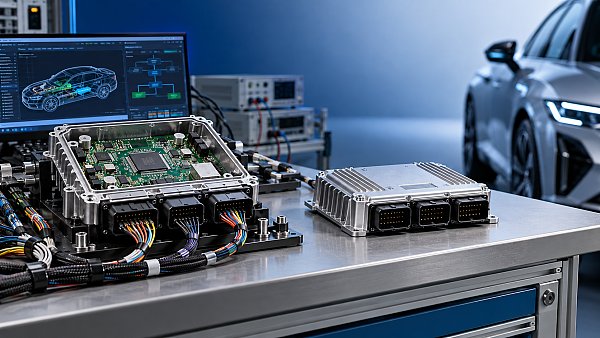
A zonal layout reorganizes part of this logic around vehicle geography rather than only around function. Typical zones may include front left, front right, cabin, rear left, rear right, and a central or rear power zone. A zonal controller collects local inputs and drives local outputs. It may contain Ethernet switching capability, local I/O, power distribution features, wake-up management, diagnostics, and interfaces for legacy buses or direct-connected devices.
Instead of carrying every low-voltage signal to a body or domain controller located elsewhere, the vehicle carries a limited number of backbone connections between zones and central computers. These backbone links transport aggregated traffic. Local short branches remain necessary, but the architecture can eliminate many long runs that otherwise travel through the instrument panel, floor tunnel, A-pillars, roof rails, or rear body harness.
The architectural shift is therefore not “Ethernet versus CAN” in isolation. It is “local aggregation plus a backbone” versus “distributed point-to-point wiring to function-specific controllers.”

Conditions under which wiring reduction is real
The strongest reduction opportunity appears where a vehicle has a high density of electrically operated functions distributed around the body. Door zones are a clear example. Window lifts, mirror adjustment and heating, speakers, ambient lighting, locks, occupancy sensing, side-impact sensing, switch packs, and sometimes display or communication functions can produce a complex branch network. A local controller can consolidate these interfaces and communicate upstream through one or more network links rather than through separate long signal runs.
Front-end and rear-end zones can offer similar benefits. Cameras, lighting modules, park-assist sensors, active grille shutters, horn systems, washer pumps, tailgate functions, radar sensors, and charging-related hardware are physically concentrated but are frequently served by different functional controllers. Local aggregation can reduce the number of separate paths entering those areas.
The benefit is also more credible in vehicles with central compute platforms. If ADAS, body, infotainment, and vehicle-management software are increasingly executed on central high-performance computers, zonal controllers can act as distributed I/O and networking nodes. In that arrangement, centralized software decisions do not require centralized physical wiring for every endpoint.
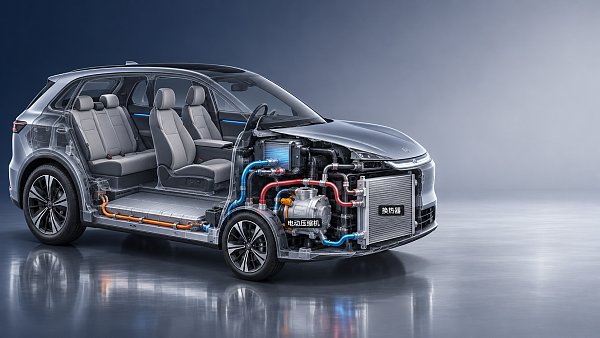
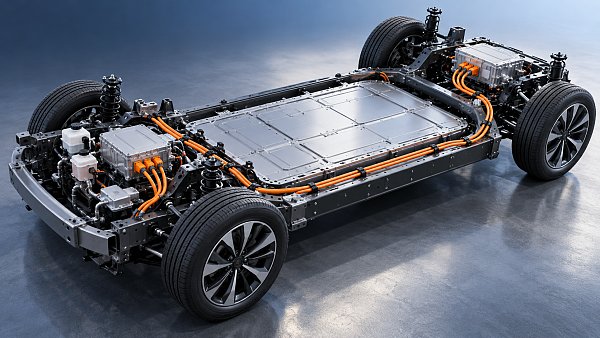
Electrified vehicles may gain additional value because the low-voltage electrical system must coexist with high-voltage distribution, battery thermal management, electric compressors, pumps, valves, sensors, charge-port equipment, and power electronics. These vehicles do not automatically benefit from a zonal architecture, but their added electronic content makes fragmented harness growth more difficult to manage. A zone-based approach can clarify the boundary between local low-voltage loads, sensing interfaces, communication links, and high-voltage harness routing.
By contrast, a low-content vehicle with limited electronic functions and stable legacy ECUs may not justify a full zonal redesign. Its harness may already be optimized around conventional body control modules and CAN or LIN subnets. In that situation, the additional cost of zonal controllers, Ethernet components, software integration, validation, and new assembly processes can outweigh the wiring saved.
Harness complexity is more than cable length
Vehicle programs sometimes assess the opportunity mainly by estimating copper mass removed. Weight matters, but it is not the only relevant measure. Wiring complexity is also determined by the number of circuits, branch points, connector cavities, seals, terminals, clips, protection components, routing constraints, and variant-specific harness versions.
A zonal architecture can reduce complexity when it removes long individual circuits and replaces them with short local branches plus shared communication paths. This may simplify routing through constrained areas and reduce the number of connectors passing between vehicle sections. It can also reduce the need for a central harness to accommodate every possible trim-level feature.
However, a new architecture can simply move complexity if the zone controller is not designed carefully. A densely populated zonal ECU may require a large connector system, substantial local power distribution, environmental sealing, heat management, and service access. A large multi-cavity connector at the zone controller may be preferable to many scattered connectors, but it is still a critical component with mechanical, sealing, and manufacturing requirements.
The correct comparison is therefore between complete harness systems, not between a single Ethernet cable and a bundle of conventional wires. The assessment should include:
- total wire length and conductor cross-section by voltage class;
- number of long cross-car circuits eliminated;
- connector count, terminal count, and splice count;
- local branch-harness growth around each zone controller;
- shielding, grounding, and electromagnetic compatibility requirements;
- assembly sequence and accessibility during body-in-white and final assembly;
- variant management across trims, regions, propulsion types, and optional equipment;
- repair strategy after collision, water ingress, or connector damage.
A concept that reduces wire mass but creates difficult-to-access modules or expensive crash repairs may not improve lifecycle value.
Ethernet bandwidth is necessary, but not sufficient
Automotive Ethernet is well suited to zonal backbones because it supports high data rates and can carry consolidated traffic between distributed zones and central computers. Single-pair Ethernet variants are particularly relevant because they are designed for automotive cabling environments. Yet bandwidth selection must follow traffic analysis rather than a general assumption that every zone needs the fastest available link.
A front zone containing multiple cameras, radar-related data paths, high-resolution lighting control, and diagnostics may require substantially different capacity from a rear body zone serving lamps, park sensors, locks, and a tailgate actuator. Network loading must account for normal traffic, peak operating conditions, diagnostic sessions, software updates, time synchronization, and fault states. A link that appears lightly loaded in nominal operation may become constrained during startup, calibration, update, or degraded-mode communication.
Latency and determinism also matter. Some functions can tolerate ordinary switched Ethernet behavior, while others require controlled timing, synchronized clocks, traffic prioritization, and bounded latency. Time-Sensitive Networking mechanisms may be relevant where the design needs deterministic transport, but their introduction also increases system design and verification work. The important question is not whether TSN is available; it is whether a function’s timing and safety allocation actually require it.
Legacy interfaces remain common at the zone edge. LIN may still be appropriate for simple local actuators and switches. CAN or CAN FD may remain necessary for established subsystems, diagnostics, or suppliers that do not expose native Ethernet interfaces. A zonal controller should not be judged negatively merely because it retains local legacy buses. The critical issue is whether these interfaces are used deliberately at the edge, rather than preserving long legacy network trunks that undermine the physical benefits of zonalization.
Power distribution can determine whether the architecture is viable
Data consolidation is only one half of the design. The zonal controller must still supply, switch, protect, monitor, or coordinate local electrical loads. As a result, low-voltage power distribution becomes closely coupled with network architecture.
Local electronic fusing or smart power distribution can reduce the number of separate protected feeds that must return to a central body controller or fuse box. It may also allow current sensing, fault reporting, and software-controlled load management close to the load. But this approach changes fault containment. A failure in a zonal power module can affect several local functions at once, so the design must define which loads share protection paths and which must remain electrically independent.
Safety-critical or legally required functions should not be grouped solely for harness convenience. Lighting, braking-related interfaces, steering-related electronics, occupant protection functions, and visibility systems may require different availability and failure-containment treatment. The architecture should align with the vehicle’s functional safety concept under ISO 26262 where applicable, including power supply assumptions, communication faults, controller failure modes, diagnostics, and safe-state behavior.
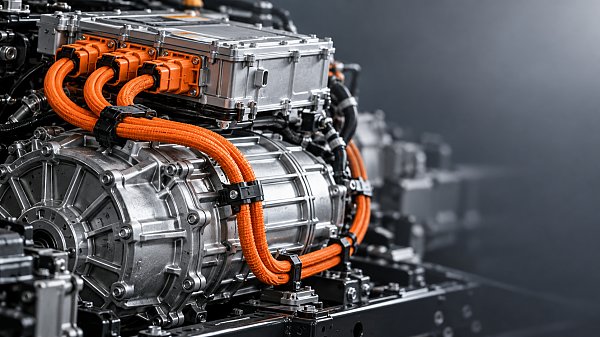
High-voltage routing requires a separate level of caution. A zonal Ethernet architecture may simplify the coordination of local sensing and control, but it does not eliminate the engineering constraints of high-voltage cables: isolation, creepage and clearance, mechanical protection, separation from low-voltage communication lines, service disconnect requirements, and electromagnetic behavior. It is misleading to treat all vehicle wiring as interchangeable harness content.
Where complexity can increase instead of decrease
The most common overstatement is that centralization always means fewer ECUs and less complexity. A zonal system can reduce the number of standalone modules, but the remaining modules become more capable. They may combine switching, gateway functions, diagnostics, cybersecurity controls, power distribution, wake-up logic, local I/O, and software update management. The hardware count may fall while software and integration complexity rise.
Cybersecurity deserves particular attention because zonal controllers sit at important network boundaries. A compromised or malfunctioning zone can expose multiple local devices and potentially provide a path toward central compute resources. Security engineering under ISO/SAE 21434 principles should consider secure boot, authenticated updates, key management, network segmentation, diagnostic access, intrusion detection strategy, and the handling of replacement parts. These requirements affect controller selection, network topology, manufacturing provisioning, and service operations.
Electromagnetic compatibility is another constraint. Ethernet links, switching power stages, electric motors, compressors, pumps, and high-voltage inverters can coexist within tight packaging spaces. Cable type, shielding strategy, connector design, grounding approach, common-mode behavior, and physical routing cannot be decided separately from the zonal placement plan. An architecture that looks clean in a network diagram can become difficult to validate if it forces communication and power hardware into electrically noisy locations without sufficient packaging control.
Thermal and environmental exposure may also limit placement. Front and rear zones can face water, salt spray, vibration, stone impact, and wide temperature cycling. Cabin zones may be easier to protect but can be constrained by packaging, noise requirements, and service access. A controller located near the loads saves wire, but only if its enclosure, connector system, and mounting design can survive the zone’s environment.
A more reliable evaluation method
Before selecting controllers or choosing Ethernet speeds, map every endpoint by physical position, function, data requirement, power requirement, safety classification, and service expectation. This exposes whether a zone is genuinely dense enough to justify aggregation. It also prevents a design team from treating every device as an Ethernet candidate when some should remain simple local I/O or low-speed bus nodes.
Then compare at least two complete architecture models: the current or baseline distributed design and the proposed zonal design. The comparison should include harness drawings, net lengths, connector families, fuse and power-distribution locations, ECU packaging, gateway paths, diagnostic paths, and fault containment. A block diagram alone cannot reveal whether cross-car wiring has actually been removed.
Particular attention should go to feature variants. A zonal architecture can improve modularity when optional hardware is largely contained within a physical zone. It can become less flexible when every trim change requires a different controller population, connector configuration, or software identity. Hardware commonality is valuable only when unused channels, power capacity, thermal margins, and software configuration remain manageable.
Serviceability should be examined before the architecture is frozen. A damaged door harness may be inexpensive to replace; a damaged sealed zonal controller with integrated power electronics may not be. Diagnostic isolation must also be practical. When many functions share a zone controller, technicians need a clear method to distinguish a network issue, local power fault, controller failure, damaged branch harness, or failed endpoint.
The decision boundary
A zonal automotive Ethernet architecture is most likely to reduce wiring complexity when the vehicle has substantial distributed electrical content, central computing or consolidation plans, physically dense local loads, and a willingness to redesign power distribution and software responsibility alongside the harness. The gain comes from eliminating long, function-specific runs and replacing them with local aggregation plus a controlled backbone.
It is less compelling when Ethernet is added as an overlay to an unchanged ECU layout, when local zones contain few shared functions, when power and safety dependencies cannot be consolidated, or when packaging and service constraints force controllers away from the loads they are intended to serve.
The decisive metric is not the number of Ethernet links installed. It is whether the complete vehicle electrical architecture removes cross-vehicle circuits, simplifies variant handling, preserves fault containment, and remains manufacturable and repairable. If those conditions are not demonstrated in the harness, power, network, and service models together, the design should be treated as a network modernization project rather than a proven wiring-complexity reduction strategy.
Have questions about this sector analysis, or seeking best practices specific to your niche? Drop us a line below and let the senior consultants at GAC assist you.
“We respect your privacy. Your information is strictly confidential.”
Related News
- 00
0000-00
How to compare noise ratings for battery coolant pumps - 00
0000-00
How bright should automotive display systems be in sunlight? - 00
0000-00
How heat pumps improve the efficiency of EV thermal systems - 00
0000-00
Can a smart cockpit platform support multiple displays? - 00
0000-00
How is automotive connector vibration resistance tested?
Weekly Insights
Stay ahead with our curated technology reports delivered every Monday.
Recommended News
 How to compare noise ratings for battery coolant pumpsCompare coolant pump low noise ratings with confidence. Learn how test conditions, hydraulic duty, tonal noise and installation affect your choice.Author:Time:Nov 10, 2026
 How bright should automotive display systems be in sunlight?Automotive Display Systems need more than brightness to stay readable in sunlight. Discover why 1,000 nits is a starting point and how to evaluate glare and heat.Author:Time:Nov 09, 2026
 How heat pumps improve the efficiency of EV thermal systemsEV Thermal Systems use heat pumps to reduce heating energy demand. Explore how they work, where they excel, and what limits efficiency in cold weather.Author:Time:Nov 08, 2026
 Can a smart cockpit platform support multiple displays?Can a smart cockpit platform support multiple displays? Explore key requirements for performance, safety, connectivity, and supplier evaluation.Author:Time:Nov 07, 2026
 How is automotive connector vibration resistance tested?Automotive connector vibration resistance testing reveals hidden contact failures. Explore test profiles, continuity monitoring and pass criteria.Author:Time:Nov 06, 2026
 How heat pumps save energy in automotive cabin climate systemsAutomotive Cabin Climate Systems energy saving starts with smarter heat pump design. Explore real-world efficiency, cold-weather trade-offs, and testing tips.Author:Time:Nov 05, 2026
 Is an EV heat pump worth it for winter driving range?Is a heat pump worth using in a cold-climate EV? Discover how it affects winter range, when it pays off, and what to check before buying.Author:Time:Nov 04, 2026
 When should you use 50-ohm coaxial cable instead of 75-ohm?Coaxial cable 50 ohm or 75 ohm? Learn when to use each, avoid impedance mismatches, and choose the right cable for reliable RF and video performance.Author:Time:Nov 03, 2026
 How to select a high temperature motor harness for an EVChoose the right high temperature motor harness for your EV. Compare thermal limits, current capacity, shielding, routing, and validation evidence.Author:Time:Nov 02, 2026
 How much does electric power steering replacement cost?Electric power steering price typically ranges from $1,000 to $3,000 for major replacements. Discover cost factors, repair options, and tips for comparing quotes.Author:Time:Nov 01, 2026
 How to size an EV A/C compressor for the required cooling capacitySize an EV A/C Compressor with confidence. Explore cooling loads, performance maps and power limits to select the right compressor for your vehicle.Author:Time:Oct 31, 2026
 How to choose the right pitch for an FPC board connectorFPC board connector pitch affects space, assembly and reliability. Learn how to compare options and select the best fit for your design.Author:Time:Oct 30, 2026
 How zonal design affects harness routing in high-voltage EV architecturesExplore high-voltage electrical architecture zonal design and its impact on EV harness routing. Discover key trade-offs in cable length, safety, thermal performance, and service access.Author:Time:Oct 29, 2026
 How tariffs affect costs in global automotive parts supply chainsNavigate tariffs in the global automotive parts trade supply chain. Learn to compare landed costs, manage duty exposure, and uncover smarter sourcing strategies to protect your margins.Author:Time:Oct 28, 2026
 How to assess vendor lock-in in a software-defined vehicle platformAssess Software-Defined Vehicle platform lock-in with practical tests for API portability, data access, update control, and exit costs. Learn how to choose a platform with a proven exit path.Author:Time:Oct 27, 2026
 How ISO 26262 guides functional safety in steer-by-wire systemsExplore steering systems functional safety through ISO 26262. Learn how hazard analysis, fault-tolerant design, and validation build a stronger steer-by-wire safety case.Author:Time:Oct 26, 2026
 How to evaluate a steering angle sensor manufacturer's accuracy claimsEvaluate steering angle sensor manufacturer accuracy claims with practical checks on calibration, latency, and test evidence. Compare suppliers confidently and avoid costly selection mistakes.Author:Time:Oct 25, 2026
 How to diagnose CAN bus faults in a hybrid vehicle control unitDiagnose Hybrid Vehicle Systems control unit CAN bus faults with step-by-step power, wiring, and waveform checks. Find the root cause and avoid unnecessary replacement.Author:Time:Oct 24, 2026
 How does battery cooling pipe diameter affect coolant pressure drop?Battery Cooling Pipe diameter affects coolant pressure drop and pump power. Explore sizing calculations and practical tips to optimize EV battery cooling and compare options with confidence.Author:Time:Oct 23, 2026
 How to assess PPAP readiness of automotive sensor system manufacturersAssess Automotive Sensor Systems manufacturers for PPAP readiness. Learn to verify production evidence, measurement capability, validation, and traceability to reduce sourcing risks.Author:Time:Oct 22, 2026
 What to ask an FPC connector manufacturer about reliability testingChoosing an FPC Connector manufacturer? Learn what to ask about reliability testing, failure limits, and traceable results to reduce design risks and select with confidence.Author:Time:Oct 21, 2026
 How to verify vehicle fitment for an aftermarket AC evaporatorNavigating the evaporator aftermarket? Verify vehicle fitment with VIN data, OE numbers, and physical interface checks. Use this guide to avoid costly mismatches and order confidently.Author:Time:Oct 20, 2026
 How electric compressor speed affects EV battery cooling capacityElectric compressor technology: battery cooling depends on more than RPM. Discover how speed, refrigerant flow, and system limits affect EV cooling capacity and energy efficiency.Author:Time:Oct 19, 2026
 How to verify a variable frequency compressor supplier’s efficiency claimsVerify a variable frequency compressor supplier’s efficiency claims using COP boundaries, matched test conditions, and duty-cycle data. Learn how to choose with confidence.Author:Time:Oct 18, 2026
 How bend radius affects FPC reliability in automotive camera modulesAutomotive FPC applications: camera module reliability starts with bend radius. Learn how stack-up, strain, and validation guide robust designs and help prevent costly failures.Author:Time:Oct 17, 2026
 How to diagnose intermittent loss of electric power steering assistMaster power steering system diagnostics to trace intermittent EPS assist loss. Learn proven checks for voltage, wiring, and fault codes to avoid costly guesswork.Author:Time:Oct 16, 2026
 How to size automotive power modules for electric compressorsSize automotive power modules for electric compressors with confidence. Learn how voltage, phase current, losses, and cooling shape reliable selection—and avoid costly oversizing.Author:Time:Oct 15, 2026
 Why automotive power electronics are shifting to silicon carbideAutomotive Power Electronics are shifting to silicon carbide. Discover how SiC can cut losses, boost EV power density, and reshape cooling, reliability, and system costs.Author:Time:Oct 14, 2026
 How EV adoption shapes the electrically driven compressor marketExplore how EV adoption shapes the electrically driven compressor market, from battery cooling and heat pumps to supplier margins. Discover the drivers of profitable growth.Author:Time:Oct 13, 2026
 How to size a PTC heater for reliable EV cabin heatingPTC Heater sizing for EV cabins: learn how to balance defrost performance, heat-pump integration, airflow, voltage range, and battery power for reliable winter comfort.Author:Time:Oct 12, 2026