Integrated Chassis Control: Key Functions and EV Handling Benefits




Integrated chassis control is moving from a premium feature to a central vehicle architecture topic, especially in electric vehicles. It links steering, braking, suspension, and torque delivery into one coordinated control strategy.
That matters because EVs bring new handling conditions. Battery packs add mass, fast torque changes alter balance, and software-defined driving behavior raises expectations for stability, comfort, and precision.
For anyone tracking automotive components and system trends, integrated chassis control is no longer just a dynamics topic. It also touches steering hardware, high-voltage architecture, sensors, wiring, software, and thermal efficiency.
Why integrated chassis control is gaining strategic weight
Vehicle control used to be divided into separate domains. Brakes, steering, dampers, and powertrain systems were optimized individually, often with limited real-time coordination.
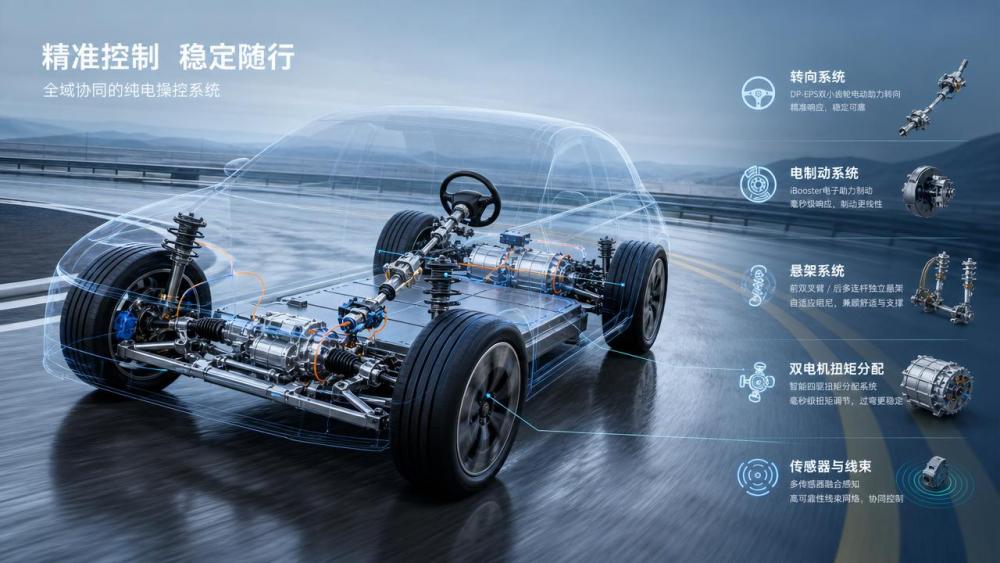
Integrated chassis control changes that model. It combines signals, actuators, and control logic so the vehicle responds as one system rather than several disconnected subsystems.
This shift fits broader industry changes. Electrification, steer-by-wire exploration, EPS upgrades, domain controllers, and lightweight harness design all support more centralized control thinking.
It also aligns with the way automotive intelligence platforms such as GACT analyze the market. Chassis behavior now intersects with wiring harnesses, cockpit electronics, thermal systems, and software-defined vehicle development.
What the system really includes
In practical terms, integrated chassis control is a supervisory layer. It does not replace every subsystem, but it coordinates them around a shared vehicle dynamics target.
The system typically draws data from steering angle sensors, wheel speed sensors, yaw rate sensors, accelerometers, brake pressure inputs, suspension states, and motor control units.
Based on those inputs, it can adjust several outputs at once. The most common control objects include:
- electric power steering assistance and steering response shaping
- brake force distribution and stability intervention timing
- regenerative braking blending with friction braking
- active or semi-active suspension damping strategies
- front and rear axle torque allocation in dual-motor EVs
Simple coordination already improves consistency. More advanced versions target predictive control, using road estimation, driver intent, and even navigation context to adjust vehicle behavior before a limit is reached.
Key functions that affect EV handling
The handling benefits of integrated chassis control are easiest to understand through its functions. Each one contributes to a more stable and more natural driving response.
Coordinated torque and braking control
EV motors react quickly, which creates both opportunity and risk. Rapid torque can sharpen corner exit performance, but it can also disturb grip if not matched with brake and stability logic.
Integrated chassis control smooths that interaction. It manages regeneration, wheel slip, and brake blending to keep deceleration stable and steering feel predictable.
Steering precision and response tuning
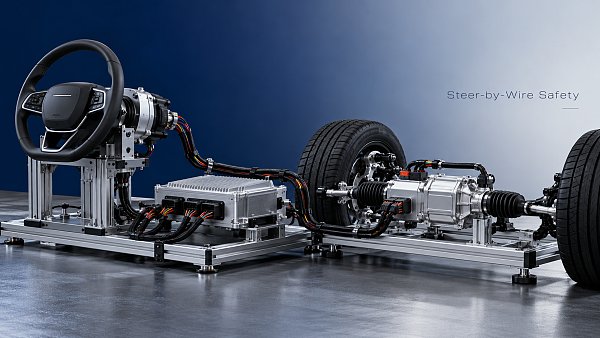
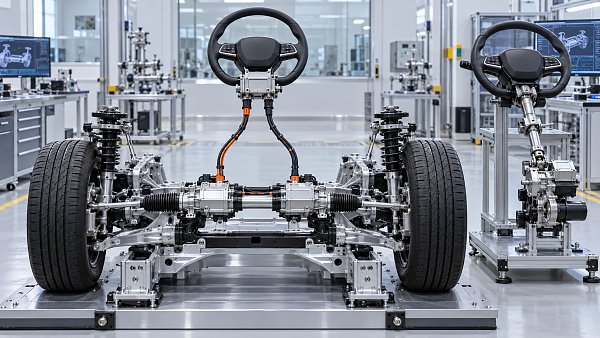
With EPS and future steer-by-wire systems, steering characteristics become increasingly software-defined. That opens room for better precision, but also demands careful calibration.
A coordinated controller can reduce mismatch between steering input and body motion. The result is cleaner turn-in, better lane change stability, and less artificial steering behavior.
Body motion and ride comfort management
Heavy battery packs can lower the center of gravity, yet they also increase total vehicle mass. That creates different damping and pitch control demands during braking, cornering, and rough-road events.
When suspension control works with braking and steering inputs, the vehicle can feel calmer. Occupants notice less head toss, fewer abrupt weight transfers, and more composed body movement.
Where the benefits show up most clearly
Not every vehicle uses integrated chassis control in the same way. The value depends on architecture, target market, and the intended driving character.
From an application perspective, the strongest benefit often appears in transition moments. Hard braking into a curve, sudden lane changes, and split-friction roads reveal the value of coordinated control.
The hidden hardware behind software-defined handling
Integrated chassis control may sound like a software topic, but its effectiveness depends on component quality and system integration discipline.
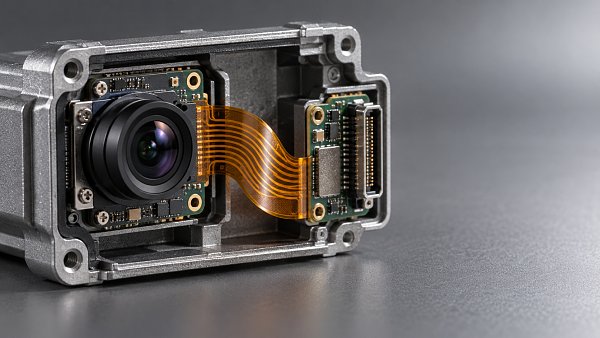
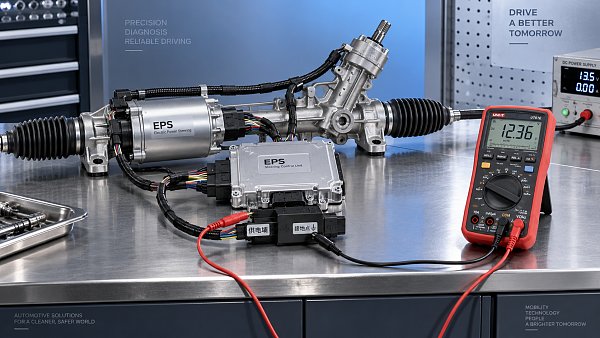
Steering columns, EPS units, sensors, communication cables, FPC solutions, and high-voltage harness layouts all influence response speed and control reliability.
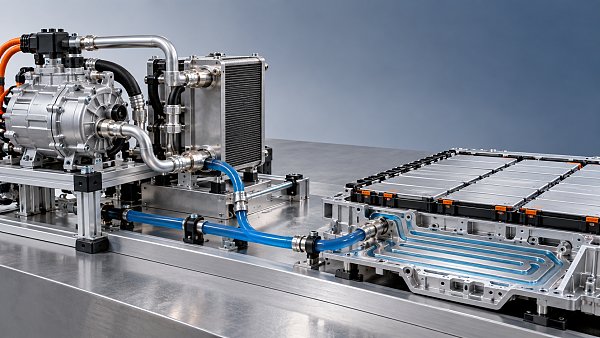
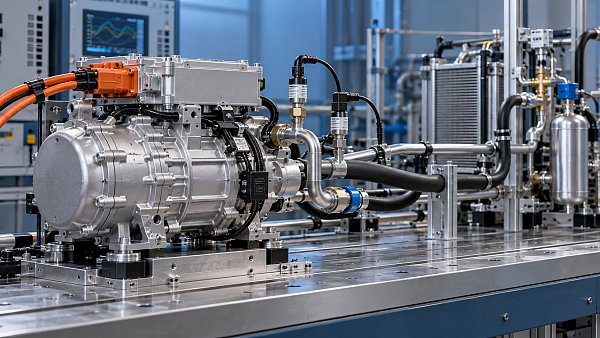
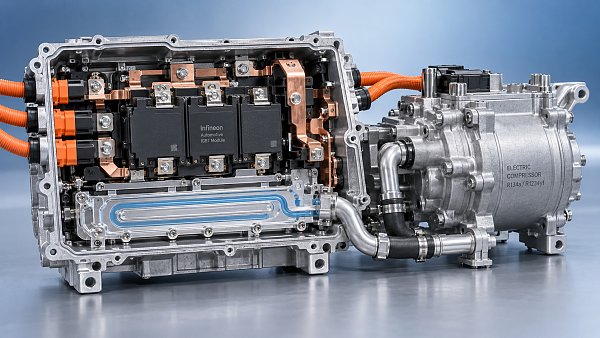
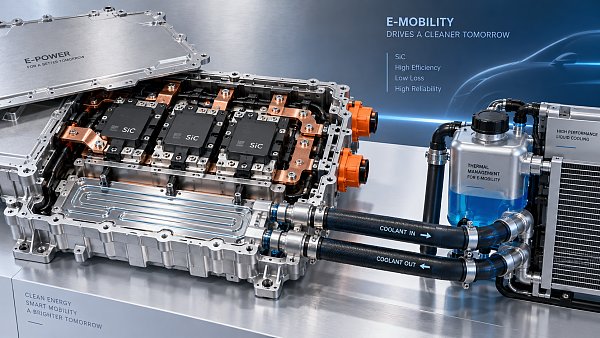
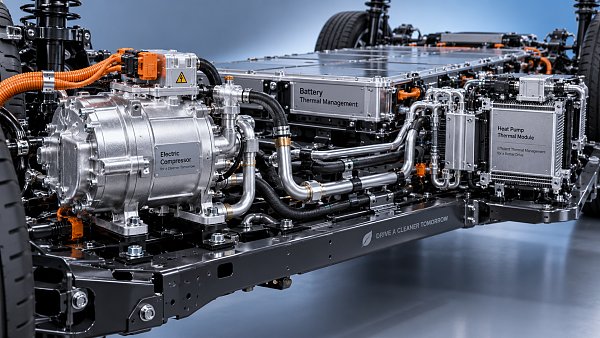
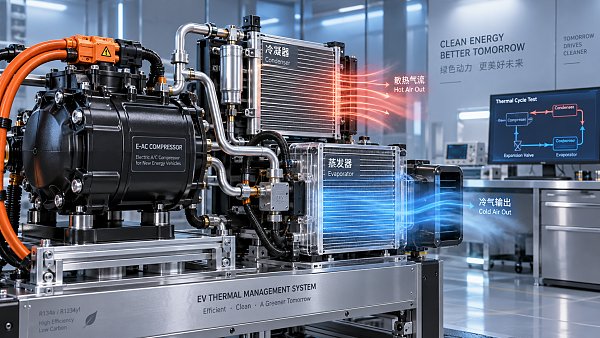
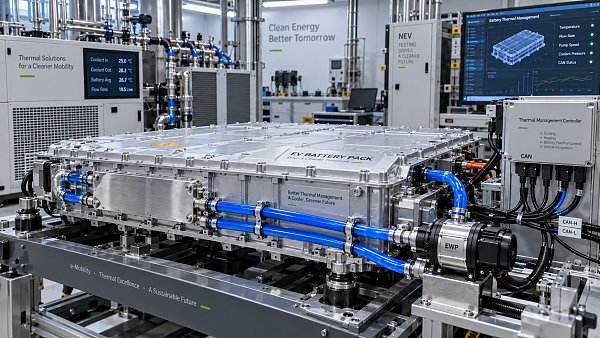
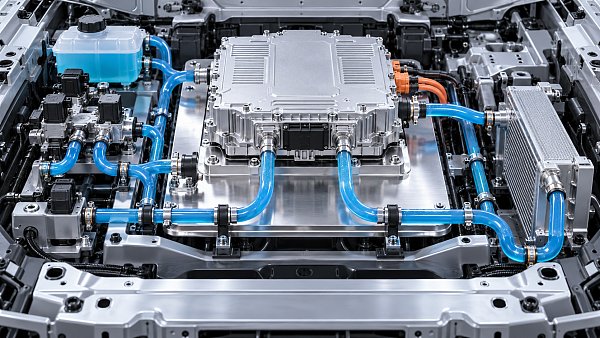
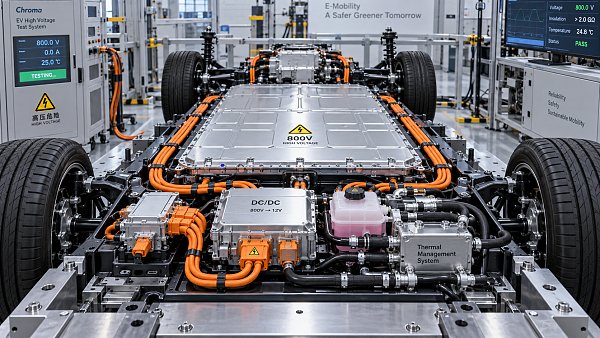
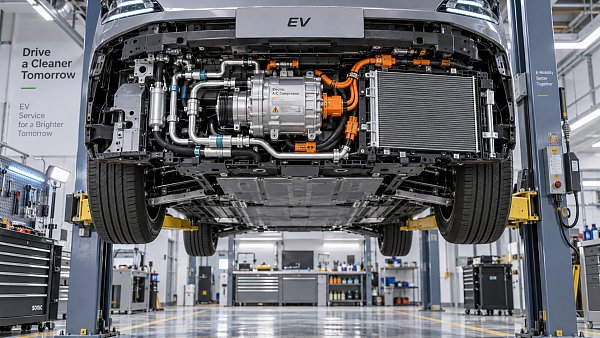
Thermal management also matters more than it first appears. Brake-by-wire modules, electric compressors, battery cooling loops, and power electronics temperatures can affect control consistency during demanding use.
That is why a broader component view is useful. Chassis control decisions are increasingly linked with thermal systems, electrical architecture, and cockpit-domain integration rather than treated as an isolated subsystem.
What to examine when comparing solutions
In business evaluation, integrated chassis control should be judged beyond headline claims. The real question is how well the control stack performs under diverse operating conditions.
- Check control latency across steering, braking, and motor systems rather than reviewing each subsystem alone.
- Look at calibration maturity for wet roads, uneven surfaces, emergency maneuvers, and mixed-load conditions.
- Assess whether the electrical architecture supports robust communication and fail-operational behavior.
- Review how regenerative braking integration affects pedal feel and stopping consistency.
- Consider supply chain depth for sensors, EPS, harnesses, controllers, and thermal support components.
It is also worth tracking standards interpretation and regional market direction. China, Europe, the United States, Japan, and South Korea are not moving at identical speeds in chassis electronics adoption.
Why this topic matters beyond handling
Integrated chassis control improves cornering precision and ride quality, but its wider significance lies in vehicle intelligence. It becomes a foundation for advanced driver assistance and future automated driving layers.
A vehicle that can accurately coordinate motion is easier to stabilize, easier to personalize, and easier to update through software. That gives it long-term platform value.
For industry analysis, this makes integrated chassis control a cross-domain signal. It points toward demand for better steering systems, smarter control units, cleaner data pathways, and more integrated component sourcing strategies.
A practical next step for evaluation
A useful way to assess integrated chassis control is to map it against three layers: vehicle behavior goals, enabling components, and validation scenarios.
That approach makes it easier to compare platforms, follow supplier direction, and spot where handling gains depend on deeper hardware or architectural changes.
As EV development becomes more software-led, integrated chassis control deserves attention not only as a feature, but as a system capability. The most reliable conclusions come from linking control logic with steering, wiring, thermal, and powertrain evidence across real use cases.
Related News
- 00
0000-00
How ISO 26262 guides functional safety in steer-by-wire systems - 00
0000-00
How to evaluate a steering angle sensor manufacturer's accuracy claims - 00
0000-00
How to diagnose CAN bus faults in a hybrid vehicle control unit - 00
0000-00
How does battery cooling pipe diameter affect coolant pressure drop? - 00
0000-00
How to assess PPAP readiness of automotive sensor system manufacturers
Weekly Insights
Stay ahead with our curated technology reports delivered every Monday.
Recommended News
 How ISO 26262 guides functional safety in steer-by-wire systemsExplore steering systems functional safety through ISO 26262. Learn how hazard analysis, fault-tolerant design, and validation build a stronger steer-by-wire safety case.Author:Time:Oct 26, 2026
 How to evaluate a steering angle sensor manufacturer's accuracy claimsEvaluate steering angle sensor manufacturer accuracy claims with practical checks on calibration, latency, and test evidence. Compare suppliers confidently and avoid costly selection mistakes.Author:Time:Oct 25, 2026
 How to diagnose CAN bus faults in a hybrid vehicle control unitDiagnose Hybrid Vehicle Systems control unit CAN bus faults with step-by-step power, wiring, and waveform checks. Find the root cause and avoid unnecessary replacement.Author:Time:Oct 24, 2026
 How does battery cooling pipe diameter affect coolant pressure drop?Battery Cooling Pipe diameter affects coolant pressure drop and pump power. Explore sizing calculations and practical tips to optimize EV battery cooling and compare options with confidence.Author:Time:Oct 23, 2026
 How to assess PPAP readiness of automotive sensor system manufacturersAssess Automotive Sensor Systems manufacturers for PPAP readiness. Learn to verify production evidence, measurement capability, validation, and traceability to reduce sourcing risks.Author:Time:Oct 22, 2026
 What to ask an FPC connector manufacturer about reliability testingChoosing an FPC Connector manufacturer? Learn what to ask about reliability testing, failure limits, and traceable results to reduce design risks and select with confidence.Author:Time:Oct 21, 2026
 How to verify vehicle fitment for an aftermarket AC evaporatorNavigating the evaporator aftermarket? Verify vehicle fitment with VIN data, OE numbers, and physical interface checks. Use this guide to avoid costly mismatches and order confidently.Author:Time:Oct 20, 2026
 How electric compressor speed affects EV battery cooling capacityElectric compressor technology: battery cooling depends on more than RPM. Discover how speed, refrigerant flow, and system limits affect EV cooling capacity and energy efficiency.Author:Time:Oct 19, 2026
 How to verify a variable frequency compressor supplier’s efficiency claimsVerify a variable frequency compressor supplier’s efficiency claims using COP boundaries, matched test conditions, and duty-cycle data. Learn how to choose with confidence.Author:Time:Oct 18, 2026
 How bend radius affects FPC reliability in automotive camera modulesAutomotive FPC applications: camera module reliability starts with bend radius. Learn how stack-up, strain, and validation guide robust designs and help prevent costly failures.Author:Time:Oct 17, 2026
 How to diagnose intermittent loss of electric power steering assistMaster power steering system diagnostics to trace intermittent EPS assist loss. Learn proven checks for voltage, wiring, and fault codes to avoid costly guesswork.Author:Time:Oct 16, 2026
 How to size automotive power modules for electric compressorsSize automotive power modules for electric compressors with confidence. Learn how voltage, phase current, losses, and cooling shape reliable selection—and avoid costly oversizing.Author:Time:Oct 15, 2026
 Why automotive power electronics are shifting to silicon carbideAutomotive Power Electronics are shifting to silicon carbide. Discover how SiC can cut losses, boost EV power density, and reshape cooling, reliability, and system costs.Author:Time:Oct 14, 2026
 How EV adoption shapes the electrically driven compressor marketExplore how EV adoption shapes the electrically driven compressor market, from battery cooling and heat pumps to supplier margins. Discover the drivers of profitable growth.Author:Time:Oct 13, 2026
 How to size a PTC heater for reliable EV cabin heatingPTC Heater sizing for EV cabins: learn how to balance defrost performance, heat-pump integration, airflow, voltage range, and battery power for reliable winter comfort.Author:Time:Oct 12, 2026
 What determines the cooling output of electric automotive AC compressors?Automotive air conditioning compressors electric systems: explore how speed, voltage, refrigerant, controls, and heat exchangers shape EV cooling capacity and efficiency.Author:Time:Oct 11, 2026
 What makes a touchscreen media head unit responsive enough for daily use?Touchscreen media head unit performance explained: discover what delivers fast starts, smooth maps, reliable phone pairing, and responsive daily driving.Author:Time:Oct 10, 2026
 How Does a Battery Management System Communicate Cooling Demand?How does a battery management system communicate cooling demand? Explore CAN signals, thermal priorities, fault handling, and EV cooling control strategies.Author:Time:Oct 20, 2026
 Can a Domain Controller Share a Cooling Loop with Other Electronics?Can a domain controller share a cooling loop with other electronics? Explore thermal zoning, flow control, safety priorities, and reliable vehicle electronics cooling strategies.Author:Time:Oct 19, 2026
 What Causes Domain Controller Overheating During Summer Testing?What causes domain controller overheating in summer testing? Explore heat load, airflow, installation, software factors, and practical fixes.Author:Time:Oct 18, 2026
 Is a Head-Up Display Hard to Integrate with Different Windshields?Is a head-up display difficult to integrate with different windshields? Discover how glass geometry, coatings, and calibration affect HUD clarity, cost, and production readiness.Author:Time:Oct 17, 2026
 What Should Be Checked Before Selecting an Automotive Head Unit?What should be checked before selecting an automotive head unit? Explore compatibility, performance, cybersecurity, compliance, and supplier support.Author:Time:Oct 16, 2026
 Is Steer-by-Wire More Expensive Than an EPS Steering System?Is steer-by-wire more expensive than an EPS steering system? Explore the true costs, safety demands, software value, and when SbW justifies its premium.Author:Time:Oct 15, 2026
 Which Automotive Electronics Need Validation for 800V Platforms?What automotive electronics should be validated for 800V platforms? Explore critical checks for harnesses, power electronics, thermal systems, safety, and EMC.Author:Time:Oct 14, 2026
 How Do Automotive Compressor Export Requirements Vary by Market?How do automotive compressor export requirements vary by market? Explore key compliance rules for refrigerants, EV safety, OEM approvals, labeling, and customs.Author:Time:Oct 13, 2026
 What Documents Are Needed to Export Automotive Thermal Components?What documents are needed to export automotive thermal components? Explore customs, compliance, technical records, and shipping tips to prevent costly delays.Author:Time:Oct 12, 2026
 How Often Should an EV Air Conditioning Compressor Be Inspected?How often should an EV air conditioning compressor be inspected? Discover recommended service intervals, warning signs, and expert care tips to protect cooling performance and EV reliability.Author:Time:Oct 11, 2026
 How resolution and refresh rate affect vehicle dashboard displaysCompare resolutions and refresh rates of vehicle dashboard displays to optimize readability, motion, latency, and cockpit performance. Explore the right specs for every vehicle display.Author:Time:Oct 20, 2026
 How to size power solutions for automotive head-up display systemsHeads-up display systems power solutions: learn how to size automotive HUD power architectures for startup, brightness, thermal limits, EMC, protection, and reliable vehicle operation.Author:Time:Oct 19, 2026
 How does a head-up display work in a high-performance car?Hoe werkt een head-up display in een high-performance auto en welke informatie toont het? Discover the tech, safety alerts, and performance data that sharpen every drive.Author:Time:Oct 18, 2026