Autonomous Driving Data Risks to Watch in 2026




As autonomous systems scale across the automotive value chain, autonomous driving data is emerging as a critical asset—and a growing source of strategic risk. In 2026, business evaluators must look beyond data volume to assess security, compliance, latency, interoperability, and supplier resilience. Understanding these risks is essential for judging technology readiness, investment value, and long-term competitiveness in the evolving mobility ecosystem.
For procurement teams, investment reviewers, and strategic sourcing leaders, the issue is no longer whether vehicles can generate more data. The real question is whether the surrounding hardware, software, and supplier network can manage that data safely, in real time, and across a lifecycle that may last 8 to 15 years.
This matters directly to the component domains tracked by GACT, especially wiring harnesses, steer-by-wire evolution, smart cabin electronics, and NEV thermal management systems. In each of these areas, autonomous driving data affects not only intelligence performance, but also vehicle reliability, diagnostic traceability, energy efficiency, and commercial risk exposure.
Why autonomous driving data risk becomes a board-level issue in 2026

By 2026, many vehicle programs will move beyond pilot fleets into scaled deployment across multiple trims, regions, and software release cycles. That shift increases data complexity sharply. A single high-level driver assistance architecture may process inputs from 8 to 20 sensors, several domain controllers, and cloud-linked update channels within milliseconds.
For business evaluators, autonomous driving data should be treated as an operational dependency rather than a technical byproduct. If data pipelines fail, the consequences can include delayed homologation, reduced feature availability, supplier disputes, and higher recall exposure. In a competitive sourcing environment, even a 3 to 6 month integration delay can change platform economics.
Data volume is not the main problem
Many assessments still focus on storage scale or sensor count. That is too narrow. The bigger concern is whether the data remains trustworthy across collection, transmission, processing, retention, and audit stages. Weakness in any one stage can undermine the business case for the entire program.
Five practical dimensions to review
- Security of in-vehicle and cloud-linked data paths
- Latency thresholds for safety-relevant decision loops, often below 50 milliseconds
- Regulatory compliance across 2 or more operating regions
- Interoperability between ECUs, domain controllers, IVI, and backend systems
- Supplier resilience over software and hardware refresh cycles of 24 to 60 months
The table below frames how business evaluators can distinguish routine data management issues from strategic autonomous driving data risks that may affect sourcing, valuation, or program continuity.
The key conclusion is simple: autonomous driving data risk often appears first as an engineering issue, but it usually ends as a commercial issue. That is why evaluation frameworks must connect data architecture to supply chain resilience and launch feasibility.
The 6 autonomous driving data risks business evaluators should watch
A robust 2026 review should examine at least 6 risk categories. Each one can influence component sourcing, software compatibility, validation cost, and long-term vehicle support. In integrated automotive systems, these risks rarely stay isolated.
1. Data security gaps across high-bandwidth vehicle networks
Autonomous driving data travels through gateways, domain controllers, telematics units, storage devices, and in some cases IVI-linked interfaces. As bandwidth rises, attack surfaces increase. A harness or connector strategy designed for power delivery alone may not fully address shielding, redundancy, or secure data transport under high electromagnetic load.
For evaluators, this means reviewing not only software encryption but also hardware architecture. Questions should cover signal integrity, fail-operational design, network segmentation, and how quickly vulnerabilities can be patched within a 30 to 90 day response window.
2. Latency and synchronization failures in safety-critical loops
In higher-level automated functions, decisions may depend on tightly synchronized sensor streams. If timestamps drift or processing queues build up, even a 20 to 40 millisecond inconsistency can reduce object fusion quality. That is especially relevant where steering response, braking logic, and perception fusion must align under edge-case conditions.
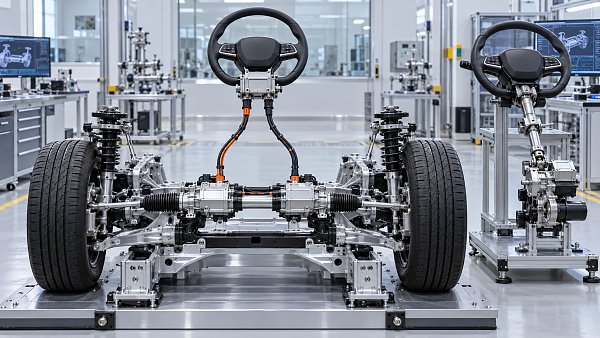
Steer-by-wire development makes this risk more important. Data timing is no longer just a perception issue; it becomes a chassis confidence issue. Business reviewers should ask whether the supplier can prove deterministic communication under thermal load, voltage fluctuation, and partial component degradation.
3. Compliance fragmentation across jurisdictions
Autonomous driving data may be collected in one market, processed in another, and used to train or validate systems in a third. That raises questions around storage location, cross-border transfer, driver privacy, and event logging. Requirements are not uniform, and compliance assumptions valid in Region A may fail in Region B.
For platform programs targeting 2 to 5 major markets, fragmented compliance can create duplicated engineering work and longer audit cycles. A practical review should check whether the supplier supports configurable retention rules, data minimization, and traceable access control records.
4. Interoperability breakdown between component domains
Autonomous driving data does not stay within the AD stack. It touches IVI displays, diagnostic tools, cloud analytics, thermal control strategies, and wiring backbone design. If data models differ across suppliers, teams may spend 6 to 12 extra weeks normalizing logs, event formats, or fault codes.
This is where GACT’s component focus becomes commercially relevant. Wiring harness architecture affects data reliability. Smart cabin electronics affect interface consistency. Thermal systems affect compute stability. These are not separate procurement silos when autonomous driving data must flow end to end.
5. Thermal stress on compute and data retention reliability
High-performance controllers generate substantial heat, especially during perception training, edge inference, and extended recording. If thermal management is undersized, the system may throttle performance, increase packet loss, or shorten storage component life. Typical design reviews should consider operating bands such as -30°C to 85°C, depending on installation zone and duty cycle.
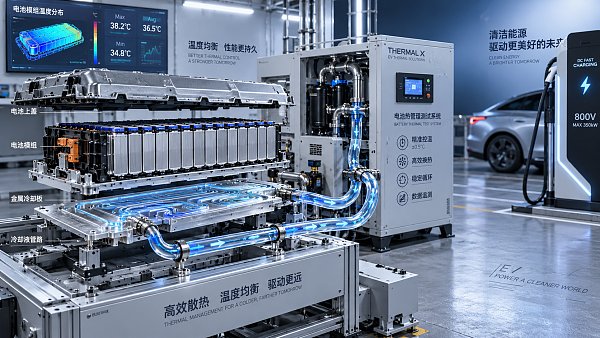
For NEV platforms, thermal management also affects driving range and power allocation. A poorly balanced thermal architecture can force tradeoffs between cabin comfort, battery conditioning, and autonomous compute stability. That turns autonomous driving data reliability into an energy management question as well.
6. Supplier concentration and lifecycle support risk
Some sourcing strategies still depend on one software stack, one storage format, or one domain controller ecosystem. That may simplify early integration, but it raises concentration risk. If a supplier changes roadmap priorities, misses software maintenance targets, or struggles with semiconductor allocation, data continuity can become fragile.
Business evaluators should examine support commitments over at least 3 layers: hardware revisions, middleware updates, and data compatibility across OTA generations. A system that performs well today but cannot preserve backward traceability after 24 months creates hidden liability.
How to evaluate autonomous driving data readiness across the supply chain
A practical evaluation model should connect technical evidence with sourcing decisions. In many cases, a 4-part review process is more useful than a generic vendor presentation because it reveals whether autonomous driving data controls are embedded in real delivery capability.
A four-step due diligence framework
- Map the full data path from sensor capture to storage, cloud exchange, and diagnostic retrieval.
- Test performance under stress conditions such as heat, vibration, bandwidth spikes, and partial network failure.
- Review compliance workflows for access control, retention, export handling, and software update governance.
- Validate supplier continuity, including toolchain support, replacement components, and version compatibility.
The following checklist helps business teams compare suppliers using criteria that matter in real vehicle programs, not just in controlled demonstrations.
The strongest suppliers are usually the ones that can connect these dimensions with evidence from validation, service processes, and cross-domain engineering coordination. That matters more than headline claims about sensor count or AI capability.
Where component intelligence and thermal strategy intersect
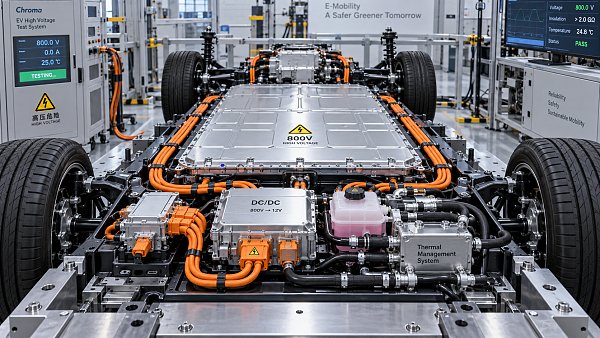
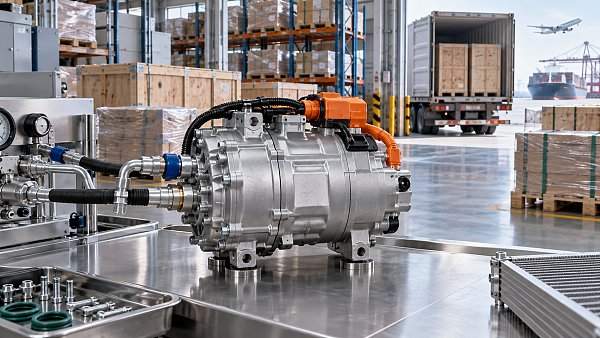
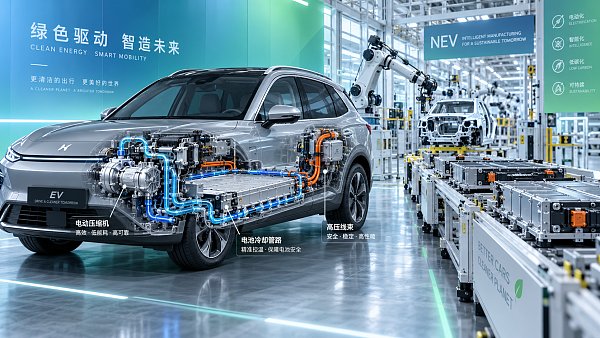
In 2026, autonomous driving data resilience will increasingly depend on “invisible” component decisions. High-voltage harness routing, connector shielding, electric compressor efficiency, and multi-way thermal valve response can all influence controller stability and communication consistency. These factors are often underestimated in early commercial assessments.
For example, a domain controller may meet lab benchmarks, yet underperform in vehicle if cooling distribution is uneven or if harness architecture introduces avoidable signal noise. This is why B2B evaluators should review component ecosystems, not single modules in isolation.
Common mistakes in autonomous driving data assessment
Several recurring mistakes weaken sourcing decisions. Most are not caused by lack of technical depth, but by evaluating the data stack too narrowly or too late in the program timeline.
Mistake 1: treating data as a software-only issue
In reality, autonomous driving data reliability depends on electromechanical infrastructure. Harnesses, steering feedback channels, cabin computing interfaces, and thermal control hardware shape how data is carried, protected, and sustained. Ignoring physical architecture can distort total risk scoring.
Mistake 2: overvaluing pilot performance
A pilot fleet of 50 vehicles does not prove readiness for 50,000 units. Scaling introduces version control pressure, regional compliance variation, field repair complexity, and larger OTA dependency. Evaluators should request evidence from multi-batch validation and service planning, not just prototype metrics.
Mistake 3: missing post-sale data obligations
Autonomous driving data remains relevant after SOP. Diagnostic retrieval, software patching, incident reconstruction, and warranty analysis all rely on stable data access. If post-sale responsibilities are unclear, the apparent cost advantage at sourcing stage may disappear within 12 to 24 months.
Quick red flags for evaluators
- No unified data ownership matrix across OEM, Tier 1, and cloud partner
- No stress-tested thermal plan for compute-intensive driving modes
- No evidence of backward compatibility after software iteration
- No documented fallback logic for degraded data quality conditions
In a market where component integration is becoming the real differentiator, autonomous driving data should be evaluated as a system-of-systems asset. That includes hardware pathways, thermal sustainability, compliance architecture, and supplier execution discipline.
For business evaluators tracking smart cabin electronics, steer-by-wire readiness, high-voltage harness strategy, or NEV thermal management, the most valuable question in 2026 is not how much data a vehicle can generate. It is how reliably that data can support safe functions, scalable deployment, and profitable lifecycle management.
GACT supports that perspective by connecting component intelligence with commercial judgment across the automotive value chain. If you need a sharper view of autonomous driving data risk, supplier readiness, or cross-domain integration priorities, contact us to discuss your evaluation goals, request a tailored intelligence brief, or explore more solutions for smart mobility sourcing.
Related News
- 00
0000-00
How electric compressor speed affects EV battery cooling capacity - 00
0000-00
How to verify a variable frequency compressor supplier’s efficiency claims - 00
0000-00
How bend radius affects FPC reliability in automotive camera modules - 00
0000-00
How to diagnose intermittent loss of electric power steering assist - 00
0000-00
How to size automotive power modules for electric compressors
Weekly Insights
Stay ahead with our curated technology reports delivered every Monday.
Recommended News
 How electric compressor speed affects EV battery cooling capacityElectric compressor technology: battery cooling depends on more than RPM. Discover how speed, refrigerant flow, and system limits affect EV cooling capacity and energy efficiency.Author:Time:Oct 19, 2026
 How to verify a variable frequency compressor supplier’s efficiency claimsVerify a variable frequency compressor supplier’s efficiency claims using COP boundaries, matched test conditions, and duty-cycle data. Learn how to choose with confidence.Author:Time:Oct 18, 2026
 How bend radius affects FPC reliability in automotive camera modulesAutomotive FPC applications: camera module reliability starts with bend radius. Learn how stack-up, strain, and validation guide robust designs and help prevent costly failures.Author:Time:Oct 17, 2026
 How to diagnose intermittent loss of electric power steering assistMaster power steering system diagnostics to trace intermittent EPS assist loss. Learn proven checks for voltage, wiring, and fault codes to avoid costly guesswork.Author:Time:Oct 16, 2026
 How to size automotive power modules for electric compressorsSize automotive power modules for electric compressors with confidence. Learn how voltage, phase current, losses, and cooling shape reliable selection—and avoid costly oversizing.Author:Time:Oct 15, 2026
 Why automotive power electronics are shifting to silicon carbideAutomotive Power Electronics are shifting to silicon carbide. Discover how SiC can cut losses, boost EV power density, and reshape cooling, reliability, and system costs.Author:Time:Oct 14, 2026
 How EV adoption shapes the electrically driven compressor marketExplore how EV adoption shapes the electrically driven compressor market, from battery cooling and heat pumps to supplier margins. Discover the drivers of profitable growth.Author:Time:Oct 13, 2026
 How to size a PTC heater for reliable EV cabin heatingPTC Heater sizing for EV cabins: learn how to balance defrost performance, heat-pump integration, airflow, voltage range, and battery power for reliable winter comfort.Author:Time:Oct 12, 2026
 What determines the cooling output of electric automotive AC compressors?Automotive air conditioning compressors electric systems: explore how speed, voltage, refrigerant, controls, and heat exchangers shape EV cooling capacity and efficiency.Author:Time:Oct 11, 2026
 What makes a touchscreen media head unit responsive enough for daily use?Touchscreen media head unit performance explained: discover what delivers fast starts, smooth maps, reliable phone pairing, and responsive daily driving.Author:Time:Oct 10, 2026
 Can a Domain Controller Share a Cooling Loop with Other Electronics?Can a domain controller share a cooling loop with other electronics? Explore thermal zoning, flow control, safety priorities, and reliable vehicle electronics cooling strategies.Author:Time:Oct 19, 2026
 What Causes Domain Controller Overheating During Summer Testing?What causes domain controller overheating in summer testing? Explore heat load, airflow, installation, software factors, and practical fixes.Author:Time:Oct 18, 2026
 Is a Head-Up Display Hard to Integrate with Different Windshields?Is a head-up display difficult to integrate with different windshields? Discover how glass geometry, coatings, and calibration affect HUD clarity, cost, and production readiness.Author:Time:Oct 17, 2026
 What Should Be Checked Before Selecting an Automotive Head Unit?What should be checked before selecting an automotive head unit? Explore compatibility, performance, cybersecurity, compliance, and supplier support.Author:Time:Oct 16, 2026
 Is Steer-by-Wire More Expensive Than an EPS Steering System?Is steer-by-wire more expensive than an EPS steering system? Explore the true costs, safety demands, software value, and when SbW justifies its premium.Author:Time:Oct 15, 2026
 Which Automotive Electronics Need Validation for 800V Platforms?What automotive electronics should be validated for 800V platforms? Explore critical checks for harnesses, power electronics, thermal systems, safety, and EMC.Author:Time:Oct 14, 2026
 How Do Automotive Compressor Export Requirements Vary by Market?How do automotive compressor export requirements vary by market? Explore key compliance rules for refrigerants, EV safety, OEM approvals, labeling, and customs.Author:Time:Oct 13, 2026
 What Documents Are Needed to Export Automotive Thermal Components?What documents are needed to export automotive thermal components? Explore customs, compliance, technical records, and shipping tips to prevent costly delays.Author:Time:Oct 12, 2026
 How Often Should an EV Air Conditioning Compressor Be Inspected?How often should an EV air conditioning compressor be inspected? Discover recommended service intervals, warning signs, and expert care tips to protect cooling performance and EV reliability.Author:Time:Oct 11, 2026
 How to size power solutions for automotive head-up display systemsHeads-up display systems power solutions: learn how to size automotive HUD power architectures for startup, brightness, thermal limits, EMC, protection, and reliable vehicle operation.Author:Time:Oct 19, 2026
 How does a head-up display work in a high-performance car?Hoe werkt een head-up display in een high-performance auto en welke informatie toont het? Discover the tech, safety alerts, and performance data that sharpen every drive.Author:Time:Oct 18, 2026
 Which trends will shape zonal EV architectures in the next decade?Future trends in zonal EV architectures: explore smarter power distribution, 48V systems, thermal integration, software, and resilient networks shaping next-gen vehicles.Author:Time:Oct 17, 2026
 When does a zonal EV architecture outperform a centralized design?Explore the trade-offs between zonal and centralized EV architectures to identify the best path for harness efficiency, software scalability, safety, and faster EV launches.Author:Time:Oct 16, 2026
 How to compare vendors for zonal EV power architecturesComparing vendors for zonal EV power architectures: assess electrical capability, interface ownership, lifecycle support, and integration risk for smarter sourcing.Author:Time:Oct 15, 2026
 How zonal architectures can improve EV reliability at the system levelHow zonal architectures affect EV reliability: explore fault containment, diagnostics, power resilience, and software strategies for more dependable electric vehicles.Author:Time:Oct 14, 2026
 What is driving growth in the automotive E/E architecture market?Explore what drives the automotive electric electronic systems architecture market, from EV power systems and zonal computing to ADAS, cybersecurity, and software-defined vehicles.Author:Time:Oct 13, 2026
 How to evaluate top-rated vehicle electrical components for reliabilityDiscover how to evaluate top-rated vehicle electrical components for reliability, from connector integrity and thermal margins to validation data and manufacturing control.Author:Time:Oct 12, 2026
 What makes vehicle electrical components reliable over a long service life?Top-rated vehicle electrical components for reliability depend on thermal control, sealing, vibration resistance, and validated manufacturing. Discover how to choose durable parts.Author:Time:Oct 11, 2026
 How battery thermal management solutions prevent fast-charge overheatingBattery thermal management solutions prevent fast-charge overheating with intelligent cooling, valve control, predictive preconditioning, and reliable heat rejection.Author:Time:Oct 09, 2026
 What an automotive market report can reveal about EV demand shiftsAutomotive market report insights reveal EV demand shifts, component opportunities, regional risks, and smarter investment strategies for growth.Author:Time:Oct 08, 2026