
Automotive Wiring Harness Technology Pricing: What Drives Cost in High-Voltage Systems




Why does Automotive Wiring Harness Technology pricing vary so much in high-voltage systems?
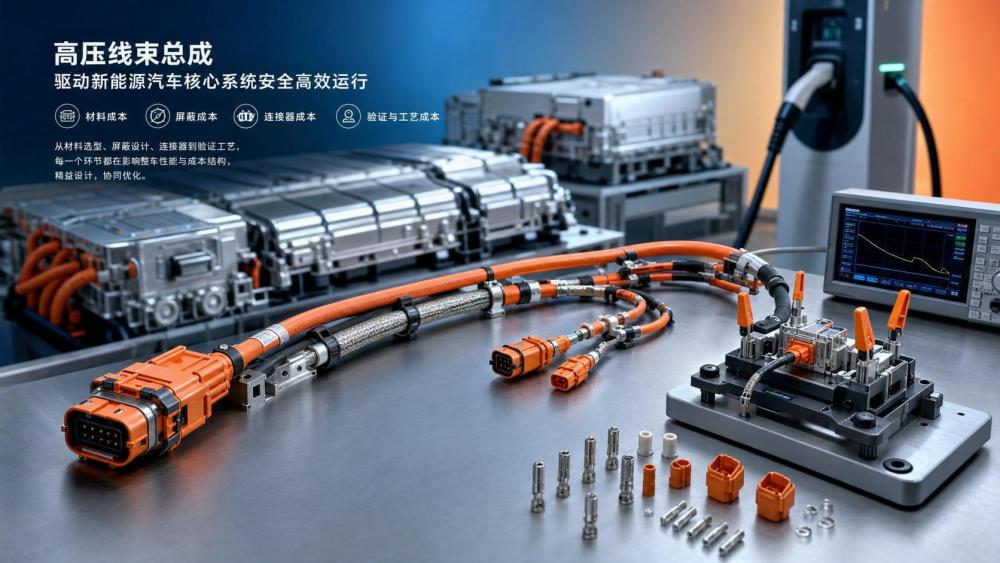
Automotive Wiring Harness Technology pricing often looks inconsistent at first glance. Two harnesses may appear similar, yet their quoted cost can differ sharply.
The reason is simple. In high-voltage systems, price is shaped by engineering risk, safety performance, process control, and long-term reliability, not only by copper weight.
A high-voltage harness must survive heat, vibration, moisture, electromagnetic interference, and demanding insulation requirements. Every added protection layer changes material cost, assembly difficulty, and validation workload.
In practical sourcing, Automotive Wiring Harness Technology pricing is also affected by platform architecture. Battery packs, e-axles, compressors, PTC heaters, and charging units each create different routing and connector demands.
This matters even more as electrification connects wiring decisions with thermal systems, smart cockpit electronics, and power distribution design. That broader system view is why market intelligence platforms like GACT track harness cost alongside NEV thermal and electrical architecture trends.
A better question is not whether a quote is high or low. It is whether the quoted structure matches the application, compliance burden, and expected field performance.
Which cost elements usually matter more than raw materials?
Copper and aluminum are important, but they rarely explain the full gap in Automotive Wiring Harness Technology pricing. More often, the biggest differences come from the details around the conductor.
Conductor selection is one driver. Copper offers stable conductivity and easier termination, while aluminum can reduce weight but may need larger cross-sections and tighter joining control.
Insulation and jacket materials also move the price. High-voltage harnesses may require better heat resistance, flame performance, chemical durability, and flexibility for tight vehicle packaging.
Then comes shielding. Once electromagnetic compatibility becomes critical, braided shielding, foil structures, drain wires, and grounding design can add both material and labor cost.
Connector systems are another major factor. High-voltage interlock, sealing grade, touch-safe design, mating cycles, and terminal plating quality all affect final pricing.
Testing is often underestimated. Partial discharge checks, dielectric withstand tests, continuity inspection, leak resistance, and end-of-line traceability create real cost, especially for safety-critical assemblies.
The table below helps separate the cost layers that usually deserve closer review before comparing quotations.
When a quote looks unusually low, these are usually the first areas worth checking. The savings may be real, but sometimes the missing cost has simply been shifted into future risk.
How do design complexity and vehicle application change the quote?
Not every high-voltage harness serves the same job. An on-board charger link, battery pack internal harness, and e-compressor connection can require very different design priorities.
Routing complexity is one of the clearest price multipliers. More branches, tighter bending radius, packaging constraints, and mixed interfaces increase labor and fixture complexity.
Length also matters, but not only because of material use. Longer harnesses can demand more shielding stability, more clips, more protection sleeves, and more process control.
Another factor is integration with nearby systems. In EV platforms, harness design often interacts with battery cooling, heat pump packaging, inverter layout, and smart cabin electronics.
That is why Automotive Wiring Harness Technology pricing cannot be judged in isolation. A harness that works well in one architecture may become expensive in another because routing, connector orientation, or thermal exposure changes.
More advanced platforms may also ask for lightweight solutions. That can lead to aluminum conductors, hybrid material strategies, or redesigned terminals, each with its own validation burden.
- Battery pack and power distribution harnesses usually carry the highest safety and insulation expectations.
- Motor and inverter links often require stronger shielding and vibration resistance.
- Electric compressor or thermal loop connections may need tighter heat and fluid exposure control.
- Fast-charging related harnesses can raise demands on current density and connector durability.
So when comparing suppliers, the useful benchmark is application equivalence. Without that, Automotive Wiring Harness Technology pricing comparisons quickly become misleading.
What should be checked when one supplier is much cheaper?
A lower quote is not automatically a bad sign. Sometimes it reflects stronger automation, better local sourcing, or more mature tooling.
Still, large gaps in Automotive Wiring Harness Technology pricing deserve a structured review. The main question is whether the lower price comes from efficiency or from reduced design margin.
Start with standards and test scope. If insulation resistance, dielectric testing, salt spray, vibration, or flame requirements are not aligned, the quote is not truly comparable.
Then look at connector source and terminal process. Approved brands, plating thickness, crimp monitoring, and high-voltage interlock design can shift both cost and reliability.
Process capability matters as much as the drawing. Mature harness suppliers usually control crimp force, stripping accuracy, shielding termination, traceability labels, and end-of-line test coverage with less variation.
Another common issue is hidden NRE. Tooling, sample validation, PPAP support, fixture cost, and engineering changes may sit outside the unit price and distort the first quote.
A practical comparison list often includes these checkpoints:
- Are conductor material and cross-section exactly the same?
- Is shielding coverage equivalent, or only visually similar?
- Do both quotes include the same connector family and sealing grade?
- Is validation included, or charged separately later?
- Is the quoted lead time realistic for volume ramp-up?
The better comparison is total delivered cost over program life. Unit price alone rarely captures launch delays, scrap, warranty exposure, or export compliance risk.
Can regional supply chain differences affect Automotive Wiring Harness Technology pricing?
Yes, and often more than expected. Regional differences influence labor content, copper and resin sourcing, connector availability, certification pathways, and logistics exposure.
For example, sourcing from China may provide strong scale in EV harness production and better access to related ecosystems such as battery systems, compressors, and thermal components.
In Europe, stronger pressure around standards, traceability, and localized production may push the quote higher, but can reduce homologation friction for certain vehicle programs.
North American sourcing may benefit from regional delivery support, yet costs can rise when local content, freight stability, or approved connector sources become limiting factors.
This is where cross-market intelligence becomes useful. Platforms that connect supply chain data, export trends, standards interpretation, and component developments help buyers judge whether a quoted price reflects market reality or temporary distortion.
In the automotive components sector, harness sourcing increasingly overlaps with thermal management, smart cockpit power architecture, and electrified chassis systems. Regional capability should be evaluated in that full system context.
How can price be evaluated without ignoring reliability and program risk?
The most useful way to assess Automotive Wiring Harness Technology pricing is to build a value screen before RFQ comparison starts.
That screen should combine technical fit, compliance coverage, launch readiness, and life-cycle cost. Without those filters, the cheapest offer can become the most expensive decision later.
A simple decision table can keep the review grounded.
In many cases, the right decision comes from balancing three things together: technical equivalence, process maturity, and true landed cost.
If the next sourcing round is approaching, start by mapping the exact harness application, expected standards, connector preferences, validation scope, and program timing.
Then compare Automotive Wiring Harness Technology pricing against that baseline, not against headline unit cost alone. That approach usually leads to clearer negotiations, fewer surprises, and better long-term value.
Have questions about this sector analysis, or seeking best practices specific to your niche? Drop us a line below and let the senior consultants at GAC assist you.
“We respect your privacy. Your information is strictly confidential.”
Related News
- 00
0000-00
What does each FAKRA cable color code mean? - 00
0000-00
How to compare noise ratings for battery coolant pumps - 00
0000-00
How bright should automotive display systems be in sunlight? - 00
0000-00
How heat pumps improve the efficiency of EV thermal systems - 00
0000-00
Can a smart cockpit platform support multiple displays?
Weekly Insights
Stay ahead with our curated technology reports delivered every Monday.
Recommended News
 What does each FAKRA cable color code mean?FAKRA cable color code explained: Explore common connector colors, typical uses and key compatibility checks before choosing a replacement.Author:Time:Nov 11, 2026
 How to compare noise ratings for battery coolant pumpsCompare coolant pump low noise ratings with confidence. Learn how test conditions, hydraulic duty, tonal noise and installation affect your choice.Author:Time:Nov 10, 2026
 How bright should automotive display systems be in sunlight?Automotive Display Systems need more than brightness to stay readable in sunlight. Discover why 1,000 nits is a starting point and how to evaluate glare and heat.Author:Time:Nov 09, 2026
 How heat pumps improve the efficiency of EV thermal systemsEV Thermal Systems use heat pumps to reduce heating energy demand. Explore how they work, where they excel, and what limits efficiency in cold weather.Author:Time:Nov 08, 2026
 Can a smart cockpit platform support multiple displays?Can a smart cockpit platform support multiple displays? Explore key requirements for performance, safety, connectivity, and supplier evaluation.Author:Time:Nov 07, 2026
 How is automotive connector vibration resistance tested?Automotive connector vibration resistance testing reveals hidden contact failures. Explore test profiles, continuity monitoring and pass criteria.Author:Time:Nov 06, 2026
 How heat pumps save energy in automotive cabin climate systemsAutomotive Cabin Climate Systems energy saving starts with smarter heat pump design. Explore real-world efficiency, cold-weather trade-offs, and testing tips.Author:Time:Nov 05, 2026
 Is an EV heat pump worth it for winter driving range?Is a heat pump worth using in a cold-climate EV? Discover how it affects winter range, when it pays off, and what to check before buying.Author:Time:Nov 04, 2026
 When should you use 50-ohm coaxial cable instead of 75-ohm?Coaxial cable 50 ohm or 75 ohm? Learn when to use each, avoid impedance mismatches, and choose the right cable for reliable RF and video performance.Author:Time:Nov 03, 2026
 How to select a high temperature motor harness for an EVChoose the right high temperature motor harness for your EV. Compare thermal limits, current capacity, shielding, routing, and validation evidence.Author:Time:Nov 02, 2026
 How much does electric power steering replacement cost?Electric power steering price typically ranges from $1,000 to $3,000 for major replacements. Discover cost factors, repair options, and tips for comparing quotes.Author:Time:Nov 01, 2026
 How to size an EV A/C compressor for the required cooling capacitySize an EV A/C Compressor with confidence. Explore cooling loads, performance maps and power limits to select the right compressor for your vehicle.Author:Time:Oct 31, 2026
 How to choose the right pitch for an FPC board connectorFPC board connector pitch affects space, assembly and reliability. Learn how to compare options and select the best fit for your design.Author:Time:Oct 30, 2026
 How zonal design affects harness routing in high-voltage EV architecturesExplore high-voltage electrical architecture zonal design and its impact on EV harness routing. Discover key trade-offs in cable length, safety, thermal performance, and service access.Author:Time:Oct 29, 2026
 How tariffs affect costs in global automotive parts supply chainsNavigate tariffs in the global automotive parts trade supply chain. Learn to compare landed costs, manage duty exposure, and uncover smarter sourcing strategies to protect your margins.Author:Time:Oct 28, 2026
 How to assess vendor lock-in in a software-defined vehicle platformAssess Software-Defined Vehicle platform lock-in with practical tests for API portability, data access, update control, and exit costs. Learn how to choose a platform with a proven exit path.Author:Time:Oct 27, 2026
 How ISO 26262 guides functional safety in steer-by-wire systemsExplore steering systems functional safety through ISO 26262. Learn how hazard analysis, fault-tolerant design, and validation build a stronger steer-by-wire safety case.Author:Time:Oct 26, 2026
 How to evaluate a steering angle sensor manufacturer's accuracy claimsEvaluate steering angle sensor manufacturer accuracy claims with practical checks on calibration, latency, and test evidence. Compare suppliers confidently and avoid costly selection mistakes.Author:Time:Oct 25, 2026
 How to diagnose CAN bus faults in a hybrid vehicle control unitDiagnose Hybrid Vehicle Systems control unit CAN bus faults with step-by-step power, wiring, and waveform checks. Find the root cause and avoid unnecessary replacement.Author:Time:Oct 24, 2026
 How does battery cooling pipe diameter affect coolant pressure drop?Battery Cooling Pipe diameter affects coolant pressure drop and pump power. Explore sizing calculations and practical tips to optimize EV battery cooling and compare options with confidence.Author:Time:Oct 23, 2026
 How to assess PPAP readiness of automotive sensor system manufacturersAssess Automotive Sensor Systems manufacturers for PPAP readiness. Learn to verify production evidence, measurement capability, validation, and traceability to reduce sourcing risks.Author:Time:Oct 22, 2026
 What to ask an FPC connector manufacturer about reliability testingChoosing an FPC Connector manufacturer? Learn what to ask about reliability testing, failure limits, and traceable results to reduce design risks and select with confidence.Author:Time:Oct 21, 2026
 How to verify vehicle fitment for an aftermarket AC evaporatorNavigating the evaporator aftermarket? Verify vehicle fitment with VIN data, OE numbers, and physical interface checks. Use this guide to avoid costly mismatches and order confidently.Author:Time:Oct 20, 2026
 How electric compressor speed affects EV battery cooling capacityElectric compressor technology: battery cooling depends on more than RPM. Discover how speed, refrigerant flow, and system limits affect EV cooling capacity and energy efficiency.Author:Time:Oct 19, 2026
 How to verify a variable frequency compressor supplier’s efficiency claimsVerify a variable frequency compressor supplier’s efficiency claims using COP boundaries, matched test conditions, and duty-cycle data. Learn how to choose with confidence.Author:Time:Oct 18, 2026
 How bend radius affects FPC reliability in automotive camera modulesAutomotive FPC applications: camera module reliability starts with bend radius. Learn how stack-up, strain, and validation guide robust designs and help prevent costly failures.Author:Time:Oct 17, 2026
 How to diagnose intermittent loss of electric power steering assistMaster power steering system diagnostics to trace intermittent EPS assist loss. Learn proven checks for voltage, wiring, and fault codes to avoid costly guesswork.Author:Time:Oct 16, 2026
 How to size automotive power modules for electric compressorsSize automotive power modules for electric compressors with confidence. Learn how voltage, phase current, losses, and cooling shape reliable selection—and avoid costly oversizing.Author:Time:Oct 15, 2026
 Why automotive power electronics are shifting to silicon carbideAutomotive Power Electronics are shifting to silicon carbide. Discover how SiC can cut losses, boost EV power density, and reshape cooling, reliability, and system costs.Author:Time:Oct 14, 2026
 How EV adoption shapes the electrically driven compressor marketExplore how EV adoption shapes the electrically driven compressor market, from battery cooling and heat pumps to supplier margins. Discover the drivers of profitable growth.Author:Time:Oct 13, 2026





























