How Autonomous Driving Data Is Changing Validation in 2026




In 2026, autonomous driving data is no longer just a testing byproduct—it is becoming the foundation of validation itself. For technical evaluators, the shift means moving beyond limited road trials toward data-driven assessment of safety, edge cases, system redundancy, and thermal-electronic interactions. Understanding how this data reshapes validation is now essential for judging real-world readiness across next-generation vehicle platforms.
Autonomous Driving Data and the New Validation Baseline
Autonomous driving data now defines how advanced vehicle systems are measured, compared, and approved before deployment.

It includes sensor streams, control logs, actuator feedback, thermal states, localization traces, and driver fallback records.
Earlier validation relied heavily on road mileage and scripted proving-ground scenarios.
That approach remains important, but it misses rare combinations of weather, traffic, software timing, and subsystem stress.
In 2026, autonomous driving data closes this gap by capturing millions of real operating moments.
Validation teams can replay, classify, and compare those moments across software versions and hardware architectures.
This shift is especially relevant for platforms where steering, braking, wiring, computing, and thermal control are tightly coupled.
For GACT’s focus areas, data is not only about perception accuracy.
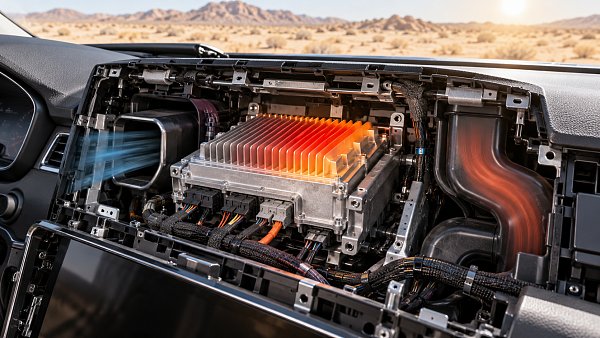
It also reveals signal latency in harnesses, redundancy behavior in steering systems, and temperature impact on domain controllers.
As a result, validation becomes a system discipline rather than a software-only exercise.
Industry Signals Reshaping Validation in 2026
Several industry signals explain why autonomous driving data now sits at the center of validation strategy.
- Higher sensor density creates far more events than manual review can handle.
- Over-the-air software updates require continuous validation after vehicles enter service.
- Steer-by-wire and brake-by-wire demand proof of fault tolerance under complex timing conditions.
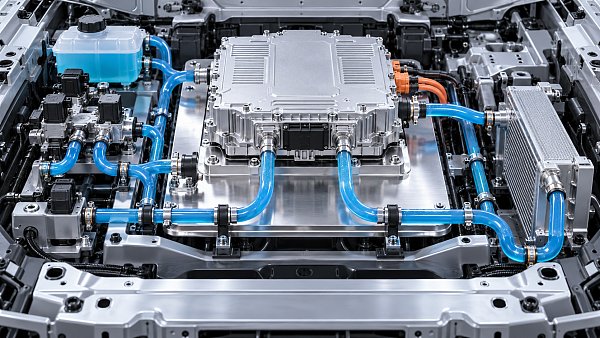
- NEV thermal management directly affects compute performance, battery stability, and cabin electronics.
- Global compliance expectations increasingly require traceable evidence, not just aggregate mileage claims.
These trends are expanding the definition of validation from pass-or-fail testing to operational evidence management.
Autonomous driving data supports that transition because it links observed behavior to root causes.
For example, a lane-keeping anomaly may involve camera occlusion, steering torque lag, and elevated controller temperature.
Without synchronized data, that relationship stays hidden.
Why Autonomous Driving Data Improves Real-World Validation Quality
The strongest benefit is realism.
Autonomous driving data reflects what vehicles actually encounter, not only what engineers expect them to encounter.
That distinction matters when validating mixed traffic, degraded markings, urban glare, or sudden sensor blockage.
The second benefit is repeatability.
Recorded data can be replayed in simulation, hardware-in-the-loop setups, and software regression pipelines.
This helps teams compare behavior before and after calibration changes or controller updates.
The third benefit is traceability.
Every validation claim can be tied to conditions, versions, and subsystem responses.
That is increasingly valuable where safety cases require evidence chains rather than isolated test reports.
Autonomous driving data also strengthens efficiency.
Instead of expanding fleet mileage endlessly, teams can prioritize high-information events and scenario coverage.
This reduces cost while improving defect discovery.
Cross-domain value for core vehicle systems
For wiring harnesses, autonomous driving data exposes bandwidth pressure, signal integrity risks, and electromagnetic interference patterns.
For power steering, it shows whether torque commands, fallback modes, and redundant paths stay stable under stress.
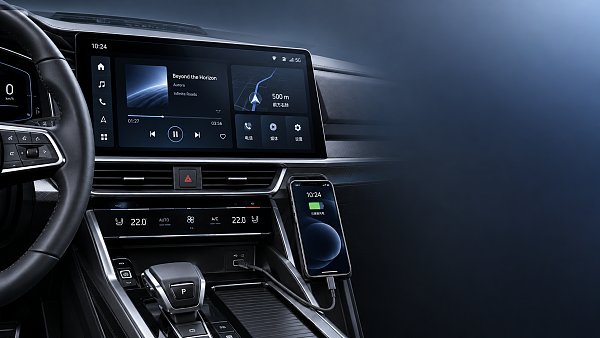
For IVI and smart cabins, it tracks workload competition between infotainment and driving compute resources.
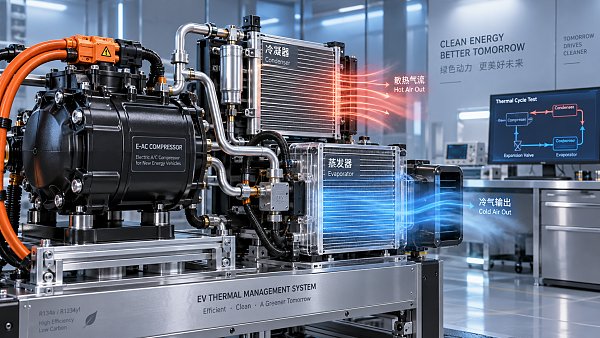
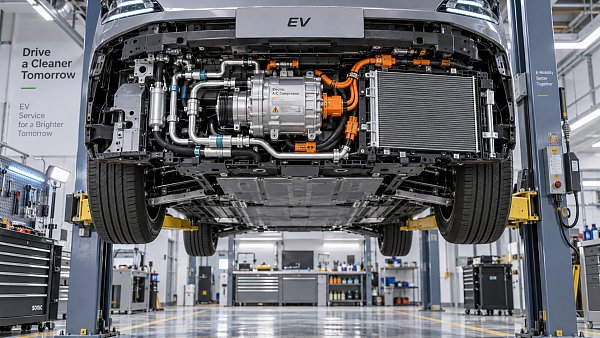
For electric compressors and NEV thermal management, it reveals how heat loads influence sensor accuracy and compute reliability.
Representative Validation Scenarios Using Autonomous Driving Data
The most useful validation programs organize autonomous driving data into scenario families.
This makes evidence easier to search, compare, and expand over time.
Scenario-based structuring improves coverage planning.
It also reveals where missing autonomous driving data creates blind spots in validation confidence.
Practical Challenges in Data-Centered Validation
More data does not automatically mean better validation.
The first challenge is data quality.
If timestamps drift or labels are inconsistent, replay results become unreliable.
The second challenge is representativeness.
A large dataset from limited climates or road types can distort safety conclusions.
The third challenge is subsystem synchronization.
Validation needs aligned visibility into perception, control, thermal states, power flow, and network load.
The fourth challenge is version control.
Autonomous driving data loses value if software builds, map versions, and hardware revisions are not tracked precisely.
Finally, organizations must define what evidence is sufficient for release decisions.
Without clear thresholds, data collection can expand endlessly without improving assurance.
Key review points
- Check event diversity, not only total recorded hours.
- Verify synchronized clocks across sensors and controllers.
- Link each dataset to software, hardware, and calibration versions.
- Include thermal and electrical operating envelopes in scenario reviews.
- Prioritize replayable edge cases with measurable pass criteria.
Implementation Guidance for 2026 Validation Programs
A practical validation framework starts with scenario taxonomy.
Define scenario groups by environment, traffic behavior, visibility, vehicle state, and subsystem stress.
Next, build a shared data model.
Perception events, steering feedback, harness loads, compressor activity, and thermal readings should be traceable together.
Then, connect field data to simulation loops.
This allows autonomous driving data to generate repeatable regression tests after every major update.
It is also important to define risk-ranked metrics.
Examples include intervention frequency, steering command latency, thermal derating duration, and fallback success rate.
Cross-functional review is essential.
Autonomous driving data should be reviewed alongside electromechanical, thermal, and software evidence, not in separate silos.
This integrated method aligns closely with GACT’s emphasis on vehicle neurons and temperature control hubs.
It reflects how modern vehicle performance emerges from connected component behavior.
Operational Next Steps
For 2026 programs, the immediate priority is to treat autonomous driving data as validation infrastructure.
Map current datasets against scenario coverage, subsystem synchronization, and version traceability.
Identify where electrical, steering, IVI, and thermal evidence remains disconnected.
Then create a replay pipeline that turns field observations into repeatable validation assets.
The organizations that do this well will judge readiness faster and with greater confidence.
In that environment, autonomous driving data becomes more than information.
It becomes the proof layer for safe, scalable, and technically credible intelligent mobility.
Related News
- 00
0000-00
How electric compressor speed affects EV battery cooling capacity - 00
0000-00
How to verify a variable frequency compressor supplier’s efficiency claims - 00
0000-00
How bend radius affects FPC reliability in automotive camera modules - 00
0000-00
How to diagnose intermittent loss of electric power steering assist - 00
0000-00
How to size automotive power modules for electric compressors
Weekly Insights
Stay ahead with our curated technology reports delivered every Monday.
Recommended News
 How electric compressor speed affects EV battery cooling capacityElectric compressor technology: battery cooling depends on more than RPM. Discover how speed, refrigerant flow, and system limits affect EV cooling capacity and energy efficiency.Author:Time:Oct 19, 2026
 How to verify a variable frequency compressor supplier’s efficiency claimsVerify a variable frequency compressor supplier’s efficiency claims using COP boundaries, matched test conditions, and duty-cycle data. Learn how to choose with confidence.Author:Time:Oct 18, 2026
 How bend radius affects FPC reliability in automotive camera modulesAutomotive FPC applications: camera module reliability starts with bend radius. Learn how stack-up, strain, and validation guide robust designs and help prevent costly failures.Author:Time:Oct 17, 2026
 How to diagnose intermittent loss of electric power steering assistMaster power steering system diagnostics to trace intermittent EPS assist loss. Learn proven checks for voltage, wiring, and fault codes to avoid costly guesswork.Author:Time:Oct 16, 2026
 How to size automotive power modules for electric compressorsSize automotive power modules for electric compressors with confidence. Learn how voltage, phase current, losses, and cooling shape reliable selection—and avoid costly oversizing.Author:Time:Oct 15, 2026
 Why automotive power electronics are shifting to silicon carbideAutomotive Power Electronics are shifting to silicon carbide. Discover how SiC can cut losses, boost EV power density, and reshape cooling, reliability, and system costs.Author:Time:Oct 14, 2026
 How EV adoption shapes the electrically driven compressor marketExplore how EV adoption shapes the electrically driven compressor market, from battery cooling and heat pumps to supplier margins. Discover the drivers of profitable growth.Author:Time:Oct 13, 2026
 How to size a PTC heater for reliable EV cabin heatingPTC Heater sizing for EV cabins: learn how to balance defrost performance, heat-pump integration, airflow, voltage range, and battery power for reliable winter comfort.Author:Time:Oct 12, 2026
 What determines the cooling output of electric automotive AC compressors?Automotive air conditioning compressors electric systems: explore how speed, voltage, refrigerant, controls, and heat exchangers shape EV cooling capacity and efficiency.Author:Time:Oct 11, 2026
 What makes a touchscreen media head unit responsive enough for daily use?Touchscreen media head unit performance explained: discover what delivers fast starts, smooth maps, reliable phone pairing, and responsive daily driving.Author:Time:Oct 10, 2026
 Can a Domain Controller Share a Cooling Loop with Other Electronics?Can a domain controller share a cooling loop with other electronics? Explore thermal zoning, flow control, safety priorities, and reliable vehicle electronics cooling strategies.Author:Time:Oct 19, 2026
 What Causes Domain Controller Overheating During Summer Testing?What causes domain controller overheating in summer testing? Explore heat load, airflow, installation, software factors, and practical fixes.Author:Time:Oct 18, 2026
 Is a Head-Up Display Hard to Integrate with Different Windshields?Is a head-up display difficult to integrate with different windshields? Discover how glass geometry, coatings, and calibration affect HUD clarity, cost, and production readiness.Author:Time:Oct 17, 2026
 What Should Be Checked Before Selecting an Automotive Head Unit?What should be checked before selecting an automotive head unit? Explore compatibility, performance, cybersecurity, compliance, and supplier support.Author:Time:Oct 16, 2026
 Is Steer-by-Wire More Expensive Than an EPS Steering System?Is steer-by-wire more expensive than an EPS steering system? Explore the true costs, safety demands, software value, and when SbW justifies its premium.Author:Time:Oct 15, 2026
 Which Automotive Electronics Need Validation for 800V Platforms?What automotive electronics should be validated for 800V platforms? Explore critical checks for harnesses, power electronics, thermal systems, safety, and EMC.Author:Time:Oct 14, 2026
 How Do Automotive Compressor Export Requirements Vary by Market?How do automotive compressor export requirements vary by market? Explore key compliance rules for refrigerants, EV safety, OEM approvals, labeling, and customs.Author:Time:Oct 13, 2026
 What Documents Are Needed to Export Automotive Thermal Components?What documents are needed to export automotive thermal components? Explore customs, compliance, technical records, and shipping tips to prevent costly delays.Author:Time:Oct 12, 2026
 How Often Should an EV Air Conditioning Compressor Be Inspected?How often should an EV air conditioning compressor be inspected? Discover recommended service intervals, warning signs, and expert care tips to protect cooling performance and EV reliability.Author:Time:Oct 11, 2026
 How to size power solutions for automotive head-up display systemsHeads-up display systems power solutions: learn how to size automotive HUD power architectures for startup, brightness, thermal limits, EMC, protection, and reliable vehicle operation.Author:Time:Oct 19, 2026
 How does a head-up display work in a high-performance car?Hoe werkt een head-up display in een high-performance auto en welke informatie toont het? Discover the tech, safety alerts, and performance data that sharpen every drive.Author:Time:Oct 18, 2026
 Which trends will shape zonal EV architectures in the next decade?Future trends in zonal EV architectures: explore smarter power distribution, 48V systems, thermal integration, software, and resilient networks shaping next-gen vehicles.Author:Time:Oct 17, 2026
 When does a zonal EV architecture outperform a centralized design?Explore the trade-offs between zonal and centralized EV architectures to identify the best path for harness efficiency, software scalability, safety, and faster EV launches.Author:Time:Oct 16, 2026
 How to compare vendors for zonal EV power architecturesComparing vendors for zonal EV power architectures: assess electrical capability, interface ownership, lifecycle support, and integration risk for smarter sourcing.Author:Time:Oct 15, 2026
 How zonal architectures can improve EV reliability at the system levelHow zonal architectures affect EV reliability: explore fault containment, diagnostics, power resilience, and software strategies for more dependable electric vehicles.Author:Time:Oct 14, 2026
 What is driving growth in the automotive E/E architecture market?Explore what drives the automotive electric electronic systems architecture market, from EV power systems and zonal computing to ADAS, cybersecurity, and software-defined vehicles.Author:Time:Oct 13, 2026
 How to evaluate top-rated vehicle electrical components for reliabilityDiscover how to evaluate top-rated vehicle electrical components for reliability, from connector integrity and thermal margins to validation data and manufacturing control.Author:Time:Oct 12, 2026
 What makes vehicle electrical components reliable over a long service life?Top-rated vehicle electrical components for reliability depend on thermal control, sealing, vibration resistance, and validated manufacturing. Discover how to choose durable parts.Author:Time:Oct 11, 2026
 How battery thermal management solutions prevent fast-charge overheatingBattery thermal management solutions prevent fast-charge overheating with intelligent cooling, valve control, predictive preconditioning, and reliable heat rejection.Author:Time:Oct 09, 2026
 What an automotive market report can reveal about EV demand shiftsAutomotive market report insights reveal EV demand shifts, component opportunities, regional risks, and smarter investment strategies for growth.Author:Time:Oct 08, 2026