Power Steering Systems: EPS vs Hydraulic Trade-Offs




Power Steering Systems: EPS vs Hydraulic Trade-Offs
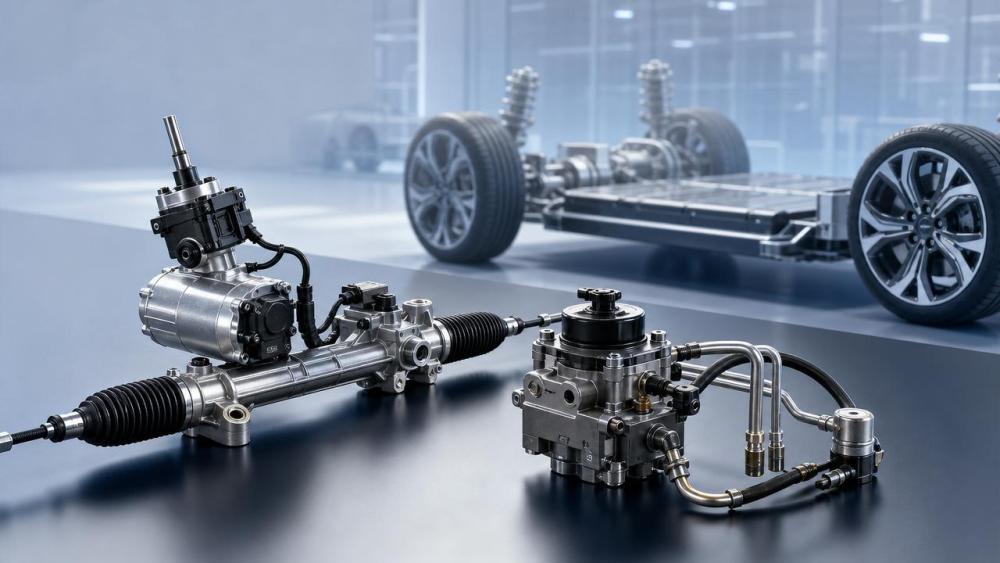
As vehicle platforms move toward electrification, autonomy, and tighter energy management, power steering systems have become a critical evaluation point for chassis performance and system integration.
The choice between EPS and hydraulic steering is no longer only about steering feel. It affects efficiency, packaging, redundancy, maintenance, and steer-by-wire readiness.
For GACT, power steering systems sit between vehicle intent and road response. They connect electromechanical control, chassis dynamics, and future mobility architectures.
Why a Checklist Matters for Power Steering Systems
Hydraulic steering once dominated because it was predictable, robust, and familiar. EPS changed the equation by removing continuous pump load from the engine.
Today, power steering systems must support software tuning, energy reduction, ADAS functions, and tighter space inside electrified vehicle platforms.
A checklist approach prevents isolated decisions. It links steering torque, energy demand, thermal behavior, noise, fail-safe logic, and lifecycle cost.
It also helps compare EPS, electro-hydraulic steering, and conventional hydraulic layouts under the same engineering and business conditions.
Core Checklist for EPS vs Hydraulic Steering Decisions
- Map steering load against vehicle mass, tire size, axle load, and duty cycle before selecting EPS or hydraulic power steering systems.
- Measure energy consumption during parking, low-speed maneuvering, cruising, and ADAS corrections, not only under steady laboratory conditions.
- Check packaging around the rack, column, pump, reservoir, hoses, ECU, motor, cooling airflow, and high-voltage routing.
- Validate steering feel through assist curves, returnability, friction compensation, road feedback, and on-center stability across temperature ranges.
- Review software calibration capability, including lane keeping assist, park assist, torque overlay, diagnostic routines, and cybersecurity protection.
- Assess redundancy requirements for automated driving, including power supply backup, sensor diversity, fault detection, and degraded operating modes.
- Compare maintenance exposure from hydraulic fluid leaks, hose aging, pump wear, motor electronics, connectors, and water ingress risks.
- Audit NVH performance under pump operation, motor whine, gear mesh, hydraulic pulsation, steering column vibration, and cabin resonance.
- Estimate total cost using components, assembly steps, software validation, field service, warranty risk, and platform reuse potential.
- Confirm supplier capability in functional safety, automotive-grade electronics, thermal validation, EMC testing, and global production consistency.
Efficiency and Energy Trade-Offs
EPS usually wins on energy efficiency because assist is generated only when steering input requires it. This advantage supports fuel economy and EV range.
Traditional hydraulic power steering systems use an engine-driven pump. The pump consumes energy even during straight-line driving with minimal steering demand.
Electro-hydraulic systems reduce some losses by using an electric pump. However, they still keep hydraulic fluid, hoses, seals, and pressure management.
For battery electric vehicles, EPS aligns better with centralized energy supervision. It can coordinate with thermal systems, domain controllers, and driving modes.
Steering Feel, Feedback, and Calibration
Hydraulic steering often delivers natural feedback because pressure changes are mechanically linked to tire forces and road texture.
EPS must recreate desirable feedback through sensors, motor control, assist maps, friction compensation, and careful rack design.
Modern power steering systems can tune assist by speed, drive mode, vehicle load, and ADAS request. This flexibility is a major EPS strength.
The risk is artificial feel. Poor calibration may cause sticky on-center behavior, delayed return, excessive isolation, or nervous corrections.
Practical Evaluation Points
- Test parking effort, highway stability, emergency lane change response, and steering return under both dry and wet road conditions.
- Compare torque ripple, motor noise, assist delay, and road feedback using objective data and controlled driver evaluation.
- Correlate steering feel with tire specification, suspension geometry, bushing stiffness, and electronic stability control intervention strategy.
Packaging, Weight, and Platform Integration
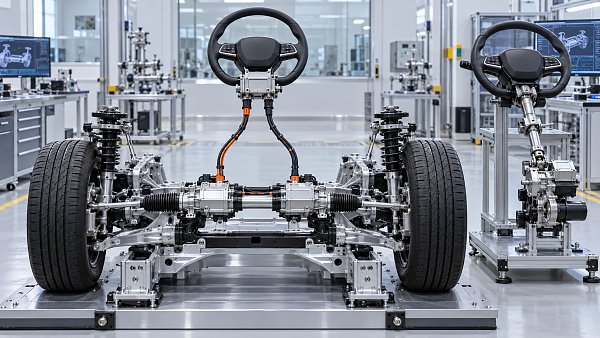
EPS removes pumps, reservoirs, hydraulic lines, and fluid service points. This simplifies vehicle assembly and reduces leak-related packaging constraints.
Column-assist EPS can be compact for smaller vehicles. Rack-assist EPS is preferred when higher steering force and better precision are required.
Hydraulic power steering systems may still fit heavy-duty applications where high loads, harsh duty cycles, or legacy architecture dominate decisions.
The best selection depends on platform reuse. A single EPS architecture can often serve multiple trims through software changes.
Reliability, Maintenance, and Lifecycle Cost
Hydraulic systems bring known service concerns. Fluid contamination, pump wear, belt issues, hose cracking, and seal leaks can increase lifecycle cost.
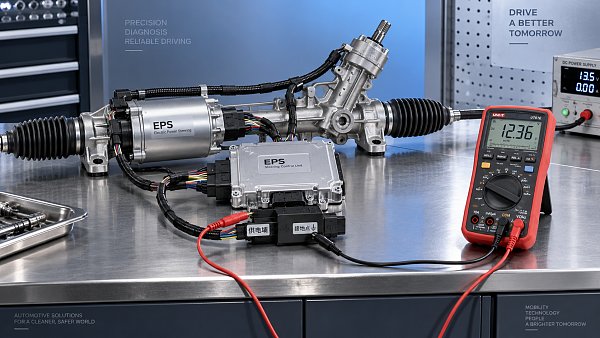
EPS reduces fluid-related failures but adds electronics exposure. Control units, torque sensors, connectors, motors, and software diagnostics become critical.
Power steering systems must be assessed through humidity, salt spray, thermal shock, vibration, EMC, and long-duration endurance testing.
A lower bill of materials does not guarantee lower cost. Warranty behavior and calibration effort can change the commercial result.
Scenario Notes for Different Vehicle Applications
Battery Electric and Hybrid Platforms
EPS is the dominant direction for electrified platforms. It supports energy savings, software-defined driving modes, and future steer-by-wire migration.
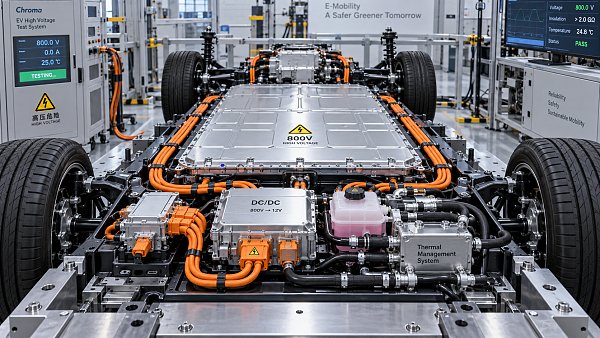
In EVs, power steering systems should be reviewed with thermal management, high-voltage safety, low-voltage backup, and vehicle control software.
Commercial and Heavy Load Vehicles
Hydraulic steering can remain competitive where steering loads are extreme and operating cycles are severe. Durability familiarity still has value.
However, heavy-duty EPS and electro-hydraulic solutions are advancing. Redundancy and automated logistics use cases will accelerate this transition.
ADAS and Autonomous Driving Readiness
ADAS functions require precise torque overlay and continuous electronic control. EPS has a structural advantage in these steering interactions.
For higher automation, power steering systems must support diagnostics, fallback modes, redundant sensing, and predictable behavior after partial failure.
Commonly Overlooked Risks
Ignoring thermal limits: EPS motors and control units can derate under repeated low-speed maneuvers, especially with heavy axle loads.
Underestimating EMC exposure: Poor shielding or grounding may create steering signal disturbance near inverters, chargers, or high-current harnesses.
Testing only ideal roads: Real conditions include potholes, curb impacts, snow buildup, standing water, and road crown compensation.
Separating steering from chassis tuning: Tire, suspension, brake control, and stability logic strongly influence perceived steering quality.
Overlooking service strategy: Diagnostic access, replacement complexity, calibration tools, and parts availability affect long-term customer satisfaction.
Execution Recommendations
- Build a common scorecard covering energy use, steering feel, redundancy, packaging, NVH, validation burden, and lifecycle cost.
- Run EPS and hydraulic benchmarks on comparable tires, axle loads, road surfaces, and environmental conditions.
- Request supplier evidence for ISO 26262 processes, EMC robustness, software update control, and production quality stability.
- Use vehicle-level simulations before hardware freeze to avoid late changes in rack location, harness routing, or cooling design.
- Plan calibration loops early, because power steering systems directly influence comfort, safety perception, and ADAS performance.
Summary and Next Actions
EPS is generally stronger for electrification, software control, energy efficiency, and automated driving readiness. Hydraulic steering still has relevance in demanding legacy applications.
The right decision depends on measurable trade-offs, not tradition. Power steering systems should be judged as integrated chassis and electronic control assets.
Start with load cases, energy targets, safety goals, and platform roadmap. Then compare EPS, hydraulic, and hybrid steering solutions through structured validation.
GACT will continue tracking power steering systems, steer-by-wire evolution, smart chassis redundancy, and supply chain signals shaping future mobility components.
Related News
- 00
0000-00
How electric compressor speed affects EV battery cooling capacity - 00
0000-00
How to verify a variable frequency compressor supplier’s efficiency claims - 00
0000-00
How bend radius affects FPC reliability in automotive camera modules - 00
0000-00
How to diagnose intermittent loss of electric power steering assist - 00
0000-00
How to size automotive power modules for electric compressors
Weekly Insights
Stay ahead with our curated technology reports delivered every Monday.
Recommended News
 How electric compressor speed affects EV battery cooling capacityElectric compressor technology: battery cooling depends on more than RPM. Discover how speed, refrigerant flow, and system limits affect EV cooling capacity and energy efficiency.Author:Time:Oct 19, 2026
 How to verify a variable frequency compressor supplier’s efficiency claimsVerify a variable frequency compressor supplier’s efficiency claims using COP boundaries, matched test conditions, and duty-cycle data. Learn how to choose with confidence.Author:Time:Oct 18, 2026
 How bend radius affects FPC reliability in automotive camera modulesAutomotive FPC applications: camera module reliability starts with bend radius. Learn how stack-up, strain, and validation guide robust designs and help prevent costly failures.Author:Time:Oct 17, 2026
 How to diagnose intermittent loss of electric power steering assistMaster power steering system diagnostics to trace intermittent EPS assist loss. Learn proven checks for voltage, wiring, and fault codes to avoid costly guesswork.Author:Time:Oct 16, 2026
 How to size automotive power modules for electric compressorsSize automotive power modules for electric compressors with confidence. Learn how voltage, phase current, losses, and cooling shape reliable selection—and avoid costly oversizing.Author:Time:Oct 15, 2026
 Why automotive power electronics are shifting to silicon carbideAutomotive Power Electronics are shifting to silicon carbide. Discover how SiC can cut losses, boost EV power density, and reshape cooling, reliability, and system costs.Author:Time:Oct 14, 2026
 How EV adoption shapes the electrically driven compressor marketExplore how EV adoption shapes the electrically driven compressor market, from battery cooling and heat pumps to supplier margins. Discover the drivers of profitable growth.Author:Time:Oct 13, 2026
 How to size a PTC heater for reliable EV cabin heatingPTC Heater sizing for EV cabins: learn how to balance defrost performance, heat-pump integration, airflow, voltage range, and battery power for reliable winter comfort.Author:Time:Oct 12, 2026
 What determines the cooling output of electric automotive AC compressors?Automotive air conditioning compressors electric systems: explore how speed, voltage, refrigerant, controls, and heat exchangers shape EV cooling capacity and efficiency.Author:Time:Oct 11, 2026
 What makes a touchscreen media head unit responsive enough for daily use?Touchscreen media head unit performance explained: discover what delivers fast starts, smooth maps, reliable phone pairing, and responsive daily driving.Author:Time:Oct 10, 2026
 Can a Domain Controller Share a Cooling Loop with Other Electronics?Can a domain controller share a cooling loop with other electronics? Explore thermal zoning, flow control, safety priorities, and reliable vehicle electronics cooling strategies.Author:Time:Oct 19, 2026
 What Causes Domain Controller Overheating During Summer Testing?What causes domain controller overheating in summer testing? Explore heat load, airflow, installation, software factors, and practical fixes.Author:Time:Oct 18, 2026
 Is a Head-Up Display Hard to Integrate with Different Windshields?Is a head-up display difficult to integrate with different windshields? Discover how glass geometry, coatings, and calibration affect HUD clarity, cost, and production readiness.Author:Time:Oct 17, 2026
 What Should Be Checked Before Selecting an Automotive Head Unit?What should be checked before selecting an automotive head unit? Explore compatibility, performance, cybersecurity, compliance, and supplier support.Author:Time:Oct 16, 2026
 Is Steer-by-Wire More Expensive Than an EPS Steering System?Is steer-by-wire more expensive than an EPS steering system? Explore the true costs, safety demands, software value, and when SbW justifies its premium.Author:Time:Oct 15, 2026
 Which Automotive Electronics Need Validation for 800V Platforms?What automotive electronics should be validated for 800V platforms? Explore critical checks for harnesses, power electronics, thermal systems, safety, and EMC.Author:Time:Oct 14, 2026
 How Do Automotive Compressor Export Requirements Vary by Market?How do automotive compressor export requirements vary by market? Explore key compliance rules for refrigerants, EV safety, OEM approvals, labeling, and customs.Author:Time:Oct 13, 2026
 What Documents Are Needed to Export Automotive Thermal Components?What documents are needed to export automotive thermal components? Explore customs, compliance, technical records, and shipping tips to prevent costly delays.Author:Time:Oct 12, 2026
 How Often Should an EV Air Conditioning Compressor Be Inspected?How often should an EV air conditioning compressor be inspected? Discover recommended service intervals, warning signs, and expert care tips to protect cooling performance and EV reliability.Author:Time:Oct 11, 2026
 How to size power solutions for automotive head-up display systemsHeads-up display systems power solutions: learn how to size automotive HUD power architectures for startup, brightness, thermal limits, EMC, protection, and reliable vehicle operation.Author:Time:Oct 19, 2026
 How does a head-up display work in a high-performance car?Hoe werkt een head-up display in een high-performance auto en welke informatie toont het? Discover the tech, safety alerts, and performance data that sharpen every drive.Author:Time:Oct 18, 2026
 Which trends will shape zonal EV architectures in the next decade?Future trends in zonal EV architectures: explore smarter power distribution, 48V systems, thermal integration, software, and resilient networks shaping next-gen vehicles.Author:Time:Oct 17, 2026
 When does a zonal EV architecture outperform a centralized design?Explore the trade-offs between zonal and centralized EV architectures to identify the best path for harness efficiency, software scalability, safety, and faster EV launches.Author:Time:Oct 16, 2026
 How to compare vendors for zonal EV power architecturesComparing vendors for zonal EV power architectures: assess electrical capability, interface ownership, lifecycle support, and integration risk for smarter sourcing.Author:Time:Oct 15, 2026
 How zonal architectures can improve EV reliability at the system levelHow zonal architectures affect EV reliability: explore fault containment, diagnostics, power resilience, and software strategies for more dependable electric vehicles.Author:Time:Oct 14, 2026
 What is driving growth in the automotive E/E architecture market?Explore what drives the automotive electric electronic systems architecture market, from EV power systems and zonal computing to ADAS, cybersecurity, and software-defined vehicles.Author:Time:Oct 13, 2026
 How to evaluate top-rated vehicle electrical components for reliabilityDiscover how to evaluate top-rated vehicle electrical components for reliability, from connector integrity and thermal margins to validation data and manufacturing control.Author:Time:Oct 12, 2026
 What makes vehicle electrical components reliable over a long service life?Top-rated vehicle electrical components for reliability depend on thermal control, sealing, vibration resistance, and validated manufacturing. Discover how to choose durable parts.Author:Time:Oct 11, 2026
 How battery thermal management solutions prevent fast-charge overheatingBattery thermal management solutions prevent fast-charge overheating with intelligent cooling, valve control, predictive preconditioning, and reliable heat rejection.Author:Time:Oct 09, 2026
 What an automotive market report can reveal about EV demand shiftsAutomotive market report insights reveal EV demand shifts, component opportunities, regional risks, and smarter investment strategies for growth.Author:Time:Oct 08, 2026