Thermodynamic Parameters That Shape Heat Pump Efficiency




For project managers and engineering leads overseeing NEV thermal systems, heat pump efficiency is no longer a single-component issue—it is a system-level performance lever.
Understanding the thermodynamic parameters behind pressure ratios, refrigerant behavior, heat exchanger effectiveness, compressor work, and ambient-temperature response supports better decisions across design, validation, cost, and range targets.
What Are the Thermodynamic Parameters That Define Heat Pump Efficiency?
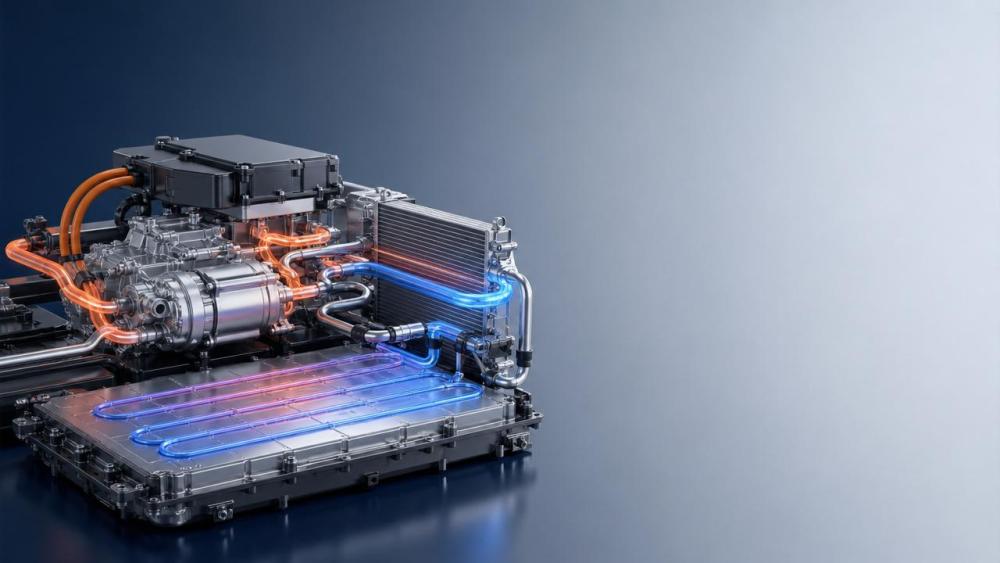
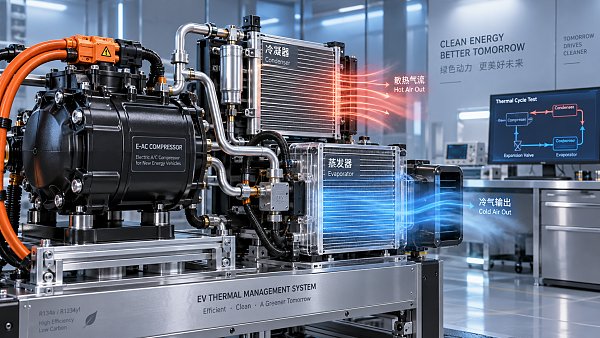
Heat pump efficiency depends on how energy moves between refrigerant, air, coolant, battery packs, and cabin zones.
The most important thermodynamic parameters include temperature lift, pressure ratio, enthalpy change, refrigerant mass flow, compressor efficiency, and heat exchanger effectiveness.
In automotive applications, these thermodynamic parameters must be evaluated under dynamic loads, not only steady laboratory conditions.
A vehicle heat pump faces cabin heating demand, battery conditioning, defogging, motor cooling, and changing ambient temperatures.
Coefficient of performance, or COP, is the common efficiency indicator, but it is not enough alone.
COP depends on boundary conditions, control logic, refrigerant state, and the thermodynamic parameters selected during system design.
A high COP at mild weather may not guarantee acceptable range preservation in freezing conditions.
GACT tracks these variables as part of broader NEV thermal management intelligence, linking component data with vehicle-level energy behavior.
Core Parameters to Monitor
- Evaporating and condensing temperature difference.
- Compressor suction and discharge pressure.
- Refrigerant enthalpy before and after compression.
- Mass flow stability across operating modes.
- Heat exchanger approach temperature and air-side resistance.
Why Does Temperature Lift Matter So Much?
Temperature lift is the difference between the heat source temperature and the required heat delivery temperature.
Among thermodynamic parameters, it is one of the strongest predictors of heat pump energy demand.
When ambient air is cold, the evaporator absorbs heat from a weaker source.
The compressor must raise refrigerant pressure and temperature more aggressively to heat the cabin or battery loop.
This increases compressor work and reduces COP, especially during warm-up and defrost events.
A small change in temperature target can produce a large change in electrical consumption.
For example, raising cabin supply temperature during low ambient operation may improve comfort but reduce driving range.
Battery preheating adds another layer because the thermal system must protect charging performance and cell safety.
Effective control strategies balance comfort, battery temperature, and compressor speed instead of maximizing one target alone.
In validation, thermodynamic parameters should be mapped across real drive cycles, not only standard ambient chambers.
Practical Decision Point
If a program targets cold-region performance, temperature lift assumptions must be locked before compressor, valve, and heat exchanger sizing.
Late changes can trigger redesign across refrigerant routing, control software, noise limits, and packaging space.
How Do Pressure Ratio and Compressor Work Shape COP?
Pressure ratio compares discharge pressure with suction pressure and directly affects compressor load.
It is one of the thermodynamic parameters most closely tied to electrical energy consumption.
A higher pressure ratio usually means more compression work, higher discharge temperature, and greater mechanical stress.
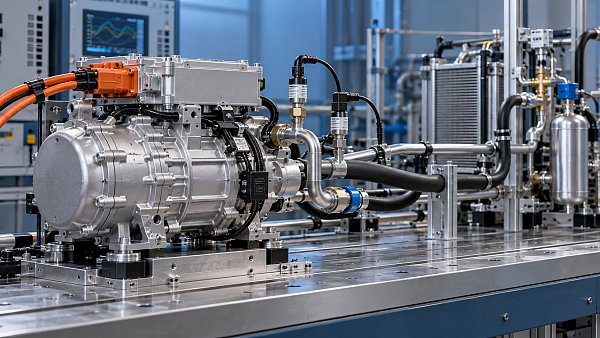
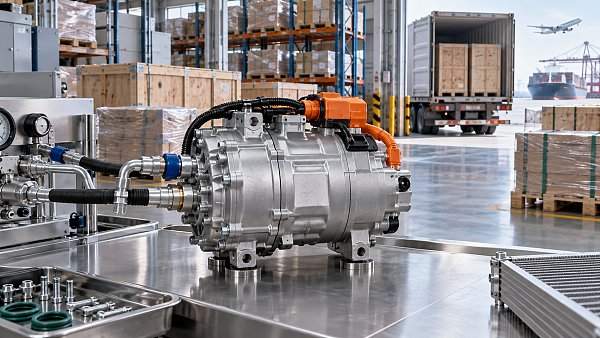
In NEVs, the electric compressor must deliver performance while limiting vibration, acoustic noise, and inverter losses.
Variable-frequency compressors help by adjusting speed according to thermal demand and refrigerant state.
However, speed control cannot fully overcome poor system architecture or excessive pressure losses.
Suction line restrictions, undersized heat exchangers, and valve mismatch can all increase unfavorable thermodynamic parameters.
Compressor efficiency also depends on isentropic efficiency, motor efficiency, oil behavior, and thermal protection strategy.
The best results appear when compressor maps are integrated early with system simulations and vehicle energy models.
Common Risk
Selecting a compressor only by peak capacity may create low-efficiency operation during partial-load conditions.
Most real driving time occurs away from maximum load, so part-load thermodynamic parameters deserve equal attention.
Which Refrigerant Properties Influence Heat Pump Performance?
Refrigerant choice strongly influences saturation pressure, latent heat, volumetric capacity, temperature glide, and discharge temperature.
These refrigerant characteristics are thermodynamic parameters that shape efficiency, safety, durability, and regulatory compliance.
Automotive heat pumps commonly involve refrigerants such as R134a, R1234yf, R744, or other low-GWP alternatives.
Each option brings trade-offs in operating pressure, component robustness, leakage management, and low-temperature capability.
R744, or CO2, can perform well in certain heating scenarios, but it requires high-pressure components and precise control.
R1234yf supports current regulatory needs, but system optimization remains essential for cold-climate efficiency.
The refrigerant charge amount also matters because undercharge and overcharge both distort thermodynamic parameters.
Undercharge may reduce heat transfer capacity, while overcharge may increase pressure and compressor load.
Charge tolerance should be validated across manufacturing variation, aging, service events, and vehicle inclination conditions.
Selection Questions
- Does the refrigerant support the lowest required ambient condition?
- Can existing components handle its pressure range?
- How sensitive is COP to charge variation?
- Does the refrigerant strategy align with regional environmental rules?
How Do Heat Exchangers and Flow Paths Affect System Efficiency?
Heat exchangers determine how effectively thermal energy moves between refrigerant and surrounding media.
Their design changes several thermodynamic parameters, including approach temperature, superheat, subcooling, and pressure drop.
A larger heat exchanger may reduce temperature difference and improve COP, but it can add cost and packaging difficulty.
A compact design may save space but increase airflow resistance or refrigerant-side pressure loss.
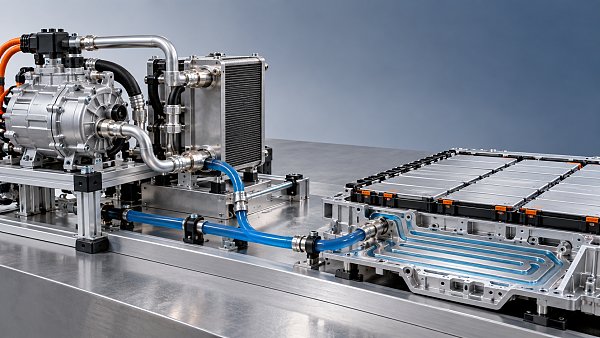
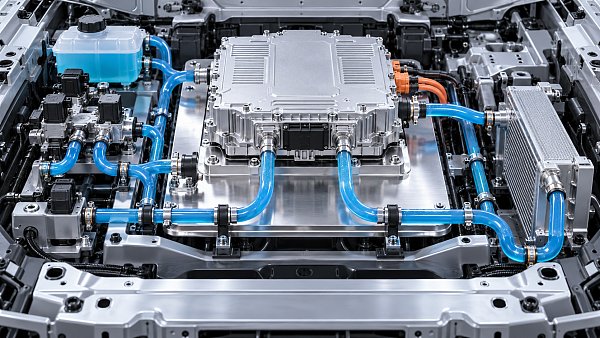
In NEV thermal modules, multi-way valves and integrated coolant plates increase system flexibility.
They also create more operating modes, requiring careful calibration of thermodynamic parameters under transitions.
During cabin heating, battery heating, and defrosting, refrigerant routing may change within seconds.
Poor transitions can cause pressure spikes, unstable superheat, or unnecessary compressor acceleration.
Air-side factors matter too, especially fan power, grille blockage, humidity, and frost formation.
Frost reduces heat transfer and forces defrost cycles, which consume energy and temporarily reduce heating output.
Engineering Reminder
Heat exchanger optimization should include pressure loss, thermal effectiveness, noise, water drainage, and contamination resistance.
Focusing only on peak heat transfer may hide system-level efficiency penalties.
What Mistakes Lead to Poor Interpretation of Thermodynamic Parameters?
One common mistake is treating thermodynamic parameters as isolated laboratory numbers.
In vehicles, cabin comfort, battery safety, compressor durability, and energy consumption interact continuously.
Another mistake is using average COP without examining transient behavior during startup, defrost, fast charging, or traffic congestion.
Average values may hide inefficient spikes that affect range and customer perception.
Some teams also underestimate sensor accuracy and placement.
Incorrect pressure or temperature readings can mislead control algorithms and distort calculated thermodynamic parameters.
Thermal models require measured validation, especially when new refrigerants, integrated modules, or software-defined controls are introduced.
Data governance becomes critical because thermal performance depends on mechanical hardware and calibration logic together.
Risk Checklist
- Ignoring cold-start energy during range estimation.
- Oversizing components without checking part-load efficiency.
- Using chamber data without road validation.
- Separating battery thermal goals from cabin comfort targets.
- Missing pressure drop across valves, hoses, and fittings.
How Should Thermodynamic Parameters Guide Development Decisions?
Thermal development should begin with clear performance targets for climate zones, vehicle segments, and energy consumption limits.
Then thermodynamic parameters can be translated into component specifications, control requirements, and validation plans.
For cost control, the goal is not always the largest compressor or heat exchanger.
The goal is balanced efficiency across the most frequent and most critical operating points.
For schedule control, early simulation reduces late physical changes in refrigerant lines, valve blocks, or underhood packaging.
For quality control, validation should include aging, manufacturing variation, leak scenarios, and sensor drift.
Commercial decisions should also compare thermodynamic parameters with supply chain maturity and serviceability.
A high-performance concept may lose value if components are difficult to source or repair globally.
FAQ: Practical Answers for Heat Pump Efficiency Decisions
Are thermodynamic parameters more important than component efficiency?
They are inseparable. Component efficiency matters, but system thermodynamic parameters determine how each component operates in real conditions.
A premium compressor may still perform poorly if pressure losses, refrigerant charge, or heat exchanger balance are unsuitable.
Which parameter should be checked first during poor COP diagnosis?
Start with temperature lift and pressure ratio because they quickly show whether the system is working against excessive thermal demand.
Then review superheat, subcooling, mass flow, and compressor electrical input for deeper root-cause analysis.
Do integrated thermal modules always improve efficiency?
Not automatically. Integration can reduce parts and improve routing, but control complexity increases.
The benefit appears when thermodynamic parameters are calibrated across all operating modes and transitions.
How often should models be validated against physical tests?
Models should be validated after major architecture changes, refrigerant changes, compressor map updates, and control software revisions.
Validation should include hot weather, cold weather, humidity, defrost, charging, and mixed driving conditions.
Conclusion: Turning Thermodynamic Parameters into Better Vehicle Outcomes
Heat pump efficiency is shaped by a connected set of thermodynamic parameters, not a single headline metric.
Temperature lift, pressure ratio, refrigerant behavior, compressor work, and heat exchanger effectiveness all influence COP and real-world range.
For NEV thermal management, the practical path is early system modeling, disciplined validation, and data-driven calibration.
GACT supports this perspective by connecting automotive components, thermal systems, electrical controls, and market intelligence into actionable insight.
The next step is to review current heat pump assumptions against operating maps, cold-climate targets, refrigerant strategy, and integration risks.
When thermodynamic parameters guide decisions from concept to validation, heat pump systems deliver stronger efficiency, reliability, and customer value.
Related News
- 00
0000-00
How electric compressor speed affects EV battery cooling capacity - 00
0000-00
How to verify a variable frequency compressor supplier’s efficiency claims - 00
0000-00
How bend radius affects FPC reliability in automotive camera modules - 00
0000-00
How to diagnose intermittent loss of electric power steering assist - 00
0000-00
How to size automotive power modules for electric compressors
Weekly Insights
Stay ahead with our curated technology reports delivered every Monday.
Recommended News
 How electric compressor speed affects EV battery cooling capacityElectric compressor technology: battery cooling depends on more than RPM. Discover how speed, refrigerant flow, and system limits affect EV cooling capacity and energy efficiency.Author:Time:Oct 19, 2026
 How to verify a variable frequency compressor supplier’s efficiency claimsVerify a variable frequency compressor supplier’s efficiency claims using COP boundaries, matched test conditions, and duty-cycle data. Learn how to choose with confidence.Author:Time:Oct 18, 2026
 How bend radius affects FPC reliability in automotive camera modulesAutomotive FPC applications: camera module reliability starts with bend radius. Learn how stack-up, strain, and validation guide robust designs and help prevent costly failures.Author:Time:Oct 17, 2026
 How to diagnose intermittent loss of electric power steering assistMaster power steering system diagnostics to trace intermittent EPS assist loss. Learn proven checks for voltage, wiring, and fault codes to avoid costly guesswork.Author:Time:Oct 16, 2026
 How to size automotive power modules for electric compressorsSize automotive power modules for electric compressors with confidence. Learn how voltage, phase current, losses, and cooling shape reliable selection—and avoid costly oversizing.Author:Time:Oct 15, 2026
 Why automotive power electronics are shifting to silicon carbideAutomotive Power Electronics are shifting to silicon carbide. Discover how SiC can cut losses, boost EV power density, and reshape cooling, reliability, and system costs.Author:Time:Oct 14, 2026
 How EV adoption shapes the electrically driven compressor marketExplore how EV adoption shapes the electrically driven compressor market, from battery cooling and heat pumps to supplier margins. Discover the drivers of profitable growth.Author:Time:Oct 13, 2026
 How to size a PTC heater for reliable EV cabin heatingPTC Heater sizing for EV cabins: learn how to balance defrost performance, heat-pump integration, airflow, voltage range, and battery power for reliable winter comfort.Author:Time:Oct 12, 2026
 What determines the cooling output of electric automotive AC compressors?Automotive air conditioning compressors electric systems: explore how speed, voltage, refrigerant, controls, and heat exchangers shape EV cooling capacity and efficiency.Author:Time:Oct 11, 2026
 What makes a touchscreen media head unit responsive enough for daily use?Touchscreen media head unit performance explained: discover what delivers fast starts, smooth maps, reliable phone pairing, and responsive daily driving.Author:Time:Oct 10, 2026
 Can a Domain Controller Share a Cooling Loop with Other Electronics?Can a domain controller share a cooling loop with other electronics? Explore thermal zoning, flow control, safety priorities, and reliable vehicle electronics cooling strategies.Author:Time:Oct 19, 2026
 What Causes Domain Controller Overheating During Summer Testing?What causes domain controller overheating in summer testing? Explore heat load, airflow, installation, software factors, and practical fixes.Author:Time:Oct 18, 2026
 Is a Head-Up Display Hard to Integrate with Different Windshields?Is a head-up display difficult to integrate with different windshields? Discover how glass geometry, coatings, and calibration affect HUD clarity, cost, and production readiness.Author:Time:Oct 17, 2026
 What Should Be Checked Before Selecting an Automotive Head Unit?What should be checked before selecting an automotive head unit? Explore compatibility, performance, cybersecurity, compliance, and supplier support.Author:Time:Oct 16, 2026
 Is Steer-by-Wire More Expensive Than an EPS Steering System?Is steer-by-wire more expensive than an EPS steering system? Explore the true costs, safety demands, software value, and when SbW justifies its premium.Author:Time:Oct 15, 2026
 Which Automotive Electronics Need Validation for 800V Platforms?What automotive electronics should be validated for 800V platforms? Explore critical checks for harnesses, power electronics, thermal systems, safety, and EMC.Author:Time:Oct 14, 2026
 How Do Automotive Compressor Export Requirements Vary by Market?How do automotive compressor export requirements vary by market? Explore key compliance rules for refrigerants, EV safety, OEM approvals, labeling, and customs.Author:Time:Oct 13, 2026
 What Documents Are Needed to Export Automotive Thermal Components?What documents are needed to export automotive thermal components? Explore customs, compliance, technical records, and shipping tips to prevent costly delays.Author:Time:Oct 12, 2026
 How Often Should an EV Air Conditioning Compressor Be Inspected?How often should an EV air conditioning compressor be inspected? Discover recommended service intervals, warning signs, and expert care tips to protect cooling performance and EV reliability.Author:Time:Oct 11, 2026
 How to size power solutions for automotive head-up display systemsHeads-up display systems power solutions: learn how to size automotive HUD power architectures for startup, brightness, thermal limits, EMC, protection, and reliable vehicle operation.Author:Time:Oct 19, 2026
 How does a head-up display work in a high-performance car?Hoe werkt een head-up display in een high-performance auto en welke informatie toont het? Discover the tech, safety alerts, and performance data that sharpen every drive.Author:Time:Oct 18, 2026
 Which trends will shape zonal EV architectures in the next decade?Future trends in zonal EV architectures: explore smarter power distribution, 48V systems, thermal integration, software, and resilient networks shaping next-gen vehicles.Author:Time:Oct 17, 2026
 When does a zonal EV architecture outperform a centralized design?Explore the trade-offs between zonal and centralized EV architectures to identify the best path for harness efficiency, software scalability, safety, and faster EV launches.Author:Time:Oct 16, 2026
 How to compare vendors for zonal EV power architecturesComparing vendors for zonal EV power architectures: assess electrical capability, interface ownership, lifecycle support, and integration risk for smarter sourcing.Author:Time:Oct 15, 2026
 How zonal architectures can improve EV reliability at the system levelHow zonal architectures affect EV reliability: explore fault containment, diagnostics, power resilience, and software strategies for more dependable electric vehicles.Author:Time:Oct 14, 2026
 What is driving growth in the automotive E/E architecture market?Explore what drives the automotive electric electronic systems architecture market, from EV power systems and zonal computing to ADAS, cybersecurity, and software-defined vehicles.Author:Time:Oct 13, 2026
 How to evaluate top-rated vehicle electrical components for reliabilityDiscover how to evaluate top-rated vehicle electrical components for reliability, from connector integrity and thermal margins to validation data and manufacturing control.Author:Time:Oct 12, 2026
 What makes vehicle electrical components reliable over a long service life?Top-rated vehicle electrical components for reliability depend on thermal control, sealing, vibration resistance, and validated manufacturing. Discover how to choose durable parts.Author:Time:Oct 11, 2026
 How battery thermal management solutions prevent fast-charge overheatingBattery thermal management solutions prevent fast-charge overheating with intelligent cooling, valve control, predictive preconditioning, and reliable heat rejection.Author:Time:Oct 09, 2026
 What an automotive market report can reveal about EV demand shiftsAutomotive market report insights reveal EV demand shifts, component opportunities, regional risks, and smarter investment strategies for growth.Author:Time:Oct 08, 2026