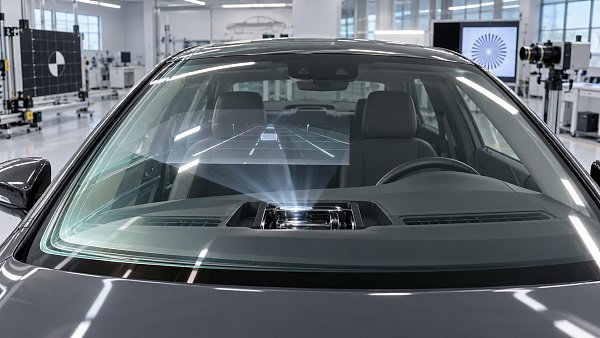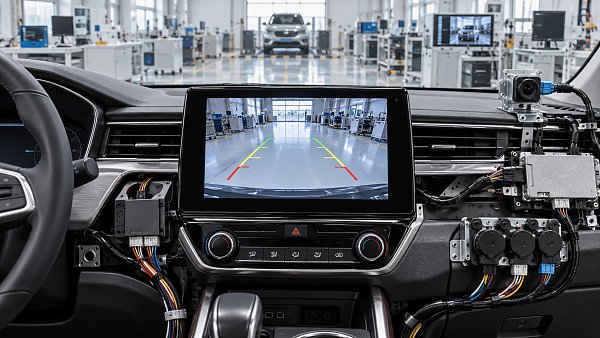
AR-HUD Safety Risks in Real Driving Conditions




As AR-HUD moves from premium innovation to mainstream smart-cabin equipment, its safety performance in real driving conditions is becoming a critical concern for quality control and safety management teams.
Beyond display brightness and virtual image distance, risks may emerge from misaligned overlays, delayed data refresh, sensor fusion errors, driver distraction, and environmental interference.
Understanding these failure modes is essential for validating AR-HUD systems across diverse road, weather, and lighting scenarios.
The core challenge is clear: enhanced visibility must not become a hidden safety liability inside the intelligent cockpit.
AR-HUD Is Becoming a Safety-Critical Smart-Cabin Interface

The market signal is shifting. AR-HUD is no longer only a branding feature for high-end vehicles.
It is entering mass-market electric vehicles, connected cabins, and assisted-driving platforms at accelerating speed.
This transition changes the risk profile. A conventional display can fail silently. AR-HUD failure can directly affect perception and decision timing.
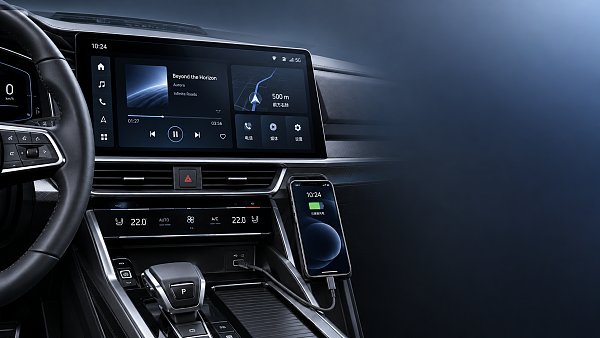
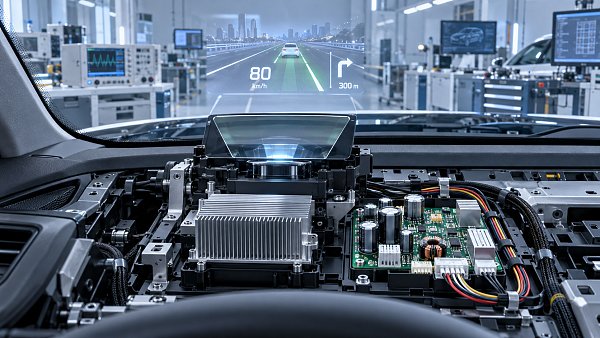
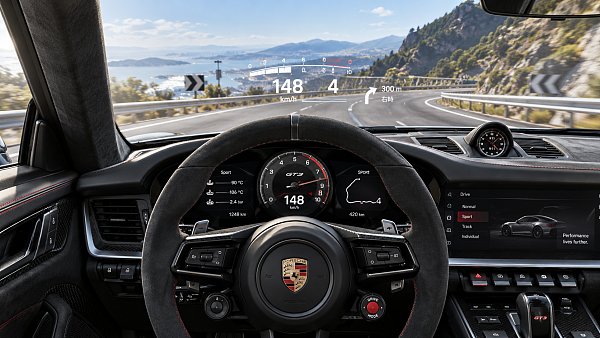
Navigation arrows, lane highlights, warning icons, and distance cues sit inside the driver’s forward view.
If AR-HUD content is wrong, late, unstable, or visually dominant, the driver may trust a misleading signal.
This makes AR-HUD validation closer to safety engineering than entertainment display testing.
For GACT’s focus areas, the issue links smart cabin electronics, wiring harness stability, thermal control, and domain controller integration.
The AR-HUD image is only the visible endpoint of a complex electromechanical and software chain.
Trend Signals Showing Why AR-HUD Risk Is Rising
Several industry changes are increasing the operational burden placed on AR-HUD systems.
First, vehicles are carrying more ADAS functions. Drivers now receive frequent lane, speed, obstacle, and navigation prompts.
Second, electric vehicles favor larger digital cockpits. AR-HUD becomes part of a multi-screen information environment.
Third, over-the-air updates can change display logic after vehicle launch. Validation must therefore continue through the software lifecycle.
Fourth, global driving environments are highly inconsistent. Snow glare, tunnels, night rain, and broken lane markings all challenge AR-HUD reliability.
Fifth, drivers have different visual habits. Seat position, eye height, eyewear, and fatigue affect perceived overlay accuracy.
Together, these signals show that AR-HUD safety cannot be judged only in laboratory brightness conditions.
Main Factors Pushing AR-HUD Safety Risks Forward
These factors show why AR-HUD risk is systemic. It cannot be isolated from the wider vehicle architecture.
A stable projector is not enough. The upstream data, power supply, calibration logic, and thermal environment all matter.
Overlay Misalignment Is the Most Visible Failure Mode
AR-HUD overlay accuracy is often treated as a premium user-experience metric.
In real driving, it becomes a safety parameter.
A lane guidance graphic shifted by a small visual angle may still appear polished.
However, it can create uncertainty when the driver approaches exits, curves, or complex intersections.
Misalignment may come from camera calibration drift, windshield tolerance, suspension movement, or inaccurate vehicle pose estimation.
It may also come from poor synchronization between map data and live sensor perception.
The issue becomes worse when AR-HUD content is anchored to moving vehicles, pedestrians, or road edges.
A warning attached to the wrong object can be more dangerous than no warning at all.
Practical Alignment Checks
- Verify AR-HUD registration across different driver eye positions.
- Test road curvature, slopes, ramps, and lane merges.
- Confirm windshield optical tolerance under production variation.
- Measure overlay shift after vibration, thermal cycling, and service events.
Latency Turns Useful AR-HUD Guidance Into Delayed Advice
Latency is another critical risk. AR-HUD information must arrive when the driver can still act.
A delayed lane-change alert, speed prompt, or forward-collision cue may reduce reaction time.
The full delay includes sensing, processing, fusion, rendering, projection, and driver interpretation.
Many assessments focus on display refresh rate. Real AR-HUD latency is broader and more dynamic.
Computing load spikes can occur during navigation rerouting, camera recognition, voice interaction, or multi-screen animation.
Power fluctuations and communication jitter may also appear inside the wiring harness and domain controller network.
For safety validation, AR-HUD delay must be measured under worst-case cabin and ADAS workloads.
A comfortable average value does not prove reliability during emergency situations.
Driver Distraction Creates a Subtle AR-HUD Paradox
AR-HUD is designed to reduce eye movement away from the road.
Yet excessive content can create a new distraction directly inside the forward view.
The risk is not only brightness or animation. It is also decision interference.
When too many cues compete, drivers may spend extra time interpreting system intention.
This matters during dense traffic, urban intersections, and adverse weather.
A safer AR-HUD strategy should prioritize information by urgency, confidence, and actionability.
- Show collision-related warnings before comfort or infotainment prompts.
- Suppress uncertain overlays when sensor confidence is low.
- Limit animated content during complex maneuvers.
- Use consistent colors, shapes, and spatial rules.
- Avoid visual clutter near pedestrians, cyclists, and road signs.
Environmental Conditions Expose Weak AR-HUD Assumptions
Real roads create optical stress that laboratory scenes may miss.
Direct sunlight can wash out AR-HUD images. Night reflections can make symbols feel closer than expected.
Rain, fog, snow, and dirty windshields can distort perceived depth and contrast.
Tunnels create sudden transitions between high brightness and low brightness.
Polarized sunglasses may reduce display visibility or create inconsistent color perception.
These conditions affect more than readability. They influence whether drivers believe the AR-HUD is trustworthy.
If the system is clear in some scenarios and vague in others, behavioral adaptation becomes unpredictable.
Validation should therefore include seasonal, geographic, and road-surface diversity.
Business and Engineering Impacts Across the Vehicle Chain
AR-HUD safety risks influence several business and technical links inside the automotive value chain.
For smart cockpit integration, display logic must align with ADAS warning logic and human-machine interaction standards.
For wiring harness design, stable high-speed signal transmission becomes essential for low-latency AR-HUD operation.
For thermal management, cabin temperature control protects optics, processors, and display modules from performance drift.
For quality systems, end-of-line calibration must consider windshield variation, seat position, and camera alignment.
For software governance, OTA updates require regression testing of AR-HUD content placement and timing.
The impact is therefore cross-functional. AR-HUD safety cannot be owned by display teams alone.
Key Points to Watch Before Scaling AR-HUD
- Define safety-critical AR-HUD use cases before styling discussions begin.
- Set measurable limits for overlay error, latency, flicker, and brightness adaptation.
- Separate decorative content from warnings that affect driving decisions.
- Create fallback behavior when sensor confidence or map accuracy is insufficient.
- Connect AR-HUD testing with ADAS, thermal, electrical, and cockpit validation plans.
- Track field data after launch to detect rare real-world failure patterns.
These priorities support a more realistic view of AR-HUD maturity.
The system should be evaluated by how safely it behaves when conditions are imperfect.
A Practical Roadmap for Safer AR-HUD Deployment
This roadmap reflects a broader industry trend. Smart-cabin features are becoming part of vehicle safety assurance.
AR-HUD must therefore be developed with traceable requirements, measurable thresholds, and scenario-based validation.
From Visual Innovation to Trustworthy Driving Support
The future of AR-HUD depends on trust, not only visual effect.
Drivers will accept augmented guidance only when it feels stable, timely, and relevant.
That trust requires engineering discipline across optics, software, sensors, harnesses, thermal control, and human factors.
For the global auto components ecosystem, AR-HUD safety is a useful indicator of smart vehicle maturity.
It shows whether digital cockpit innovation is truly connected with reliable underlying hardware and control logic.
GACT will continue observing this transition through the lens of vehicle neurons and temperature control hubs.
The next practical step is to audit AR-HUD requirements against real driving scenarios, not only specification sheets.
Review overlay accuracy, latency, environmental readability, driver workload, electrical stability, and thermal robustness as one integrated safety picture.
When AR-HUD validation follows that logic, augmented vision can support safer mobility instead of adding another layer of uncertainty.
Related News
- 00
0000-00
How electric compressor speed affects EV battery cooling capacity - 00
0000-00
How to verify a variable frequency compressor supplier’s efficiency claims - 00
0000-00
How bend radius affects FPC reliability in automotive camera modules - 00
0000-00
How to diagnose intermittent loss of electric power steering assist - 00
0000-00
How to size automotive power modules for electric compressors
Weekly Insights
Stay ahead with our curated technology reports delivered every Monday.
Recommended News
 How electric compressor speed affects EV battery cooling capacityElectric compressor technology: battery cooling depends on more than RPM. Discover how speed, refrigerant flow, and system limits affect EV cooling capacity and energy efficiency.Author:Time:Oct 19, 2026
 How to verify a variable frequency compressor supplier’s efficiency claimsVerify a variable frequency compressor supplier’s efficiency claims using COP boundaries, matched test conditions, and duty-cycle data. Learn how to choose with confidence.Author:Time:Oct 18, 2026
 How bend radius affects FPC reliability in automotive camera modulesAutomotive FPC applications: camera module reliability starts with bend radius. Learn how stack-up, strain, and validation guide robust designs and help prevent costly failures.Author:Time:Oct 17, 2026
 How to diagnose intermittent loss of electric power steering assistMaster power steering system diagnostics to trace intermittent EPS assist loss. Learn proven checks for voltage, wiring, and fault codes to avoid costly guesswork.Author:Time:Oct 16, 2026
 How to size automotive power modules for electric compressorsSize automotive power modules for electric compressors with confidence. Learn how voltage, phase current, losses, and cooling shape reliable selection—and avoid costly oversizing.Author:Time:Oct 15, 2026
 Why automotive power electronics are shifting to silicon carbideAutomotive Power Electronics are shifting to silicon carbide. Discover how SiC can cut losses, boost EV power density, and reshape cooling, reliability, and system costs.Author:Time:Oct 14, 2026
 How EV adoption shapes the electrically driven compressor marketExplore how EV adoption shapes the electrically driven compressor market, from battery cooling and heat pumps to supplier margins. Discover the drivers of profitable growth.Author:Time:Oct 13, 2026
 How to size a PTC heater for reliable EV cabin heatingPTC Heater sizing for EV cabins: learn how to balance defrost performance, heat-pump integration, airflow, voltage range, and battery power for reliable winter comfort.Author:Time:Oct 12, 2026
 What determines the cooling output of electric automotive AC compressors?Automotive air conditioning compressors electric systems: explore how speed, voltage, refrigerant, controls, and heat exchangers shape EV cooling capacity and efficiency.Author:Time:Oct 11, 2026
 What makes a touchscreen media head unit responsive enough for daily use?Touchscreen media head unit performance explained: discover what delivers fast starts, smooth maps, reliable phone pairing, and responsive daily driving.Author:Time:Oct 10, 2026
 Can a Domain Controller Share a Cooling Loop with Other Electronics?Can a domain controller share a cooling loop with other electronics? Explore thermal zoning, flow control, safety priorities, and reliable vehicle electronics cooling strategies.Author:Time:Oct 19, 2026
 What Causes Domain Controller Overheating During Summer Testing?What causes domain controller overheating in summer testing? Explore heat load, airflow, installation, software factors, and practical fixes.Author:Time:Oct 18, 2026
 Is a Head-Up Display Hard to Integrate with Different Windshields?Is a head-up display difficult to integrate with different windshields? Discover how glass geometry, coatings, and calibration affect HUD clarity, cost, and production readiness.Author:Time:Oct 17, 2026
 What Should Be Checked Before Selecting an Automotive Head Unit?What should be checked before selecting an automotive head unit? Explore compatibility, performance, cybersecurity, compliance, and supplier support.Author:Time:Oct 16, 2026
 Is Steer-by-Wire More Expensive Than an EPS Steering System?Is steer-by-wire more expensive than an EPS steering system? Explore the true costs, safety demands, software value, and when SbW justifies its premium.Author:Time:Oct 15, 2026
 Which Automotive Electronics Need Validation for 800V Platforms?What automotive electronics should be validated for 800V platforms? Explore critical checks for harnesses, power electronics, thermal systems, safety, and EMC.Author:Time:Oct 14, 2026
 How Do Automotive Compressor Export Requirements Vary by Market?How do automotive compressor export requirements vary by market? Explore key compliance rules for refrigerants, EV safety, OEM approvals, labeling, and customs.Author:Time:Oct 13, 2026
 What Documents Are Needed to Export Automotive Thermal Components?What documents are needed to export automotive thermal components? Explore customs, compliance, technical records, and shipping tips to prevent costly delays.Author:Time:Oct 12, 2026
 How Often Should an EV Air Conditioning Compressor Be Inspected?How often should an EV air conditioning compressor be inspected? Discover recommended service intervals, warning signs, and expert care tips to protect cooling performance and EV reliability.Author:Time:Oct 11, 2026
 How to size power solutions for automotive head-up display systemsHeads-up display systems power solutions: learn how to size automotive HUD power architectures for startup, brightness, thermal limits, EMC, protection, and reliable vehicle operation.Author:Time:Oct 19, 2026
 How does a head-up display work in a high-performance car?Hoe werkt een head-up display in een high-performance auto en welke informatie toont het? Discover the tech, safety alerts, and performance data that sharpen every drive.Author:Time:Oct 18, 2026
 Which trends will shape zonal EV architectures in the next decade?Future trends in zonal EV architectures: explore smarter power distribution, 48V systems, thermal integration, software, and resilient networks shaping next-gen vehicles.Author:Time:Oct 17, 2026
 When does a zonal EV architecture outperform a centralized design?Explore the trade-offs between zonal and centralized EV architectures to identify the best path for harness efficiency, software scalability, safety, and faster EV launches.Author:Time:Oct 16, 2026
 How to compare vendors for zonal EV power architecturesComparing vendors for zonal EV power architectures: assess electrical capability, interface ownership, lifecycle support, and integration risk for smarter sourcing.Author:Time:Oct 15, 2026
 How zonal architectures can improve EV reliability at the system levelHow zonal architectures affect EV reliability: explore fault containment, diagnostics, power resilience, and software strategies for more dependable electric vehicles.Author:Time:Oct 14, 2026
 What is driving growth in the automotive E/E architecture market?Explore what drives the automotive electric electronic systems architecture market, from EV power systems and zonal computing to ADAS, cybersecurity, and software-defined vehicles.Author:Time:Oct 13, 2026
 How to evaluate top-rated vehicle electrical components for reliabilityDiscover how to evaluate top-rated vehicle electrical components for reliability, from connector integrity and thermal margins to validation data and manufacturing control.Author:Time:Oct 12, 2026
 What makes vehicle electrical components reliable over a long service life?Top-rated vehicle electrical components for reliability depend on thermal control, sealing, vibration resistance, and validated manufacturing. Discover how to choose durable parts.Author:Time:Oct 11, 2026
 How battery thermal management solutions prevent fast-charge overheatingBattery thermal management solutions prevent fast-charge overheating with intelligent cooling, valve control, predictive preconditioning, and reliable heat rejection.Author:Time:Oct 09, 2026
 What an automotive market report can reveal about EV demand shiftsAutomotive market report insights reveal EV demand shifts, component opportunities, regional risks, and smarter investment strategies for growth.Author:Time:Oct 08, 2026