



NEV Thermal Management: What Impacts Total Cost
For finance leaders approving electrification investments, NEV thermal management is no longer just an engineering line item—it is a major driver of vehicle cost.
It influences warranty exposure, energy efficiency, customer-perceived value, supplier risk, and long-term platform competitiveness across electric and hybrid vehicle portfolios.
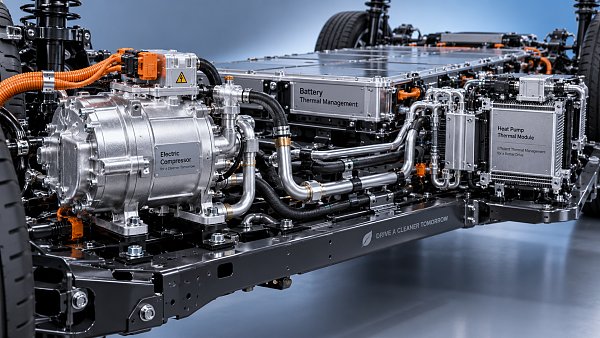
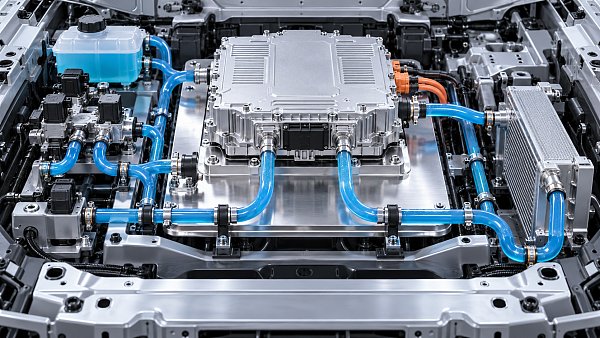
From heat pumps and electric compressors to cooling plates, valves, sensors, and algorithms, every design decision affects investment approval quality.
Understanding what truly impacts total cost helps financial decision-makers evaluate trade-offs confidently and prioritize systems that protect margins.
The Real Question: Lowest Purchase Price or Lowest Total Cost?
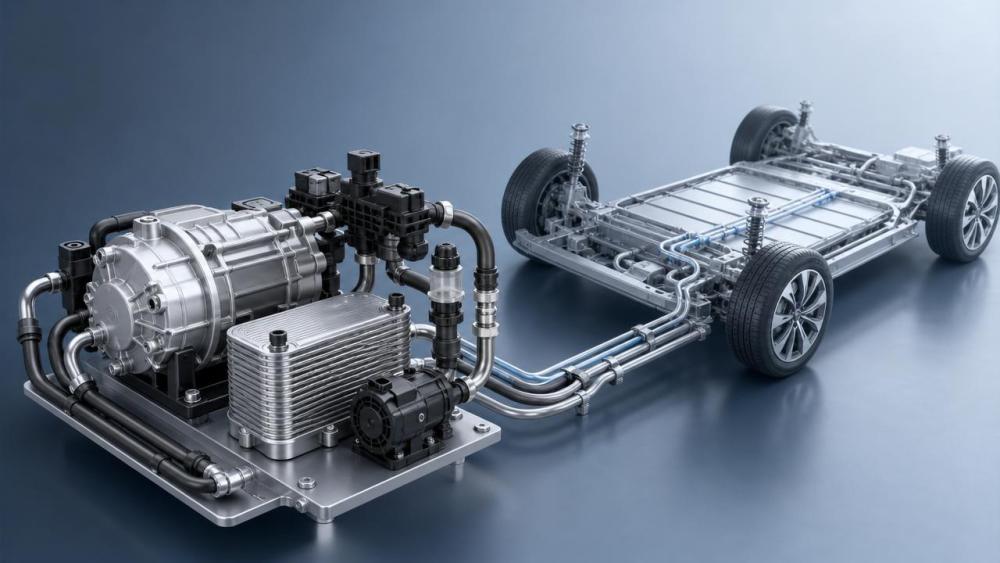
The core cost question in NEV thermal management is not which component is cheapest, but which architecture delivers sustainable cost efficiency.
A low-priced compressor, valve, or cooling plate can become expensive if it reduces range, increases warranty claims, or complicates manufacturing.
Finance teams should view thermal systems as operating-cost infrastructure, not merely as vehicle hardware purchased during sourcing negotiations.
The system affects battery life, fast-charging capability, cabin comfort, winter range, software complexity, and residual value perception.
For approval committees, the right benchmark is total cost of ownership across development, production, operation, service, and compliance.
Why NEV Thermal Management Has Become a Strategic Cost Center
Internal combustion vehicles relied heavily on waste heat, but electric vehicles must create, move, recover, and regulate heat deliberately.
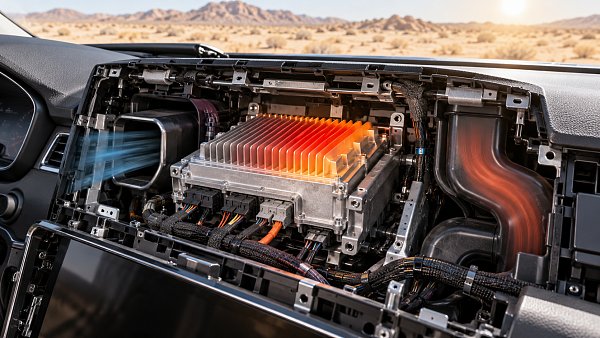
This makes NEV thermal management central to energy efficiency, especially in cold climates where heating can consume substantial battery energy.
Battery packs, e-drive units, power electronics, and cabins all operate within different temperature windows and load patterns.
Coordinating these demands requires more components, tighter controls, higher reliability standards, and deeper software integration than legacy systems.
As platforms move toward longer range and faster charging, thermal performance becomes a purchasing argument as much as an engineering requirement.
Finance leaders should recognize that thermal decisions can influence sales conversion, customer satisfaction, and brand reputation.
Architecture Choice Is the Largest Cost Lever
The biggest cost driver is usually the selected thermal architecture, because it defines component count, integration level, controls, and validation scope.
A basic liquid cooling loop may reduce initial cost, but it can limit fast charging, winter efficiency, or premium comfort features.
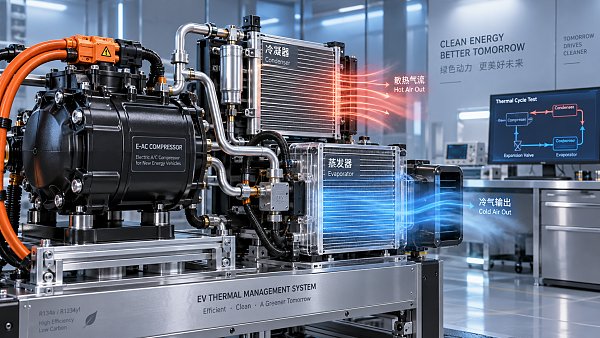
A heat pump architecture requires higher upfront spending, yet it can reduce energy consumption and improve cold-weather range perception.
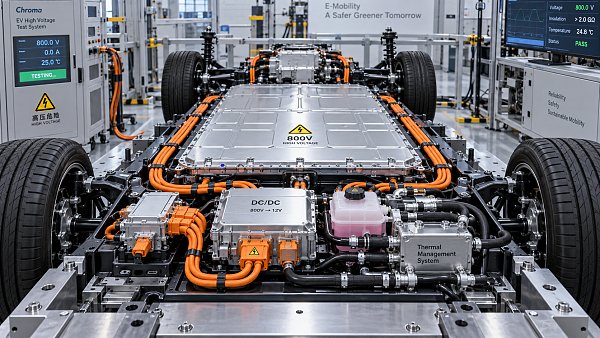
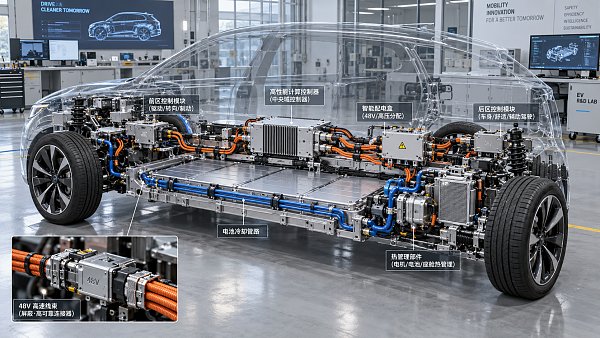
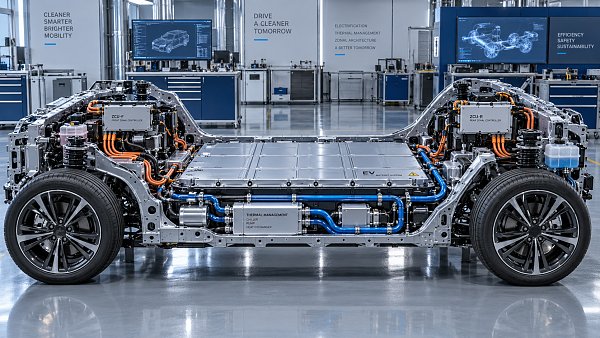
Highly integrated thermal modules combine valves, pumps, sensors, heat exchangers, and manifolds into compact assemblies with fewer interfaces.
Integration can lower assembly labor, leakage risk, packaging complexity, and supplier coordination burden, but may increase module unit price.
The finance question is whether integration reduces system-level cost more than it increases component-level procurement cost.
That answer depends on vehicle segment, production volume, climate markets, warranty strategy, and platform reuse plans.
Component Costs: What Finance Teams Should Actually Compare
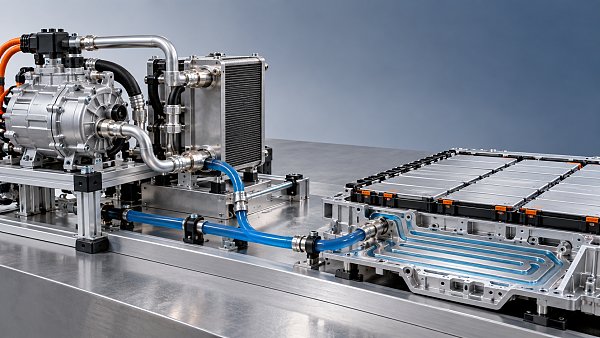
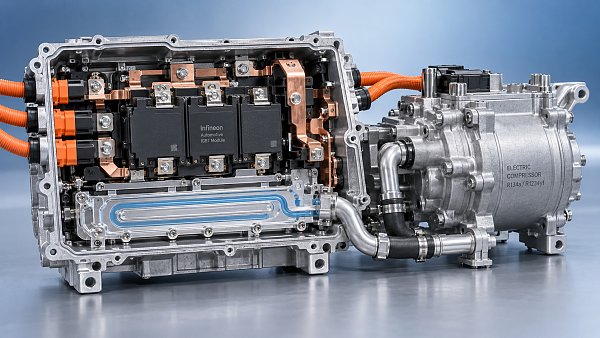
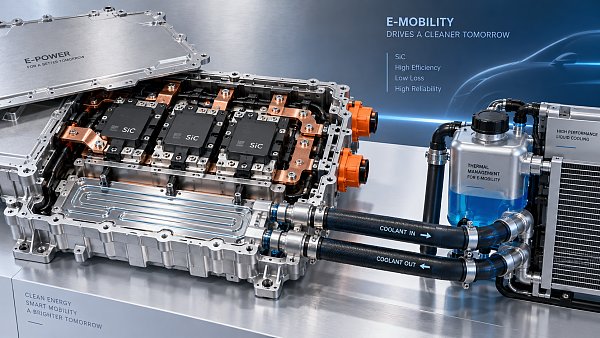
Electric compressors, battery cooling plates, electronic expansion valves, multi-way valves, pumps, sensors, and heat exchangers drive visible bill-of-material cost.
However, comparing part prices alone can be misleading because similar components may differ significantly in efficiency, durability, and controllability.
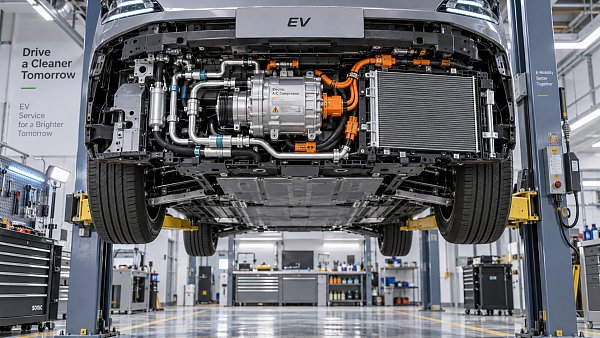
An electric compressor with better variable-speed efficiency may cost more, but reduce energy consumption and improve noise performance.
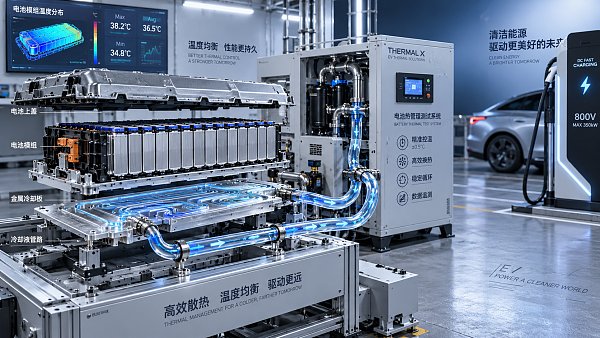
A cooling plate with stronger temperature uniformity can help protect battery aging and support more aggressive charging strategies.
Multi-way valves may appear costly, yet they enable heat sharing between cabin, battery, motor, and power electronics loops.
Finance reviewers should request system-level cost models showing energy savings, warranty assumptions, serviceability, and platform scalability.
Battery Protection Is a Hidden Financial Variable
Battery degradation is one of the most financially significant outcomes influenced by NEV thermal management design and control quality.
Cells operating outside optimal temperature ranges can age faster, lose capacity, or require power limitation during charging and driving.
These outcomes affect warranty reserves, customer complaints, resale value, fleet performance guarantees, and brand trust.
For commercial fleets, thermal stability can influence uptime, charging schedules, route planning, and lifetime asset value.
Finance teams should ask how thermal design supports temperature uniformity across the pack under real-world load conditions.
They should also review whether the supplier has validation data for fast charging, cold soaking, high-load driving, and thermal runaway mitigation.
Energy Efficiency Directly Affects Customer Value
Thermal efficiency converts into practical driving range, especially during winter operation, highway driving, fast charging, and heavy cabin heating use.
A more efficient system may reduce the need for larger battery capacity, which is often the most expensive vehicle subsystem.
In some cases, investing in better thermal management can be cheaper than adding battery kilowatt-hours to compensate for losses.
This trade-off matters when procurement teams compare hardware cost without considering range, charging time, or customer satisfaction.
Heat pumps, waste heat recovery, predictive controls, and zone-based cabin heating can improve perceived vehicle efficiency.
For finance leaders, the value lies in avoiding overinvestment in battery size while still meeting market range expectations.
Software and Controls Are Becoming Cost Multipliers
Modern NEV thermal management is increasingly defined by control logic, not only mechanical or electromechanical hardware.
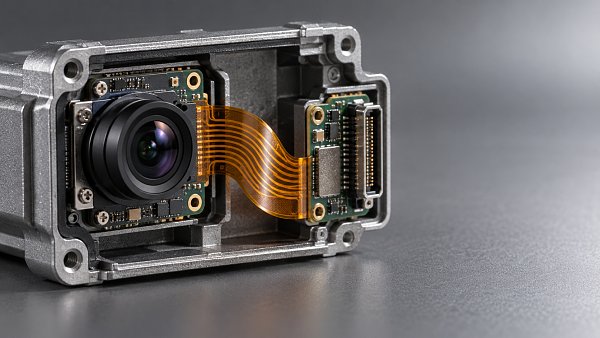
Algorithms decide when to heat the battery, cool the motor, recover waste heat, precondition before charging, or prioritize cabin comfort.
Better software can unlock efficiency from the same hardware, but development, calibration, cybersecurity, and validation costs must be budgeted.
Overlooking software effort often leads to delayed launches, excessive testing cycles, field updates, or inconsistent performance across climates.
Finance teams should ask whether control development is internal, supplier-led, jointly owned, or dependent on a black-box module.
Ownership affects licensing, future updates, data access, platform flexibility, and long-term bargaining power with suppliers.
Supplier Capability Changes the Risk Profile
Thermal systems are multi-disciplinary, combining refrigerant circuits, coolant loops, electronics, sensors, noise control, packaging, and software calibration.
A supplier with a low quotation but weak integration capability can create hidden costs in engineering support and launch management.
Finance decision-makers should evaluate supplier maturity beyond price, including validation laboratories, automotive-grade quality systems, and global delivery resilience.
Key questions include leakage performance, compressor reliability, valve response accuracy, pump lifetime, refrigerant compliance, and field failure history.
It is also important to assess whether the supplier can support regional climate requirements and different vehicle platforms.
A capable supplier can reduce engineering uncertainty, shorten validation cycles, and improve negotiating leverage through modular reuse.
Manufacturing and Assembly Costs Are Often Underestimated
Thermal system cost includes hoses, brackets, connectors, refrigerant charging, coolant filling, leak testing, assembly labor, and end-of-line inspection.
A design with many separate components may look cheaper in purchasing data but become expensive during vehicle integration.
Each connection creates potential leakage risk, assembly variation, inspection time, and service complexity.
Integrated modules can reduce the number of joints and simplify factory routing, though they may require new tooling or packaging changes.
Finance teams should request a manufacturing cost walk-through, not only a component quotation summary.
This review should include takt time, rework rates, testing equipment, refrigerant handling, logistics packaging, and line-side inventory impact.
Warranty Exposure Can Overturn Procurement Savings
Thermal failures are costly because they may affect drivability, charging speed, cabin comfort, or battery safety perception.
Common failure modes include compressor noise, valve sticking, coolant leakage, pump degradation, sensor drift, and control calibration errors.
Even when failures are not safety-critical, they can trigger expensive diagnostics and customer dissatisfaction.
Battery-related thermal issues are especially sensitive because customers associate them with range loss and long-term vehicle value.
Approval documents should include warranty sensitivity analysis under conservative, base, and optimistic scenarios.
A small increase in failure rate can erase savings gained from selecting a lower-cost supplier or simplified architecture.
Regulatory and Refrigerant Choices Affect Long-Term Cost
Refrigerant selection influences component compatibility, environmental compliance, service equipment, supply availability, and future regulatory exposure.
Automakers must consider global market requirements, including emissions rules, refrigerant restrictions, and service network readiness.
A technically attractive solution may become costly if it requires region-specific redesigns or specialized aftersales handling.
Regulatory uncertainty should be reflected in sourcing strategy, inventory planning, and platform design flexibility.
Finance leaders should avoid approving a thermal architecture that is optimized for one market but difficult to globalize.
Global scalability often matters more than the lowest regional unit cost for multi-market vehicle programs.
How to Build a Practical Total Cost Model
A useful cost model should separate direct hardware cost from engineering, validation, manufacturing, warranty, energy efficiency, and lifecycle impacts.
Start with the bill of materials, including compressors, pumps, valves, plates, sensors, heat exchangers, hoses, brackets, and controllers.
Then add tooling, software development, calibration, durability testing, climate testing, and supplier engineering support.
Manufacturing costs should include line modifications, assembly labor, leak testing, coolant filling, refrigerant charging, and quality inspection.
Lifecycle cost should include expected warranty claims, serviceability, battery aging impact, energy consumption, and residual value assumptions.
This structure allows finance teams to compare architectures using business outcomes rather than isolated part prices.
Decision Criteria for Finance Approval
Before approving an NEV thermal management investment, finance leaders should define the vehicle’s target segment and customer promise.
A budget urban vehicle may prioritize simplicity, robust cooling, and controlled unit cost over advanced heat recovery.
A premium long-range model may justify heat pumps, integrated modules, predictive preconditioning, and advanced cabin comfort strategies.
A fleet vehicle may prioritize uptime, battery longevity, fast-charging consistency, and predictable service costs.
The right decision depends on how thermal performance supports the business case, not on a universal technology ranking.
Finance approval should be tied to measurable targets, including range retention, charging performance, warranty limits, and manufacturing efficiency.
Where Spending More Usually Makes Sense
Higher spending is often justified when it protects the battery, improves cold-weather range, reduces warranty risk, or enables platform reuse.
Investments in reliable compressors, accurate valves, robust sensors, and well-validated control algorithms usually produce measurable lifecycle value.
Integrated modules can be attractive when production volume is high and assembly simplification creates repeatable savings.
Heat pumps are stronger candidates in markets with cold climates, range-sensitive buyers, or premium comfort expectations.
Advanced controls are valuable when vehicles support fast charging, route-based energy planning, or over-the-air optimization.
These investments should still be tested against realistic utilization patterns, not ideal laboratory efficiency claims.
Where Cost Discipline Matters Most
Not every vehicle requires the most advanced NEV thermal management system, and over-engineering can damage program profitability.
Cost discipline matters when customer willingness to pay is limited or climate demands are moderate.
It also matters when platform volumes are uncertain, because complex architectures require higher validation and tooling commitments.
Finance teams should challenge features that add hardware complexity without clear links to customer value or risk reduction.
They should also question redundant components, excessive sensor counts, and bespoke designs that cannot be reused across models.
The objective is not maximum technology content, but the best economic fit for the platform strategy.
Conclusion: Thermal Cost Is a Business Architecture Decision
NEV thermal management total cost is shaped by architecture, components, software, supplier capability, manufacturing complexity, warranty exposure, and regulatory readiness.
For finance leaders, the most important shift is moving from part-price comparison to system-level economic evaluation.
The cheapest design is not always the lowest-cost design once range, battery life, service risk, and customer perception are considered.
The strongest approval cases connect thermal investment directly to measurable business outcomes and platform competitiveness.
When evaluated correctly, NEV thermal management becomes more than a cost center; it becomes a margin-protection and value-creation system.