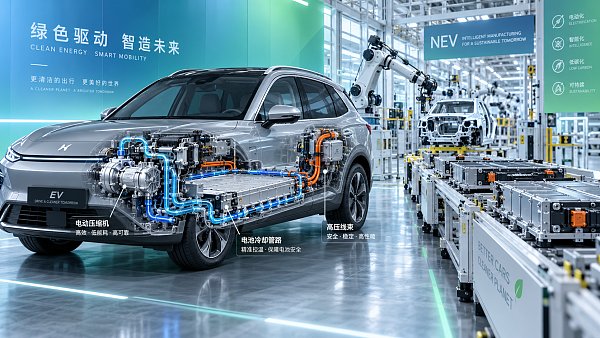
Battery Thermoregulation Risks in Fast Charging




Battery Thermoregulation Risks in Fast Charging
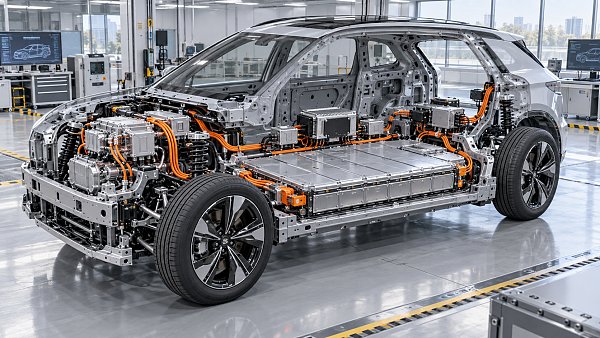
Fast charging is redefining EV convenience, but it also intensifies hidden safety variables inside the pack.
For quality control and safety management teams, battery thermoregulation is no longer a supporting function.
It is a critical risk barrier against thermal gradients, lithium plating, accelerated aging, and potential thermal runaway.
This article examines battery thermoregulation risks created by high-current charging, linking sensors, cooling architecture, control logic, and validation standards.
The goal is practical: identify weak points before they become field failures, warranty events, or safety recalls.
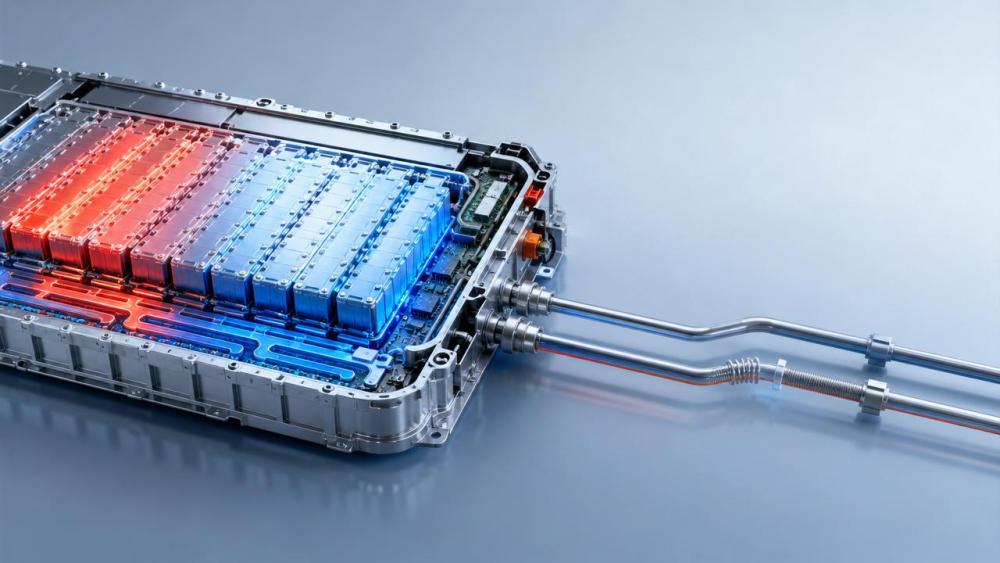
1. Why does fast charging make battery thermoregulation harder?
Fast charging pushes large current into cells within a compressed time window.
That current creates heat through internal resistance, connector losses, busbar resistance, and electrochemical side reactions.
Battery thermoregulation must remove this heat while keeping cells within a narrow operating band.
The challenge is not only peak temperature. Temperature uniformity is equally important.
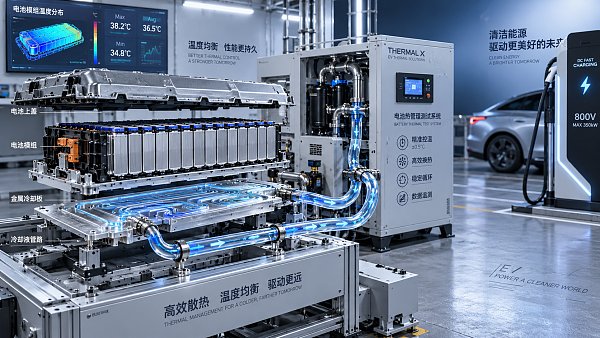
A pack may show acceptable average temperature while edge cells, central cells, or upper layers experience different thermal stress.
This hidden gradient can reduce capacity, distort state-of-health estimation, and weaken fast-charge repeatability.
Battery thermoregulation becomes harder when charging power rises faster than cooling capacity.
It also becomes harder when pack density increases, because thermal paths become shorter, tighter, and less forgiving.
What changes inside the pack?
- Cells heat unevenly because current distribution is rarely perfect.
- Cooling plates may remove heat faster near inlets than outlets.
- Sensors may miss hot spots between measurement points.
- Control software may react late to transient thermal spikes.
Good battery thermoregulation therefore requires integrated thinking, not isolated component selection.
2. What are the main safety risks behind poor battery thermoregulation?
The first risk is lithium plating, especially during low-temperature fast charging.
If ions cannot intercalate smoothly into the anode, metallic lithium can deposit on the surface.
This may reduce capacity and create dendritic structures that increase internal short-circuit risk.
Battery thermoregulation must therefore preheat the pack before aggressive charging begins.
The second risk is accelerated aging under repeated high-temperature exposure.
Electrolyte decomposition, SEI growth, gas generation, and impedance increase can all intensify when cooling is insufficient.
The third risk is thermal runaway propagation.
A single failed cell does not always become a pack-level event.
However, weak battery thermoregulation can delay detection and allow heat to migrate through modules.
Which risk is most likely during daily fast charging?
Accelerated aging is usually more common than catastrophic failure.
Yet safety management cannot ignore rare events, because severity and regulatory consequences are high.
A robust battery thermoregulation strategy should reduce both frequent degradation and low-probability safety escalation.
3. How can sensor accuracy weaken battery thermoregulation?
Battery thermoregulation depends on measured data, estimated data, and predicted data.
If temperature sensors are sparse, delayed, poorly calibrated, or badly located, control decisions become unreliable.
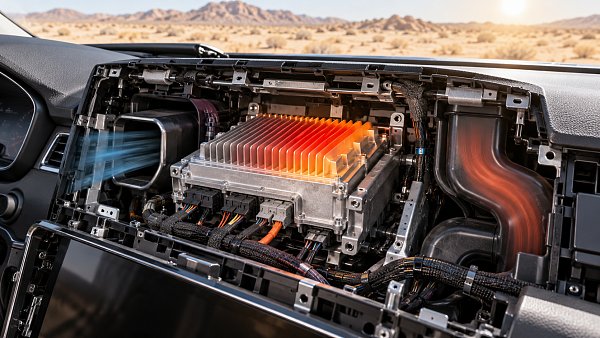
A sensor attached near a cooling plate may report safe temperature while inner cell regions run hotter.
A sensor far from a busbar may miss localized heating caused by contact resistance.
This problem grows when charging current changes rapidly.
Thermal inertia means the measured surface temperature may lag behind internal electrochemical heat generation.
Battery thermoregulation should therefore combine physical sensors with model-based estimation.
Impedance trends, voltage relaxation, coolant temperature, and charge acceptance can support early warning.
What should validation teams check?
- Sensor placement against thermal simulation and teardown data.
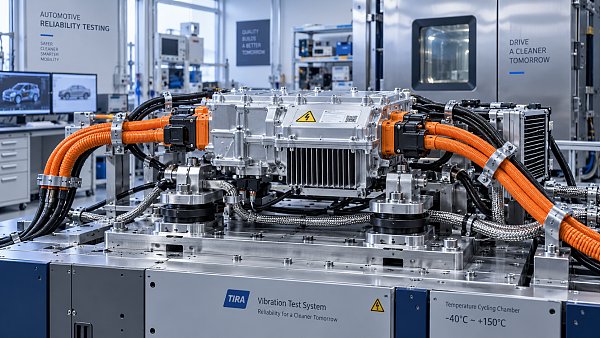
- Calibration drift after vibration, humidity, and thermal cycling.
- Response delay during fast current ramp-up.
- Fault handling when one sensor becomes implausible.
- Consistency between measured temperature and BMS thermal models.
Reliable battery thermoregulation starts with trustworthy sensing, not only stronger pumps or larger heat exchangers.
4. Which cooling architecture decisions affect fast-charging risk?
Cooling architecture determines how quickly heat can leave the cells.
It also determines whether heat removal remains uniform across the pack.
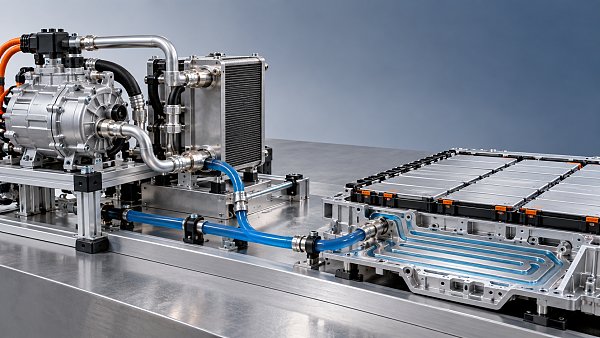
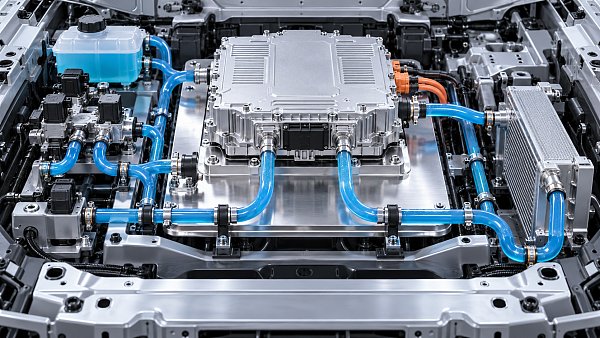
Liquid cooling plates are widely used because they offer better heat transfer than passive air systems.
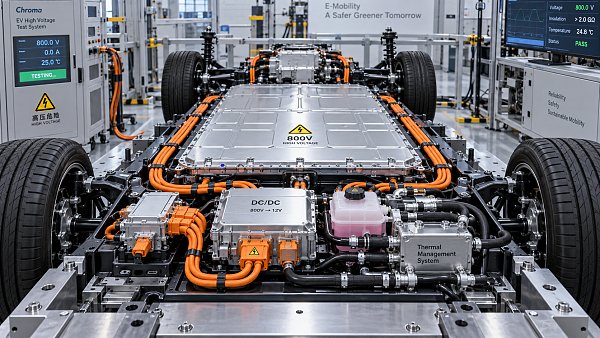
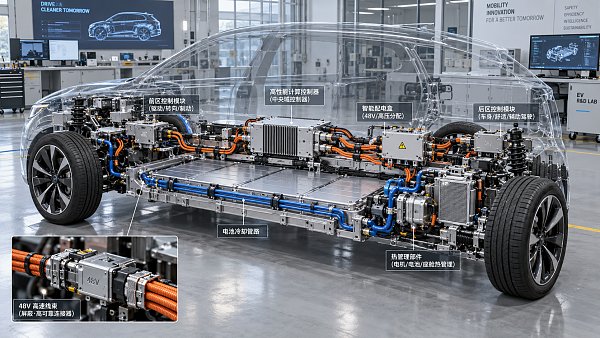
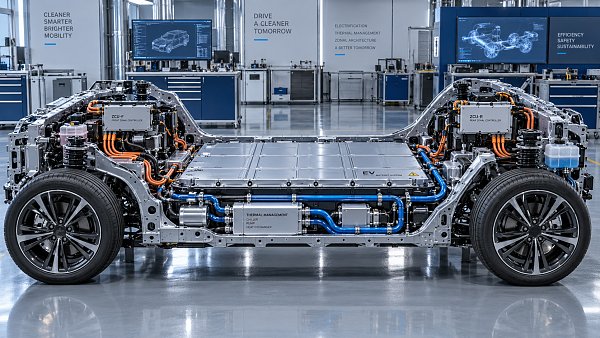
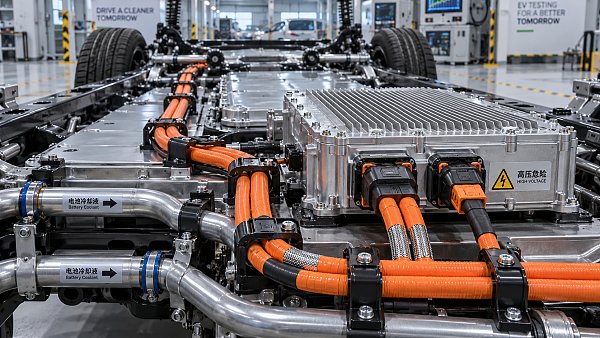
However, battery thermoregulation depends on channel design, coolant flow, manifold balance, and thermal interface materials.
A narrow channel may improve local heat transfer but increase pressure drop.
A long flow path may create inlet-to-outlet temperature differences that stress downstream cells.
Direct refrigerant cooling can deliver strong performance, yet leakage control and service complexity require careful evaluation.
Immersion cooling offers high thermal contact, but fluid compatibility, sealing, mass, and cost remain key questions.
How should architectures be compared?
A good architecture supports battery thermoregulation across seasons, not only under laboratory conditions.
5. How does control logic decide whether fast charging stays safe?
Control logic connects charging limits, thermal limits, vehicle state, and charger communication.
Even excellent hardware can fail if control thresholds are too slow or too optimistic.
Battery thermoregulation requires predictive control, especially before high-power charging begins.
Preconditioning is a central example.
If navigation predicts a charging stop, the system can warm or cool the pack early.
This reduces lithium plating risk in winter and overheating risk in summer.
Power derating is another important tool.
Derating should feel smooth, but it must act decisively when thermal margins shrink.
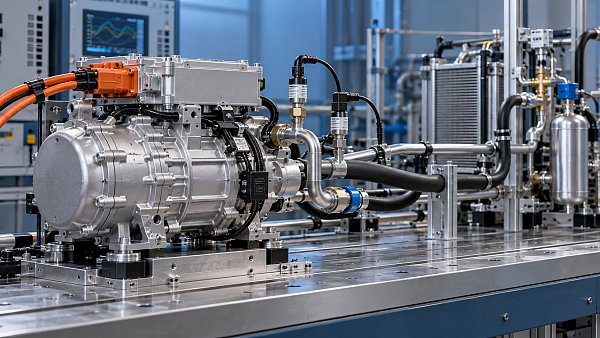
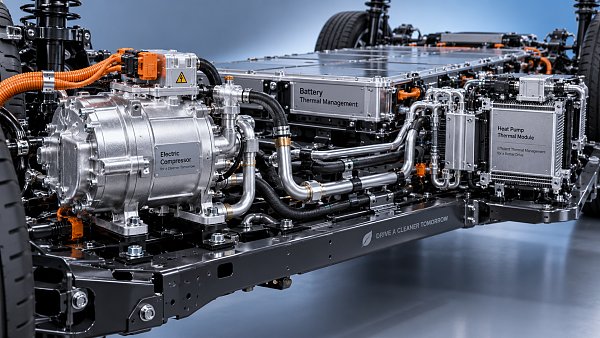
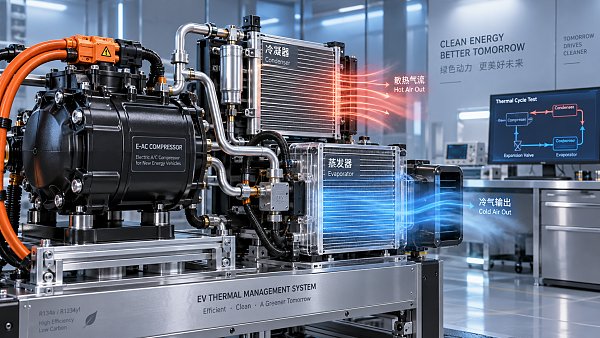
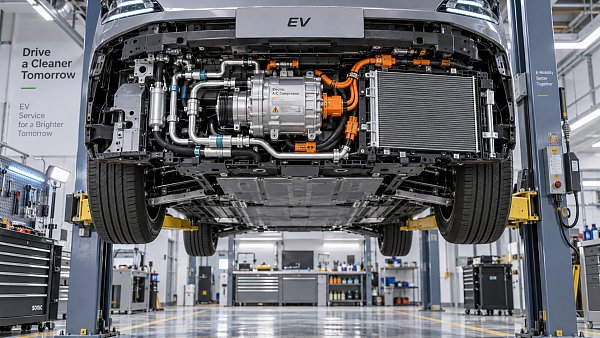
Battery thermoregulation also needs coordination with heat pumps, electric compressors, valves, and e-drive cooling loops.
What are common control mistakes?
- Using average pack temperature as the main safety gate.
- Ignoring temperature rise rate during charging ramp-up.
- Starting cooling only after the pack is already hot.
- Failing to coordinate cabin comfort and battery cooling demand.
- Allowing fast charging after sensor plausibility becomes uncertain.
Effective battery thermoregulation should be predictive, redundant, and conservative near unknown states.
6. What validation work reduces field failures?
Validation should test the gap between design intent and real driving behavior.
Fast charging rarely occurs under a single ideal condition.
Vehicles may arrive at chargers after highway driving, cold soaking, towing, or repeated short trips.
Battery thermoregulation validation must include these mixed thermal histories.
Standards and internal test plans should cover electrical abuse, thermal abuse, mechanical stress, and software fault handling.
Relevant references may include ISO 26262, ISO 21434, UNECE R100, UL 2580, and GB/T test frameworks.
They should be supported by cell-level calorimetry, module testing, pack testing, and vehicle-level charging trials.
Practical validation checklist
Battery thermoregulation should be validated as a system behavior, not a standalone cooling performance number.
7. FAQ: fast-charging battery thermoregulation questions
These answers show why battery thermoregulation requires cross-functional evidence from cells, electronics, software, and thermal hardware.
Conclusion: turning battery thermoregulation into a risk barrier
Fast charging will continue to shape EV competition, customer expectations, and charging-network strategy.
But higher charging power increases the importance of disciplined battery thermoregulation.
The strongest systems combine accurate sensing, balanced cooling, predictive control, and severe validation.
Weakness in any layer can become a safety, durability, or customer-experience problem.
A practical next step is to map every fast-charging risk to a measurable control or validation item.
Start with hot spots, cold-start plating exposure, sensor plausibility, coolant flow balance, and derating response.
GACT tracks these links across NEV thermal management, electric compressors, wiring harnesses, and smart vehicle control systems.
For safer electrification, battery thermoregulation must be treated as an engineering intelligence system, not only a cooling function.
Related News
- 00
0000-00
How electric compressor speed affects EV battery cooling capacity - 00
0000-00
How to verify a variable frequency compressor supplier’s efficiency claims - 00
0000-00
How bend radius affects FPC reliability in automotive camera modules - 00
0000-00
How to diagnose intermittent loss of electric power steering assist - 00
0000-00
How to size automotive power modules for electric compressors
Weekly Insights
Stay ahead with our curated technology reports delivered every Monday.
Recommended News
 How electric compressor speed affects EV battery cooling capacityElectric compressor technology: battery cooling depends on more than RPM. Discover how speed, refrigerant flow, and system limits affect EV cooling capacity and energy efficiency.Author:Time:Oct 19, 2026
 How to verify a variable frequency compressor supplier’s efficiency claimsVerify a variable frequency compressor supplier’s efficiency claims using COP boundaries, matched test conditions, and duty-cycle data. Learn how to choose with confidence.Author:Time:Oct 18, 2026
 How bend radius affects FPC reliability in automotive camera modulesAutomotive FPC applications: camera module reliability starts with bend radius. Learn how stack-up, strain, and validation guide robust designs and help prevent costly failures.Author:Time:Oct 17, 2026
 How to diagnose intermittent loss of electric power steering assistMaster power steering system diagnostics to trace intermittent EPS assist loss. Learn proven checks for voltage, wiring, and fault codes to avoid costly guesswork.Author:Time:Oct 16, 2026
 How to size automotive power modules for electric compressorsSize automotive power modules for electric compressors with confidence. Learn how voltage, phase current, losses, and cooling shape reliable selection—and avoid costly oversizing.Author:Time:Oct 15, 2026
 Why automotive power electronics are shifting to silicon carbideAutomotive Power Electronics are shifting to silicon carbide. Discover how SiC can cut losses, boost EV power density, and reshape cooling, reliability, and system costs.Author:Time:Oct 14, 2026
 How EV adoption shapes the electrically driven compressor marketExplore how EV adoption shapes the electrically driven compressor market, from battery cooling and heat pumps to supplier margins. Discover the drivers of profitable growth.Author:Time:Oct 13, 2026
 How to size a PTC heater for reliable EV cabin heatingPTC Heater sizing for EV cabins: learn how to balance defrost performance, heat-pump integration, airflow, voltage range, and battery power for reliable winter comfort.Author:Time:Oct 12, 2026
 What determines the cooling output of electric automotive AC compressors?Automotive air conditioning compressors electric systems: explore how speed, voltage, refrigerant, controls, and heat exchangers shape EV cooling capacity and efficiency.Author:Time:Oct 11, 2026
 What makes a touchscreen media head unit responsive enough for daily use?Touchscreen media head unit performance explained: discover what delivers fast starts, smooth maps, reliable phone pairing, and responsive daily driving.Author:Time:Oct 10, 2026
 Can a Domain Controller Share a Cooling Loop with Other Electronics?Can a domain controller share a cooling loop with other electronics? Explore thermal zoning, flow control, safety priorities, and reliable vehicle electronics cooling strategies.Author:Time:Oct 19, 2026
 What Causes Domain Controller Overheating During Summer Testing?What causes domain controller overheating in summer testing? Explore heat load, airflow, installation, software factors, and practical fixes.Author:Time:Oct 18, 2026
 Is a Head-Up Display Hard to Integrate with Different Windshields?Is a head-up display difficult to integrate with different windshields? Discover how glass geometry, coatings, and calibration affect HUD clarity, cost, and production readiness.Author:Time:Oct 17, 2026
 What Should Be Checked Before Selecting an Automotive Head Unit?What should be checked before selecting an automotive head unit? Explore compatibility, performance, cybersecurity, compliance, and supplier support.Author:Time:Oct 16, 2026
 Is Steer-by-Wire More Expensive Than an EPS Steering System?Is steer-by-wire more expensive than an EPS steering system? Explore the true costs, safety demands, software value, and when SbW justifies its premium.Author:Time:Oct 15, 2026
 Which Automotive Electronics Need Validation for 800V Platforms?What automotive electronics should be validated for 800V platforms? Explore critical checks for harnesses, power electronics, thermal systems, safety, and EMC.Author:Time:Oct 14, 2026
 How Do Automotive Compressor Export Requirements Vary by Market?How do automotive compressor export requirements vary by market? Explore key compliance rules for refrigerants, EV safety, OEM approvals, labeling, and customs.Author:Time:Oct 13, 2026
 What Documents Are Needed to Export Automotive Thermal Components?What documents are needed to export automotive thermal components? Explore customs, compliance, technical records, and shipping tips to prevent costly delays.Author:Time:Oct 12, 2026
 How Often Should an EV Air Conditioning Compressor Be Inspected?How often should an EV air conditioning compressor be inspected? Discover recommended service intervals, warning signs, and expert care tips to protect cooling performance and EV reliability.Author:Time:Oct 11, 2026
 How to size power solutions for automotive head-up display systemsHeads-up display systems power solutions: learn how to size automotive HUD power architectures for startup, brightness, thermal limits, EMC, protection, and reliable vehicle operation.Author:Time:Oct 19, 2026
 How does a head-up display work in a high-performance car?Hoe werkt een head-up display in een high-performance auto en welke informatie toont het? Discover the tech, safety alerts, and performance data that sharpen every drive.Author:Time:Oct 18, 2026
 Which trends will shape zonal EV architectures in the next decade?Future trends in zonal EV architectures: explore smarter power distribution, 48V systems, thermal integration, software, and resilient networks shaping next-gen vehicles.Author:Time:Oct 17, 2026
 When does a zonal EV architecture outperform a centralized design?Explore the trade-offs between zonal and centralized EV architectures to identify the best path for harness efficiency, software scalability, safety, and faster EV launches.Author:Time:Oct 16, 2026
 How to compare vendors for zonal EV power architecturesComparing vendors for zonal EV power architectures: assess electrical capability, interface ownership, lifecycle support, and integration risk for smarter sourcing.Author:Time:Oct 15, 2026
 How zonal architectures can improve EV reliability at the system levelHow zonal architectures affect EV reliability: explore fault containment, diagnostics, power resilience, and software strategies for more dependable electric vehicles.Author:Time:Oct 14, 2026
 What is driving growth in the automotive E/E architecture market?Explore what drives the automotive electric electronic systems architecture market, from EV power systems and zonal computing to ADAS, cybersecurity, and software-defined vehicles.Author:Time:Oct 13, 2026
 How to evaluate top-rated vehicle electrical components for reliabilityDiscover how to evaluate top-rated vehicle electrical components for reliability, from connector integrity and thermal margins to validation data and manufacturing control.Author:Time:Oct 12, 2026
 What makes vehicle electrical components reliable over a long service life?Top-rated vehicle electrical components for reliability depend on thermal control, sealing, vibration resistance, and validated manufacturing. Discover how to choose durable parts.Author:Time:Oct 11, 2026
 How battery thermal management solutions prevent fast-charge overheatingBattery thermal management solutions prevent fast-charge overheating with intelligent cooling, valve control, predictive preconditioning, and reliable heat rejection.Author:Time:Oct 09, 2026
 What an automotive market report can reveal about EV demand shiftsAutomotive market report insights reveal EV demand shifts, component opportunities, regional risks, and smarter investment strategies for growth.Author:Time:Oct 08, 2026