Battery Management System in Automotive: Key Functions and Limits




Why does Battery Management System automotive technology matter so much now?

Battery performance now shapes how electric vehicles are judged in daily use, long-distance travel, and lifecycle cost.
That is why Battery Management System automotive technology has moved from a hidden controller to a central vehicle function.
It affects safety, usable range, charging speed, thermal behavior, and battery aging at the same time.
In practical terms, a vehicle may use advanced cells and efficient cooling, yet still underperform without a capable BMS.
The system decides what the battery can safely deliver, not just what the cell chemistry promises on paper.
This matters across the wider automotive components landscape as well.
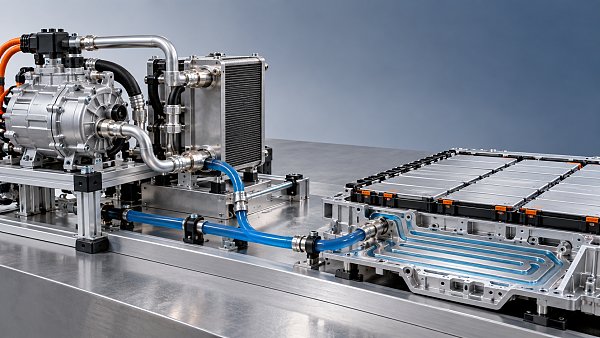
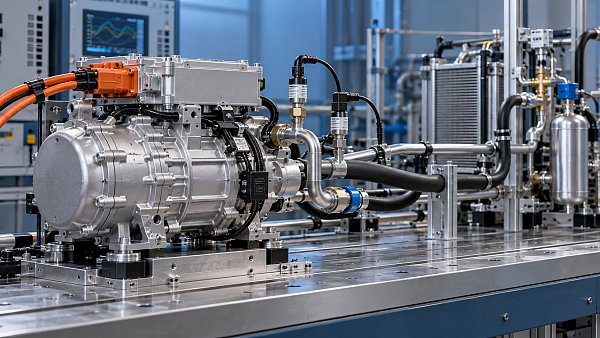
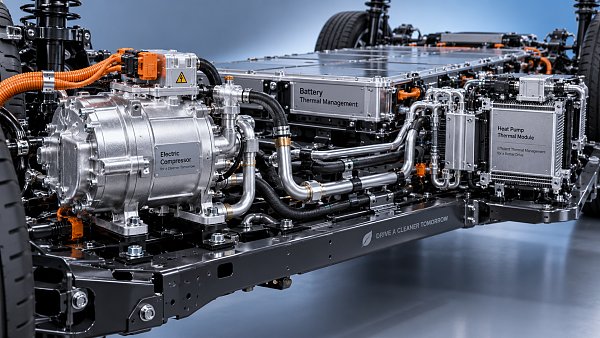
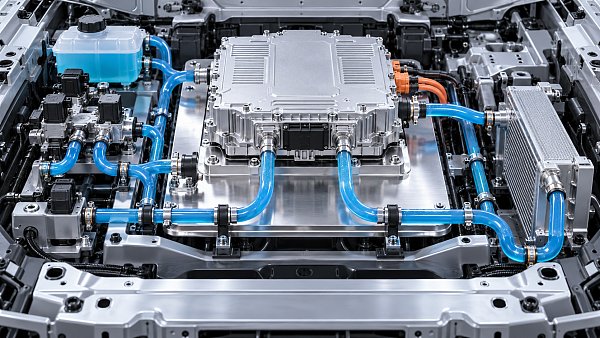
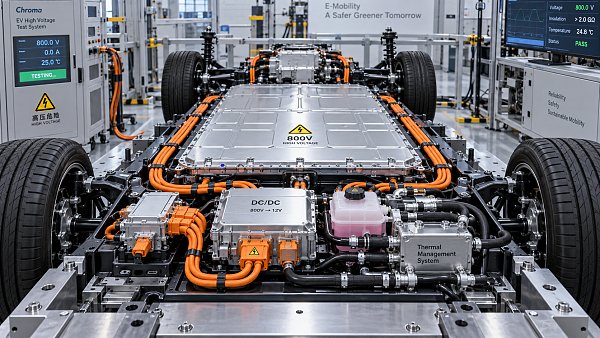
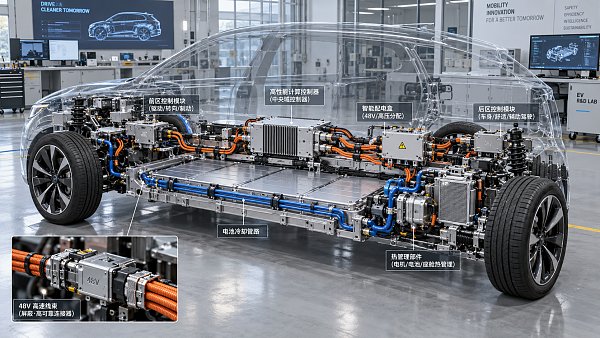
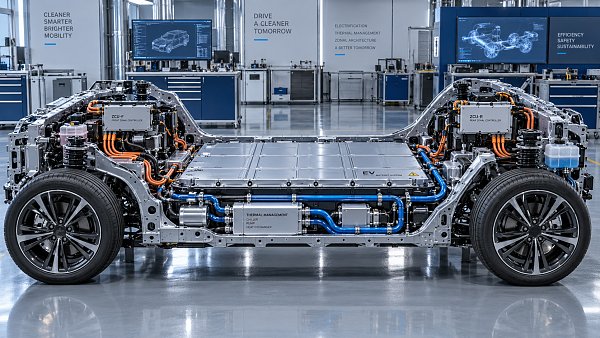
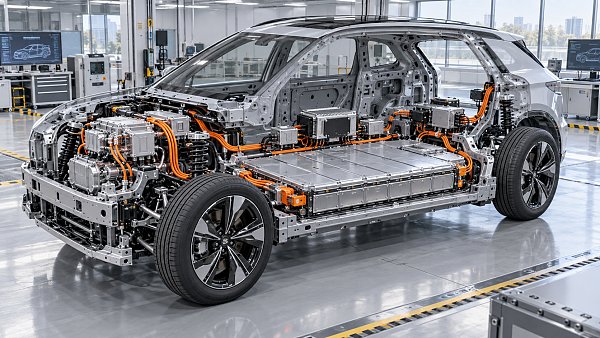
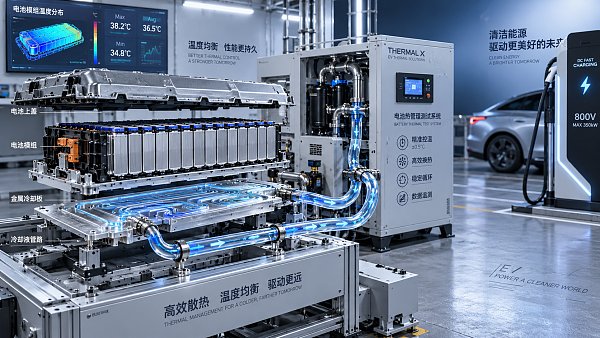
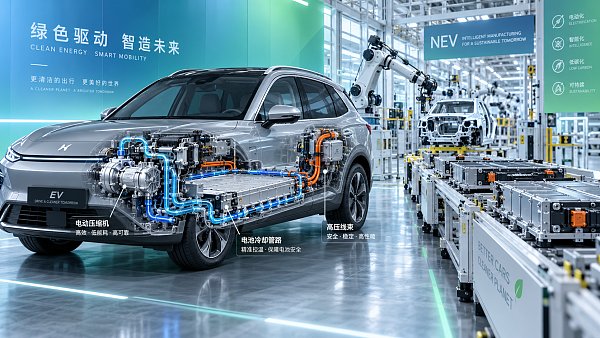
A BMS interacts with liquid cooling loops, heat pump systems, high-voltage harnesses, electric compressors, and vehicle control units.
For that reason, industry platforms following NEV thermal systems and high-voltage architecture often track Battery Management System automotive developments closely.
The real question is no longer whether a BMS is important.
The more useful question is how it works, where its limits appear, and what signals should be checked when comparing systems.
What does a Battery Management System automotive unit actually do inside the vehicle?
At the simplest level, the BMS watches battery condition and controls operating boundaries.
Its job is not only measurement.
It also supports protection, communication, and system coordination.
Most Battery Management System automotive designs handle several core functions:
- Monitoring cell voltage, pack voltage, current, and temperature.
- Estimating state of charge, state of health, and available power.
- Preventing overcharge, overdischarge, overcurrent, and thermal events.
- Balancing cells to reduce uneven aging across the pack.
- Communicating with thermal management, chargers, inverters, and vehicle controllers.
- Recording fault data for diagnosis, service analysis, and long-term optimization.
Cell balancing is often misunderstood.
It does not magically restore weak cells.
Instead, it helps keep voltage spread under control so the whole pack can operate more consistently.
Estimation is another difficult area.
State of charge is not a simple fuel gauge.
It depends on current flow, temperature, cell aging, and the model used by the controller.
This is why two vehicles using similar cells may still feel different in charging behavior and power delivery.
When reviewed alongside cooling plates, integrated thermal valves, and battery liquid cooling systems, the BMS becomes easier to evaluate as part of a full energy system.
Where are the real limits of a BMS, and what can it not fix?
A Battery Management System automotive solution is critical, but it is not all-powerful.
Its limits usually appear when people expect software and controls to compensate for hardware weaknesses.
For example, a BMS cannot eliminate poor cell consistency coming from upstream manufacturing variation.
It cannot fully offset weak pack design, insufficient cooling capacity, or poor sensor placement.
It also cannot create charging performance beyond the limits of chemistry, wiring, contactors, and thermal stability.
In real vehicle programs, the limits usually show up in four areas:
The most common mistake is treating the BMS as a standalone answer.
A better view is to treat it as one control layer inside a tightly linked battery, thermal, and high-voltage architecture.
How does Battery Management System automotive design connect with thermal management?
This is where many important performance differences appear.
A battery does not behave the same way in winter, summer, city traffic, or repeated DC fast charging.
The BMS reads thermal conditions, but thermal hardware executes the response.
That response may involve coolant pumps, chillers, heat exchangers, integrated thermal valves, heat pumps, or electric compressors.
In actual applications, the Battery Management System automotive controller may lower available power before temperatures reach a dangerous threshold.
This can feel conservative, but it often protects long-term battery health.
The same logic applies during cold-weather charging.
If the pack is too cold, the BMS may restrict charging until preheating raises cells into a safer range.
That is why thermal efficiency and BMS calibration are now discussed together across global NEV programs.
For anyone comparing vehicle systems, it helps to ask whether reported performance comes from the battery alone or from the battery plus its thermal control strategy.
This broader view is increasingly visible in market analysis covering China, Europe, the United States, Japan, India, and Southeast Asia.
When comparing solutions, what should be checked beyond the headline specs?
Headline claims often focus on range, charge time, or pack capacity.
Those figures matter, but they do not reveal how robust the Battery Management System automotive strategy really is.
A more useful evaluation looks at behavior under stress, variation, and aging.
- How accurate are SOC and SOH estimates after repeated cycling?
- How many temperature sensing points are used across the pack?
- How quickly can the system detect abnormal voltage spread?
- What balancing method is used, and under which conditions?
- How closely is the BMS linked to cooling, heating, and charging control?
- How does performance change after calendar aging and low-temperature exposure?
Software update capability also deserves attention.
As battery data accumulates, calibration improvements may refine charging logic, protection thresholds, and estimation models.
Another practical point is standards and diagnostics compatibility.
When a system must interface with high-voltage harnesses, thermal modules, and vehicle electronics from different suppliers, communication quality matters as much as hardware quality.
This is one reason broader component intelligence platforms pay attention not only to cells, but also to compressors, valves, cable systems, and control integration.
What are the most common misunderstandings, and what is worth tracking next?
One misunderstanding is that a stronger BMS always means a more complex user experience.
Usually, the opposite is true.
Better control often appears as smoother charging, more predictable range, and fewer temperature-related restrictions.
Another misunderstanding is that battery safety depends only on emergency shutdown logic.
In reality, safety is built through early detection, thermal coordination, stable communication, and conservative operating windows.
Looking ahead, several signals are worth watching:
- Closer integration between Battery Management System automotive software and heat pump control.
- Better real-time models for aging, fast charging, and low-temperature recovery.
- Higher data visibility for diagnostics and fleet-level battery analysis.
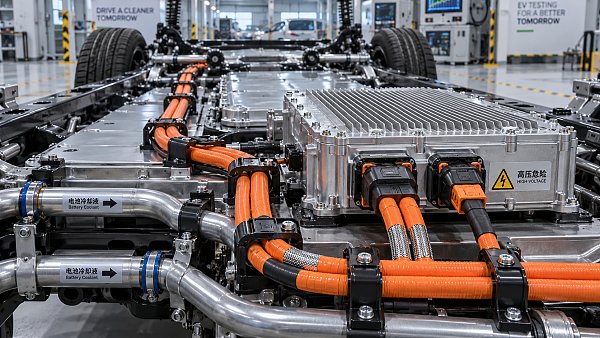
- Stronger coordination with high-voltage cables, contactors, and power electronics.
- Regional differences in standards, supply chains, and export requirements.
Taken together, the Battery Management System automotive field is best understood as a control hub with clear strengths and clear boundaries.
It protects the battery, interprets battery condition, and links the pack to thermal and electrical systems across the vehicle.
It still depends on sound cell selection, effective cooling, reliable harness design, and realistic calibration targets.
For the next step, compare systems through actual operating scenarios, not brochure claims alone.
Check temperature response, charging limits, data transparency, and integration with thermal components before drawing conclusions.
That approach gives a clearer basis for understanding battery durability, vehicle efficiency, and future component direction across global automotive markets.
Related News
- 00
0000-00
How electric compressor speed affects EV battery cooling capacity - 00
0000-00
How to verify a variable frequency compressor supplier’s efficiency claims - 00
0000-00
How bend radius affects FPC reliability in automotive camera modules - 00
0000-00
How to diagnose intermittent loss of electric power steering assist - 00
0000-00
How to size automotive power modules for electric compressors
Weekly Insights
Stay ahead with our curated technology reports delivered every Monday.
Recommended News
 How electric compressor speed affects EV battery cooling capacityElectric compressor technology: battery cooling depends on more than RPM. Discover how speed, refrigerant flow, and system limits affect EV cooling capacity and energy efficiency.Author:Time:Oct 19, 2026
 How to verify a variable frequency compressor supplier’s efficiency claimsVerify a variable frequency compressor supplier’s efficiency claims using COP boundaries, matched test conditions, and duty-cycle data. Learn how to choose with confidence.Author:Time:Oct 18, 2026
 How bend radius affects FPC reliability in automotive camera modulesAutomotive FPC applications: camera module reliability starts with bend radius. Learn how stack-up, strain, and validation guide robust designs and help prevent costly failures.Author:Time:Oct 17, 2026
 How to diagnose intermittent loss of electric power steering assistMaster power steering system diagnostics to trace intermittent EPS assist loss. Learn proven checks for voltage, wiring, and fault codes to avoid costly guesswork.Author:Time:Oct 16, 2026
 How to size automotive power modules for electric compressorsSize automotive power modules for electric compressors with confidence. Learn how voltage, phase current, losses, and cooling shape reliable selection—and avoid costly oversizing.Author:Time:Oct 15, 2026
 Why automotive power electronics are shifting to silicon carbideAutomotive Power Electronics are shifting to silicon carbide. Discover how SiC can cut losses, boost EV power density, and reshape cooling, reliability, and system costs.Author:Time:Oct 14, 2026
 How EV adoption shapes the electrically driven compressor marketExplore how EV adoption shapes the electrically driven compressor market, from battery cooling and heat pumps to supplier margins. Discover the drivers of profitable growth.Author:Time:Oct 13, 2026
 How to size a PTC heater for reliable EV cabin heatingPTC Heater sizing for EV cabins: learn how to balance defrost performance, heat-pump integration, airflow, voltage range, and battery power for reliable winter comfort.Author:Time:Oct 12, 2026
 What determines the cooling output of electric automotive AC compressors?Automotive air conditioning compressors electric systems: explore how speed, voltage, refrigerant, controls, and heat exchangers shape EV cooling capacity and efficiency.Author:Time:Oct 11, 2026
 What makes a touchscreen media head unit responsive enough for daily use?Touchscreen media head unit performance explained: discover what delivers fast starts, smooth maps, reliable phone pairing, and responsive daily driving.Author:Time:Oct 10, 2026
 Can a Domain Controller Share a Cooling Loop with Other Electronics?Can a domain controller share a cooling loop with other electronics? Explore thermal zoning, flow control, safety priorities, and reliable vehicle electronics cooling strategies.Author:Time:Oct 19, 2026
 What Causes Domain Controller Overheating During Summer Testing?What causes domain controller overheating in summer testing? Explore heat load, airflow, installation, software factors, and practical fixes.Author:Time:Oct 18, 2026
 Is a Head-Up Display Hard to Integrate with Different Windshields?Is a head-up display difficult to integrate with different windshields? Discover how glass geometry, coatings, and calibration affect HUD clarity, cost, and production readiness.Author:Time:Oct 17, 2026
 What Should Be Checked Before Selecting an Automotive Head Unit?What should be checked before selecting an automotive head unit? Explore compatibility, performance, cybersecurity, compliance, and supplier support.Author:Time:Oct 16, 2026
 Is Steer-by-Wire More Expensive Than an EPS Steering System?Is steer-by-wire more expensive than an EPS steering system? Explore the true costs, safety demands, software value, and when SbW justifies its premium.Author:Time:Oct 15, 2026
 Which Automotive Electronics Need Validation for 800V Platforms?What automotive electronics should be validated for 800V platforms? Explore critical checks for harnesses, power electronics, thermal systems, safety, and EMC.Author:Time:Oct 14, 2026
 How Do Automotive Compressor Export Requirements Vary by Market?How do automotive compressor export requirements vary by market? Explore key compliance rules for refrigerants, EV safety, OEM approvals, labeling, and customs.Author:Time:Oct 13, 2026
 What Documents Are Needed to Export Automotive Thermal Components?What documents are needed to export automotive thermal components? Explore customs, compliance, technical records, and shipping tips to prevent costly delays.Author:Time:Oct 12, 2026
 How Often Should an EV Air Conditioning Compressor Be Inspected?How often should an EV air conditioning compressor be inspected? Discover recommended service intervals, warning signs, and expert care tips to protect cooling performance and EV reliability.Author:Time:Oct 11, 2026
 How to size power solutions for automotive head-up display systemsHeads-up display systems power solutions: learn how to size automotive HUD power architectures for startup, brightness, thermal limits, EMC, protection, and reliable vehicle operation.Author:Time:Oct 19, 2026
 How does a head-up display work in a high-performance car?Hoe werkt een head-up display in een high-performance auto en welke informatie toont het? Discover the tech, safety alerts, and performance data that sharpen every drive.Author:Time:Oct 18, 2026
 Which trends will shape zonal EV architectures in the next decade?Future trends in zonal EV architectures: explore smarter power distribution, 48V systems, thermal integration, software, and resilient networks shaping next-gen vehicles.Author:Time:Oct 17, 2026
 When does a zonal EV architecture outperform a centralized design?Explore the trade-offs between zonal and centralized EV architectures to identify the best path for harness efficiency, software scalability, safety, and faster EV launches.Author:Time:Oct 16, 2026
 How to compare vendors for zonal EV power architecturesComparing vendors for zonal EV power architectures: assess electrical capability, interface ownership, lifecycle support, and integration risk for smarter sourcing.Author:Time:Oct 15, 2026
 How zonal architectures can improve EV reliability at the system levelHow zonal architectures affect EV reliability: explore fault containment, diagnostics, power resilience, and software strategies for more dependable electric vehicles.Author:Time:Oct 14, 2026
 What is driving growth in the automotive E/E architecture market?Explore what drives the automotive electric electronic systems architecture market, from EV power systems and zonal computing to ADAS, cybersecurity, and software-defined vehicles.Author:Time:Oct 13, 2026
 How to evaluate top-rated vehicle electrical components for reliabilityDiscover how to evaluate top-rated vehicle electrical components for reliability, from connector integrity and thermal margins to validation data and manufacturing control.Author:Time:Oct 12, 2026
 What makes vehicle electrical components reliable over a long service life?Top-rated vehicle electrical components for reliability depend on thermal control, sealing, vibration resistance, and validated manufacturing. Discover how to choose durable parts.Author:Time:Oct 11, 2026
 How battery thermal management solutions prevent fast-charge overheatingBattery thermal management solutions prevent fast-charge overheating with intelligent cooling, valve control, predictive preconditioning, and reliable heat rejection.Author:Time:Oct 09, 2026
 What an automotive market report can reveal about EV demand shiftsAutomotive market report insights reveal EV demand shifts, component opportunities, regional risks, and smarter investment strategies for growth.Author:Time:Oct 08, 2026