Smart Cockpit Solutions Manufacturers: Key Features to Compare




Smart Cockpit Solutions Manufacturers: Key Features to Compare
Choosing among Smart Cockpit Solutions manufacturers requires more than reviewing product sheets.
The stronger signal is how well a supplier supports real vehicle programs from concept to SOP.
In practice, buyers need to compare hardware, software, validation depth, and delivery discipline together.
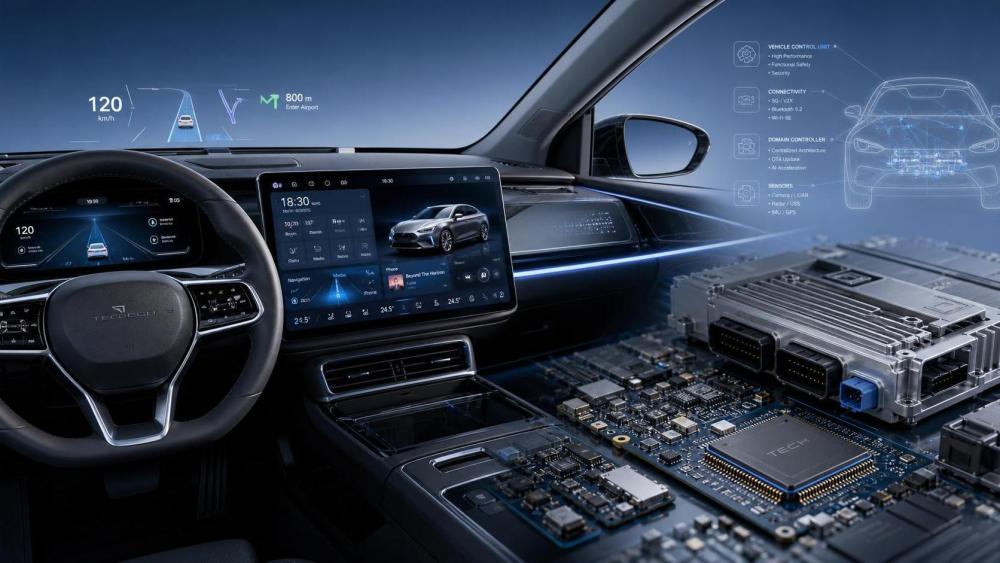
That is especially true as cockpit electronics now link infotainment, displays, HUD, connectivity, voice, and domain control.
A capable supplier can reduce integration risk, shorten launch timing, and improve long-term upgrade flexibility.
A weaker one may still look competitive on price, yet create expensive issues later.
This guide explains how to assess Smart Cockpit Solutions manufacturers with a sharper, business-focused lens.
Why supplier comparison has become more complex
The cockpit is no longer a single device category.
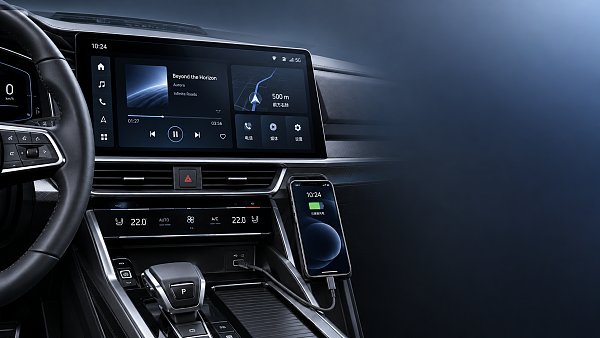
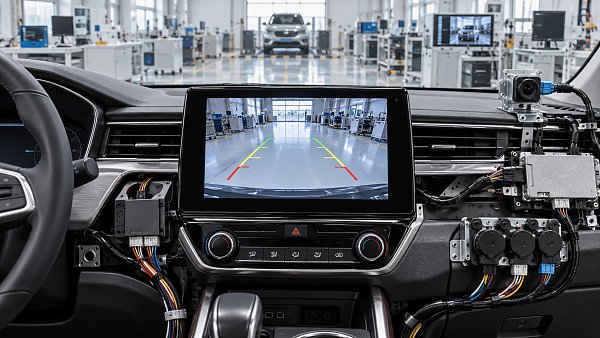
Today, Smart Cockpit Solutions manufacturers may provide media head units, cockpit displays, HUD systems, controllers, sensors, and software stacks.
More importantly, these elements must work as one system inside a connected vehicle architecture.
From recent market shifts, the bigger issue is system coordination rather than standalone component performance.
This also means procurement decisions now affect user experience, cybersecurity exposure, homologation timing, and after-sales support.
As a result, shortlisting Smart Cockpit Solutions manufacturers needs a structured evaluation model.
1. Integration capability across cockpit domains
Integration capability should be the first checkpoint.
Many Smart Cockpit Solutions manufacturers can deliver screens or head units.
Fewer can align display hardware, operating systems, middleware, voice, cameras, and vehicle communication layers smoothly.
Ask whether the supplier supports centralized cockpit architecture or still relies on fragmented module coordination.
The answer affects wiring complexity, software debugging effort, and change management later.
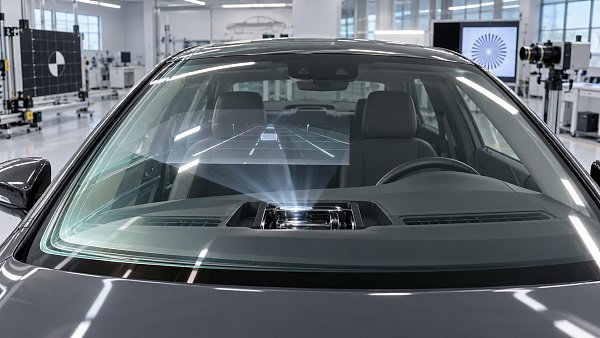
- Can they integrate HUD, cluster, center display, and rear-seat interfaces?
- Do they support CAN, LIN, Ethernet, and high-speed data links?
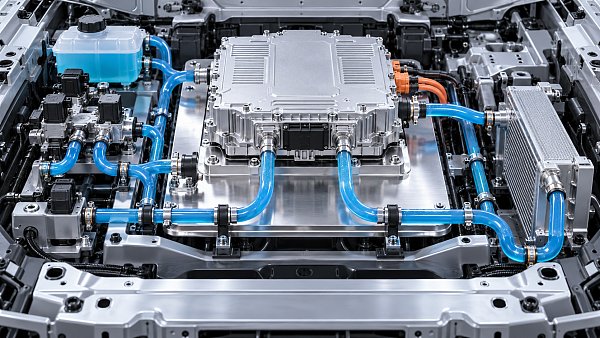
- Can they coordinate with thermal, power, and vehicle domain teams?
In actual sourcing work, suppliers with stronger cross-domain engineering usually create fewer late-stage surprises.
2. Software scalability and upgrade strategy
Software defines cockpit value more than ever.
When comparing Smart Cockpit Solutions manufacturers, check whether their platform can scale across trims, regions, and vehicle lines.
A rigid platform may look cheaper at nomination stage.
However, it often becomes costly when OEM requirements change.
Look for support in these areas:
- OTA update readiness
- Modular UI and feature configuration
- Third-party app and ecosystem compatibility
- Long-term maintenance roadmap
- Regional language and compliance adaptation
The best Smart Cockpit Solutions manufacturers usually present software roadmaps with version control discipline and clear ownership boundaries.
That matters because software delays can derail the whole vehicle launch, even when hardware is ready.
3. Display quality, HMI performance, and user experience
Display specifications should never be viewed in isolation.
Brightness, contrast, color accuracy, touch response, anti-glare treatment, and boot time all shape perceived quality.
This is where Smart Cockpit Solutions manufacturers often separate into different quality tiers.
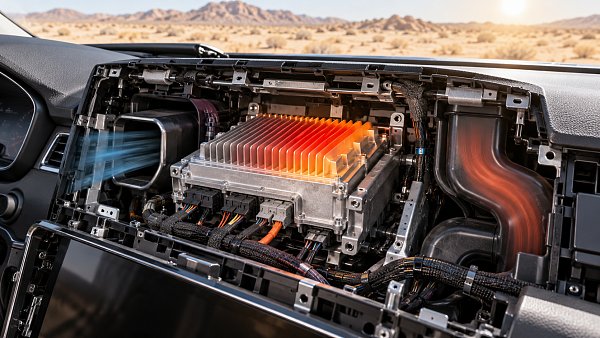
A strong demonstration sample may still hide thermal drift, ghosting, or latency under real driving conditions.
Evaluate HMI performance through real use cases:
- Cold start and wake-up time
- Sunlight readability
- Multi-screen synchronization
- Voice and touch interaction consistency
- Driver distraction control logic
For business evaluation, user experience is not just a design issue.
It directly impacts brand positioning, warranty claims, and customer retention.
4. Connectivity, data handling, and cybersecurity
Connectivity is now a baseline expectation, not a premium extra.
Smart Cockpit Solutions manufacturers should support smartphone integration, cloud services, Bluetooth, Wi-Fi, navigation data, and telematics coordination.
More importantly, they must manage data securely.
This area has become more sensitive as regulators tighten requirements and users expect privacy protection.
Key questions include:
- Do they follow ISO/SAE 21434 cybersecurity processes?
- Can they support UNECE compliance workflows where required?
- How do they handle vulnerability management and patch release timing?
- Is data storage localized when local regulation demands it?
Among Smart Cockpit Solutions manufacturers, cybersecurity maturity is often easier to test through process evidence than sales claims.
5. Validation, compliance, and automotive-grade reliability
Automotive programs fail when validation depth is weak.
This is why experienced buyers examine test coverage very carefully.
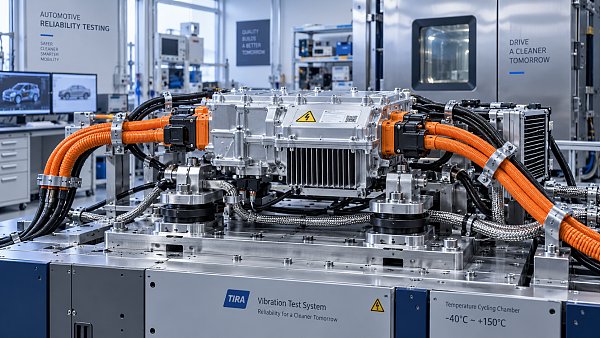
Reliable Smart Cockpit Solutions manufacturers should show evidence across EMC, vibration, thermal cycling, humidity, aging, and software regression testing.
They should also understand regional certification and OEM-specific release gates.
This part is less visible in early quotations, yet it strongly affects warranty risk.
The more complete the validation story, the more credible the supplier becomes.
6. Supply chain resilience and manufacturing execution
A technically advanced product still needs stable supply support.
This has become more obvious after repeated disruptions in chips, displays, and logistics.
When screening Smart Cockpit Solutions manufacturers, ask where critical semiconductors come from and how alternates are qualified.
Check plant locations, localization ability, ramp-up records, and inventory strategy.
Good manufacturing execution usually shows up in predictable milestones, transparent reporting, and disciplined engineering changes.
Weak execution tends to appear as recurring sample delays and unstable BOM planning.
7. Commercial fit and total cost of ownership
Unit price alone does not identify the best supplier.
A proper sourcing comparison should estimate total cost of ownership across the program life cycle.
For Smart Cockpit Solutions manufacturers, commercial fit includes engineering support cost, software licensing terms, tooling exposure, warranty assumptions, and upgrade charges.
It is also worth checking how the supplier handles program changes after design freeze.
The most competitive quote may carry hidden cost in validation gaps or limited software ownership rights.
That is why commercial terms should always be reviewed alongside engineering capability.
A practical comparison framework for shortlisting
To compare Smart Cockpit Solutions manufacturers more effectively, use a weighted scorecard.
That keeps the discussion grounded when internal teams prioritize different things.
- Define must-have technical requirements.
- Separate launch-critical items from future feature requests.
- Score integration, software, validation, supply, and cost independently.
- Request evidence, not only presentations.
- Run sample reviews under realistic operating conditions.
- Check references from similar vehicle segments or regions.
This process makes it easier to identify which Smart Cockpit Solutions manufacturers are genuinely ready for production programs.
Final takeaway
The smartest choice is rarely the supplier with the broadest catalog or the lowest opening quote.
The better choice is the partner that can integrate hardware and software, scale across programs, validate thoroughly, and deliver consistently.
As cockpit electronics become more central to vehicle value, selecting Smart Cockpit Solutions manufacturers demands a more disciplined evaluation process.
A clear comparison framework helps reduce sourcing risk and improves the odds of a smoother launch.
Start with integration depth, software readiness, reliability evidence, and supply execution, then test commercial terms against long-term program realities.
Related News
- 00
0000-00
How electric compressor speed affects EV battery cooling capacity - 00
0000-00
How to verify a variable frequency compressor supplier’s efficiency claims - 00
0000-00
How bend radius affects FPC reliability in automotive camera modules - 00
0000-00
How to diagnose intermittent loss of electric power steering assist - 00
0000-00
How to size automotive power modules for electric compressors
Weekly Insights
Stay ahead with our curated technology reports delivered every Monday.
Recommended News
 How electric compressor speed affects EV battery cooling capacityElectric compressor technology: battery cooling depends on more than RPM. Discover how speed, refrigerant flow, and system limits affect EV cooling capacity and energy efficiency.Author:Time:Oct 19, 2026
 How to verify a variable frequency compressor supplier’s efficiency claimsVerify a variable frequency compressor supplier’s efficiency claims using COP boundaries, matched test conditions, and duty-cycle data. Learn how to choose with confidence.Author:Time:Oct 18, 2026
 How bend radius affects FPC reliability in automotive camera modulesAutomotive FPC applications: camera module reliability starts with bend radius. Learn how stack-up, strain, and validation guide robust designs and help prevent costly failures.Author:Time:Oct 17, 2026
 How to diagnose intermittent loss of electric power steering assistMaster power steering system diagnostics to trace intermittent EPS assist loss. Learn proven checks for voltage, wiring, and fault codes to avoid costly guesswork.Author:Time:Oct 16, 2026
 How to size automotive power modules for electric compressorsSize automotive power modules for electric compressors with confidence. Learn how voltage, phase current, losses, and cooling shape reliable selection—and avoid costly oversizing.Author:Time:Oct 15, 2026
 Why automotive power electronics are shifting to silicon carbideAutomotive Power Electronics are shifting to silicon carbide. Discover how SiC can cut losses, boost EV power density, and reshape cooling, reliability, and system costs.Author:Time:Oct 14, 2026
 How EV adoption shapes the electrically driven compressor marketExplore how EV adoption shapes the electrically driven compressor market, from battery cooling and heat pumps to supplier margins. Discover the drivers of profitable growth.Author:Time:Oct 13, 2026
 How to size a PTC heater for reliable EV cabin heatingPTC Heater sizing for EV cabins: learn how to balance defrost performance, heat-pump integration, airflow, voltage range, and battery power for reliable winter comfort.Author:Time:Oct 12, 2026
 What determines the cooling output of electric automotive AC compressors?Automotive air conditioning compressors electric systems: explore how speed, voltage, refrigerant, controls, and heat exchangers shape EV cooling capacity and efficiency.Author:Time:Oct 11, 2026
 What makes a touchscreen media head unit responsive enough for daily use?Touchscreen media head unit performance explained: discover what delivers fast starts, smooth maps, reliable phone pairing, and responsive daily driving.Author:Time:Oct 10, 2026
 Can a Domain Controller Share a Cooling Loop with Other Electronics?Can a domain controller share a cooling loop with other electronics? Explore thermal zoning, flow control, safety priorities, and reliable vehicle electronics cooling strategies.Author:Time:Oct 19, 2026
 What Causes Domain Controller Overheating During Summer Testing?What causes domain controller overheating in summer testing? Explore heat load, airflow, installation, software factors, and practical fixes.Author:Time:Oct 18, 2026
 Is a Head-Up Display Hard to Integrate with Different Windshields?Is a head-up display difficult to integrate with different windshields? Discover how glass geometry, coatings, and calibration affect HUD clarity, cost, and production readiness.Author:Time:Oct 17, 2026
 What Should Be Checked Before Selecting an Automotive Head Unit?What should be checked before selecting an automotive head unit? Explore compatibility, performance, cybersecurity, compliance, and supplier support.Author:Time:Oct 16, 2026
 Is Steer-by-Wire More Expensive Than an EPS Steering System?Is steer-by-wire more expensive than an EPS steering system? Explore the true costs, safety demands, software value, and when SbW justifies its premium.Author:Time:Oct 15, 2026
 Which Automotive Electronics Need Validation for 800V Platforms?What automotive electronics should be validated for 800V platforms? Explore critical checks for harnesses, power electronics, thermal systems, safety, and EMC.Author:Time:Oct 14, 2026
 How Do Automotive Compressor Export Requirements Vary by Market?How do automotive compressor export requirements vary by market? Explore key compliance rules for refrigerants, EV safety, OEM approvals, labeling, and customs.Author:Time:Oct 13, 2026
 What Documents Are Needed to Export Automotive Thermal Components?What documents are needed to export automotive thermal components? Explore customs, compliance, technical records, and shipping tips to prevent costly delays.Author:Time:Oct 12, 2026
 How Often Should an EV Air Conditioning Compressor Be Inspected?How often should an EV air conditioning compressor be inspected? Discover recommended service intervals, warning signs, and expert care tips to protect cooling performance and EV reliability.Author:Time:Oct 11, 2026
 How to size power solutions for automotive head-up display systemsHeads-up display systems power solutions: learn how to size automotive HUD power architectures for startup, brightness, thermal limits, EMC, protection, and reliable vehicle operation.Author:Time:Oct 19, 2026
 How does a head-up display work in a high-performance car?Hoe werkt een head-up display in een high-performance auto en welke informatie toont het? Discover the tech, safety alerts, and performance data that sharpen every drive.Author:Time:Oct 18, 2026
 Which trends will shape zonal EV architectures in the next decade?Future trends in zonal EV architectures: explore smarter power distribution, 48V systems, thermal integration, software, and resilient networks shaping next-gen vehicles.Author:Time:Oct 17, 2026
 When does a zonal EV architecture outperform a centralized design?Explore the trade-offs between zonal and centralized EV architectures to identify the best path for harness efficiency, software scalability, safety, and faster EV launches.Author:Time:Oct 16, 2026
 How to compare vendors for zonal EV power architecturesComparing vendors for zonal EV power architectures: assess electrical capability, interface ownership, lifecycle support, and integration risk for smarter sourcing.Author:Time:Oct 15, 2026
 How zonal architectures can improve EV reliability at the system levelHow zonal architectures affect EV reliability: explore fault containment, diagnostics, power resilience, and software strategies for more dependable electric vehicles.Author:Time:Oct 14, 2026
 What is driving growth in the automotive E/E architecture market?Explore what drives the automotive electric electronic systems architecture market, from EV power systems and zonal computing to ADAS, cybersecurity, and software-defined vehicles.Author:Time:Oct 13, 2026
 How to evaluate top-rated vehicle electrical components for reliabilityDiscover how to evaluate top-rated vehicle electrical components for reliability, from connector integrity and thermal margins to validation data and manufacturing control.Author:Time:Oct 12, 2026
 What makes vehicle electrical components reliable over a long service life?Top-rated vehicle electrical components for reliability depend on thermal control, sealing, vibration resistance, and validated manufacturing. Discover how to choose durable parts.Author:Time:Oct 11, 2026
 How battery thermal management solutions prevent fast-charge overheatingBattery thermal management solutions prevent fast-charge overheating with intelligent cooling, valve control, predictive preconditioning, and reliable heat rejection.Author:Time:Oct 09, 2026
 What an automotive market report can reveal about EV demand shiftsAutomotive market report insights reveal EV demand shifts, component opportunities, regional risks, and smarter investment strategies for growth.Author:Time:Oct 08, 2026