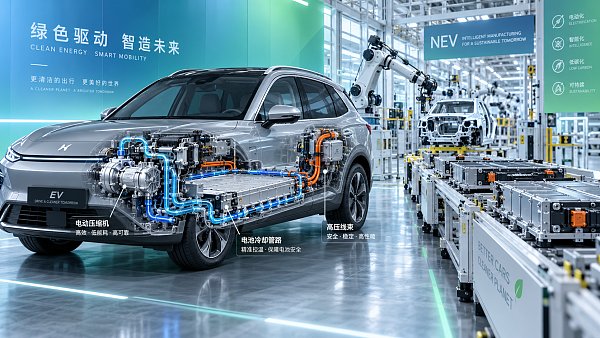
Automotive Air Conditioning Manufacturer Comparison: Cost, Capacity, and Lead Time




Automotive Air Conditioning Manufacturer Comparison: Cost, Capacity, and Lead Time
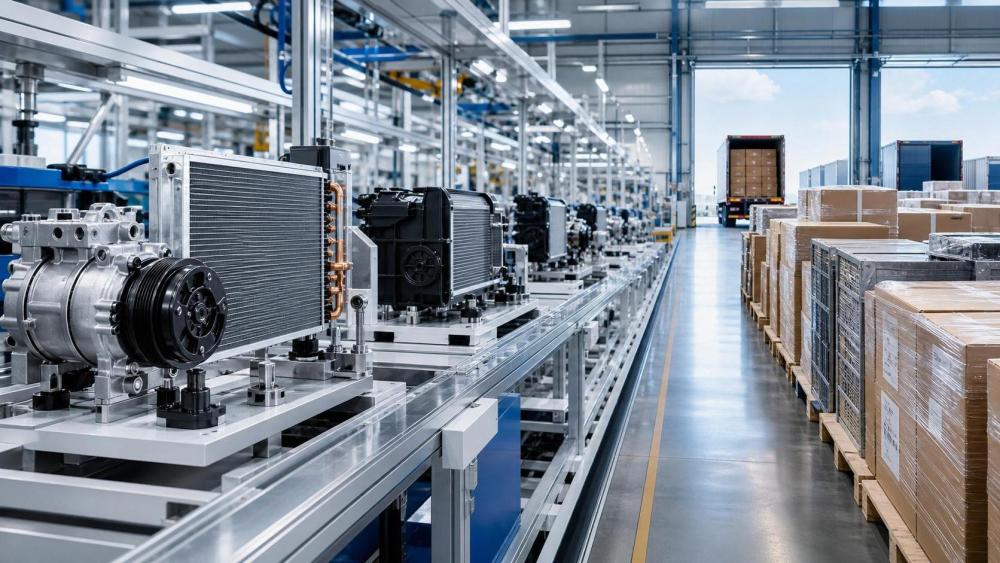
Choosing the right automotive air conditioning manufacturer can reshape total sourcing results. Cost matters first, but capacity and lead time often decide whether a program stays profitable.
In practical procurement, the lowest quote rarely tells the full story. Tooling charges, validation needs, compressor type, and regional shipping pressure can change the final landed cost fast.
That is why comparing an automotive air conditioning manufacturer requires a wider lens. Buyers need to match supplier economics with cooling performance, program timing, and long-term supply stability.
Across global markets, supplier profiles differ sharply. Some focus on scale and price. Others win on engineering support, electric compressor integration, or shorter response cycles for urgent orders.
This guide breaks the comparison into the three variables that matter most: cost structure, production capacity, and lead time. Together, they create a more realistic basis for supplier selection.
Why Cost Comparison Needs More Than Unit Price
When screening an automotive air conditioning manufacturer, unit price is only the visible layer. The real purchasing decision depends on how each supplier builds and protects its margins.
For conventional vehicle A/C systems, pricing usually reflects compressor design, condenser material, evaporator configuration, and assembly complexity. For NEV programs, thermal integration raises the cost logic further.
A low opening quotation can hide later adjustments. Common examples include certification fees, mold amortization, test samples, packaging upgrades, and changes in copper or aluminum input prices.
More importantly, some suppliers quote aggressively to enter a platform, then recover margin through engineering changes or service add-ons after nomination. That risk needs early review.
Key Cost Elements to Compare
- Base component price by annual volume tier
- Tooling, fixture, and validation charges
- Warranty reserve assumptions
- Packaging, pallet, and export handling cost
- Logistics mode, port exposure, and customs duties
- Engineering change pricing and spare parts policy
A strong automotive air conditioning manufacturer should also explain cost reduction roadmaps. Buyers should ask whether savings come from automation, sourcing localization, material substitution, or design refinement.
That distinction matters because sustainable cost-down plans are easier to trust. Price cuts driven only by short-term commercial pressure often create quality or delivery problems later.
How Capacity Shapes Supplier Reliability
Capacity is not just a factory size issue. It reflects line flexibility, labor availability, localization depth, and the supplier’s ability to support volume swings without disrupting output quality.
An automotive air conditioning manufacturer serving both ICE and EV platforms may already operate near peak load in summer-driven markets. In those cases, nominal capacity can look stronger than usable capacity.
It helps to separate installed capacity from committed capacity. Installed capacity shows what equipment can produce. Committed capacity shows what remains after current customer allocations.
Questions That Reveal Real Capacity
- What is monthly output by product family and plant?
- How much volume is already reserved by existing OEM programs?
- Can the supplier add a second shift within thirty days?
- Which components remain externally sourced and vulnerable?
- What is the backup plan for compressor motor or valve shortages?
This is especially relevant for electric compressors and integrated thermal modules. These categories depend on electronics, magnets, semiconductors, and precision machining, which can create hidden bottlenecks.
From recent market shifts, a clearer signal is that capacity resilience now matters almost as much as rated output. Flexible plants with regional supplier networks are gaining attention.
For that reason, the best automotive air conditioning manufacturer may not be the one with the biggest factory. It may be the one with the most predictable supply response.
Lead Time Comparison: Where Delays Usually Start
Lead time is the point where commercial promises meet operational reality. Many supplier comparisons fail because quoted lead times are measured under ideal conditions, not actual sourcing conditions.
A capable automotive air conditioning manufacturer should separate prototype lead time, SOP ramp lead time, and mass production replenishment lead time. Each one follows a different risk path.
Typical Lead Time Drivers
- Compressor core sourcing and motor availability
- Heat exchanger fin and tube processing load
- PPAP, testing, and customer approval cycles
- Export documentation and route congestion
- Demand spikes before seasonal production peaks
Lead time should be reviewed in both calendar days and supplier response stages. A short factory cycle means little if sample approval or booking delays add another three weeks.
This also means procurement teams should track on-time delivery history, not just written commitments. Historic shipment discipline often predicts future performance better than polished presentations.
When comparing an automotive air conditioning manufacturer in China, Mexico, Southeast Asia, or Eastern Europe, transit options can shift the total lead time more than plant efficiency itself.
Regional Manufacturer Profiles: What Buyers Usually See
Regional sourcing patterns often follow familiar tradeoffs. They are not absolute rules, but they help frame the first comparison round with more realism.
China
China-based suppliers usually offer broad scale, mature compressor ecosystems, and strong cost competitiveness. Many also support EV thermal products with faster industrialization speed.
Mexico
Mexico often appeals for North American programs needing shorter logistics routes and tariff advantages. Capacity depth varies by product category and upstream localization.
Japan and South Korea
These markets are often associated with stronger process control and stable quality systems. Pricing may be higher, but technical consistency can justify the premium in sensitive programs.
Europe
European suppliers can be attractive for localized OEM support, compliance alignment, and engineering collaboration. However, cost pressure may be harder to negotiate at scale.
In real sourcing work, the best automotive air conditioning manufacturer is often selected through a dual-region model. One supplier covers cost, another supports continuity and response speed.
A Practical Comparison Table for Shortlisting
This table works best when scored with weighted criteria. Programs focused on launch timing may rank lead time highest, while mature replacement business may prioritize cost and continuity.
How to Make the Final Supplier Decision
A final decision should connect commercial targets with operational evidence. That means validating the automotive air conditioning manufacturer through documents, interviews, and production-side checks.
Start with a clean RFQ structure. Ask every supplier to break out product price, tooling, annual capacity, standard lead time, and assumptions behind the quote.
Then compare beyond spreadsheets. Review defect history, site maturity, export experience, and responsiveness during technical clarification. Those signals usually mirror future daily cooperation.
It is also worth stress-testing each proposal with two scenarios: a sudden 20% demand increase and a critical material shortage. The answers reveal supplier discipline quickly.
For most sourcing teams, the strongest automotive air conditioning manufacturer is the one that balances acceptable cost, proven capacity, and credible lead time under pressure.
That approach reduces expensive surprises after nomination. It also supports cleaner launch execution, more stable service levels, and better leverage in future platform negotiations.
As supplier landscapes keep shifting, procurement decisions need current market intelligence, not legacy assumptions. Cost, capacity, and timing are moving targets across every major region.
A disciplined comparison process makes those variables manageable. With the right sourcing framework, selecting an automotive air conditioning manufacturer becomes a strategic decision, not just a price exercise.
Related News
- 00
0000-00
How electric compressor speed affects EV battery cooling capacity - 00
0000-00
How to verify a variable frequency compressor supplier’s efficiency claims - 00
0000-00
How bend radius affects FPC reliability in automotive camera modules - 00
0000-00
How to diagnose intermittent loss of electric power steering assist - 00
0000-00
How to size automotive power modules for electric compressors
Weekly Insights
Stay ahead with our curated technology reports delivered every Monday.
Recommended News
 How electric compressor speed affects EV battery cooling capacityElectric compressor technology: battery cooling depends on more than RPM. Discover how speed, refrigerant flow, and system limits affect EV cooling capacity and energy efficiency.Author:Time:Oct 19, 2026
 How to verify a variable frequency compressor supplier’s efficiency claimsVerify a variable frequency compressor supplier’s efficiency claims using COP boundaries, matched test conditions, and duty-cycle data. Learn how to choose with confidence.Author:Time:Oct 18, 2026
 How bend radius affects FPC reliability in automotive camera modulesAutomotive FPC applications: camera module reliability starts with bend radius. Learn how stack-up, strain, and validation guide robust designs and help prevent costly failures.Author:Time:Oct 17, 2026
 How to diagnose intermittent loss of electric power steering assistMaster power steering system diagnostics to trace intermittent EPS assist loss. Learn proven checks for voltage, wiring, and fault codes to avoid costly guesswork.Author:Time:Oct 16, 2026
 How to size automotive power modules for electric compressorsSize automotive power modules for electric compressors with confidence. Learn how voltage, phase current, losses, and cooling shape reliable selection—and avoid costly oversizing.Author:Time:Oct 15, 2026
 Why automotive power electronics are shifting to silicon carbideAutomotive Power Electronics are shifting to silicon carbide. Discover how SiC can cut losses, boost EV power density, and reshape cooling, reliability, and system costs.Author:Time:Oct 14, 2026
 How EV adoption shapes the electrically driven compressor marketExplore how EV adoption shapes the electrically driven compressor market, from battery cooling and heat pumps to supplier margins. Discover the drivers of profitable growth.Author:Time:Oct 13, 2026
 How to size a PTC heater for reliable EV cabin heatingPTC Heater sizing for EV cabins: learn how to balance defrost performance, heat-pump integration, airflow, voltage range, and battery power for reliable winter comfort.Author:Time:Oct 12, 2026
 What determines the cooling output of electric automotive AC compressors?Automotive air conditioning compressors electric systems: explore how speed, voltage, refrigerant, controls, and heat exchangers shape EV cooling capacity and efficiency.Author:Time:Oct 11, 2026
 What makes a touchscreen media head unit responsive enough for daily use?Touchscreen media head unit performance explained: discover what delivers fast starts, smooth maps, reliable phone pairing, and responsive daily driving.Author:Time:Oct 10, 2026
 Can a Domain Controller Share a Cooling Loop with Other Electronics?Can a domain controller share a cooling loop with other electronics? Explore thermal zoning, flow control, safety priorities, and reliable vehicle electronics cooling strategies.Author:Time:Oct 19, 2026
 What Causes Domain Controller Overheating During Summer Testing?What causes domain controller overheating in summer testing? Explore heat load, airflow, installation, software factors, and practical fixes.Author:Time:Oct 18, 2026
 Is a Head-Up Display Hard to Integrate with Different Windshields?Is a head-up display difficult to integrate with different windshields? Discover how glass geometry, coatings, and calibration affect HUD clarity, cost, and production readiness.Author:Time:Oct 17, 2026
 What Should Be Checked Before Selecting an Automotive Head Unit?What should be checked before selecting an automotive head unit? Explore compatibility, performance, cybersecurity, compliance, and supplier support.Author:Time:Oct 16, 2026
 Is Steer-by-Wire More Expensive Than an EPS Steering System?Is steer-by-wire more expensive than an EPS steering system? Explore the true costs, safety demands, software value, and when SbW justifies its premium.Author:Time:Oct 15, 2026
 Which Automotive Electronics Need Validation for 800V Platforms?What automotive electronics should be validated for 800V platforms? Explore critical checks for harnesses, power electronics, thermal systems, safety, and EMC.Author:Time:Oct 14, 2026
 How Do Automotive Compressor Export Requirements Vary by Market?How do automotive compressor export requirements vary by market? Explore key compliance rules for refrigerants, EV safety, OEM approvals, labeling, and customs.Author:Time:Oct 13, 2026
 What Documents Are Needed to Export Automotive Thermal Components?What documents are needed to export automotive thermal components? Explore customs, compliance, technical records, and shipping tips to prevent costly delays.Author:Time:Oct 12, 2026
 How Often Should an EV Air Conditioning Compressor Be Inspected?How often should an EV air conditioning compressor be inspected? Discover recommended service intervals, warning signs, and expert care tips to protect cooling performance and EV reliability.Author:Time:Oct 11, 2026
 How to size power solutions for automotive head-up display systemsHeads-up display systems power solutions: learn how to size automotive HUD power architectures for startup, brightness, thermal limits, EMC, protection, and reliable vehicle operation.Author:Time:Oct 19, 2026
 How does a head-up display work in a high-performance car?Hoe werkt een head-up display in een high-performance auto en welke informatie toont het? Discover the tech, safety alerts, and performance data that sharpen every drive.Author:Time:Oct 18, 2026
 Which trends will shape zonal EV architectures in the next decade?Future trends in zonal EV architectures: explore smarter power distribution, 48V systems, thermal integration, software, and resilient networks shaping next-gen vehicles.Author:Time:Oct 17, 2026
 When does a zonal EV architecture outperform a centralized design?Explore the trade-offs between zonal and centralized EV architectures to identify the best path for harness efficiency, software scalability, safety, and faster EV launches.Author:Time:Oct 16, 2026
 How to compare vendors for zonal EV power architecturesComparing vendors for zonal EV power architectures: assess electrical capability, interface ownership, lifecycle support, and integration risk for smarter sourcing.Author:Time:Oct 15, 2026
 How zonal architectures can improve EV reliability at the system levelHow zonal architectures affect EV reliability: explore fault containment, diagnostics, power resilience, and software strategies for more dependable electric vehicles.Author:Time:Oct 14, 2026
 What is driving growth in the automotive E/E architecture market?Explore what drives the automotive electric electronic systems architecture market, from EV power systems and zonal computing to ADAS, cybersecurity, and software-defined vehicles.Author:Time:Oct 13, 2026
 How to evaluate top-rated vehicle electrical components for reliabilityDiscover how to evaluate top-rated vehicle electrical components for reliability, from connector integrity and thermal margins to validation data and manufacturing control.Author:Time:Oct 12, 2026
 What makes vehicle electrical components reliable over a long service life?Top-rated vehicle electrical components for reliability depend on thermal control, sealing, vibration resistance, and validated manufacturing. Discover how to choose durable parts.Author:Time:Oct 11, 2026
 How battery thermal management solutions prevent fast-charge overheatingBattery thermal management solutions prevent fast-charge overheating with intelligent cooling, valve control, predictive preconditioning, and reliable heat rejection.Author:Time:Oct 09, 2026
 What an automotive market report can reveal about EV demand shiftsAutomotive market report insights reveal EV demand shifts, component opportunities, regional risks, and smarter investment strategies for growth.Author:Time:Oct 08, 2026