EPS Steering Fault Patterns That Make Diagnosis Faster




For aftermarket technicians, recognizing recurring EPS steering fault patterns can cut diagnosis time, reduce misjudgments, and improve repair accuracy. From intermittent assist loss and torque sensor drift to CAN communication issues and power supply instability, understanding how these symptoms connect is essential. This article highlights practical EPS steering clues that help maintenance teams troubleshoot faster and make more confident service decisions.
Why EPS Steering Diagnosis Changes from One Service Scenario to Another
In the workshop, EPS steering faults rarely present the same way twice. A city commuter vehicle with low-speed steering complaints behaves differently from a collision-repaired vehicle, a fleet car with high mileage, or a new energy vehicle with unstable low-voltage supply. That is why fast diagnosis does not begin with a scan tool alone. It begins with matching the symptom to the service scenario.
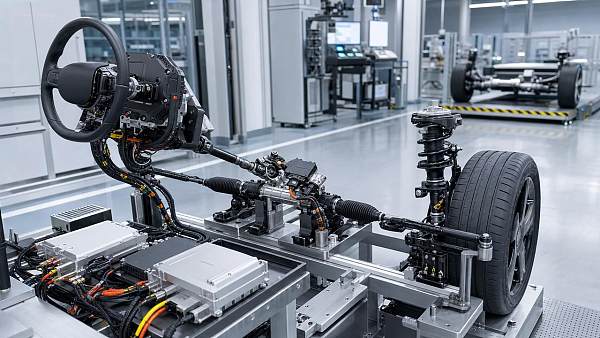
For aftermarket teams, this scenario-based view matters because EPS steering systems sit at the intersection of power supply quality, chassis alignment, steering mechanics, sensor accuracy, software logic, and network communication. A technician who understands where the complaint occurs, when the fault is triggered, and what other systems were recently serviced can often narrow the root cause before disassembly. This is especially valuable in modern vehicles where wiring harnesses, power steering electronics, and body control modules interact through tightly managed signals.
In other words, the fastest path is not asking only “What failed?” but also “In what operating context did this EPS steering pattern appear?” That question reduces parts swapping, avoids overlooking external triggers, and aligns repair steps with real-world service conditions.
A Quick Scenario Map: Where EPS Steering Fault Patterns Commonly Appear
Before diving into detailed cases, it helps to sort faults by workshop scenario. The table below gives technicians a practical starting point for pattern recognition.
Scenario 1: Intermittent Assist Loss in Daily Driving
This is one of the most common EPS steering complaints in general repair shops. The customer reports that steering became heavy for a few seconds, usually while parking, turning at low speed, or crossing rough roads. After an ignition cycle, the symptom disappears. In this scenario, technicians should think in layers: electrical supply first, signal integrity second, internal EPS steering unit faults third.
Low-voltage instability is a major trigger. Weak batteries, charging fluctuation, corroded grounds, and poor terminal contact can force the EPS steering control unit into protective mode. The fault may not be permanent enough to leave clear evidence unless live data is captured during load changes. A voltage reading at idle is not enough. Better practice is to observe voltage drop during steering input, starter recovery, fan operation, and lighting load.
If supply checks are acceptable, the next likely pattern is connector or harness interruption. Vehicles operating in humid, dusty, or vibration-heavy conditions may develop terminal looseness or oxidation. In many cases, the steering complaint looks like a failed rack when the true cause is unstable current delivery or an interrupted signal path in the wiring harness network.
What matters most in this scenario
- Check battery health under load, not only open-circuit voltage.
- Inspect power and ground circuits for heat marks, looseness, and resistance rise.
- Review freeze-frame data to see speed, voltage, and temperature when the EPS steering fault set.
- Road test under the same low-speed turning conditions described by the driver.
Scenario 2: EPS Steering Problems After Collision, Suspension, or Alignment Work
Another high-value service scenario is the vehicle that develops an EPS steering issue after front-end repair, wheel alignment, steering linkage replacement, or subframe removal. Here, technicians should resist the urge to blame the electronic steering unit too early. Many post-repair complaints come from a mismatch between mechanical center and sensor reference.
A steering angle sensor that has not been recalibrated can create an off-center feel, warning lamps, lane support errors, or unusual assist behavior. Likewise, if the subframe position shifts or the intermediate shaft is installed one spline off, the vehicle may show pull, irregular returnability, or torque bias that feels electronic but begins mechanically.
In this scenario, EPS steering diagnosis must include geometry and system integration. Modern steering does not work in isolation. It interacts with stability control, ADAS functions, and body electronics. A collision-repaired car can therefore carry multiple related symptoms, and the root issue may be a calibration sequence that was skipped.
Best-fit checks after repair-related complaints
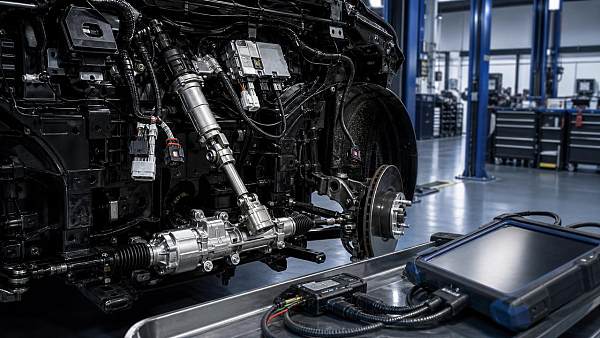
Confirm straight-ahead wheel position, verify steering wheel centering, inspect the intermediate shaft phasing, and compare live steering angle data against actual wheel position. If EPS steering DTCs coexist with yaw, ABS, or camera-related codes, do not isolate the steering system too narrowly. A full vehicle calibration chain may be involved.
Scenario 3: High-Mileage Vehicles with Gradual Steering Feel Changes
Fleet units, taxis, delivery vehicles, and older passenger cars often arrive with complaints such as “steering feels uneven,” “assist is too light one day and too heavy the next,” or “noise appears near full lock.” In this setting, the pattern is usually mixed rather than purely electronic. EPS steering diagnosis becomes faster when technicians separate wear-related changes from control faults.
Torque sensor drift is a frequent suspect in aging systems. The vehicle may not lose assist completely, but the steering effort curve can become inconsistent around center. At the same time, rack friction, worn mounts, dry joints, or tie rod free play can distort feedback and mislead technicians into chasing software or module problems.
This is where experience with mechanical baseline checks saves time. If current draw is elevated because the rack or column is physically resisting movement, the EPS steering unit may appear overloaded even though the motor and controller are still functional. Looking only at fault codes may miss the real issue.
Scenario 4: Communication Faults and EPS Steering Warnings After Electrical Work
When a vehicle develops EPS steering warnings after battery replacement, alternator repair, body electrical work, or aftermarket accessory installation, the service scenario itself becomes the biggest clue. In these cases, the root cause is often outside the steering assembly. CAN communication interruption, improper grounding, blown fuses, or wake-up logic disturbances can disable assist or trigger reduced-function mode.
Technicians should ask what changed before the complaint started. That question is especially useful in modern vehicles with complex cabin electronics and tightly connected control domains. An accessory tied into the wrong power source, a pin drag issue at a module connector, or a high-resistance ground shared with another system can create an EPS steering symptom without an internal steering hardware failure.
This matters for aftermarket efficiency. If a workshop sees network DTCs, unstable ignition status, or multiple unrelated module complaints together, the repair path should shift toward communication topology and power distribution checks rather than immediate EPS steering component replacement.
Scenario 5: Temperature-Dependent EPS Steering Faults in Real Use
Some of the hardest cases are those that appear only on cold mornings, after long traffic idling, or when the engine bay and cabin electronics have been heat soaked. In these situations, EPS steering faults may be linked to thermal expansion at connectors, marginal solder joints, motor current protection, or software thresholds reacting to abnormal load conditions.
For workshop teams, the key is to reproduce the environment rather than rely on a short indoor inspection. A vehicle that behaves normally at room temperature may fail during a hot restart or after repeated parking maneuvers. Thermal management trends in modern vehicles also mean that electronics, power steering, and nearby heat-generating systems increasingly affect one another in packaging-dense layouts. The lesson is practical: if the customer complaint is temperature-linked, the test plan should be temperature-linked as well.
How to Choose the Right Diagnostic Route for Your Workshop Scenario
A fast and accurate EPS steering workflow should adapt to the type of repair environment. Independent shops, fleet maintenance teams, and collision centers do not all see the same failure mix. Independent workshops often benefit most from a disciplined triage order: verify complaint, scan all systems, confirm power and ground quality, inspect harness and connectors, then evaluate steering-specific data. Fleet teams should emphasize trend tracking because repeated complaints across similar vehicles can reveal common wear points or environmental exposure. Collision centers should build calibration and geometry validation into the steering workflow from the start.
If your workshop handles many electrical and chassis complaints, create a standard EPS steering checklist that includes battery load test results, charging voltage behavior, fuse map verification, steering angle status, torque sensor readings, alignment history, and recent repair notes. This simple process reduces repeat comebacks and helps less experienced technicians avoid jumping directly to expensive assemblies.
Common Misreads That Slow Down EPS Steering Diagnosis
- Treating every heavy-steering complaint as a failed EPS steering rack or column.
- Checking fault codes without reviewing freeze-frame and live data context.
- Ignoring recent collision, alignment, battery, or wiring repairs.
- Skipping mechanical resistance checks on high-mileage vehicles.
- Trying to confirm intermittent faults without recreating temperature or load conditions.
- Replacing modules before validating power supply and communication quality.
FAQ for Aftermarket Technicians Working on EPS Steering
Can low battery voltage really create an EPS steering fault without a bad steering unit?
Yes. EPS steering systems are sensitive to voltage drop and unstable current delivery. A marginal battery, poor ground, or charging fluctuation can trigger warning lamps, reduced assist, or temporary shutdown.
When should I suspect torque sensor drift?
Suspect it when steering feel becomes inconsistent around center, assist is uneven without clear mechanical binding, or the vehicle shows steering bias with no obvious alignment problem. Compare live sensor values against actual wheel behavior.
Why do some EPS steering faults appear only after suspension repair?
Because steering angle calibration, wheel alignment, intermediate shaft positioning, and subframe location all affect how the EPS steering controller interprets driver input and vehicle direction.
Should I scan only the steering module?
No. Full-system scanning is important because ABS, ESC, body control, ADAS, and network modules may hold clues that explain the EPS steering complaint more completely than the steering module alone.
Final Takeaway: Match the Fault Pattern to the Service Scene
For aftermarket professionals, faster EPS steering diagnosis comes from recognizing patterns within the right service scenario. Intermittent assist loss points first to voltage and connection quality. Post-repair complaints demand calibration and geometry checks. High-mileage steering feel issues require a balanced electronic and mechanical inspection. Communication-related warnings after electrical work call for network and power distribution analysis. Temperature-dependent faults need realistic reproduction conditions.
If your team wants more reliable decisions on EPS steering, build a repeatable process around scenario recognition, full-system context, and evidence-based testing. That approach improves repair speed, protects margins, and helps technicians make confident service calls in an increasingly integrated vehicle electronics environment.
Related News
- 00
0000-00
How Vehicle Reliability Is Changing in the EV Era - 00
0000-00
Automotive Supply Chain Risks That Still Catch Programs Off Guard - 00
0000-00
Smart Mobility Trends Worth Watching Through 2026 - 00
0000-00
Defrosting Algorithms: What Improves Visibility in Real Winter Driving - 00
0000-00
Are High-Voltage Flat-Wire Motors Worth the Design Trade-Offs?
Tags
Weekly Insights
Stay ahead with our curated technology reports delivered every Monday.
Recommended News
 How Vehicle Reliability Is Changing in the EV EraVehicle reliability is evolving in the EV era. Discover how wiring, thermal systems, steering, and smart cabin electronics are redefining safety, uptime, and long-term performance.Author:Time:May 08, 2026
 Automotive Supply Chain Risks That Still Catch Programs Off GuardAutomotive supply chain risks still derail launches through hidden dependencies in wiring, steering, thermal systems, and IVI. Learn what leaders should spot early to cut delays and cost.Author:Time:May 08, 2026
 Smart Mobility Trends Worth Watching Through 2026Smart mobility trends through 2026: discover how wiring architecture, steer-by-wire, smart cabins, and NEV thermal management can shape strategy, sourcing, and growth.Author:Time:May 08, 2026
 Defrosting Algorithms: What Improves Visibility in Real Winter DrivingDefrosting algorithms improve winter visibility by balancing humidity control, airflow, and energy use. Learn what makes vehicles clear faster, stay clearer, and drive safer in real cold conditions.Author:Time:May 08, 2026
 Are High-Voltage Flat-Wire Motors Worth the Design Trade-Offs?High-voltage flat-wire motors: are the efficiency, power density, and thermal gains worth the design trade-offs? Explore performance, risk, and EV system value.Author:Time:May 08, 2026
![]() Multi-Way Valves vs Traditional Layouts: Where the Efficiency Gains Come FromMulti-way valves vs traditional layouts: discover where multi-way valves improve NEV thermal efficiency through smarter routing, faster switching, and lower energy loss.Author:Time:May 08, 2026
Multi-Way Valves vs Traditional Layouts: Where the Efficiency Gains Come FromMulti-way valves vs traditional layouts: discover where multi-way valves improve NEV thermal efficiency through smarter routing, faster switching, and lower energy loss.Author:Time:May 08, 2026 Cabin Climate Control Problems That Hurt Comfort More Than ExpectedCabin climate control issues can quietly ruin comfort, visibility, and efficiency. Learn the warning signs, likely causes, and when to act before repairs get costly.Author:Time:May 08, 2026
 Autonomous Driving Data: What Makes It Useful Beyond VolumeAutonomous driving data matters most when it delivers quality, context, and usability beyond sheer volume. Discover how actionable datasets improve safety, validation, and commercialization.Author:Time:May 08, 2026
 Why Thermodynamic Parameters Matter More in Thermal System ValidationThermodynamic parameters reveal hidden thermal risks that basic checks miss. Learn how they improve automotive system validation, safety, efficiency, and supplier decisions.Author:Time:May 08, 2026
 Fluid Dynamics Mistakes That Lead to Costly Thermal RedesignsFluid dynamics mistakes can trigger costly thermal redesigns in automotive programs. Learn the key risks, warning signs, and smarter decisions to protect cost, timing, and performance.Author:Time:May 08, 2026
 What to Check Before Sourcing Automotive Electromechanical ComponentsAutomotive electromechanical sourcing starts with more than price. Learn how to assess suppliers, compliance, reliability, and integration risks before choosing components for EV, IVI, steering, and thermal systems.Author:Time:May 08, 2026
 Domain Controller Integration Challenges No One Should IgnoreDomain controller integration can make or break software-defined vehicle programs. Discover hidden risks in architecture, thermal design, software, validation, and supplier coordination.Author:Time:May 08, 2026
 E-Drive Cooling Solutions: What Delivers Stable Performance Under LoadE-drive cooling insights for stable EV performance under load. Learn which thermal solutions reduce derating, improve reliability, and help maintenance teams diagnose issues faster.Author:Time:May 08, 2026
 Battery Thermoregulation Choices That Affect Range, Safety, and LifecycleBattery thermoregulation choices shape EV range, safety, charging speed, and battery life. Discover the key architectures, trade-offs, and business metrics that drive smarter decisions.Author:Time:May 08, 2026
 Heat Pump Systems: When the Efficiency Payback Really Shows UpHeat pump systems: discover when efficiency gains turn into real payback in NEVs through lower energy use, better winter range, and smarter thermal integration.Author:Time:May 08, 2026
 AR-HUD Design Priorities That Improve Driver FocusAR-HUD design priorities can make the difference between sharper focus and added distraction. Discover the key checklist for clarity, stability, low cognitive load, and safer driver support.Author:Time:May 08, 2026
 Variable-Frequency Compressors vs Fixed-Speed Options: What Changes in Real UseVariable-frequency compressors vs fixed-speed options: see what changes in real use for efficiency, NVH, thermal control, and EV system value before you choose.Author:Time:May 08, 2026
 Steer-by-Wire Safety Questions That Need Clear Answers Before AdoptionSteer-by-wire safety demands clear proof before adoption. Explore failure modes, redundancy, diagnostics, and regulatory readiness to judge if real-world steering safety is truly verified.Author:Time:May 08, 2026
 EPS Steering Fault Patterns That Make Diagnosis FasterEPS steering fault patterns explained for faster diagnosis. Learn how to spot voltage, sensor, CAN, and calibration issues quickly to reduce misdiagnosis and improve repair accuracy.Author:Time:May 08, 2026
 High-Voltage Harness Selection: What Matters Beyond Voltage RatingHigh-voltage harness selection goes beyond voltage rating. Learn how current capacity, insulation, EMC, connectors, and supply stability shape safer, smarter sourcing decisions.Author:Time:May 08, 2026
 Smart Cabin Electronics Features Drivers Actually NoticeSmart cabin electronics shape what drivers notice most—from fast screens and seamless phone pairing to quieter climate control and safer displays. Discover which features are truly worth paying for.Author:Time:May 08, 2026
![]() Electric Compressors: Where Reliability Issues Usually StartElectric compressors often show reliability problems before failure. Discover the earliest warning signs in insulation, lubrication, sealing, vibration, and control logic to reduce downtime and safety risk.Author:Time:May 08, 2026
Electric Compressors: Where Reliability Issues Usually StartElectric compressors often show reliability problems before failure. Discover the earliest warning signs in insulation, lubrication, sealing, vibration, and control logic to reduce downtime and safety risk.Author:Time:May 08, 2026 How Chassis Dynamics Tuning Changes the Driving ExperienceChassis dynamics tuning transforms comfort, control, and confidence on the road. Discover how suspension, steering, and stability systems shape a safer, smoother, more engaging drive.Author:Time:May 08, 2026
 Thermal Systems Upgrades That Deliver Measurable Efficiency GainsThermal systems upgrades deliver measurable efficiency gains through lower energy use, stronger reliability, and better lifecycle value. See what drives smarter investment decisions.Author:Time:May 08, 2026
 Vehicle Electrification Trends Reshaping Platform PlanningVehicle electrification is reshaping platform planning across wiring, steering, thermal systems, and smart cabins. Discover key trends, risks, and strategies for scalable EV success.Author:Time:May 08, 2026
 NEV Thermal Management Costs: What Drives Budget OverrunsNEV thermal management costs often exceed plan due to integration, software, validation, and supply chain risks. Learn the real budget drivers and how to control overruns.Author:Time:May 08, 2026
 In-Vehicle Infotainment Issues That Turn Into User Complaints FastIn-vehicle infotainment issues can trigger fast user complaints. Learn key pain points, supplier checks, and scenario-based tips to reduce risk and improve customer satisfaction.Author:Time:May 08, 2026
 Auto A/C Compressors: How to Compare Durability Across OptionsAuto A/C compressors buyers can compare durability with confidence. Explore materials, sealing, thermal tolerance, NVH, and validation data to reduce lifecycle cost and sourcing risk.Author:Time:May 08, 2026
![]() Power Steering Systems: Common Failure Points and What Causes ThemPower steering systems fail at pumps, hoses, racks, sensors, and EPS units. Learn the root causes, early warning signs, and smarter diagnostics to cut comebacks and repair costs.Author:Time:May 08, 2026
Power Steering Systems: Common Failure Points and What Causes ThemPower steering systems fail at pumps, hoses, racks, sensors, and EPS units. Learn the root causes, early warning signs, and smarter diagnostics to cut comebacks and repair costs.Author:Time:May 08, 2026 Auto Wiring Harnesses: Early Warning Signs of Quality ProblemsAuto wiring harnesses can hide critical quality risks before failure occurs. Learn the early warning signs—insulation defects, loose terminals, overheating, and assembly drift.Author:Time:May 08, 2026