Steer-by-Wire Safety Risks to Check Before Adoption




As automakers move from mechanical linkages to electronic command paths, steer-by-wire promises packaging freedom, faster control response, and autonomy-ready redundancy.
Yet adoption requires more than supplier claims, benchmark laps, or concept demonstrations. Production readiness depends on verified safety behavior under real faults.
Before platform release, sensors, actuators, ECUs, power supply, software diagnostics, and fallback logic must be checked as one controlled system.
Steer-by-Wire Safety Scope and System Definition
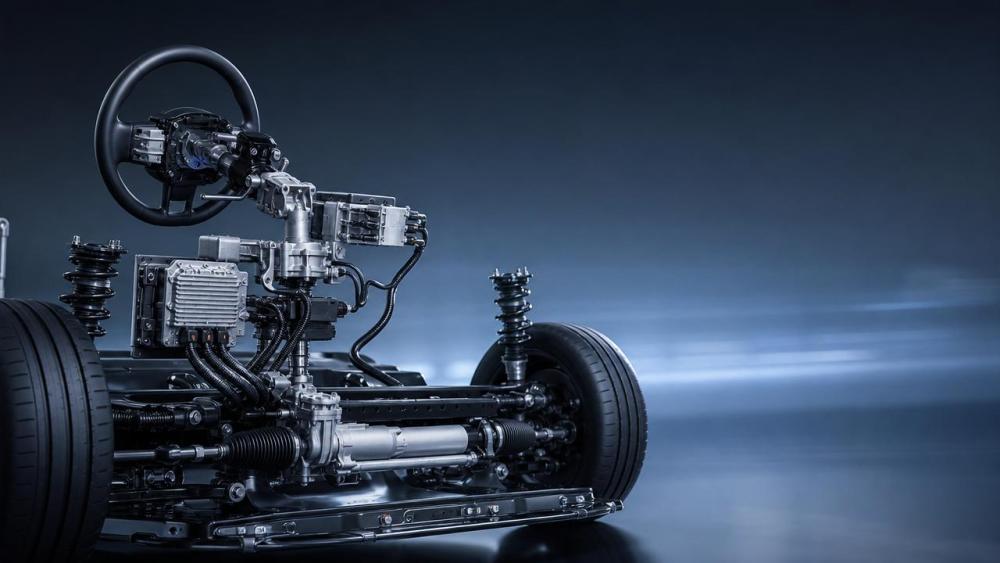
Steer-by-wire removes the continuous mechanical steering column and transmits driver intent through sensors, controllers, power electronics, and steering actuators.
The system normally includes a handwheel module, road wheel actuator, torque feedback unit, redundant ECUs, and independent power paths.
In conventional steering, a mechanical path provides inherent fallback. In steer-by-wire, fallback must be engineered, monitored, and proven.
This changes the safety discussion from component durability to system-level fault tolerance, diagnostic coverage, and controlled degradation.
A production steer-by-wire architecture should define safe states before testing begins. Undefined fallback behavior creates late-stage validation risk.
The safety case should also link steering performance with braking, stability control, autonomous driving, and power distribution behavior.
Industry Background and Current Risk Signals
The shift toward electric vehicles and software-defined platforms has accelerated interest in steer-by-wire across passenger cars, commercial vehicles, and robotaxi platforms.
Packaging freedom supports new cabin layouts. Electronic steering ratios also improve maneuverability, lane control, and automated parking performance.
However, the same transition introduces dependency on sensing accuracy, power stability, cybersecurity protection, and actuator thermal endurance.
GACT views steer-by-wire as a key “Vehicle Neuron” technology, where signal integrity directly affects vehicle motion safety.
For global supply chains, the major question is not whether steer-by-wire works in principle. It is whether it fails safely.
Core Safety Risks Before Adoption
Sensor Plausibility and Signal Integrity
Steer-by-wire depends on accurate steering angle, torque, position, acceleration, and actuator feedback signals.
A single inaccurate signal can produce unwanted steering response if plausibility checks are weak.
Validation should include offset drift, intermittent connectors, electromagnetic disturbance, short circuits, and frozen signal simulation.
The system should compare redundant sensor channels and reject values that violate physical steering limits.
Actuator Authority and Thermal Degradation
Road wheel actuators must deliver steering force across parking, high-speed lane changes, rough roads, and emergency avoidance.
Thermal saturation can reduce available torque when repeated steering events occur in hot environments.
Steer-by-wire approval should include motor winding temperature, inverter derating, grease behavior, and gearbox efficiency under load.
A safe design should predict torque loss early and shift to a controlled degraded mode.
Power Supply Redundancy
Because steer-by-wire has no continuous mechanical backup, electrical availability is central to the safety case.
Independent power feeds, isolated fusing, reserve energy, and stable grounding should be verified under realistic transients.
Testing should cover battery sag, load dump, inverter noise, harness abrasion, and partial connector disengagement.
The steering system must maintain controllability long enough for a safe stop strategy.
Software Diagnostics and Timing Control
Steer-by-wire software must detect faults quickly without creating false interventions during normal driving.
Critical checks include watchdog logic, task scheduling, communication timeout, memory protection, and actuator command monitoring.
Latency matters. A delayed command can feel unstable during obstacle avoidance or automated lane centering.
The control loop should be measured from handwheel input to road wheel response under maximum bus load.
Cybersecurity and Unauthorized Commands
Electronic steering expands the attack surface because steering commands travel through networked controllers and software interfaces.
A secure steer-by-wire design should authenticate commands, isolate safety functions, and monitor abnormal message frequency.
Security validation should include diagnostic access abuse, update package tampering, gateway bypass, and compromised sensor data.
Cybersecurity controls must support safety goals, not merely satisfy compliance documentation.
Application Value and Business Meaning
When validated correctly, steer-by-wire can improve platform flexibility, driving personalization, and automated driving integration.
Variable steering ratios reduce driver workload at low speed and improve stability at highway speed.
The absence of a steering column can support new crash structures, right-hand or left-hand market flexibility, and smart cabin layouts.
For electrified vehicles, steer-by-wire also fits centralized electrical architectures and integrated chassis control strategies.
The business value appears only when safety evidence is strong enough for regulation, insurance, aftersales, and consumer trust.
Weak validation can turn steer-by-wire from an innovation advantage into a recall, warranty, or brand confidence risk.
Typical Scenarios and Objects to Classify
A practical review should classify steer-by-wire risks by driving scenario, failure object, and controllability requirement.
Object classification should include sensors, ECUs, wiring harnesses, connectors, motors, reducers, software modules, and cooling paths.
Harness design is especially important because steer-by-wire relies on clean signal transmission and stable high-current delivery.
Connector locking, shielding, routing, bending radius, and water ingress protection should be reviewed with vehicle packaging data.
Practical Validation and Adoption Recommendations
A steer-by-wire program should begin with a hazard analysis that links failures to vehicle-level controllability outcomes.
Functional safety work should follow recognized processes such as ISO 26262 and connect directly with testable technical safety requirements.
Cybersecurity engineering should align with ISO/SAE 21434 and include over-the-air update controls where applicable.
- Define safe states for complete loss, partial loss, and degraded steering authority.
- Test redundant channels with injected faults, not only simulated software flags.
- Measure control latency during peak network traffic and thermal derating.
- Verify power independence through wiring, fusing, grounding, and reserve energy tests.
- Check driver feedback quality during fallback and autonomous handover events.
- Review diagnostics for false positives, missed faults, and unclear warning strategies.
Physical proving should combine bench rigs, hardware-in-the-loop systems, proving grounds, and public-road exposure where permitted.
Environmental testing should include cold start, high humidity, salt spray, vibration, thermal shock, and long-duration steering cycles.
Data review should focus on worst cases, not average behavior. Rare steering anomalies deserve root-cause closure before release.
A strong steer-by-wire safety case also needs production control, traceability, calibration governance, and aftersales diagnostic readiness.
Decision Checklist for Production Readiness
Before adoption, decision records should show that steer-by-wire has passed measurable safety gates, not only functional demonstrations.
- The system remains controllable after any single point failure defined in the safety concept.
- Diagnostic coverage is validated with real electrical, mechanical, and software fault injection.
- Power redundancy supports steering control through defined safe stop requirements.
- Thermal limits are proven during high-load steering and hot-climate operation.
- Cybersecurity protection prevents unauthorized steering commands and unsafe update states.
- Manufacturing variation does not compromise sensor alignment or actuator response.
If any item remains unresolved, the adoption plan should shift from launch approval to targeted engineering closure.
Steer-by-wire can become a foundation for intelligent chassis control, but only when redundancy is verified as deeply as performance.
GACT will continue tracking steering electronics, wiring harness reliability, domain control integration, and thermal constraints affecting future vehicle safety.
For the next step, build a risk register around the checks above and compare supplier evidence against vehicle-level safety targets.
Have questions about this sector analysis, or seeking best practices specific to your niche? Drop us a line below and let the senior consultants at GAC assist you.
“We respect your privacy. Your information is strictly confidential.”
Related News
- 00
0000-00
How to compare noise ratings for battery coolant pumps - 00
0000-00
How bright should automotive display systems be in sunlight? - 00
0000-00
How heat pumps improve the efficiency of EV thermal systems - 00
0000-00
Can a smart cockpit platform support multiple displays? - 00
0000-00
How is automotive connector vibration resistance tested?
Weekly Insights
Stay ahead with our curated technology reports delivered every Monday.
Recommended News
 How to compare noise ratings for battery coolant pumpsCompare coolant pump low noise ratings with confidence. Learn how test conditions, hydraulic duty, tonal noise and installation affect your choice.Author:Time:Nov 10, 2026
 How bright should automotive display systems be in sunlight?Automotive Display Systems need more than brightness to stay readable in sunlight. Discover why 1,000 nits is a starting point and how to evaluate glare and heat.Author:Time:Nov 09, 2026
 How heat pumps improve the efficiency of EV thermal systemsEV Thermal Systems use heat pumps to reduce heating energy demand. Explore how they work, where they excel, and what limits efficiency in cold weather.Author:Time:Nov 08, 2026
 Can a smart cockpit platform support multiple displays?Can a smart cockpit platform support multiple displays? Explore key requirements for performance, safety, connectivity, and supplier evaluation.Author:Time:Nov 07, 2026
 How is automotive connector vibration resistance tested?Automotive connector vibration resistance testing reveals hidden contact failures. Explore test profiles, continuity monitoring and pass criteria.Author:Time:Nov 06, 2026
 How heat pumps save energy in automotive cabin climate systemsAutomotive Cabin Climate Systems energy saving starts with smarter heat pump design. Explore real-world efficiency, cold-weather trade-offs, and testing tips.Author:Time:Nov 05, 2026
 Is an EV heat pump worth it for winter driving range?Is a heat pump worth using in a cold-climate EV? Discover how it affects winter range, when it pays off, and what to check before buying.Author:Time:Nov 04, 2026
 When should you use 50-ohm coaxial cable instead of 75-ohm?Coaxial cable 50 ohm or 75 ohm? Learn when to use each, avoid impedance mismatches, and choose the right cable for reliable RF and video performance.Author:Time:Nov 03, 2026
 How to select a high temperature motor harness for an EVChoose the right high temperature motor harness for your EV. Compare thermal limits, current capacity, shielding, routing, and validation evidence.Author:Time:Nov 02, 2026
 How much does electric power steering replacement cost?Electric power steering price typically ranges from $1,000 to $3,000 for major replacements. Discover cost factors, repair options, and tips for comparing quotes.Author:Time:Nov 01, 2026
 How to size an EV A/C compressor for the required cooling capacitySize an EV A/C Compressor with confidence. Explore cooling loads, performance maps and power limits to select the right compressor for your vehicle.Author:Time:Oct 31, 2026
 How to choose the right pitch for an FPC board connectorFPC board connector pitch affects space, assembly and reliability. Learn how to compare options and select the best fit for your design.Author:Time:Oct 30, 2026
 How zonal design affects harness routing in high-voltage EV architecturesExplore high-voltage electrical architecture zonal design and its impact on EV harness routing. Discover key trade-offs in cable length, safety, thermal performance, and service access.Author:Time:Oct 29, 2026
 How tariffs affect costs in global automotive parts supply chainsNavigate tariffs in the global automotive parts trade supply chain. Learn to compare landed costs, manage duty exposure, and uncover smarter sourcing strategies to protect your margins.Author:Time:Oct 28, 2026
 How to assess vendor lock-in in a software-defined vehicle platformAssess Software-Defined Vehicle platform lock-in with practical tests for API portability, data access, update control, and exit costs. Learn how to choose a platform with a proven exit path.Author:Time:Oct 27, 2026
 How ISO 26262 guides functional safety in steer-by-wire systemsExplore steering systems functional safety through ISO 26262. Learn how hazard analysis, fault-tolerant design, and validation build a stronger steer-by-wire safety case.Author:Time:Oct 26, 2026
 How to evaluate a steering angle sensor manufacturer's accuracy claimsEvaluate steering angle sensor manufacturer accuracy claims with practical checks on calibration, latency, and test evidence. Compare suppliers confidently and avoid costly selection mistakes.Author:Time:Oct 25, 2026
 How to diagnose CAN bus faults in a hybrid vehicle control unitDiagnose Hybrid Vehicle Systems control unit CAN bus faults with step-by-step power, wiring, and waveform checks. Find the root cause and avoid unnecessary replacement.Author:Time:Oct 24, 2026
 How does battery cooling pipe diameter affect coolant pressure drop?Battery Cooling Pipe diameter affects coolant pressure drop and pump power. Explore sizing calculations and practical tips to optimize EV battery cooling and compare options with confidence.Author:Time:Oct 23, 2026
 How to assess PPAP readiness of automotive sensor system manufacturersAssess Automotive Sensor Systems manufacturers for PPAP readiness. Learn to verify production evidence, measurement capability, validation, and traceability to reduce sourcing risks.Author:Time:Oct 22, 2026
 What to ask an FPC connector manufacturer about reliability testingChoosing an FPC Connector manufacturer? Learn what to ask about reliability testing, failure limits, and traceable results to reduce design risks and select with confidence.Author:Time:Oct 21, 2026
 How to verify vehicle fitment for an aftermarket AC evaporatorNavigating the evaporator aftermarket? Verify vehicle fitment with VIN data, OE numbers, and physical interface checks. Use this guide to avoid costly mismatches and order confidently.Author:Time:Oct 20, 2026
 How electric compressor speed affects EV battery cooling capacityElectric compressor technology: battery cooling depends on more than RPM. Discover how speed, refrigerant flow, and system limits affect EV cooling capacity and energy efficiency.Author:Time:Oct 19, 2026
 How to verify a variable frequency compressor supplier’s efficiency claimsVerify a variable frequency compressor supplier’s efficiency claims using COP boundaries, matched test conditions, and duty-cycle data. Learn how to choose with confidence.Author:Time:Oct 18, 2026
 How bend radius affects FPC reliability in automotive camera modulesAutomotive FPC applications: camera module reliability starts with bend radius. Learn how stack-up, strain, and validation guide robust designs and help prevent costly failures.Author:Time:Oct 17, 2026
 How to diagnose intermittent loss of electric power steering assistMaster power steering system diagnostics to trace intermittent EPS assist loss. Learn proven checks for voltage, wiring, and fault codes to avoid costly guesswork.Author:Time:Oct 16, 2026
 How to size automotive power modules for electric compressorsSize automotive power modules for electric compressors with confidence. Learn how voltage, phase current, losses, and cooling shape reliable selection—and avoid costly oversizing.Author:Time:Oct 15, 2026
 Why automotive power electronics are shifting to silicon carbideAutomotive Power Electronics are shifting to silicon carbide. Discover how SiC can cut losses, boost EV power density, and reshape cooling, reliability, and system costs.Author:Time:Oct 14, 2026
 How EV adoption shapes the electrically driven compressor marketExplore how EV adoption shapes the electrically driven compressor market, from battery cooling and heat pumps to supplier margins. Discover the drivers of profitable growth.Author:Time:Oct 13, 2026
 How to size a PTC heater for reliable EV cabin heatingPTC Heater sizing for EV cabins: learn how to balance defrost performance, heat-pump integration, airflow, voltage range, and battery power for reliable winter comfort.Author:Time:Oct 12, 2026