How to Evaluate Autonomous Driving Architecture for System Safety




Evaluating autonomous driving architecture for system safety starts with a simple point: safety does not come from sensor quantity alone. It comes from how sensing, computing, actuation, power, cooling, and communication behave together when conditions become uncertain.
That question now matters across the broader automotive components industry. Electrified platforms, smart cockpit electronics, high-voltage harnesses, steer-by-wire systems, and thermal management hardware are no longer adjacent topics. They directly shape whether an autonomous stack can remain controllable under stress.
For platforms tracked by GACT, this is where technical evaluation becomes practical. A strong architecture must connect software logic with wiring topology, cooling capacity, steering redundancy, and vehicle-level fault response, not just headline computing power.
What Safety Evaluation Really Covers
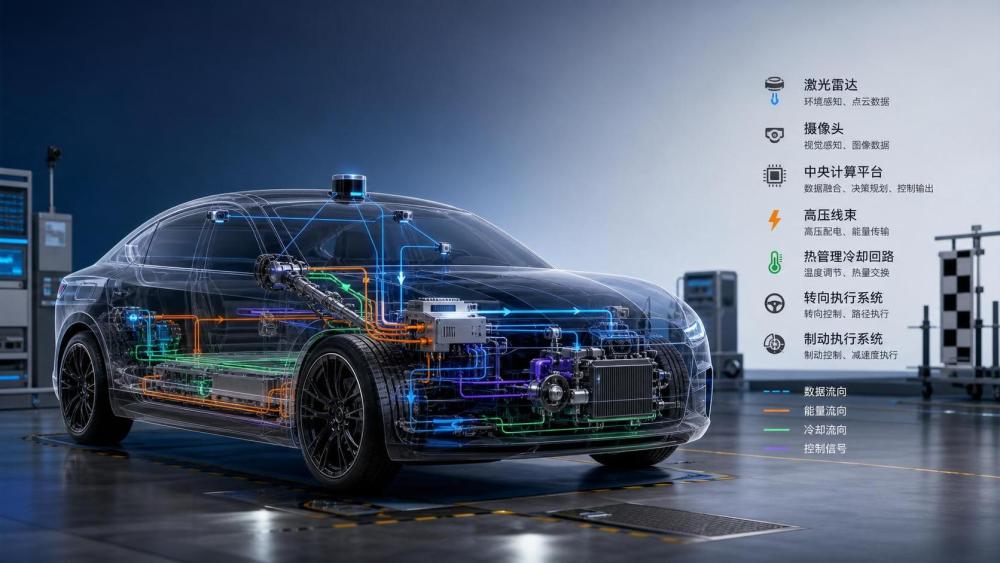
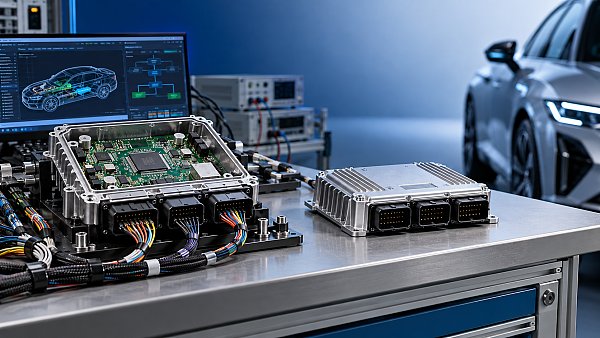
An autonomous driving architecture is the full system arrangement behind perception, planning, control, and execution. It includes sensors, domain controllers, in-vehicle networks, power supply paths, thermal systems, steering and braking interfaces, and fallback logic.
From a safety perspective, the core issue is not whether each part performs well in isolation. The issue is whether the architecture maintains acceptable behavior when data becomes degraded, components overheat, links drop, or actuators lose precision.
This is why architecture reviews usually go beyond algorithm accuracy. They test how the vehicle detects faults, limits unsafe motion, preserves control authority, and transitions into a minimal risk condition.
Safety Is a System Property
A perception model may score well in development, yet the overall autonomous driving architecture can still be unsafe. A thermal bottleneck, unstable power rail, or overloaded communication bus can create failure paths that software alone cannot absorb.
That is especially relevant in current vehicle programs, where centralized computing, high-speed data cables, cockpit integration, and electrified auxiliaries are becoming tightly coupled.
Why the Industry Is Paying Closer Attention
Autonomous functions are moving from isolated demonstrations toward production platforms. As soon as systems enter real traffic, the evaluation standard changes. Scalability, diagnostics, maintainability, and component robustness become as important as peak performance.
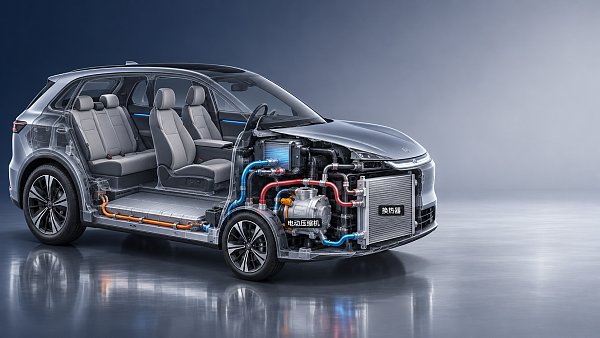
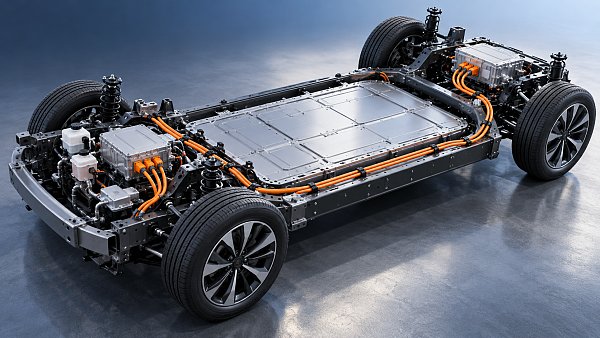
At the same time, vehicle architectures are being reshaped by electrification. Battery thermal loops, electric compressors, integrated thermal valves, high-voltage wiring, and zonal electronics affect the operating envelope of autonomous hardware.
A controller that performs well on a bench may behave differently in a vehicle with heat pump load shifts, constrained packaging, or electromagnetic interference from high-voltage harness routing. System safety evaluation must account for those interactions.
Global Programs Also Raise the Bar
Programs targeting China, the United States, Germany, Japan, South Korea, India, Mexico, Southeast Asia, and Europe face different road conditions, regulations, and supply chain realities. An autonomous driving architecture should therefore be assessed for regional adaptability, not only baseline capability.
This is one reason industry intelligence platforms matter. Tracking standards interpretation, component maturity, and export trends helps teams judge whether a design can move from prototype confidence to production confidence.
Key Dimensions for Evaluating Autonomous Driving Architecture
A useful review framework should connect vehicle electronics, software behavior, and mechanical control paths. The table below highlights the dimensions that usually determine system safety maturity.
Perception Must Be Evaluated as a Safety Chain
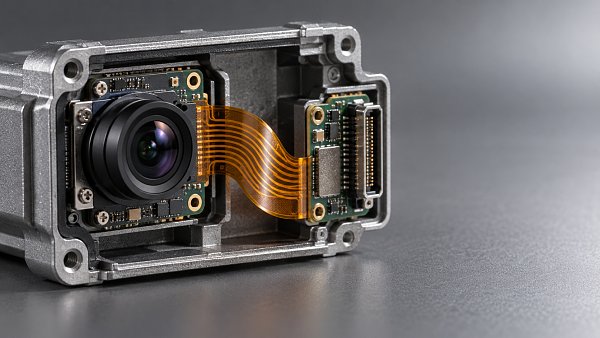
Camera, radar, lidar, ultrasonic, and driver monitoring systems should not be judged only by nominal detection range. Safety depends on data quality during glare, rain, dirt, vibration, and low-temperature startup.
The stronger autonomous driving architecture usually has clear sensor diversity and a defined response when one modality becomes unreliable. Diversity matters because common-mode failure can defeat apparent redundancy.
Compute Power Needs Thermal and Power Context
High TOPS numbers look attractive, but sustained safety depends on thermal stability and power integrity. If a central controller derates under summer load, the architecture may lose the timing margins needed for safe planning and control.
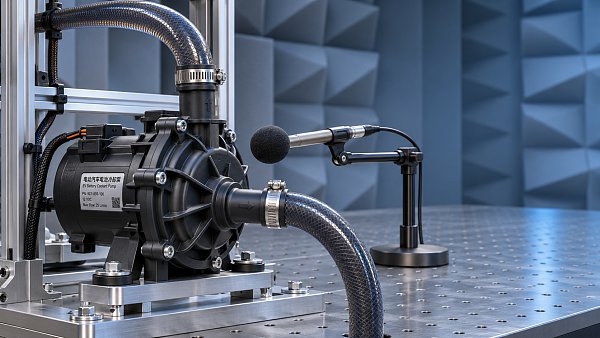
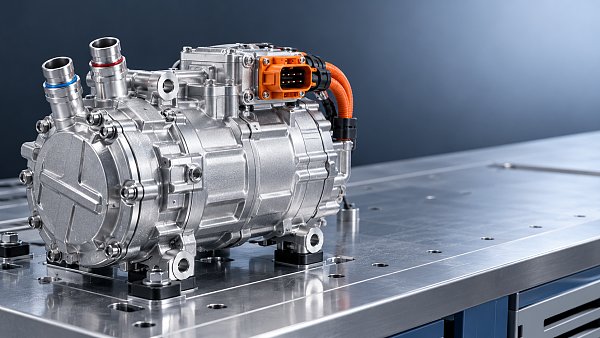
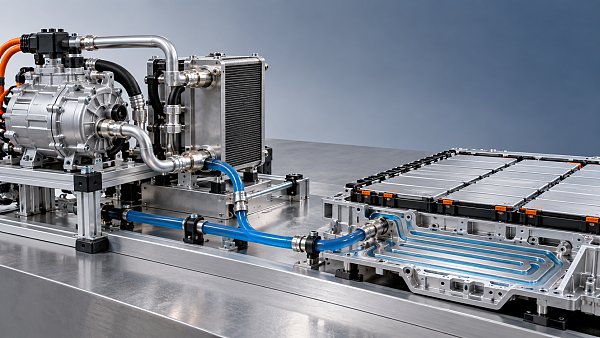
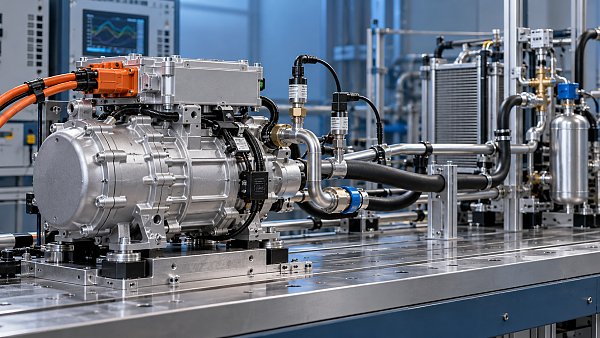
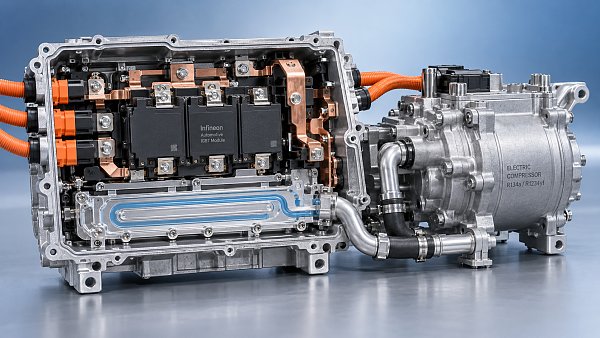
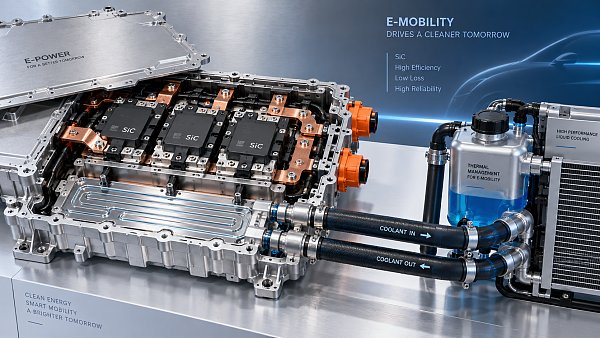
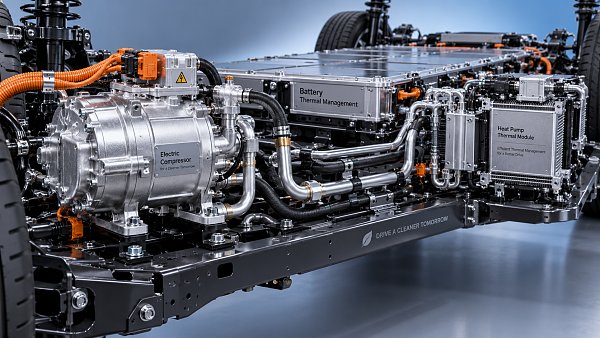
This is where NEV thermal management becomes relevant. Battery liquid cooling systems, heat pump strategies, electric compressors, and integrated valves can influence cabin electronics and autonomous compute reliability in real operation.
Vehicle Integration Often Decides the Outcome
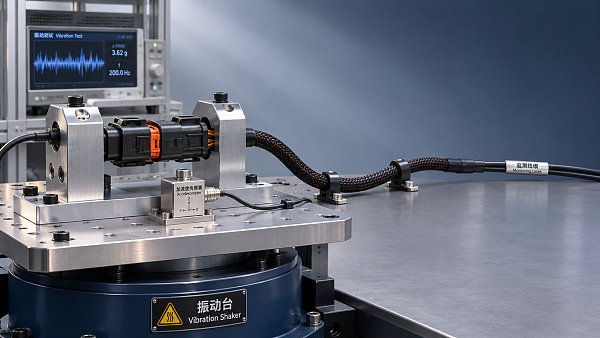
Many architecture reviews fail because they stay too close to the software stack. In production vehicles, safety performance is frequently determined by integration details: packaging, cable length, connector sealing, grounding strategy, steering interface, and diagnostic communication.
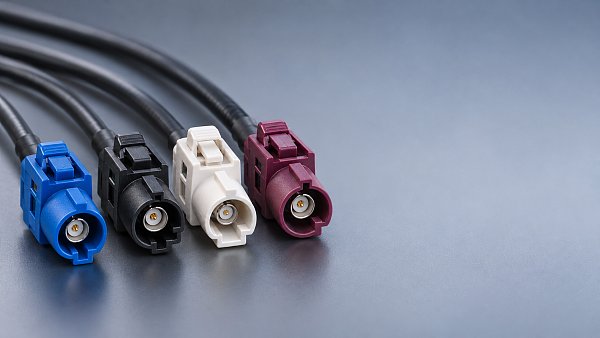
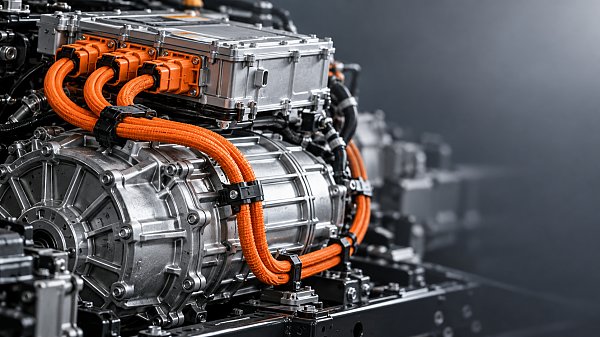
High-voltage harnesses and data communication cables deserve particular attention. Routing, shielding, and connector quality can affect signal integrity, electromagnetic compatibility, and long-term reliability.
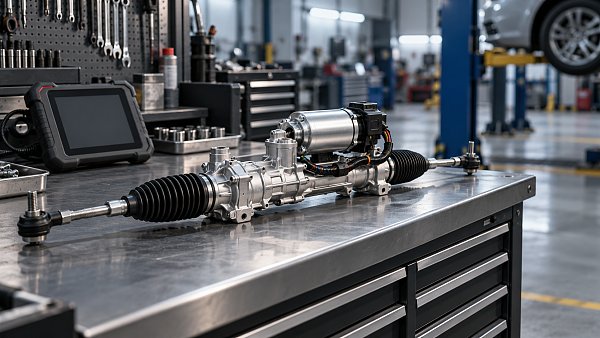
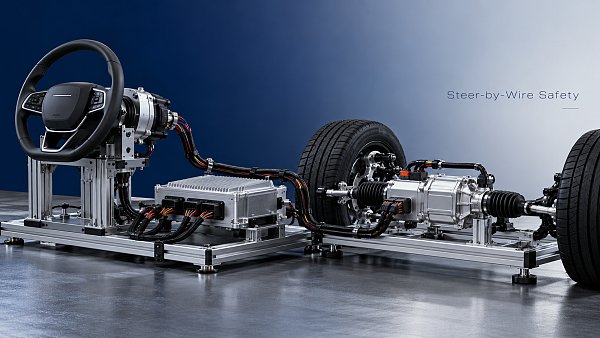
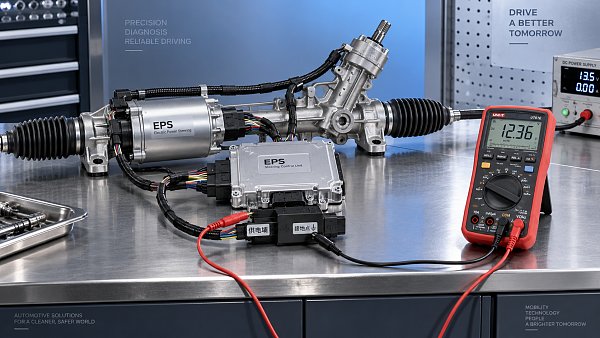
Steering architecture matters just as much. EPS systems, steering columns, and steer-by-wire layouts should be checked for redundancy allocation, control handoff, and the way faults propagate from electronic layers into vehicle motion.
Cockpit and ADAS Convergence Adds New Dependencies
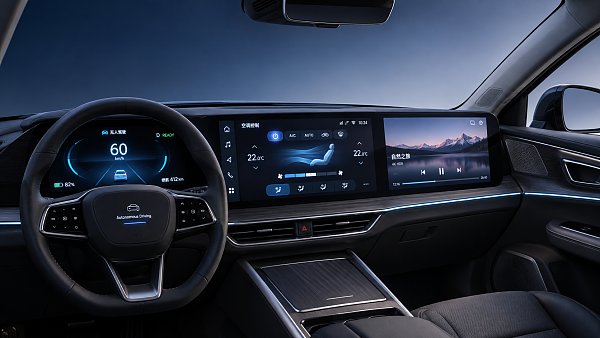
Smart cockpit electronics are increasingly linked with ADAS and automated driving functions. Media head units, HUD systems, and cockpit displays may share data, computing resources, or user-state information.
That can improve situational awareness, but it also creates new safety questions. Resource contention, interface latency, and mixed-criticality software boundaries should be reviewed before the architecture is considered mature.
Practical Warning Signs During Assessment
Certain patterns usually indicate that an autonomous driving architecture looks stronger on paper than in deployment. Spotting them early can save significant redesign cost.
- Redundancy exists at component level, but not at function level.
- Thermal design is sized for average load, not worst-case urban autonomy cycles.
- Fault handling depends on manual intervention without a stable minimal risk strategy.
- Network bandwidth is acceptable in simulation, yet fragile during logging, updates, or degraded modes.
- Steering or braking fallback is defined conceptually, but not validated with timing and authority limits.
- Supply chain choices introduce variation in sensors, compressors, harnesses, or ECUs without rechecking safety margins.
In actual sourcing and platform planning, these warning signs often appear before serious field issues do. That makes early architecture review a business decision as much as an engineering task.
How to Turn Evaluation Into a Useful Decision Framework
A practical assessment should compare the autonomous driving architecture against its intended operating domain, vehicle class, and validation evidence. A robotaxi platform, highway assist system, and low-speed delivery vehicle do not need the same safety structure.
It helps to review four layers together: intended function, failure behavior, component constraints, and supply maturity. When these layers align, the architecture is usually easier to scale and certify.
Questions Worth Asking
- What happens after the first sensor fault, not only after total sensor loss?
- Can the cooling system sustain compute and perception performance in peak ambient conditions?
- Which wiring and communication paths are safety critical, and how are they protected?
- Does the steering and braking path support predictable degraded operation?
- How much of the architecture has been validated at vehicle level rather than subsystem level?
- Are regional regulations and component supply conditions likely to change the safety case?
These questions also connect well with the kind of market, product, and standards intelligence followed across GACT. The goal is not to admire architecture diagrams. It is to judge readiness, resilience, and integration depth.
A Better Next Step
The most useful way to evaluate autonomous driving architecture for system safety is to build a structured checklist around failure conditions, thermal limits, wiring integrity, actuation fallback, and vehicle-level diagnostics.
That checklist should then be compared with real application scenarios, from dense urban driving to high-temperature operation and component variation across supply regions. A system that looks balanced across those conditions is usually closer to production readiness.
For ongoing assessment, it is worth tracking not only software progress but also the component trends behind it: steering evolution, harness design, thermal hardware, cockpit convergence, and standards movement. That is where a safer autonomous driving architecture becomes easier to identify, compare, and act on.
Have questions about this sector analysis, or seeking best practices specific to your niche? Drop us a line below and let the senior consultants at GAC assist you.
“We respect your privacy. Your information is strictly confidential.”
Related News
- 00
0000-00
What does each FAKRA cable color code mean? - 00
0000-00
How to compare noise ratings for battery coolant pumps - 00
0000-00
How bright should automotive display systems be in sunlight? - 00
0000-00
How heat pumps improve the efficiency of EV thermal systems - 00
0000-00
Can a smart cockpit platform support multiple displays?
Tags
- NEV thermal management
- thermal systems
- electric compressors
- high-voltage harness
- steer-by-wire
- automotive components
- autonomous driving
- domain controllers
- smart cockpit electronics
- thermal valves
- smart cockpit
- head units
- cockpit displays
- data communication cables
- steering columns
- battery liquid cooling
- Cabin Electronics
- autonomous driving architecture
Weekly Insights
Stay ahead with our curated technology reports delivered every Monday.
Recommended News
 What does each FAKRA cable color code mean?FAKRA cable color code explained: Explore common connector colors, typical uses and key compatibility checks before choosing a replacement.Author:Time:Nov 11, 2026
 How to compare noise ratings for battery coolant pumpsCompare coolant pump low noise ratings with confidence. Learn how test conditions, hydraulic duty, tonal noise and installation affect your choice.Author:Time:Nov 10, 2026
 How bright should automotive display systems be in sunlight?Automotive Display Systems need more than brightness to stay readable in sunlight. Discover why 1,000 nits is a starting point and how to evaluate glare and heat.Author:Time:Nov 09, 2026
 How heat pumps improve the efficiency of EV thermal systemsEV Thermal Systems use heat pumps to reduce heating energy demand. Explore how they work, where they excel, and what limits efficiency in cold weather.Author:Time:Nov 08, 2026
 Can a smart cockpit platform support multiple displays?Can a smart cockpit platform support multiple displays? Explore key requirements for performance, safety, connectivity, and supplier evaluation.Author:Time:Nov 07, 2026
 How is automotive connector vibration resistance tested?Automotive connector vibration resistance testing reveals hidden contact failures. Explore test profiles, continuity monitoring and pass criteria.Author:Time:Nov 06, 2026
 How heat pumps save energy in automotive cabin climate systemsAutomotive Cabin Climate Systems energy saving starts with smarter heat pump design. Explore real-world efficiency, cold-weather trade-offs, and testing tips.Author:Time:Nov 05, 2026
 Is an EV heat pump worth it for winter driving range?Is a heat pump worth using in a cold-climate EV? Discover how it affects winter range, when it pays off, and what to check before buying.Author:Time:Nov 04, 2026
 When should you use 50-ohm coaxial cable instead of 75-ohm?Coaxial cable 50 ohm or 75 ohm? Learn when to use each, avoid impedance mismatches, and choose the right cable for reliable RF and video performance.Author:Time:Nov 03, 2026
 How to select a high temperature motor harness for an EVChoose the right high temperature motor harness for your EV. Compare thermal limits, current capacity, shielding, routing, and validation evidence.Author:Time:Nov 02, 2026
 How much does electric power steering replacement cost?Electric power steering price typically ranges from $1,000 to $3,000 for major replacements. Discover cost factors, repair options, and tips for comparing quotes.Author:Time:Nov 01, 2026
 How to size an EV A/C compressor for the required cooling capacitySize an EV A/C Compressor with confidence. Explore cooling loads, performance maps and power limits to select the right compressor for your vehicle.Author:Time:Oct 31, 2026
 How to choose the right pitch for an FPC board connectorFPC board connector pitch affects space, assembly and reliability. Learn how to compare options and select the best fit for your design.Author:Time:Oct 30, 2026
 How zonal design affects harness routing in high-voltage EV architecturesExplore high-voltage electrical architecture zonal design and its impact on EV harness routing. Discover key trade-offs in cable length, safety, thermal performance, and service access.Author:Time:Oct 29, 2026
 How tariffs affect costs in global automotive parts supply chainsNavigate tariffs in the global automotive parts trade supply chain. Learn to compare landed costs, manage duty exposure, and uncover smarter sourcing strategies to protect your margins.Author:Time:Oct 28, 2026
 How to assess vendor lock-in in a software-defined vehicle platformAssess Software-Defined Vehicle platform lock-in with practical tests for API portability, data access, update control, and exit costs. Learn how to choose a platform with a proven exit path.Author:Time:Oct 27, 2026
 How ISO 26262 guides functional safety in steer-by-wire systemsExplore steering systems functional safety through ISO 26262. Learn how hazard analysis, fault-tolerant design, and validation build a stronger steer-by-wire safety case.Author:Time:Oct 26, 2026
 How to evaluate a steering angle sensor manufacturer's accuracy claimsEvaluate steering angle sensor manufacturer accuracy claims with practical checks on calibration, latency, and test evidence. Compare suppliers confidently and avoid costly selection mistakes.Author:Time:Oct 25, 2026
 How to diagnose CAN bus faults in a hybrid vehicle control unitDiagnose Hybrid Vehicle Systems control unit CAN bus faults with step-by-step power, wiring, and waveform checks. Find the root cause and avoid unnecessary replacement.Author:Time:Oct 24, 2026
 How does battery cooling pipe diameter affect coolant pressure drop?Battery Cooling Pipe diameter affects coolant pressure drop and pump power. Explore sizing calculations and practical tips to optimize EV battery cooling and compare options with confidence.Author:Time:Oct 23, 2026
 How to assess PPAP readiness of automotive sensor system manufacturersAssess Automotive Sensor Systems manufacturers for PPAP readiness. Learn to verify production evidence, measurement capability, validation, and traceability to reduce sourcing risks.Author:Time:Oct 22, 2026
 What to ask an FPC connector manufacturer about reliability testingChoosing an FPC Connector manufacturer? Learn what to ask about reliability testing, failure limits, and traceable results to reduce design risks and select with confidence.Author:Time:Oct 21, 2026
 How to verify vehicle fitment for an aftermarket AC evaporatorNavigating the evaporator aftermarket? Verify vehicle fitment with VIN data, OE numbers, and physical interface checks. Use this guide to avoid costly mismatches and order confidently.Author:Time:Oct 20, 2026
 How electric compressor speed affects EV battery cooling capacityElectric compressor technology: battery cooling depends on more than RPM. Discover how speed, refrigerant flow, and system limits affect EV cooling capacity and energy efficiency.Author:Time:Oct 19, 2026
 How to verify a variable frequency compressor supplier’s efficiency claimsVerify a variable frequency compressor supplier’s efficiency claims using COP boundaries, matched test conditions, and duty-cycle data. Learn how to choose with confidence.Author:Time:Oct 18, 2026
 How bend radius affects FPC reliability in automotive camera modulesAutomotive FPC applications: camera module reliability starts with bend radius. Learn how stack-up, strain, and validation guide robust designs and help prevent costly failures.Author:Time:Oct 17, 2026
 How to diagnose intermittent loss of electric power steering assistMaster power steering system diagnostics to trace intermittent EPS assist loss. Learn proven checks for voltage, wiring, and fault codes to avoid costly guesswork.Author:Time:Oct 16, 2026
 How to size automotive power modules for electric compressorsSize automotive power modules for electric compressors with confidence. Learn how voltage, phase current, losses, and cooling shape reliable selection—and avoid costly oversizing.Author:Time:Oct 15, 2026
 Why automotive power electronics are shifting to silicon carbideAutomotive Power Electronics are shifting to silicon carbide. Discover how SiC can cut losses, boost EV power density, and reshape cooling, reliability, and system costs.Author:Time:Oct 14, 2026
 How EV adoption shapes the electrically driven compressor marketExplore how EV adoption shapes the electrically driven compressor market, from battery cooling and heat pumps to supplier margins. Discover the drivers of profitable growth.Author:Time:Oct 13, 2026