Automotive Steering Actuators Response Time: What Counts as Fast Enough?




How fast should an automotive steering actuator respond?
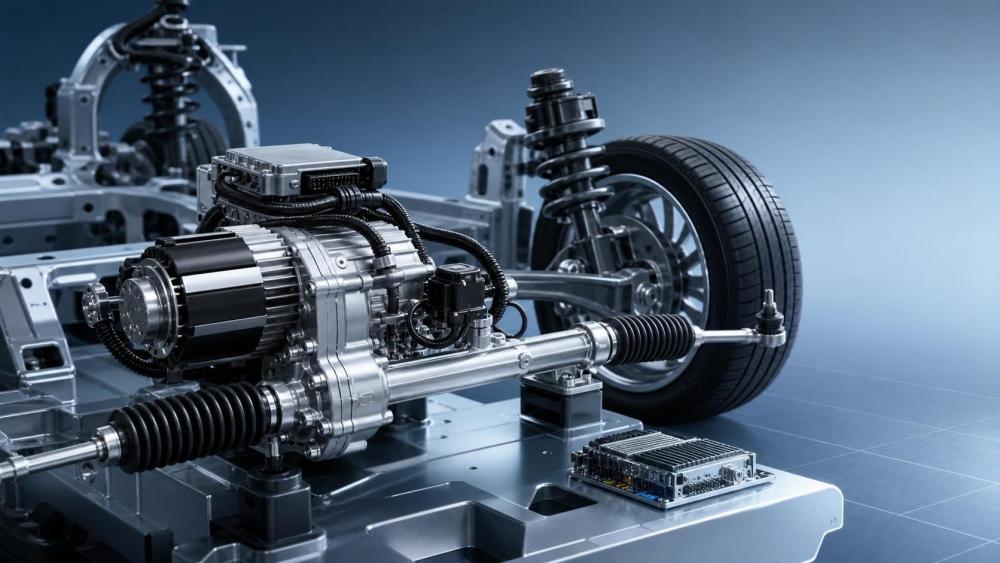
Automotive Steering Actuators response time sounds simple, yet it rarely has one universal answer.
In practice, “fast enough” depends on steering architecture, control software, vehicle speed, and the safety margin built into the system.
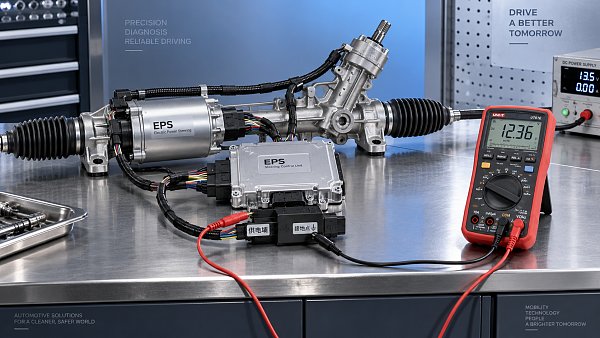
For a basic EPS layout, acceptable response may differ from a steer-by-wire platform designed for automated lane control.
That is why Automotive Steering Actuators response time is treated as a system-level performance issue, not just a component number.
A quick actuator helps steering feel stable, predictable, and precise.
If the reaction is too slow, the vehicle may feel vague in corners, delayed in evasive maneuvers, or inconsistent during lane keeping.
Industry coverage across chassis control, high-voltage architecture, and smart mobility increasingly links steering speed with broader vehicle integration.
That connection matters because modern steering no longer works in isolation.
It now interacts with sensors, cockpit displays, domain controllers, wiring harnesses, power electronics, and thermal management strategies.
What does response time actually measure in a steering system?
The term usually describes how quickly the actuator reacts after a steering command is issued.
That command may come from the driver, an electronic control unit, or an automated driving function.
However, not every supplier measures Automotive Steering Actuators response time the same way.
Some focus on motor current rise.
Others measure steering angle change, torque build-up, or the delay between command input and stable output.
This is where confusion often starts.
A very low millisecond figure may look impressive, but it can hide the fact that the full system still responds more slowly under load.
A practical review should separate at least three layers:
- Signal delay from controller to actuator
- Mechanical or electromechanical reaction time
- Settling time until steering output becomes stable and usable
When comparing systems, that full chain is more meaningful than a single headline number.
This is especially true in platforms where EPS, steer-by-wire, sensors, and data cables must work together without noticeable lag.
Is there a practical benchmark for fast enough?
A useful benchmark is not one fixed threshold.
A more realistic approach is to ask whether the steering response supports the intended vehicle behavior under real operating conditions.
For example, a compact city EV, a performance sedan, and a commercial vehicle will not judge speed the same way.
The table below gives a practical reference for discussing Automotive Steering Actuators response time.
So, fast enough usually means quick without becoming unstable.
An actuator that reacts instantly but causes overshoot can be worse than one that is slightly slower and better controlled.
Why do steer-by-wire and EPS judge response time differently?
EPS and steer-by-wire may share motors, controllers, and steering columns, but their response demands are not identical.
In EPS, mechanical linkage still supports directional control.
That means actuator delay affects steering feel and assist quality, yet the system retains a direct physical path.
Steer-by-wire changes that equation.
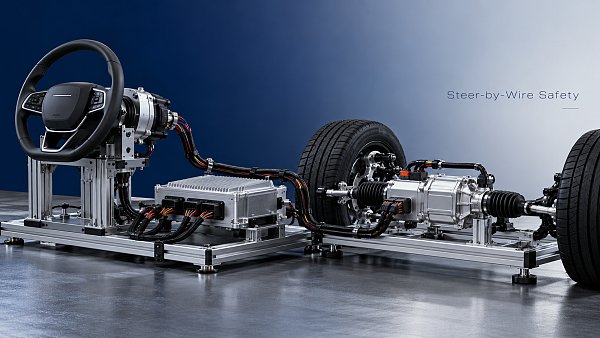
Here, Automotive Steering Actuators response time becomes part of the core control chain between input and wheel angle output.
Even small delays can affect feedback realism, emergency correction, and fallback strategy design.
The difference also extends to surrounding hardware.
Steer-by-wire platforms rely more heavily on redundant power supply, communication cables, software timing, and functional safety architecture.
That makes response time a cross-domain topic.
It touches wiring, controller design, thermal load, and vehicle electronics, not just the actuator itself.
This broader view fits current automotive intelligence platforms that track steering systems alongside harnesses, cockpit electronics, and electrified chassis components.
What usually slows the system down more than expected?
A common mistake is assuming the motor specification tells the whole story.
In real vehicles, Automotive Steering Actuators response time is often limited by combined system effects.
The most frequent causes include the following:
- Controller filtering that reduces noise but adds latency
- Insufficient power delivery during peak steering demand
- Thermal derating after repeated steering events
- Mechanical friction in columns, gears, or rack assemblies
- Communication delay across in-vehicle networks
- Conservative fault-monitoring logic that slows actuation commands
Thermal effects deserve extra attention.
As vehicle architectures become more electrified, steering performance can be influenced by power electronics cooling and packaging constraints.
That is one reason steering trends increasingly sit beside thermal systems analysis in automotive component research.
If a response-time claim is based only on room-temperature lab testing, it may not represent summer traffic, repeated parking maneuvers, or high-load ADAS operation.
How should response time be evaluated before choosing a solution?
A sensible evaluation starts with the vehicle use case, not the brochure headline.
The key question is whether the steering actuator remains quick, stable, and repeatable in the exact duty cycle required.
Before comparing options, it helps to check these points:
- How is Automotive Steering Actuators response time defined and measured?
- Is the figure based on no-load, nominal load, or worst-case load?
- What happens at high temperature or low voltage?
- Does the system remain smooth during repeated maneuvers?
- How well does it integrate with EPS, steer-by-wire, or ADAS control loops?
- What validation evidence exists for durability and safety behavior?
This step matters even more when supply chains span multiple regions.
Standards interpretation, export requirements, and regional platform expectations can all change what counts as acceptable performance.
A steering system intended for Europe may be validated differently from one optimized for China, the United States, or Southeast Asia.
Where do people misread a fast response-time claim?
The biggest misunderstanding is equating lower milliseconds with better steering in every situation.
Fast response helps, but steering quality depends on balance.
If the system reacts quickly but introduces noise, oscillation, or abrupt torque changes, the result may feel less refined.
Another mistake is ignoring the wider electrical path.
In vehicles using advanced cockpit electronics, high-voltage harnesses, and centralized control architectures, latency can come from places outside the actuator assembly.
That makes isolated component claims less useful than integrated testing data.
A practical rule is simple: judge Automotive Steering Actuators response time together with stability, thermal behavior, fault handling, and network timing.
That is the level where meaningful comparison begins.
For ongoing research, it also helps to track steering developments alongside adjacent categories such as control electronics, wiring, power systems, and thermal components.
That broader context often explains why one steering solution performs better in the market than another.
In the end, fast enough is not the smallest number on paper.
It is the response level that delivers safe, repeatable, and confidence-building control in the intended vehicle environment.
The next useful step is to define the steering scenario clearly, compare measurement methods, and review thermal, electrical, and safety constraints together.
That approach leads to better decisions than chasing an isolated response-time figure alone.
Have questions about this sector analysis, or seeking best practices specific to your niche? Drop us a line below and let the senior consultants at GAC assist you.
“We respect your privacy. Your information is strictly confidential.”
Related News
- 00
0000-00
What does each FAKRA cable color code mean? - 00
0000-00
How to compare noise ratings for battery coolant pumps - 00
0000-00
How bright should automotive display systems be in sunlight? - 00
0000-00
How heat pumps improve the efficiency of EV thermal systems - 00
0000-00
Can a smart cockpit platform support multiple displays?
Weekly Insights
Stay ahead with our curated technology reports delivered every Monday.
Recommended News
 What does each FAKRA cable color code mean?FAKRA cable color code explained: Explore common connector colors, typical uses and key compatibility checks before choosing a replacement.Author:Time:Nov 11, 2026
 How to compare noise ratings for battery coolant pumpsCompare coolant pump low noise ratings with confidence. Learn how test conditions, hydraulic duty, tonal noise and installation affect your choice.Author:Time:Nov 10, 2026
 How bright should automotive display systems be in sunlight?Automotive Display Systems need more than brightness to stay readable in sunlight. Discover why 1,000 nits is a starting point and how to evaluate glare and heat.Author:Time:Nov 09, 2026
 How heat pumps improve the efficiency of EV thermal systemsEV Thermal Systems use heat pumps to reduce heating energy demand. Explore how they work, where they excel, and what limits efficiency in cold weather.Author:Time:Nov 08, 2026
 Can a smart cockpit platform support multiple displays?Can a smart cockpit platform support multiple displays? Explore key requirements for performance, safety, connectivity, and supplier evaluation.Author:Time:Nov 07, 2026
 How is automotive connector vibration resistance tested?Automotive connector vibration resistance testing reveals hidden contact failures. Explore test profiles, continuity monitoring and pass criteria.Author:Time:Nov 06, 2026
 How heat pumps save energy in automotive cabin climate systemsAutomotive Cabin Climate Systems energy saving starts with smarter heat pump design. Explore real-world efficiency, cold-weather trade-offs, and testing tips.Author:Time:Nov 05, 2026
 Is an EV heat pump worth it for winter driving range?Is a heat pump worth using in a cold-climate EV? Discover how it affects winter range, when it pays off, and what to check before buying.Author:Time:Nov 04, 2026
 When should you use 50-ohm coaxial cable instead of 75-ohm?Coaxial cable 50 ohm or 75 ohm? Learn when to use each, avoid impedance mismatches, and choose the right cable for reliable RF and video performance.Author:Time:Nov 03, 2026
 How to select a high temperature motor harness for an EVChoose the right high temperature motor harness for your EV. Compare thermal limits, current capacity, shielding, routing, and validation evidence.Author:Time:Nov 02, 2026
 How much does electric power steering replacement cost?Electric power steering price typically ranges from $1,000 to $3,000 for major replacements. Discover cost factors, repair options, and tips for comparing quotes.Author:Time:Nov 01, 2026
 How to size an EV A/C compressor for the required cooling capacitySize an EV A/C Compressor with confidence. Explore cooling loads, performance maps and power limits to select the right compressor for your vehicle.Author:Time:Oct 31, 2026
 How to choose the right pitch for an FPC board connectorFPC board connector pitch affects space, assembly and reliability. Learn how to compare options and select the best fit for your design.Author:Time:Oct 30, 2026
 How zonal design affects harness routing in high-voltage EV architecturesExplore high-voltage electrical architecture zonal design and its impact on EV harness routing. Discover key trade-offs in cable length, safety, thermal performance, and service access.Author:Time:Oct 29, 2026
 How tariffs affect costs in global automotive parts supply chainsNavigate tariffs in the global automotive parts trade supply chain. Learn to compare landed costs, manage duty exposure, and uncover smarter sourcing strategies to protect your margins.Author:Time:Oct 28, 2026
 How to assess vendor lock-in in a software-defined vehicle platformAssess Software-Defined Vehicle platform lock-in with practical tests for API portability, data access, update control, and exit costs. Learn how to choose a platform with a proven exit path.Author:Time:Oct 27, 2026
 How ISO 26262 guides functional safety in steer-by-wire systemsExplore steering systems functional safety through ISO 26262. Learn how hazard analysis, fault-tolerant design, and validation build a stronger steer-by-wire safety case.Author:Time:Oct 26, 2026
 How to evaluate a steering angle sensor manufacturer's accuracy claimsEvaluate steering angle sensor manufacturer accuracy claims with practical checks on calibration, latency, and test evidence. Compare suppliers confidently and avoid costly selection mistakes.Author:Time:Oct 25, 2026
 How to diagnose CAN bus faults in a hybrid vehicle control unitDiagnose Hybrid Vehicle Systems control unit CAN bus faults with step-by-step power, wiring, and waveform checks. Find the root cause and avoid unnecessary replacement.Author:Time:Oct 24, 2026
 How does battery cooling pipe diameter affect coolant pressure drop?Battery Cooling Pipe diameter affects coolant pressure drop and pump power. Explore sizing calculations and practical tips to optimize EV battery cooling and compare options with confidence.Author:Time:Oct 23, 2026
 How to assess PPAP readiness of automotive sensor system manufacturersAssess Automotive Sensor Systems manufacturers for PPAP readiness. Learn to verify production evidence, measurement capability, validation, and traceability to reduce sourcing risks.Author:Time:Oct 22, 2026
 What to ask an FPC connector manufacturer about reliability testingChoosing an FPC Connector manufacturer? Learn what to ask about reliability testing, failure limits, and traceable results to reduce design risks and select with confidence.Author:Time:Oct 21, 2026
 How to verify vehicle fitment for an aftermarket AC evaporatorNavigating the evaporator aftermarket? Verify vehicle fitment with VIN data, OE numbers, and physical interface checks. Use this guide to avoid costly mismatches and order confidently.Author:Time:Oct 20, 2026
 How electric compressor speed affects EV battery cooling capacityElectric compressor technology: battery cooling depends on more than RPM. Discover how speed, refrigerant flow, and system limits affect EV cooling capacity and energy efficiency.Author:Time:Oct 19, 2026
 How to verify a variable frequency compressor supplier’s efficiency claimsVerify a variable frequency compressor supplier’s efficiency claims using COP boundaries, matched test conditions, and duty-cycle data. Learn how to choose with confidence.Author:Time:Oct 18, 2026
 How bend radius affects FPC reliability in automotive camera modulesAutomotive FPC applications: camera module reliability starts with bend radius. Learn how stack-up, strain, and validation guide robust designs and help prevent costly failures.Author:Time:Oct 17, 2026
 How to diagnose intermittent loss of electric power steering assistMaster power steering system diagnostics to trace intermittent EPS assist loss. Learn proven checks for voltage, wiring, and fault codes to avoid costly guesswork.Author:Time:Oct 16, 2026
 How to size automotive power modules for electric compressorsSize automotive power modules for electric compressors with confidence. Learn how voltage, phase current, losses, and cooling shape reliable selection—and avoid costly oversizing.Author:Time:Oct 15, 2026
 Why automotive power electronics are shifting to silicon carbideAutomotive Power Electronics are shifting to silicon carbide. Discover how SiC can cut losses, boost EV power density, and reshape cooling, reliability, and system costs.Author:Time:Oct 14, 2026
 How EV adoption shapes the electrically driven compressor marketExplore how EV adoption shapes the electrically driven compressor market, from battery cooling and heat pumps to supplier margins. Discover the drivers of profitable growth.Author:Time:Oct 13, 2026