NEV Thermal Management Costs: What Drives Budget Overruns




Why do NEV thermal management costs so often exceed initial budgets? For financial decision-makers, the answer lies beyond component pricing alone—touching system integration, energy efficiency targets, supply chain volatility, and evolving vehicle architectures. This article breaks down the key cost drivers behind overruns and highlights where smarter planning can improve margin control without sacrificing performance or reliability.
Why is NEV thermal management receiving so much budget attention now?
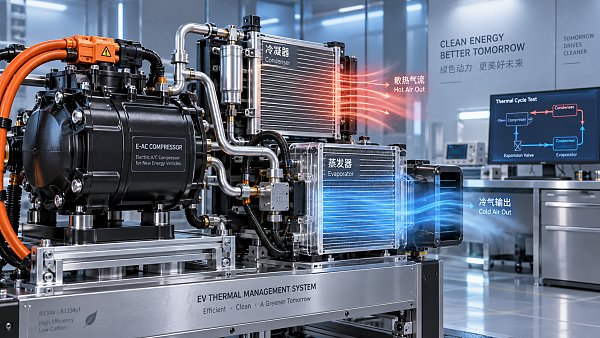
NEV thermal management has moved from a supporting subsystem to a core determinant of vehicle range, charging speed, safety, cabin comfort, and powertrain durability. In internal combustion vehicles, thermal control was important but relatively compartmentalized. In new energy vehicles, battery thermal regulation, e-drive cooling, power electronics protection, and cabin climate performance are increasingly interconnected. That means a change in one thermal target often triggers changes in valves, compressors, sensors, software, piping, insulation, and control logic across the vehicle.
For finance approvers, this shift matters because thermal cost is no longer just a bill-of-materials line item. It is tied to vehicle efficiency promises, warranty risk, platform scalability, and launch timing. A thermal architecture that appears affordable in sourcing may become expensive after calibration cycles, packaging revisions, supplier changes, and validation failures. As automakers push for longer range and better low-temperature performance, the cost sensitivity of NEV thermal management increases further.
In short, the budget spotlight exists because thermal management now directly influences product competitiveness and gross margin. If the subsystem misses its targets, the financial impact may show up not only in procurement spend, but also in delayed SOP, additional engineering hours, field claims, and reduced market acceptance.
What usually causes NEV thermal management budgets to overrun?
Budget overruns in NEV thermal management rarely come from one dramatic mistake. More often, they result from several underestimated factors stacking together over development cycles. The most common pattern is early cost planning based on component prices rather than whole-system behavior. A heat pump, electric compressor, chiller, coolant loop, or multi-way valve may each look manageable on paper, yet integration cost rises quickly when performance targets tighten.
Another major cause is target instability. Battery suppliers may revise optimal temperature windows. Vehicle teams may demand faster DC charging, improved winter range, or quieter cabin operation late in the project. Each change forces rework. In NEV thermal management, rework is expensive because thermal systems sit at the intersection of packaging, controls, refrigerant loop design, and electrical load management.
Supply chain volatility is also a frequent driver. Aluminum, copper, automotive-grade semiconductors, and sealing materials can shift in price or availability. If a selected supplier lacks stable production capability for integrated thermal modules or precision valves, the OEM or Tier 1 may face premium freight, dual sourcing costs, redesign expenses, or quality containment actions.
Finally, budgets often fail to fully include software and validation effort. Thermal performance depends heavily on control strategies for battery preconditioning, defrost, compressor speed modulation, and loop switching. These functions require calibration, climate-chamber testing, road validation, and diagnostics development. When organizations budget hardware well but underestimate software complexity, NEV thermal management cost performance deteriorates quickly.
Which cost elements are most often underestimated at the approval stage?
Financial decision-makers often receive early proposals that emphasize visible hardware costs while understating cross-functional cost elements. In practice, the following areas are repeatedly underestimated in NEV thermal management programs:
A further blind spot is the cost of integration with adjacent vehicle domains. NEV thermal management increasingly interfaces with smart cabin electronics, high-voltage architectures, and e-drive systems. If domain responsibilities are unclear, duplicated sensors, harness changes, controller modifications, and software handoff delays can quietly accumulate. These do not always appear in the original thermal budget, but they still hit the program P&L.
How do performance targets turn a reasonable thermal budget into an expensive one?
In many programs, the cost problem begins with ambition rather than execution. Better fast-charging support, superior winter driving range, rapid cabin heating, low NVH, and compact packaging are all desirable. The challenge is that these targets compete with one another. A thermal system optimized for one KPI may demand more expensive hardware or more advanced control strategies to protect another KPI.
For example, improving low-temperature heat pump performance may require added refrigerant circuit sophistication, enhanced sensors, more robust compressor operating maps, and refined defrost algorithms. Supporting ultra-fast charging can require stronger battery preconditioning capability, higher coolant flow control precision, and tighter integration with charging logic. Every additional target expands technical complexity, and complexity increases both direct and indirect cost.
From a finance perspective, this means cost review should not ask only, “What does the system cost?” It should also ask, “Which performance claims are creating that cost?” NEV thermal management spending often looks excessive only because the performance envelope was never economically prioritized. If management ranks targets more clearly—such as winter range over premium NVH, or charging stability over extreme cabin warm-up time—engineering teams can make trade-offs earlier and avoid cascading overruns.
Are integrated thermal modules always cheaper than traditional architectures?
Not always. Integrated thermal modules are often marketed as a way to reduce part count, save space, simplify assembly, and improve energy efficiency. In the right platform, those benefits are real. However, integration can also concentrate risk. If one module combines multiple valves, sensors, heat exchangers, and controls, any design issue may affect several functions at once. Replacement cost, qualification effort, and supplier dependency may rise.
The financial question is not whether integration is good in principle, but whether the platform volume, supplier capability, and lifecycle plan justify it. For a high-volume NEV platform with stable architecture, integrated NEV thermal management may lower total lifecycle cost through fewer interfaces and better efficiency. For a platform still changing battery formats, cabin layouts, or software domains, a highly integrated solution may create redesign risk and delay cost recovery.
Approvers should compare three layers of cost: initial sourcing price, engineering change exposure, and post-launch service implications. A lower assembly count does not automatically mean lower total cost. If the module is difficult to calibrate, sourced from a narrow supplier base, or vulnerable to single-point failures, the apparent savings can disappear.
What sourcing and supply chain issues most often inflate NEV thermal management costs?
Several supply-side issues repeatedly push thermal budgets above plan. First is overreliance on quotations taken before design freeze. Early prices may assume favorable volume, limited customization, and standard validation scope. Once the program adds customized manifolds, vehicle-specific software, special sealing requirements, or stricter leak standards, the supplier cost model changes.
Second is insufficient review of supplier process maturity. NEV thermal management components such as electric compressors, electronic expansion valves, coolant pumps, and multi-circuit modules require high consistency. If yield loss, cleanliness control, brazing quality, or electronics robustness are not stable, hidden costs emerge in scrap, rework, warranty exposure, and launch support.
Third is commodity and logistics exposure. Thermal systems rely on metals, engineered plastics, electronic controls, and refrigerant-related components. Price movements in copper and aluminum matter, but so do freight conditions, local compliance requirements, and tariff shifts. In a globally distributed automotive supply chain, these variables can materially alter landed cost.
A practical sourcing safeguard is to request not just piece-price comparison, but also visibility into tooling assumptions, localization plans, software ownership, warranty splits, and cost-down roadmaps. For NEV thermal management, the cheapest quote is often the least informative one.
What are the most common budgeting mistakes financial approvers should avoid?
The first mistake is treating thermal management as a mature commodity. While some parts are standardized, the system-level behavior is highly platform-specific. Budget logic that works for traditional HVAC procurement may fail in an electrified architecture where battery conditioning and energy recovery are central.
The second mistake is separating CapEx, engineering cost, and warranty risk too rigidly. A lower up-front hardware spend may create higher validation burden or future field exposure. NEV thermal management should be assessed through total cost of ownership, not just sourcing variance against target.
The third mistake is approving budgets without scenario analysis. Thermal systems are exposed to climate extremes, user charging behavior, regional regulations, and platform evolution. A single base-case budget can look precise but be strategically weak. Better practice includes best-case, expected-case, and stress-case cost views.
The fourth mistake is overlooking interface ownership. If battery teams, smart cabin teams, e-drive engineers, and thermal suppliers do not align early, interface costs appear late. Those costs are especially dangerous because they often arrive after design commitments have reduced flexibility.
How can companies control NEV thermal management costs without sacrificing performance?
Cost control starts with target discipline. Companies should define which thermal outcomes truly matter for market success and which are optional enhancements. That creates a stronger basis for technical trade-offs before design complexity escalates. In parallel, finance teams should require early alignment between thermal architecture, charging strategy, battery chemistry assumptions, and cabin comfort targets.
Another effective lever is staged validation planning. Instead of discovering integration problems during late prototype phases, teams can front-load simulation, subsystem testing, and supplier co-validation. This does not eliminate cost, but it tends to replace expensive late rework with earlier, more manageable engineering effort.
Supplier strategy also matters. Dual sourcing may not be practical for every component, but risk mapping should at least identify single-source exposure, software dependency, tooling lock-in, and localization constraints. In NEV thermal management, resilience has financial value because launch disruptions and warranty events can be more expensive than moderate up-front prevention spending.
Finally, teams should build a cost dashboard that links thermal decisions to business outcomes. Useful indicators include energy efficiency contribution, charging support, expected warranty sensitivity, software iteration burden, and commodity exposure. When these metrics are visible, discussions shift from narrow piece price debates to better profitability management.
What should decision-makers ask before approving the next thermal budget?
Before approving any major NEV thermal management investment, financial stakeholders should ask a short but critical set of questions:
- Which vehicle performance targets are driving the current thermal architecture?
- What portion of cost is hardware, software, validation, and contingency?
- What assumptions have been made about supplier maturity, yield, and localization?
- How sensitive is the budget to changes in battery chemistry, charging speed targets, or climate requirements?
- What are the top three single-point risks that could create overruns after approval?
These questions help expose whether the proposal reflects a true total-cost view or merely an attractive sourcing snapshot. For organizations operating in increasingly electrified and intelligent vehicle ecosystems, disciplined review of NEV thermal management is becoming a strategic capability rather than a narrow engineering exercise.
If you need to confirm a specific thermal solution, target cost range, supplier direction, implementation timeline, or cooperation model, it is best to first align on platform goals, integration boundaries, validation scope, software ownership, and commodity risk assumptions. Those early clarifications usually do more to prevent budget overruns than any last-minute cost-cutting action.
Have questions about this sector analysis, or seeking best practices specific to your niche? Drop us a line below and let the senior consultants at GAC assist you.
“We respect your privacy. Your information is strictly confidential.”
Related News
- 00
0000-00
Can a smart cockpit platform support multiple displays? - 00
0000-00
How is automotive connector vibration resistance tested? - 00
0000-00
How heat pumps save energy in automotive cabin climate systems - 00
0000-00
Is an EV heat pump worth it for winter driving range? - 00
0000-00
When should you use 50-ohm coaxial cable instead of 75-ohm?
Weekly Insights
Stay ahead with our curated technology reports delivered every Monday.
Recommended News
 Can a smart cockpit platform support multiple displays?Can a smart cockpit platform support multiple displays? Explore key requirements for performance, safety, connectivity, and supplier evaluation.Author:Time:Nov 07, 2026
 How is automotive connector vibration resistance tested?Automotive connector vibration resistance testing reveals hidden contact failures. Explore test profiles, continuity monitoring and pass criteria.Author:Time:Nov 06, 2026
 How heat pumps save energy in automotive cabin climate systemsAutomotive Cabin Climate Systems energy saving starts with smarter heat pump design. Explore real-world efficiency, cold-weather trade-offs, and testing tips.Author:Time:Nov 05, 2026
 Is an EV heat pump worth it for winter driving range?Is a heat pump worth using in a cold-climate EV? Discover how it affects winter range, when it pays off, and what to check before buying.Author:Time:Nov 04, 2026
 When should you use 50-ohm coaxial cable instead of 75-ohm?Coaxial cable 50 ohm or 75 ohm? Learn when to use each, avoid impedance mismatches, and choose the right cable for reliable RF and video performance.Author:Time:Nov 03, 2026
 How to select a high temperature motor harness for an EVChoose the right high temperature motor harness for your EV. Compare thermal limits, current capacity, shielding, routing, and validation evidence.Author:Time:Nov 02, 2026
 How much does electric power steering replacement cost?Electric power steering price typically ranges from $1,000 to $3,000 for major replacements. Discover cost factors, repair options, and tips for comparing quotes.Author:Time:Nov 01, 2026
 How to size an EV A/C compressor for the required cooling capacitySize an EV A/C Compressor with confidence. Explore cooling loads, performance maps and power limits to select the right compressor for your vehicle.Author:Time:Oct 31, 2026
 How to choose the right pitch for an FPC board connectorFPC board connector pitch affects space, assembly and reliability. Learn how to compare options and select the best fit for your design.Author:Time:Oct 30, 2026
 How zonal design affects harness routing in high-voltage EV architecturesExplore high-voltage electrical architecture zonal design and its impact on EV harness routing. Discover key trade-offs in cable length, safety, thermal performance, and service access.Author:Time:Oct 29, 2026
 How tariffs affect costs in global automotive parts supply chainsNavigate tariffs in the global automotive parts trade supply chain. Learn to compare landed costs, manage duty exposure, and uncover smarter sourcing strategies to protect your margins.Author:Time:Oct 28, 2026
 How to assess vendor lock-in in a software-defined vehicle platformAssess Software-Defined Vehicle platform lock-in with practical tests for API portability, data access, update control, and exit costs. Learn how to choose a platform with a proven exit path.Author:Time:Oct 27, 2026
 How ISO 26262 guides functional safety in steer-by-wire systemsExplore steering systems functional safety through ISO 26262. Learn how hazard analysis, fault-tolerant design, and validation build a stronger steer-by-wire safety case.Author:Time:Oct 26, 2026
 How to evaluate a steering angle sensor manufacturer's accuracy claimsEvaluate steering angle sensor manufacturer accuracy claims with practical checks on calibration, latency, and test evidence. Compare suppliers confidently and avoid costly selection mistakes.Author:Time:Oct 25, 2026
 How to diagnose CAN bus faults in a hybrid vehicle control unitDiagnose Hybrid Vehicle Systems control unit CAN bus faults with step-by-step power, wiring, and waveform checks. Find the root cause and avoid unnecessary replacement.Author:Time:Oct 24, 2026
 How does battery cooling pipe diameter affect coolant pressure drop?Battery Cooling Pipe diameter affects coolant pressure drop and pump power. Explore sizing calculations and practical tips to optimize EV battery cooling and compare options with confidence.Author:Time:Oct 23, 2026
 How to assess PPAP readiness of automotive sensor system manufacturersAssess Automotive Sensor Systems manufacturers for PPAP readiness. Learn to verify production evidence, measurement capability, validation, and traceability to reduce sourcing risks.Author:Time:Oct 22, 2026
 What to ask an FPC connector manufacturer about reliability testingChoosing an FPC Connector manufacturer? Learn what to ask about reliability testing, failure limits, and traceable results to reduce design risks and select with confidence.Author:Time:Oct 21, 2026
 How to verify vehicle fitment for an aftermarket AC evaporatorNavigating the evaporator aftermarket? Verify vehicle fitment with VIN data, OE numbers, and physical interface checks. Use this guide to avoid costly mismatches and order confidently.Author:Time:Oct 20, 2026
 How electric compressor speed affects EV battery cooling capacityElectric compressor technology: battery cooling depends on more than RPM. Discover how speed, refrigerant flow, and system limits affect EV cooling capacity and energy efficiency.Author:Time:Oct 19, 2026
 How to verify a variable frequency compressor supplier’s efficiency claimsVerify a variable frequency compressor supplier’s efficiency claims using COP boundaries, matched test conditions, and duty-cycle data. Learn how to choose with confidence.Author:Time:Oct 18, 2026
 How bend radius affects FPC reliability in automotive camera modulesAutomotive FPC applications: camera module reliability starts with bend radius. Learn how stack-up, strain, and validation guide robust designs and help prevent costly failures.Author:Time:Oct 17, 2026
 How to diagnose intermittent loss of electric power steering assistMaster power steering system diagnostics to trace intermittent EPS assist loss. Learn proven checks for voltage, wiring, and fault codes to avoid costly guesswork.Author:Time:Oct 16, 2026
 How to size automotive power modules for electric compressorsSize automotive power modules for electric compressors with confidence. Learn how voltage, phase current, losses, and cooling shape reliable selection—and avoid costly oversizing.Author:Time:Oct 15, 2026
 Why automotive power electronics are shifting to silicon carbideAutomotive Power Electronics are shifting to silicon carbide. Discover how SiC can cut losses, boost EV power density, and reshape cooling, reliability, and system costs.Author:Time:Oct 14, 2026
 How EV adoption shapes the electrically driven compressor marketExplore how EV adoption shapes the electrically driven compressor market, from battery cooling and heat pumps to supplier margins. Discover the drivers of profitable growth.Author:Time:Oct 13, 2026
 How to size a PTC heater for reliable EV cabin heatingPTC Heater sizing for EV cabins: learn how to balance defrost performance, heat-pump integration, airflow, voltage range, and battery power for reliable winter comfort.Author:Time:Oct 12, 2026
 What determines the cooling output of electric automotive AC compressors?Automotive air conditioning compressors electric systems: explore how speed, voltage, refrigerant, controls, and heat exchangers shape EV cooling capacity and efficiency.Author:Time:Oct 11, 2026
 What makes a touchscreen media head unit responsive enough for daily use?Touchscreen media head unit performance explained: discover what delivers fast starts, smooth maps, reliable phone pairing, and responsive daily driving.Author:Time:Oct 10, 2026
 How Does a Battery Management System Communicate Cooling Demand?How does a battery management system communicate cooling demand? Explore CAN signals, thermal priorities, fault handling, and EV cooling control strategies.Author:Time:Oct 20, 2026