
Defrosting Algorithms: Faster Clearing, Lower Energy Use




For vehicle users and fleet operators, slow windshield clearing is more than an inconvenience—it affects safety, energy consumption, and daily operating efficiency. Modern defrosting algorithms are becoming a key part of NEV thermal management, using sensor data, heat pump logic, and cabin climate controls to clear glass faster while reducing battery drain. As electric vehicles face cold-weather range pressure, smarter defrost strategies help balance visibility, comfort, and energy use, making them essential for reliable operation in real-world driving conditions.
In daily operation, a driver may judge a vehicle by how quickly it becomes ready to move. For electric buses, delivery vans, ride-hailing fleets, and passenger NEVs, the first 3–8 minutes after startup often determine visibility, comfort, and energy demand.
GACT observes this topic from the component intelligence layer: electric compressors, heat pumps, sensors, wiring harnesses, domain controllers, and cabin electronics must work as one system. Defrosting algorithms are where these systems meet real user experience.
Why Defrosting Algorithms Matter in NEV Daily Operation
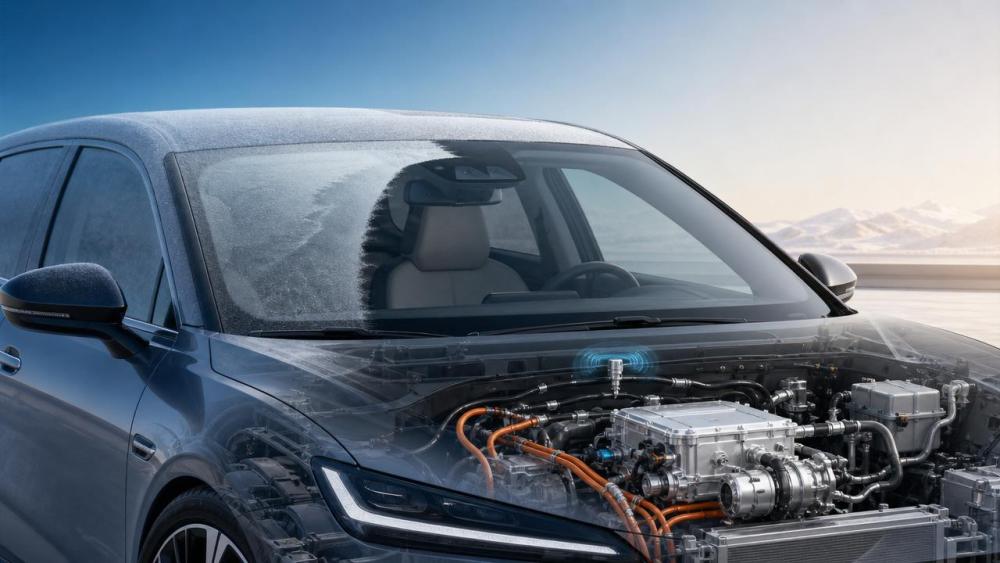
Traditional defrosting relied heavily on high-temperature airflow and manual settings. In NEVs, that approach can consume significant battery energy, especially when outside temperatures fall below 0°C and the cabin is already cold.
Modern defrosting algorithms calculate how much heat, airflow, compressor output, and air distribution are needed at each moment. The objective is not maximum heating, but sufficient glass clearing with controlled energy use.
The User Problem: Visibility Versus Range
For operators, the conflict is practical. A windshield must clear fast enough for safe departure, but every extra kilowatt-hour used for cabin heating can reduce range, route flexibility, or charging buffer.
A typical NEV heat pump system may coordinate a 2 kW–7 kW heating load, compressor speed changes, coolant valve positions, and blower steps within seconds. Poor logic wastes heat before it reaches the glass.
Common Cold-Weather Operating Scenarios
- Early-morning startup after 6–10 hours of parking in low temperatures.
- Short urban trips where repeated defrost cycles consume energy multiple times per day.
- Fleet vehicles with different drivers using inconsistent climate settings.
- High-humidity regions where fogging occurs even above freezing temperatures.
These scenarios show why defrosting algorithms should be evaluated as operational tools, not hidden software features. The best strategy gives drivers simple controls while managing complex thermal decisions in the background.
For GACT’s audience, the implication is clear: windshield clearing performance depends on the whole thermal management chain, from sensor reliability to compressor response and HVAC duct efficiency.
How Smart Defrost Control Works Inside the Vehicle
Defrosting algorithms use inputs from temperature sensors, humidity sensors, sunload sensors, windshield surface estimation, HVAC mode status, and battery thermal limits. The controller then chooses a heat delivery path.
In many NEVs, the algorithm must also decide whether to prioritize cabin air heating, battery preconditioning, e-drive cooling, or glass clearing. During winter startup, these demands can compete within the first 5 minutes.
Core Inputs and Control Actions
A practical defrost system is built around repeatable decisions. The following table explains typical signals and actions that operators, service teams, and procurement managers should understand when comparing vehicle platforms.
The key conclusion is that defrost performance cannot be judged by outlet temperature alone. Strong defrosting algorithms interpret the vehicle’s thermal state and choose the lowest-energy path to safe visibility.
Heat Pump Logic and Electric Compressor Response
In heat pump NEVs, defrosting algorithms may request rapid compressor ramp-up, refrigerant circuit switching, or auxiliary PTC support. The sequence must avoid sudden cabin noise, unstable airflow, or excessive current draw.
A well-calibrated system can shift from anti-fog mode to active defrost in 10–30 seconds when humidity rises. That fast transition reduces driver intervention and supports safer operation in stop-and-go traffic.
Three Logic Layers Operators Should Know
- Detection layer: estimates fog, frost, temperature gradient, and glass surface condition.
- Decision layer: selects airflow, heat source, recirculation ratio, and compressor output.
- Correction layer: checks whether visibility improves and adjusts every few seconds.
This layered method helps fleets reduce inconsistent manual operation. Drivers still control comfort preferences, but the vehicle prevents unsafe glass conditions from developing unnoticed.
Selection Criteria for Operators and Fleet Procurement
When comparing NEV models or thermal system suppliers, operators should ask more than whether a vehicle has “automatic defrost.” The better question is how the defrosting algorithms behave under real route conditions.
A fleet in a mild coastal climate may prioritize anti-fog precision. A northern delivery fleet may need rapid frost clearing below -15°C. A passenger shuttle may focus on noise, comfort, and predictable departure time.
Practical Evaluation Checklist
The following comparison framework helps procurement teams evaluate defrost strategy during vehicle trials, supplier discussions, or thermal management benchmarking. It translates software behavior into measurable operating factors.
This table highlights a procurement reality: defrosting algorithms should be tested across at least 3 temperature conditions and 2 humidity conditions. A showroom test rarely reflects route-level behavior.
Questions to Ask Vehicle or Component Suppliers
- Does the controller support adaptive anti-fog logic, or only fixed defrost modes?
- How does the system prioritize windshield clearing versus battery heating below -10°C?
- Can the HVAC controller log energy use and defrost requests for fleet analysis?
- What service checks are recommended every 12 months or 20,000–30,000 km?
These questions are especially important for operators purchasing vehicles in batches. Small differences in defrost logic can create large route-level effects when multiplied across 50 or 500 vehicles.
Implementation, Calibration, and Maintenance Priorities
Even the best defrosting algorithms depend on accurate sensors, clean air paths, stable compressor control, and correct calibration. Software cannot fully compensate for blocked filters, weak actuators, or poor duct sealing.
For fleet users, implementation should include operating procedures. Drivers should understand when to use automatic mode, when to activate maximum defrost, and when a slow-clearing windshield indicates a maintenance issue.
A 5-Step Operating and Service Workflow
- Precondition when possible: start cabin and windshield heating 10–20 minutes before departure while plugged in.
- Use automatic defrost logic first: allow the controller to stabilize airflow and heat source selection.
- Monitor repeated fogging: frequent manual overrides may indicate humidity sensor or recirculation problems.
- Inspect cabin filters and ducts: blocked airflow can reduce clearing speed even with strong heating power.
- Review diagnostic records: compare compressor requests, flap positions, and sensor readings during service.
This workflow helps operators preserve both safety and energy efficiency. It also gives maintenance teams a clear path from user complaint to component inspection and controller data review.
Common Misunderstandings That Increase Energy Use
One common mistake is leaving maximum defrost active long after the windshield has cleared. Another is using full recirculation during humid operation, which can trap moisture and trigger repeated fogging.
Operators should also avoid judging performance only by cabin warmth. Defrosting algorithms focus on glass safety first, which may mean directing heat away from feet or face vents for several minutes.
Maintenance Indicators Worth Tracking
- Windshield clearing time increasing by more than 20% under similar weather conditions.
- Blower noise rising while airflow from defrost vents feels weaker than normal.
- Frequent compressor cycling without stable glass clearing after 3–5 minutes.
- Humidity-related fogging returning shortly after manual defrost is switched off.
When these indicators appear, service teams should check more than refrigerant level. They should inspect actuator feedback, wiring harness connections, sensor plausibility, and software calibration status.
Future Trends: Integrated Thermal Intelligence for Safer Mobility
Defrosting algorithms are moving from simple HVAC functions toward integrated vehicle intelligence. In smart cabins, the IVI interface, domain controller, and thermal management system increasingly share operating data.
For example, navigation can predict a cold-soak departure after parking, while the thermal controller prepares the windshield and battery before the driver enters. This can reduce peak heating demand during the first route segment.
What GACT Tracks Across the Component Chain
GACT follows the interaction between auto wiring harnesses, electric compressors, heat pump modules, multi-way valves, sensors, and cockpit controllers. Defrost performance is a visible result of these hidden component decisions.
As NEV platforms adopt more integrated thermal modules, suppliers must consider signal latency, controller redundancy, refrigerant circuit efficiency, and service diagnostics. A 1-second delay in actuator response can affect perceived quality.
Expected Development Directions
- More predictive control using weather, route, parking duration, and charging status.
- Closer coordination between battery preheating, cabin comfort, and windshield clearing.
- Improved fault diagnostics for humidity sensors, flaps, compressors, and coolant valves.
- Operator dashboards showing energy use per climate event across vehicle groups.
These trends matter because defrosting algorithms are no longer only comfort features. They influence safety compliance, driver confidence, fleet uptime, energy planning, and the perceived maturity of an NEV platform.
For users and fleet operators, the right defrost strategy delivers faster glass clearing, fewer manual adjustments, lower unnecessary battery drain, and more predictable cold-weather operation. For suppliers, it proves system-level engineering capability.
GACT helps industry readers connect thermal control logic with real component performance, from electric compressors to smart cabin electronics and NEV heat pump architectures. To evaluate defrosting algorithms for your operating scenarios, consult our sector intelligence, compare solution pathways, and contact us to obtain a customized thermal management insight package.
Have questions about this sector analysis, or seeking best practices specific to your niche? Drop us a line below and let the senior consultants at GAC assist you.
“We respect your privacy. Your information is strictly confidential.”
Related News
- 00
0000-00
How does a shielded HSD cable reduce interference in vehicles? - 00
0000-00
What drives demand for scroll compressors in the automotive market? - 00
0000-00
Does AEC-Q200 apply to flexible printed circuits? - 00
0000-00
How does production volume affect automotive flexible electronics costs? - 00
0000-00
How much does an in-vehicle infotainment system cost to replace?
Weekly Insights
Stay ahead with our curated technology reports delivered every Monday.
Recommended News
 How does a shielded HSD cable reduce interference in vehicles?Discover how a shielded HSD cable reduces vehicle interference, and learn why connector design, routing, and testing matter for reliable high-speed data links.Author:Time:Nov 17, 2026
 What drives demand for scroll compressors in the automotive market?Explore the scroll compressor for automobile market and discover how EV adoption, heat pumps, efficiency, and supplier capabilities shape demand.Author:Time:Nov 16, 2026
 Does AEC-Q200 apply to flexible printed circuits?Flexible Printed Circuit AEC-Q200 requirements explained: discover which components qualify and how to assess automotive FPC reliability.Author:Time:Nov 15, 2026
 How does production volume affect automotive flexible electronics costs?Explore how production volume affects automotive flexible electronics cost, from tooling and yield to testing. Compare quotes and negotiate smarter.Author:Time:Nov 14, 2026
 How much does an in-vehicle infotainment system cost to replace?Explore in-vehicle infotainment cost, from affordable repairs to factory replacements. Compare options, installation fees, and compatibility before you buy.Author:Time:Nov 13, 2026
 How does condenser efficiency affect heat pump performance?Discover how condenser high efficiency can improve heat pump performance, reduce compressor power, and boost heating COP—plus the trade-offs to watch.Author:Time:Nov 12, 2026
 What does each FAKRA cable color code mean?FAKRA cable color code explained: Explore common connector colors, typical uses and key compatibility checks before choosing a replacement.Author:Time:Nov 11, 2026
 How to compare noise ratings for battery coolant pumpsCompare coolant pump low noise ratings with confidence. Learn how test conditions, hydraulic duty, tonal noise and installation affect your choice.Author:Time:Nov 10, 2026
 How bright should automotive display systems be in sunlight?Automotive Display Systems need more than brightness to stay readable in sunlight. Discover why 1,000 nits is a starting point and how to evaluate glare and heat.Author:Time:Nov 09, 2026
 How heat pumps improve the efficiency of EV thermal systemsEV Thermal Systems use heat pumps to reduce heating energy demand. Explore how they work, where they excel, and what limits efficiency in cold weather.Author:Time:Nov 08, 2026
 Can a smart cockpit platform support multiple displays?Can a smart cockpit platform support multiple displays? Explore key requirements for performance, safety, connectivity, and supplier evaluation.Author:Time:Nov 07, 2026
 How is automotive connector vibration resistance tested?Automotive connector vibration resistance testing reveals hidden contact failures. Explore test profiles, continuity monitoring and pass criteria.Author:Time:Nov 06, 2026
 How heat pumps save energy in automotive cabin climate systemsAutomotive Cabin Climate Systems energy saving starts with smarter heat pump design. Explore real-world efficiency, cold-weather trade-offs, and testing tips.Author:Time:Nov 05, 2026
 Is an EV heat pump worth it for winter driving range?Is a heat pump worth using in a cold-climate EV? Discover how it affects winter range, when it pays off, and what to check before buying.Author:Time:Nov 04, 2026
 When should you use 50-ohm coaxial cable instead of 75-ohm?Coaxial cable 50 ohm or 75 ohm? Learn when to use each, avoid impedance mismatches, and choose the right cable for reliable RF and video performance.Author:Time:Nov 03, 2026
 How to select a high temperature motor harness for an EVChoose the right high temperature motor harness for your EV. Compare thermal limits, current capacity, shielding, routing, and validation evidence.Author:Time:Nov 02, 2026
 How much does electric power steering replacement cost?Electric power steering price typically ranges from $1,000 to $3,000 for major replacements. Discover cost factors, repair options, and tips for comparing quotes.Author:Time:Nov 01, 2026
 How to size an EV A/C compressor for the required cooling capacitySize an EV A/C Compressor with confidence. Explore cooling loads, performance maps and power limits to select the right compressor for your vehicle.Author:Time:Oct 31, 2026
 How to choose the right pitch for an FPC board connectorFPC board connector pitch affects space, assembly and reliability. Learn how to compare options and select the best fit for your design.Author:Time:Oct 30, 2026
 How zonal design affects harness routing in high-voltage EV architecturesExplore high-voltage electrical architecture zonal design and its impact on EV harness routing. Discover key trade-offs in cable length, safety, thermal performance, and service access.Author:Time:Oct 29, 2026
 How tariffs affect costs in global automotive parts supply chainsNavigate tariffs in the global automotive parts trade supply chain. Learn to compare landed costs, manage duty exposure, and uncover smarter sourcing strategies to protect your margins.Author:Time:Oct 28, 2026
 How to assess vendor lock-in in a software-defined vehicle platformAssess Software-Defined Vehicle platform lock-in with practical tests for API portability, data access, update control, and exit costs. Learn how to choose a platform with a proven exit path.Author:Time:Oct 27, 2026
 How ISO 26262 guides functional safety in steer-by-wire systemsExplore steering systems functional safety through ISO 26262. Learn how hazard analysis, fault-tolerant design, and validation build a stronger steer-by-wire safety case.Author:Time:Oct 26, 2026
 How to evaluate a steering angle sensor manufacturer's accuracy claimsEvaluate steering angle sensor manufacturer accuracy claims with practical checks on calibration, latency, and test evidence. Compare suppliers confidently and avoid costly selection mistakes.Author:Time:Oct 25, 2026
 How to diagnose CAN bus faults in a hybrid vehicle control unitDiagnose Hybrid Vehicle Systems control unit CAN bus faults with step-by-step power, wiring, and waveform checks. Find the root cause and avoid unnecessary replacement.Author:Time:Oct 24, 2026
 How does battery cooling pipe diameter affect coolant pressure drop?Battery Cooling Pipe diameter affects coolant pressure drop and pump power. Explore sizing calculations and practical tips to optimize EV battery cooling and compare options with confidence.Author:Time:Oct 23, 2026
 How to assess PPAP readiness of automotive sensor system manufacturersAssess Automotive Sensor Systems manufacturers for PPAP readiness. Learn to verify production evidence, measurement capability, validation, and traceability to reduce sourcing risks.Author:Time:Oct 22, 2026
 What to ask an FPC connector manufacturer about reliability testingChoosing an FPC Connector manufacturer? Learn what to ask about reliability testing, failure limits, and traceable results to reduce design risks and select with confidence.Author:Time:Oct 21, 2026
 How to verify vehicle fitment for an aftermarket AC evaporatorNavigating the evaporator aftermarket? Verify vehicle fitment with VIN data, OE numbers, and physical interface checks. Use this guide to avoid costly mismatches and order confidently.Author:Time:Oct 20, 2026
 How electric compressor speed affects EV battery cooling capacityElectric compressor technology: battery cooling depends on more than RPM. Discover how speed, refrigerant flow, and system limits affect EV cooling capacity and energy efficiency.Author:Time:Oct 19, 2026





























