NEV Thermal Management Trends Shaping Range and Efficiency




NEV thermal management has moved from a supporting function to a central lever for range, efficiency, and durability. In battery electric and hybrid platforms, every watt saved in heating or cooling can influence driving distance, charging stability, and lifecycle cost. That shift is pushing thermal strategy higher on product planning, sourcing decisions, and platform architecture across global automotive markets.
Why thermal control now shapes vehicle competitiveness
The old approach treated cabin comfort, battery cooling, and power electronics as separate tasks. That model no longer fits modern NEV platforms.
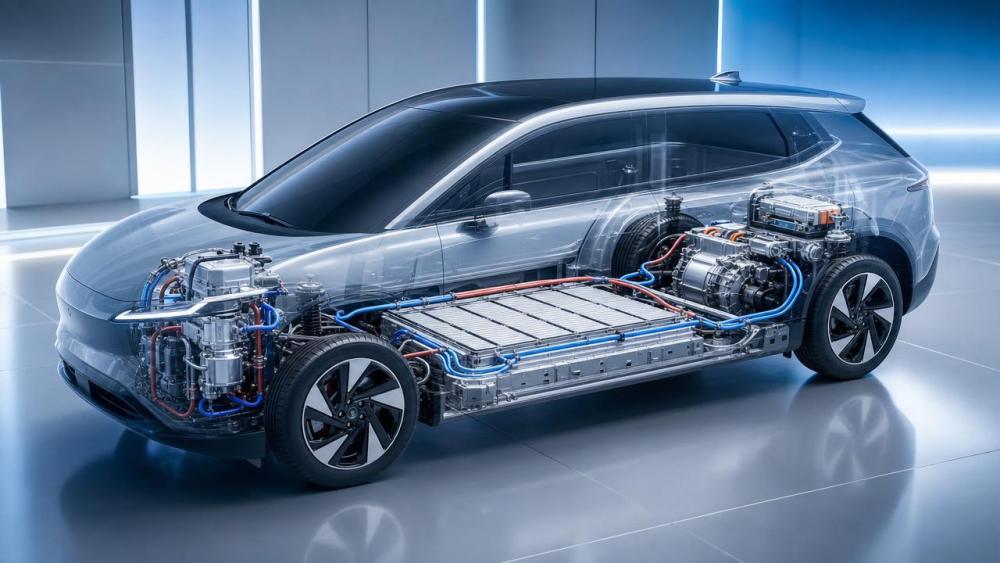
Today, NEV thermal management links the battery pack, heat pump, electric compressor, coolant loop, thermal valves, motor, inverter, and cabin system into one energy network.
When that network is well integrated, the vehicle can recover heat, reduce unnecessary compressor load, and maintain better battery temperature consistency.
This matters most in winter driving, fast charging, urban stop-start use, and hot-climate operation. These are exactly the conditions where range loss becomes visible.
It also explains why thermal systems now influence platform differentiation almost as much as battery chemistry or motor efficiency.
What NEV thermal management really includes
In practical terms, NEV thermal management is the coordinated control of heat generation, transfer, storage, and release across several vehicle domains.
The battery remains the most sensitive element. Temperature that is too high can accelerate degradation. Temperature that is too low can reduce charging speed and usable power.
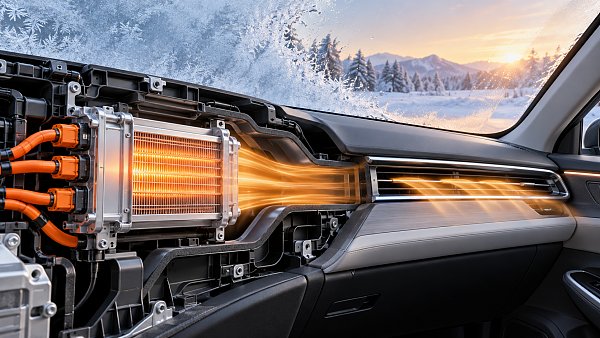
At the same time, the cabin competes for energy, especially in cold weather. A resistive heater can quickly reduce range, which is why heat pump adoption continues to expand.
Power electronics and e-drive units add another layer. Their thermal loads may be smaller than battery loads, but they still affect reliability and system efficiency.
This is where integrated thermal valves, battery liquid cooling systems, and electric compressors become strategically important. They help redirect heat where it creates the most value.
Core building blocks in current platforms
- Heat pump systems that improve low-temperature energy efficiency compared with direct electric heating.
- Battery liquid cooling loops that keep cells within a narrower operating window.
- Integrated thermal valves that simplify routing and reduce component count.
- Electric compressors that support variable-speed control and more flexible thermal balancing.
- High-voltage harnesses and control electronics that must tolerate rising thermal and electrical complexity.
The trends redefining range and efficiency
One clear trend is system integration. Instead of adding standalone modules, OEMs are consolidating thermal functions to reduce mass, packaging space, and control losses.
A second trend is smarter heat reuse. Waste heat from the motor, inverter, or battery can support cabin conditioning or battery preheating.
A third trend is control precision. Software increasingly determines thermal efficiency, because valve logic, compressor speed, and loop switching affect real-world performance.
Another important shift is faster charging support. As charging power rises, NEV thermal management must remove heat more quickly without creating large energy penalties.
Regional adaptation is also becoming more visible. China, Europe, the United States, Japan, India, and Southeast Asia do not present the same climate, usage, or regulation profile.
Why supply chain decisions are changing
Thermal architecture is no longer just an engineering topic. It affects sourcing strategy, cost structure, compliance planning, and market positioning.
For example, a more efficient heat pump system may raise upfront component cost while improving range claims and reducing seasonal performance complaints.
Integrated thermal valves can reduce assembly complexity, but they also concentrate supplier dependence in fewer modules. That changes risk evaluation.
Electric compressor performance now deserves closer comparison across efficiency maps, noise behavior, low-temperature response, and control compatibility.
This is where market intelligence becomes valuable. Platforms such as GACT help connect component trends, export dynamics, standards interpretation, and application analysis across regions.
That broader view is useful because NEV thermal management decisions often involve trade-offs between local sourcing, technical maturity, and platform scalability.
Where the biggest practical gains usually appear
In many programs, the most visible gain does not come from a single breakthrough part. It comes from coordination across several subsystems.
Battery preconditioning before charging is one example. Better timing and temperature control can improve charging speed without major battery redesign.
Cabin comfort management is another. Smarter zoning, faster defogging logic, and efficient compressor control reduce comfort-related energy waste.
Thermal design also matters for adjacent vehicle systems. High-voltage harness routing, cockpit electronics, and compact packaging all interact with heat exposure.
That is why the conversation now extends beyond cooling plates and compressors. It includes wiring, controls, sensors, and vehicle-level energy management.
Areas worth evaluating together
- Cold-weather range retention versus added system complexity.
- Fast-charge thermal stability versus parasitic energy use.
- Integrated module sourcing versus serviceability and replacement flexibility.
- Thermal performance targets versus regional operating conditions.
- Control software capability versus hardware overdesign.
How to assess NEV thermal management more effectively
A useful starting point is to separate headline claims from operating context. A system that performs well in mild conditions may deliver weaker value in extreme climates.
It also helps to compare at the platform level, not only at the component level. A premium compressor alone cannot fix poor loop design or weak control calibration.
Thermal response time should be reviewed alongside steady-state efficiency. Vehicles spend much of their real life in transient conditions.
Reliability data matters as much as efficiency data. Repeated thermal cycling, refrigerant durability, valve endurance, and sealing quality affect long-term economics.
Standards, export expectations, and regional supplier capability should also be part of the review, especially for programs targeting several overseas markets.
A practical review checklist
- Map where heat is produced, wasted, recovered, and stored.
- Check whether the battery loop supports future charging upgrades.
- Review heat pump performance in low-temperature and humid conditions.
- Compare integrated thermal valve designs for maintainability and control precision.
- Verify compatibility between thermal hardware, software logic, and high-voltage architecture.
What to watch next in the global market
NEV thermal management will keep evolving as charging speeds rise, battery formats diversify, and software-defined vehicle architectures mature.
The most competitive systems are likely to combine efficient hardware, tighter control integration, and stronger adaptation to local climate and usage patterns.
For that reason, the next step is rarely a simple component swap. It is usually a structured review of thermal goals, vehicle scenarios, supply options, and regional requirements.
Following developments in battery liquid cooling, heat pump systems, electric compressors, integrated valves, and related wiring architecture can make that review more grounded.
A clear understanding of NEV thermal management now supports better decisions on range strategy, platform cost, supplier selection, and long-term product resilience.
Have questions about this sector analysis, or seeking best practices specific to your niche? Drop us a line below and let the senior consultants at GAC assist you.
“We respect your privacy. Your information is strictly confidential.”
Related News
- 00
0000-00
How to compare noise ratings for battery coolant pumps - 00
0000-00
How bright should automotive display systems be in sunlight? - 00
0000-00
How heat pumps improve the efficiency of EV thermal systems - 00
0000-00
Can a smart cockpit platform support multiple displays? - 00
0000-00
How is automotive connector vibration resistance tested?
Weekly Insights
Stay ahead with our curated technology reports delivered every Monday.
Recommended News
 How to compare noise ratings for battery coolant pumpsCompare coolant pump low noise ratings with confidence. Learn how test conditions, hydraulic duty, tonal noise and installation affect your choice.Author:Time:Nov 10, 2026
 How bright should automotive display systems be in sunlight?Automotive Display Systems need more than brightness to stay readable in sunlight. Discover why 1,000 nits is a starting point and how to evaluate glare and heat.Author:Time:Nov 09, 2026
 How heat pumps improve the efficiency of EV thermal systemsEV Thermal Systems use heat pumps to reduce heating energy demand. Explore how they work, where they excel, and what limits efficiency in cold weather.Author:Time:Nov 08, 2026
 Can a smart cockpit platform support multiple displays?Can a smart cockpit platform support multiple displays? Explore key requirements for performance, safety, connectivity, and supplier evaluation.Author:Time:Nov 07, 2026
 How is automotive connector vibration resistance tested?Automotive connector vibration resistance testing reveals hidden contact failures. Explore test profiles, continuity monitoring and pass criteria.Author:Time:Nov 06, 2026
 How heat pumps save energy in automotive cabin climate systemsAutomotive Cabin Climate Systems energy saving starts with smarter heat pump design. Explore real-world efficiency, cold-weather trade-offs, and testing tips.Author:Time:Nov 05, 2026
 Is an EV heat pump worth it for winter driving range?Is a heat pump worth using in a cold-climate EV? Discover how it affects winter range, when it pays off, and what to check before buying.Author:Time:Nov 04, 2026
 When should you use 50-ohm coaxial cable instead of 75-ohm?Coaxial cable 50 ohm or 75 ohm? Learn when to use each, avoid impedance mismatches, and choose the right cable for reliable RF and video performance.Author:Time:Nov 03, 2026
 How to select a high temperature motor harness for an EVChoose the right high temperature motor harness for your EV. Compare thermal limits, current capacity, shielding, routing, and validation evidence.Author:Time:Nov 02, 2026
 How much does electric power steering replacement cost?Electric power steering price typically ranges from $1,000 to $3,000 for major replacements. Discover cost factors, repair options, and tips for comparing quotes.Author:Time:Nov 01, 2026
 How to size an EV A/C compressor for the required cooling capacitySize an EV A/C Compressor with confidence. Explore cooling loads, performance maps and power limits to select the right compressor for your vehicle.Author:Time:Oct 31, 2026
 How to choose the right pitch for an FPC board connectorFPC board connector pitch affects space, assembly and reliability. Learn how to compare options and select the best fit for your design.Author:Time:Oct 30, 2026
 How zonal design affects harness routing in high-voltage EV architecturesExplore high-voltage electrical architecture zonal design and its impact on EV harness routing. Discover key trade-offs in cable length, safety, thermal performance, and service access.Author:Time:Oct 29, 2026
 How tariffs affect costs in global automotive parts supply chainsNavigate tariffs in the global automotive parts trade supply chain. Learn to compare landed costs, manage duty exposure, and uncover smarter sourcing strategies to protect your margins.Author:Time:Oct 28, 2026
 How to assess vendor lock-in in a software-defined vehicle platformAssess Software-Defined Vehicle platform lock-in with practical tests for API portability, data access, update control, and exit costs. Learn how to choose a platform with a proven exit path.Author:Time:Oct 27, 2026
 How ISO 26262 guides functional safety in steer-by-wire systemsExplore steering systems functional safety through ISO 26262. Learn how hazard analysis, fault-tolerant design, and validation build a stronger steer-by-wire safety case.Author:Time:Oct 26, 2026
 How to evaluate a steering angle sensor manufacturer's accuracy claimsEvaluate steering angle sensor manufacturer accuracy claims with practical checks on calibration, latency, and test evidence. Compare suppliers confidently and avoid costly selection mistakes.Author:Time:Oct 25, 2026
 How to diagnose CAN bus faults in a hybrid vehicle control unitDiagnose Hybrid Vehicle Systems control unit CAN bus faults with step-by-step power, wiring, and waveform checks. Find the root cause and avoid unnecessary replacement.Author:Time:Oct 24, 2026
 How does battery cooling pipe diameter affect coolant pressure drop?Battery Cooling Pipe diameter affects coolant pressure drop and pump power. Explore sizing calculations and practical tips to optimize EV battery cooling and compare options with confidence.Author:Time:Oct 23, 2026
 How to assess PPAP readiness of automotive sensor system manufacturersAssess Automotive Sensor Systems manufacturers for PPAP readiness. Learn to verify production evidence, measurement capability, validation, and traceability to reduce sourcing risks.Author:Time:Oct 22, 2026
 What to ask an FPC connector manufacturer about reliability testingChoosing an FPC Connector manufacturer? Learn what to ask about reliability testing, failure limits, and traceable results to reduce design risks and select with confidence.Author:Time:Oct 21, 2026
 How to verify vehicle fitment for an aftermarket AC evaporatorNavigating the evaporator aftermarket? Verify vehicle fitment with VIN data, OE numbers, and physical interface checks. Use this guide to avoid costly mismatches and order confidently.Author:Time:Oct 20, 2026
 How electric compressor speed affects EV battery cooling capacityElectric compressor technology: battery cooling depends on more than RPM. Discover how speed, refrigerant flow, and system limits affect EV cooling capacity and energy efficiency.Author:Time:Oct 19, 2026
 How to verify a variable frequency compressor supplier’s efficiency claimsVerify a variable frequency compressor supplier’s efficiency claims using COP boundaries, matched test conditions, and duty-cycle data. Learn how to choose with confidence.Author:Time:Oct 18, 2026
 How bend radius affects FPC reliability in automotive camera modulesAutomotive FPC applications: camera module reliability starts with bend radius. Learn how stack-up, strain, and validation guide robust designs and help prevent costly failures.Author:Time:Oct 17, 2026
 How to diagnose intermittent loss of electric power steering assistMaster power steering system diagnostics to trace intermittent EPS assist loss. Learn proven checks for voltage, wiring, and fault codes to avoid costly guesswork.Author:Time:Oct 16, 2026
 How to size automotive power modules for electric compressorsSize automotive power modules for electric compressors with confidence. Learn how voltage, phase current, losses, and cooling shape reliable selection—and avoid costly oversizing.Author:Time:Oct 15, 2026
 Why automotive power electronics are shifting to silicon carbideAutomotive Power Electronics are shifting to silicon carbide. Discover how SiC can cut losses, boost EV power density, and reshape cooling, reliability, and system costs.Author:Time:Oct 14, 2026
 How EV adoption shapes the electrically driven compressor marketExplore how EV adoption shapes the electrically driven compressor market, from battery cooling and heat pumps to supplier margins. Discover the drivers of profitable growth.Author:Time:Oct 13, 2026
 How to size a PTC heater for reliable EV cabin heatingPTC Heater sizing for EV cabins: learn how to balance defrost performance, heat-pump integration, airflow, voltage range, and battery power for reliable winter comfort.Author:Time:Oct 12, 2026