
Cabin Climate Control Issues That Hurt Comfort and Energy Use




When cabin climate control stops working as it should, comfort drops fast and energy use climbs without warning. Weak airflow, uneven temperatures, and slow defogging can turn every drive into a frustrating experience. Understanding the common issues behind cabin climate control helps drivers improve comfort, reduce waste, and make smarter decisions about vehicle maintenance and efficiency.
In today’s vehicle landscape, cabin climate control affects far more than temperature. It influences visibility, battery range, compressor load, and the overall efficiency of thermal systems. For conventional vehicles and NEVs alike, small faults can create larger operating losses.
From an industry viewpoint, cabin climate control connects electronics, sensors, airflow routing, compressors, software logic, and thermal management. That makes problem diagnosis highly scenario-dependent. The same symptom may point to very different causes under different driving conditions.
Why cabin climate control issues look different across real driving scenarios
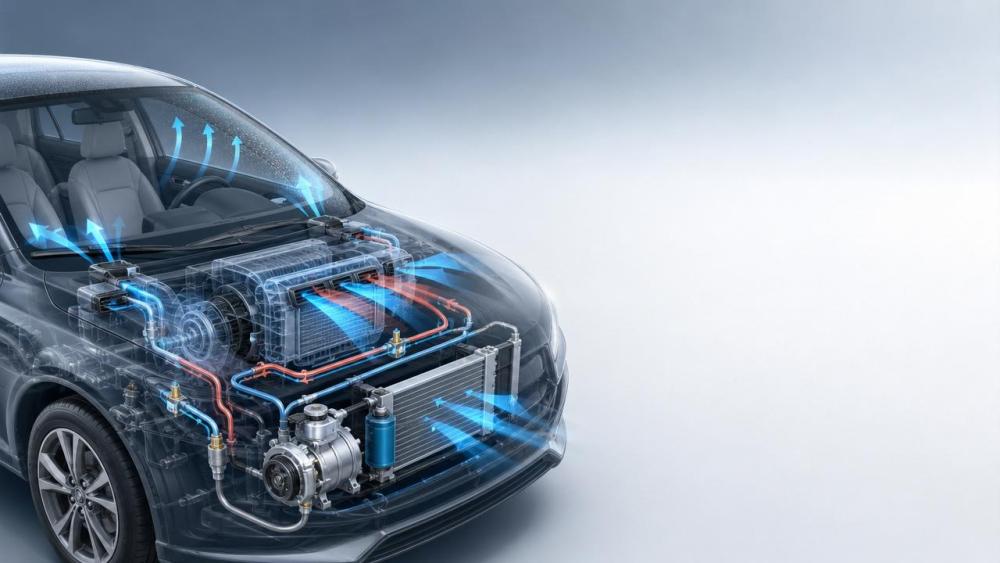
Not every cabin climate control problem appears the same. Urban commutes, highway driving, winter starts, summer parking, and EV range-sensitive trips all place different demands on the system.
A vehicle stuck in traffic may struggle with idle cooling efficiency. A highway vehicle may reveal airflow imbalance at speed. A cold-weather vehicle may show weak heating, delayed defrost, or fogging caused by humidity control faults.
This is why effective diagnosis starts with use conditions. Looking only at one symptom often leads to part replacement without solving the root issue. Better results come from matching symptoms with the operating scene.
Scenario 1: City driving exposes weak airflow and unstable cooling
In stop-and-go traffic, cabin climate control works under limited ram air support. Heat builds up faster, and cooling depends more heavily on fans, compressor response, and condenser efficiency.
If airflow feels weak at low speed, the issue may involve a clogged cabin filter, blower motor wear, dirty evaporator fins, or blocked vents. If air volume seems normal but cooling is poor, refrigerant charge or compressor control may be involved.
Key judgment points in urban use
- Cooling improves only when the vehicle speeds up.
- The fan sounds strong, but vents deliver little air.
- Cabin climate control cycles too often in traffic.
- Idle comfort drops after several minutes.
These signs often indicate airflow restriction, condenser heat rejection issues, or weak control calibration. In NEVs, thermal management priorities may also shift energy away from cabin cooling during heavy battery conditioning.
Scenario 2: Highway comfort problems often come from distribution imbalance
At highway speed, airflow supply usually improves. If discomfort remains, the root cause often moves from air volume to air distribution, sensor accuracy, or blend door control.
One common cabin climate control complaint is uneven temperature between front seats, or between upper body and footwell areas. This can result from failing actuators, misread in-cabin temperature sensors, or duct leakage.
Noise also matters here. A climate system working too hard at cruising speed may point to poor sealing, overactive compressor operation, or software that keeps chasing unstable setpoints.
What to check on long-distance routes
- Different outlet temperatures across left and right vents.
- Persistent fan noise despite moderate cabin load.
- Frequent manual adjustment to stay comfortable.
- Dry air, stuffiness, or recurring windshield haze.
These symptoms suggest that cabin climate control is no longer balancing comfort and energy use effectively. The system may still function, but it is operating inefficiently.
Scenario 3: Cold weather turns small faults into defogging and heating failures
Winter conditions place special stress on cabin climate control. Occupants expect quick heat, clear glass, and stable airflow. When any of those functions lag, both comfort and safety suffer.
Slow warm-up may reflect thermostat issues, low coolant flow, heater core restriction, heat pump limitations, or software strategies designed to protect battery temperature first. In NEVs, this interaction becomes especially important.
Fogging often signals humidity mismanagement, not just weak heat. A damp cabin filter, poor recirculation logic, water intrusion, or sensor drift can all reduce defog performance.
Cold-weather warning signs
- Windshield clearing takes much longer than before.
- The cabin warms unevenly or never reaches target temperature.
- Recirculation creates rapid fogging.
- Range drops sharply when heat demand rises.
In these cases, cabin climate control should be evaluated as part of the complete thermal system, not as an isolated cabin feature.
Scenario 4: Parked heat soak reveals hidden cabin climate control weakness
A vehicle parked in direct sun creates one of the toughest recovery scenarios. Interior surfaces store heat, and the climate system must remove both air heat and radiant load quickly.
If cabin climate control takes too long to recover, root causes may include weak compressor output, poor glazing performance, low blower efficiency, dirty heat exchangers, or weak sunload sensor input.
This scenario also exposes control strategy quality. A smart system stages airflow, fresh air, recirculation, and compressor loading efficiently. A weak system simply works harder and wastes energy.
How cabin climate control needs vary by scenario
Practical adaptation steps to improve comfort and reduce waste
Better cabin climate control performance usually comes from targeted action, not random replacement. The right maintenance step depends on the operating pattern and symptom combination.
Recommended actions by symptom
- Replace restricted cabin filters before airflow loss affects cooling and defogging.
- Inspect blower output if vent flow feels weaker than fan sound suggests.
- Verify refrigerant condition and compressor response when cooling fades in traffic.
- Check sensor accuracy when temperatures swing or zones disagree.
- Review humidity sources if windows fog repeatedly in mild weather.
- For NEVs, examine cabin and battery thermal strategy interaction.
These steps support both comfort and efficiency. They also align with broader automotive trends toward integrated thermal management, intelligent controls, and energy-aware cabin systems.
Common misjudgments that make cabin climate control problems worse
A frequent mistake is treating all cooling loss as a refrigerant problem. In reality, airflow restriction, actuator faults, and sensor errors often create similar complaints.
Another mistake is ignoring gradual decline. Cabin climate control often deteriorates slowly, making rising energy use harder to notice until range, comfort, or visibility clearly worsen.
In electrified vehicles, one more misjudgment is separating cabin comfort from thermal system efficiency. Heating and cooling loads directly influence battery performance, compressor duty, and whole-vehicle energy balance.
There is also a tendency to focus only on hardware. Yet software logic, calibration quality, and signal coordination increasingly define how well cabin climate control performs under changing conditions.
Next steps for evaluating cabin climate control more effectively
Start by recording when the issue appears most clearly. Note speed, weather, sun exposure, occupancy, and whether the vehicle is an ICE model, hybrid, or NEV.
Then compare the symptom against the scenario patterns above. This narrows the likely cause much faster than checking unrelated parts one by one.
For deeper insight, use a systems view. Cabin climate control should be assessed together with compressors, sensors, ducts, heat pumps, coolant paths, and control algorithms.
As vehicles become more electrified and software-defined, comfort is no longer a simple HVAC topic. It is a strategic thermal management issue tied directly to efficiency, safety, and user experience.
A structured, scenario-based approach helps restore comfort sooner, prevents wasted energy, and supports smarter maintenance decisions for modern automotive systems.
Have questions about this sector analysis, or seeking best practices specific to your niche? Drop us a line below and let the senior consultants at GAC assist you.
“We respect your privacy. Your information is strictly confidential.”
Related News
- 00
0000-00
How does a shielded HSD cable reduce interference in vehicles? - 00
0000-00
What drives demand for scroll compressors in the automotive market? - 00
0000-00
Does AEC-Q200 apply to flexible printed circuits? - 00
0000-00
How does production volume affect automotive flexible electronics costs? - 00
0000-00
How much does an in-vehicle infotainment system cost to replace?
Weekly Insights
Stay ahead with our curated technology reports delivered every Monday.
Recommended News
 How does a shielded HSD cable reduce interference in vehicles?Discover how a shielded HSD cable reduces vehicle interference, and learn why connector design, routing, and testing matter for reliable high-speed data links.Author:Time:Nov 17, 2026
 What drives demand for scroll compressors in the automotive market?Explore the scroll compressor for automobile market and discover how EV adoption, heat pumps, efficiency, and supplier capabilities shape demand.Author:Time:Nov 16, 2026
 Does AEC-Q200 apply to flexible printed circuits?Flexible Printed Circuit AEC-Q200 requirements explained: discover which components qualify and how to assess automotive FPC reliability.Author:Time:Nov 15, 2026
 How does production volume affect automotive flexible electronics costs?Explore how production volume affects automotive flexible electronics cost, from tooling and yield to testing. Compare quotes and negotiate smarter.Author:Time:Nov 14, 2026
 How much does an in-vehicle infotainment system cost to replace?Explore in-vehicle infotainment cost, from affordable repairs to factory replacements. Compare options, installation fees, and compatibility before you buy.Author:Time:Nov 13, 2026
 How does condenser efficiency affect heat pump performance?Discover how condenser high efficiency can improve heat pump performance, reduce compressor power, and boost heating COP—plus the trade-offs to watch.Author:Time:Nov 12, 2026
 What does each FAKRA cable color code mean?FAKRA cable color code explained: Explore common connector colors, typical uses and key compatibility checks before choosing a replacement.Author:Time:Nov 11, 2026
 How to compare noise ratings for battery coolant pumpsCompare coolant pump low noise ratings with confidence. Learn how test conditions, hydraulic duty, tonal noise and installation affect your choice.Author:Time:Nov 10, 2026
 How bright should automotive display systems be in sunlight?Automotive Display Systems need more than brightness to stay readable in sunlight. Discover why 1,000 nits is a starting point and how to evaluate glare and heat.Author:Time:Nov 09, 2026
 How heat pumps improve the efficiency of EV thermal systemsEV Thermal Systems use heat pumps to reduce heating energy demand. Explore how they work, where they excel, and what limits efficiency in cold weather.Author:Time:Nov 08, 2026
 Can a smart cockpit platform support multiple displays?Can a smart cockpit platform support multiple displays? Explore key requirements for performance, safety, connectivity, and supplier evaluation.Author:Time:Nov 07, 2026
 How is automotive connector vibration resistance tested?Automotive connector vibration resistance testing reveals hidden contact failures. Explore test profiles, continuity monitoring and pass criteria.Author:Time:Nov 06, 2026
 How heat pumps save energy in automotive cabin climate systemsAutomotive Cabin Climate Systems energy saving starts with smarter heat pump design. Explore real-world efficiency, cold-weather trade-offs, and testing tips.Author:Time:Nov 05, 2026
 Is an EV heat pump worth it for winter driving range?Is a heat pump worth using in a cold-climate EV? Discover how it affects winter range, when it pays off, and what to check before buying.Author:Time:Nov 04, 2026
 When should you use 50-ohm coaxial cable instead of 75-ohm?Coaxial cable 50 ohm or 75 ohm? Learn when to use each, avoid impedance mismatches, and choose the right cable for reliable RF and video performance.Author:Time:Nov 03, 2026
 How to select a high temperature motor harness for an EVChoose the right high temperature motor harness for your EV. Compare thermal limits, current capacity, shielding, routing, and validation evidence.Author:Time:Nov 02, 2026
 How much does electric power steering replacement cost?Electric power steering price typically ranges from $1,000 to $3,000 for major replacements. Discover cost factors, repair options, and tips for comparing quotes.Author:Time:Nov 01, 2026
 How to size an EV A/C compressor for the required cooling capacitySize an EV A/C Compressor with confidence. Explore cooling loads, performance maps and power limits to select the right compressor for your vehicle.Author:Time:Oct 31, 2026
 How to choose the right pitch for an FPC board connectorFPC board connector pitch affects space, assembly and reliability. Learn how to compare options and select the best fit for your design.Author:Time:Oct 30, 2026
 How zonal design affects harness routing in high-voltage EV architecturesExplore high-voltage electrical architecture zonal design and its impact on EV harness routing. Discover key trade-offs in cable length, safety, thermal performance, and service access.Author:Time:Oct 29, 2026
 How tariffs affect costs in global automotive parts supply chainsNavigate tariffs in the global automotive parts trade supply chain. Learn to compare landed costs, manage duty exposure, and uncover smarter sourcing strategies to protect your margins.Author:Time:Oct 28, 2026
 How to assess vendor lock-in in a software-defined vehicle platformAssess Software-Defined Vehicle platform lock-in with practical tests for API portability, data access, update control, and exit costs. Learn how to choose a platform with a proven exit path.Author:Time:Oct 27, 2026
 How ISO 26262 guides functional safety in steer-by-wire systemsExplore steering systems functional safety through ISO 26262. Learn how hazard analysis, fault-tolerant design, and validation build a stronger steer-by-wire safety case.Author:Time:Oct 26, 2026
 How to evaluate a steering angle sensor manufacturer's accuracy claimsEvaluate steering angle sensor manufacturer accuracy claims with practical checks on calibration, latency, and test evidence. Compare suppliers confidently and avoid costly selection mistakes.Author:Time:Oct 25, 2026
 How to diagnose CAN bus faults in a hybrid vehicle control unitDiagnose Hybrid Vehicle Systems control unit CAN bus faults with step-by-step power, wiring, and waveform checks. Find the root cause and avoid unnecessary replacement.Author:Time:Oct 24, 2026
 How does battery cooling pipe diameter affect coolant pressure drop?Battery Cooling Pipe diameter affects coolant pressure drop and pump power. Explore sizing calculations and practical tips to optimize EV battery cooling and compare options with confidence.Author:Time:Oct 23, 2026
 How to assess PPAP readiness of automotive sensor system manufacturersAssess Automotive Sensor Systems manufacturers for PPAP readiness. Learn to verify production evidence, measurement capability, validation, and traceability to reduce sourcing risks.Author:Time:Oct 22, 2026
 What to ask an FPC connector manufacturer about reliability testingChoosing an FPC Connector manufacturer? Learn what to ask about reliability testing, failure limits, and traceable results to reduce design risks and select with confidence.Author:Time:Oct 21, 2026
 How to verify vehicle fitment for an aftermarket AC evaporatorNavigating the evaporator aftermarket? Verify vehicle fitment with VIN data, OE numbers, and physical interface checks. Use this guide to avoid costly mismatches and order confidently.Author:Time:Oct 20, 2026
 How electric compressor speed affects EV battery cooling capacityElectric compressor technology: battery cooling depends on more than RPM. Discover how speed, refrigerant flow, and system limits affect EV cooling capacity and energy efficiency.Author:Time:Oct 19, 2026





























