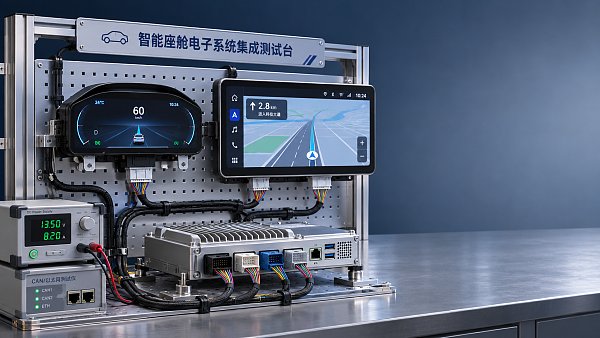
In-Vehicle Infotainment Issues That Turn Into User Complaints Fast




In-vehicle infotainment issues can escalate into user complaints faster than many dealers, distributors, and agents expect—especially when laggy interfaces, unstable connectivity, poor voice control, or screen integration failures affect daily driving. Understanding these pain points is essential for identifying reliable suppliers, improving aftersales satisfaction, and capturing growing market demand for smarter, more dependable cabin electronics.
Why scenario differences matter more than product specs alone
For channel partners, the biggest mistake in the in-vehicle infotainment market is assuming that one “good” system fits every vehicle program. In reality, user complaints often come from a mismatch between usage scenario and system capability. A system that performs acceptably in a fleet sedan may trigger repeated complaints in a premium SUV, a connected EV, or a light commercial vehicle with constant route changes and device pairing.
This matters because end users do not complain in engineering language. They do not say “the HMI architecture lacks optimization” or “the domain controller integration is unstable.” They say the screen freezes, Bluetooth drops, navigation is slow, the backup camera lags, voice commands fail, or the display looks cheap. For dealers and distributors, these complaints quickly turn into warranty pressure, low customer satisfaction scores, return negotiations, and damage to brand trust.
In a market shaped by smart cabin electronics, software-defined vehicles, and higher expectations for seamless connectivity, the real business question is not simply whether an in-vehicle infotainment unit has a large screen or supports multiple apps. The better question is: in which application scenario will this system remain responsive, stable, update-friendly, and easy to support after delivery?
Where in-vehicle infotainment complaints usually appear first
User complaints rise fastest when infotainment sits at the center of daily interaction. The more often drivers touch, view, speak to, or depend on the system, the lower the tolerance for delay or inconsistency. For channel businesses, several scenarios deserve special attention.
High-frequency urban commuting
In city traffic, drivers repeatedly switch between music, navigation, phone calls, parking assist, and climate settings. Here, in-vehicle infotainment issues become highly visible because the system is used in short, frequent bursts. Slow boot times, delayed touch response, poor voice wake-up, and map lag create immediate frustration. In this scenario, software smoothness matters more than feature count.
Family vehicles with multiple users
Multi-driver households stress infotainment systems differently. Different phones connect, profiles switch, rear-seat needs vary, and navigation history changes often. Complaints in this scenario usually involve failed device recognition, unstable Apple CarPlay or Android Auto sessions, inconsistent user settings, and confusing menu paths. A family user may forgive a missing advanced feature, but not recurring inconvenience.
Premium and technology-positioned vehicles
In higher-end models, customer expectations are sharper. A premium-looking cabin with a weak in-vehicle infotainment experience creates a larger perception gap than in entry-level vehicles. Users expect smooth animations, crisp displays, fast voice assistants, synchronized multi-screen behavior, and reliable cloud-linked functions. Small defects are interpreted as overall poor quality, not isolated software flaws.
Commercial and fleet operations
Fleet use adds another layer. Drivers may work long hours, rely on navigation continuously, and connect devices repeatedly. Complaint patterns often focus on durability, restart stability, telematics integration, and distraction risk. In this application, a flashy interface has less value than dependable operation, quick recovery from faults, and straightforward service diagnostics.
Scenario comparison: what channel partners should evaluate before selecting suppliers
The table below helps dealers, distributors, and agents compare in-vehicle infotainment requirements by use case rather than by headline features alone.
Different complaint patterns require different supplier judgment
Not all in-vehicle infotainment complaints carry the same business meaning. Some point to poor software tuning, others to weak hardware selection, and others to immature system integration. Channel partners should learn to read complaint patterns as sourcing signals.
If complaints center on lag, look beyond screen size
Lag is one of the fastest paths to user dissatisfaction. It usually reflects insufficient processing reserve, poor memory management, overloaded interfaces, or weak coordination across cockpit functions. In commuter and premium scenarios, this is especially damaging because users interact with the screen constantly. A larger display cannot compensate for poor responsiveness.
If complaints center on connectivity, test ecosystem compatibility
Bluetooth instability, failed smartphone mirroring, weak Wi-Fi linking, and unreliable app synchronization often vary by region, phone brand, software version, and operator network. For distributors and agents serving diverse markets, the critical issue is not whether connectivity exists on the spec sheet, but whether it works across the device mix that local drivers actually use.
If complaints center on voice functions, measure real usability
Voice control is frequently promoted yet frequently criticized. In practice, users complain when wake-up is inconsistent, cabin noise ruins recognition, commands are too limited, or responses are too slow. In-vehicle infotainment systems intended for hands-busy or eyes-busy driving scenarios should be validated in real cabin conditions, not only in ideal demos.
If complaints center on integration failures, investigate architecture maturity
Problems such as delayed camera feed, climate setting conflicts, steering wheel control errors, and instrument cluster mismatch often reveal weak integration between infotainment, body electronics, and smart cabin domains. This is especially important in newer EV and intelligent cockpit programs, where the in-vehicle infotainment platform is no longer a standalone screen but part of a larger electronic architecture.
How demand differs for dealers, distributors, and agents
Although all three groups care about user satisfaction, their operational priorities differ. Matching in-vehicle infotainment solutions to business role reduces complaint costs and improves conversion.
Common scenario misjudgments that lead to fast complaints
Several repeat mistakes cause channel partners to underestimate complaint risk in in-vehicle infotainment projects.
Assuming demo performance equals long-term performance
A polished showroom demonstration may hide thermal throttling, memory pressure, software conflicts, or poor behavior after repeated updates. This is why GACT’s broader focus on smart cabin electronics and thermal systems matters: cockpit performance can degrade when hardware heat management is weak or when integration loads increase over time.
Overvaluing feature volume and undervaluing stability
A long feature list can help sales presentations, but unstable execution creates complaints much faster than missing fringe functions. For many use cases, fewer well-optimized functions outperform a complicated but fragile interface.
Ignoring local user habits and phone ecosystems
An in-vehicle infotainment platform that works well in one region may perform poorly in another due to different map services, streaming habits, language use, or smartphone brand share. Channel partners should validate region-specific behavior before scaling distribution.
Treating infotainment as isolated from other core systems
As cabins become more integrated, infotainment quality depends on vehicle electrical architecture, wiring harness reliability, display communication, software update strategy, and even thermal operating conditions. Complaints can originate in cross-domain interactions, not only in the head unit itself.
Practical scenario-based selection advice for channel businesses
To reduce complaint risk and improve supplier decisions, dealers, distributors, and agents should apply a scenario-based checklist before committing to an in-vehicle infotainment product line.
First, define the dominant usage pattern: daily commuting, family multi-user operation, premium smart cockpit positioning, or commercial duty cycles. Second, identify the top three complaint-sensitive functions in that scenario, such as navigation, voice control, device pairing, or camera display. Third, request evidence of real-world validation, including long-duration tests, OTA update cases, and compatibility data across phone models and software versions.
Fourth, assess aftersales support depth. Fast complaint closure often depends less on sales promises and more on log analysis, remote diagnostics, bug-fix cadence, and local technical coordination. Fifth, review the supplier’s broader system understanding. Providers that understand cockpit integration, vehicle electronics, and thermal constraints are usually better positioned to deliver stable in-vehicle infotainment performance over time.
FAQ for buyers evaluating in-vehicle infotainment risk
Which vehicles generate infotainment complaints the fastest?
Vehicles with frequent screen interaction, high connectivity dependence, or premium user expectations usually generate complaints the fastest. Urban EVs, family SUVs, and smart cockpit models are common examples.
What should distributors ask suppliers first?
Ask for evidence of software stability, device compatibility, OTA maintenance capability, regional localization, and reference programs with similar cabin architecture and user profiles.
Are user complaints mainly caused by software?
Not always. Software is a major factor, but complaints may also come from weak processors, poor display quality, unstable electrical integration, inadequate heat control, or insufficient validation under real operating conditions.
A smarter next step for channel partners
In-vehicle infotainment has become a frontline indicator of vehicle quality, comfort, and intelligence. For dealers, distributors, and agents, the safest path is not chasing the most impressive feature sheet, but matching product capability to the right usage scenario and complaint profile. When you evaluate systems through the lens of real applications—commuting, family use, premium cabins, or fleet operation—you make better sourcing decisions and protect long-term customer satisfaction.
If your business is comparing suppliers or expanding into smarter cabin electronics, a scenario-based review of in-vehicle infotainment stability, integration maturity, and serviceability should come before volume commitments. That is where stronger channel performance begins, and where better partnerships in the evolving automotive electronics value chain are built.
Have questions about this sector analysis, or seeking best practices specific to your niche? Drop us a line below and let the senior consultants at GAC assist you.
“We respect your privacy. Your information is strictly confidential.”
Related News
- 00
0000-00
How to assess a smart cockpit electronics manufacturer's integration capability - 00
0000-00
How does a shielded HSD cable reduce interference in vehicles? - 00
0000-00
What drives demand for scroll compressors in the automotive market? - 00
0000-00
Does AEC-Q200 apply to flexible printed circuits? - 00
0000-00
How does production volume affect automotive flexible electronics costs?
Weekly Insights
Stay ahead with our curated technology reports delivered every Monday.
Recommended News
 How to assess a smart cockpit electronics manufacturer's integration capabilityAssess a smart cockpit electronics manufacturer's integration capability with practical checks for interfaces, testing, safety, cybersecurity and supplier support.Author:Time:Nov 18, 2026
 How does a shielded HSD cable reduce interference in vehicles?Discover how a shielded HSD cable reduces vehicle interference, and learn why connector design, routing, and testing matter for reliable high-speed data links.Author:Time:Nov 17, 2026
 What drives demand for scroll compressors in the automotive market?Explore the scroll compressor for automobile market and discover how EV adoption, heat pumps, efficiency, and supplier capabilities shape demand.Author:Time:Nov 16, 2026
 Does AEC-Q200 apply to flexible printed circuits?Flexible Printed Circuit AEC-Q200 requirements explained: discover which components qualify and how to assess automotive FPC reliability.Author:Time:Nov 15, 2026
 How does production volume affect automotive flexible electronics costs?Explore how production volume affects automotive flexible electronics cost, from tooling and yield to testing. Compare quotes and negotiate smarter.Author:Time:Nov 14, 2026
 How much does an in-vehicle infotainment system cost to replace?Explore in-vehicle infotainment cost, from affordable repairs to factory replacements. Compare options, installation fees, and compatibility before you buy.Author:Time:Nov 13, 2026
 How does condenser efficiency affect heat pump performance?Discover how condenser high efficiency can improve heat pump performance, reduce compressor power, and boost heating COP—plus the trade-offs to watch.Author:Time:Nov 12, 2026
 What does each FAKRA cable color code mean?FAKRA cable color code explained: Explore common connector colors, typical uses and key compatibility checks before choosing a replacement.Author:Time:Nov 11, 2026
 How to compare noise ratings for battery coolant pumpsCompare coolant pump low noise ratings with confidence. Learn how test conditions, hydraulic duty, tonal noise and installation affect your choice.Author:Time:Nov 10, 2026
 How bright should automotive display systems be in sunlight?Automotive Display Systems need more than brightness to stay readable in sunlight. Discover why 1,000 nits is a starting point and how to evaluate glare and heat.Author:Time:Nov 09, 2026
 How heat pumps improve the efficiency of EV thermal systemsEV Thermal Systems use heat pumps to reduce heating energy demand. Explore how they work, where they excel, and what limits efficiency in cold weather.Author:Time:Nov 08, 2026
 Can a smart cockpit platform support multiple displays?Can a smart cockpit platform support multiple displays? Explore key requirements for performance, safety, connectivity, and supplier evaluation.Author:Time:Nov 07, 2026
 How is automotive connector vibration resistance tested?Automotive connector vibration resistance testing reveals hidden contact failures. Explore test profiles, continuity monitoring and pass criteria.Author:Time:Nov 06, 2026
 How heat pumps save energy in automotive cabin climate systemsAutomotive Cabin Climate Systems energy saving starts with smarter heat pump design. Explore real-world efficiency, cold-weather trade-offs, and testing tips.Author:Time:Nov 05, 2026
 Is an EV heat pump worth it for winter driving range?Is a heat pump worth using in a cold-climate EV? Discover how it affects winter range, when it pays off, and what to check before buying.Author:Time:Nov 04, 2026
 When should you use 50-ohm coaxial cable instead of 75-ohm?Coaxial cable 50 ohm or 75 ohm? Learn when to use each, avoid impedance mismatches, and choose the right cable for reliable RF and video performance.Author:Time:Nov 03, 2026
 How to select a high temperature motor harness for an EVChoose the right high temperature motor harness for your EV. Compare thermal limits, current capacity, shielding, routing, and validation evidence.Author:Time:Nov 02, 2026
 How much does electric power steering replacement cost?Electric power steering price typically ranges from $1,000 to $3,000 for major replacements. Discover cost factors, repair options, and tips for comparing quotes.Author:Time:Nov 01, 2026
 How to size an EV A/C compressor for the required cooling capacitySize an EV A/C Compressor with confidence. Explore cooling loads, performance maps and power limits to select the right compressor for your vehicle.Author:Time:Oct 31, 2026
 How to choose the right pitch for an FPC board connectorFPC board connector pitch affects space, assembly and reliability. Learn how to compare options and select the best fit for your design.Author:Time:Oct 30, 2026
 How zonal design affects harness routing in high-voltage EV architecturesExplore high-voltage electrical architecture zonal design and its impact on EV harness routing. Discover key trade-offs in cable length, safety, thermal performance, and service access.Author:Time:Oct 29, 2026
 How tariffs affect costs in global automotive parts supply chainsNavigate tariffs in the global automotive parts trade supply chain. Learn to compare landed costs, manage duty exposure, and uncover smarter sourcing strategies to protect your margins.Author:Time:Oct 28, 2026
 How to assess vendor lock-in in a software-defined vehicle platformAssess Software-Defined Vehicle platform lock-in with practical tests for API portability, data access, update control, and exit costs. Learn how to choose a platform with a proven exit path.Author:Time:Oct 27, 2026
 How ISO 26262 guides functional safety in steer-by-wire systemsExplore steering systems functional safety through ISO 26262. Learn how hazard analysis, fault-tolerant design, and validation build a stronger steer-by-wire safety case.Author:Time:Oct 26, 2026
 How to evaluate a steering angle sensor manufacturer's accuracy claimsEvaluate steering angle sensor manufacturer accuracy claims with practical checks on calibration, latency, and test evidence. Compare suppliers confidently and avoid costly selection mistakes.Author:Time:Oct 25, 2026
 How to diagnose CAN bus faults in a hybrid vehicle control unitDiagnose Hybrid Vehicle Systems control unit CAN bus faults with step-by-step power, wiring, and waveform checks. Find the root cause and avoid unnecessary replacement.Author:Time:Oct 24, 2026
 How does battery cooling pipe diameter affect coolant pressure drop?Battery Cooling Pipe diameter affects coolant pressure drop and pump power. Explore sizing calculations and practical tips to optimize EV battery cooling and compare options with confidence.Author:Time:Oct 23, 2026
 How to assess PPAP readiness of automotive sensor system manufacturersAssess Automotive Sensor Systems manufacturers for PPAP readiness. Learn to verify production evidence, measurement capability, validation, and traceability to reduce sourcing risks.Author:Time:Oct 22, 2026
 What to ask an FPC connector manufacturer about reliability testingChoosing an FPC Connector manufacturer? Learn what to ask about reliability testing, failure limits, and traceable results to reduce design risks and select with confidence.Author:Time:Oct 21, 2026
 How to verify vehicle fitment for an aftermarket AC evaporatorNavigating the evaporator aftermarket? Verify vehicle fitment with VIN data, OE numbers, and physical interface checks. Use this guide to avoid costly mismatches and order confidently.Author:Time:Oct 20, 2026