How to Compare Car Infotainment System Features That Matter Daily




How to Compare Car Infotainment System Features That Matter Daily
Choosing the right Car Infotainment System affects every trip, not just long road journeys.
The best setup saves time, reduces distraction, and makes routine driving feel smoother.
That is why daily-use features matter more than dramatic animations or oversized screens.
A practical comparison should focus on how a Car Infotainment System behaves in traffic, parking lots, school runs, and commuting.
Screen speed, menu logic, phone pairing, audio clarity, and navigation reliability usually decide long-term satisfaction.
From recent market changes, one signal is especially clear.
Drivers now expect smart cockpit functions to work as naturally as their phones.
This also means weak software can ruin otherwise good hardware.
If you are comparing models, start with everyday convenience first, then move to premium extras.
Start With the Features You Will Use Every Day
Many buyers begin with screen size, but that can be misleading.
A large display is useful only when the Car Infotainment System responds quickly and stays easy to read.
In real use, five daily functions should carry the most weight.
- Fast startup and smooth touch response
- Stable Apple CarPlay or Android Auto connection
- Clear voice control for calls, music, and navigation
- Simple climate, media, and camera access
- Readable maps and strong route guidance
These functions shape daily comfort more than gaming apps, rotating graphics, or novelty widgets.
A strong Car Infotainment System should reduce effort, not add another learning curve.
When testing a vehicle, try common actions in sequence.
Open maps, switch music, answer a call, and adjust cabin settings.
If the system hesitates during those basics, premium claims matter less.
Compare Screen Quality, Speed, and Layout
Display quality matters because you glance at it constantly.
Still, brightness and anti-glare performance are often more important than raw resolution.
A Car Infotainment System should remain visible in direct sun, at night, and during quick side glances.
The layout matters just as much.
Large icons, clear labels, and shallow menus make safer operation while moving.
Check whether key functions need one tap or several.
That difference becomes frustrating surprisingly fast.
Responsiveness also reveals software quality.
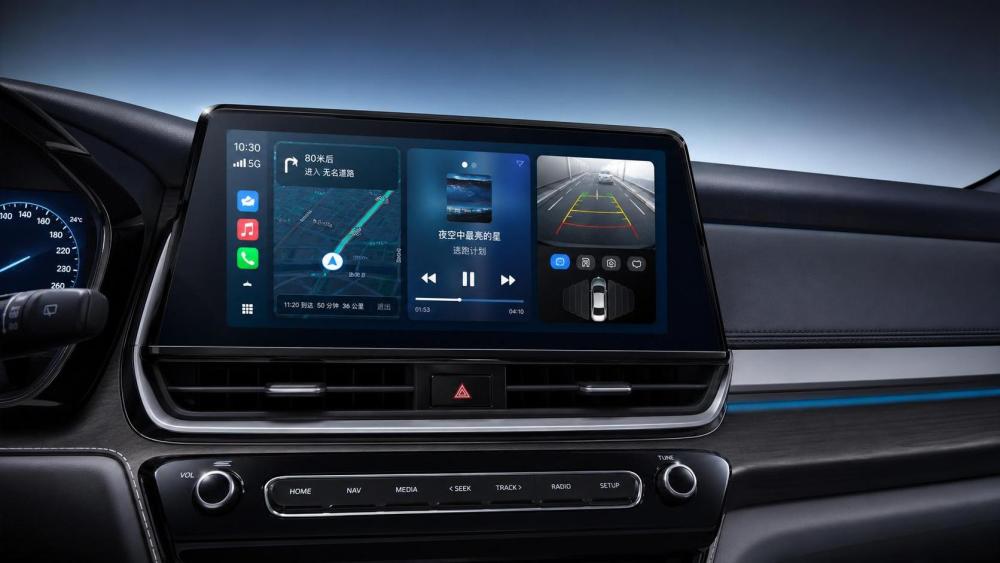
Menus should open instantly, maps should pinch smoothly, and reversing cameras should load without delay.
If the screen stutters in a showroom, daily use will not improve it.
A Quick Screen Checklist
- Can you reach common controls within two taps?
- Does the screen stay legible with sunglasses on?
- Do camera and parking views appear immediately?
- Can split-screen show maps and media clearly?
- Are physical shortcuts available for frequent actions?
Check Smartphone Integration Before Anything Else
For many drivers, smartphone integration is the real center of the Car Infotainment System.
A polished native interface is helpful, but phone mirroring often decides everyday usability.
Wireless CarPlay and wireless Android Auto feel convenient, yet stability matters more than cable-free use.
Frequent disconnects quickly become a real annoyance.
Test initial pairing, reconnection speed, and audio handoff after restarting the vehicle.
Also check whether the Car Infotainment System supports multiple user profiles or paired phones.
That is especially useful in shared vehicles.
Another detail worth checking is charging support.
Wireless mirroring drains battery faster, so weak charging can cancel the convenience advantage.
In practical terms, the best Car Infotainment System should treat the phone as a seamless extension, not a backup workaround.
Do Not Ignore Voice Control, Navigation, and Audio
Voice control often sounds impressive in brochures, but daily value depends on accuracy.
A useful Car Infotainment System should understand natural phrases without repeated corrections.
Try simple requests like calling a contact, finding fuel, or changing music.
If the assistant struggles in a quiet cabin, road noise will expose bigger limits.
Navigation quality also deserves close attention.
Some built-in systems look polished but update slowly or handle live traffic poorly.
Good guidance needs accurate routing, clear lane prompts, and fast rerouting after missed turns.
Then there is audio.
A premium badge on the speaker grille does not guarantee satisfying sound.
Listen for vocal clarity, bass control, and volume consistency between sources.
The best systems sound balanced during podcasts, calls, and compressed streaming audio, not only demo tracks.
What to Test in 10 Minutes
- Pair your phone and start music.
- Enter a destination and review route clarity.
- Use voice control for a call and a media command.
- Switch between radio, streaming, and navigation prompts.
- Check whether settings are intuitive without staff guidance.
Look at Update Support, Safety, and Long-Term Value
A Car Infotainment System is no longer a fixed feature.
Software updates, connected services, and interface improvements now shape long-term ownership value.
Ask whether updates are over the air, dealer-based, free, or subscription-linked.
That point is often overlooked during purchase decisions.
Safety is equally important.
The best Car Infotainment System supports safer driving through clean menus, limited distraction, and fast access to cameras and alerts.
Some systems bury critical controls inside layered menus.
That design increases eyes-off-road time, especially in dense traffic.
Long-term value also depends on hardware aging well.
A fast processor, stable connectivity, and compatible app support usually age better than flashy experimental features.
This is where broader industry insight becomes useful.
Platforms such as GACT track smart cockpit electronics, media head units, cockpit displays, wiring integration, and technology trends shaping future in-car systems.
That context helps explain why some features mature quickly while others remain inconsistent across brands.
A Simple Way to Make the Final Decision
When comparing options, use a short scoring method.
Rate each Car Infotainment System on responsiveness, phone integration, navigation, voice control, audio, and ease of use.
Keep the weighting practical.
This approach keeps the decision grounded in everyday use, not showroom excitement.
The right Car Infotainment System should feel invisible in the best way.
It should connect quickly, respond cleanly, guide clearly, and stay dependable over time.
Before making the final choice, test your top options with your own phone, your usual apps, and your normal driving habits.
That is usually where the better system becomes obvious.
Have questions about this sector analysis, or seeking best practices specific to your niche? Drop us a line below and let the senior consultants at GAC assist you.
“We respect your privacy. Your information is strictly confidential.”
Related News
- 00
0000-00
How to assess a smart cockpit electronics manufacturer's integration capability - 00
0000-00
How does a shielded HSD cable reduce interference in vehicles? - 00
0000-00
What drives demand for scroll compressors in the automotive market? - 00
0000-00
Does AEC-Q200 apply to flexible printed circuits? - 00
0000-00
How does production volume affect automotive flexible electronics costs?
Weekly Insights
Stay ahead with our curated technology reports delivered every Monday.
Recommended News
 How to assess a smart cockpit electronics manufacturer's integration capabilityAssess a smart cockpit electronics manufacturer's integration capability with practical checks for interfaces, testing, safety, cybersecurity and supplier support.Author:Time:Nov 18, 2026
 How does a shielded HSD cable reduce interference in vehicles?Discover how a shielded HSD cable reduces vehicle interference, and learn why connector design, routing, and testing matter for reliable high-speed data links.Author:Time:Nov 17, 2026
 What drives demand for scroll compressors in the automotive market?Explore the scroll compressor for automobile market and discover how EV adoption, heat pumps, efficiency, and supplier capabilities shape demand.Author:Time:Nov 16, 2026
 Does AEC-Q200 apply to flexible printed circuits?Flexible Printed Circuit AEC-Q200 requirements explained: discover which components qualify and how to assess automotive FPC reliability.Author:Time:Nov 15, 2026
 How does production volume affect automotive flexible electronics costs?Explore how production volume affects automotive flexible electronics cost, from tooling and yield to testing. Compare quotes and negotiate smarter.Author:Time:Nov 14, 2026
 How much does an in-vehicle infotainment system cost to replace?Explore in-vehicle infotainment cost, from affordable repairs to factory replacements. Compare options, installation fees, and compatibility before you buy.Author:Time:Nov 13, 2026
 How does condenser efficiency affect heat pump performance?Discover how condenser high efficiency can improve heat pump performance, reduce compressor power, and boost heating COP—plus the trade-offs to watch.Author:Time:Nov 12, 2026
 What does each FAKRA cable color code mean?FAKRA cable color code explained: Explore common connector colors, typical uses and key compatibility checks before choosing a replacement.Author:Time:Nov 11, 2026
 How to compare noise ratings for battery coolant pumpsCompare coolant pump low noise ratings with confidence. Learn how test conditions, hydraulic duty, tonal noise and installation affect your choice.Author:Time:Nov 10, 2026
 How bright should automotive display systems be in sunlight?Automotive Display Systems need more than brightness to stay readable in sunlight. Discover why 1,000 nits is a starting point and how to evaluate glare and heat.Author:Time:Nov 09, 2026
 How heat pumps improve the efficiency of EV thermal systemsEV Thermal Systems use heat pumps to reduce heating energy demand. Explore how they work, where they excel, and what limits efficiency in cold weather.Author:Time:Nov 08, 2026
 Can a smart cockpit platform support multiple displays?Can a smart cockpit platform support multiple displays? Explore key requirements for performance, safety, connectivity, and supplier evaluation.Author:Time:Nov 07, 2026
 How is automotive connector vibration resistance tested?Automotive connector vibration resistance testing reveals hidden contact failures. Explore test profiles, continuity monitoring and pass criteria.Author:Time:Nov 06, 2026
 How heat pumps save energy in automotive cabin climate systemsAutomotive Cabin Climate Systems energy saving starts with smarter heat pump design. Explore real-world efficiency, cold-weather trade-offs, and testing tips.Author:Time:Nov 05, 2026
 Is an EV heat pump worth it for winter driving range?Is a heat pump worth using in a cold-climate EV? Discover how it affects winter range, when it pays off, and what to check before buying.Author:Time:Nov 04, 2026
 When should you use 50-ohm coaxial cable instead of 75-ohm?Coaxial cable 50 ohm or 75 ohm? Learn when to use each, avoid impedance mismatches, and choose the right cable for reliable RF and video performance.Author:Time:Nov 03, 2026
 How to select a high temperature motor harness for an EVChoose the right high temperature motor harness for your EV. Compare thermal limits, current capacity, shielding, routing, and validation evidence.Author:Time:Nov 02, 2026
 How much does electric power steering replacement cost?Electric power steering price typically ranges from $1,000 to $3,000 for major replacements. Discover cost factors, repair options, and tips for comparing quotes.Author:Time:Nov 01, 2026
 How to size an EV A/C compressor for the required cooling capacitySize an EV A/C Compressor with confidence. Explore cooling loads, performance maps and power limits to select the right compressor for your vehicle.Author:Time:Oct 31, 2026
 How to choose the right pitch for an FPC board connectorFPC board connector pitch affects space, assembly and reliability. Learn how to compare options and select the best fit for your design.Author:Time:Oct 30, 2026
 How zonal design affects harness routing in high-voltage EV architecturesExplore high-voltage electrical architecture zonal design and its impact on EV harness routing. Discover key trade-offs in cable length, safety, thermal performance, and service access.Author:Time:Oct 29, 2026
 How tariffs affect costs in global automotive parts supply chainsNavigate tariffs in the global automotive parts trade supply chain. Learn to compare landed costs, manage duty exposure, and uncover smarter sourcing strategies to protect your margins.Author:Time:Oct 28, 2026
 How to assess vendor lock-in in a software-defined vehicle platformAssess Software-Defined Vehicle platform lock-in with practical tests for API portability, data access, update control, and exit costs. Learn how to choose a platform with a proven exit path.Author:Time:Oct 27, 2026
 How ISO 26262 guides functional safety in steer-by-wire systemsExplore steering systems functional safety through ISO 26262. Learn how hazard analysis, fault-tolerant design, and validation build a stronger steer-by-wire safety case.Author:Time:Oct 26, 2026
 How to evaluate a steering angle sensor manufacturer's accuracy claimsEvaluate steering angle sensor manufacturer accuracy claims with practical checks on calibration, latency, and test evidence. Compare suppliers confidently and avoid costly selection mistakes.Author:Time:Oct 25, 2026
 How to diagnose CAN bus faults in a hybrid vehicle control unitDiagnose Hybrid Vehicle Systems control unit CAN bus faults with step-by-step power, wiring, and waveform checks. Find the root cause and avoid unnecessary replacement.Author:Time:Oct 24, 2026
 How does battery cooling pipe diameter affect coolant pressure drop?Battery Cooling Pipe diameter affects coolant pressure drop and pump power. Explore sizing calculations and practical tips to optimize EV battery cooling and compare options with confidence.Author:Time:Oct 23, 2026
 How to assess PPAP readiness of automotive sensor system manufacturersAssess Automotive Sensor Systems manufacturers for PPAP readiness. Learn to verify production evidence, measurement capability, validation, and traceability to reduce sourcing risks.Author:Time:Oct 22, 2026
 What to ask an FPC connector manufacturer about reliability testingChoosing an FPC Connector manufacturer? Learn what to ask about reliability testing, failure limits, and traceable results to reduce design risks and select with confidence.Author:Time:Oct 21, 2026
 How to verify vehicle fitment for an aftermarket AC evaporatorNavigating the evaporator aftermarket? Verify vehicle fitment with VIN data, OE numbers, and physical interface checks. Use this guide to avoid costly mismatches and order confidently.Author:Time:Oct 20, 2026